







Learn about how TweakTown tests and reviews hardware. As an Amazon Associate, we earn from qualifying purchases. TweakTown may also earn commissions from other affiliate partners at no extra cost to you.
Stay Updated
Follow TweakTown for breaking tech news, reviews, and daily updates.


The two most vulnerable operating systems both belong to Apple
When people think of a vulnerable operating system, the first thing that comes to mind is, well, Windows. But, according to a new report from GFI, that's not the case. The most vulnerable operating system in the world is actually Apple's MacOS X, followed by Apple's iOS.
GFI's report sees Apple taking the top two spots when it comes to OS vulnerabilities, with OS X having 147 vulnerabilities, and iOS with 127. Third position goes to Linux Kernel with 119 vulnerabilities, and Windows Server 2008 in fourth position with 38. Windows 7 funnily enough, comes in at fifth place with just 38 vulnerabilities, and comparing this to the huge 147 holes found in MacOS X, this should wake people up.
Over the course of 2014, there were 7038 new security vulnerabilities, up from the 4794 found in 2013. Out of those 7038 vulnerabilities, just 24% of them were deemed 'high risk'. GDI's Christian Florian explains: "2014 was a tough year for Linux users from a security point of view, coupled with the fact that some of the most important security issues of the year were reported for applications that usually run on Linux systems. Heartbleed, for example, is a critical security vulnerability detected in OpenSSL while Shellshock is a vulnerability that affects GNU Bash".
Continue reading: The two most vulnerable operating systems both belong to Apple (full post)
NVIDIA CEO on GTX 970 VRAM issues: 'we'll do a better job next time'
NVIDIA's CEO and founder Jen-Hsun Huang has written on the company's official blog addressing the issue of the GeForce GTX 970 and its 4GB of VRAM. Huang says early on in the blog post: "We invented a new memory architecture in Maxwell. This new capability was created so that reduced-configurations of Maxwell can have a larger framebuffer - i.e., so that GTX 970 is not limited to 3GB, and can have an additional 1GB".
He adds that the GTX 970 is a 4GB card, and that the upper 512MB of its 4GB of frame buffer is "segmented and has reduced bandwidth". Huang elaborates, saying "This is a good design because we were able to add an additional 1GB for GTX 970 and our software engineers can keep less frequently used data in the 512MB segment". But, he acknowledges that this wasn't all good news, as the company "failed to communicate this internally to our marketing team, and externally to reviewers at launch".
"Instead of being excited that we invented a way to increase memory of the GTX 970 from 3GB to 4GB, some were disappointed that we didn't better describe the segmented nature of the architecture for that last 1GB of memory", explaining the 4GB of VRAM issue on the GTX 970 in more detail, "This is understandable. But, let me be clear: Our only intention was to create the best GPU for you. We wanted GTX 970 to have 4GB of memory, as games are using more memory than ever". Huang added: "The 4GB of memory on GTX 970 is used and useful to achieve the performance you are enjoying. And as ever, our engineers will continue to enhance game performance that you can regularly download using GeForce Experience".
Continue reading: NVIDIA CEO on GTX 970 VRAM issues: 'we'll do a better job next time' (full post)
Valve has 'prominent hardware manufacturer' to make SteamVR headset
It wasn't even 24 hours ago that we were writing about Valve showing off its SteamVR headset at GDC 2015 next week, but VRFocus has heard "from a reliable source close to the project" that the HMD itself will be made by a third-party company.
Valve has reportedly secured a "prominent hardware manufacturer" to make the headset, but now the speculation will begin as to who this hardware manufacturer is. In order to fight against the likes of Oculus VR, Sony and other VR headset makers, Valve can't do this on the cheap. Maybe Valve is working with NVIDIA on the SteamVR headset? Now that should start an exciting discussion.
Continue reading: Valve has 'prominent hardware manufacturer' to make SteamVR headset (full post)
Intel expects 10nm by late 2017, with silicon being abandoned at 7nm
Intel will be providing more details on its upcoming 10nm manufacturing process this week at the 2015 International Solid-State Circuits Conference (ISSCC), and how its new research will continue pounding on the door of Moore's law when it hits 7nm, and beyond.
The chipmaker expects to provide the first 10nm-based processors late 2016 or early 2017, as the company is hoping to dodge the delay train it hit with Broadwell at 14nm. Before 10nm is even here, Intel is teasing 7nm, saying that it will need to use new materials in order to build it. This means that 10nm will be the last product Intel builds using silicon, with Intel eyeing down a replacement for silicon, such as III-V semiconductor, such as indium gallium arsenide (InGaAs).
Then we have even more interesting points of Intel's shift to 7nm, which could see the company using new types of packaging. This includes 2.5D, which is something AMD is using on its upcoming Radeon R9 390X which uses HBM memory. 2.5D has separate dies which are placed side by side on an interposer. Intel would also be looking at 3D, where each die is stacked directly on top of one another. When it comes to 10nm, Intel is hoping to continue pushing Moore's law against the wall, all while reducing the price per transistor. 7nm is going to be a very exciting milestone, as it will shift away from silicon that has been used for decades now. Imagine the possibilities of a 3D stack of 7nm dies... that should have any enthusiast begging for more.
Continue reading: Intel expects 10nm by late 2017, with silicon being abandoned at 7nm (full post)
Apple could end up tracking your iPhone, even if it was turned off
I'm sure the NSA didn't have to twist Apple's arm too much to get this done, but Apple has patented a system that tracks iPhones even when they have been switched off. Apple's patent would see the iPhone prompting a user to enter their security code to formally shut it down.
If the code isn't typed in, or it is typed incorrectly a number of times, the phone will appear off. But this isn't the case; the iPhone is still "on" but it appears to be off to the user. While this sounds like a great idea for security, it does mean that Apple could track your iPhone even if you thought it was "off". You would be none the wiser.
This shouldn't come as a surprise to you, as it can be done on Android smartphones right now. This can be tested by having an Android-powered smartphone far away from a cellular tower, and then keep an eye on the battery usage on your smartphone. Researchers have used this method to track an Android smartphone by making a malicious application that didn't have access to Wi-Fi or GPS, and only kept an eye on the power consumption of the phone.
Continue reading: Apple could end up tracking your iPhone, even if it was turned off (full post)
AMD Radeon R9 390X limited to 4GB of VRAM because of HBM limitations?
With the release of AMD's Radeon 300 series right around the corner, and the tease of its upcoming Fiji-based Radeon R9 390X flagship video card, it's time to start speculating on what we can expect in regards to VRAM on the new GPUs.
We have heard that AMD will be using High Bandwidth Memory, or HBM, on the flagship R9 390X. A report over at Fudzilla points out that AMD is using something called 2.5D-IC silicon interposer, which will see "two separate chips on the same silicon interposer and package substrate". AMD is baking this onto a PCB on the 28nm process, but there will be two products on offer. One without HBM, and the other with HBM.
HBM 1.0 is currently limited to 1GB per stack configured as 4 x 2Gb layers for a total of 4GB of VRAM, which should raise some very serious questions. Throwing to the side memory bandwidth and the node AMD chooses to use (with all signs pointing to 28nm), a limit of 4GB of VRAM could hurt the company with the first new GPU it has released in over 18 months. Considering the issues NVIDIA has been going through with its GTX 970 and "4GB" of VRAM argument, AMD have the opportunity to really drive home the VRAM argument.
Continue reading: AMD Radeon R9 390X limited to 4GB of VRAM because of HBM limitations? (full post)
DirectX 12 rumored to allow GeForce and Radeon GPUs to work together
Tom's Hardware has quite the exclusive report, where they're saying that they have a "source with knowledge" on the matter of DirectX 12, that will see that the new API will combine the powers of competing GPUs. In order words, an NVIDIA GeForce GPU will work together in a multi-GPU set up with an AMD Radeon card.
This is something DirectX 12 has on its side with its Explicit Asynchronous Multi-GPU capabilities, which will throw all of the various graphics resources in a system, and into a single "bucket". From there, the game developers will have to work out where the workload will be split, which could see different hardware being used in specific tasks.
One of the major points of this new multi-GPU technology is that multi-GPU configurations will no longer have to mirror their frame buffers, or VRAM. In previous APIs, right up to DX11, you needed two cards of identical VRAM amounts to work in tandem, but only one lot of VRAM is utilized, it's not combined. This is a limitation of rendering an alternate frame (AFR), but DX12 is removing the 4 + 4 = 4 limitation of AFR, replacing it with a new frame method called SFR, or Split Frame Rendering.
Continue reading: DirectX 12 rumored to allow GeForce and Radeon GPUs to work together (full post)
Schwarzenegger will be back for 'Terminator 6'
The next installment in the 'Terminator' saga 'Genisys' is still a few months away, but Paramount Pictures is moving quickly to produce a new trilogy of films in the long running franchise before the rights revert to series creator James Cameron in 2018, where it will likely be retired forever.
TheArnoldFans asked star Arnold Schwarzenegger if he would return for the next film; the as yet untitled 'Terminator 6' to which replied "Yes, of course, next year". It isn't currently known if he will return for the seventh and final film, although I'd be willing to put money on it - even if he will be 70 years old by the time it comes around.
'Terminator: Genisys' hits screens worldwide on July 1st and for the first time in 3D, helmed by 'Thor: The Dark World' director Alan Taylor.
Continue reading: Schwarzenegger will be back for 'Terminator 6' (full post)
Nix Sensor preparing to launch NIX Pro portable color sensor
The NIX Pro from Nix Sensor is the first full-featured portable color sensor, designed to be a smartphone accessory. The Bluetooth device is able to scan surfaces to quickly obtain a color reading, similar to the Adobe PhotoShop eyedropper tools.
The device is able to save captured colors in a unique library, colors can be shared among users, and should prove much more accurate than other color measurement methods. NIX Sensor says the NIX Pro is able to block out ambient light and use a custom broad spectrum LED light source - all the while with a product just a bit larger than a ping-pong ball.
"Every color measurement solution in the consumer market today is difficult to transport, inaccurate, and costs tens of thousands of dollars," said Matthew Sheridan, founder and CEO of Nix Sensor. "The NIX Pro is the first color sensor that is accurate, portable, and affordable - it's the PhotoShop eyedropper in real life."
Continue reading: Nix Sensor preparing to launch NIX Pro portable color sensor (full post)
Report: Invisible wearables to be an $80 billion industry by 2020
Invisible wearables, which are products indistinguishable from non-smart technology, will begin to see widespread adoption in the near future. The surging market could be worth $80 billion per year by 2020, as fashion items could help drive the market.
Physical appearance of products is becoming streamlined to be more aesthetically pleasing, so it won't be ideal for all products. To help drive this market further, expect hardware companies to recruit executives from the fashion and jewelry industries - hoping to create next-generation products that will spur development at a faster rate.
Wearables are packing more powerful hardware, and consumers are seeing a wider number of product choices available. Companies like Apple, Google, Intel, ARM, Intel, Lenovo, Sony, Withings, Microsoft, Qualcomm, and Omate are working with wearable-design teams to make products more visually appealing.
Continue reading: Report: Invisible wearables to be an $80 billion industry by 2020 (full post)
FBI aware of at least 60 state-sponsored cyberthreat groups
The FBI is aware of at least 60 cybercriminal groups with state-sponsored support, according to Joseph Demarest, senior bureau chief and head of the FBI cybercrime division.
Demarest also said the FBI was able to trace the Sony Pictures Entertainment hack was tied to North Korea within one month - showing that the unstable country has increasingly sophisticated cyberattack capabilities. State-sponsored cyberespionage is a booming business, with the FBI and other departments suspecting China, Russia, Iran, and other countries of relying on hackers.
In addition, the FBI announced a $3 million reward for the arrest or conviction of Evgeniy Bogachev, operator of GameOver Zeus. The bounty is the largest offered for a cybercriminal, and the Russian has been charged with computer hacking, conspiracy, wire fraud, bank fraud and money laundering - and faces a federal charge of bank fraud conspiracy.
Continue reading: FBI aware of at least 60 state-sponsored cyberthreat groups (full post)
LinkedIn offering $1 to previously compromised users
Do you remember when 6.5 million LinkedIn user's passwords were leaked in 2012 by Russian hackers? We leaned that apparently some people log-in to their professional social media with passwords like 'swampass' and 'squirter'.
A class action lawsuit has seen this company brought to their knees, offering a massive $1 each to the 800,000 Premium Users who joined up the fight. Just in case you were wondering if this might have been a typing error or mistake, it's not - they're giving $1 of cold-hard US dollar to each of the 800,000 Premium Users in which joined this lawsuit.
A LinkedIn spokesperson said to the New York Times that the purpose of this move is "to avoid the distraction and expense of ongoing litigation," even though they deny that they are at fault for the breach.
Continue reading: LinkedIn offering $1 to previously compromised users (full post)
Yahoo clashes with NSA regarding encryption backdoor demands
The National Security Agency (NSA) still has a fragile relationship with Silicon Valley companies, and both sides are trading shots at one another. In the most recent incident, a Yahoo executive challenged the NSA regarding its demand for encryption backdoors.
"If we're going to build defects, backdoors or golden master keys for the US government, do you believe we should do so for the Chinese government, the Russian government, the Saudi Arabian government, the Israeli government, the French government?" said Alex Stamos, CISO of Yahoo.
NSA Director Adm. Michael Rogers initially tried to deflect the question, and then offered the following answer: "I think that we're lying that this isn't technically feasible - now, it needs to be done within a framework. I'm the first to acknowledge that," Adm. Rogers said.
Continue reading: Yahoo clashes with NSA regarding encryption backdoor demands (full post)
Canadian intelligence accurately identified French Babar malware
The Communication Security Establishment Canada (CSEC) documented a French language cyberespionage piece of malware. Former NSA contractor Edward Snowden leaked the CSEC documents, which were published by the Le Monde French publication and German Der Spiegel newspaper.
The sophisticated Babar malware could record and transfer keystrokes and monitor data and audio conversations - it was a well-made, complex piece of software, according to cybersecurity experts. The Remote Access Tool (RAT) was the second piece of software tied to the Snowglobe spyware campaign.
"Babar is a highly developed spyware program that could only have been manufactured by very well-trained developers," said Eddy Willems, security evangelist at G DATA Software AG. "Babar is designed to work specifically in networks belonging to companies, authorities, organizations and research institutes and to steal sensitive data from them. As a result, audio conversations such as Skype chats, for example, can be recorded. Even a targeted attack on individual seems conceivable. A mass distribution of such malware, however, is very unlikely."
Continue reading: Canadian intelligence accurately identified French Babar malware (full post)
NVIDIA rumored to be working on its own VR headset
NVIDIA has teased its 'Made to Game' special event on March 3 during the Game Developers Conference (GDC) 2015, but according to some fresh rumors, the company could be unveiling its own VR headset. Chris Burns from Slashgear thinks that NVIDIA could unveil its own VR headset, and so do I.
The conclusion can be drawn from various technologies NVIDIA has been releasing over the last year, and still have close to their chest. With NVIDIA's Shield and Shield Tablet devices, its range of Tegra processors, G-SYNC, VR Direct, GRID, and so much more. Then we've heard from game developers like Tim Sweeney teasing that VR will look as good as real life within 10 years.
But where the pieces fit into the puzzle more is that G-SYNC and VR Direct technologies would go hand in hand with each other, which is something I asked the company back when they revealed their Maxwell architecture. At the time, my question was answered to the large number of other various press members, but wasn't elaborated on. I did ask if we would see VR Direct, VR SLI and G-SYNC work with the Oculus Rift, but maybe I should've asked if NVIDIA were working on its own VR headset, instead? With NVIDIA's CEO and founder Jen-Hsun Huang saying things like "More than five years in the making, what I want to share with you will redefine the future of gaming" when referring to the March 3 event, we can't help but get excited.
Continue reading: NVIDIA rumored to be working on its own VR headset (full post)
NSA director says 'backdoors' into tech companies doesn't harm privacy
It was only last week that it was revealed that the National Security Agency hacked into Gemalto, the largest SIM card maker in the world, which broke just after we wrote about the NSA reportedly having access to backdoors in Western Digital and Seagate firmware.
The NSA is back in the news once again, with its director, Mike Rogers, wanting to see calmer action in regards to the government's plans to keep its backdoors operating smoothly. Rogers said that maintaining these "backdoors" would not be harmful to citizens' privacy, would not "fatally compromise encryption and would not ruin international markets for US technology products", reports The Guardian. Rogers said: "If you look at the topology of that attack from North Korea against Sony Pictures Entertainment, it literally bounced all over the world before it got to California. Infrastructure located on multiple continents, in multiple different geographic regions".
Rogers wasn't too clear on how legal or technological protections could be installed so that the various government agencies wouldn't take advantage of having all of this data. The White House is working directly with tech giants like Apple, Yahoo and Google on their encryption for the government to access their mobile data, cloud computing and more.
Continue reading: NSA director says 'backdoors' into tech companies doesn't harm privacy (full post)
Apple, Google prepare to battle it out in connected car tech market
Google and Apple hope to see their respective in-car mobile operating systems have a major impact in the connected car market. Apple's CarPlay and Google's Android Auto go beyond just pairing smartphones to the infotainment system, hopefully designed to increase auto safety.
"Consumers have spoken," said John Maddox, assistant director at the University of Michigan's Mobility Transformation Center, in a statement to the New York Times. "They expect to have coordination between their phone and their vehicle."
Both companies want to improve Bluetooth connectivity and voice recognition functionality in connected cars. Automakers are creating working relationship with Google, Apple, and other Silicon Valley companies interested in developing in-car technology.
Continue reading: Apple, Google prepare to battle it out in connected car tech market (full post)
Early reports: Galaxy S6 Edge 'better than' iPhone 6 design
According to officials from various mobile carriers, Samsung's upcoming next-gen Galaxy smartphones are better than the best from Apple. In closed-door meetings, these officials used the new Galaxy S6 and Galaxy S6 Edge smartphones, responding with nothing but praise.
Executives from companies like T-Mobile, Sprint, Vodafone and SK Telecom have said that both smartphones were reportedly "greatly satisfied" in terms of the new design, and were "wagering they could beat Apple's hot-selling iPhone 6 at least in terms of design". A source spoke with The Korea Herald, where they said: "Some executives said the new phones were the best of the best among Samsung-made phones. They said the Edge was better than Apple's iPhone 6 in terms of design".
Another source talked about the Galaxy S6 Edge model, where they said "It is doubtful whether the acclamations from the mobile carriers will directly lead to (high) sales. Samsung will need to increase the phone's functionality dramatically to appeal to customers".
Continue reading: Early reports: Galaxy S6 Edge 'better than' iPhone 6 design (full post)
Companies hiring hackers to help test their network cybersecurity
Companies nervous about their cybersecurity defenses are relying on white hat hackers to test systems and help identify security flaws. Offering a bounty allows additional skilled users outside of a company's software and IT team to help track down anything that may have unknowingly fallen through the cracks.
"We're curious, we want to test our skills, we want to help these companies," said Mike Santillana, white hat hacker for Bugcrowd, in a statement published by CBS News. "I've found several bugs where you can completely compromise another user's account."
Additional companies are paying security experts and programmers as part of increasingly lucrative bug bounty programs. These hackers enjoy the monetary incentive and the challenge of identifying security flaws that could pose problems for companies and their customers.
Continue reading: Companies hiring hackers to help test their network cybersecurity (full post)
US military testing GuardBot robot ball for surveillance duties
American Unmanned Systems wants to see its amphibious GuardBot used for surveillance missions by the US military, with the unique robot able to travel across land and water. The GuardBot can travel up to 20 miles per hour along the beach and cross water at speeds up to 4 mph, according to American Unmanned Systems.
The unique robotic ball can vary in sizes, from 10cm up to 9 feet, controllable by one operator or programmable via GPS. The GuardBot was created for non-intrusive surveillance and is extremely quiet as built-in cameras and sensors provide feedback from inside the sealed sphere physical casing. The team is looking to develop software supporting geographic information system data to increase autonomous activity.
American Unmanned Systems has a cooperative research development agreement (CRADA) with the US Navy, so they are able to use government research labs and resources to help develop the GuardBot. It was first presented to the military at Marine Corps Base Quantico in 2012, traveling through a volleyball pit - and was shown again in 2014 at the Naval Amphibious Base, deploying and returning to a naval craft.
Continue reading: US military testing GuardBot robot ball for surveillance duties (full post)
 Star Citizen livestream full of bugs, glitches, and performance issues raises fresh concerns about the $1 billion game
 GTA 6 gameplay leaks ahead of its big reveal, showcasing full map, six-star wanted level, and more
 US Army is giving soldiers time off to play GTA 6 as an incentive
 GTA 6 nears $500 million in pre-order revenue with 77% sales on PS5, per analysis
 Crucial offers a $250 refund for a RAM kit that costs $1,800, forgets to ship back the working module
 Noctua has no plans to introduce RGB lighting or screens to its coolers, instead it wants to focus on raw performance
 Iconic N64 shooter GoldenEye 007 is getting a native PC port
 Diablo 4 is coming to the Switch 2 with both expansions in a special Age of Hatred Collection
 CXMT DDR5 memory hits 9,000 MT/s speed milestone on AMD AM5 motherboard
 Sony says PlayStation 6 release date and pricing are still up in the air
 ASUS ROG Strix XG129C Review: A $199 Gaming Monitor You Don't Play Games On
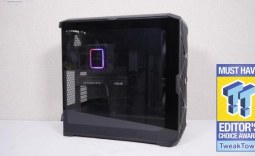 Cooler Master HAF II 500 Mid-Tower Chassis Review
 Corsair HS35 v3 Wireless Gaming Headset Review - An Affordable Winner
 D-Link F518 5G Wi‑Fi 6 AX1800 Mobile Hotspot Review: All-Day Mobile Hotspot
 Bose Lifestyle Ultra Speaker Review - Impressively Detailed Room-Filling Sound
 MSI Z890 Gaming Plus WIFI6E Review - Z890 for under $200
 Mortal Kombat (1995) 4K Ultra HD Blu-ray Review
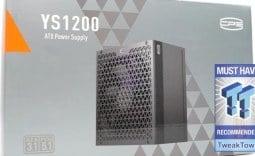 CPS PCCOOLER YS1200 ATX 3.1 80 PLUS Gold PSU Review
 ASRock X870E Taichi White Review: a premium AM5 motherboard with 10G LAN and WiFi 7
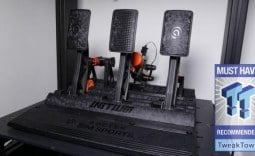 Asetek Initium Pedal Modular Upgrades Review
 Using Multiple Monitors? Change these Windows settings for a Better Experience
 Windows Sandbox is The Windows Security Feature Most People Never Use
 I ditched the Windows 11 context menu for this open-source tool, and here's why
 Windows 11 may be encrypting your drive already, and I checked where my recovery key went
 GIGABYTE's 40 Days of INFINITY celebrates 40 Years of Innovation with stunning GeForce RTX graphics cards and rewards
 I swapped File Explorer for this free file manager and finally got the layout I wanted
 How to tell if someone has been using your Windows PC without your permission
 6 Task Manager tips for troubleshooting Windows performance problems
 ASUS ROG's 20th Anniversary Line-up of Premium PC Gaming Gear has Arrived - Here's Everything You Need to Know
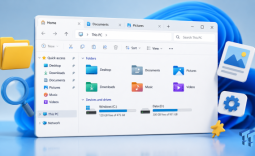 Six File Explorer tips every Windows user should know