







Science, Space, & Robotics - Page 199
Explore the latest Science, Space, Health, and Robotics news from TweakTown. Coverage includes space launches, medical tech, discoveries, and rockets. - Page 199
Stay Updated
Follow TweakTown for breaking tech news, reviews, and daily updates.


As an Amazon Associate, we earn from qualifying purchases. TweakTown may also earn commissions from other affiliate partners at no extra cost to you.
China's rover stuck its probe in the Moon, revealing vital information
China has had a lunar lander stationed on the dark side of the Moon since 2019, and since it's been there, it has relayed back some interesting information. Now, the lander has relayed back some new information about the Moon's surface.

In a new paper published in Science Advances, China's lander called Yutu 2 has performed some new experiments on the Moon's surface using the rover's ground-penetrating radar tools. Yutu 2 used its radar to examine the Moon's surface and found that the top layer, which mostly consists of pale, dusty soil, sprinkled in with some rock that stretches down beneath the surface for about 39 feet.
After that layer is the second layer, which consists of much larger grains of soil and much more larger stones and rocks, this layer continues down beneath the Moon for about 40 feet. The final layer of the Moon stretches another 50 feet below the second layer and consists of even larger stones, but surprisingly has a mixture of both large and fine grains of soil. Unfortunately, the instrument that was used to measure these layers reached its maximum capabilities at this layer, so we don't know what's beneath it.
Continue reading: China's rover stuck its probe in the Moon, revealing vital information (full post)
Elon Musk will bring a SpaceX Starship manufacturing plant to LA
Elon Musk and his private rocket company SpaceX has gotten the thumbs up to build a manufacturing plant in Los Angeles for its deep-space Starship.

The Los Angeles City Council and L.A. Board of Harbor Commissioners granted a 10-year permit for SpaceX to build its manufacturing plant just last week. According to Reuters, the council votes to whether or not SpaceX should be granted the permit were a unanimous decision of 12-0 -- clearly, they want SpaceX there. Councilman Joe Buscaino, whose district includes the port, said, "It's crazy that here we are in 2020 preparing ourselves to send people to Mars, and it's going to happen in our backyard. We are becoming a spaceport."
If you are wondering whether SpaceX will be launching rockets from the L.A. port, that, unfortunately, won't be the case. This plant is purely for the manufacturing of parts, as all aerospace vehicles will be transported elsewhere for testing. If you don't know what Starship is, it's SpaceX's largest rocket standing over 387 feet, or 118 meters tall. Starship is designed to carry a large number of passengers to Mars, and Elon Musk plans on initiating test flights for the craft later this year.
Continue reading: Elon Musk will bring a SpaceX Starship manufacturing plant to LA (full post)
New AI-powered patch predicts heart failure days before it happens
Scientists have created a new AI-powered device that has the potential of saving hundreds, if not thousands of lives.

This new device, which doesn't have a name at the moment, is a patch that uses AI to monitor patients' heart rate. The device checks the patient's heart rhythm, breathing cycles, quality of their sleep, posture, and overall physical activity. The device then collates all this data and feeds it back into a smartphone app via Bluetooth. From here, the AI takes over to create a summarised baseline specific for every patient.
Once this baseline is created, the device will continue to monitor the patient and observe any deterioration of their condition. Scientists and researchers from the University of Utah Health and VA Salt Lake City Health Care System attached the device to 100 patients who have previously suffered from heart failure. Out of the 100 patients, the average age was around 68, and over the three months of monitoring, the device was able to successfully predict heart failure days before at a rate of 80%.
Continue reading: New AI-powered patch predicts heart failure days before it happens (full post)
Plague Inc. removed from Chinese iOS App Store over coronavirus fears
You simply can't escape hearing the words coronavirus or COVID-19 on the daily, but when it comes to Ndemic Creations' game Plague Inc. -- what could go wrong? Well, how about the game being banned on the Chinese iOS App Store.

Yeah, so the disease sim has been getting more and more popular with the recent coronavirus (COVID-19) outbreak, and now the game has been officially removed from the Chinese iOS App Store. The news is coming directly from Ndemic Creations, that has explained: "We've just been informed that Plague Inc. 'includes content that is illegal in China as determined by the Cyberspace Administration of China' and has been removed from the China App Store".
Ndemic Creations adds that "The situation is completely out of our control". The news is riding on the back of Ndemic seeing sales of Plague Inc spiking big time, and then Plague Inc. quickly becoming China's top-paid iOS game... weeks later? Banned on the Chinese iOS App Store. I'm not shocked to see this happen, and it's China of all places.
Continue reading: Plague Inc. removed from Chinese iOS App Store over coronavirus fears (full post)
Brain neurons & artificial neurons can talk in real-time over the web
Scientists have successfully made artificial brain neurons, and biological brain neurons communicate over the internet.

Researchers from the University of Padova in Italy, extracted rat neurons in their laboratory, while researchers at the University of Zurich and ETH Zurich created artificial neurons on Silicon microchips. Then researchers from the University of Southampton used cutting-edge nanotechnology to create devices that link the two neurons together called synapses, or more accurately memristors.
The scientists from Southhampton University observed biological spikes being sent over the internet from the researchers in Italy. The researchers then distributed those spikes to the memristors and sent them down the line to the artificial neurons in Zurich. The process was a success as it works in reverse as well. If spikes are sent from the artificial neurons through the mesristors, the biological neurons receive them. Proving that artificial and biological neurons can communicate with each bi-directionally in real-time.
Continue reading: Brain neurons & artificial neurons can talk in real-time over the web (full post)
New way of cooling down computer chips results in more efficiency
In a new paper, researchers have detailed a brand new way to cool down computer chips. This idea manipulates the speed of photons.

Researchers at Stanford University have managed to develop a new way to cool down heated objects, and in this instance computer chips. In their paper, which has been published in the Physical Review Letters, the team of researchers describe in detail how heat radiation can be manipulated into cooling down objects faster. Firstly, objects both radiate and receive heat from the environment, and already established research has pointed out that objects radiate heat in a spectrum.
Heat radiated from an object peaks out at a certain frequency, this is determined by the current temperature of the object. A simple way to look at this is when the number of incoming photons to an object is more than the number of outgoing photons, the the object will begin to increase it's temperature. With all this in mind, the team of researchers came up with an idea that could speed up the radiated photons, and in theory would then be able to speed up the cooling process.
Continue reading: New way of cooling down computer chips results in more efficiency (full post)
A cure for diabetes has been found, stem cells to be the answer
A team of researchers may have just stumbled upon the cure for diabetes by fusing mice with stem cells. The results are extremely promising.

For those that don't know much about diabetes, here's a quick summary of the disease. People who have diabetes find it hard for their bodies to produce a reasonable amount of insulin. The current treatment for this is regular exercise, strict diet, and insulin shots. In the human body, the pancreas produces insulin, but in the case of a diabetic, their pancreas does not produce enough. This means patients have to monitor their blood sugar levels and directly inject insulin into their bloodstream.
In the new study, researchers led by Jeffrey Millman from Washington University in St. Louis, Missouri, found that using pluripotent stem cells (iPS cells), which are stem cells that can be manipulated into becoming almost any cell in the body, they can cure diabetes. Unfortunately, when using these stem cells, not all of them convert into the desired cell, in this case, insulin-producing cells. This means that some random cells enter the bloodstream along with converted insulin cells.
Continue reading: A cure for diabetes has been found, stem cells to be the answer (full post)
NASA jabbed its probe in a Martian hole and found that Mars shakes
NASA loves jamming probes into holes to examine things, and in this case, Mars was lucky enough to be a candidate.

While you might think this is an over-exaggeration, that's hardly the case. NASA sent it's InSight robot to Mars to examine several aspects of the strange red planet, and since it's been on Mars, it has achieved quite a lot. InSight was able to measure and record some strange martian sounds, that were believed to be Marsquakes and martian wind. Now, NASA has published some of the latest findings from InSight.
InSight is stationed on the Mars surface, and it uses its seismometer instrument that's stuck in a hole to record ground motions. When NASA first detected the Marsquakes, they weren't able to accurately distinguish the sound of quakes in comparison to other potential sounds. Since then, NASA has gotten much better at this and is now able to separate the sound of the wind from the quakes.
Continue reading: NASA jabbed its probe in a Martian hole and found that Mars shakes (full post)
Dick Pound: Tokyo 2020 Olympics likely to be canceled over coronavirus
It looks like coronavirus could be causing a bigger stir throughout the world than previously thought, with Mobile World Congress (MWC) canceled over it -- people pulling out left, right, and center of the Game Developers Conference (GDC) and Computex 2020 in Taiwan now possibly in question.

How could it get worse? Seeign the Tokyo 2020 Olympics canceled. This is now a possibility, with International Olympic Committee member Dick Pound talking with the Associated Press recently, where he said that the committee will be making a final decision throughout discussions with the World Health Organization (WHO).
Pound said: "All indications are at this stage that it will be business as usual. So keep focused on your sport and be sure that the IOC is not going to send you into a pandemic situation. It's a big, big, big decision and you just can't take it until you have reliable facts on which to base it. You just don't postpone something on the size and scale of the Olympics".
Continue reading: Dick Pound: Tokyo 2020 Olympics likely to be canceled over coronavirus (full post)
Researchers use stem cells to 3D print the world's first human cornea
At the moment, 3D printing technology has an uncapped potential, and something to reinforce that fact is scientists successfully 3D printing the world's first cornea.

Researchers at Newcastle University, located in the United Kingdom, have recently published a new paper that details that they have successfully 3D printed the world's first cornea. The aim behind this research is to provide patients who are blind or are deteriorating into blindness with a replacement cornea for their eyes. At the moment, there's a huge demand for human cornea transplants, but if researchers can print them and distribute them out to patients accordingly, then those waitlists for transplants would be reduced significantly.
So how does this work? Researchers took corneal stem cells from a healthy donor and added the samples to alginate and collagen. The result of this mixture was what is called "bio-ink". From this stage, scientists were able to perfectly form the ink into the cornea shape using a 3D bio-printer. Of course, with most bleeding-edge level technology, it will be several years before the printed corneas are issued out to patients, as researchers still need to perform numerous levels of testing to ensure safety. Regardless of the wait time for the corneas, it still proves that this idea is completely feasible.
Continue reading: Researchers use stem cells to 3D print the world's first human cornea (full post)
Flat Earther dies in $18,000 homemade rocket trying to prove theory
A man that was a massive advocate for the Flat Earth Theory has tragically died in his homemade rocket that crashed landed into the desert.

The man was "Mad" Mike Hughes, who built homemade rockets with limited funding for a Science Channel series called "Homemade Astronauts". The series' aim was to document the adventures of rookie rocket designers. Hughes' goal for his homemade rocket was to prove to the world that Earth was in fact a flat disc by viewing it from space himself. This also wasn't Hughes' first attempt at reaching space, back in 2014 the homemade astronaut reached a height of 1,374ft, then in 2018 he reached 1,875ft.
The rocket was steam powered and during his launch in 2020 the chute detached, causing him to collide with the Barstow, Californian desert at an extremely high velocity. The rocket was also not tested correctly as Hughes didn't have the funding that NASA or SpaceX has, instead he had $18,000 sourced from fellow flat Earthers and extreme levels of confidence in his creation. Flat Earth advocates have been beating the drum that the Earth is disc shaped since we realised that the Earth was spherical, much like all the other planets/exoplanets.
Continue reading: Flat Earther dies in $18,000 homemade rocket trying to prove theory (full post)
61% of Americans want UFO files declassified revealing the truth
The United Kingdom decided to release a large portion of UFO related documents to the public, under the Freedom of Information act. This decision has no doubt sparked interest of UFO's globally, but what do Americans think?

Market research firm, Piplsay has posted a new article regarding the mystery behind UFO's and whether or not Americans would like to see the disclosure happen in their country as well. According to the paper, which polled 30,741 Americans, around 61% of those who were polled want the American government to follow in the footsteps of the UK government and disclose what they have to the public. Out of those 30,000+ people, 27% of them didn't want to the files disclosed, and 12% said they don't care what happens.
The paper also says that around 58% of those that were polled think that the American government is investigating alien life. 25% of the Americans believe that the US government isn't investigating alien life and 17% aren't sure what they are doing. Around 27% of Americans think that UFO sightings are real, while 34% of them are a bit unsure about what their answer is. Piplsay also polled 4,161 people in the UK, and it was found that 60% of those people are excited about the disclosure of the "X-Files", versus the 28% of those people believing the disclosure will cause "madness".
Continue reading: 61% of Americans want UFO files declassified revealing the truth (full post)
Elon Musk seeks SpaceX funding, company valued at $36 billion
SpaceX is wanting to raise another $250 million in new funding according to CNBC, with the new cash seeing Elon Musk's space-venturing company worth around $36 billion.
The $36 billion valuation is a $2.5 billion increase in the last time the reported valuation came in, with Elon Musk seeing SpaceX injected with around $1.33 billion across 2019 from 3 different rounds of fundraising. SpaceX has rounded up $3 billion or so in funding over the years, but it's no wonder as it continues to push the boundaries of technology and dominate beyond our pale blue dot.
NASA awarded SpaceX over $3.1 billion to develop the Crew Dragon capsule that the company built to take astronauts to the International Space Station, with Musk saying SpaceX has spent "hundreds of millions of dollars" of its own funds to develop Crew Dragon.
Continue reading: Elon Musk seeks SpaceX funding, company valued at $36 billion (full post)
Here's our battle plan for 'planet-killing' asteroids hitting Earth
One of the biggest problems we all face on Earth is if a large asteroid decides to line up Earth. It's an even bigger problem if that asteroid is so large that it falls into the category of "planet-killing".

So, in the event of one of those asteroids making its way over to Earth, how do we defend ourselves as a planet? MIT researchers have announced a battle plan for dealing with a "planet-killing" asteroid being on a collision course with Earth. According to the new paper, there are three options for missions that could be prepared in reasonably short notice. The first is "type 0", and is when a single, heavy spacecraft is fired at the asteroid using all information gathered from Earth to knock it off course.
The second is "type 1" mission, and that is when a scout craft is launched first to examine the asteroid. With the data gathered from the scout craft, humans back on Earth would be able to launch an impactor craft more accurately. The third option is "type 2" mission, which is when an impactor craft is launched at the same time as the scout craft. The scout craft then examines the asteroid after the initial impact, then relays data back for a second impactor that should finish the asteroid off.
Continue reading: Here's our battle plan for 'planet-killing' asteroids hitting Earth (full post)
Deep Space radio burst pattern could be aliens, says Harvard scientist
It was only a few weeks ago that astronomers announced that they received what is called Fast Radio Bursts from deep space. Now, a Harvard scientist and astronomer have said that it could be aliens who are sending the signals.

If you don't know what Fast Radio Bursts (FRB) is, here's a quick summary of what has happened so far. In January 2020, astronomers picked up FRB's from deep space, and while this is originally a rare finding, these signals are usually traced back to a cosmic event such as stars colliding. What puzzled astronomers were that these new FRB's were arriving in a regular pattern.
The pattern was that the FRB goes through a four-day cycle of regular activity almost every hour, then after those four days, it would go dormant for 12 days. The researchers also said that the source of the FRB would sometimes skip it's four-day activity period and only let out a single burst. This discovery broke all explanations towards for what the source of the FRB could be.
Continue reading: Deep Space radio burst pattern could be aliens, says Harvard scientist (full post)
Western-style fast-food diet linked to brain and memory impairment
A study has shined a new light on how traditional Western-style fast-food diets can lead to memory and brain deficiencies.

The new study was published in the Royal Society Open Science and has examined the effects of high-fat, high-sugar, and processed foods and how they affect cognitive ability. Researchers took 110 participants aged 20-33, who were generally healthy and split them into two groups. The first ate their normal healthy diets for a week, and the other was assigned a calorie-heavy Western-style diet filled with fast-foods.
At the start and end of the week, both groups were asked to rate how much they like sugary foods while eating breakfast. The participants were also asked to rate how much they wanted to continue eating them and were also given a memory test. Richard Stevenson, study co-author and psychology professor Macquarie University in Sydney, found that "After a week on a Western-style diet, palatable food such as snacks and chocolate becomes more desirable when you are full. This will make it harder to resist, leading you to eat more, which in turn generates more damage to the hippocampus and a vicious cycle of overeating."
Continue reading: Western-style fast-food diet linked to brain and memory impairment (full post)
SpaceX will take its first space tourists in late 2021, early 2022
Elon Musk's SpaceX is checking off milestones as it moves towards making commercial space travel a real thing. Now, we are hearing about when SpaceX will be taking its first tourists.

TheNextWeb has reported that SpaceX will begin to send tourists to orbit as soon as 2021, but the costs it won't be like a international flight -- they will be much higher than that. Space Adventures is the company that will be handling the bookings for SpaceX's orbital experience, and they also handled the brokering deal of tourists going into orbit throughout 2001 and 2009.
According to Quartz, the last space tourism flight by Cirque du Soleil founder Guy Laliberte cost a whopping $30 million. Space Adventures expects that SpaceX will be taking four passengers on their first flight to space "late 2021 and mid-2022", but that won't happen until the Crew Dragon Capsule completes its first manned flight in just a couple of months. Once that is complete, SpaceX has set the runway for tourists entering space.
Continue reading: SpaceX will take its first space tourists in late 2021, early 2022 (full post)
Chernobyl nuclear fallout being healed by... radiation absorbing Fungi
Back in late April 1986, a nuclear accident happened that shook the planet. This disaster was none other than Chernobyl, and the nuclear fallout was devastating.

Since the Chernobyl nuclear explosion, the radioactive site has become more of a real-life research site for scientists. Researchers have since sent in several robots to examine the site and how the nuclear fallout has affected both plant and animal life. In 1991, a team found that black-spotted fungi were growing on the walls of one of the nuclear reactors. The team also found that this fungi was slowly breaking down the radioactive graphite from the core, and was growing more strongly towards the center of the zone.
In 2007 a follow-up study was conducted by researchers at the University of Saskatchewan, and found that certain types of fungi were "attracted" to radiation and actually grew more rapidly in radioactive conditions. The three fungi species were Cladosporium sphaerospermum, Cryptococcus neoformans, and Wangiella dermatitidis. These species of fungi and five others were then sent to the International Space Station in 2016 to be exposed to further radiation.
Continue reading: Chernobyl nuclear fallout being healed by... radiation absorbing Fungi (full post)
Jetman Dubai: the closest person to fly like a real-life Superman
Alright, so I need to do this -- it has gone to the top of my bucket list instantly. Jetman Dubai has unleashed a new video that shows pilot Vince Reffet flying through the sky in a jet-powered carbon-fiber suit like a real-life Superman, or Iron Man, depending on how you want your superheroes.

The pilot launches off the ground and flies into the air at around the 2-minute mark in the video, flying around Dubai and heading south towards Jumeirah Beach Residence. Jetman Dubai notes that Reffet in "eight seconds [Reffet] had reached 100 meters height, in 12 seconds 200m, 19 seconds 500m, and reached 1000m in 30 seconds at an average speed of 130 knots". Crazy, but oh-so-damn-awesome stuff.
Reffet has a bunch of GoPro cameras attached to the suit which gives us some utterly gorgeous footage of his flight, which is wicked-fast in the end and makes me want to do it personally... even though I'm deathly afraid of heights, it would be a once-in-a-lifetime experience, that's for sure.
Continue reading: Jetman Dubai: the closest person to fly like a real-life Superman (full post)
Rocket Lab to launch NASA's 55lbs 'pathfinder' satellite to the Moon
NASA has announced that Rocket Lab will be the company to provide launch services to get their 55-pound satellite to the Moon's orbit.

More specifically, Rocket Lab will be taking the Cislunar Autonomous Positioning System Technology Operations and Navigation Experiment (CAPSTONE), or CubeSat to the Moon's cislunar orbit. Once it has arrived, it will learn the Moon's seven-day cislunar orbit cycle, and relay valuable information back to Earth that will allow engineers and NASA to better prepare for future missions.
The CubeSat will be aboard the Electron rocket and blast off from NASA's Wallops Flight Facility in Virginia. At the moment, the mission is targeted to launch sometime in early 2021, and the firm-fixed launch contract is valued at $9.95 million. If you are after anymore information regarding this new contract, check out the official NASA press release here.
Continue reading: Rocket Lab to launch NASA's 55lbs 'pathfinder' satellite to the Moon (full post)
 Phantom Blade Zero on PC will launch with DLSS 4.5 and Ray Tracing on day one
 Razer announces its first Artisan Keycap with the Triple-Headed Snake Edition
 ZOTAC's 20th Anniversary Edition GeForce RTX 5080 features a titanium colorway and mirror-like backplate
 GeForce NOW app for Linux leaves beta, while DLSS Frame Generation cloud latency also improves
 Twitch opts streamers into gen AI training by default, faces harsh backlash
 Sean Murray still plays the 2016 launch version of No Man's Sky
 China's YMTC has climbed to third place in global NAND flash shipments
 $100 GTA 6 version makes up 89% of pre-orders, analysts estimate
 HWiNFO's latest update quietly confirms Intel is working on Razor Lake-AX
 Nintendo puts Switch 2 price increase warnings on store demo kiosks ahead of September 1 hike
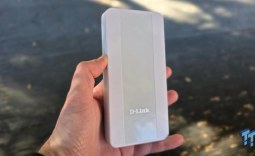 D-Link F518 5G Wi‑Fi 6 AX1800 Mobile Hotspot Review: All-Day Mobile Hotspot
 Bose Lifestyle Ultra Speaker Review - Impressively Detailed Room-Filling Sound
 MSI Z890 Gaming Plus WIFI6E Review - Z890 for under $200
 Mortal Kombat (1995) 4K Ultra HD Blu-ray Review
 CPS PCCOOLER YS1200 ATX 3.1 80 PLUS Gold PSU Review
 ASRock X870E Taichi White Review: a premium AM5 motherboard with 10G LAN and WiFi 7
 Asetek Initium Pedal Modular Upgrades Review
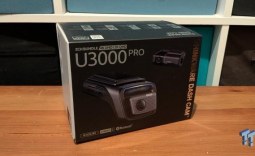 Thinkware U3000 Pro Review - Smart Dashcam with Wi-Fi quirks
 Montech TG3 Mid-Tower Chassis Review
 ASUS ROG Strix X870E-A Gaming WiFI7 Neo Review - A New Enticing Option
 I ditched the Windows 11 context menu for this open-source tool, and here's why
 Windows 11 may be encrypting your drive already, and I checked where my recovery key went
 GIGABYTE's 40 Days of INFINITY celebrates 40 Years of Innovation with stunning GeForce RTX graphics cards and rewards
 I swapped File Explorer for this free file manager and finally got the layout I wanted
 How to tell if someone has been using your Windows PC without your permission
 6 Task Manager tips for troubleshooting Windows performance problems
 ASUS ROG's 20th Anniversary Line-up of Premium PC Gaming Gear has Arrived - Here's Everything You Need to Know
 Six File Explorer tips every Windows user should know
 I switched my PC to encrypted DNS in Windows 11, and browsing felt more private
 Printer Not Working in Windows? How to fix detection, print queues and drivers