







Learn about how TweakTown tests and reviews hardware. As an Amazon Associate, we earn from qualifying purchases. TweakTown may also earn commissions from other affiliate partners at no extra cost to you.
Stay Updated
Follow TweakTown for breaking tech news, reviews, and daily updates.


iPhone 15 Pro overheating problems are caused by design flaws, says Apple insiders
It's been almost two weeks since the release of the iPhone 15 Pro, and with many of the new devices now making their way out into the public, there seems to be a portion of users reporting overheating problems.

One example is sourced from a Chinese video platform that showed an iPhone 15 Pro Max downloading a game called Genshin Impact on a 5G network, and during the download, the phone reached 122ºF. Additionally, the phone remained at a similar temperature when it was running the game in its high-resolution mode. Another example can be found on TheRelaxingEnd YouTube channel, where an iPhone 15 Pro can be seen freezing and dropping its framerate.
These examples, combined with plenty of others posted on various social media platforms, suggest there is at least a small group of iPhone 15 Pro users suffering from overheating problems. So, why is this happening?
Scientists gasped after they opened the lid of NASA's asteroid sample capsule
NASA made history this week when it safely landed asteroid samples for the very first time back on Earth, paving the way for researchers to develop a deeper understanding of these space rocks and the solar system's evolution.

NASA's OSIRIS-REx spacecraft delivered the capsule containing samples from the asteroid Bennu to the Utah desert at 10:52 a.m. EDT on September 24, 2023. Notably, Bennu is located approximately 4 billion miles away from Earth, and is the first asteroid sample NASA has ever collected, marking a milestone for the space agency.
The container containing the samples was immediately transported to NASA's Johnson Space Center in Houston, Texas, and has now been cracked open. According to a new blog post on NASA's website and posts on the space agency's social media channels, the lid was taken off the canister, and inside was "dark powder and sand-sized particles on the inside of the lid and base," per the NASA Astromaterials X account.
Intel's upcoming 14th Gen Core i7-14700KF CPU reached 6 GHz in a new benchmark
Intel's 14th Gen CPUs are set to arrive very soon, with rumors pointing to an October Raptor Lake Refresh launch. Although Intel has yet to announce the new generation formally, we've already seen benchmarks leak for the flagship Intel Core i9-14900KF and Intel Core i9-14900K flagship CPUs and seen that the new 6 GHz boost clocks on the high-end are delivering some impressive results.

Read more: https://www.tweaktown.com/news/93301/intel-core-i9-14900kf-cpu-benchmarks-leak-and-it-is-15-faster-than-the-13900k/index.html
Based on these results, the Intel Core i9-14900KF is set to be the world's fastest consumer CPU across single and multi-core tests. Today comes more info on the Intel Core i7-14700KF, which sits in the mainstream or more affordable region and is the successor to the popular Intel Core i7-13700KF.
Intel says its upcoming Meteor Lake CPUs won't be coming to desktop PCs
A few days ago, Michelle Johnston Holthaus, Executive Vice President and General Manager of Client Computing Group at Intel, told PCWorld that the company's new Meteor Lake CPUs will make their way to desktop PCs in 2024. Turns out this is not the case, or at least the traditional desktop socket we're used to.

Clarifying the comments, Intel now states Meteor Lake is only coming to AIO desktop solutions like mini-PCs that use mobile chips directly soldered to the motherboard.
"Meteor Lake is a power efficient architecture that will power innovative mobile and desktop designs," Intel clarifies in a statement made to the German publication ComputerBase. "[This also includes] desktop form factors such as All-in-One (AIO). We will have more product details to share in the future."
PlayStation CEO Jim Ryan will leave Sony in 2024
PlayStation CEO Jim Ryan is leaving the company in 2024, Sony has officially announced.

Today marks the end of an era for PlayStation. Sony's gaming CEO Jim Ryan will depart the company when the FY23 timeline ends on April 1, 2024. Ryan will be temporarily replaced by Sony's Hiroki Totoki, who will step in as interim CEO of the games division while the board approves a new leader for SIE. Totoki also leads as Sony Corp's president, chief operating officer, and chief financial officer.
Jim Ryan leaves behind a decades-long legacy at Sony. Having joined Sony's European games division in 1994, eventually rising to become president of Sony Interactive Entertainment Europe. Ryan then became deputy president at the consolidated games branch in 2018, and eventually succeeded Shawn Layden when Layden left PlayStation in 2019.
Continue reading: PlayStation CEO Jim Ryan will leave Sony in 2024 (full post)
Meta teams up with Ray-Ban to bring style, improved audio, and AI to its next gen smart glasses
Alongside the full reveal of the new Meta Quest 3 VR and mixed-reality headset today at Meta Connect 2023, the company unveiled its second-generation Ray-Ban Meta smart glasses collection, which "combines iconic style and cutting-edge technology." And they'll be here October 17, starting from USD 299.

Although smart glasses have been around for a while and haven't taken off, Meta's new Ray-Ban collaboration improves on the company's first-gen efforts while adding AI capabilities and revamping the audio with redesigned speakers optimized for bass, higher volume, and directional sound to deliver calls, music, and podcasts in noisy environments.
According to Meta, you'll get "double the bass," which sits on top of the ability to capture POV media with the new ultra-wide 12 MP camera that can capture 1080p videos of up to 60 seconds each. Meta adds that the latest Qualcomm Snapdragon AR1 Gen1 Platform enabled higher-quality photos and video processing and faster access to features.
Meta Quest 3 shipping in October with double the GPU power and mixed reality features
At Meta Connect 2023, Meta CEO and Founder Mark Zuckerberg was on hand to confirm that the Meta Quest 3 all-in-one VR headset is also now a mixed-reality device and is launching on October 10 starting from USD 499.99 for the 128GB version and USD 649.99 for the larger capacity 512GB model.

Yes, the new Meta Quest 3 headset features cameras on the front, with full-color passthrough to deliver mixed-reality experiences on top of serving as the next-generation all-in-one VR headset from the company. Meta notes that this full-color Passthrough presents your surroundings with 10 times more pixels than the Quest 2.
Of course, the main functionality of the Meta Quest 3 will still be as a VR headset. On that front, the new Snapdragon XR2 Gen 2 platform delivers double the GPU processing power than what's possible with the Quest 2 - alongside other features like faster loading for games.
You can probably rule the fabled Apple Car out for now, analyst hints
The Apple Car is fast becoming something of a myth at this point, and it now seems increasingly unlikely that we will ever see it hit the roads. Especially not in the next few years, we're told.

With the Apple Car presumably still under development inside Apple using the same Project Titan name that we've been hearing for years, supply chain analyst Ming-Chi Kuo has now hinted that the project has gone dark.
In a post on X, the social network previously known as Twitter, Kuo says that the Apple Car "seems to have lost all visibility," suggesting that there has been no movement on the project in terms of the supply chain and companies responsible for sourcing parts. The analyst goes on to hint that we won't see the Apple Car go into mass production within the next few years unless something dramatic happens.
Continue reading: You can probably rule the fabled Apple Car out for now, analyst hints (full post)
Apple's 2024 iPads & Macs will get new 3nm chips, analyst says - but people might not buy them
Apple's 2024 lineup of new iPads and Macs will all use improved chips according to one well-connected supply chain analyst. But that might not be enough to make people actually buy them, they say.

Speaking in a larger Medium post about Apple's plans for next year, analyst Ming-Chi Kuo says that Apple will use 3nm chips for its new models next year. That matches expectations that the new machines will all get upgraded M3 chips to replace the M2 family that is currently on sale. But the analyst also warns that a "lack of growth drivers" could mean that there will be a lack of growth for Apple's new products.
Growth drivers like the COVID pandemic and the initial switch away from Intel chips caused plenty of people to buy new Macs, especially of the laptop kind. But Kuo says that the lack of similar drivers could mean that the new Macs and iPads won't be as attractive.
Apple's new iPhone 15 chip-naming scheme to continue with A18 and A18 Pro in 2024, analyst says
When Apple announced the iPhone 16 Pro during the September 12 event it also announced that it would come with a new A17 Pro chip. The fastest chip it's ever put in an iPhone, the new silicon would power only Apple's best iPhones. The iPhone 15 would get the A16 Bionic of last year's iPhone 14 Pro, and things are set to continue in the same way next year - although with a slight twist.

Writing in a research note seen by MacRumors, Haitong International Securities analyst Jeff Pu believes that Apple will give the iPhone 16 and iPhone 16 Pro new chips next year. They'll reportedly be called the A18 and A18 Pro, with the lineup split between the iPhone 16 and iPhone 16 Plus and the iPhone 16 Pro and iPhone 16 Pro Max.
The analyst believes that both of the new chips will be based on the N3E fabrication process. That's chipmaker TSMC's new, second-generation 3nm process which is expected to be less expensive with improved yields compared to the current first-generation one. That first-generation 3nm fabrication process was behind the A17 Pro that powers the iPhone 15 Pro and iPhone 15 Pro Max.
UK iPhone owners will soon see their bank balance in the Wallet app
If you own an iPhone and live in the UK you could soon be able to see your bank balance in the Wallet app, according to a new report. While the feature is indeed coming, you'll need to be the proud owner of an account at one of a handful of banks to make use of the new feature.

The bank balance feature will be available to people who bank with HSBC, Lloyds, RBS, Monzo, and Starling, a 9to5Mac report says. What makes that interesting is that it's a mix of new fintech companies and traditional banks, with all of them using the UK's Open Banking API.
The use of the special API means that Apple never sees any of the data that is collected from the banks themselves, and all of it is stored on the iPhone in question. That means that it never touches Apple's servers either, something that will be a big positive for people who value their privacy.
Continue reading: UK iPhone owners will soon see their bank balance in the Wallet app (full post)
Horizon Forbidden West port is coming to PC early in 2024
Horizon Forbidden West is coming to the PC platform, and soon enough, Sony has just revealed.

The Complete Edition of Horizon Forbidden West will pitch up next year, and we're told it'll be early 2024, too. So, we haven't got that long to wait at all for the PC port.
This is, of course, the sequel to Horizon Zero Dawn, the original PlayStation game which was ported to the PC back in the summer of 2020 (three years ago, now, shockingly - has it really been that long?).
Continue reading: Horizon Forbidden West port is coming to PC early in 2024 (full post)
Logitech's new racing chair solves one of the biggest issues for gamers - how to store it
Racing sim addicts who are after a dedicated chair, but don't have the space for a full setup - and maybe not the wallet capacity either - might be impressed by a new offering from Logitech in this space.

That would be the Playseat Challenge X racing chair, which folds away to be easily stored in a cupboard somewhere.
The chassis of the racing chair is nicely lightweight at just under 12kg in total, and you can, of course, attach a steering wheel and pedals. Crucially, as part of the compact setup, those peripherals can be left attached when you fold up the Playseat Challenge X, for a good deal of added convenience.
Apple explains exactly how macOS Sonoma's new Game Mode actually works
Apple's macOS Sonoma is finally available for everyone to download after going through months of beta testing and one of the big new features is called Game Mode. The feature is exactly what it sounds like, a mode that is designed to be turned on whenever playing a game. But what does it do?

Apple had already said that Game Mode would redirect system resources to make sure that games run at the best possible performance levels by reducing background processes. That hands over more of the CPU and GPU to the game, making it run better. We also see that the Bluetooth sampling rate will increase, reducing latency when using AirPods and game controllers. Now, Apple has shared details on how to use the feature and how to disable it if you don't want it to be used at all.
A new support document, spotted by MacRumors, details exactly how Game Mode works. It says that it'll turn on automatically whenever a game is run in full-screen mode by hovering the pointer over the green arrow button in the top-left corner of the game window and choosing the Full Screen option.
Continue reading: Apple explains exactly how macOS Sonoma's new Game Mode actually works (full post)
Apple's watchOS 10.0.2 update briefly fixes a Weather bug only to break it again
When Apple released watchOS 10 to the public last week it brought with it a ton of new features as well as tweaks to existing ones. But it turns out it also brought something else to the table - a bug that prevents the Weather app's complications from working properly.

So when Apple released watchOS 10.0.2 yesterday there was a lot of hope. Could this update fix the weird complication issue? It appeared that it indeed did, with people who downloaded the updated reporting that their complications were working once more. Except, soon enough, it all went wrong and the complications stopped working all over again.
The issue appears to be that Weather app complications simply stop working, refusing to display data even when there is data to be found. Tapping the notification opens the Weather app and weather data is indeed present and correct. But it seems that information isn't finding its way through to the complication, causing problems as a result.
MSI quietly launches new Ventus Essential line of GeForce RTX 40 Series GPUs
MSI's Ventus range of GeForce RTX graphics cards is one of the company's most popular among consumers as they adhere closely to the MSRP pricing set by NVIDIA. Being more affordable is only one part of the picture; the Ventus range also offers excellent cooling and thermal performance - often comparable to higher-end models and variants.

Today, we've got word that MSI has quietly updated some of its GeForce RTX 40 Series Ventus graphics cards with new 'E' models - apparently part of a new Ventus Essential series. They look identical to previous Ventus models, but sources say they might feature enhancements or revisions to the overall build quality and components used.
Changing the make-up or revising products over their lifecycle is not uncommon, and it's something we've seen MSI do in the past - and by the sounds of things, these new Ventus E variants are not cheaper or otherwise inferior models. However, there is one big change to the display output configuration on the MSI GeForce RTX 4090 VENTUS 3X E models.
ChatGPT has evolved, with the AI now able to listen, see, and speak
According to OpenAI, the popular AI model ChatGPT can now "see, hear, and speak" as new voice and image capabilities are being rolled out. This will allow users to engage and interact with ChatGPT conversationally and show it pictures - with OpenAI providing a few innocuous examples, like snapping a picture of a landmark while traveling and asking about its history.

Which, yes, does mean that ChatGPT will be able to speak. According to the update, ChatGPT's new synthetic voice capabilities will be able to craft a realistic-sounding voice based on "just a few seconds of real speech."
OpenAI notes that it is aware that this technology could be used to impersonate public figures or commit fraud, so it's limited to voice chat. And with that, you'll only be able to choose from five different options for ChatGPT's voice.
Continue reading: ChatGPT has evolved, with the AI now able to listen, see, and speak (full post)
Ransomware group claims to have hacked all of Sony's systems, company 'currently investigating'
According to a new report at Cyber Security Connect, a ransomware group called Ransomed.vc claims that it has compromised all of Sony's system and is putting up all of the company's data for sale.

It's a bold claim and could be one of the biggest security breaches in a long time, especially when you factor in the size and scope of Sony's operations - which includes over 40 million PlayStation 5 owners and gamers.
Ransomed.vc announced the breach on its leak sites, adding that Sony isn't willing to pay for the data it's up for sale. The extent of the breach and the validity of the claim haven't been confirmed, with Sony offering a statement to IGN that says it is " "currently investigating the situation" though it offers "no further comment at this time."
Samsung's new LPCAMM DDR5 memory for laptops use 60% less space and increase performance
Samsung has announced that it has developed the world's first Low Power Compression Attached Memory Module (LPCAMM) form factor for laptop memory, which could transform the DRAM and DDR5 market across PCs, laptops, and even data centers.

Samsung notes that LPDDR5X-based LPCAMM modules can improve performance by 50% and power efficiency by up to 70% while taking up 60% less space when compared to So-DIMM technology. This is exciting news for the mobile market, especially for compact gaming devices, as you're looking at speed, efficiency, and a small physical footprint.
Look at the animated gif above; you'll see how much of a space saver it can be. Speed-wise, Samsung confirms that it has successfully tested 7.5 gigabits-per-second (Gbps) LPCAMM through Intel's platform - so it'll be fast too.
Microsoft is planning to power its data centers with nuclear microreactors
Microsoft is hiring for a new role at the company, Principal Program Manager of Nuclear Technology. Microsoft is going nuclear, with the company planning to implement a global Small Modular Reactor (SMR) and microreactor energy strategy.

With the rise of AI and the exponential increase in data center power requirements, the company is looking to the controversial nuclear power for its Cloud and AI business.
"The ideal candidate will have experience in the energy industry and a deep understanding of nuclear technologies and regulatory affairs," the job listing writes. It's worth noting that this will not involve Microsoft building massive nuclear power reactors all over the globe but will use specialized microreactors that are compact, transportable, and "plug-and-play."
 Noctua showcases one of its 'custom-built torture-test rigs' that it uses to test its fans
 More PC gamers are using GPUs with 16GB of VRAM than 8GB, according to the latest Steam data
 GeForce RTX 5070 is now the third most popular desktop gaming GPU among PC gamers
 Original Game Boy versions of Pokémon Red and Blue ported to PC with 3D voxel graphics
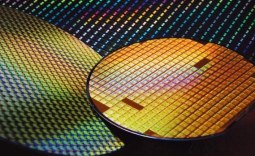 TSMC is ramping up 2nm production, 100K monthly wafers by the end of 2026
 CXMT is considering a second Beijing DRAM fab as it targets Micron-level output by late 2026
 Spider-Man games are back in Steam's top 10 and on sale for up to 60% off following Brand New Day's success
 Redditor finds $600 Kingston Fury 32GB DDR5-6000 kit at a thrift store for just $14
 The Steam Frame could be priced at $1,500 at launch, according to insider
 NVIDIA GeForce RTX 50 series GPUs get up to 30% more expensive in South Korea
 Thinkware U3000 Pro Review - Smart Dashcam with Wi-Fi quirks
 Montech TG3 Mid-Tower Chassis Review
 ASUS ROG Strix X870E-A Gaming WiFI7 Neo Review - A New Enticing Option
 Noctua NL-LC1-36 Liquid CPU Cooler Review
 Logitech G316 X 98 Wired Gaming Keyboard Review - Retro-Inspired Board that Falls a Little Short
 Biwin M560 2TB SSD Review - Best Overall Retail-Ready DRAMless SSD
 Logitech G512 X 98 Analog Mechanical Gaming Keyboard Review - An Innovative Two-in-One
 Thrustmaster T.Flight HOTAS 5 MSFS Edition Review
 SteelSeries Arctis Nova Pro Omni Wireless Headset Review - One Headset to Rule Them All
 SteelSeries Arctis Nova 7 Wireless Gen 2 Headset Review - New and Improved, But Is It Enough?
 How to tell if someone has been using your Windows PC without your permission
 6 Task Manager tips for troubleshooting Windows performance problems
 ASUS ROG's 20th Anniversary Line-up of Premium PC Gaming Gear has Arrived - Here's Everything You Need to Know
 Six File Explorer tips every Windows user should know
 I switched my PC to encrypted DNS in Windows 11, and browsing felt more private
 Printer Not Working in Windows? How to fix detection, print queues and drivers
 The Ultimate Guide to Personalizing Your Windows 11 Taskbar
 How to Turn Your Windows Laptop Into a Second Monitor with Miracast and Wireless Display in Minutes
 6 Mistakes to Avoid When Buying a Windows Laptop
 I capped Windows Update's bandwidth with Delivery Optimization, and my downloads stopped choking