







RAM
Stay updated on RAM news, including DDR5, CAMM2, LPDDR6, overclocking trends, and next-gen memory developments.
Stay Updated
Follow TweakTown for breaking tech news, reviews, and daily updates.


As an Amazon Associate, we earn from qualifying purchases. TweakTown may also earn commissions from other affiliate partners at no extra cost to you.
One retailer says 91% of attempts to buy DDR5 memory are coming from bots
Trying to buy DDR5 memory right now apparently means competing with an army of bots, not actual people. According to bot-mitigation firm DataDome, 91% of the traffic hitting one retailer's DDR5 product pages is now coming from automated scraping tools rather than real shoppers, which is roughly ten bot requests for every one legitimate visit.

The figure comes from a post by Jérôme Segura, DataDome's VP of threat research, and builds on a bigger report the company published earlier this year. In a one-hour sample, DataDome found 91 unique DDR5 listings being scraped an average of 551 times each, which works out to a stock check on a given kit roughly every 6.5 seconds. One operation alone reportedly generated over 50,000 requests per hour before DataDome blocked it, and more than 10 million scraping attempts have been blocked in total.
It's worth noting the 91% figure comes from a single unnamed retailer, and DataDome hasn't shared its sample window or full methodology. Page requests also aren't purchases, so the number is really how hard bots are watching listings rather than how much stock they're actually grabbing. Still, DataDome says the bots aren't limiting themselves to consumer kits either, with scraping activity also hitting industrial memory suppliers and component makers like Amphenol and TE Connectivity.
Crucial offers a $250 refund for a RAM kit that costs $1,800, forgets to ship back the working module
It doesn't look like it's a great time to be a Crucial customer, as this is the second warranty complaint we have seen against Crucial in the same week. In this latest one, a Reddit user posted in the r/homelab subreddit about their terrible warranty experience with Crucial.

Apparently, Crucial offered the customer a refund of just $259.99 for a failed 128GB (2x64GB) DDR5 kit that now sells for around $1,800 at major retailers. That's just 14% of the current value, and assuming the customer accepts, they would have to buy a replacement at the inflated RAM prices. It's the second warranty complaint of this nature we have covered recently, and it's playing out identically to the first case.
Crucial initially approved an RMA and promised a replacement within 14 to 21 business days. After the customer shipped the RAM to Crucial, the company changed its mind. The reason they gave is that they have stopped making RAM for the consumer market. So, instead, they offered a refund based on what the customer originally paid. However, that refund is roughly 14 percent of what a comparable kit costs right now.
CXMT DDR5 memory hits 9,000 MT/s speed milestone on AMD AM5 motherboard
With the current memory crisis leading to DDR5 pricing doubling and tripling over the past year, there's been a lot of focus placed on alternatives that aren't sourced from the Big Three - Micron, SK hynix, and Samsung. As demand still outstrips supply by a huge margin in recent years, we've seen Chinese memory maker CXMT emerge as a new and serious player in the space.

Although CXMT memory in products released in the United States and other Western markets is still relatively rare, the company's evolution in the space has been noteworthy. Recently, it was reported that CXMT's 17nm DDR5 memory yields hit the 90% milestone, suggesting its production quality and facilities are quickly approaching those of its rivals.
On top of this, CXMT memory performance continues to improve. Case in point, an AMD system running COLORFUL's iGame X870E VULCAN W OC motherboard with 48GB (24x2) of CXMT-powered DDR5 memory has achieved an impressive speed of 9,000 MT/s, rivaling kits with chips from the biggest names in the memory space.
Redditor sends a gaming laptop with 64GB RAM for repair, comes back with 32GB RAM
A Redditor's warranty repair turned into a headache after his Lenovo Legion 5 gaming laptop came back with only 32GB of RAM installed, half of the 64GB he shipped it with.

Reddit user GRINZ_DOCTOR says he bought the laptop through Best Buy's website last December, configured with a Core i9-14900HX, an RTX 5070 Laptop GPU, 64GB of DDR5 memory, and a 2TB SSD. The laptop reportedly ran fine for eight months before it started throwing repeated blue screens and had to be sent in for warranty service.
When it came back, one of the two 32GB DDR5 modules was gone. Best Buy's paperwork apparently claimed the laptop could only support 32GB of memory. It does match Lenovo's own spec sheet for the Legion 5 15IRX10, which lists a maximum of 32GB DDR5, despite the laptop having two SO-DIMM slots and clearly running fine with double that for months.
Crucial refuses to send back a user's defective RAM, also denies warranty replacement
A Redditor's warranty saga with Crucial is making the rounds, and it doesn't paint the brand in a good light. According to a post on r/pcmasterrace, Reddit user Forsaken_Bet3568 filed an RMA for a defective DDR5 SO-DIMM kit, but that was perhaps a poor decision in hindsight.

Crucial apparently agreed to replace it, then walked that back and offered only a refund at the original price, saying they had no replacement inventory. When the user asked for the defective kit back instead, hoping to try a warranty claim through the original seller, Crucial refused that too.
Crucial's email response, screenshotted and shared by the user, cites the wind-down of the Crucial consumer business as the reason it can't facilitate any outbound shipments of returned warranty products. It also declined to reimburse the roughly 14 euros the customer spent shipping the RAM back in the first place. That's excessively stingy, as the user hadn't even asked for that money back.
China's YMTC has climbed to third place in global NAND flash shipments
Yangtze Memory Technologies has climbed to third place in global NAND flash shipments, according to Counterpoint Research's Q2 2026 memory and storage tracker. YMTC now holds a 14% share of the market, narrowly edging out Kioxia and sitting behind only Samsung at 25% and SK Hynix at 22%.

YMTC grew its bit shipments 22% year over year and 5% quarter over quarter, capitalising on widespread shortages while expanding supply to domestic OEMs. The company is currently mass-producing 267-layer 3D NAND using its Xtacking 4.0 architecture, with 300-plus-layer technology expected next year.
Its combined production capacity currently sits at around 200,000 wafers per month across two fabs in Wuhan. A third facility is expected to come online later this year, adding another 100,000 wafers per month. Two additional fabs with 50,000 wafers per month of capacity each are also in the pipeline, which would take YMTC's total capacity to around 400,000 wafers per month, putting it in the same territory as Samsung's estimated 390,000 to 450,000 wafers per month.
Continue reading: China's YMTC has climbed to third place in global NAND flash shipments (full post)
$1 billion in TSMC chips for Apple's new iPhone 18 are reportedly sitting on shelves, waiting for DRAM
Earlier today we reported on a deal that fell through between Chinese memory manufacturer CXMT and Apple, where the latter was attempting to secure cheaper pricing for DDR5 memory that it needs for its next-gen iPhone 18 products powered by the 2nm A20 chip.

According to journalist and insider Tim Culpan, the situation is getting dire, with Apple "scrambling" to secure memory for its big iPhone 18 and foldable iPhone Ultra launch that's weeks away. The reporter calls the situation "fascinating" because TSMC is reportedly holding on to over $1 billion of "excess inventory" because it's still waiting on DRAM to complete packaging.
Apple's next-gen 2nm-powered iPhones will reportedly feature chips with Integrated Fan-Out Package on Package (InFO-PoP) technology that stores memory directly above the main SoC. The result is a smaller physical footprint as there's no need for a separate LPDDR5X module.
Chinese CXMT rejects Apple, leaving the company scrambling for DRAM
Apple's attempt to squeeze a cheaper DRAM deal out of Chinese memory maker CXMT has reportedly fallen apart. This has added another wrinkle to the company's supply chain headaches ahead of its biggest launch window of the year.

According to a report from Korean outlet Digital Daily, along with Tim Culpan's Culpium newsletter, CXMT turned down Apple's request for discounted pricing on LPDDR5X memory. Apple was reportedly hoping to bring CXMT in as a third supplier alongside Samsung and SK hynix, using the extra option as leverage to keep prices down across its existing partners.
That plan doesn't seem to be working. CXMT is apparently quoting prices in line with, or even above, what Samsung and SK hynix already charge Apple. Its domestic customers, namely Huawei and Xiaomi, have reportedly booked much of its output well in advance, and CXMT doesn't seem to need Apple's business badly enough to cut a deal.
Continue reading: Chinese CXMT rejects Apple, leaving the company scrambling for DRAM (full post)
Samsung leads the DRAM market in 2026 as China's CXMT gains ground
Thanks to a new report from Counterpoint, we've got an updated look at the global DRAM market as of Q2 2026. In recent years, there's been a seismic shift in the DRAM market due to the AI boom and manufacturing capacity being gobbled up by data centers and the big AI and tech companies. For consumers, it's led to a situation where supply can't meet demand, exacerbated by steep increases in memory prices.

When it comes to global DRAM revenue share, that is the money memory manufacturers are making: the big three have maintained their leadership in Q2 2026. The big three are Samsung, SK hynix, and Micron, and Samsung is the global leader with a sizeable 39% market share. This sees the company return to the top spot after ceding it to SK hynix last year, thanks to the demand for memory, price increases, and the company expanding its HBM segment for AI.
Although its market share dropped, SK hynix takes the second spot with a 26% share, followed closely by Micron with 25%. Perhaps the bigger story is Chinese memory company CXMT's rapid growth over the past year, which has seen it secure an impressive 7% of the global DRAM market.
Continue reading: Samsung leads the DRAM market in 2026 as China's CXMT gains ground (full post)
Samsung reveals zHBM: future RAM is stacked above AI accelerator, boasts 8x performance of HBM5 and 3x energy efficiency
Samsung has been showing off a future innovation for memory in the form of zHBM, among other revelations at the Future of Memory and Storage (FMS) conference.

FMS 2026 is happening in Santa Clara, California, where, as VideoCardz spotted, Samsung introduced us to both zHBM and zNAND-O which are next-gen 3D memory architectures, albeit they are only at the concept stage right now.
Given that, details are scarce, but as the 'z' suggests, this tech is about stacking vertically (on the Z-axis). In the case of zHBM, this is a new take on HBM where the memory is directly stacked above the AI accelerator (as opposed to being placed alongside the processor as is the case currently).
Memory capacity for all of 2027 has reportedly been booked and sold, with no more DRAM or HBM available
According to Taiwanese outlet DigiTimes, citing "industry insiders" as the source, the big three memory suppliers have reportedly allocated all of 2027's DRAM and HBM capacity. Essentially, this means that all memory on track to be manufactured in 2027 by Samsung, SK hynix, and Micron is now sold out, with no additional supply planned.

Naturally, this is driven by the current AI boom, and several predictions that state that 2027 is set to be the worst year on record for memory supply. Demand far exceeds supply, and memory makers are signing LTAs (long-term agreements) with companies to supply memory for up to 5 years; the situation is pretty dire.
Traditionally, July and August are when companies secure memory for the following year, so it's looking increasingly likely that several companies won't be able to get the memory they need for 2027. And when it comes to the big AI companies and hyperscalers buying up vast quantities of HBM, the report notes that some of these firms (without naming them specifically) have resorted to "begging" for supply. And that's obtaining supply while paying a lot more.
Redditor finds $600 Kingston Fury 32GB DDR5-6000 kit at a thrift store for just $14
Scoring a cheap GPU or a prebuilt gaming PC is already a lucky find, but finding cheap memory right now is something else entirely. This whole domino effect of hardware prices going through the roof started with RAM, and one would have to be "Tyche's" personal favorite to slash even a few dollars off a kit in this economy.

Reddit user u/JuniTheFox, however, appears to have spent a lifetime's worth of luck in a single trip to a thrift store in the Netherlands, walking out with a 32GB Kingston Fury DDR5 kit for just €12.50. That is roughly $14. Two digits. In 2026.
The kit is a DDR5-6000 CL36 configuration, two 16GB modules in a dual-channel setup. At current market prices, comparable 32GB DDR5-6000 kits are selling for anywhere between $400 and $600 on Amazon, with this particular Kingston Fury model sitting closer to the top of that range. Before the RAMpocalypse took hold, kits like this were available for under $150. The Redditor paid approximately 2.4% of the current retail price.
Memory shortages will get only worse in 2027 and 2028, warns Samsung
We all expected as much, but now even Samsung just told investors that this debilitating memory crunch isn't even close to peaking. During its Q2 2026 earnings call, the company said DRAM and NAND shortages will get worse in 2027 before easing anywhere close to normal, with tight supply sticking around through 2028.

Jaejune Kim, Samsung's EVP of memory, put it bluntly on the call:
That's a rough one for anyone who's been watching RAM shortages drag into 2027 already, hoping for relief on the other side. Instead, Samsung is describing 2027 as a harder year, not the recovery year.
Continue reading: Memory shortages will get only worse in 2027 and 2028, warns Samsung (full post)
Microsoft improves Windows 11 optimization for PCs with 8GB RAM
Microsoft is finally admitting Windows 11 itself is part of the reason PCs feel sluggish, and it says fixing that is now a priority through the end of 2026. Windows president Pavan Davuluri posted an update on the Windows quality commitment Microsoft first made back in March, and memory optimization for 8GB systems is one of the headline items.

Davuluri says Microsoft has adopted a more efficient memory allocator to cut overhead across apps and system components, and it is tuning WinUI 3 so built-in apps use less RAM by design. Chromium and WebView2 components in the OS are getting the same treatment.
Currently, Microsoft has not put a number on any of this. There are no benchmarks and no memory targets as of yet. We also don't know whether this lands as one big update or trickles out over several releases. The plan seems to be iterating through Insider builds and adjusting based on feedback, the same approach used for the WinUI 3 rework already improving app responsiveness elsewhere in Windows 11.
Continue reading: Microsoft improves Windows 11 optimization for PCs with 8GB RAM (full post)
MSI adds a BIOS toggle to tighten standard DDR5 timings closer to EXPO ULL kits
MSI has added a new BIOS feature to its AMD AM5 motherboards called High-Efficiency Mode, and the motherboard manufacturer arguably couldn't have picked a better time. With EXPO ULL memory kits carrying premiums of up to 79% over standard EXPO kits, MSI is offering users a way to get close to ULL-level memory latency without having to buy new memory.

The feature works by automatically tightening secondary and tertiary memory subtimings on standard DDR5 kits. EXPO ULL profiles use the same approach when factory-validated on compatible modules. MSI tested the feature on a Ryzen 7 9800X3D paired with an MSI B850MPOWER, comparing a standard DDR5-6000 CL30 kit against a G.Skill EXPO ULL kit with the same primary timings.
The standard kit measured 79.4ns of latency in AIDA64 with High-Efficiency Mode disabled. Enabling the Tightest preset brought that down to 71.6ns, while the EXPO ULL kit measured 71.4ns with its factory profile in the same system. That puts just 0.2ns between a standard kit with a BIOS toggle and a kit designed specifically for low latency.
SK hynix reports record Q2 2026 profit, but shares drop after results miss expectations
SK hynix is one of the big three when it comes to memory, so it's no surprise that the company's latest earnings report for Q2 2026 reflects a record-high operating profit thanks to the demand for HBM and other high-performance memory. With KRW 60.5 trillion in profit, this represents a 557% increase year-over-year; however, even this astronomically high figure failed to meet expectations.

Throw in overall revenue of KRW 79.3 trillion, a 257% increase from a year ago, and SK hynix's share price still managed to drop by over 9% on Wednesday. One reason the company's Q2 performance fell short is continued DRAM price increases and SK hynix's inability to pass them on because it has long-term supply agreements (LTAs) with key customers already in place. Reporting indicates approximately 50% of the company's total sales were made via these long-term contracts.
But these lower prices are temporary, with several of these contracts concluding. And with SK hynix beginning to mass produce and ship next-gen HBM4 memory, it's expected that demand from the AI and data center markets will continue to increase as next-gen systems like NVIDIA's Vera Rubin begin to roll out in volume. HBM4 memory is widely viewed as a critical component in this next generation of AI hardware, with all of the big three (SK hynix, Samsung, and Micron) on board to supply HBM4 to NVIDIA.
SK hynix will start LPDDR6 mass production in 2026 for Xiaomi smartphones
SK Hynix is preparing to begin mass production of LPDDR6 memory in the second half of 2026, according to South Korean outlet Herald. Xiaomi is expected to become the first customer, with the new memory reportedly destined for the company's next-generation flagship smartphone.

LPDDR6 is built on SK Hynix's sixth-generation 10nm-class process, known as 1c. The company is targeting a maximum data transfer speed of 14.4 Gbps, a 33% improvement over the 10.7 Gbps ceiling of LPDDR5X. Power efficiency improves by more than 20%, achieved through two key design changes.
The first is a sub-channel structure that allows individual memory channels to operate selectively, engaging only the data paths that are actually needed at any given moment. The second is Dynamic Voltage and Frequency Scaling, which adjusts voltage and frequency dynamically depending on the workload rather than running at a fixed level.
Memory supply could plummet 70% as AI's endless hunger devours global production
The memory shortage hitting the tech world is about to get far worse. By 2027, memory supply is expected to drop 70% as AI and data center demand continues to feed its endless hunger.

Apacer CEO C.K. Chang warned that securing supply is now a bigger operational risk to Apacer than paying inflated prices, meaning it will cost the company more in the long run if they don't secure supply now. He noted that memory manufacturers are expected to release only 30% of their 2026 supply in 2027. For a simple example, suppose manufacturers supplied companies such as Apacer with 100 million memory chips in 2026. The statement suggests they might supply only 30 million equivalent chips in 2027 - a 70% reduction.
To prepare, Apacer has already stockpiled inventory worth $383 million. Reports indicate that other consumer electronics firms are following in the same footsteps as Apacer, locking down multi-year supply deals to avoid worst-case scenarios of being left paying even worse prices, or being locked out entirely.
Framework says current memory prices are 'far beyond anything we're able to absorb'
Framework, the hardware maker of modular and repairable systems, has issued a new update on the 'volatile silicon market' and the current memory and storage crisis affecting consumer technology. And as expected, it's not good news, as the company's update relates specifically to LPCAMM2 memory modules and the cost of its Framework Laptop 13 Pro.

"We've consistently held and communicated a philosophy of absorbing price increases wherever we can, making pricing predictable and ensuring that when you place a pre-order, you'll be able to get the product you ordered at the price you ordered it at," Framework's Nirav Patel writes. According to the post, Framework has been able to absorb price increases until now.
"We recently received a cost update from our LPCAMM2 supplier that goes far beyond anything we had predicted and anything we're able to absorb without placing our ability to operate at real financial risk," the post continues. "Rather than the low-to-mid double-digit percentage increase we had forecast from Q2 to Q3 on LPCAMM2 costs, we received prices that are more than double that of the prior inventory we had brought in."
Thieves stole 16 RAM sticks from Chinese eSports hotels, arrested
Police in Shihezi, in China's Xinjiang region, have detained two men accused of quietly dismantling gaming PCs inside hotel rooms and walking off with the memory sticks. Not the CPUs or the graphics cards, just the RAM.

For anyone unfamiliar with the concept, eSports hotels are a real thing in China, and a pretty popular one. Guests book a room the same way they'd book any hotel, except the room comes with a bed, WiFi, and a full gaming PC set up and ready to go. Groups of friends can show up, order food, and grind through the night on a proper rig without owning any of the hardware themselves. It sounds almost too convenient, which might explain why it turned into a target.
According to local police reports, one of the men checked into a hotel back in May and pulled two RAM sticks out of a gaming PC while nobody was looking. When that went unnoticed, he brought in a partner, and the pair spent the rest of the month hitting three more hotels. By the time they were done, they'd pulled 16 memory modules total, then sold them off through second-hand marketplaces and small computer shops.
Continue reading: Thieves stole 16 RAM sticks from Chinese eSports hotels, arrested (full post)
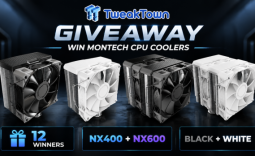 Giveaway: 12 Winners Will Score MONTECH NX400 and NX600 CPU Coolers
 GIGABYTE's next-gen 4K 32-inch AORUS ELITE gaming monitor with Tandem WOLED panel delivers 1,500 nits of HDR peak brightness
 Sony reminds players they don't actually own digital PlayStation games amid disc-production backlash
 GTA 6 'build' that's 113GB in size is currently circulating online, and it's fake
 Windows 11 update has broken some PC games, and RGB lighting could be the issue
 Assassin's Creed Odyssey becomes the highest-rated entry in the franchise, thanks to Nolan's 'The Odyssey'
 PlayStation gamers' planned week-long 'PS Blackout' begins today
 Nintendo Switch 2 will rise to £419.99 in the UK, starting September 1
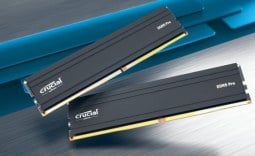 One retailer says 91% of attempts to buy DDR5 memory are coming from bots
 Jensen Huang signed NVIDIA RTX Pro 6000 graphics card sells for $57,450 at auction
 GTA 6 leaks have reportedly led to a morale drop at Rockstar, with Netflix frustrated as well
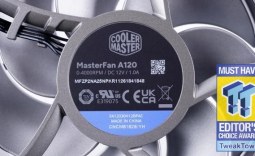 Cooler Master MasterFan A120 Fan Review
 GIGABYTE MO27Q2A Gaming Monitor Review: 1440p, 280Hz, and QD-OLED is a winning combination
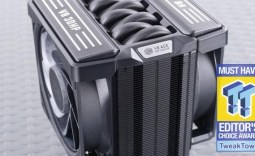 Cooler Master V8 ACE 3DHP BLACK CPU Cooler Review
 ASUS ROG Strix XG129C Review: A $199 Gaming Monitor You Don't Play Games On
 Cooler Master HAF II 500 Mid-Tower Chassis Review
 Corsair HS35 v3 Wireless Gaming Headset Review - An Affordable Winner
 D-Link F518 5G Wi‑Fi 6 AX1800 Mobile Hotspot Review: All-Day Mobile Hotspot
 Bose Lifestyle Ultra Speaker Review - Impressively Detailed Room-Filling Sound
 MSI Z890 Gaming Plus WIFI6E Review - Z890 for under $200
 Mortal Kombat (1995) 4K Ultra HD Blu-ray Review
 Using Multiple Monitors? Change these Windows settings for a Better Experience
 Windows Sandbox is The Windows Security Feature Most People Never Use
 I ditched the Windows 11 context menu for this open-source tool, and here's why
 Windows 11 may be encrypting your drive already, and I checked where my recovery key went
 GIGABYTE's 40 Days of INFINITY celebrates 40 Years of Innovation with stunning GeForce RTX graphics cards and rewards
 I swapped File Explorer for this free file manager and finally got the layout I wanted
 How to tell if someone has been using your Windows PC without your permission
 6 Task Manager tips for troubleshooting Windows performance problems
 ASUS ROG's 20th Anniversary Line-up of Premium PC Gaming Gear has Arrived - Here's Everything You Need to Know
 Six File Explorer tips every Windows user should know