







Science, Space, & Robotics - Page 152
Explore the latest Science, Space, Health, and Robotics news from TweakTown. Coverage includes space launches, medical tech, discoveries, and rockets. - Page 152
Stay Updated
Follow TweakTown for breaking tech news, reviews, and daily updates.


As an Amazon Associate, we earn from qualifying purchases. TweakTown may also earn commissions from other affiliate partners at no extra cost to you.
UFO sighting in Sydney, China Long March 3B rocket launch blamed
New South Wales residents down in Australia got quite the sight overnight, with many Australians thinking they're looking at a UFO scooting across the night sky.

It looks very similar to other spirals and objects that look similar in the sky, that normally get blamed on rockets -- with this one being no different. China reportedly launched its new Long March 3B rocket at around 6:20PM local time in Sydney last night, and then the "rocket" was seen over Sydney "about 30 minutes later" according to local news outlets.
China's new Long March 3B rocket reportedly crashed down into the Indian Ocean, southwest of Sri Lanka and north of the Maldives. China's Manned Space Engineering Office reports that most of the 22-tonne spacecraft burned up during re-entry, and is what the media (at least in Australia) is blaming for what thousands of Aussies thought was probably a UFO, portal or something similar opening up in front of their eyes.
Continue reading: UFO sighting in Sydney, China Long March 3B rocket launch blamed (full post)
Biggest meteor to hit Earth cost millions in damages, 1200+ injured
Researchers currently have two ways of determining the size of a meteor hitting Earth; observing the impact and measuring the size of the crater the meteor leaves behind.

The largest crater that has ever been discovered on Earth is known as the Vredefort Crater, located in South Africa. The meteor that caused the crater, which stretches some 190 miles in diameter, is estimated to be around 6 miles wide. The largest meteor to have entered Earth's atmosphere is called the Chelyabinsk meteor, and it exploded over the Russian city of Chelyabinsk that was home to more than one million people in 2013.
The Chelyabinsk asteroid was just 50 feet in diameter and exploded with a force the same as 440,000 tons of TNT exploding. As meteors enter the atmosphere, they begin to heat up, catch fire and break apart. As Chelyabinsk approached the surface of Earth, it exploded just 18 miles above the surface, damaging more than 7,200 buildings and injuring more than 1,200 people. The government estimated that the repair costs to be around $33 million.
Continue reading: Biggest meteor to hit Earth cost millions in damages, 1200+ injured (full post)
'Exquisitely preserved' cells found of 125 million-year-old dinosaur
Researchers have claimed that they have identified and isolated cells from a dinosaur that lived 125 million years ago.

The research comes from the Institute of Vertebrate Paleontology and Paleoanthropology (IVPP) of the Chinese Academy of Sciences and from the Shandong Tianyu Museum of Nature. Researchers have said that they have found organic molecules and fossilized chromatin in the cartilage of Caudipteryx, which was a dinosaur that is believed to be around the size of a peacock. According to the researchers, two types of cells were found; healthy cells and cells that were decaying when the dinosaur was dying.
Additionally, the researchers noted that cells were most likely "exquisitely preserved" by silicon dioxide that was in volcanic ash that covered the dinosaur's body. LI Zhiheng, Associate Professor at IVPP and co-author on the study, explained, "Geological data has accumulated over the years and shown that fossil preservation in the Jehol Biota was exceptional due to fine volcanic ashes that entombed the carcasses and preserved them down to the cellular level."
Continue reading: 'Exquisitely preserved' cells found of 125 million-year-old dinosaur (full post)
NASA releases jaw-dropping image snapped by the Hubble Space Telescope
NASA has released a new image onto the Hubble Twitter account that showcases a spectacular cosmic view of our Milky Way galaxy.

NASA has taken to its official website to explain the absolutely incredible image that NASA's Hubble Space Telescope captured. The image above is of a globular cluster officially named ESO 520-21, but also goes by the name Palomar 6. A globular cluster is a densely packed collection of ancient stars, and as for Palomar 6, this globular cluster is located close to the center of the Milky Way.
Researchers used Hubble's Wide Field Camera 3 and Advanced Camera for Survey to take this phenomenal image. Looking at the image, you can see that some of the stars have a red hue bleeding out from the X shape that is being made. NASA explains as light travels back to Earth, interstellar absorption influences the wavelengths of light, which can change the colors of astronomical objects, making it difficult for researchers to determine the properties of those objects accurately. Astronomers have dubbed this process "reddening".
Continue reading: NASA releases jaw-dropping image snapped by the Hubble Space Telescope (full post)
Moon origin revealed in new study, was born out of two violent impacts
Probably the most widely believed theory for how the Moon came to be is a singular collision occurring billions of years ago with a very young Earth.

However, a new study that has been recently published in The Planetary Science Journal has suggested a new theory that builds upon the main one. Erik Asphaug, a professor at the University of Arizona's Lunar and Planetary Laboratory, and fellow colleagues, have conducted computer simulations involving a celestial body the size of Mars (named Theia) colliding with a proto-Earth around 4.4 billion years ago.
Rolling back the clock through these simulations, researchers found that a new theory was much better suited to the end result of what we observe today. The researchers suggest that Theia collided with Earth at a much faster speed than previously anticipated, which caused a "hit and run" incident that teed up Theia and Earth to collide again sometime 100,000 to 1 million years after the initial collision.
Continue reading: Moon origin revealed in new study, was born out of two violent impacts (full post)
Hurricane Sam hits peak intensity, may get 'very close' to US soon
Hurricane Sam has been officially categorized as a Category 4 storm that has winds topping 150 mph. Will it reach land?

Storms are highly unpredictable and can change direction and speed at any given moment. However, that doesn't mean approximate forecasts can't be done. A meteorologist from AccuWeather, Bernie Rayno, said that a due west path for Hurricane Sam isn't very like, "But if that jet stream dip sets up farther west or meanders westward, then there is room for Sam to get very close to the U.S. next weekend."
Due to how large Sam is, meteorologists are still dropping warnings for a possible rise in ocean levels along the Atlantic coast from central Florida to Maine, as well as dangerous surf and rip currents. Officials expect that the aforementioned effects of Sam being east of the U.S. will begin along the southern U.S. coast this week as the storm continues on its path north over the weekend, where those same effects will occur in surrounding locations.
Continue reading: Hurricane Sam hits peak intensity, may get 'very close' to US soon (full post)
Bill Gates burns Elon Musk and Jeff Bezos over their space programs
The space industry is just starting to heat up with billionaires such as Richard Branson and Jeff Bezos bringing a lot of attention to a new form of tourism - space tourism.

While the overall impacts of privatizing space have positives for everyone on a long enough timeline, some individuals aren't too thrilled about seeing humans start to explore the last frontier and leave Earth behind. During an interview with CBS' James Corden, Microsoft founder and billionaire Bill Gates were asked his thoughts on the emerging industry.
Gates said that he has become obsessed with diseases such as Malaria and HIV over space. "I don't know - I've become obsessed with things like Malaria and HIV and getting rid of those diseases, and I probably bore people at cocktail parties talking about diseases. Space? We have a lot to do here on Earth." James Corden responded quickly after Gates finished and said that was the "classiest burn" he'd ever heard. If you are interested in reading more about this story, check out this link here.
Continue reading: Bill Gates burns Elon Musk and Jeff Bezos over their space programs (full post)
Global warming found to be slowing down in new study
A team of researchers has found a new mechanism that can impact the rate of human-induced global warming.

The new study was published in the journal Nature Climate Change by a team of researchers from Princeton University and the University of Miami (UM) Rosenstiel School of Marine and Atmospheric Science. The new paper explores the effects of global warming and the intensification of the global hydrological cycle as a result of the warming.
As the planet warms, ocean heat uptake is increased, which has been found to also influence the salt levels in the water. Global warming results in salinity levels in the ocean being increased in salty regions, which causes denser seawater and an increase in ocean heat uptake. An increase in ocean heat uptake reduces the temperature of surfaces and influences the rate of global warming.
Continue reading: Global warming found to be slowing down in new study (full post)
Astronaut warns of 'serious issue' with ISS, lifespan may be cut
It was only a few months ago that reports from astronauts aboard the International Space Station raised concerns about the floating laboratory's longevity or lifespan.

The reports from a few months ago revealed that the International Space Station is cracking, or at least there are new cracks being found. Now, former NASA astronaut Bill Shepherd who has been aboard the ISS, has warned Congressional representatives that the cracks on the floating laboratory are a "serious issue" and that there are "probably other cracks we haven't found yet".
Additionally, the former astronaut also said that while the cracks are small at the moment, "quite small - they look like scratches on the surface of the aluminum plate, there are probably something like a half dozen of them." Shepard explained that the astronauts or the ISS itself aren't in "any immediate danger," but the cracks could certainly reduce NASA's projected lifespan of the ISS if they continue to spread. Shepard recommended, "before we can clear the station for another so many years of operational use, we should better understand this."
Continue reading: Astronaut warns of 'serious issue' with ISS, lifespan may be cut (full post)
So they've just 3D-printed and cooked chicken with lasers
The world of the future is kind of unfathomable at this point when it comes to normalizing 3D-printed food, but the Creative Machines Lab at Columbia Engineering have done it -- 3D-printed chicken with lasers. Check it out:

The video explains it all -- they've used real chicken and grinded it up to be used by a 3D printer in a very, very intricate way. This 3D-printed chicken can be put in any manner of patterns, and then with a combination of 3 lasers it is cooked with what is promised with incredible results.
3D-printed chicken cooked with lasers is twice as moist as conventionally cooked chicken, as well as shrinking half as much as regularly-cooked chicken while retaining its flavors. You can also use the various lasers to do different things to the chicken such as higher surface-level browning, broiling, and more. The laser was even capable of browning the chicken through the packaging... scary (lasers through plastic into chicken) but impressive.
Continue reading: So they've just 3D-printed and cooked chicken with lasers (full post)
'Absolutely life-changing' view of Earth captured on video
Earth is a beautiful planet, but unfortunately, most people won't be able to see it the same way Hayley Arceneaux has seen it.

The video footage was captured by Inspiration4 crew member and medical officer Hayley Arceneaux when she was aboard SpaceX's Dragon capsule that took her and three other crew members to space for three days. The video has been posted to Hayley's personal Twitter account with the following as the caption; "The 360-degree view of our beautiful planet from the cupola was absolutely life-changing".
The view that Hayley and the other crew members had for three days was out of Dragon's large glass dome or cupola. SpaceX replaced Dragon's docking module commonly used by astronauts arriving/leaving the International Space Station. Since there was no need for a docking module as the Inspiration4 mission didn't include any docking, the space transportation company replaced the docking module with a cupola that allowed the Inspiration4 crew to experience the Overview Effect.
Continue reading: 'Absolutely life-changing' view of Earth captured on video (full post)
Inspiration4 crew had toilet 'challenges', Elon Musk will add upgrades
Reports have indicated that the Inspiration4 crew faced some "challenges" when it came to using the Dragon toilet.

The Inspiration4 mission with SpaceX raised $200 million for St. Jude Children's Research Hospital. $50 million was thrown in by SpaceX CEO Elon Musk after the crew successfully landed back on Earth off the coast of Florida. While the mission was an overall success, it didn't come without its challenges. According to Musk, the crew experienced some "challenges" with Dragon's toilet system.
Musk tweeted that Dragon will be getting upgraded bathroom facilities for future flights, "Definitely upgraded toilets :) We had some challenges with it this flight," said Musk. Back in July, mission sponsor and crew member Jared Issacman said to Insider that "It's not a ton of privacy. But you do have this kind of privacy curtain that cuts across the top of the spacecraft, so you can kind of separate yourself from everyone else." If you are interested in reading more about this story, check out this link here.
Continue reading: Inspiration4 crew had toilet 'challenges', Elon Musk will add upgrades (full post)
Video: Inspiration4 crew cry seeing Earth for 1st time out glass dome
A new video has captured the moment the Inspiration4 crew first saw the Earth through SpaceX's Dragon cupola.

The video has been posted on the Inspiration4 YouTube channel and shows crew members floating around the Dragon capsule. Hayley Arceneaux, the crew's medical officer, is seen center frame smiling at the camera, and in the background, the very famous soundtrack from Stanley Kubrick's 2001: A Space Odyssey is playing.
Hayley is then seen looking out the see-through dome or cupola that SpaceX equipped the Dragon for this specific flight. The video shows Hayley's reaction to the view out the cupola and other crew members vocalizing their amazement. The very last few frames really show how genuine this moment is as Hayley's reaction goes from excited and smiling to blank-faced awe with tears welling up in her eyes. A truly incredible moment to capture on video.
Continue reading: Video: Inspiration4 crew cry seeing Earth for 1st time out glass dome (full post)
21,000-year-old disappearing 'ghost' footprints change human history
Reports are indicating that a newly released study has added to our timeline of human evolution through carbon dating footprints.

The study has been published in the journal Science, and co-author David Bustos explained that he first heard about "ghost tracks" when he began work as a wildlife scientist at the White Sands National Park in New Mexico back in 2005. The "ghost tracks" got their name from how the footprints would appear on blank Earth if the ground were wet enough during certain times of the year. When the ground became drier, the tracks would disappear.
Inspection of these tracks confirmed in 2016 that humans made them, and according to research published in Science on Thursday, the tracks have been dated and are now some of the earliest known footprints of humans anywhere throughout the Americas. The tracks date back to 21,000 to 23,000 years ago and prove that during that time period, humans were present in the area, which is several thousand years earlier than scientists previously estimated.
Continue reading: 21,000-year-old disappearing 'ghost' footprints change human history (full post)
Officials warn hurricane more powerful than Ida may hit this weekend
Officials have warned that Tropical Storm Sam formed on Thursday in the Atlantic Ocean and has now become the 18th named system of the season.

According to reports and official warnings from the National Hurricane Center, Tropical Storm Sam is strengthening 1,560 miles east-southeast of the northern Leeward Islands and is currently moving west at around 15 mph. Officials are warning that Tropical Storm Sam could gain enough strength over the weekend to have wind speed greater than 110 mph, categorizing it as a major hurricane.
The National Hurricane Center said, "Sam is rapidly intensifying, and maximum sustained winds have increased." Adding, "Rapid intensification is forecast to continue through early Saturday. Sam is likely to become a hurricane very soon and then could be a major hurricane by Friday night or early Saturday." At the moment, it's unclear whether Sam will reach landfall, but officials have said that residents located in Bermuda, the Bahamas, and the US East Coast to remain alert about the situation.
Continue reading: Officials warn hurricane more powerful than Ida may hit this weekend (full post)
Astronomers find two hidden galaxies at the edge of space and time
A team of researchers has accidentally found two galaxies that were hidden from view sitting at the edge of space and time.

Yoshinobu Fudamoto, an astronomer at the Research Institute for Science and Engineering at Waseda University, Japan, and the National Astronomical Observatory of Japan (NAOJ), led the team that used the Atacama Large Millimeter/submillimeter Array (ALMA) located in Chile to make the discovery. ALMA is an astronomical interferometer of 66 radio telescopes and is capable of seeing through dusty environments and viewing incredibly large distances.
The team stumbled across the two new galaxies when they were observing two target galaxies named REBELS-12 and REBELS-29. The team noticed that thousands of light-years away from the target galaxies, there were bright emissions. This discovery led the team to pursue with follow-up observations that led to the discovery of two galaxies are named REBELS-12-2 and REBELS-29-2. These galaxies were hidden behind a cloud of cosmic dust and aren't visible in UV and optical light.
Continue reading: Astronomers find two hidden galaxies at the edge of space and time (full post)
Giant rivers of lava caught on video oozing down street after eruption
On Monday, a volcano erupted on a Spanish island, and now residents are filming the giant rivers of oozing lava flowing down streets.

The Cumbre Vieja ridge is where the eruption occurred, and the 5,500 residents in the nearby area were lucky enough to put some distance between them and the volcano, thanks to early warnings from scientists. The first eruption was heard on Sunday afternoon, and onlookers saw the Cumbre Vieja ridge spewing bright red magma into the air.
According to the Canary Islands Volcanology Institute, the lava measured in at more than 1,800 F and was moving 2,300 feet per hour, headed towards the Atlantic Ocean. As previously mentioned, prompt warnings from officials caused all residents in the area to evacuate, avoiding any casualties. However, officials are saying the lava flow could last for weeks or even months.
Continue reading: Giant rivers of lava caught on video oozing down street after eruption (full post)
Hubble stuns researchers with discovery of 6 mysterious dead galaxies
Researchers have used NASA's Hubble Space Telescope to spy on six galaxies that appear to have died early in the universe's development.

NASA has announced the news with a press release via its website. According to the post, when the universe was in its early stages of development when it was only around 3 billion years old, it went through the most significant period of star birthing in its history. However, not all galaxies were as lucky as the Milky Way, as some appear to have run out of key components resulting in deaths.
Hubble, in conjunction with Atacama Large Millimeter/submillimeter Array (ALMA) located in northern Chile, researchers were able to identify six galaxies that ran out of cold hydrogen gas that is required to create a star. As a result, all six of these galaxies are "dead". So, what caused these galaxies to die? At the moment, the answer remains a puzzle, but Kate Whitaker, assistant professor of astronomy at the University of Massachusetts, Amherst, and lead author on the paper, has proposed a few different theories that could have interrupted development.
Continue reading: Hubble stuns researchers with discovery of 6 mysterious dead galaxies (full post)
Researchers discovered a 'unprecedented' giant spherical void in space
Using new techniques to observe the constellations of Taurus and Perseus, astronomers have been able to discover something "unprecedented".

A new study published in The Astrophysical Journal has detailed the discovery of a spherical-shaped void in space between the two star-birthing constellations. When viewing the constellations in 2D images from Earth, astronomers have to consider the illusion of forced perspective. But now, due to observational advancements, astronomers have achieved a breakthrough in terms of analyzing molecular clouds in the interstellar medium.
Researchers, for the first time, are able "to analyze the 3D spatial structure and thicknesses of famous nearby star-forming regions." Allowing an "unprecedented insight into the origins and fates of molecular clouds in the interstellar medium", per this study. From the new mapping strategies, researchers have confirmed what was long theorized and now what is named as the Per-Tau shell.
Continue reading: Researchers discovered a 'unprecedented' giant spherical void in space (full post)
Officials drop red alert warning for coming US volcano explosions
Officials have observed that the frequency and the intensity of the ash coming from the Semisopochnoi Island volcano.

According to the Alaska Volcano Observatory (AVO) and satellite imagery of the volcanic activity, the ash cloud that the volcano has emitted stretches approximately 15,000 feet above sea level and around 60 miles southeast. The AVO has raised the volcano alert level to "Red/Warning," as the observed increase in sulfur dioxide gas emissions is an indicator of an increase in eruptive activity.
Semisopochnoi is a part of the Aleutian Islands, which are a chain of 14 large volcanic islands and 55 smaller islands. Alaska is the owner of most of the islands, with some of them also belonging to the Russian federal subject of Kamchatka Krai. Natureworldnews reports that the activity of volcanoes such as Semisopochnoi is usually brought on by tectonic plate activity. For more information on this story, check out this link here.
Continue reading: Officials drop red alert warning for coming US volcano explosions (full post)
 Twitch opts streamers into gen AI training by default, faces harsh backlash
 Sean Murray still plays the 2016 launch version of No Man's Sky
 China's YMTC has climbed to third place in global NAND flash shipments
 $100 GTA 6 version makes up 89% of pre-orders, analysts estimate
 HWiNFO's latest update quietly confirms Intel is working on Razor Lake-AX
 Nintendo puts Switch 2 price increase warnings on store demo kiosks ahead of September 1 hike
 GIGABYTE launches two new B450 motherboards as demand for AM4 stays high in 2026
 Microsoft finally makes up its mind and unifies Copilot features into one big app
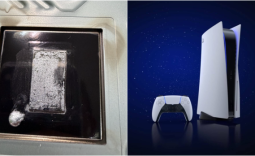 PS5 suffers from severe overheating after liquid metal eats into the heatsink
 AMD Ryzen 7 7800X3D CPU burns and swells even after using AMD's updated BIOS
 D-Link F518 5G Wi‑Fi 6 AX1800 Mobile Hotspot Review: All-Day Mobile Hotspot
 Bose Lifestyle Ultra Speaker Review - Impressively Detailed Room-Filling Sound
 MSI Z890 Gaming Plus WIFI6E Review - Z890 for under $200
 Mortal Kombat (1995) 4K Ultra HD Blu-ray Review
 CPS PCCOOLER YS1200 ATX 3.1 80 PLUS Gold PSU Review
 ASRock X870E Taichi White Review: a premium AM5 motherboard with 10G LAN and WiFi 7
 Asetek Initium Pedal Modular Upgrades Review
 Thinkware U3000 Pro Review - Smart Dashcam with Wi-Fi quirks
 Montech TG3 Mid-Tower Chassis Review
 ASUS ROG Strix X870E-A Gaming WiFI7 Neo Review - A New Enticing Option
 I ditched the Windows 11 context menu for this open-source tool, and here's why
 Windows 11 may be encrypting your drive already, and I checked where my recovery key went
 GIGABYTE's 40 Days of INFINITY celebrates 40 Years of Innovation with stunning GeForce RTX graphics cards and rewards
 I swapped File Explorer for this free file manager and finally got the layout I wanted
 How to tell if someone has been using your Windows PC without your permission
 6 Task Manager tips for troubleshooting Windows performance problems
 ASUS ROG's 20th Anniversary Line-up of Premium PC Gaming Gear has Arrived - Here's Everything You Need to Know
 Six File Explorer tips every Windows user should know
 I switched my PC to encrypted DNS in Windows 11, and browsing felt more private
 Printer Not Working in Windows? How to fix detection, print queues and drivers