







Science, Space, & Robotics - Page 155
Explore the latest Science, Space, Health, and Robotics news from TweakTown. Coverage includes space launches, medical tech, discoveries, and rockets. - Page 155
Stay Updated
Follow TweakTown for breaking tech news, reviews, and daily updates.


As an Amazon Associate, we earn from qualifying purchases. TweakTown may also earn commissions from other affiliate partners at no extra cost to you.
SpaceX's all-civilian crew will have this incredible view when pooping
SpaceX just took four ordinary civilians to space via its Falcon 9 rocket and Dragon capsule, and the view the passengers will have will be incredible.

The launch for the mission titled Inspiration4 happened only a matter of hours ago, and we saw the four passengers Jared Isaacman, Hayley Arceneaux, Chris Sembroski, and Dr. Sian Proctor, all of which aren't trained astronauts. The Inspiration4 launch marked a milestone in the space tourism industry as the first successful launch of an all-civilian mission into space.
SpaceX has outfitted the Dragon capsule with a glass dome on its nose, replacing the docking port that is usually there when astronauts are transported to the International Space Station. The glass dome is for viewing purposes and is called a cupola. Passengers aboard the Dragon capsule will be able to stick their heads inside the dome for a full 360-degree viewing experience.
Continue reading: SpaceX's all-civilian crew will have this incredible view when pooping (full post)
Watch SpaceX's Inspiration4 launch here, launch to happen in 30 mins
SpaceX will be making history in less than an hour as the Inspiration4 crew awaits lift off from the Kennedy Space Center.

Today is a historic moment in the space tourism industry as Elon Musk's SpaceX will be taking the first all-civilian mission into lower-Earth orbit. The Inspiration4 crew consists of Jared Isaacman, Sian Proctor, Hayley Arceneaux, and Chris Sembroski, all of which are people just like you and me. The crew will stay in orbit for a span three days.
SpaceX will be using the Falcon 9 rocket to take all of the civlians into Earth's orbit, and the civilians will be used stations in a modified Dragon spacecraft. SpaceX states in the YouTube video description that after spending three days in orbit the Dragon spacecraft and the Inspiration4 crew will splash down at one of several locations off the Florida coast. Check out the above video to tune into the launch!
Continue reading: Watch SpaceX's Inspiration4 launch here, launch to happen in 30 mins (full post)
NASA award millions to Blue Origin, SpaceX for new moon lander concept
NASA has just dished out some new awards to companies for new lunar lander concepts as apart of its Artemis program that will take humans back to the moon.

The space agency has awarded the following five companies contracts for the new concepts of a lunar lander; SpaceX, Blue Origin, Dynetics, Lockheed Martin and Northrop Grumman. NASA awarded the contracts to the aforementioned companies under the NextSTEP-2 (Next Space Technologies for Exploration Partnerships) Appendix N: Sustainable Human Landing System Studies and Risk Reduction.
The objective of the contracts is "to engage with potential commercial partners for concept studies, sustaining HLS concept of operations (ground and flight) development, and risk reduction activities." Under these contracts that NASA has handed out companies will create designs of lunar landers and carry out tests to ensure consistent performance, safety, versatility, and any other requirements that are outlined in the contract.
Continue reading: NASA award millions to Blue Origin, SpaceX for new moon lander concept (full post)
Netflix will stream SpaceX's game-changing launch happening this week
Tune in for the countdown to SpaceX's milestone launch that will be taking place in just a matter of hours. Join Netflix's virtual party!

SpaceX will be launching its Inspiration4 mission, which will be a world's first as four civilians will be sent into orbit for three days - the first all-civilian mission into Earth's orbit. The launch will be from Kennedy Space Center, and Netflix will be taking viewers of the countdown for an all-access behind the scenes of the historic mission.
The Inspiration4 mission will take Jared Isaacman, Sian Proctor, Hayley Arceneaux, and Chris Sembroski on the three-day adventure aboard a SpaceX Crew Dragon vehicle scheduled for launch no earlier than 8 p.m. EDT (0020 GMT Sept. 16). According to Netflix's YouTube page, "Countdown: Inspiration4 Mission to Space" will be a 90-minute live show that will start at 8 p.m. EDT (0020 GMT Sept. 16). If you are interested in reading more about this story, check out this link here.
Continue reading: Netflix will stream SpaceX's game-changing launch happening this week (full post)
Chinese astronauts just took phenomenal images of Earth
Astronauts aboard the new Chinese space station module have snapped some absolutely gorgeous images of Earth.

China launched the Tianhe space station module on April 29, 2021, and its the first module of the Tiangong space station. Aboard the Tianhe module is three astronauts that arrived on June 17, and one of the astronauts named Tang Hongbo has taken some incredible images of Earth from the module that is currently located in lower-Earth orbit.
The images released by China's space agency showcase thousands of lights on the North African continent, as well as a portion of South Africa, and the Peruvian cost. As for the newest batch of images that were released on September 8, the images are of; Lake Urmia in Iran, China's Kizilsu Kyrgyz Autonomous Prefecture, Lake Van in Turkey, the Armenian highlands, and South Africa. All of the images were taken by Hongbo, but the equipment that was used to capture the images wasn't specified.
Continue reading: Chinese astronauts just took phenomenal images of Earth (full post)
Astronauts may use their own blood to build concrete buildings on Mars
Humans are now looking towards Mars as our next planet to colonize, but it isn't just a matter of getting in some rockets and touching down. There are significant challenges ahead of us.

It's far expensive, not to mention time-consuming, to transport all of the items needed for a sustainable human outpost on Mars. As a solution, NASA officials suggest that researchers need to devise ways astronauts will be able to construct a viable outpost on Mars using the environment around them. A new study has explored how astronauts could piece together a building and what material the structure could be made out of.
The researchers detailed in the study that bricks of concrete could be made using Martian dirt combined with a protein that is found in human blood and a compound called urea, which can be sourced from astronaut sweat, tears, or urine.
Continue reading: Astronauts may use their own blood to build concrete buildings on Mars (full post)
This 'dog-bone' shaped asteroid challenges our solar system knowledge
Astronomers have detailed that an asteroid that is "dog-boned" shaped is challenging human understanding of our solar system.

Astronomers recently used the European Space Agency's Very Large Telescope to take what is now considered as the best images of the dog-boned shaped asteroid named Kleopatra. Franck Marchis, a senior planetary astronomer at the SETI Institute in California and the lead author of a new study on Kleopatra, has said that asteroids aren't just boring, useless pieces of rock floating around in space but are actually "complex mini-geological worlds."
Marchis goes on to say that "Kleopatra and other weird asteroids are natural laboratories to challenge our knowledge of the solar system and make us think outside the box." The strange-looking asteroid was first discovered back in 1880, but its weird shape was only discovered back in 2011 with the use of ground-based telescopes. Researchers estimate that Kleopatra measures is around 160 miles from one end to the other, and weighs a ridiculous 3,300 trillion tons.
Continue reading: This 'dog-bone' shaped asteroid challenges our solar system knowledge (full post)
Apple co-founder joins private space industry with mysterious project
One of the co-founders of Apple, Steve Wozniak, has announced that he will be joining the private space industry with a new company.

The Apple co-founder is widely recognized as one of the pioneers of the now-massive personal computing industry and now will be joining in on the booming private space industry with a new company named Privateer Space. Wozniak made the announcement on his personal Twitter account and linked a video that really doesn't reveal much about the company at all.
The only details we have on Privateer is that the company will be "unlike the others", which is seemingly in reference to the other space companies that are making headlines these days; SpaceX, Blue Origin, and Virgin Galactic. RT has speculated that Wozniak's new company will specialize in cleaning up space trash left behind by other companies' launches. All that is known for sure is that more details will be announced about Privateer Space at the AMOS Tech 2021 conference that'll get underway next Tuesday.
Continue reading: Apple co-founder joins private space industry with mysterious project (full post)
New dinosaur species found, so large it would've eaten T-Rex for lunch
Paleontologists have found a new species of dinosaur that once ruled over the Tyrannosaurus Rex as the apex predator.

Tyrannosaurus Rex is widely believed to be the most famous and dangerous dinosaur, and this idea was largely popularized with iconic movie franchises such as Jurassic Park. While the T-Rex certainly was an apex predator during the peak of species' life, it wasn't always at the very top of the food chain. Paleontologists have found a new species of carnivore that was much larger than T-Rex and would have eaten it for lunch.
Introducing, Ulughbegasaurus, a large theropod dinosaur that walked the plains of North America and Asia around 90 million years ago. Fossil evidence indicates that Ulughbegasaurus was around 26 feet in length and just over a tonne in weight. During the time of its rein, a T-Rex would have only been 440 pounds, and according to paleontologist professor Darla Zelenitsky, the sheer existence of the Ulughbegasaurus would have suppressed the growth of the T-Rex.
Continue reading: New dinosaur species found, so large it would've eaten T-Rex for lunch (full post)
NASA updates the odds of a dangerous asteroid colliding with Earth
Last month NASA updated its prediction for one of the most hazardous objects in our solar system colliding with Earth - asteroid Bennu.

The updated forecast, measured to extreme precision, detailed the chances of asteroid Bennu colliding with Earth are 1 in 1,750, which was slightly higher than previous estimations. For those that don't know, Bennu was originally discovered back in 1999, and is an asteroid estimated to be around the size of a regular building.
Updated predictions stated that there is a higher chance that Bennu will collide with Earth, but not a certainty. As previously stated, the chances of Bennu actually colliding with Earth are 1 in 1,750, and those odds will occur late in the twenty-second century. To put the odds of Bennu impacting Earth into perspective, the chances are the same as:
Continue reading: NASA updates the odds of a dangerous asteroid colliding with Earth (full post)
SEC head tells crypto projects & platforms to 'come in and talk to us'
Regulators are asking cryptocurrency platforms and projects to register with the United States Securities and Exchange Commission (SEC).

The chair of the SEC, Gary Gensler, has said in a prepared statement at the Senate Committee on Banking, Housing and Urban Affairs that the SEC was working with the Commodities Futures Trading Commission to develop investor protection for cryptocurrency markets. On top of that, Gensler said, "We just don't have enough investor protection in crypto finance, issuance, trading, or lending."
Adding, "Frankly, at this time, it's more like the Wild West or the old world of 'buyer beware' that existed before the securities laws were enacted. This asset class is rife with fraud, scams, and abuse in certain applications. I've suggested that [crypto] platforms and projects come in and talk to us Many platforms have dozens or hundreds of tokens on them. While each token's legal status depends on its own facts and circumstances, the probability is quite remote that, with 50, 100, or 1,000 tokens, any given platform has zero securities."
Continue reading: SEC head tells crypto projects & platforms to 'come in and talk to us' (full post)
Hubble snaps a jaw-dropping image of a cluster of candy-colored stars
The Hubble Space Telescope was launched into orbit 31 years ago, and despite its outdated technology, the space telescope can truly capture marvelous images of the cosmos.

An example of this is an image recently published by the European Space Agency that showcases a globular cluster of stars located around 20,000 light-years from Earth called NGC 6717. A globular cluster is a spherical collection of stars that are all tightly bound together by gravity and can be defined by the center of the cluster featuring a denser population of stars when compared to its edges.
The ESA explains that while the image showcases an amazing display of candy-colored stars, some of the stars seen in the image aren't actually a part of the NGC 6717 as they are much closer to Earth than they appear. These stars can be identified by the X running through the center of the star. If you are interested in reading more about this story, check out this link here.
Continue reading: Hubble snaps a jaw-dropping image of a cluster of candy-colored stars (full post)
Here's why gas stations will be floating around in Earth's orbit
The space industry is just starting to take its baby steps, and companies are already talking about gas stations being present in lower-Earth orbit.

The commercialization of lower-Earth orbit is taking place right now, but what we are seeing now is only just the beginning as more companies launch more satellites into space as society shifts more towards being digitally orientated. At the moment, there are around 4,000 operations satellites in lower-Earth orbit, and it's expected that within the end of this decade, that number will have increased to 100,000.
As a way to service these satellites and not leave them up in orbit to accumulate in an ever-growing junk pile, solutions have been proposed that would allow satellites to extend mission lengths which would prolong operational time for companies. An example of this is Orbit Fab's "Gas Stations in Space" refueling technology, which has just received investment from Lockheed Martin.
Continue reading: Here's why gas stations will be floating around in Earth's orbit (full post)
Geneticists receive millions to resurrect a real-life woolly mammoth
A company has received millions in funding to bring back to life a woolly mammoth in an effort to reduce the effects of climate change in certain locations.

The new company named Colossal is co-founded by geneticist George Church and Ben Lamm, the former CEO of Hypergiant, and has recently announced that it has received a $15 million seed round that's led by former CEO of Legendary Entertainment (Jurassic World and The Dark Knight), Thomas Tull. Colossal plans on using CRISPR to alter the genes of existing Asian elephants to convert them into a woolly mammoth-Asian elephant hybrid.
According to Colossal's press release, the reason it's necessary to bring back the woolly Mammoth is to reduce the effects of climate change. Here's what Lamm said, "Our goal is not to just bring back the Mammoth, that's a feat in itself. It's for the successful re-wilding of mammoths. If you take that toolkit, you have all the tools are your disposal to prevent extinction or to bring back critically endangered species."
Continue reading: Geneticists receive millions to resurrect a real-life woolly mammoth (full post)
NASA locks in new 2021 launch window for James Webb Telescope
Back on September 8, NASA officially delayed the James Webb Space telescope launch and locked in a new launch window.

The James Webb Space telescope is teed up to replace the Hubble Space Telescope and become, as NASA describes in its latest press release about the topic, "the premier deep space observatory for the next decade." NASA, along with its partners in the Webb project, the European Space Agency (ESA), and the Canadian Space Agency (CSA), have delayed the launch of Webb so another practice launch of the Ariane 5 rocket can take place.
The Ariane 5 rocket, provided by the European Space Agency, will take Webb to its destination out in space and successfully completed a practice launch back in July, which was the first launch of the Ariane 5 rocket since August 2020. It seems that NASA and its partners aren't taking any chances when it comes to Webb's launch, and for good reason, as the space telescope has been development for thirty years, had billions spent on it, and has faced numerous delays.
Continue reading: NASA locks in new 2021 launch window for James Webb Telescope (full post)
NASA says new Mars sample reveal a 'potentially habitable environment'
NASA researchers are showing off their excitement for the upcoming prospects that will take place in Mars' Jezero Crater after Perseverance recovered its second core sample.

In the above video that has been released onto the NASA Jet Propulsion Laboratory YouTube channel, NASA scientists explain the significance of Perseverance's second core sample collection and what it means for future exploration on Mars.
NASA predicted that the Jezero Crater was once a large lake that may have contained microbial life, and now NASA has confirmed that prediction was correct as the core sample nicknamed Rochette contained salts that likely formed as water evaporated from the environment. NASA said, "The salt minerals in these first two rock cores may also have trapped tiny bubbles of ancient Martian water. If present, they could serve as microscopic time capsules, offering clues about the ancient climate and habitability of Mars."
Continue reading: NASA says new Mars sample reveal a 'potentially habitable environment' (full post)
Scientists just created the coldest temperature ever recorded
A team of physicists has managed to break the record for the coldest temperature ever recorded, and they did it with a quantum gas experiment.

For context, the coldest temperature that can be measured on the thermodynamics scale is -459.67 F, and for an object to reach that temperature, it needs to be stripped of all atomic motion and kinetic energy, which is currently impossible for scientists.
However, that doesn't mean researchers can't come close to absolute zero, as researchers aboard the International Space Station were able to record a temperature of 100 nanoKelvin or 100 millionths of a degree above absolute zero, per Interesting Engineering. The team, which now holds the record for the lowest temperature ever recorded, managed to reach a temperature of 38 picoKelvin or 38 trillionths of a degree above absolute zero.
Continue reading: Scientists just created the coldest temperature ever recorded (full post)
Researchers discover 'swimming head' sea monster, bizarre new species
Scientists have uncovered a fossil of what has now been deemed as a new sub-species of ancient sea life that was alive around half a billion years ago.

The new study was published in the Royal Society Open Science journal and details a large predatory arthropod recently dubbed Titanokorys. The new sub-species measured at 19.7 inches, which was considered very large when considering that most of the life in the ocean at that time was about the size of a pea. Researchers uncovered the fossils of Titanokorys from the Kootenay Nation Park located in the Canadian Rockies.
According to co-author on the paper and evolutionary biology Ph. D. student Joe Moysiuk from the University of Toronto, "Titanokorys is part of a subgroup of radiodonts, called hurdiids, characterized by an incredibly long head covered by a three-part carapace that took on myriad shapes. The head is so long relative to the body that these animals are really little more than swimming heads."
Continue reading: Researchers discover 'swimming head' sea monster, bizarre new species (full post)
Elon Musk confirms SpaceX will provide internet between Earth and Mars
Elon Musk's space transportation and communications company SpaceX will be deploying its Starlink satellites between Earth and Mars.

Musk was asked on Twitter if "Is Starlink going to be deployed between earth and Mars to improve communication for starship?", to which the billionaire replied, "yeah". So, what does this mean exactly? SpaceX will be deploying Starlink satellites between Earth and Mars to provide broadband internet connection that will improve communication capabilities with the world's tallest rocket, Starship.
Starship is poised to be the transportation that will one day take humans to Mars. However, before Starship transports humans to Mars, it will first be used to take humans back to the Moon. Musk has said that once all testing is complete for Starship, it's expected that it will be used to take humans back to the Moon "probably" before 2024. For more information on this story, check out this link here.
Continue reading: Elon Musk confirms SpaceX will provide internet between Earth and Mars (full post)
'Really clear signals' found of nearby exoplanet that is Earth-like
Researchers are constantly searching the cosmos for star systems that have exoplanets that are similar to Earth, and now they may have found one.

Using the advanced Transiting Exoplanet Survey Satellite (TESS), researchers were able to identify signals from the planetary system called L 98-59. The star system is located just 35 light-years from Earth, which is relatively close in terms of space travel. The star system has intrigued researchers as its believed to contain new worlds that have similar characteristics and compositions to Earth.
According to Diana Dragomir, an exoplanetologist at the University of New Mexico, "There was quite some detective work involved, and the right people were there at the right time." Adding, "But we were lucky, and we caught the signals, and they were really clear." The observation has marked a milestone for TESS.
Continue reading: 'Really clear signals' found of nearby exoplanet that is Earth-like (full post)
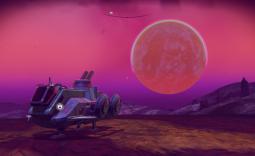 Sean Murray still plays the 2016 launch version of No Man's Sky
 China's YMTC has climbed to third place in global NAND flash shipments
 $100 GTA 6 version makes up 89% of pre-orders, analysts estimate
 HWiNFO's latest update quietly confirms Intel is working on Razor Lake-AX
 Nintendo puts Switch 2 price increase warnings on store demo kiosks ahead of September 1 hike
 GIGABYTE launches two new B450 motherboards as demand for AM4 stays high in 2026
 Microsoft finally makes up its mind and unifies Copilot features into one big app
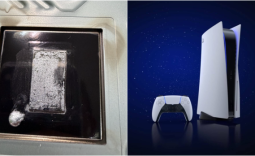 PS5 suffers from severe overheating after liquid metal eats into the heatsink
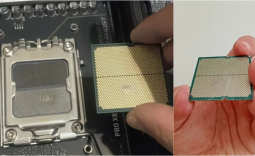 AMD Ryzen 7 7800X3D CPU burns and swells even after using AMD's updated BIOS
 New tool enables crossbar overclocking on RTX 5090, user reports show gains of up to 142MHz
 D-Link F518 5G Wi‑Fi 6 AX1800 Mobile Hotspot Review: All-Day Mobile Hotspot
 Bose Lifestyle Ultra Speaker Review - Impressively Detailed Room-Filling Sound
 MSI Z890 Gaming Plus WIFI6E Review - Z890 for under $200
 Mortal Kombat (1995) 4K Ultra HD Blu-ray Review
 CPS PCCOOLER YS1200 ATX 3.1 80 PLUS Gold PSU Review
 ASRock X870E Taichi White Review: a premium AM5 motherboard with 10G LAN and WiFi 7
 Asetek Initium Pedal Modular Upgrades Review
 Thinkware U3000 Pro Review - Smart Dashcam with Wi-Fi quirks
 Montech TG3 Mid-Tower Chassis Review
 ASUS ROG Strix X870E-A Gaming WiFI7 Neo Review - A New Enticing Option
 I ditched the Windows 11 context menu for this open-source tool, and here's why
 Windows 11 may be encrypting your drive already, and I checked where my recovery key went
 GIGABYTE's 40 Days of INFINITY celebrates 40 Years of Innovation with stunning GeForce RTX graphics cards and rewards
 I swapped File Explorer for this free file manager and finally got the layout I wanted
 How to tell if someone has been using your Windows PC without your permission
 6 Task Manager tips for troubleshooting Windows performance problems
 ASUS ROG's 20th Anniversary Line-up of Premium PC Gaming Gear has Arrived - Here's Everything You Need to Know
 Six File Explorer tips every Windows user should know
 I switched my PC to encrypted DNS in Windows 11, and browsing felt more private
 Printer Not Working in Windows? How to fix detection, print queues and drivers