







Science, Space, & Robotics - Page 151
Explore the latest Science, Space, Health, and Robotics news from TweakTown. Coverage includes space launches, medical tech, discoveries, and rockets. - Page 151
Stay Updated
Follow TweakTown for breaking tech news, reviews, and daily updates.


As an Amazon Associate, we earn from qualifying purchases. TweakTown may also earn commissions from other affiliate partners at no extra cost to you.
NASA confirms 'bright' fireball sighting in the night sky, video here
More than 100 people have seen a fireball streak across the night sky over North Carolina, and NASA has confirmed its existence.

According to NASA Meteor Watch, the fireball appeared to be "exceptionally bright" as it skimmed across the night coast at around 7:40 pm. The meteor became visible to the eye at around 48 miles above sea level, and according to the American Meteor Society, the fireball was seen by more than 100 people as it traveled through the sky at 32,000 mph.
The fireball didn't cause any damage, and throughout its descent, it disintegrated, "28 miles above Morehead City, after traveling 26 miles through Earth's upper atmosphere", per NASA. The video that is seen above was taken 15 miles south of Raleigh and was posted by the American Meteor Society. If you are interested in reading more about this story, check out this link here.
Continue reading: NASA confirms 'bright' fireball sighting in the night sky, video here (full post)
Blue Origin is suing NASA because the space agency didn't talk to them
New information has surfaced about Jeff Bezos' Blue Origin moving to sue NASA over the space agency's decision to award Elon Musk's SpaceX the $2.9 billion lunar lander contract.

Legal documents obtained by The Verge with the Freedom of Information Act reveal the basis of some of the arguments made by Blue Origin. While the legal documents are some hundred or so pages in total, some of the main points that can be derived are what Blue Origin considers to be the basis of its argument. Blue Origin argues that it was treated unfairly through the selection process for the $2.9 billion award and that NASA didn't give it an opportunity to renegotiate the price of its proposal.
During the time of the selection process, Blue Origin was aware that Congress wasn't giving NASA all of its requested funding, essentially forcing the space agency into a tighter budget. Blue Origin gave its $5.9 billion proposal to NASA for its Artemis program, to which NASA declined the offer and selected SpaceX's proposal that was nearly half the price. In response to NASA's decision to go with SpaceX, Blue Origin argues that it wasn't given the opportunity to renegotiate the price of its proposal like SpaceX was.
Continue reading: Blue Origin is suing NASA because the space agency didn't talk to them (full post)
NASA will be turning all of its Mars rovers into safe mode very soon
The rovers that are currently stationed on the Red Planet will be forced into "safe mode" in the coming days.

NASA and the China National Space Administration (CNSA) will have no choice but to turn its Martian vehicles into "safe mode" and temporarily put a pause on ongoing research. Why? Well, the Sun is going to be getting in the way, and I mean that quite literally. Earth and Mars are about to be directly opposite each other in their orbits, and right in the middle of both of the planets will be the Sun.
Researchers will lose line-of-sight with Mars from October 2 to October 16, and during this time, the space agencies won't be able to communicate with any of their vehicles stationed on the Red Planet, hence the decision to put all vehicles into "safe mode". It should be noted that the rovers won't be completely inactive, they just won't be communicating with Earth. Curiosity and Perseverance will continue observing and recording Mars' weather. The same goes for the InSight lander that is monitoring Marsquakes.
Continue reading: NASA will be turning all of its Mars rovers into safe mode very soon (full post)
Jeff Bezos replaced as world's richest, Musk to send him silver medal
SpaceX and Tesla CEO Elon Musk has recently replaced Jeff Bezos as the world's richest person, according to Forbes.

The SpaceX and Tesla CEO took the opportunity to throw a little bit of shade at the Amazon founder after becoming the third person in the world to reach a net worth of $200 billion. Musk wrote in an email to Forbes that he will be sending a giant statue of the digit "2" to Jeff Bezos along with a silver medal. Here's what Musk wrote, "I'm sending a giant statue of the digit '2' to Jeffrey B., along with a silver medal."
Musk is no stranger to throwing comments at Bezos. Even just yesterday, the SpaceX CEO said that Bezos couldn't "sue his way to orbit", which is in reference to the recent moves made by Bezos' space company Blue Origin to sue NASA over its decision to award SpaceX with a $2.9 billion contract. If you are interested in reading more about that story, check out this link here.
Continue reading: Jeff Bezos replaced as world's richest, Musk to send him silver medal (full post)
NASA's climate advisor warns 'unprecedented things' are happening
In an interview with NASA's climate advisor, Gavin Schmidt warns that researchers are seeing things that have never happened before.

ABC's lead meteorologist, Ginger Zee, spoke to NASA's Senior Climate Advisor, Gavin Schmidt, who said that what he and his team are seeing is "unprecedented in many millennia". Schmidt goes on to say that this is happening because of what humans are doing to the planet through the use of burning fossil fuels and the increases in greenhouse gases.
NASA lead climate advisor continues to explain that researchers have observed the global mean changes "decade by decade", and found that there is "unequivocal warming of the planet". The warming of the planet impacts weather events such as fires, storms, hurricanes, floods, etc. Schmidt says that global warming amplifies these events. An example of this is heat waves becoming more frequent and greater in magnitude. If you are interested in reading more about climate change, check out NASA's latest satellite launch here.
Continue reading: NASA's climate advisor warns 'unprecedented things' are happening (full post)
NASA will soon be taking a complete picture of Earth every 8 days
NASA's Landsat program has been taking images of Earth from space for more than 50 years, and now the space agency has sent out its brand new satellite - Landsat 9.

The achievements from the Landsat program cannot go understated as it holds the longest continuous space-based record of Earth in existence. The satellites have been taking square images around 112 miles by 115 miles of all of the landmass on Earth, and with the data, researchers can interpret and understand what is shaping our planet.
The data acquired from the Landsat satellites are used to monitor climate change, landmass movement, take images of natural disasters, and even used to influence political decisions. With all that in mind, NASA has recently launched Landsat 9, which is equipped with many improvements when compared to its sister satellite that is currently in orbit, Landsat 8. NASA's newest Landsat satellite will work in tandem with Landsat 8, and with both satellites taking images of the Earth, NASA expects it will only take eight days to acquire a complete image of Earth.
Continue reading: NASA will soon be taking a complete picture of Earth every 8 days (full post)
NASA's Hubble Telescope discovers a new strange mystery with Jupiter
A new video has been posted to the NASA Goddard YouTube channel that details a discovery made with the Hubble Space Telescope.

NASA explains that humans have been observing Jupiter (and some other planets) for centuries, and out of all of the accumulated data humans have acquired, Jupiter is always depicted as having a Great Red Spot. This is definitely the most defining feature about the planet, and in the past, astronomers have observed the Spot shrinking in size as well as becoming more circular rather than oval.
Hubble was pointed at the Great Red Spot, and over the years, annual images revealed that the Spot was changing. The Spot is a storm with wind speeds exceeding 400 miles per hour, but what researchers noticed was that the wind speed on the outermost edge of the storm increased by 8% from 2009 to 2020. Additionally, the researchers observed the wind speed at the center of the storm decreasing. NASA says in the video that the answer for this strange discovery is yet to be found.
Continue reading: NASA's Hubble Telescope discovers a new strange mystery with Jupiter (full post)
Most detailed image of the Moon ever, 1.4 billion pixels of eye-candy
A new image has been released of the surface of Earth's only natural satellite, and its being described as the highest-resolution image of the Moon ever.

ScienceAlert reports that the image is of the Tycho Crater and was taken by the National Science Foundation's Green Bank Telescope that is stationed in West Virginia. The telescope was recently upgraded with a new radar transmitter that sends pulses out into space that then bounce of the target - in this case, the Tycho Crater.
The National Radio Astronomy Observatory then collects the bounced signals, compares them, and then produces an image. The result is what you can see above, and according to ScienceAlert, the image contains about 1.4 billion pixels. As for the size of the Tycho Crater, the image fully encompasses its diameter that measures 53 miles.
Continue reading: Most detailed image of the Moon ever, 1.4 billion pixels of eye-candy (full post)
Elon Musk revealed his chances of going to Mars and actually surviving
Space is slowly becoming accessible to private citizens, with the recent Inspiration4 launch marking the first all-civilian spaceflight. One day humans will venture to Mars, and one of them will be SpaceX CEO Elon Musk.

Back in 2018, in an interview with Axios, Musk was several questions about his plan on putting humans on the Red Planet, and the chances of him participating in a trip. Musk said that there is a 70% chance that he'll live long enough to be able to go to Mars. Musk goes on to say that he is "talking about moving there". Musk was then asked if colonizing Mars will be "an escape" for rich people as the target price for a ticket is a "couple hundred thousand".
Musk goes on to explain that Mars won't be an "escape" for the rich as the probability of dying on the Red Planet is significantly higher than Earth. Musk added that the advertisement for going to Mars will be a lot like "Shackleton's ad for going to the Antarctic. It's going to be hard. There's a good chance of death, going in a little can through deep space. You might land successfully, once you land successfully, you'll be working nonstop to build the base."
Continue reading: Elon Musk revealed his chances of going to Mars and actually surviving (full post)
Comet traveling 84,000 mph is fast-approaching Earth very soon
The European Space Agency's Rosetta spacecraft landed on the comet 67P/Churyumov-Gerasimenko back in 2014, and now the comet is making a very fast approach towards Earth.

The achievement of landing on the comet with the Rosetta spacecraft in August of 2014 put 67P on the map. The Rosetta spacecraft traveled with the comet for two years, and in during that time, it sent down Rosetta's lander that touched down on the surface of the comet. Now, 67P is on its way to making its closest approach with Earth for the next 193 years. Next closest approach will be in 2214.
67P will pass safely pass Earth between November 11 and November 12 at a distance of about 38 million miles. The world-famous comet was first discovered back in 1969 by Soviet and Ukrainian astronomer Klim Churyumov. The comet's orbital period has been calculated to be 6.45 years, meaning it takes 6.45 years to complete its full orbit around the Sun. Additionally, it's traveling at a ridiculous speed of 84,000 mph. For more information on this story, check out this link here.
Continue reading: Comet traveling 84,000 mph is fast-approaching Earth very soon (full post)
Elon Makes fires shot at Jeff Bezos, 'you can't sue your way to orbit'
The space race between SpaceX's Elon Musk and Blue Origin's Jeff Bezos and Virgin Galactic's Richard Branson has been heating up for a while.

Blue Origin founder Jeff Bezos missed out on NASA's $2.9 billion contracts to construct a new lunar lander. The contract was awarded to SpaceX, and since that decision was made, Blue Origin has been making moves to get the decision overturned, even going as far as to sue NASA. The lawsuits and efforts on Blue Origins' behalf to get the decision overturned have caused major delays with the construction of SpaceX's lunar lander, which has thrown the timeline of humans getting back onto the Moon by 2024 into jeopardy.
As you can probably imagine, the constant stopping and starting with SpaceX's lunar construction would be very frustrating for everyone involved. SpaceX CEO Elon Musk has previously voiced his concerns over Blue Origin's decision to sue NASA, even going as far as to pay out Jeff Bezos, "Turns out Besos retired in order to pursue a full-time job filing lawsuits against SpaceX". Now, Musk has fired another shot off at Bezos during an interview at CodeCon 2021.
Continue reading: Elon Makes fires shot at Jeff Bezos, 'you can't sue your way to orbit' (full post)
Amazon unveils Astro Household Robot, rolls around your house
Amazon has just unveiled its first-ever household robot with the introduction of Astro, a new autonomous robot that listens to your voice commands and drives around your house on wheels.

The new Amazon Astro robot would wheel around your house when you're not home, and will keep an eye on things at home while you're away. It will patrol your home like a gimped Terminator, but on wheels and it looks harmless, and will send you a push notification if something happens at home. You can even have a live view of your house from you're phone while you're out of the house, if that's what you want.
Astro can move around a fair bit, and has multiple movements and expressions through its LCD-as-a-face, and front-facing cameras that will identify you, and show the world to you through Astro's all-seeing eyes. If you're concerned about privacy, you can tweak Astro with "out of bounds" zones where Amazon's robot can't go.
Continue reading: Amazon unveils Astro Household Robot, rolls around your house (full post)
US government successfully tests its new 'air-breathing' weapon
The Defense Advanced Research Projects Agency (DARPA) has announced a successful test flight of a new weapon called HAWC.

DARPA, along with the U.S. Air Force, conducted a successful test flight of the Hypersonic Air-breathing Weapon Concept (HAWC). The new weapon concept is a missile that is released from an aircraft; the difference between HAWC and traditional missiles is that HAWC's engine compresses incoming air that has been mixed with hydrocarbon fuel.
HAWC's engines then ignite the mixture of fast-flowing air and hydrocarbon fuel, creating an explosive amount of thrust that causes HAWC to travel five times greater than the speed of sound (Mach 5). DARPA states in its announcement that the missile operates best in "oxygen-rich" atmospheres and that the success of the test flight is a demonstration that a hypersonic missile could strike a target much more quickly than subsonic missiles.
Continue reading: US government successfully tests its new 'air-breathing' weapon (full post)
NASA captures ridiculous image of 'Giant Twisters' in space
A new post has appeared on the NASA History Office Twitter account that details a stunning image captured with the Hubble Space Telescope.

NASA explains that the above image of the Lagoon Nebula was captured with the long-running Hubble Space Telescope back in 1995. The image showcases what is described as "Giant Twisters" that are "analogous" to tornadoes we see here on Earth. NASA explains that the Giant Twisters share the same differences in temperature as tornadoes, with the surface being hot and the interior being colder.
This interaction between the two temperatures creates a horizontal shear that causes the clouds to twist. As for the Lagoon Nebula, the nebula is technically classified as an emission nebula and is located in the constellation Sagittarius. It was first discovered back in 1654 by the Italian astronomer Giovanni Hodierna and is one of the only two star-forming nebulae that are faintly visible to the eye from mid-northern latitudes. For more information on this story, check out this link here.
Continue reading: NASA captures ridiculous image of 'Giant Twisters' in space (full post)
Blazing visitor from space spotted flying across night sky in US
A report from the American Meteor Society has confirmed the presence of a blazing visitor from space entering Earth's atmosphere.

NASA has taken to its NASA Meteor Watch Facebook page to confirm that on September 26, at around 7:40 pm, a fireball was spotted over North Carolina. According to the post, the meteor was spotted by more than 80 people and skimmed across the coast of North Carolina at the speed of 32,000 miles per hour.
The meteor didn't cause any damage and eventually disintegrated. According to the post from NASA, the meteor disintegrated "28 miles above Morehead City, after traveling 26 miles through Earth's upper atmosphere." Additionally, NASA notes that this wasn't the only meteor to be spotted in the night sky on September 26 as there were reports for at least five meteors seen over the United States. For more information on this story, check out this link here.
Continue reading: Blazing visitor from space spotted flying across night sky in US (full post)
Researchers hone in on 2 galaxies that may have intelligent alien life
A team of researchers has published a new paper in the Monthly Notices of the Royal Astronomical Society that details the hunt for hyper-intelligent alien life.

The team of researchers is looking for K3 lifeforms, which are lifeforms that meet the requirements of the Kardashev scale that Soviet astronomer Nikolai Kardashev proposed in 1964. The Kardashev scale is a way to measure the level of technological advancement a civilization has achieved. For example, humans are currently sitting at a Type 1 civilization as we are yet to successfully harness the full power of our local star, the Sun.
For a civilization to be deemed a Type 3, or a K3 civilization, the lifeforms would be able to harness the power of a black hole, stars, and quasars - something humans aren't even close to being able to achieve (yet). The researchers believe that these advanced technologies, such as a Dyson sphere, would leave behind infrared emissions that can be detected with instruments here on Earth.
Continue reading: Researchers hone in on 2 galaxies that may have intelligent alien life (full post)
NASA's Mars probe just recorded one of the biggest Martian quakes yet
In celebration of being on Mars for 1,000 Martian days, or sols, NASA's InSight lander recorded one of the largest and longest-lasting Marsquakes that has ever been detected throughout the mission.

According to a new press release posted to NASA's Mars Exploration Program website, the InSight lander successfully recorded an estimated 4.2 magnitude Marsquake that lasted for around an hour and a half on September 18. NASA explained that this latest Marsquake recording is the third major Marsquake that has been detected in the last month.
For context or a different perspective, the previous record-holder for Marsquake levels in terms of magnitude was a 3.7 magnitude quake that was detected back in 2019. NASA states that a "magnitude 4.2 quake has five times the energy" than a 3.7 magnitude quake. The data acquired by the InSight lander will allow researchers to understand Mars' geological activity much better, which will pave the way forward for an accurate and effective landing when that time arrives.
Continue reading: NASA's Mars probe just recorded one of the biggest Martian quakes yet (full post)
NASA launches 'mission like no other' to battle Earth's climate crisis
NASA launched a new satellite that is designed to monitor Earth's land surface and provide data that will inform us about Earth's climate crisis.

Through a new press release, NASA explains that the Landsat missions have been in place for the last 50 years, with the first Landsat satellite being launched back in 1972. Each of the Landsat satellites is designed to monitor Earth. They are essentially our eyes in the sky when it comes to observing our ever-changing planet from above.
Now, NASA has launched Landsat 9, which will join Landsat 8 in Earth's orbit. Both of the satellites will work in tandem and collect images of the entire planet every eight days. NASA is partnered with the U.S. Geological Survey and launched the Landsat 9 on the back of a United Launch Alliance Atlas V rocket. The new satellite is performing as expected and is currently traveling to its final orbital altitude of 438 miles.
Continue reading: NASA launches 'mission like no other' to battle Earth's climate crisis (full post)
Otherworldly 'Golden Ring' image feels you can reach out and touch it
The winner of the Astronomy Photographer of the Year competition for 2021 has been selected, and the image showcases an incredible solar eclipse.

The winner of this year's competition is Shuchang Dong of China, who captured the above image during a solar eclipse that happens every year. The Royal Observatory Greenwich in England gives the award, and according to judge Steve Marsh, "you feel as if you could reach into the sky and place this onto your finger". So, what did Dong win?
The competition for the best astrophotography image of the year has been running for thirteen consecutive years. The competition winners are awarded a cash prize and have their photographs exhibited at the National Maritime Museum in Greenwich. It should be noted that Dong's "The Golden Ring" image also snagged first place in the competition's "Our Sun" category. If you are interested in checking out more of the winning images in their respective categories, check out this link here.
Continue reading: Otherworldly 'Golden Ring' image feels you can reach out and touch it (full post)
Star Trek's William Shatner will join Jeff Bezos in venture to space
William Shatner will be flying off into familiar, yet unexplored territory next month: with the Star Trek actor flying off into space with Amazon founder Jeff Bezos.

Shatner will join Bezos in a Blue Origin capsule that will be blasting away from the Earth for a 15-minute ride, all filmed for a documentary. Shatner might be going to space, but the mission is completely secret -- Shatner, or Blue Origin will be commenting on the news.
Captain James Tiberius Kirk, otherwise known as William Shatner, will become the oldest person in space at 90 years old. Before Shatner, Wally Funk -- a former test pilot -- was 82 years old when he joined Bezos and Blue Origin's first-crewed flight into space earlier this year.
Continue reading: Star Trek's William Shatner will join Jeff Bezos in venture to space (full post)
 Twitch opts streamers into gen AI training by default, faces harsh backlash
 Sean Murray still plays the 2016 launch version of No Man's Sky
 China's YMTC has climbed to third place in global NAND flash shipments
 $100 GTA 6 version makes up 89% of pre-orders, analysts estimate
 HWiNFO's latest update quietly confirms Intel is working on Razor Lake-AX
 Nintendo puts Switch 2 price increase warnings on store demo kiosks ahead of September 1 hike
 GIGABYTE launches two new B450 motherboards as demand for AM4 stays high in 2026
 Microsoft finally makes up its mind and unifies Copilot features into one big app
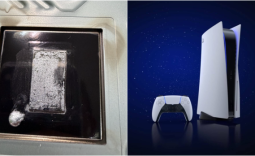 PS5 suffers from severe overheating after liquid metal eats into the heatsink
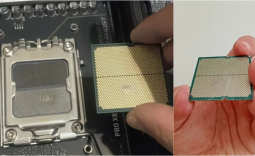 AMD Ryzen 7 7800X3D CPU burns and swells even after using AMD's updated BIOS
 D-Link F518 5G Wi‑Fi 6 AX1800 Mobile Hotspot Review: All-Day Mobile Hotspot
 Bose Lifestyle Ultra Speaker Review - Impressively Detailed Room-Filling Sound
 MSI Z890 Gaming Plus WIFI6E Review - Z890 for under $200
 Mortal Kombat (1995) 4K Ultra HD Blu-ray Review
 CPS PCCOOLER YS1200 ATX 3.1 80 PLUS Gold PSU Review
 ASRock X870E Taichi White Review: a premium AM5 motherboard with 10G LAN and WiFi 7
 Asetek Initium Pedal Modular Upgrades Review
 Thinkware U3000 Pro Review - Smart Dashcam with Wi-Fi quirks
 Montech TG3 Mid-Tower Chassis Review
 ASUS ROG Strix X870E-A Gaming WiFI7 Neo Review - A New Enticing Option
 I ditched the Windows 11 context menu for this open-source tool, and here's why
 Windows 11 may be encrypting your drive already, and I checked where my recovery key went
 GIGABYTE's 40 Days of INFINITY celebrates 40 Years of Innovation with stunning GeForce RTX graphics cards and rewards
 I swapped File Explorer for this free file manager and finally got the layout I wanted
 How to tell if someone has been using your Windows PC without your permission
 6 Task Manager tips for troubleshooting Windows performance problems
 ASUS ROG's 20th Anniversary Line-up of Premium PC Gaming Gear has Arrived - Here's Everything You Need to Know
 Six File Explorer tips every Windows user should know
 I switched my PC to encrypted DNS in Windows 11, and browsing felt more private
 Printer Not Working in Windows? How to fix detection, print queues and drivers