







Science, Space, & Robotics - Page 150
Explore the latest Science, Space, Health, and Robotics news from TweakTown. Coverage includes space launches, medical tech, discoveries, and rockets. - Page 150
Stay Updated
Follow TweakTown for breaking tech news, reviews, and daily updates.


As an Amazon Associate, we earn from qualifying purchases. TweakTown may also earn commissions from other affiliate partners at no extra cost to you.
NASA created a Mars habitat, humans will live in it and be monitored
NASA previously announced it was looking for four individuals to participate in spending a month in the space agency's simulated Mars habitat.

The four individuals were required to have certain qualifications and would have to spend 45 days working and living in the Human Exploration Research Analog (HERA). The idea behind this project is so NASA scientists can observe how the first humans will react to living on Mars when we finally get there. While we are still decently far away before any colony starts on the Red Planet, the space agency wants to do as much preparation as it can before the missions go underway.
As for this particular HERA mission, NASA will be simulating a trip to Phobos, the innermost and larger of the two natural satellites of Mars. The mission will include cramped living spaces and delayed communications with the outside world. As previously stated, the duration of the mission will be 45 days, and throughout that time, NASA researchers will be monitoring the four individuals inside for changes in the human psyche, health, etc.
Continue reading: NASA created a Mars habitat, humans will live in it and be monitored (full post)
Officials confirm bright blue object caught on video in sky over US
Eyewitnesses have reported seeing an extremely bright fireball pass overhead in the night sky. Officials have confirmed its existence.

The American Meteor Society has confirmed a meteor estimated to be the size of a house entering Earth's atmosphere above Colorado, United States. The fireball was captured on film by numerous cameras, some of which were porch cameras, and they show a bright fireball enter the sky, lighting it up a beautiful blue hue. According to Josh Ellis, located in Evergreen, Colorado, the fireball was so bright that it charged his solar lights.
Doug Robinson, who captured a video of the fireball over Boulder, Colorado, said, "Everything was pitch dark, and all of a sudden it lit up as if it was a brightly lit moon." Additionally, six people reported hearing a boom sound as they saw the fireball pass overhead. This "boom" was likely the fireball exploding as it broke up in the atmosphere.
Continue reading: Officials confirm bright blue object caught on video in sky over US (full post)
Eyewitnesses report stunningly bright fireball streaking across sky
Numerous reports have surfaced about a fireball appearing in the night sky and confirming the reports are videos published on the American Meteor Society (AMS) YouTube Channel.

A meteor is a space rock that has entered Earth's atmosphere and is plummeting towards the surface. Luckily, most meteors never make it to Earth's surface and burn up as they get lower and lower into our atmosphere. The American Meteor Society was created to track events such as these, and just recently, AMS received around a dozen reports that an extremely bright fireball streaked across the night sky above Colorado.
When a meteor enters Earth's atmosphere, it's introduced to our thick atmosphere that slows it down, and heats it up via friction. This friction causes the meteor to catch on fire, which results in the bright object we see up in the sky. As previously stated, most of these fireballs aren't large enough to make it to the surface, and as a result, they disintegrate or explode. As for this fireball, reports state that it was around the size of a house.
Continue reading: Eyewitnesses report stunningly bright fireball streaking across sky (full post)
20 years of data indicate Earth is becoming dimmer and here's why
A study that used nearly 20 years of data indicates that Earth is becoming dimmer, and climate change is the likely culprit.

Earth reflects around 30% of the sunlight that hits the planet, and according to the researchers who published the paper in the peer-reviewed journal Geophysical Research Letters, Earth's albedo, or reflectance, has reduced. Researchers used data from 1998 to 2017 to measure the amount of Earthshine that causes the Moon to be illuminated and found that it has reduced by half a watt less light per square meter, or 0.5% when compared to data recorded in 1998.
According to theoretical physicist Philip Goode from the New Jersey Institute of Technology, "The albedo drop was such a surprise to us when we analyzed the last three years of data after 17 years of nearly flat albedo." The study found that the likely culprit of the reduction in reflectance is not due to a reduction in sunlight coming from Earth, but a reduction in the number of reflective clouds that appear over the eastern Pacific Ocean. The researchers link the reduction in these clouds to climate change.
Continue reading: 20 years of data indicate Earth is becoming dimmer and here's why (full post)
Volcano eruption captured from space, lava rivers flow into ocean
The volcanic eruption that has happened on Spain's La Palma island doesn't seem to be stopping anytime soon, and some new images from space reveal its destruction.

Locals in the area have reported earthquakes in the region as the La Palma volcano continues to spew lava out into the surrounding area. The images from space come from Russian cosmonauts Oleg Novitsky and Pyotr Dubrov, who are aboard the International Space Station (ISS). The cosmonauts snapped images of the volcanic eruption as the ISS passed overhead at night, which made for a beautifully horrific image of a river of lava passing through a surrounding town.
Reports indicate that more than 1,000 buildings have been buried in lava since the volcano first began erupting back on September 19. In total, 1.4 square miles of land have been swallowed by the lava, and due to new earthquakes that occurred on October 1, the flow of lava isn't stopping. As for people, more than 6,000 residents in the local area have been evacuated. If you are interested in reading more about this story, check out this link here.
Continue reading: Volcano eruption captured from space, lava rivers flow into ocean (full post)
Largest comet ever discovered is heading our way, arrival time found
A new paper that has appeared on the pre-print server arXiv has detailed the arrival time for what could be the largest comet humans have ever discovered.

The comet is Bernardinelli-Bernstein and researchers estimate that it is at least 62 miles in diameter, which is around 1,000 times larger than a typical comet. Researchers previously incorrectly estimated that Bernardinelli-Bernstein was a dwarf planet due to its size but later found out that it was a comet. Further analysis of the celestial object found that it's making its way towards the Sun.
At the moment, Bernardinelli-Bernstein is located in the Oort cloud, 29 astronomical units away from Earth. An astronomical unit is the distance between Earth and the Sun, which is about 93 million miles. Researchers detail in their paper that Bernardinelli-Bernstein will make its closest approach to Earth within 10.97 astronomical units, which will put it just outside of Saturn's orbit. The researchers estimate that Bernardinelli-Bernstein will make its closest approach with Earth 10 years from now.
Continue reading: Largest comet ever discovered is heading our way, arrival time found (full post)
Celestial 'eye' found out in deep space, Hubble takes incredible image
The Hubble Space Telescope is at it again with another jaw-dropping image. This time the space telescope has snapped a photo of a celestial "eye".

The image is of a spiral galaxy dubbed NGC 5728 that's located around 130 million light-years from Earth in the constellation Libra. NGC 5728 is a Seyfert galaxy, which means it has an active nucleus at its center. According to Space.com, at the center of this galaxy, there is a black hole that has lots of gas and dust surrounding it, causing it to be bright.
The image was released by the European Space Agency, which co-operates the Hubble Space Telescope with NASA. According to European Space Agency, "As this image shows, NGC 5728 is clearly observable, and at optical and infrared wavelengths it looks quite normal. It is fascinating to know that the galaxy's centre is emitting vast amounts of light in parts of the electromagnetic spectrum that WFC3 [Wide Field Camera 3] just isn't sensitive to!"
Continue reading: Celestial 'eye' found out in deep space, Hubble takes incredible image (full post)
50-year-old puzzle solved, animal tracks that date back before animals
A mystery that has spanned almost half a century has just been answered, according to a team of researchers.

The mystery involved the above image, which is a trace fossil. A trace fossil shows the activity of an animal rather than the animal themselves, and these types of fossils provide really valuable information to researchers looking to understand the evolution of complex life on Earth. The quartzite rock was discovered in Mount Barren in southwestern Australia, and the tracks embedded in it appear to have been made by crustaceans that burrow into the sand.
The only problem is, "quartzite is as hard as concrete and impossible for burrowing animals to penetrate. The traces would therefore have had to be made while the sand was still loose. But the sand was deposited 1.7 billion years ago - a billion years prior to the appearance of the first animals in the fossil record, and its transformation to quartzite occurred more than 1.2 billion years ago, much earlier than the oldest animal fossils, which are less than 0.6 billion years old," said paleontologist Bruce Runnegar from the University of California, Los Angeles (UCLA).
Continue reading: 50-year-old puzzle solved, animal tracks that date back before animals (full post)
NASA takes aim at Jeff Bezos' Blue Origin, Moon landing in jeopardy
In a bombshell report from CBS Mornings, current and former Blue Origin employees have signed an essay that accuses Blue Origin of prioritizing speed over safety.

The report occurred on October 1st, and according to Alexandra Abrams, a former head of employee communications at Blue Origin, the company pushes employees to sign brutal nondisclosure agreements that infringe on rights, doesn't listen to any feedback, and disregards safety warnings provided by employees. On top of that, the essay, which was published on the website Lioness, details that the workplace environment at Blue Origin was "toxic" and an uncomfortable sexist climate for women.
Now, NASA has fired back at Blue Origin, saying that the company is threatening to destroy the "once-in-a-generation momentum" because it gambled on its original proposal for a new lunar lander and lost. NASA's lawyers stated in legal documents obtained by The Verge through the Freedom of Information Act that "Blue Origin made a bet, and it lost." Due to the legal battle between NASA and Blue Origin the construction of a new lunar lander has been put on hold which throws the 2024 date of the next Moon landing into jeopardy.
Continue reading: NASA takes aim at Jeff Bezos' Blue Origin, Moon landing in jeopardy (full post)
Yellowstone's largest geyser is very active, massive eruption bursts
Yellowstone National Park, located mostly in Wyoming, is a 3,500 square-mile volcanic hotspot that is home to the world's largest active geyser.

The geyser named Steamboat Geyser has been observed for a number of years, along with the rest of the park, as researchers fear that one day the supervolcano located underneath the surface will erupt. Monitoring the geysers and the overall park will give researchers the data they need to be able to predict if an eruption is likely, which in turn will help save lives if an evacuation is needed.
As for Steamboat, onlookers of this active geyser will see water being shot out of the northern vent at heights of 300 feet to 400 feet. As with all geysers, Steamboat's eruptions go through cycles, and depending on what stage of the cycle the geyser is in will determine how active it is. In the past three years, there have been over 110 eruptions, leading some researchers to believe that Steamboat is slightly more active than what it usually is.
Continue reading: Yellowstone's largest geyser is very active, massive eruption bursts (full post)
World 1st achieved, drone captures wild video of inside Hurricane Sam
A team of researchers has achieved a world first by capturing the first footage of inside a Category 4 hurricane.

The footage has been released by the National Oceanic and Atmospheric Administration (NOAA), and it shows the terrifying inside of Hurricane Sam that is currently causing havoc in the Atlantic Ocean. Researchers used a robotic surfboard that is called a Saildrone to capture the footage. In the below image, you can see that Saildrone has a thick surfboard as a base, a sail, and a camera arm.
The ocean craft measures at just 23 feet in length and features a "hurricane wing" that is designed to withstand the force of the elements. Saildrone is powered by solar and is designed to record important data such as wind speed and direction, barometric pressure, temperature, salinity, humidity, and more. According to NOAA scientist Greg Foltz, "We expect to improve forecast models that predict rapid intensification of hurricanes."
Continue reading: World 1st achieved, drone captures wild video of inside Hurricane Sam (full post)
Jeff Bezos' Blue Origin is under fire, 20+ employees drop bombshells
More than 20 people have signed an essay that describes Jeff Bezos' space company Blue Origin as a "toxic" workplace.

The essay was published Thursday on Lioness.co, and according to Alexandra Abrams, a former head of employee communications at Blue Origin, the company pushes employees to sign harsh nondisclosure agreements that infringe on rights, doesn't listen to internal feedback, disregards safety concerns despite numerous warnings and creates an uncomfortable sexist environment for women.
Abrams appeared on CBS Mornings to discuss the essay and said that 13 of 21 signees are engineers and that in 2018 a team of employees documented "more than 1,000 problem reports related to the engines that power Blue Origin's rockets, which had never been addressed." Additionally, CBS spoke to 5 of the co-authors of the essay that decided to remain anonymous out of fear of job security. According to CBS, these authors said that the private space race impacted safety concerns.
Continue reading: Jeff Bezos' Blue Origin is under fire, 20+ employees drop bombshells (full post)
Blast from the Sun is fast-approaching Earth, will arrive very soon
Officials have warned that a coronal mass ejection (CME) from the Sun is on its way to hit Earth, and it will be here very soon.

The Space Weather Prediction Center, along with the National Weather Service, rolled back the Geomagnetic Storm Watch they had in place for September 28 and September 29 but have dropped a new warning about October 1. According to reports, a sunspot called AR2871 erupted, causing two explosive blasts of particles to be shot out from the surface of the star.
Officials have cautioned that a G2-level geomagnetic storm is expected to hit Earth on Friday, October 1. This CME is minor, and as a result of that, its impact on Earth will also be minor. But what can a solar storm cause? Small solar storms such as this one may cause auroras in the sky, interruptions in communications, and satellite issues. Overall, this is a minor space weather event, but the Sun is about to enter the most dangerous part of its cycle. To read more on that, check out this link here.
Continue reading: Blast from the Sun is fast-approaching Earth, will arrive very soon (full post)
SpaceX to launch 1st gas station into geo-orbit, slingshot around Moon
SpaceX, along with Spaceflight Inc and depot start-up OrbitFab has revealed via a press release that the first orbit propellant depot will be shot into space relatively soon.

OrbitFab announced the news via a press release that details the development of a propellant tanker dubbed "Tanker-002" and how and why it will be the first propellant tanker to reach geostationary orbit. The tanker uses OrbitFab's "robust RAFTI (Rapidly Attachable Fluid Transfer Interface) system" that was designed to refuel US Department of Defense and Intelligence Community assets in geostationary orbit. Tanker-002, along with Spaceflight's Sherpa-ES orbital transfer vehicle, will go around the back of the Moon to gain a gravitational assist.
For those that don't know what geostationary orbit is - it's when an object is stationed 22,236 miles in altitude and orbits Earth at the same speed Earth rotates. If an object is in geostationary orbit, its orbital period will be the same as Earth's single-day period - 23 hours and 56 minutes. It should also be noted that if an object, or in this instance Tanker-002, is in geostationary orbit, an observer on Earth would see the object remain stationary in the sky.
Continue reading: SpaceX to launch 1st gas station into geo-orbit, slingshot around Moon (full post)
Ex-Google executive warns of apocalypse, 'we're creating god'
A former Google executive has dropped a warning that not many people want to hear, as what is being created may pose a serious threat to humanity.

According to Mo Gawdat, the Chief Business Officer for Google's moonshot organization called Google X, artificial general intelligence (AGI) poses a genuine threat to humanity. Gawdat dropped this warning in an interview with The Times and explained when he made the revelation that AGI was actually dangerous. Gawdat said he observed Google researchers build robot arms that were trained to grab objects such as balls and toys as a human would.
Gawdat said that he passed these robots fumbling with the objects for weeks, but one day one of the robot arms did something that shook the former Google X executive. Gawdat said that he observed one robot arm pick up the ball and then hold it up towards the researchers as if it was showing off what it had achieved. Gawdat said, "And I suddenly realized this is really scary. It completely froze me." Adding, "The reality is we're creating God."
Continue reading: Ex-Google executive warns of apocalypse, 'we're creating god' (full post)
Discovering Earth-like planets may be harder than scientists thought
Humans have always wondered if we are alone in this vast universe we call home and the discovery of Earth-like planets that are some of the best places to look to answer that question.

While it may seem as simple as pointing a large telescope into the void of space to find one of these planets, it's certainly not as easy as it sounds. In fact, it may be much harder than researchers have anticipated. According to a new study out of Cornell University, researchers lay out evidence that next-generation telescopes that will be used to observe exo-planets may confuse planets that are Earth-like with other types of planets that are similar and reside in the same solar system.
Dmitry Savransky, an associate professor of mechanical and aerospace engineering and co-author on the new study published in The Astrophysical Journal, explains, "Once we have the capability of imaging Earth-like planets, we're actually going to have to worry about confusing them with completely different types of planets. The future telescopes that will enable these observations will be so huge, expensive, and difficult to build and launch that we can't afford to waste a single second of time on them, which is why it is so important to think through all of these potential issues ahead of time."
Continue reading: Discovering Earth-like planets may be harder than scientists thought (full post)
First evidence found of one planet orbiting three stars at once
A team of astronomers has identified a mystery that is yet to be solved, and it specifically has to do with a star system located in the constellation of Orion.

According to a press release from the European Southern Observatory (ESO), a new study published in the Monthly Notices of the Royal Astronomical Society reveals evidence that a star system titled GW Ori, located 1,300 light-years from Earth, has a disk that is divided into two. A good way to think about this is to picture Saturn and imagine that its rings were torn apart. While the mental image of this is easy to achieve, astronomers are struggling to explain why.
The study authors say that a possible reason why GW Ori has a split disk is that a large gassy planet estimated to be the size of Jupiter is present between the rings. However, that planet is yet to be found. Another theory for the split in the rings is the gravitational pull of three stars. The ESO press release explained, "Their simulations showed that the misalignment in the orbits of the three stars could cause the disc around them to break into distinct rings, which is exactly what they see in their observations. The observed shape of the inner ring also matches predictions from numerical simulations on how the disc would tear."
Continue reading: First evidence found of one planet orbiting three stars at once (full post)
NASA says these asteroids hold the clues to the solar system's origin
In a new video that has appeared on its official YouTube channel, NASA has explained how important Trojan asteroids are in understanding the formation of our solar system.

The new video has been published as part of NASA's "We Asked A NASA Scientist" series that answers some of sciences most burning questions. The question posed in this specific video is "What Are the Trojan Asteroid?", and it was answered by NASA Trojan asteroid expert Audrey Martin who says that billions of years ago, the solar system just consisted of small rocky and icy objects that eventually came together to form the planets that we see today.
However, not all of the early solar systems objects were used up to form the planets, as some of them are described a "pristine asteroids" that now orbit on the same orbital plane as Jupiter. These asteroids orbit in two massive swarms on either side of Jupiter and are called Trojan asteroids. Martin says that these asteroids are mysterious and could have possibly come from outside of our solar system.
Continue reading: NASA says these asteroids hold the clues to the solar system's origin (full post)
Researchers discover an ancient warrior with a jaw threaded with gold
A team of researchers have uncovered the decapitated head of an ancient Byzantine warrior and found that the jaw was threaded with gold.

The decapitated head of the Byzantine warrior was found at the Polystylon fort, an archaeological site in Western Thrace, Greece, in 1991. Anagnostis Agelarakis, an anthropology professor in the Department of History at Adelphi University in New York, studied the burial of the warrior and penned a study that was published back in 2017.
Now, Agelarakis has penned a new study that focuses on the warriors healed jaw, which states that "The jaw was shattered into two pieces" but was mended together by a medical professional that seemed to have followed the advice from the famous Greek physician Hippocrates who wrote much about jaw injuries 1,800 years before the warrior experienced his injury. The researchers found that the warrior died between the ages of 35 and 40 years old and that the jaw injury was endured 10 years before he died.
Continue reading: Researchers discover an ancient warrior with a jaw threaded with gold (full post)
Sun may cause Earth severe problems in the next 4 years as it wakes up
The Sun is nearing the most intense part of its 11-year cycle, and as it approaches the time-frame of intensity, the chances of Earth feeling its power increase.

For those that don't know, the Sun goes through an 11-year-cycle in which its magnetic poles flip, and throughout 2020 the Sun's magnetic poles were at the lowest point in the cycle, meaning that solar activity and solar storms will be on the increase until July 2025. A solar storm is when the Sun spews a large amount of charged particles out into space. Sometimes these particles line up with Earth and then collide with our magnetic field.
The collision between the Sun's charged particles and Earth's atmosphere can impact all of us, especially as the world becomes more dependent on the digital sphere. Solar storms can affect things such as communication channels, internet facilities, electricity, and more. Solar storms have hit Earth in the past, the first recorded one being in 1859. If you are interested in reading more about space, check out this link here.
Continue reading: Sun may cause Earth severe problems in the next 4 years as it wakes up (full post)
 Twitch opts streamers into gen AI training by default, faces harsh backlash
 Sean Murray still plays the 2016 launch version of No Man's Sky
 China's YMTC has climbed to third place in global NAND flash shipments
 $100 GTA 6 version makes up 89% of pre-orders, analysts estimate
 HWiNFO's latest update quietly confirms Intel is working on Razor Lake-AX
 Nintendo puts Switch 2 price increase warnings on store demo kiosks ahead of September 1 hike
 GIGABYTE launches two new B450 motherboards as demand for AM4 stays high in 2026
 Microsoft finally makes up its mind and unifies Copilot features into one big app
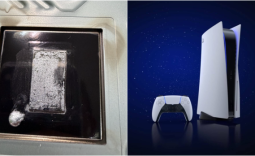 PS5 suffers from severe overheating after liquid metal eats into the heatsink
 AMD Ryzen 7 7800X3D CPU burns and swells even after using AMD's updated BIOS
 D-Link F518 5G Wi‑Fi 6 AX1800 Mobile Hotspot Review: All-Day Mobile Hotspot
 Bose Lifestyle Ultra Speaker Review - Impressively Detailed Room-Filling Sound
 MSI Z890 Gaming Plus WIFI6E Review - Z890 for under $200
 Mortal Kombat (1995) 4K Ultra HD Blu-ray Review
 CPS PCCOOLER YS1200 ATX 3.1 80 PLUS Gold PSU Review
 ASRock X870E Taichi White Review: a premium AM5 motherboard with 10G LAN and WiFi 7
 Asetek Initium Pedal Modular Upgrades Review
 Thinkware U3000 Pro Review - Smart Dashcam with Wi-Fi quirks
 Montech TG3 Mid-Tower Chassis Review
 ASUS ROG Strix X870E-A Gaming WiFI7 Neo Review - A New Enticing Option
 I ditched the Windows 11 context menu for this open-source tool, and here's why
 Windows 11 may be encrypting your drive already, and I checked where my recovery key went
 GIGABYTE's 40 Days of INFINITY celebrates 40 Years of Innovation with stunning GeForce RTX graphics cards and rewards
 I swapped File Explorer for this free file manager and finally got the layout I wanted
 How to tell if someone has been using your Windows PC without your permission
 6 Task Manager tips for troubleshooting Windows performance problems
 ASUS ROG's 20th Anniversary Line-up of Premium PC Gaming Gear has Arrived - Here's Everything You Need to Know
 Six File Explorer tips every Windows user should know
 I switched my PC to encrypted DNS in Windows 11, and browsing felt more private
 Printer Not Working in Windows? How to fix detection, print queues and drivers