







Science, Space, & Robotics - Page 153
Explore the latest Science, Space, Health, and Robotics news from TweakTown. Coverage includes space launches, medical tech, discoveries, and rockets. - Page 153
Stay Updated
Follow TweakTown for breaking tech news, reviews, and daily updates.


As an Amazon Associate, we earn from qualifying purchases. TweakTown may also earn commissions from other affiliate partners at no extra cost to you.
Study finds when Earth's oxygen will run out and become uninhabitable
A study that was published in the journal Nature Geoscience back in March details the lifespan of Earth's biosphere and how long it will be until the planet becomes uninhabitable.

Christopher Reinhard, associate professor at Georgia Institute of Technology, and Kazumi Ozaki, assistant professor at Toho University, used a model that represents Earth's climate and biochemical processes. With this model, the researchers accounted for uncertainties in Earth's atmosphere and tested it over 400,000 times, with each test the parameters of the model being adjusted.
According to the results from the model testing, the researchers found that the oxygen levels will be completely depleted in around one billion years, resulting in Earth not being able to support any life that is dependent on oxygen to survive. Around 2.5 billion years ago, the Great Oxidation Event occurred, bringing forth new forms of life as the atmosphere began to fill with oxygen. Until that moment, Earth was only capable of supporting life that didn't require oxygen to survive, such as anaerobic life forms.
Continue reading: Study finds when Earth's oxygen will run out and become uninhabitable (full post)
Planets in our solar system orbit on the same plane, but why?
An astronomer has explained why all of the planets in our solar system are roughly sitting on the same orbital plane.

According to Nader Haghighipour, an astronomer at the University of Hawaii who spoke to Live Science, the solar system began around 4.5 billion years ago, and at the time, it would have looked like a large cloud that measured 12,000 astronomical units (AU). An astronomical unit is the distance between Earth and the Sun, which is around 93 million miles. As the cloud of gas and dust increased in size, it began to collapse under its own mass to form a disc.
Live Science uses a fantastic analogy in its article here; "Imagine a pizza maker throwing a spinning slab of dough into the air. As it spins, the dough expands but becomes increasingly thin and flat. That's what happened to the very early solar system." As time went on, the center of the disc began to squeeze together under pressure, which then fused hydrogen and helium atoms, creating what we know today as the Sun. The Sun continued to grow and created space between the flat disc and itself.
Continue reading: Planets in our solar system orbit on the same plane, but why? (full post)
Inspiration4 crew had an issue with SpaceX's Dragon toilet with a view
The first crew of all-civilians that recently went to space aboard SpaceX's Crew Dragon capsule reported an issue with the toilet.

SpaceX recently chiseled its name into the private space industry with another milestone as the first company to take an all-civilian crew to space. The crew took the Dragon capsule to lower-Earth orbit with the Falcon 9 rocket and remained there for three days. Until now, astronauts that have used the Dragon capsule have only been in there for around 24 hours as they were only traveling to the International Space Station where they disembarked.
Since the Inspiration4 crew wasn't disembarking, the docking module was replaced with a large dome of glass, or more accurately named - cupola. Additionally, the cupola was also where the capsules toilet was stationed, which led people to believe that the crew aboard would have one of the best views possible while relieving themselves. However, this wasn't the case.
Continue reading: Inspiration4 crew had an issue with SpaceX's Dragon toilet with a view (full post)
Astronomers used dash and security cameras to find a fallen meteorite
A team of astronomers has used quite an unconventional way to trace the landing location of a meteorite that entered Earth's atmosphere. But if it isn't broken, don't fix it, right?

The team of astronomers worked on a paper that took all of the footage of a meteorite streaking across the sky over Slovenia, Croatia, Italy, Austria, and Hungary back in 2020. Dr. Denis Vida from the University of Western Ontario presented the paper at the Europlanet Science Congress (EPSC) 2021 and explained the team used a collection of video footage from several cameras around 62 miles apart.
Vida said, "By combining observations from several cameras around 100 kilometers apart, a fireball's position can be pinpointed to within 50 meters, and it's usually fairly easy to compute its atmospheric trajectory and pre-atmospheric orbit this way." The meteorite was estimated to be around four metric tonnes when it entered Earth's atmosphere, and as it plummeted towards the surface, it split up into at least seventeen individual pieces. Three of the pieces weigh 720 cams.
Continue reading: Astronomers used dash and security cameras to find a fallen meteorite (full post)
Former astronaut reveals the big differences between NASA and SpaceX
A former NASA astronaut that has been on the International Space Station and has worked as a project lead for SpaceX has discussed the differences between the space agency and Elon Musk's company.

The former astronaut is Garret Reisman, who has been to the International Space Station twice, the first in 2008 and the second trip in 2010. Reisman also worked as a project lead for SpaceX's Crew Dragon capsule that recently took four civilians into lower-Earth orbit for three days. In an interview with Inverse, Reisman described that the main difference between SpaceX and NASA is the amount of time it takes for a decision to be made.
Reisman said, "[At SpaceX] we would make a decision in a single meeting that would take years to reach the same decision point at NASA." According to the interview, Reisman says that SpaceX's strategy is to make decisions quickly and make adjustments on the way towards achieving its goal, while NASA is much more calculated and cautious about making decisions. The former astronaut says that NASA is structured this way because it relies on several contractors for its manufacturing while SpaceX makes its components in-house.
Continue reading: Former astronaut reveals the big differences between NASA and SpaceX (full post)
'Is there oxygen on Mars?', NASA's answer may surprise you
A part of NASA's "We Asked a NASA Professional" series on YouTube, the space agency has answered the following question - "Is there oxygen on Mars?"

The short answer is "yes", but it's hardly the amount that we have here on Earth and definitely not enough for a human to breathe while walking around on the surface. To put it into perspective of how little oxygen Mars' atmosphere contains, NASA says the amount of oxygen present in Mars' atmosphere is 0.13%, compared to 21% in Earth's atmosphere. What Mars' atmosphere is rich in is carbon dioxide, which can be useful.
NASA technologists have created a piece of technology called MOXIE, or the Mars Oxygen In-Situ Resource Utilization Experiment. NASA has equipped Perseverance with a MOXIE, and only a few months ago, the rover was able to successfully extract oxygen from the carbon dioxide present in the atmosphere. The amount of oxygen that was extracted was only small, but the experiment proved the concept works.
Continue reading: 'Is there oxygen on Mars?', NASA's answer may surprise you (full post)
NASA converts phenomenal images of space into beautiful cosmic music
NASA has taken images of astronomical observations and has converted them into "musical pieces" for your listening pleasure.

So, how does NASA do this? NASA takes observations made by NASA's Chandra X-ray Space Telescope and other ground-based telescopes and through a process called sonification, the space agency is able to convert the images into sound.
Three new sonifications have been released and they are sourced from observations made of the black hole named Messier 87, a cluster of young stars that are only a couple million years old and supernova explosion.Visualization scientist Kimberly Arcand, from the Chandra X-ray Center along with astrophysicist Matt Russo and musician Andrew Santaguida are responsible for the creation of the sonifications. If you are interested in learning more about the sonification process, check out this link here.
Continue reading: NASA converts phenomenal images of space into beautiful cosmic music (full post)
NASA makes the changes needed for a bright future of space exploration
NASA has announced that it is pivoting the space agency's infrastructure to position itself better for the next 20 years.

The announcement came from NASA's Administrator Bill Nelson who said that the space agency will be separating the current "Human Exploration and Operations Mission Directorate into the new Exploration Systems Development Mission Directorate (ESDMD) and Space Operations Mission Directorate." Jim Free will be returning to the agency as associate administrator of ESDMD, and Kathy Lueders will be associate administrator of Space Operations Mission Directorate.
So, why did NASA do this? According to the press release, the space agency wants two separate missions with separate teams providing focused oversight on each respective mission. Splitting the mission up will allow the space agency's respective teams to focus on their areas, ultimately allow the team members to execute each mission with high success.
Continue reading: NASA makes the changes needed for a bright future of space exploration (full post)
Asteroid three times Statue of Liberty is fast-approaching Earth today
An asteroid that could be anywhere between 425 and 985 feet in diameter is approaching Earth at tens of thousands of miles per hour.

The asteroid is named 2021 NY1, and according to NASA's Jet Propulsion Laboratory Near-Earth-Object (NEO) tracking website, the asteroid will pass Earth safely at a distance of about 970,000 miles. NASA categorizes any object that passes within 120 million miles of the Sun as a NEO, hence asteroid 2021 NY1's classification.
In terms of distances in space, 970,000 miles is quite close to Earth as the Moon is only 238,855 miles away. NASA's NEO database describes 2021 NY1 as being roughly between three and six Statues of Liberty tall and that the space rock is traveling at around 21,000 mph, which is about 27 times the speed of sound. If you are interested in what asteroid has come the closest to Earth, that would be asteroid 2020 QG, which passed over the Indian Ocean at just 1,830 miles.
Continue reading: Asteroid three times Statue of Liberty is fast-approaching Earth today (full post)
Black holes more complex than we thought after surprise discovery
A surprise discovery has led researchers to believe that black holes may be more complex than what was initially thought.

According to a new study published in the journal Physical Review D, astronomers Xavier Calmet and Folkert Kuipers of the University of Sussex studied the changes in gravitational forces that are changed by quantum particles located at the edge of the black hole. What they found after running their calculations was an anomaly appeared that they couldn't explain. The researchers concluded that what they saw in their calculations was black holes have pressure.
Xavier Calmet, Professor of Physics at the University of Sussex and an author on the study, explained, "Our finding that Schwarzschild black holes [static black holes without electric charge and angular momentum] have a pressure as well as a temperature is even more exciting given that it was a total surprise. I'm delighted that the research that we are undertaking at the University of Sussex into quantum gravity has furthered the scientific communities' wider understanding of the nature of black holes."
Continue reading: Black holes more complex than we thought after surprise discovery (full post)
NASA's golf-cart-sized rover will explore mysterious spots on the Moon
NASA has detailed an upcoming mission that is part of its Artemis program, which is slated to put humans back on the Moon.

The mission involved a rover called "Volatiles Investigating Polar Exploration Rover," or VIPER for short. NASA has said via the above YouTube video that the VIPER mission will be the very first resource mapping mission to ever be conducted on the surface of another celestial body. VIPER will be landing in the Nobile Crater located at the Moon's South Pole and will be searching for water in its designated area.
VIPER will be traversing 10 to 15 miles of the Nobile Crater that cover approximately 36 square miles. The rover will be visiting carefully selected locations of scientific interest, such as craters that are permanently in darkness, water-ice locations, and more. The rover will collect samples from three drill locations, and each of the locations varies in temperature.
Continue reading: NASA's golf-cart-sized rover will explore mysterious spots on the Moon (full post)
This new ultra-white paint could replace your AC, the future is cool
Imagine a future where houses are painted with a specific paint that reflects virtually all of the sunlight, keeping your house cooler and thus requiring less electricity -- massively better for the environment.

Purdue University researchers have created an ultra-white paint that is not just the whitest paint ever made, but this new paint could eventually reduce or even remove the requirement for having an air conditioner. The researchers began their journey looking to reflect sunlight away from buildings, but it has turned out so good that the team made it into the Guinness World Records.
The new white paint reflects 98.1% of solar radiation, while it also emits infrared heat -- thanks to it absorbing less heat from the sun that it emits -- the surface of anything that this paint covers would be cooler below the surrounding temperature, without using power. This is quite the reverse of an AC unit and even regular commercial white paints.
Continue reading: This new ultra-white paint could replace your AC, the future is cool (full post)
A meteor exploded in the sky, wiped out a 3,600 year-old ancient city
A new study by archaeologists has explored the ruined city of Tall el-Hammam that existed around 3,600 years ago in the Levant.

The ancient city is situated on high ground in the southern region of Jordan Valley, northeast of the Dead Cell. Researchers believe that during its peak, Tall el-Hammam would have been one of the largest and most continually occupied cities throughout the Levant.
Researchers in the new study detail the discovery of "highly unusual" materials such as pottery shards with outer edges melted, building material melted, and other evidence of extremely high temperatures in the area, which wasn't possible with the technology of the Bronze Age. James Kennett, emeritus professor of earth science at UC Santa Barbara, said, "We saw evidence for temperatures greater than 2,000 degrees Celsius".
Continue reading: A meteor exploded in the sky, wiped out a 3,600 year-old ancient city (full post)
NASA's futuristic electric propulsion will power the 'Psyche' mission
NASA's Jet Propulsion Laboratory (JPL) has explained what appears to be something that would be seen in a science fiction movie. However, this is real and will be done relatively soon.

It's called solar electric propulsion, and it is a different kind of propulsion system that is a step away from traditional methods of travel in space. NASA explains on the JPL website that a solar electric propulsion system will be equipped to NASA's Psyche spacecraft that will be launched towards a metal-rich asteroid called Psyche.
Instead of using traditional methods of propulsion, Psyche will electric propulsion, which consists of the spacecraft carrying tanks full of xenon, and solar arrays that convert sunlight into electricity that power the onboard thrusters. NASA explains, "The spacecraft's four thrusters will use electromagnetic fields to accelerate and expel charged atoms, or ions, of that xenon. As those ions are expelled, they create thrust that gently propels Psyche through space, emitting blue beams of ionized xenon."
Continue reading: NASA's futuristic electric propulsion will power the 'Psyche' mission (full post)
Jupiter's atmosphere may have solved a mystery with Uranus and Neptune
A new study suggests that Jupiter's atmosphere contains the answer to a long-standing mystery with Neptune and Uranus.

According to a study by Tristan Guillot, the mystery of why Neptune and Uranus lack ammonia in their atmospheres when compared to other gas giants may have just been answered. Guillot suggests that mushballs are what is responsible for the lack of detection. Mushballs are large hailstones that can contain large amounts of ammonia and water.
Guillot suggests that these mushballs form in the atmosphere and then carry the ammonia down into the thick atmospheric clouds and below the layer our instruments can detect. The basis of this theory was founded on a discovery that occurred on Jupiter. Researchers used NASA's Juno spacecraft that's orbiting Jupiter to observe ammonia hailstones forming when storms were occurring. These hailstones carried ammonia deep into Jupiter's atmosphere.
Continue reading: Jupiter's atmosphere may have solved a mystery with Uranus and Neptune (full post)
There may just be a simple reason why Mars doesn't have surface water
A team of researchers have published a new study that provides evidence that the size of a planet may be a determining factor in whether it will be able to contain water for extended periods of time.

The new study has been published in the journal Proceedings of the National Academies of Sciences and provides evidence that the size of a planet impacts habitabilty. The researchers looked at 20 meteorites that are representative of Mars' overall composition and measured the amount of potassium (K) isotopes that are within them.
Using K as a tracer for more "volatile" elements and compounds, the researchers were able to find correlated evidence that suggests that smaller planets lose lots of water during formation and that global magnetic fields shut down, which eventually causes the atmosphere to thin. Mars is an example of this.
Continue reading: There may just be a simple reason why Mars doesn't have surface water (full post)
NASA will hunt for water on the Moon in 'permanently shadowed areas'
As part of its Artemis program, NASA will be sending a lunar reconnaissance rover to the surface of the Moon to search for water.

In a new press release published on the NASA website, the space agency details the Volatiles Investigating Polar Exploration Rover (VIPER) and where it plans on landing it. According to the press release, SpaceX will be delivering VIPER to the Nobile Crater located at the Moon's South Pole. NASA selected this landing location with several parameters in mind, and those were; suitable terrain for the rover, temperature variation, solar charging locations, and presence of water-ice.
The Nobile Crater is the most viable location for VIPER to land, and once it arrives in 2023, it will begin to explore a region of the surface that is approximately 36 square miles. Throughout its 100 day mission, NASA expects VIPER to traverse 10 to 15 miles of its landing area, exploring areas NASA researchers have been carefully assessing with data from remote sensing instruments. VIPER's main mission is to search for water-ice, and NASA believes that ice and other resources exist in "permanently shadowed areas of the Moon near the poles."
Continue reading: NASA will hunt for water on the Moon in 'permanently shadowed areas' (full post)
NASA moves closer to getting people to 'work, play and live' in space
NASA has announced a new contest where it will review proposals from private companies for the construction of new space stations in Earth's orbit.

The space agency has said that the International Space Station is expected to be retired by the end of the decade, and instead of constructing a new space station itself, NASA is giving the opportunity to private companies. By doing this, NASA expects to save around $1 billion per year. According to Phil McAlister, NASA's director of commercial spaceflight, NASA has already received "roughly about a dozen proposals" from private companies, with 50 companies in total expressing interest in the new program.
Under the Commercial LEO Destinations project NASA will award two to four companies with the best proposals up to $400 million in contracts. McAlister added, "This strong industry response shows that our plan to retire the International Space Station in the latter part of this decade and transition to commercial space destinations is a viable, strong plan. We are making tangible progress on developing commercial space destinations where people can work, play and live."
Continue reading: NASA moves closer to getting people to 'work, play and live' in space (full post)
NASA plans to spend $400 million on two new private floating labs
NASA is has announced that it's willing to award private companies up to $400 million to construct private space stations in Earth's orbit.

The space agency is looking towards the future of how humans are going to be conducting science in microgravity, and so far, all of the research has been coming from the International Space Station (ISS). However, the ISS won't last forever, and it was only recently that astronauts aboard the floating laboratory reported new cracks in one of the modules, more on that here.
Instead of NASA constructing its own new ISS, it is putting the job up for offer with private companies. According to NASA's commercial-spaceflight director, Phil McAlister, who spoke to a CNBC reporter, the new $400 million program has "received roughly about a dozen proposals". Of NASA's proposals from private companies, the space agency will select two to four winners and divide the $400 million budget between them.
Continue reading: NASA plans to spend $400 million on two new private floating labs (full post)
Astronomers find what was left over from a rare explosion in 1181
Astronomers have detailed in a new study what the bright cosmic object was that lit up the sky over Japan and China back in 1181.

Historians and astronomers have been attempting to find an answer for what contemporary astronomers recorded seeing in the sky in 1181. According to accounts from these astronomers, onlookers of the sky saw a bright light that resembled the same brightness level as Saturn.
This bright light remained in the night sky for six months, according to historical accounts of the event. Now the mastery of the bright light in the sky may be uncovered as a new study has tracked a cosmic event back to around 1181.
Continue reading: Astronomers find what was left over from a rare explosion in 1181 (full post)
 Twitch opts streamers into gen AI training by default, faces harsh backlash
 Sean Murray still plays the 2016 launch version of No Man's Sky
 China's YMTC has climbed to third place in global NAND flash shipments
 $100 GTA 6 version makes up 89% of pre-orders, analysts estimate
 HWiNFO's latest update quietly confirms Intel is working on Razor Lake-AX
 Nintendo puts Switch 2 price increase warnings on store demo kiosks ahead of September 1 hike
 GIGABYTE launches two new B450 motherboards as demand for AM4 stays high in 2026
 Microsoft finally makes up its mind and unifies Copilot features into one big app
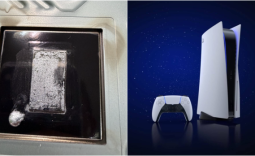 PS5 suffers from severe overheating after liquid metal eats into the heatsink
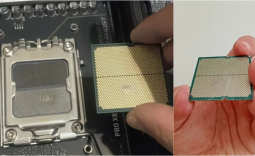 AMD Ryzen 7 7800X3D CPU burns and swells even after using AMD's updated BIOS
 D-Link F518 5G Wi‑Fi 6 AX1800 Mobile Hotspot Review: All-Day Mobile Hotspot
 Bose Lifestyle Ultra Speaker Review - Impressively Detailed Room-Filling Sound
 MSI Z890 Gaming Plus WIFI6E Review - Z890 for under $200
 Mortal Kombat (1995) 4K Ultra HD Blu-ray Review
 CPS PCCOOLER YS1200 ATX 3.1 80 PLUS Gold PSU Review
 ASRock X870E Taichi White Review: a premium AM5 motherboard with 10G LAN and WiFi 7
 Asetek Initium Pedal Modular Upgrades Review
 Thinkware U3000 Pro Review - Smart Dashcam with Wi-Fi quirks
 Montech TG3 Mid-Tower Chassis Review
 ASUS ROG Strix X870E-A Gaming WiFI7 Neo Review - A New Enticing Option
 I ditched the Windows 11 context menu for this open-source tool, and here's why
 Windows 11 may be encrypting your drive already, and I checked where my recovery key went
 GIGABYTE's 40 Days of INFINITY celebrates 40 Years of Innovation with stunning GeForce RTX graphics cards and rewards
 I swapped File Explorer for this free file manager and finally got the layout I wanted
 How to tell if someone has been using your Windows PC without your permission
 6 Task Manager tips for troubleshooting Windows performance problems
 ASUS ROG's 20th Anniversary Line-up of Premium PC Gaming Gear has Arrived - Here's Everything You Need to Know
 Six File Explorer tips every Windows user should know
 I switched my PC to encrypted DNS in Windows 11, and browsing felt more private
 Printer Not Working in Windows? How to fix detection, print queues and drivers