







Science, Space, & Robotics - Page 149
Explore the latest Science, Space, Health, and Robotics news from TweakTown. Coverage includes space launches, medical tech, discoveries, and rockets. - Page 149
Stay Updated
Follow TweakTown for breaking tech news, reviews, and daily updates.


As an Amazon Associate, we earn from qualifying purchases. TweakTown may also earn commissions from other affiliate partners at no extra cost to you.
NASA will collide a spacecraft into an asteroid at 15,000 mph
NASA has locked in a launch date for the Double Asteroid Redirection Test (DART), which is a mission that will collide a spacecraft with an asteroid at 15,000 mph.

The idea behind the DART mission is to see if it's possible to collide a spacecraft with an asteroid to knock it off course. The DART mission is a part of the agency's asteroid defense program and will be exploring the possibility of a potentially lethal asteroid lining its trajectory up with Earth. The asteroid that the DART spacecraft will be colliding with isn't lethal to Earth, but the results from the mission will allow NASA to know if direct impacts on an asteroid are a viable solution for diverting a dangerous asteroid in the future.
The asteroid that NASA is targeting is called Didymos, it's a binary asteroid which means its two space rocks moving in tandem. The larger asteroid measures 2,600 feet in diameter, and the smaller asteroid measures 525 feet in diameter. NASA is planning on colliding the spacecraft with the smaller of the two asteroids. NASA will launch the DART mission from the Vandenberg Air Force Base in California aboard SpaceX's Falcon 9 rocket.
Continue reading: NASA will collide a spacecraft into an asteroid at 15,000 mph (full post)
NASA will soon explore mysterious space 'fossils' that hold secrets
NASA will soon be launching the first mission to explore two swarms of space "fossils" that may hold the keys to understanding the evolution of our solar system.

NASA's Lucy mission will be the first mission to explore the Jupiter Trojans, which are two swarms of ancient asteroids orbiting on the same plane as Jupiter. NASA describes these asteroids as "fossils" of planet formation, and researchers believe that understanding these mysterious objects will allow them to better understand the evolution of the solar system.
Lucy will be on a 12-year mission, and will visit a total of seven different asteroids. NASA has equipped Lucy with sensitive scientific instruments that will allow the probe to inspect asteroids to find out its geology, age, surface temperature, and composition of the surface. Each of the target asteroids is different from each other as NASA wants to be able to compare the different surfaces properties.
Continue reading: NASA will soon explore mysterious space 'fossils' that hold secrets (full post)
Study finds nuking an asteroid could prevent a surprise apocalypse
A new study has explored the possibility of having limited time to react to an asteroid that is on course with Earth.

The researchers behind the study performed calculations on what Earth would need to do to save it from impact with an asteroid that's 328 feet in diameter, which is around a fifth the size of the famous asteroid Bennu. The study found that a 1-megaton-yield nuclear bomb would be a "very effective" way of preventing a catastrophic impact. Researchers performed the simulation on five different asteroids and multiple time frames for impact.
According to the researchers, if an asteroid 328 feet in diameter was heading to Earth and we had just two months before its expected arrival, a nuke would be able to reduce the destruction it would cause to 0.1% of what it originally would have caused. Additionally, if a larger asteroid was on its way and Earth had six months to react, a nuke would still be able to reduce its impact mass to just 1%.
Continue reading: Study finds nuking an asteroid could prevent a surprise apocalypse (full post)
Space tourism is reasonably priced, 'cheap' stratospheric balloon ride
World View Enterprises has announced via a press release that it's aiming to dramatically reduce the entry cost of space tourism.

According to the press release, the Tuscon, Arizona firm, is constructing a massive balloon that will carry a capsule containing tourists to the stratosphere. The space tourism industry is just taking its first baby steps, and as with most things that are brand new, the cost of entry is expensive. For context, SpaceX's Inspiration 4 mission, the first all-civilian mission to space, cost $200 million. Virgin Galactic's mission to suborbital space with Richard Branson cost $250 million, and Blue Origin's suborbital trip with Jeff Bezos cost $450 million.
World View Enterprises states that it will be offering trips to the stratosphere via its balloon for a fraction of the price - just $50,000. World View has a goal in mind, and that is to bring humanity closer by allowing as many humans as possible to experience the perspective-changing Overview Effect, "World View's mission is to bring as many people as possible to the edge of space so that at 100,000 feet, they'll see a world without borders or species and come back driven to make the world a better place."
Continue reading: Space tourism is reasonably priced, 'cheap' stratospheric balloon ride (full post)
NASA covertly throws some shade at Boeing over its new spacecraft
NASA announced on Wednesday that it was reassigning two astronauts to the Crew-5 SpaceX launch scheduled for next year.

According to the press release that has been published on the NASA website, astronauts Nicole Mann and Josh Cassada have been reassigned to the Crew-5 SpaceX launch to give Boeing more time to complete the development of Starliner. NASA states in its press release that it decided it was important to make these reassignments to "allow Boeing time to complete the development of Starliner while continuing plans for astronauts to gain spaceflight experience for the future needs of the agency's missions."
Futurism reports that the decision to reassign the astronauts is subtly throwing shade at Boeing for being behind its schedule as the development of Starliner encountered numerous delays that include failed launches, construction problems, and more. As NASA states in the press release, both Mann and Cassada need flight experience to keep the momentum of NASA's commercial flight program going. For more information on this story, check out this here.
Continue reading: NASA covertly throws some shade at Boeing over its new spacecraft (full post)
New spacecraft to travel between Mars and Jupiter to land on asteroid
A new space probe is currently in the works by the United Arab Emirates (UAE) Space Agency, which plans to send it to an asteroid to land on.

The mission includes a spacecraft being launched in 2028 that will travel for around five years to reach its destination of the asteroid belt located between Mars and Jupiter. The spacecraft will slingshot its way around Venus and Earth to gain enough velocity to reach the asteroid belt sometime in 2030.
The exact goal of the mission will be announced sometime next year, but if the UAE is successful, it will join a small group of agencies such as NASA and JAXA, who have achieved a landing on a planetoid. Other UAE projects include the space agency sending a rover to the surface of the Moon sometime in 2022. The rover will have a payload that includes technologies from three private Canadian companies. For more information on this story, check out this link here.
Continue reading: New spacecraft to travel between Mars and Jupiter to land on asteroid (full post)
A man wants to trade a Russian spacecraft for a specific human skull
One of the Soviet Union's earliest spacecraft may be traded for a specific human skull if a bargain is struck with a Kazakh businessman.

In 1988 the Soviet Union constructed the first Buran-class space shuttle, which was later superseded by the second Buran-class shuttle named Burya. The Burya shuttle, despite being a piece of Soviet Union space history, is now a bartering piece for Kazakh businessman Dauren Musa who claims he owns the shuttle. The Burya shuttle is in storage at a warehouse at Baikonur, and in early 2021, reports came out about it being covered in graffiti.
In a report from RT, Musa says he is willing to exchange the Burya shuttle for a specific human skull, the skull of the last Kazakh Khan, Kenesary Kasymov, who led a rebellion in an effort to separate Kazakhstan from Russia. So far, reports indicate that there is no known evidence for how Musa obtained the shuttle, or even where Kenesary Kasymov's skull is. Ars Technica translated a sentence from Musa, who said, "It is not water that flows in our veins, but blood, and it has the scent of wormwood."
Continue reading: A man wants to trade a Russian spacecraft for a specific human skull (full post)
Strong signal detected on 'hot Jupiter' planet that rains iron
The Milky Way is a weird and wonderful place, and as technology advances, researchers are beginning to discover more about the strange place in space we call home.

One planet, in particular, is certainly quite strange to say the least. It's called WASP-76b, and is described as a "hot Jupiter". Researchers found that on this planet, it rains iron from the sky, and it doesn't just drizzle it literally buckets down with iron regularly. Why does this happen? The short answer is heat, and quite a lot of it as well. According to researchers, the planet is quite close to its parent star and is tidally locked to it, only ever showing one side of the planet to its local star.
Temperature estimations on WASP-76b came out in early 2020, and researchers said that the planet probably reached around 3,800 Fahrenheit. However, those estimations may have been slightly incorrect. A new study has been published in the journal Astrophysical Journal Letters, and within the study, researchers analyzed the planet's upper atmosphere with the Hawaiian Gemini telescope. The researchers found a strong signal of ionized calcium.
Continue reading: Strong signal detected on 'hot Jupiter' planet that rains iron (full post)
Researchers snap image of Jupiter from the Moon with NASA spacecraft
Taking pictures of the planets in our solar system can yield researchers valuable information about the formation of our planets.

A team of researchers has used NASA's Lunar Reconnaissance Orbiter (LRO), which is typically used to observe the surface of the Moon, to take a fantastic image of the largest planet in our solar system - Jupiter. The team of researchers directed the Lunar Reconnaissance Orbiter towards the region of space where Jupiter should be and used precise timings to capture the image.
The image isn't the highest resolution photograph of Jupiter, as Brett Denevi, an LRO team member, said on Twitter. However, Jupiter is located around 372 million miles from Earth, and the image that was taken still shows some of Jupiter's best qualities, such as its Galilean moons. "It is fun to take a look around our Solar System every once in a while from our perch in lunar orbit," added Denevi. If you are interested in reading more about this story, check out this link here.
Continue reading: Researchers snap image of Jupiter from the Moon with NASA spacecraft (full post)
This brain implant 'zaps' away severe, long-term depression
In the future brain, implants are going to do a million-and-one things, and one of them will be relieving serve, long-term depression that would act as a "neural pacemaker". Yeah, a pacemaker -- like for your heart, but for your brain, that would reset brain circuits from negative feelings.

A team of researchers has said the study was a "landmark success" to treat psychiatric disorders using very, very carefully targeted neural electronics. How does it work? Well, once the electronic implant was implanted into a patient's brain, there was instant relief of depression for the patient.
The brain implant detects neural activity that steps from irrational thoughts and then has the possibility of snowballing into depressive obsessions. If the implant detects this, it will zap a "corrective" electric pulse and the depressive thoughts stop.
Continue reading: This brain implant 'zaps' away severe, long-term depression (full post)
There's an asteroid worth $11 trillion located near Earth
Reports are indicating that one of two asteroids located near Earth may contain $11 trillion worth of precious metals that could be harvested in the future.

A new study published in The Planetary Science Journal details an asteroid dubbed 1986 DA, and according to the researchers behind the study, the asteroid may contain $11.65 trillion worth of precious metals. The paper states that the asteroid may be a target for "for asteroid mining in the future." Space mining will be a massive industry when it becomes accessible, as retrieving valuable resources from the abundance of space will assist human civilization into unlocking new technology.
However, humans still have quite some time before that becomes and a reality. When humans have begun to colonize other planets such as Mars and have the tools to mine space rocks, asteroids such as 1986 DA and others like it will become valuable prospects for colonies that are lacking in certain resources such as metals.
Continue reading: There's an asteroid worth $11 trillion located near Earth (full post)
Two asteroids traveling at 21,000 mph will approach Earth very soon
There are countless amount of asteroids floating about in space, and it's NASA's job to track the ones that are potentially dangerous to Earth.

Luckily, NASA believes it is tracking the large ones that could be a threat to our planet, as there aren't as many of those as the smaller ones that would burn up in our atmosphere if their trajectory lined up with Earth. Additionally, asteroids make "close" fly-by's with Earth quite regularly, and two will be doing that very soon. On its Jet Propulsion Laboratory website, NASA states that Asteroid 1998 SD9 and Asteroid RP12 will be making their closest approach to Earth on October 6.
Originally discovered in 1998, asteroid 1998 SD9 will arrive at 3:53 p.m. ET and will be traveling at a speed of 24,606 mph. 1998 SD9 is anywhere between 144 to 325 feet in diameter, or approximately the size of an airplane, according to NASA. Additionally, 1998 SD9 will be within 2,530,000 miles of Earth. Asteroid RP12 is slightly smaller than 1998 SD9 at around 104 to 256 feet in diameter, but it will pass closer - within 1,200,000 miles of Earth. RP12 will pass Earth at around 21,000 mph.
Continue reading: Two asteroids traveling at 21,000 mph will approach Earth very soon (full post)
Mystery of black circles appearing in sky has been solved
On the weekend, people saw a mysterious black circle appear in the sky, onlookers took pictures of the ring, and then an inspection began on social media.

Social media users speculated that the black ring could have been birds migrating to a different location, and while birds do form shapes in the sky when they are flying, the formations usually don't remain locked in place for very long as this circle did. So, what was the circle? And has something similar to it been spotted before?
The mystery of the ring over the Hudson Valley was finally solved when a video was published from the Old Rhinebeck Aerodome. The video shows an explosion being triggered, causing a large black mushroom cloud to appear in the sky. As the smoke rises, it starts to take a circle shape, becoming thinner and more circular. This isn't the first time onlookers were confused at a black ring appearing high in the sky, in fact, these plumes of smoke rings have been spotted around the world - each with a different source.
Continue reading: Mystery of black circles appearing in sky has been solved (full post)
Spacecraft uses gravity to slow down, takes first image of Mercury
The European Space Agency (ESA) partnered with the Japan Aerospace Exploration Agency has achieved the first fly-by with its BepioColombo mission.

The European Space Agency explained that the spacecraft completed its first flyby of Mercury on Friday at 11.34 pm GMT. The spacecraft used the planet's gravity to slow down, passing at altitudes of less than 125 miles from the surface. During its fly-by, the spacecraft snapped an image of the planet, and according to the ESA, the image showcases Mercury's Northern Hemisphere as well as the 103-mile-wide Lermontov crater.
The BepiColombo mission was launched back in 2018, and up until now, the spacecraft traveled once past Earth and twice past Venus on its way to Mercury. The ESA explained that five more fly-by's of Mercury are needed before the spacecraft can release ESA's Mercury Planetary Orbiter and JAXA's Mercury Magnetospheric Orbiter. These two probes will relay data back to researchers about Mercury's magnetic sphere and core.
Continue reading: Spacecraft uses gravity to slow down, takes first image of Mercury (full post)
China is building an 'artificial Sun' for unlimited clean energy
Researchers in China are working hard to create an "artificial Sun" capable of producing unlimited clean energy.

Back in June, researchers at the Experimental Advanced Superconducting Tokamak (EAST) set a new world record for nuclear fusion. The team was able to raise temperatures of their mini-star to 120 million degrees Celsius (216,000,032 F) for 101 seconds, and while that doesn't seem very long, in 2016, the team was only able to reach 50 million degrees Celsius for 102 seconds. As you can see, considerable progress is being made.
The team does have a few problems on their hands though. To create a mini-star here on Earth, the team needs to sustain a large amount of pressure in the chamber so the nuclear fusion process can take place. For the Sun or any other stars like it, this process is quite easy. The Sun is so large that gravity provides an equally distributed amount of pressure needed to initiate and sustain the fusion process. While researchers are still quite far from replicating what the Sun can do, steps are being taken towards achieving that goal.
Continue reading: China is building an 'artificial Sun' for unlimited clean energy (full post)
Rare image of the International Space Station shows off all its glory
The International Space Station (ISS) is a modular space station that is located in lower-Earth orbit. It serves as a place for research to be conducted in microgravity.

The images were taken by Russian cosmonaut Oleg Novitskiy who was traveling on the Russian Soyuz capsule from the Earth-facing Rassvet module to the docking port on the Nauka module. Novitskiy was joined by Pyotr Dubrov, a fellow cosmonaut and NASA astronaut Mark Vande Hei. According to Novitskiy, everything went according to plan.
Looking at the image, you can see at the bottom of the space station the Nauka module and SpaceX's Crew Dragon capsule "Endeavour," which transported four astronauts to the space station in April at the top. In other news about the International Space Station, Russia will soon be launching a director, an actor, and a cosmonaut to the ISS to shoot the first movie in space, more on that story can be found here.
Continue reading: Rare image of the International Space Station shows off all its glory (full post)
Captain Kirk will actually go to space with Blue Origin very soon
Actor William Shatner has announced that he will be going on a suborbital flight to space with Jeff Bezos' Blue Origin.

The announcement from Shatner comes after the heated news that Blue Origin employees found the work environment "toxic" and uncomfortable for women. Shatner is known for his role in Star Trek as Captain Kirk and will be joined by Audrey Powers, the vice president of missions and flight operations at Blue Origin. The launch is scheduled to occur at New Shepard's launch site in west Texas on October 12.
Shatner took to Twitter to announce the news, saying, "So now I can say something. Yes, it's true; I'm going to be a 'rocket man!'" Shatner added in a Blue Origin statement, "I've heard about space for a long time now. I'm taking the opportunity to see it for myself. What a miracle." Additionally, the announcement comes after anonymous former/current Blue Origin engineers warned that Blue Origin prioritized speed over safety.
Continue reading: Captain Kirk will actually go to space with Blue Origin very soon (full post)
Massive volcano emerged from largest underwater eruption ever recorded
The largest underwater eruption caused a massive volcano to rise up from the seafloor, leading researchers to investigate.

On May 10, 2018, researchers recorded a seismic event that caused a volcanic island to emerge from the seafloor between Madagascar and East Africa. Within a few days of the island emerging, researchers recorded a 5.8 earthquake that was traced back down to volcanic activity underwater. In February 2019, teams of researchers mapped 3,320 square miles of the seafloor with sonar in an effort to gain more knowledge of the event.
The researchers found that more than 17,000 seismic events occurred between February and May 2019 at a depth of 30 miles beneath the seafloor. The researchers dubbed the discovery of these seismic events as "highly unusual". From these observations, the researchers were able to construct a model of how the volcanic island came to be and found that the island started with magma below the molten mantle.
Continue reading: Massive volcano emerged from largest underwater eruption ever recorded (full post)
Film crew on way to ISS to shoot the first movie in space, watch live
The team aboard the International Space Station will soon be welcoming three new crew members, a director, a cosmonaut, and an actor.

The three new crew members will be taking off from the Baikonur Cosmodrome in Kazakhstan at 4:55 a.m. EDT (0855 GMT or 6:55 p.m. local time) and will be venturing to the ISS to shoot the very first movie scenes in space. The three crew members are Russian cosmonaut and multi-spaceflight veteran Anton Shkaplerov, film director Klim Shipenko, and actor Yulia Peresild.
The crew of three is going to the ISS to shoot scenes for a character in the movie The Challenge. The movie follows a doctor that has to go to the ISS to assist a cosmonaut that is in need of medical attention. The New York Times reports that Russia is trying to secure first place for the first movie shot in space and has even moved its launch schedule around to fast-track the launch ahead of SpaceX and NASA's plans to support a Tom Cruise action movie being shot in space.
Continue reading: Film crew on way to ISS to shoot the first movie in space, watch live (full post)
Elon Musk posts wild video of SpaceX's rocket caught in lighting storm
SpaceX CEO Elon Musk has taken to his personal Twitter account to share a crazy video of the rocket Starship caught in a lightning storm.

The video showcases SpaceX's Starship rocket that will be transportation humans take to get to Mars one day. The team at SpaceX is currently hard at work getting Starship ready for its first orbital flight that is scheduled to happen sometime before the end of the year. SpaceX's Starship is the company's largest rocket, and when paired with the Super Heavy booster, it's the tallest rocket ever constructed at 400 feet.
In the video that Musk shared, we can see Starship at SpaceX's Texas facility off to the left-hand side with lightning appearing all around it, causing a gorgeous silhouette of the massive rocket. Musk further clarified in a follow-up reply to the original post that what viewers were seeing was real, "this is real btw" as some people must not have believed the video was real. If you are interested in reading more about this story, check out this link here.
Continue reading: Elon Musk posts wild video of SpaceX's rocket caught in lighting storm (full post)
 Twitch opts streamers into gen AI training by default, faces harsh backlash
 Sean Murray still plays the 2016 launch version of No Man's Sky
 China's YMTC has climbed to third place in global NAND flash shipments
 $100 GTA 6 version makes up 89% of pre-orders, analysts estimate
 HWiNFO's latest update quietly confirms Intel is working on Razor Lake-AX
 Nintendo puts Switch 2 price increase warnings on store demo kiosks ahead of September 1 hike
 GIGABYTE launches two new B450 motherboards as demand for AM4 stays high in 2026
 Microsoft finally makes up its mind and unifies Copilot features into one big app
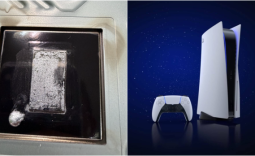 PS5 suffers from severe overheating after liquid metal eats into the heatsink
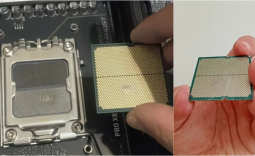 AMD Ryzen 7 7800X3D CPU burns and swells even after using AMD's updated BIOS
 D-Link F518 5G Wi‑Fi 6 AX1800 Mobile Hotspot Review: All-Day Mobile Hotspot
 Bose Lifestyle Ultra Speaker Review - Impressively Detailed Room-Filling Sound
 MSI Z890 Gaming Plus WIFI6E Review - Z890 for under $200
 Mortal Kombat (1995) 4K Ultra HD Blu-ray Review
 CPS PCCOOLER YS1200 ATX 3.1 80 PLUS Gold PSU Review
 ASRock X870E Taichi White Review: a premium AM5 motherboard with 10G LAN and WiFi 7
 Asetek Initium Pedal Modular Upgrades Review
 Thinkware U3000 Pro Review - Smart Dashcam with Wi-Fi quirks
 Montech TG3 Mid-Tower Chassis Review
 ASUS ROG Strix X870E-A Gaming WiFI7 Neo Review - A New Enticing Option
 I ditched the Windows 11 context menu for this open-source tool, and here's why
 Windows 11 may be encrypting your drive already, and I checked where my recovery key went
 GIGABYTE's 40 Days of INFINITY celebrates 40 Years of Innovation with stunning GeForce RTX graphics cards and rewards
 I swapped File Explorer for this free file manager and finally got the layout I wanted
 How to tell if someone has been using your Windows PC without your permission
 6 Task Manager tips for troubleshooting Windows performance problems
 ASUS ROG's 20th Anniversary Line-up of Premium PC Gaming Gear has Arrived - Here's Everything You Need to Know
 Six File Explorer tips every Windows user should know
 I switched my PC to encrypted DNS in Windows 11, and browsing felt more private
 Printer Not Working in Windows? How to fix detection, print queues and drivers