







Science, Space, & Robotics - Page 148
Explore the latest Science, Space, Health, and Robotics news from TweakTown. Coverage includes space launches, medical tech, discoveries, and rockets. - Page 148
Stay Updated
Follow TweakTown for breaking tech news, reviews, and daily updates.


As an Amazon Associate, we earn from qualifying purchases. TweakTown may also earn commissions from other affiliate partners at no extra cost to you.
Officials warn Earth will get hit by an enormous solar flare very soon
Yesterday, officials warned that a blast from the Sun was heading directly to Earth, and now officials have updated the time of impact.

Originally, officials from the US National Oceanic and Atmospheric Administration (NOAA) said that an M-class solar flare (second largest classification) caused a coronal magnetic ejection (CME) of charged particles to erupt from the surface of the Sun. The solar wind (charged particles) was found to be directly on course with Earth, and officials estimated that it would impact Earth on October 10.
However, a new update from NOAA states that the CME will arrive around 12 pm on October 11 with "lingering effects persisting into October 12." So, what does this mean for humans? Dr Sangeetha Abdu Jyothi, from the University of California, Irvine and VMware Research, explained, "A Coronal Mass Ejection (CME) involves the emission of electrically charged matter and accompanying magnetic field into space. When it hits the Earth, it interacts with the Earth's magnetic field and produces Geomagnetically Induced Currents (GIC) on the crust."
Continue reading: Officials warn Earth will get hit by an enormous solar flare very soon (full post)
Prize asteroid near Earth studied, found to be worth trillions
There are many asteroids out in space, and some of them contain high amounts of precious metals that are used here on Earth to make smartphones, batteries, and build large skyscrapers.

Human civilization doesn't quite yet have the technology to harvest the materials contained in these asteroids, but that hasn't stopped researchers from estimating their worth if it was possible. A recent study published in The Planetary Science Journal explores the possibility of harvesting the precious metal-rich asteroid named 1986 DA.
The researchers behind the study examined the asteroid and found that it's 85% metallic and possibly contains the following metals; iron, nickel, cobalt, copper, gold, and platinum. The researchers estimated that the mass of these metals contained in the 1986 DA would exceed the total metal reserves on Earth. Additionally, the researchers estimated the worth of the asteroid, taking into account market deflation that would occur if the materials were transported back to Earth and sold.
Continue reading: Prize asteroid near Earth studied, found to be worth trillions (full post)
NASA scientists now know where to look for life on Mars
NASA has recently stated that the landing location for its newest Mars rover named Perseverance is the best location to discover signs of past life on the Red Planet.

Researchers analyzed images taken by Perseverance of the landscape of the Jezero Crater where it landed. Before Perseverance landed, researchers speculated that the crater was once home to a large body of water being fed by a river. Now, according to a recent paper, NASA researchers' suspicions were correct as some surrounding rock formations show clear evidence that water was present some 3.5 billion years ago when Mars' climate was much more forgiving.
Researchers behind the study compared the images of Martian rock formation to what we commonly see here on Earth, and the similarities were astounding. A river system that was feeding a lake, at one point, rapidly slowed, causing the suspended sediment to form a delta. With evidence of water being present in the past, researchers hope that the samples from the rock will show evidence of past life being present in the area.
Continue reading: NASA scientists now know where to look for life on Mars (full post)
US volcanic eruption spews out lava, wild images captured from space
There has been lots of volcano activity recently happening around the world, and now incredible images from space show an eruption taking place in the United States.

According to the United States Geological Survey (USGS), a volcano located in Hawaii's islands named Kīlauea is spewing out rivers of lava from two vents, one in the western wall of Halema'uma'u crater and the other along the floor. The USGS has stated that all lava activity has been "confined within Halema'uma'u crater" that's in Hawaii Volcanoes National Park. As for seismicity and volcanic gas emissions, the USGS has said the rates "remain elevated".
The volcano has been erupting since September 29, and researchers are currently monitoring the volcano for "high levels of volcanic gas". Additionally, Maxar Technologies has taken this volcanic eruption as an opportunity to use its WorldView-3 and WorldView-2 satellites to capture stunning images of the event. The images can be found above and below. If you are interested in reading more about this eruption, check out this link here.
Continue reading: US volcanic eruption spews out lava, wild images captured from space (full post)
Elon Musk slaps Jeff Bezos a silver 2nd place medal, here's why
Late last month, SpaceX and Tesla CEO Elon Musk replaced Jeff Bezos as the world's richest individual and said he was going to send Bezos a silver medal.

When Musk was declared the world's richest individual by Forbes, he said in an email to the publication that he would send Bezos a "giant statue of the digit '2' to Jeffrey B., along with a silver medal", and now Musk has followed through on one of those. Bezos recently took to Twitter with a motivation post that details the success of Amazon despite what others were saying at the time.
Bezos goes on to say that today Amazon is one of the world's most successful companies and has "revolutionized two entirely different industries". In response to the post, Musk replied with a silver medal second place emoji, and nothing else. Since the events of Blue Origin suing NASA, which delayed the construction of SpaceX's vehicle that is scheduled to take astronauts back to the Moon, Musk has been taking shots at Bezos, with Musk even saying, "you can't sue your way to orbit". More on that story here.
Continue reading: Elon Musk slaps Jeff Bezos a silver 2nd place medal, here's why (full post)
Massive solar flare hits Earth TODAY: disrupts power grids, satellites
Eyes open, no fear: a massive solar flare will be smashing the planet today, with possibly power grid disruption and even seeing Northern Lights as far south as New York.

The US National Oceanic and Atmospheric Administration (NOAA) has said that a geomagnetic storm could cause power grid fluctuations, as well as satellites possibly being affected too. NOAA added that satellites could experience "orientation irregularities" that would force ground control to manually redirect them -- as well as anything else in low-Earth orbit.
NOAA explained: "Event analysis and model output suggest CME arrival around midday on 11 Oct, with lingering effects persisting into 12 Oct". Meanwhile, the Met Office added: "Aurora is possible through [the] 11th across much of Scotland, although cloud amounts are increasing, meaning sightings are unlikely".
Continue reading: Massive solar flare hits Earth TODAY: disrupts power grids, satellites (full post)
NASA astronaut accidentally takes picture of an airplane from space
The International Space Station (ISS) is an incredible vantage point to observe Earth, and sometimes astronauts aboard the ISS take images of the surface.

The ISS is essentially a floating laboratory, and due to its altitude, it's quite useful at spotting things down on Earth's surface. Recently, ISS astronaut Thomas Pesquet snapped an image of a "very rare" glow that was happening above Europe, more on that story here. Now, fellow ISS astronaut Megan McArthur has snapped a picture of Earth's surface, and to her surprise, she was able to spot an airplane soaring through the skies over Alberta, Canada.
McArthur posted the awesome image to her personal Twitter account, where she said that she "laughed out loud" when she spotted the airplane. Due to the ISS's altitude of 253 miles, astronauts aboard the floating laboratory rarely see any human activity on the surface, so it's quite an event when they do. According to Twitter users who used McArthur's timestamp and location from the image, the flight was Atlas Air 5Y8052/GTI8052 that was going from Anchorage, Alaska to Miami, Florida.
Continue reading: NASA astronaut accidentally takes picture of an airplane from space (full post)
Hubble solves 'baffling' mirrored galaxy mystery, researchers stumped
Observing objects out in space with telescopes has its challenges, and sometimes astronomers come across that are much further away than anticipated through a phenomenon called gravitational lensing.

Gravitational lensing ocurrs when a large object such as galaxy is between Earth and an object much further away. Due to the immense gravity of the object, spacetime is warped, and when astronomers peer out into the void to observe the distant object, the warped spacetime acts as a magnifying glass, allowing researchers to see much further than what they originally would be able to.
While gravitational lensing can certainly be useful for researchers, it can sometimes raise more questions about what's being observed rather than answers. For example, back in 2013, astronomers used NASA's Hubble Space Telescope to observe two objects that appeared to be perfectly mirrored. According to astronomer Timothy Hamilton of Shawnee State University, who spotted the two objects, "We were really stumped".
Continue reading: Hubble solves 'baffling' mirrored galaxy mystery, researchers stumped (full post)
Researchers say oxygen on Earth won't last, will suffocate most life
A new study has been published in Nature Geoscience, and it details Earth's oxygen levels eventually running out, causing most life on the planet to suffocate.

Around 2.4 billion years ago, Earth underwent the Great Oxidation Event, which was when Earth's shallow ocean and Earth's atmosphere first began experiencing a rise in oxygen levels. According to the researchers behind the paper, Earth's atmosphere will eventually run out of oxygen and essentially revert back to what it was before the Great Oxidation Event.
Additionally, the researchers say that atmospheric oxygen is unlikely a permanent feature of any habitable worlds, which throws a wrench into human civilizations' search for life outside of Earth. The researchers expect that this drop in oxygen levels throughout the atmosphere will occur after about one billion years or so, and while that is definitely an extremely long way away, when the change in the atmosphere's oxygen levels happens, it will happen relatively quickly.
Continue reading: Researchers say oxygen on Earth won't last, will suffocate most life (full post)
Blast from the Sun on its way to impact Earth, will arrive very soon
The Sun is entering the most intense part of its 11-year cycle, which means we can expect much more activity from our star.

Activity from the Sun can come in various ways, and it's very important that researchers keep a close watch on our star for any dangerous charged particles heading our way. On October 10, researchers observed an M-class solar flare that caused the eruption of a coronal magnetic ejection (CME) that's headed towards Earth. The National Oceanic and Atmospheric Administration (NOAA) researchers have forecasted the arrival of the CME for October 11.
According to Spaceweather.com and SpaceWeatherNews.com, the CME that is on its way to Earth is expected to spark G1 to G2-class geomagnetic storms. Additionally, reports indicate that if a moderately strong G2-storm happens, residents in the United States may see auroras as far south as a line connecting New York to Oregon. It should be noted that this CME has an extremely low chance of affecting electricity grids on a global scale. On top of that, this is CME is classified as a "halo CME" as CMEs heading directly for Earth cause a 360-degree halo around the Sun.
Continue reading: Blast from the Sun on its way to impact Earth, will arrive very soon (full post)
One Inspiration4 astronaut suffered 'space sickness' for two days
A civilian astronaut that was aboard SpaceX's Inspiration4 mission has talked about her experience being in space for three days.

Dr. Sian Proctor was joined by three other crew members for a three-day mission in space, marking the very first all-civilian trip to space. The Inspiration4 mission consisted of zero astronauts, and according to Dr. Proctor, who spoke to National Geographic, the first two days of the trip, she felt quite sick. Dr. Proctor said, "Space sickness is one of those things that a lot of people suffer from. You're just not on your game." So, what causes "space sickness"?
Humans are very well adjusted to the Earth's gravity, but when venturing off-planet with no gravity, you experience weightlessness, which can lead to variable levels of motion sickness. This is quite common, according to Dr. Proctor. Luckily, this feeling is usually temporary as the astronaut starts to adapt and adjust to the new environment. "But man, I woke up the third day, and I was humming, and everything was perfect. I had adapted, I was good, and I was like, 'What? I have to come home?! No, no, no!'" said Dr. Proctor.
Continue reading: One Inspiration4 astronaut suffered 'space sickness' for two days (full post)
William Shatner isn't going to space with Blue Origin... just yet
Last week it was announced that Star Trek's Captain Kirk, played by actor William Shatner will be going to suborbital space with Blue Origin.

The announcement from Shatner and Blue Origin came after the bombshell news that Blue Origin employees reported the work environment at Blue Origin was "toxic" and uncomfortable for women. Shatner will be joined by Blue Origin vice president of mission and flight operations Audrey Powers, but unfortunately, the launch has now been officially delayed due to bad weather.
The launch was scheduled for October 12, but according to Blue Origin representatives, the launch will be pushed back by 24 hours due to unfavorable winds. When Blue Origin launches Shatner and the other crew members into suborbital space aboard the New Shepard vehicle, Shatner will hold the crown for the oldest person to ever go into suborbital space. The new launch date has been scheduled for 9:30 a.m. EDT (1330 GMT) on Wednesday.
Continue reading: William Shatner isn't going to space with Blue Origin... just yet (full post)
Hubble takes an image of a dangerous cosmic dance between two galaxies
NASA has posted a new article to its website that details a dangerous dance between two galaxies that are slowly colliding.

According to the NASA post, the galaxies are located 100 million light-years away from Earth, and according to NASA, both the galaxies are spiral galaxies. The galaxy at the bottom of the image is labeled NGC 5953, and the one above it is called NGC 5954. Since the two galaxies are interacting so much that they have been given a collective name - Arp 91.
Additionally, NASA says that NGC 5953 is clearly "tugging" at NGC 5954, which is a result of the immense gravitational attraction between the two galaxies. Astronomers speculate that on a long enough timeline, the galaxies will eventually collide with each other to form a new type of galaxy called an elliptical galaxy. If you are interested in reading more about these galaxies, check out this link here.
Continue reading: Hubble takes an image of a dangerous cosmic dance between two galaxies (full post)
ISS astronauts take image of a strange, 'very rare' glow above Europe
As you can probably imagine, astronauts aboard the International Space Station have an awesome view of the planet from their position, and sometimes they spot things that are strange.

Astronaut Thomas Pesquet recently spotted something of this nature and posted the image to Twitter, explaining the strange phenomenon that was seen over Europe. According to Pesquet, what was spotted was called a "transient luminous event" in the upper atmosphere, and according to the astronaut, it's a "very rare occurrence".
So what is it? Pesquet says that this phenomenon happens when there's lightning in the upper atmosphere that is occurring at higher altitudes than it normally does. Pesquet wrote on Flickr, "What is fascinating about this lightning is that just a few decades ago they had been observed anecdotally by pilots and scientists were not convinced they actually existed". Jokingly, Pesquet added, "Fast forward a few years and we can confirm elves, and sprites are very real and could be influencing our climate too!"
Continue reading: ISS astronauts take image of a strange, 'very rare' glow above Europe (full post)
Crazy image from space shows bulls-eye clouds above erupting Volcano
The volcano located on Spain's Canary Islands has been erupting for weeks, and a satellite has snapped an incredible photo of it from space.

The eruption of the volcano on La Palma started on September 19 and has continued for weeks now, marking the first time an eruption has happened out of this volcano in more than 50 years. On October 1, the Moderate Resolution Imaging Spectroradiometer (MODIS) that is equipped on NASA's Aqua satellite snapped a crazy image of the clouds above the volcano as it passed overhead. The image shows concentric cloud rings that look very much like a bulls-eye.
According to NASA's Earth Observatory, the concentric clouds that can be seen in the image are a result of a rising column of superheated ash and gases, which is described as an "eruption column". Additionally, NASA explains that "The buoyant column of water vapor and other gases rose rapidly upward until colliding with a drier, warmer layer of air at roughly 5.3 kilometers (3.3 miles) altitude. The unusually warm air above-a temperature inversion-functioned like a lid, preventing the volcanic plume from rising any higher. Instead, it flattened out and spread horizontally."
Continue reading: Crazy image from space shows bulls-eye clouds above erupting Volcano (full post)
NASA's human Mars colonists may live in these inflatable pods
NASA is already planning on what kind of structures human colonists will live in when they arrive on Mars, and inflatable pods may be a viable choice.

NASA selected a design from Hassell Studio, an architectural firm, and Eckersley O'Callaghan, an engineering design team, and it's unlike any other proposed design for living quarters on the Red Planet. The design concept was posted to the Hassell YouTube channel back in March 2019, and it details a concept that concentrates on protecting the astronauts that live in it from the main dangers of Mars; dust storms, high amounts of radiation, low temperatures, and an unlivable atmosphere.
The team at Hassell proposes sending several robots to the surface of Mars before the astronauts arrive. These robots will be programmed to find a viable location for an outer shell made out of Mars regolith, or loose rock, to be 3D printed. This outer shell, constructed with Mars soil, will protect the astronauts from the elements of Mars and will essentially be a roof over the inflatable pods that will arrive with the astronauts. Once the shell is complete, and the astronauts arrive, the inflation process for the pods begins.
Continue reading: NASA's human Mars colonists may live in these inflatable pods (full post)
NASA takes steps to finding ancient life on Mars with wild new images
Researchers have published a new study that confirms that the Jezero Crater was once home to large amounts of liquid water and a river.

The study was published in Science, and according to the researchers, the images taken by NASA's Perseverance of cliffs show strong evidence of layers within the cliffs that are similar to Earth's river deltas. According to the researchers, the images show a presence and a steady flow of water, which caused the formation of the cliff/crater floor. Additionally, researchers inferred that Mars was once "warm and humid enough to support a hydrologic cycle" around 3.7 billion years ago.
The findings from the Mars rover and the analysis provided by the researchers will assist NASA in guiding Perseverance to the location that has the highest chance of containing "bio-signatures" of ancient microbial life. NASA astrobiologist Amy Williams and her team, who found similarities between the cliff formation, crater floor, and Earth's river deltas, said, "From orbital images, we knew it had to be water that formed the delta. But having these images is like reading a bo/ok instead of just looking at the cover."
Continue reading: NASA takes steps to finding ancient life on Mars with wild new images (full post)
NASA's Perseverance Mars rover was spied on, image from above taken
NASA's Perseverance rover that's stationed on Mars in the Jezero Crater has been spotted from above by a passing satellite.

Perseverance landed in the Jezero Crater back in February earlier this year, and since its landing, it has been exploring the area that surrounds it along with its helicopter companion Ingenuity. Perseverance is on the Red Planet to collect samples of rock and dirt to eventually transport them back to Earth for researchers to analyze.
Ultimately, Perseverance has been sent to Mars to hunt for signs of ancient microbial life, and recently studies confirmed that the location where Perseverance is stationed was once a large lake and a river. NASA's Mars Reconnaissance Orbiter passed over Perseverance exploring the Jezero Crater and managed to snap a birds-eye-view of the rover, the image is located above. Communication between NASA, the rover, and its companion has temporarily been paused as Earth and Mars move to opposite sides of the Sun.
Continue reading: NASA's Perseverance Mars rover was spied on, image from above taken (full post)
Lunar samples analyzed, the results rewrite the history of the Moon
China's Chang'e 5 mission collected 3.8 pounds of lunar material from a region on the Moon that was once a large plain of molten lava.

The first paper detailing the results of the samples being analyzed has recently been published in Science, and according to the findings, the volcanic rock located in the landing site is much younger than what researchers first anticipated. According to the paper, lunar volcanoes were erupting as early as 2 billion years ago, which means that researchers' current model of the Moon's history now needs to be adjusted to fit in the new data.
Study co-author Brad Jolliff, a planetary scientist, and mineralogist at Washington University in St. Louis, said, "So we got the stuff less than a billion, and the stuff older than 3 billion, [but] there's this big gap of 2 billion years - from 1 to 3 billion years ago - that we had no actually calibrated surfaces. And so this result now gives us that age - and it's right in the middle!"
Continue reading: Lunar samples analyzed, the results rewrite the history of the Moon (full post)
NASA's rover confirms something big on Mars, potential 'signs of life'
With images acquired by NASA's Perseverance rover, the space agency has confirmed that the Jezero Crater was once a large lake.

NASA landed the Perseverance rover in the Jezero Crater back in February this year with the goal of developing a deeper understanding of Mars' history and identifying any potential signs of past life. Now, a new study published in the journal Science has confirmed through an analysis of images taken by Perseverance of outcropping rocks inside the crater that the crater was once a lake bed fed by a small river 3.7 billion years ago.
The researchers confirmed the existence of the lake and river by looking at the sedimentary layers in the outcrop and found that the river provided the lake with a steady flow of liquid water until a dramatic shift in climate caused mass flooding that was near the end of the lake's lifespan. Now that it has been confirmed that the Jezero Crater was once a lake, researchers hope to find traces of ancient aqueous life in the sediments. Perseverance will acquire sediment samples that will eventually be transported back to Earth to be scanned for Martian biosignatures.
Continue reading: NASA's rover confirms something big on Mars, potential 'signs of life' (full post)
 Twitch opts streamers into gen AI training by default, faces harsh backlash
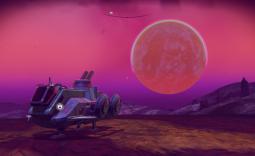 Sean Murray still plays the 2016 launch version of No Man's Sky
 China's YMTC has climbed to third place in global NAND flash shipments
 $100 GTA 6 version makes up 89% of pre-orders, analysts estimate
 HWiNFO's latest update quietly confirms Intel is working on Razor Lake-AX
 Nintendo puts Switch 2 price increase warnings on store demo kiosks ahead of September 1 hike
 GIGABYTE launches two new B450 motherboards as demand for AM4 stays high in 2026
 Microsoft finally makes up its mind and unifies Copilot features into one big app
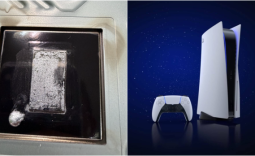 PS5 suffers from severe overheating after liquid metal eats into the heatsink
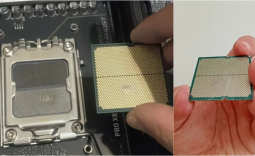 AMD Ryzen 7 7800X3D CPU burns and swells even after using AMD's updated BIOS
 D-Link F518 5G Wi‑Fi 6 AX1800 Mobile Hotspot Review: All-Day Mobile Hotspot
 Bose Lifestyle Ultra Speaker Review - Impressively Detailed Room-Filling Sound
 MSI Z890 Gaming Plus WIFI6E Review - Z890 for under $200
 Mortal Kombat (1995) 4K Ultra HD Blu-ray Review
 CPS PCCOOLER YS1200 ATX 3.1 80 PLUS Gold PSU Review
 ASRock X870E Taichi White Review: a premium AM5 motherboard with 10G LAN and WiFi 7
 Asetek Initium Pedal Modular Upgrades Review
 Thinkware U3000 Pro Review - Smart Dashcam with Wi-Fi quirks
 Montech TG3 Mid-Tower Chassis Review
 ASUS ROG Strix X870E-A Gaming WiFI7 Neo Review - A New Enticing Option
 I ditched the Windows 11 context menu for this open-source tool, and here's why
 Windows 11 may be encrypting your drive already, and I checked where my recovery key went
 GIGABYTE's 40 Days of INFINITY celebrates 40 Years of Innovation with stunning GeForce RTX graphics cards and rewards
 I swapped File Explorer for this free file manager and finally got the layout I wanted
 How to tell if someone has been using your Windows PC without your permission
 6 Task Manager tips for troubleshooting Windows performance problems
 ASUS ROG's 20th Anniversary Line-up of Premium PC Gaming Gear has Arrived - Here's Everything You Need to Know
 Six File Explorer tips every Windows user should know
 I switched my PC to encrypted DNS in Windows 11, and browsing felt more private
 Printer Not Working in Windows? How to fix detection, print queues and drivers