







Learn about how TweakTown tests and reviews hardware. As an Amazon Associate, we earn from qualifying purchases. TweakTown may also earn commissions from other affiliate partners at no extra cost to you.
Stay Updated
Follow TweakTown for breaking tech news, reviews, and daily updates.


Blast from the Sun hit Earth, causing beautiful auroras to appear
On October 9, the Sun blasted out a slew of charged particles directly at Earth. The result was a low-to-moderate geomagnetic storm taking place on our planet.

Earth has a protective shield against the fury of the Sun, and this protective shield is called our magnetosphere. When the Sun shoots out a coronal mass ejection (CME) - which is a significant release of plasma from the Sun - and it collides with our planet's magnetosphere, it can cause some considerable effects. Depending on how powerful the solar wind is from the blast, the CME can cause power outages, internet disruptions, satellite issues, and more.
Luckily, the event of October 9 didn't cause much damage at all since the blast was only relatively small in scale. However, the effects of the blast were seen across the globe in the form of auroras in the sky. Auroras happen when the charged particles from the solar wind get trapped in Earth's magnetic field and travel to the geomagnetic poles of the planet. The result is the stunning colors we see in the sky. The European Space Agency put together a video that is comprised of an image taken every 60 seconds throughout the duration of the solar storm. The video can be found above.
Continue reading: Blast from the Sun hit Earth, causing beautiful auroras to appear (full post)
Cybershoes gets native support in multiple Quest games
Cybershoes on Wednesday announced that its locomotion solution is now integrated into a handful of new titles. The company also revealed that the hardware is now available on Amazon.

Cybershoes is a VR locomotion system that integrates a 360-degree swivel stool and a pair of shoe covers that track your foot movement. The company makes a version for PCVR and a version for Oculus Quest, and now there's a new list of games that support the controller.
Until You Fall from Schell Games, Contractors VR from Caveman Studio, Grapple Tournament from Tomorrow Games, and Death Unchained from Superbright have all recently received updates that enable Cybershoes support.
Continue reading: Cybershoes gets native support in multiple Quest games (full post)
Facebook is going all in on the Metaverse with 10k jobs and a new name
Facebook is making some dramatic moves these days. The company is preparing to hire 10,000 people to help create the metaverse. It's also reportedly about to change names. Huh?

Facebook's founder, Mark Zuckerberg, has never been coy about is his belief in the future of VR and AR technology. He famously threw down billions of dollars to buy Oculus years before the VR industry was even on its feet. In 2014, Zuckerberg believed that VR would be the "next computing platform."
Since then, his company has invested billions more in developing the hardware, software, and general technology to bring VR to the market and create the foundational tech needed for consumer AR devices. Now, it appears that he's betting the farm on the future of immersive computing technology.
Continue reading: Facebook is going all in on the Metaverse with 10k jobs and a new name (full post)
AORUS Project Cielo: modular gaming PC, looks like food dehydrator
GIGABYTE engineers have spent an untold amount of time designing what they consider the next-gen gaming PC, introducing Project Cielo.

Project Cielo might look like a food dehydrator but it's really a concept portable PC with 5G connectivity, a huge built-in battery, and bigger Bluetooth speaker at the bottom. GIGABYTE is silent on the internal specs of Project Cielo, but I guess it could have anything inside of it: Intel's new 12th Gen Core "Alder Lake" CPUs, or 13th Gen Core CPUs of the future alongside AMD's new Zen 4 chips coming in 2022.
Being a "next-gen gaming PC" we should expect a next-gen NVIDIA GeForce RTX 40 series or AMD Radeon RX 7000 series GPU, DDR5 RAM support, and PCIe 5.0 support as well. We can't have built-in 5G without the very latest CPU and GPU technology, right AORUS?
Continue reading: AORUS Project Cielo: modular gaming PC, looks like food dehydrator (full post)
AORUS Z690 EXTREME motherboard teased, ready for your Core i9-12900K
GIGABYTE's new flagship AORUS Z690 EXTREME motherboard has smiled for the camera, looking absolutely rockin' with its design and use of RGB lighting.

The new AORUS Z690 EXTREME motherboard will be ready for Intel's new 12th Gen Core "Alder Lake" CPUs, as well as the new worlds of DDR5 memory and PCIe 5.0 slots. There's no detailed specs on the AORUS Z690 EXTREME motherboard just yet, but we do know that it supports DDR5-4800 RAM out of the box, and much more with overclocking.
We have an awesome RGB-laden memory cover over the new DDR5 DIMM slots, to the right of the new LGA 1700 socket that will take that new Intel Core i9-12900K processor... or any other Alder Lake CPU for that matter. It will be interesting to see if you can only fit a particular height DDR5 gaming memory under that cover on the AORUS Z690 EXTREME motherboard.
Continue reading: AORUS Z690 EXTREME motherboard teased, ready for your Core i9-12900K (full post)
G.SKILL rocks out with world's fastest DDR5-6600 RAM, Alder Lake ready
You can't even buy DDR5 memory right now, but there's already the world's fastest DDR5 memory unleashed by G.SKILL with speeds breaching DDR5-6600 in a larger 32GB kit.

G.SKILL is using timings of CL36-36-36-76 for its 32GB kit of DDR5-6600, using some of Samsung's very best DDR5 IC. The new member of the Trident Z family of DDR5 memory will be the perfect choice for gamers, enthusiasts, overclockers, and those chasing the most performance from their new Intel Alder Lake gaming PC.
G.SKILL will be offering the super-fast DDR5-6600 as a new member of the Trident Z family of DDR5 memory, with an option for RGB lighting with its Trident Z RGB RAM. The tighter timings on the DDR5-6600 are impressive, with CL36-36-36-76 compared to the normal CL40-40-40 timings of DDR5. This RAM is of course ready for Intel's new 12th Gen Core "Alder Lake" CPUs and the Z690 chipset, which will support both DDR5 RAM and PCIe 5.0.
Continue reading: G.SKILL rocks out with world's fastest DDR5-6600 RAM, Alder Lake ready (full post)
ASUS teases Z690 mobos: Intel Alder Lake CPUs, DDR5, PCIe 5.0 tech
ASUS has officially teased its new Z690 family of motherboards, with the new ROG STRIX, PRIME, ProArt, and TUF Gaming motherboards all geared and ready for Intel's new 12th Gen Core "Alder Lake" CPUs.

The new ASUS Z690 ROG STRIX motherboard looks delicious with its design and style, also rocking some dual 8-pin power connectors to power the flagship Intel Core i9-12900K processor. It looks great from this teaser by ASUS, but also expect multiple motherboards in the Z690 ROG family, with all of the Z690 ROG STRIX motherboards featuring DDR5 + PCIe 5.0 technologies.
ASUS will have the Z690 TUF Gaming that will be locked to DDR4, with ASUS not offering any Z690 TUF Gaming motherboards with DDR5. DDR5-ready motherboards from ASUS in the Z690 range include the ROG MAXIMUS, ROG STRIX, ProArt, and PRIME motherboards. There are also ROG STRIX, TUF Gaming, and PRIME motherboards with DDR4.
Continue reading: ASUS teases Z690 mobos: Intel Alder Lake CPUs, DDR5, PCIe 5.0 tech (full post)
Guardians of the Galaxy is actually only 80GB on PC, not 150GB
Square Enix says Guardians of the Galaxy's install size on the spec requirement page will shrink by almost half before launch.

A bit ago some bruhaha broke out about Eidos-Montreal's new Guardians of the Galaxy game, mainly with its huge install size requirements. Previous Steam listings say the game needs 150GB of space. This is wrong. The game actually only needs about 80GB of space--Eidos-Montreal has shrunk the requirement down by nearly 50%--and the Steam store page has been updated to reflect this number.
Outside of this brief kerfuffle there hasn't been much negativity around the game. Guardians of the Galaxy is an offline, singleplayer-only action RPG and won't be monetized with microtransactions or DLC. It's a self-contained experience and is as opposite as Avengers as a game could get. Crystal Dynamics' Avengers game has been criticized for its over-monetized cosmetics and explosive, yet derivative gameplay.
Continue reading: Guardians of the Galaxy is actually only 80GB on PC, not 150GB (full post)
Starfield set in year 2330 in systems 50 light-years from Solar System
Bethesda reveals new Starfield info in an unlisted YouTube video, confirming the star date, brutal interstellar war, and multiple new factions seen in the game.

Every new Starfield update makes one thing clear: This is the game Bethesda has always wanted to make. Starfield is a celebration of the golden age of 1970s sci-fi where spaceships, blasters, and promises of interstellar exploration captured the public's attention.
The latest Starfield news further illustrates this with new exuberant concept art inspired directly from John Berkey alongside gritty Bladerunner-style art based on Syd Mead's work. We also get a bunch of new info, including confirmation that Starfield takes place in the year 2330 in the Settled Systems, a group of planets and stars 50 light-years away from the Solar System.
Continue reading: Starfield set in year 2330 in systems 50 light-years from Solar System (full post)
Cyberpunk 2077, Witcher 3 next-gen PS5, Series X ports delayed to 2022
The Witcher 3: Wild Hunt and Cyberpunk 2077 next-gen versions won't release in 2021, and have been delayed to 2022, CD Projekt RED today announced.

In a recent note to investors, CD Projekt RED confirms the delay of new next-gen ports for two of its hit games. Cyberpunk 2077's PS5 and Xbox Series X/S re-release will now launch in Q1 2022, which runs from January - March 2022.
The Witcher 3 won't be out until much longer, as far out as mid-year. CDPR plans to launch The Witcher 3: Wild Hunt's PS5 and Xbox Series X/S version in Q2 2022, which runs from April - June 2022.
Continue reading: Cyberpunk 2077, Witcher 3 next-gen PS5, Series X ports delayed to 2022 (full post)
God of War coming to PC with DLSS support, uncapped FPS, native 4K
Sony continues breaking PlayStation console game exclusivity by bringing more PS4 games to PC.

God of War is the latest PS4 game to make the jump over to PC. Sony Santa Monica's 2018 magnum opus will be unleashed with the power of PC hardware and offer optimizations like NVIDIA DLSS support for boosted in-game performance (as well as NVIDIA Reflex support), native 4K resolution gaming, and uncapped frame rates. Like the PC version of Horizon Zero Dawn, God of War will also have a ton of graphical tweaks and presets for PC players to adjust.
"Our PC version includes a wide range of graphical presets and options so you can fine-tune your visual experience based on your setup. From higher resolution shadows and improved screen space reflections to enhancements to the ambient occlusion pipeline with GTAO and SSDO - God of War on the PC can create striking visual quality unique to the platform."
Continue reading: God of War coming to PC with DLSS support, uncapped FPS, native 4K (full post)
Monster Hunter World, a 3 year-old game, sold 2.7m units in 3 months
Monster Hunter World is selling incredibly well for a three year-old video game and still remains Capcom's champion release.

Monster Hunter World's performance can be summed in one phrase: sales-revenue monster. The game has now accumulated 20 million shipments worldwide, cementing the game firmly as the best-selling Capcom title of all time.
On top of the accumulated sales milestone is the game's continued sales over time. Monster Hunter World's previous sales were 17.3 million as of June 30, 2021, meaning the online action-RPG has sold 2.7 million in just three months. That's more than some games sell in their entire lifetime, and Monster Hunter World's total sales are more than some franchises sell.
Continue reading: Monster Hunter World, a 3 year-old game, sold 2.7m units in 3 months (full post)
Facebook is being completely rebranded next week, amid company chaos
Facebook is preparing for a huge rebranding with a change to the company name to be announced next week, according to the very latest rumors.

The company will change its name and talk about its focus on building the metaverse, "according to a source with direct knowledge of the matter" reports The Verge. Facebook CEO Mark Zuckerberg will talk at the company's annual Connect conference on October 28, but we could hear about the rebrand sooner than that.
The new name for Facebook isn't known widely within the company according to The Verge, which says that the new name is a "closely-guarded secret within its walls and not known widely, even among its full senior leadership". One of the names being thrown around is "Horizon".
Continue reading: Facebook is being completely rebranded next week, amid company chaos (full post)
NASA releases wild video of its rover speeding on the surface of Mars
NASA's Perseverance rover is designed for precision, and to achieve that, the rover must move incredibly slow - painfully slow.

NASA's Perseverance rover has a top speed on flat ground of a little less than 0.1 miles per hour. But, the space agency has released a new sped-up video of the rover traversing the Martian surface. The video is sped up by about 200 times, and in-between each frame of the video is about 30 seconds. "In total, the rover drove 574 feet (175 meters). The first 26 feet (8 meters) were based on commands sent up earlier by rover drivers, allowing Perseverance to build a 3D map of the terrain under and around it", wrote NASA.
The footage has been released onto the official Perseverance Twitter account and shows the rover taking the surface of the Red Planet head-on. Recently, NASA's Perseverance rover captured a panorama of the Martian surface that shows it in incredible detail. The image is a mosaic piece that is comprised of 84 separate images. If you are interested in checking out that image, click this link here.
Continue reading: NASA releases wild video of its rover speeding on the surface of Mars (full post)
If alien probes are close to Earth, this new telescope may find them
The idea of advanced aliens being out there somewhere in the cosmos has been an idea much speculated by everyday people as well as scientists.

There are people on both sides of the metaphorical fence that claim aliens are somewhere out there in the void and others who claim we are the first since we haven't detected them yet. Perhaps the problem isn't that they are real or not, perhaps, the problem is a limitation in our technology to detect them (if they are there). A new study has appeared on a preprint server that details the possibility of China's new radio telescope being capable of detecting alien probes within and beyond our solar system.
The paper explains through calculations that China's Five-hundred-meter Aperture Spherical Radio Telescope (FAST) could be able to detect alien probes within its radio spectral band that is a key feature of the telescope. The idea behind the telescope being able to detect alien probes is that these probes would emit some kind of radiation that China's new instrument could then detect. If you are interested in reading more about this story, check out this link here.
Continue reading: If alien probes are close to Earth, this new telescope may find them (full post)
Earth tipped on its side millions of years ago, did a 'cosmic yo-yo'
Researchers have analyzed limestone samples and have discovered that Earth tipped millions of years ago while dinosaurs were still walking around.

The new study has been published in Nature Communications and details an analysis of limestone samples from Italy that date back 65.5 to 100.5 million years ago during the Late Cretaceous period. The researchers were looking for evidence of a shift in Earth's magnetic record that would indicate True Polar Wander (TPW), which can cause whole planets and moons to tilt.
According to the study results, the researchers were able to identify evidence of a tilt occurring with bacteria fossils trapped within the limestone. These bacteria fossils provide evidence that during the aforementioned periods, the Earth's surface, which is made up of mantle and crust, tipped by 12 degrees around 84 million years ago and then corrected itself within about 5 million years.
Continue reading: Earth tipped on its side millions of years ago, did a 'cosmic yo-yo' (full post)
Life-threatening asteroids could be sliced and diced, says new study
A group of researchers has proposed a new method of planetary defense that would explode a potentially life-threatening asteroid that was on track to impact Earth.

The technical paper has been published in the journal Advances in Space Research on the University of California, Santa Barbara (UCSB) Experimental Cosmology Group website and details what are described as "penetrator rods". These rods would be launched on the back of the rocket and directed straight for the asteroid that was on its way towards Earth.
The rods are between 6 and 10 feet long and equipped with explosives that could potentially be nuclear. The idea behind this strategy is that the rods would enter the asteroid surface and explode, which would cause the asteroid to shatter into small pieces. The researchers state in the paper that the damage caused by the smaller pieces of the asteroid wouldn't even be close to the amount of damage a larger asteroid would do.
Continue reading: Life-threatening asteroids could be sliced and diced, says new study (full post)
NASA's ancient asteroid inspecting spacecraft 'Lucy' has glitched
NASA recently launched its spacecraft that is scheduled to inspect ancient asteroids located near the largest planet in our solar system - Jupiter.

NASA's Lucy spacecraft took off on Saturday, October 16, aboard the United Launch Alliance Atlas V rocket, and while the launch was deemed an overall success, the space agency has announced the spacecraft has experienced a slight problem with one of its solar panels. The two solar panels Lucy is equipped with are crucial components of the spacecraft's very ambitious mission to visit the ancient Trojan asteroids as they give the spacecraft power.
According to the announcement from NASA's associate administrator for science who wrote on Twitter, Lucy is "safe and stable". However, "The two solar arrays have deployed, but one may not be fully latched." Adding, "The team is analyzing data to determine next steps. This team has overcome many challenges already and I am confident they will prevail here as well." NASA gave its own statement on the matter, saying, "Lucy's two solar arrays have deployed, and both are producing power and the battery is charging. While one of the arrays has latched, indications are that the second array may not be fully latched."
Continue reading: NASA's ancient asteroid inspecting spacecraft 'Lucy' has glitched (full post)
White dwarf star seen switching 'on and off' for the first time ever
Astronomers used one of NASA's satellites to observe a white dwarf star seemingly switching "on and off" for the first time.

The research has been published in the journal Nature Astronomy. It details a first-time discovery of astronomers from Durham University, UK, using NASA's Transiting Exoplanet Survey Satellite (TESS) to look at a white dwarf star around 1,400 light-years. The astronomers' new observations detail the white dwarf losing brightness in just 30 minutes, which is something that was only previously observed over a period of several days to months.
So, why did this happen? According to Phys.org, the brightness of a white dwarf star is affected by the amount of material surrounding it that it can potentially feed on. When the white dwarf is bright, it's feeding off the accretion disk of its companion star, and when dull, it's not "eating" as much. From the results, the researchers suspect that there was an interference of some sort with the star's food supply which led to the dramatic rise and fall of its brightness.
Continue reading: White dwarf star seen switching 'on and off' for the first time ever (full post)
NASA Mars rover records Martian sound, says it was 'totally wrong'
NASA has recorded what it sounds like on Mars with two microphones aboard its Perseverance rover that's currently exploring the Red Planet.

In a new video released on NASA's Jet Propulsion Laboratory YouTube channel, NASA imaging scientist Justin Maka at NASA's Jet Propulsion Laboratory and Nina Lanza, a scientist at Los Alamos National Laboratory (LANL), explain how the Perseverance rover captured the sounds of Mars and the importance of being able to hear what it's like on the Red Planet.
The two microphones that Perseverance is equipped with are two commercial off-the-shelf microphones. Having microphones on Perseverance allows researchers to understand how sound works in Mars' atmosphere, such as the Red Planet's atmosphere is vastly different compared to Earth's. Additionally, researchers can listen to the rover performing analysis as well as the sounds the rover makes, which allows engineers to better understand the current health of the rover better. To listen to the sounds of Mars, check out the above video.
Continue reading: NASA Mars rover records Martian sound, says it was 'totally wrong' (full post)
 Minecraft now recommends 16GB of RAM and a much newer CPU
 007 First Light ditches Denuvo DRM just as first patch arrives packing a ton of bug fixes and some new content
 Microsoft's still working on Windows 11 File Explorer improvements, and it's now making deleting large files speedier
 Hacking group Anonymous targets Sony over deciding to kill PlayStation discs
 Top 5 PS Store pre-orders in US are all $100+ games
 Anthropic responds after Claude conversations appeared in Google Search results
 Steam Workshop maps infected players with malware and took over a 100,000-member Discord
 MSI launches compact PRO MAX EDGE AI+ desktops, with up to Ryzen AI Max+ 395 and 128GB of memory
 ASRock launches new 27-inch QHD QD-OLED Phantom Gaming monitors
 Framework says current memory prices are 'far beyond anything we're able to absorb'
 Logitech G512 X 98 Analog Mechanical Gaming Keyboard Review - An Innovative Two-in-One
 Thrustmaster T.Flight HOTAS 5 MSFS Edition Review
 SteelSeries Arctis Nova Pro Omni Wireless Headset Review - One Headset to Rule Them All
 SteelSeries Arctis Nova 7 Wireless Gen 2 Headset Review - New and Improved, But Is It Enough?
 AMD Ryzen 7 7700X3D Review - Days of Future Past
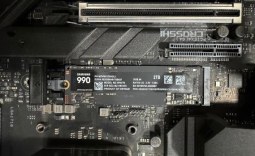 Samsung 990 2TB SSD Review - Ninth Gen QLC at PCIe Gen4 Speeds
 ASUS ExpertBook Ultra (Panther Lake) 14" Business Laptop Review
 ASUS ROG Raikiri II Xbox Wireless Controller Review - Ready to Take Control
 MOZA FMP18 Panel Bundle Review: authentic F/A-18 Hornet cockpit controls for flight sims
 Micron 6600 ION 245.76TB Enterprise SSD Review - Best in Class Programming Speeds
 Printer Not Working in Windows? How to fix detection, print queues and drivers
 The Ultimate Guide to Personalizing Your Windows 11 Taskbar
 How to Turn Your Windows Laptop Into a Second Monitor with Miracast and Wireless Display in Minutes
 6 Mistakes to Avoid When Buying a Windows Laptop
 I capped Windows Update's bandwidth with Delivery Optimization, and my downloads stopped choking
 I use this decade-old free tool that finds files faster than Windows Search does
 I install and update most of my apps with this Windows command now, and I stopped downloading sketchy installers
 Hisense U6SF 65-inch MiniLED TV: High Performance Meets Leisurely Convenience
 I stopped digging through Windows menus after I set up this one folder
 Don't sell your Windows laptop until you do these things