







Learn about how TweakTown tests and reviews hardware. As an Amazon Associate, we earn from qualifying purchases. TweakTown may also earn commissions from other affiliate partners at no extra cost to you.
Stay Updated
Follow TweakTown for breaking tech news, reviews, and daily updates.


NASA confirms intense solar flare followed by an impact on Earth
Officials have watched the Sun's growing activity for quite some time now, but recently our star released a series of powerful solar flares.

Space.com has reported that the Sun released a trio of solar flares between August 27 and August 29. The strongest of the flares was an M8-class flare that was reported to have happened on Monday, August 29. NASA ranks solar flares on a similar scale to the Richter scale used for earthquakes, but instead, it includes letters. Solar flares range in severity from A-class level being the smallest to B-class, C-class, M, and finally, X-class being the most powerful.
As outlined by NASA, each of the letters represents an increase of 10-fold the energy output from the flare, which means that an X-class solar flare is 10 times more powerful than an M-class, and an M-class is 100 times more powerful than a C-class. Notably, the scale also features a finer scale of numbers ranging from 1-9. Furthermore, the space agency notes that solar flares C-class and below are too weak to noticeably affect Earth, but M-class and above can cause radio blackouts and radiation storms that can endanger astronauts.
Continue reading: NASA confirms intense solar flare followed by an impact on Earth (full post)
Meta open the flood gates for NFTs on Facebook and Instagram
Meta is fully adopting digital collectibles such as NFTs, according to a recent announcement on the company's website.

On Meta's Newsroom website, the company outlined its continued plan to adopt digital collectibles across Facebook and Instagram, with Meta writing as of August 29 that it's begun giving users the ability to post digital collectibles that they own across both Facebook and Instagram. Additionally, the company wrote that it will be allowing Facebook and Instagram users to connect their digital wallets once to either application, which will enable the user to share digital collectibles across both platforms.
Meta's digital collection adoption plan has been rolling out for quite some time, with the company announcing on August 4 that it expanded into support for digital collectibles to 100 more countries, ushering in support for popular digital wallets such as Coinbase Wallet, Dapper, and more. As reported by TechCrunch, Meta CEO and Facebook founder Mark Zuckerberg began talking about NFTs coming to Instagram in March 2022, and now they have been rolled out to US-based users.
Continue reading: Meta open the flood gates for NFTs on Facebook and Instagram (full post)
Tesla Cybertruck spotted taking a beating on public street
Tesla's highly anticipated Cybertruck has been spotted on a public street looking pretty worse for wear, with onlookers witnessing a towing.

From the image, we can see that the unreleased Cybertruck has been put through some tests, possibly off-road, considering the amount of dust that is seen all over its side panels. The vehicle also doesn't have any windows on at least one of its sides, and it may possibly have a cracked windshield, or the windshield is reflecting the branches of the tree behind it. Most noticeably, the vehicle is equipped with apparatuses on its sides, roof, and front. This equipment was likely necessary for any performance testing that was being conducted.
Reports indicate that the equipment seen on the Cybertruck is likely some form of cameras and sensors used to calibrate or monitor the vehicle throughout testing. Tesla fans that examined the image closely discovered that the Cybertruck still uses its large windscreen wiper, which seems to not be popular with at least some fans. Tesla's Cybertruck will be Elon Musk's most durable car yet, with Tesla even writing on its website that its "exoskeleton" is made for "ultimate durability and passenger protection".
Continue reading: Tesla Cybertruck spotted taking a beating on public street (full post)
Elon Musk makes big 2030 prediction, says what keeps him up at night
Elon Musk recently sat down for an interview at the ONS Foundation Conference in Norway where he answered multiple questions regarding the future of sustainable energy.

During Musk's interview the Tesla and SpaceX CEO touched on fossil fuels and the progression of a sustainable economy. Musk said that Earth needs to have more oil and gas, but at the same time should be putting effort into developing more sustainable energy. Following this statement Musk said that he predicts by 2030 that almost half of all manufactured cars will be electric.
Stemming off of electric cars Musk also said that he hopes he can announce the location of a new Tesla factory close to the end of this year, while saying there is "no shortage" of raw materials on Earth for batteries to be built. On a more personal note, Musk was asked "what keeps you up at night", and Musk's answer was simple - an orbital Starship and self-driving Tesla cars. Musk has answered this question in previous interviews and has even set public goals for himself, writing on Twitter - 2 main goals this year, Starship to orbit and Full Self Driving wide release.
Continue reading: Elon Musk makes big 2030 prediction, says what keeps him up at night (full post)
Intel: 'we're competitive or better' than NVIDIA with ray tracing GPUs
Intel is talking up the ray tracing performance of its Arc GPU hardware, where the company has flown Ryan Shrout and Tom Peterson out to Berlin, Germany for IFA 2022 and revealed new details on the RTU (Ray Tracing Unit) and its performance.

Intel's Ryan Shrout and Tom Peterson spoke with PCGamer's Senior Hardware Editor, Jacob Ridley, where they talked about a fair amount but when it came to ray tracing we've got some confident new comments from the company. The Ray Tracing Unit (RTU) on Arc GPUs is capable of delivering "real" ray tracing performance notes Tom Peterson, with the Arc A770 and Arc A750 battling the RTX 3060 and keeping up or beating it.
Tom continued, saying that the ray tracing performance Intel offers with its Arc GPUs is competitive or better than NVIDIA's ray tracing hardware. Tom said: "The RTU [ray tracing unit] that we have is particularly well suited for delivering real ray tracing performance. And you'll see that when you do ray tracing on comparisons with an [RTX] 3060 versus A750 or A770, we should fare very, very well. Yeah, we're definitely competitive or better than NVIDIA with ray tracing hardware".
Continue reading: Intel: 'we're competitive or better' than NVIDIA with ray tracing GPUs (full post)
Bang & Olufsen's new motorized TV stand + Atmos soundbar costs $8000
Bang & Olufsen have just unveiled their new Beosound Theatre Dolby Atmos soundbar at IFA 2022, featuring a stylish speaker and motorized stand at a cost... well, at a cost that will hurt.

Inside, the new Beosound Theatre features an all-in-one system with 12 speaker drivers in total, with two custom-made, long-stroke 6.5-inch woofers. If you want even better audio, Bang & Olufsen features seven built-in outputs that support up to an audiophile-worthy 16 external loudspeakers with support for Dolby Atmos 7.1.4 surround systems.
The company says the design is a "sculptural, modular build" with the interface bracket being motorized it allows users to rotate the TV to their perfect liking. The soundbar is available separately from the stand, so you can replace the soundbar (or the TV) in the future. The TV stand, or what is the Beosound Theatre interface bracket, has a cool little compartment that lets you hide your cables and STBs away.
Continue reading: Bang & Olufsen's new motorized TV stand + Atmos soundbar costs $8000 (full post)
KIOXIA details new tech, products, form factors at VMWare Explore
KIOXIA is at VMWare Explore this week showing off its new technologies, products, and form factors that will benefit the world of VMware applications, where the company says it will "help build the new multi-cloud world".

KIOXIA says that its families of SSD solutions will help partners enhance their multi-workload and multi-workspace IT infrastructures of today, while planning for the future. The company is showing off both what it has now, and what it has coming in the future, pointing to its new 24G SAS SSDs that will push super-high speeds to SAS architectures, next-gen PCIe 5.0 storage solutions that double the speeds over PCIe 4.0 SSDs, and new form factors that have more performance and density than ever before.
VMware Explore is being held in San Francisco's Moscone Center, where KIOXIA has some demo systems detailing its products and how it will be helping drive the future of the cloud. KIOXIA has demos using:
Continue reading: KIOXIA details new tech, products, form factors at VMWare Explore (full post)
AMD: yeah, so DDR5-6000 is the sweet spot for Ryzen 7000 'Zen 4' CPUs
AMD's new Ryzen 7000 series "Zen 4" CPUs usher in the world of DDR5 memory, with the company making it clear that DDR5-6000 memory is the "sweet spot" for your new Zen 4 system.

On the official AMD Discord server, Technical Marketing Manager Robert Hallock confirmed the news himself: using the AUTO setting will usually give you the most performant result unless you have an "astonishing overclocker". Hallock was fielding questions on Discord from users, in regards to DDR5 memory and their new Ryzen 7000 series "Zen 4" CPUs.
Hallock says that at its native setting, DDR5-5200 will operate in a 2:1:1 mode or 1733:2600:2600 clock, to which someone else replied saying "what is the sweet spot? 6000mhz" to which Hallock replied "roughly, yes" and then he said that to be more specific the "sweet spot" he's referring to is the best compromise of cost/stability + performance + availability + ease.
Continue reading: AMD: yeah, so DDR5-6000 is the sweet spot for Ryzen 7000 'Zen 4' CPUs (full post)
US restricts NVIDIA from exporting H100, A100 chips to China, Russia
The US government has just issued new export licensing requirements to both NVIDIA and AMD, stopping them from exporting their respective advanced GPU designs for AI-based applications to both Russia and China.

The new export controls aren't banning specific GPUs like NVIDIA's new Hopper H100 or Ampere A100 GPUs, nor is it targeting AMD's new Instinct MI200 or Instinct MI250X GPUs but rather a particular threshold of performance. NVIDIA's current A100 GPUs get close and the H100 GPUs would blow past it, so they've received notification from the US government of the new export limitations.
AMD and its current Instinct MI200 and upcoming MI250X are also slapped with the new licensing requirements, since their next-gen GPUs are super-fast at AI-related tasks and the US government can't have the Chinese government having that type of AI power. The Biden administration along with the US Commerce Department have installed new rules that will block the exporting of chip design software that is necessary to make next-gen chips... these new export restrictions are an extension of that.
Continue reading: US restricts NVIDIA from exporting H100, A100 chips to China, Russia (full post)
Samsung Odyssey OLED G8: ultra-slim ultra-wide OLED gaming monitor
Samsung has just unveiled its new Odyssey OLED G8 gaming monitor, which is the first OLED gaming monitor for Samsung.

The new Samsung Odyssey OLED G8 gaming monitor has an ultra-thin form factor while cramming in a 34-inch ultra-wide panel with a native 3440 x 1440 resolution and gaming-focused 175Hz refresh rate. Thanks to the use of an OLED panel, we have amazing brightness and a super-quick 0.1ms response time with the 175Hz refresh rate.
Samsung's new Odyssey OLED G8 gaming monitor is ultra-slim, where at its thinnest part the 34-inch monitor is just 3.9mm thick: the slimmest in its product category. The company finishes it off with a sleek metal frame, with the ultra-thin goodness because of the use of an OLED panel so there's no backlighting on the monitor required. We have true RGB and true black for maximum color accuracy and brightness.
Continue reading: Samsung Odyssey OLED G8: ultra-slim ultra-wide OLED gaming monitor (full post)
LG 42-inch OLED Flex TV: bendable OLED flexes for you at 4K 120Hz
It seems it's the season for bendable OLED gaming monitors and TVs with Corsair first introducing its new 45-inch XENEON FLEX bendable OLED gaming monitor, then LG with its 45-inch curved OLED gaming monitor, and now LG is back again with its 42-inch OLED Flex TV which is bendable like Corsair's new XENEON FLEX.

LG's new OLED Flex TV features a 42-inch bendable OLED panel with a native 4K (3840 x 2160) resolution at 120Hz, which is driven through its HDMI 2.1 connectivity. LG's new OLED Flex TV and its curved panel can be manually adjusted until you hit the maximum curvature of 900R, where for comparison Corsair's also-bendable OLED panel has an 800R curvature.
There's a dedicated button on the remote control for the LG OLED Flex TV which lets you tweak the curvature of the OLED panel, with two available presets that are joined by the ability of manually adjust the curvature in 5% increments until you get the perfect curve. LG also lets you tilt the OLED Flex TV for more adjustment, as well as the chunky height adjustable stand letting you lift the TV up for certain tasks or games, and drop it down for others.
Continue reading: LG 42-inch OLED Flex TV: bendable OLED flexes for you at 4K 120Hz (full post)
AMD's new Zen 4 CPUs with second-gen 3D V-Cache teased for CES 2023
It was just before the big Zen 4 launch announcement from AMD that we were already hearing rumors on the second-gen 3D V-Cache versions of the new Ryzen 7000 series "Zen 4" CPUs... and now we're hearing launch rumors: CES 2023.

The new rumors are coming from leaker "Greymon55" who isn't being too clear on Twitter, simply saying "V95, V9, V8" on Twitter: which should translate to the Ryzen 9 7950X3D (V95) + Ryzen 9 7900X3D (V9) + Ryzen 7 7800X3D (V8) processors. In a follow-up tweet, Greymon55 replied to someone asking about the Zen 4 V-Cache CPU launch where "AvgGuy" said "Q1" to which Greymon55 replied "CES".
CES 2023 takes place between January 5 and January 8, 2023, which gives AMD a couple of months between releasing its new flagship Ryzen 9 7950X and Ryzen 9 7900X processors in late September, and the purported CES 2023 reveal of its Zen 4 V-Cache CPUs in the form of the Ryzen 9 7950X3D, Ryzen 9 7900X3D, and Ryzen 7 7800X3D.
Continue reading: AMD's new Zen 4 CPUs with second-gen 3D V-Cache teased for CES 2023 (full post)
Hitman dev's new 007 game may not release until 2025 at the earliest
IO Interactive's latest financial annual report may give hints on release timing for its new projects.

Hitman developer IO Interactive recently published its annual earnings report for the FY22 period on the Danish Central Business Register (CVR). While the numbers show IO is doing quite well with a boost in total revenues (538 million Danish krone, or about $72.7 million USD), there's a section that could give us a better idea on when the studio's next games will release.
The report specifically mentions how IO Interactive's earnings typically spike when the release a new game. In between the releases are major lulls in revenues as consumers move on to other games and IO starts working on a new project. This cycle of ups and downs is how the industry works for smaller independent studios like IO Interactive. The studio says the next lull will take place in FY24 and FY25, which could indicate that neither of IO's big new games will release until after March 2025 at the earliest (which is to be expected given their scale).
Continue reading: Hitman dev's new 007 game may not release until 2025 at the earliest (full post)
Microtransaction titan NetEase buys Quantic Dream
The reports were right: NetEase today announced it has purchased Quantic Dream.

It's official: NetEase has bought Quantic Dream. On paper, Quantic Dream is kind of an odd fit for a company like NetEase. The Chinese juggernaut NetEase makes billions of dollars every year from microtransaction-fueled free-to-play online games ($9.8 billion in 2021, to be exact), whereas Quantic Dream's games (Heavy Rain, Beyond Two Souls, Detroit Become Human, and the upcoming Star Wars Eclipse) are more premium and cinematic-driven experiences.
That being said, Quantic Dream is actually making a game with microtransactions, and it could be a free-to-play title. This would fold directly with NetEase's business model.
Continue reading: Microtransaction titan NetEase buys Quantic Dream (full post)
Metal Gear trilogy remasters are in development from Konami
Metal Gear Solid, Metal Gear Solid 2: Sons of Liberty, and Metal Gear Solid 3: Snake Eater are getting remastered, reports indicate.

Konami is re-connecting with fans in a big way. The publisher plans to revive dormant franchises like Castlevania, Silent Hill, and Metal Gear with new releases and remasters. Konami doesn't have the might of Kojima's old dev team to make a brand new big-budget Metal Gear so they're doing the next best thing: Re-releasing the old games with upgraded features.
Reports from Video Games Chronicle indicate that Konami is currently working with third-party developers like Virtuous on remastering the first three Metal Gear Solid games. The games, which have been re-released with HD upgrades in the past, will be all new remasters with performance and visual upgrades befit of modern hardware.
Continue reading: Metal Gear trilogy remasters are in development from Konami (full post)
Sony reduces weight of largest PS5 shipment ever by millions of pounds
Sony plans to ship 18 million PlayStation 5 consoles by March 2023. It's a good thing the PlayStation 5 just went on a diet and lost some weight.

Sony is currently preparing the largest shipment of PlayStation consoles in history. The company wants to ship 18 million PlayStation 5 consoles worldwide and meet console demand head-on. We've known about this incoming hardware salvo for some time, but Sony has made some strategic business decisions to squeeze as much profit out of the PlayStation 5 as possible.
There's three major developments to keep track of and all of them tie into one another. Sony just raised the price of the PS5 in practically all markets except for the United States due to "economic factors" like weaker foreign currency exchange rates and inflation trends (the spending records set during the pandemic are over as consumers weather rising costs of living). It's also worth noting that these same forex rates drastically cut PlayStation's operating income during the first quarter of FY2022, leading to a 50% reduction in USD-converted earnings.
Continue reading: Sony reduces weight of largest PS5 shipment ever by millions of pounds (full post)
Train of Elon Musk's Starlink satellites spotted in the night sky
A trail of Starlink satellites from Elon Musk's SpaceX has been spotted flying overhead in the night sky of Johannesburg, South Africa, on August 30th, 2022.

Over 3,000 Starlink satellites are now in orbit since SpaceX began forming the satellite constellation in low Earth orbit (LEO) in 2019. SpaceX hopes to achieve global coverage by 2023, providing accessible Internet services to the entire planet. Currently, Starlink services 500,000 subscribers in 39 countries, with SpaceX focusing on bolstering coverage in remote and low-coverage areas first.
Reportedly, SpaceX plans to bring the Starlink service to Mozambique and Nigeria by September 2022, marking its first availability in African countries. The recent sighting of Starlink satellites over Gauteng, a small province in South Africa, sparked reports of potential meteors and shooting stars. However, weather forecaster Gauteng Weather noted on Twitter, "so-called 'meteor' spotted over Gauteng on the evening of Monday August 29th is most likely to just be the Starlink Satellite Train."
Continue reading: Train of Elon Musk's Starlink satellites spotted in the night sky (full post)
Unusual floating turbine design looks to revolutionize wind power
Norwegian startup company World Wide Wind (WWW) has unveiled designs for floating vertical axis wind turbines (VAWTs) for offshore wind farms to generate renewable energy.

The turbines feature two sets of blades, one stacked on top of the other, that are set to contra-rotate, meaning one will rotate clockwise while the other rotates counterclockwise. VAWTs offer numerous benefits over conventional horizontal axis wind turbines (HAWTs), which contain more heavy components concentrated at the end of a long pole, including cooling systems, drivetrains, gearboxes, generators, and the turbine's blades.
In contrast, VAWTs concentrate most of their heavy machinery at their base, so they tend to orient themselves much more vertically, posing less of a challenge to keep upright in an offshore setting. VAWTs can also accept wind blowing from any direction, while HAWTs have to turn to face the wind. Though VAWTs are generally less efficient than a typical HAWT, their design enables them to be grouped more closely together, potentially allowing higher energy production per unit area for a wind farm utilizing VAWTs instead of HAWTs.
Continue reading: Unusual floating turbine design looks to revolutionize wind power (full post)
New study reveals how huge stones could be moved to build the Pyramids
A study on the building of the pyramids titled "Nile waterscapes facilitated the construction of the Giza pyramids during the 3rd millennium BCE" has been published in the journal PNAS.

A French research team has discovered evidence of how the ancient Egyptian civilization took advantage of the Nile River to transport giant stone blocks into position when assembling the pyramids in Giza. The researchers hypothesized that the ancient Egyptians developed a port complex that would enable them to utilize annual flooding from the Nile River to move building materials to the base of the pyramids, and created waterways to connect the area to the river.
Continue reading: New study reveals how huge stones could be moved to build the Pyramids (full post)
Wireless charging power transmitted with lasers up to 100 feet away
A study on the wireless power transmission technology titled "Long-range wireless optical power transfer system using an EDFA" has been published in the journal Optics Express.

Researchers from Sejong University in South Korea have created a new laser charging system that can transmit power using infrared light over up to 30 meters (98.4 feet), offering a safe alternative to corded charging for mobile devices and powering the Internet of Things (IoT) devices spread throughout an area. The system could deliver 400 milliwatts (mW) of power across this distance, enough to charge sensors but not quite enough to charge mobile devices yet.
Wireless power transmission has been achieved over greater distances, but transmitting power safely across meter-scale distances has posed challenges. The researchers overcame this with a technique known as distributed laser charging, separating the laser's transmitter and receiver, creating a laser cavity between them through which light-based power can be transmitted. When a device interrupts the line of sight, the system automatically changes to a power-safe mode that allows it to deliver power wirelessly and safely.
Continue reading: Wireless charging power transmitted with lasers up to 100 feet away (full post)
 Sony has secured enough memory to meet PS5 sales targets through March 2027 and says no further price hikes are planned
 Reddit is building a video and audio listening experience for the viral post format it accidentally created for TikTok
 Seagate says Mozaic 5 50TB hard drives are on track for 2027, with 100TB already on the roadmap
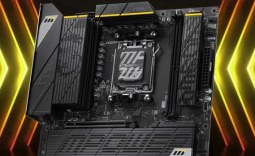 MSI adds a BIOS toggle to tighten standard DDR5 timings closer to EXPO ULL kits
 Keychron is building an open-source gaming mouse firmware called ZGM
 Assassin's Creed Odyssey gains 90% more players due to Christopher Nolan's 'The Odyssey'
 AMD Radeon GPU prices set to increase by 10% in August
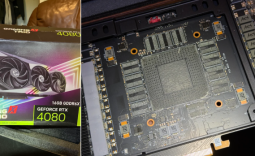 Redditor buys an RTX 4080, opens it up to find no GPU die or VRAM inside
 NVIDIA GPU rumors swirl claiming major price hikes of 20 to 30% - or more - are coming, as VRAM costs climb
 AMD's RX 9050 GPU comes up short in first review, but there's a good reason why it lags behind NVIDIA's RTX 5050 here
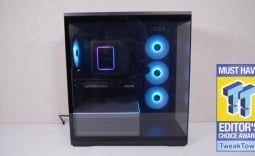 Montech TG3 Mid-Tower Chassis Review
 ASUS ROG Strix X870E-A Gaming WiFI7 Neo Review - A New Enticing Option
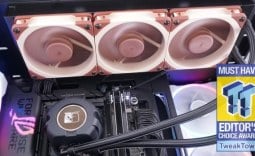 Noctua NL-LC1-36 Liquid CPU Cooler Review
 Logitech G316 X 98 Wired Gaming Keyboard Review - Retro-Inspired Board that Falls a Little Short
 Biwin M560 2TB SSD Review - Best Overall Retail-Ready DRAMless SSD
 Logitech G512 X 98 Analog Mechanical Gaming Keyboard Review - An Innovative Two-in-One
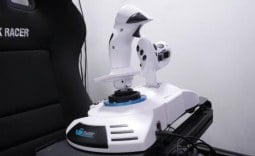 Thrustmaster T.Flight HOTAS 5 MSFS Edition Review
 SteelSeries Arctis Nova Pro Omni Wireless Headset Review - One Headset to Rule Them All
 SteelSeries Arctis Nova 7 Wireless Gen 2 Headset Review - New and Improved, But Is It Enough?
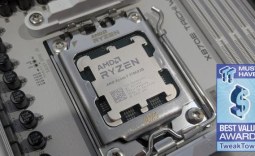 AMD Ryzen 7 7700X3D Review - Days of Future Past
 Six File Explorer tips every Windows user should know
 I switched my PC to encrypted DNS in Windows 11, and browsing felt more private
 Printer Not Working in Windows? How to fix detection, print queues and drivers
 The Ultimate Guide to Personalizing Your Windows 11 Taskbar
 How to Turn Your Windows Laptop Into a Second Monitor with Miracast and Wireless Display in Minutes
 6 Mistakes to Avoid When Buying a Windows Laptop
 I capped Windows Update's bandwidth with Delivery Optimization, and my downloads stopped choking
 I use this decade-old free tool that finds files faster than Windows Search does
 I install and update most of my apps with this Windows command now, and I stopped downloading sketchy installers
 Hisense U6SF 65-inch MiniLED TV: High Performance Meets Leisurely Convenience