







Science, Space, & Robotics - Page 145
Explore the latest Science, Space, Health, and Robotics news from TweakTown. Coverage includes space launches, medical tech, discoveries, and rockets. - Page 145
Stay Updated
Follow TweakTown for breaking tech news, reviews, and daily updates.


As an Amazon Associate, we earn from qualifying purchases. TweakTown may also earn commissions from other affiliate partners at no extra cost to you.
'First-ever free flying commercial space station' locks in launch date
Nanoracks, along with partnering companies, has announced the launch date window for its first-ever free-flying commercial space station named Starlab.

Starlab is set to become the world's first free-flying commercial space station, which means that it won't be locked into one orbit position, separating itself from the likes of the International Space Station. The new space station will feature a 12,000 cubic feet habitat module that will have the capacity to house four astronauts. Additionally, Starlab will feature a laboratory to conduct research, a large external robotic arm for servicing payloads and cargo, as well as a payload capacity of 776 cubic feet - similar to the ISS.
Jeffrey Manber, CEO, and Co-Founder of Nanoracks, said in the press release, "Since the beginning, Nanoracks has sought to own and operate a private space station to fully unlock market demand. Our team has spent the last decade learning the business of space stations, understanding customer needs, charting market growth, and self-investing in private hardware on the ISS like the Bishop Airlock. Nanoracks and our team are excited to work with NASA and our friends across the world as we move forward with Starlab."
Continue reading: 'First-ever free flying commercial space station' locks in launch date (full post)
Here's why you should be terrified for NASA's newest space telescope
NASA has released a new video that details the launch of its highly-anticipated James Webb Space Telescope - the telescope that is said to replace the Hubble Space Telescope.

NASA and many contractors have been working on the JWST for many years and have experienced numerous delays attributed to technology challenges, the COVID-19 pandemic, and many other issues. But now, the space agency is nearing the end of the road for the telescope as it gears up for launch.
In the new video posted to the JWST YouTube channel, Webb's Mission Lead System's Engineer, Mike Menzel, explains that Webb has "300 single-point failure items, and they all have to work right. When you're a million miles from the Earth, you can't send someone to fix it".
Continue reading: Here's why you should be terrified for NASA's newest space telescope (full post)
NASA scientist answers, 'What if an asteroid were going to hit Earth?'
NASA has posted a new video to its YouTube channel that's a part of its "We Asked a NASA Scientist" series that aims at answering some of the public's most popular questions about space.

In this week's episode, NASA scientist and planetary defense expert Dr. Kelly Fast answers, "What if an asteroid were going to hit Earth?". Dr. Kelly explains that there are currently no known threats to Earth asteroid-wise, but that doesn't mean that we shouldn't pay attention to asteroids as an asteroid impact is the "only natural disaster that can be prevented".
For this reason, NASA set up the Planetary Defense Coordination Office keeps which keeps a lookout for asteroids that pose any risk to Earth by calculating their trajectories and where they will end up in the future. Dr. Kelly says that if an asteroid is found to pose a danger to Earth, then a "deflection mission might be possible". Recently, a team of researchers proposed sending explosive rods to collide with an asteroid if one was calculated to impact Earth. If you want to know more about that story, check out this link here.
Continue reading: NASA scientist answers, 'What if an asteroid were going to hit Earth?' (full post)
Jupiter was just smacked by a space rock, impact was caught on video
Researchers from Japan have seen a space rock collide with the solar system's largest planet - Jupiter. The moments of impact were photographed and caught on video.

The researchers from Kyoto University in Japan were using the PONCOTS observation system, which is part of the Organized Autotelescopes for Serendipitous Event Survey (OASES) to view the event. According to reports, the impact happened on October 15 at around 9:24 a.m EDT and from the still images and video a white object can be seen in front of Jupiter's surface before disappearing.
The researchers verified that what they were seeing wasn't an anomaly with the telescopes they were using by asking fellow astronomers who were also looking at Jupiter at the same time. Ko Arimatsu, assistant professor at Kyoto University's Astronomical Observatory spoke to Newsweek and said, "We received another isolated detection of the same flash event from a Japanese amateur astronomer. Since the timing and the position of their detection are consistent with our detection, we have confirmed that our detection is an actual impact flash event on Jupiter."
Continue reading: Jupiter was just smacked by a space rock, impact was caught on video (full post)
Hubble captures first moments of a star's death, saw it 'in real-time'
NASA and the European Space Agency's Hubble Space Telescope bare-witnessed the first moments of a star's violent death.

In a new post on NASA's website, the space agency details that the Hubble Space Telescope has observed the first moments of the doomed star's violent ending. NASA states on its post that astronomers were given an unprecedented, comprehensive view of the violent death that will assist astronomers in creating a model that allows for accurate predictions of stars that are close to their end.
Ryan Foley of the University of California, Santa Cruz, and the leader of the team that made the discovery, said, "We used to talk about supernova work like we were crime scene investigators, where we would show up after the fact and try to figure out what happened to that star. This is a different situation, because we really know what's going on and we actually see the death in real-time."
Continue reading: Hubble captures first moments of a star's death, saw it 'in real-time' (full post)
Evidence of ancient life discovered inside a ruby, 'first time' ever
A new study published in Ore Geology Reviews has detailed the first-time discovery of evidence of ancient life being trapped inside a ruby.

Geologist Chris Yakymchuk and his team were attempting to learn more about the mineral corundum, which is the crystalline form of aluminum oxide, by examining rubies located in one of the world's oldest corundum deposits in Greenland. The team was examining samples of rubies and found that in one particular gem, there were traces of graphite, which can be an indicator for life. Upon further examination, the team found that graphite contained carbon 12, an isotope that occurs in living organisms and throughout Earth.
According to Yakymchuk, "Living matter preferentially consists of the lighter carbon atoms because they take less energy to incorporate into cells. Based on the increased amount of carbon-12 in this graphite, we concluded that the carbon atoms were once ancient life, most likely dead microorganisms such as cyanobacteria." If you are interested in reading more about this story or would like a much more in-depth analysis of the discovery, check out this link here.
Continue reading: Evidence of ancient life discovered inside a ruby, 'first time' ever (full post)
Officials release video of US volcano spewing out bubbling lava
Videos have emerged of a volcano located in the United States spewing out bubbling lava in every direction it can.

The footage is of Hawaii's Kilauea volcano and was captured on October 12. The footage showcases the volcano spewing out lava from the west vent at the summit crater. According to the United States Geological Survey Hawaiian Volcano Observatory, the vent has a spatter cone around the opening that stretches some 100 feet high. This splatter cone is protecting the area around it from eruptions. However, some larger bursts of lava have exceeded the height of the cone, spilling out onto the area around it.
At the base of the splatter cone, a small opening can be seen. This opening is feeding the lava lake below it, and according to officials, as of October 8, it's estimated that the eruption has spilled out 4.2 billion gallons of eruption volume. As for sulfur dioxide emissions, it's estimated that the volcano is releasing 2,700 tonnes per day. As for the lava lake at the base of the summit, its level has increased by 148 feet since the eruption began on September 29. All lava is confined to the summit crater.
Continue reading: Officials release video of US volcano spewing out bubbling lava (full post)
NASA releases majestic image of a 'starburst galaxy', taken by Hubble
NASA has published a new image taken by the famous Hubble Space Telescope. This time around, Hubble has snapped a photo of a distant "starburst galaxy".

NASA and the European Space Agency's Hubble Space Telescope has been in operation for multiple decades now, and despite its age, the space telescope still manages to take phenomenal images of the universe. The above image is of a distant spiral galaxy named NGC 4666, located around 80 million light-years from Earth within the constellation Virgo. NASA explains that this galaxy is currently going through an "intense episode of star formation".
Additionally, the space agency explains in its post that astronomers refer to galaxies undergoing intense episodes of star formation as "starburst galaxies". The galaxy's "starburst formation" can be attributed to its gravitation interactions with its neighbors, "including the nearby galaxy NGC 4668 and a dwarf galaxy, which is a small galaxy made up of a few billion stars." If you are interested in learning more about this truly awesome spiral galaxy, check out this link here.
Continue reading: NASA releases majestic image of a 'starburst galaxy', taken by Hubble (full post)
Here are 10 mysteries of Venus that NASA scientists are grappling with
NASA has posted a new video to the "NASA Goddard" YouTube channel that details ten mysteries of Venus that NASA researchers are still trying to work out.

In the video, the narrator explains that the surface of Venus is completely inhospitable for life, with an atmosphere at around 90 times the pressure of Earth's and a surface temperature is over 900 degrees Fahrenheit - hot enough to melt lead. But it may not have always been like that, and the space agency plans on finding out if that's true with its Deep Atmosphere Venus Investigation of Noble gases, Chemistry, and Imaging (DAVINCI) mission that is set to explore our strange sister planet.
Other mysteries that surround Venus are that its size is very similar to that of Earth's, but it's clear both planets took a very different route when it came to their evolution into what we see today. NASA's DAVINCI probe and its Venus Emissivity, Radio Science, InSAR, Topography, and Spectroscopy (VERITAS) probe are expected to answer many of the mysteries outlined in the video, and with the results from the mission, researchers will understand the evolution of our sister planet, which will add to the ever-growing collection of knowledge about how planets form.
Continue reading: Here are 10 mysteries of Venus that NASA scientists are grappling with (full post)
Officials warn monster 'bomb cyclone' is incoming, arrival date found
Officials are currently tracking a "monster" cyclone that is expected to bring heavy rainfall to certain areas across the United States.

Reports indicate that this "bomb cyclone" is expected to bring heavy rainfall and snow across the West Coast over the weekend. It's expected that this series of storms could bring as much as a foot of rainfall as well as up to three feet of snow in Sierra Nevada. Additionally, the storms have been supercharged by an atmospheric river pattern, which could lead to flash flooding and the spreading of debris from regions that have been subjected to wildfires.
According to Marty Ralph, director of the Center for Western Weather and Water Extremes at UC San Diego, "An atmospheric river marked as a category 4 or a 5 is capable of producing remarkable rainfall totals over three or more days, likely to exceed 10-15% of a typical year's precipitation in some locations." As for the categorization of a "bomb cyclone", the National Ocean Service explains that the name comes from meteorologists who observe a "midlatitude cyclone rapidly intensifies, dropping at least 24 millibars [atmospheric pressure] over 24 hours." Typically, a range in millibar change is around 10 to 15 in 24 hours.
Continue reading: Officials warn monster 'bomb cyclone' is incoming, arrival date found (full post)
Russian spy satellite caught on video, plummets to a fiery death
The American Meteor Society (AMS) has received more than 80 reports about a fireball sighting in the night sky over some US states.

According to the American Meteor Society, the sighting has been confirmed that a fireball was spotted in the night sky by people as far south as Tennessee and as far north as Michigan. The AMS confirmed the sighting to be around 12:43 a.m EDT but didn't know what the object was. It was later discovered that the fireball was the failed Russian spy satellite named Kosmos-2551.
Jonathan McDowell, an astronomer and satellite tracker that is based at the Harvard-Smithsonian Center for Astrophysics, said via Twitter that the "The fireball network confirms that the event seen in Michigan was at 0443 UTC (1243EDT) which is the exact predicted time Kosmos-2551 passed over the region, and within the re-entry time uncertainty window given by Space Force." Adding, "So I conclude that the ID with Kosmos-2551 is solid."
Continue reading: Russian spy satellite caught on video, plummets to a fiery death (full post)
NASA's next-gen spacesuits will prepare humanity for its giant leap
A new video has appeared on NASA's official YouTube channel that is essentially a trailer showcasing the space agency's next-generation spacesuits.

Through the video, NASA has announced that it will partner with the private space industry to construct brand new next-generation spacesuits that will be used for future astronauts in a plethora of missions. According to the video's description, the spacesuits will be "personalized" and will come with revolutionary upgrades in the forms of technology upgrades, better fits for astronauts, a larger range of sizes, better protection against the harsh environment of space.
Additionally, these spacesuits will enable the astronauts better mobility, allowing them to be "more nimble than ever before". The space agency says that these spacesuits will be used by astronauts aboard the International Space Station, future Artemis missions that will take humans back to the surface of the Moon, and will, most importantly, prepare NASA for "humanity's next giant leap - sending astronauts to Mars."
Continue reading: NASA's next-gen spacesuits will prepare humanity for its giant leap (full post)
World's largest underwater eruption birthed a new massive volcano
A study published in the journal Nature Geoscience has detailed the largest underwater eruption to ever occur gave birth to a skyscraper-sized volcano.

The study was published in Nature Geoscience back in late August, and details a "new" volcano that was discovered off the in the western Indian Ocean, off Madagascar. The underwater volcano emerged from the seafloor following a series of earthquakes that were detected in the region. The study looked at data from a 2014 underwater survey of the region and compared it to a 2019 survey and found that between those two dates, a volcano rose to a height of 8,465 feet below sea level.
The researchers collected geological data and found that this volcano draws magma from the deepest reservoirs ever recorded by scientists - about 34 miles underground. Nathalie Feuillet, a marine geoscientist at the Paris Institute of Earth Physics (IPGP), University of Paris, and lead author on the study, said, "The source of the magma, the reservoir, is very deep. This is the first time in volcanology that we can see such a deep reservoir at the base of the lithosphere."
Continue reading: World's largest underwater eruption birthed a new massive volcano (full post)
You may live inside a floating PS5-like house, says Sony in video
Last month Sony posted a video to its official YouTube channel that may have slipped under the radar when looking at its number of views.

The above video was posted on September 3 and showcased the finished product of collaborative work between Sony designers and science fiction writers. The goal of the collaboration was to come up with ideas of what life, working, senses and well-being would be like in Tokyo in 2050. The team's joint effort came up with a series of design prototypes, and one of them was the Floating Habitat that predicts humans will be living on the ocean in floating houses.
As stated in the above video, these floating habitats located in a bay are paired with solar panels located in the water. These solar panels generate electricity for the habitats and store them in autonomous energy tanks that detect when one is running low on power. They then connect to the habitat to replenish its supply. Additionally, multiple of these floating homes can be connected together to form a large structure that Sony says will reduce the impact of large waves.
Continue reading: You may live inside a floating PS5-like house, says Sony in video (full post)
Asteroid makes extremely close approach to Earth, NASA confirms
Reports indicate that an asteroid has made a relatively close approach to Earth, passing between our planet and the Moon.

According to Space.com, an asteroid named 2021 TG14 that has a diameter between 17.7 - 39.3 feet passed between the Earth and the Moon on Sunday, October 17. According to NASA's asteroid database, the space rock passed at a distance of 155,000 miles, and while that seems like quite a distance here on Earth, when talking in space terms, that is quite close to our small blue planet. For reference, the Moon is around 239,000 miles from Earth.
For those that don't know, an asteroid is an ancient piece of the early solar system when our cosmic neighborhood was just a collection of rock, ice, and debris before planets formed. For these reasons, astronomers see asteroids as valuable prospects for scientific research as they can contain information about the solar system's past and thus provide insightful information about its future. If you are interested in reading more about this story, check out this link here.
Continue reading: Asteroid makes extremely close approach to Earth, NASA confirms (full post)
This states largest volcano was shaken up, 33 earthquakes in 24 hours
A swarm of earthquakes has impacted a volcano in the United States. Officials have recorded 33 earthquakes in just 24 hours.

The US Geological Survey's (USGS) Cascades Volcano Observatory (CVO) has detected a new swarm of earthquakes impacting Oregon's Mount Hood volcano. According to officials, Mount Hood is classified as a "very high threat potential". However, the earthquakes it recently experienced are not abnormal and have not caused a change in the volcano alert level nor the aviation color code. The USGS wrote, "Several tens of small earthquakes have occurred near the summit of Mount Hood. This is not a volcanic event."
The USGS continued in its statement and said that the earthquakes began on October 17 and that the largest was an M2.5 at a depth of 1.8 - 3.1 miles below the surface. Additionally, none of the earthquakes were felt, and that swarms of earthquakes hitting the volcano are deemed "common" and "do not indicate a change in the volcanic hazard. Past swarms have lasted several days to a couple of weeks." If you are interested in reading more about the reported activity, check out this link here.
Continue reading: This states largest volcano was shaken up, 33 earthquakes in 24 hours (full post)
Monstrous cyclone storm incoming to US, officials drop warnings
AccuWeather has reported that a "beast of a bomb cyclone" is on its way towards the United States and that it may rival some of the hurricanes that have been seen throughout the Atlantic Ocean.

According to the report from AccuWeather, the monstrous cyclone storm will usher in dangerous amounts of rainfall up and down the West Coast of the United States. The report states that satellite imagery has shown that moisture has been transported all the way from India and other parts of southeast Asia across the northern Pacific and is now headed towards the West Coast of the US. AccuWeather Meteorologist Randy Adkins says that Tropical Storm Namtheun will combine with the non-tropical system in the Pacific on Wednesday.
Officials from the National Weather Service Weather Prediction Center have warned that the incoming storm will bring "heavy rain totals, worrisome for burn scars, and high elevation mountain snow". Adding, "The heaviest precipitation looks to come in two waves, one Thursday and another Sunday into Monday." Forecasters recommend keeping up to date on the movements of the storm if you are in the affected areas as with most storms, things can change quite rapidly. For more information on this story, check out this link here.
Continue reading: Monstrous cyclone storm incoming to US, officials drop warnings (full post)
Blast from the Sun hit Earth, causing beautiful auroras to appear
On October 9, the Sun blasted out a slew of charged particles directly at Earth. The result was a low-to-moderate geomagnetic storm taking place on our planet.

Earth has a protective shield against the fury of the Sun, and this protective shield is called our magnetosphere. When the Sun shoots out a coronal mass ejection (CME) - which is a significant release of plasma from the Sun - and it collides with our planet's magnetosphere, it can cause some considerable effects. Depending on how powerful the solar wind is from the blast, the CME can cause power outages, internet disruptions, satellite issues, and more.
Luckily, the event of October 9 didn't cause much damage at all since the blast was only relatively small in scale. However, the effects of the blast were seen across the globe in the form of auroras in the sky. Auroras happen when the charged particles from the solar wind get trapped in Earth's magnetic field and travel to the geomagnetic poles of the planet. The result is the stunning colors we see in the sky. The European Space Agency put together a video that is comprised of an image taken every 60 seconds throughout the duration of the solar storm. The video can be found above.
Continue reading: Blast from the Sun hit Earth, causing beautiful auroras to appear (full post)
NASA releases wild video of its rover speeding on the surface of Mars
NASA's Perseverance rover is designed for precision, and to achieve that, the rover must move incredibly slow - painfully slow.

NASA's Perseverance rover has a top speed on flat ground of a little less than 0.1 miles per hour. But, the space agency has released a new sped-up video of the rover traversing the Martian surface. The video is sped up by about 200 times, and in-between each frame of the video is about 30 seconds. "In total, the rover drove 574 feet (175 meters). The first 26 feet (8 meters) were based on commands sent up earlier by rover drivers, allowing Perseverance to build a 3D map of the terrain under and around it", wrote NASA.
The footage has been released onto the official Perseverance Twitter account and shows the rover taking the surface of the Red Planet head-on. Recently, NASA's Perseverance rover captured a panorama of the Martian surface that shows it in incredible detail. The image is a mosaic piece that is comprised of 84 separate images. If you are interested in checking out that image, click this link here.
Continue reading: NASA releases wild video of its rover speeding on the surface of Mars (full post)
If alien probes are close to Earth, this new telescope may find them
The idea of advanced aliens being out there somewhere in the cosmos has been an idea much speculated by everyday people as well as scientists.

There are people on both sides of the metaphorical fence that claim aliens are somewhere out there in the void and others who claim we are the first since we haven't detected them yet. Perhaps the problem isn't that they are real or not, perhaps, the problem is a limitation in our technology to detect them (if they are there). A new study has appeared on a preprint server that details the possibility of China's new radio telescope being capable of detecting alien probes within and beyond our solar system.
The paper explains through calculations that China's Five-hundred-meter Aperture Spherical Radio Telescope (FAST) could be able to detect alien probes within its radio spectral band that is a key feature of the telescope. The idea behind the telescope being able to detect alien probes is that these probes would emit some kind of radiation that China's new instrument could then detect. If you are interested in reading more about this story, check out this link here.
Continue reading: If alien probes are close to Earth, this new telescope may find them (full post)
 Twitch opts streamers into gen AI training by default, faces harsh backlash
 Sean Murray still plays the 2016 launch version of No Man's Sky
 China's YMTC has climbed to third place in global NAND flash shipments
 $100 GTA 6 version makes up 89% of pre-orders, analysts estimate
 HWiNFO's latest update quietly confirms Intel is working on Razor Lake-AX
 Nintendo puts Switch 2 price increase warnings on store demo kiosks ahead of September 1 hike
 GIGABYTE launches two new B450 motherboards as demand for AM4 stays high in 2026
 Microsoft finally makes up its mind and unifies Copilot features into one big app
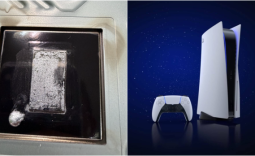 PS5 suffers from severe overheating after liquid metal eats into the heatsink
 AMD Ryzen 7 7800X3D CPU burns and swells even after using AMD's updated BIOS
 D-Link F518 5G Wi‑Fi 6 AX1800 Mobile Hotspot Review: All-Day Mobile Hotspot
 Bose Lifestyle Ultra Speaker Review - Impressively Detailed Room-Filling Sound
 MSI Z890 Gaming Plus WIFI6E Review - Z890 for under $200
 Mortal Kombat (1995) 4K Ultra HD Blu-ray Review
 CPS PCCOOLER YS1200 ATX 3.1 80 PLUS Gold PSU Review
 ASRock X870E Taichi White Review: a premium AM5 motherboard with 10G LAN and WiFi 7
 Asetek Initium Pedal Modular Upgrades Review
 Thinkware U3000 Pro Review - Smart Dashcam with Wi-Fi quirks
 Montech TG3 Mid-Tower Chassis Review
 ASUS ROG Strix X870E-A Gaming WiFI7 Neo Review - A New Enticing Option
 I ditched the Windows 11 context menu for this open-source tool, and here's why
 Windows 11 may be encrypting your drive already, and I checked where my recovery key went
 GIGABYTE's 40 Days of INFINITY celebrates 40 Years of Innovation with stunning GeForce RTX graphics cards and rewards
 I swapped File Explorer for this free file manager and finally got the layout I wanted
 How to tell if someone has been using your Windows PC without your permission
 6 Task Manager tips for troubleshooting Windows performance problems
 ASUS ROG's 20th Anniversary Line-up of Premium PC Gaming Gear has Arrived - Here's Everything You Need to Know
 Six File Explorer tips every Windows user should know
 I switched my PC to encrypted DNS in Windows 11, and browsing felt more private
 Printer Not Working in Windows? How to fix detection, print queues and drivers