







Science, Space, & Robotics - Page 143
Explore the latest Science, Space, Health, and Robotics news from TweakTown. Coverage includes space launches, medical tech, discoveries, and rockets. - Page 143
Stay Updated
Follow TweakTown for breaking tech news, reviews, and daily updates.


As an Amazon Associate, we earn from qualifying purchases. TweakTown may also earn commissions from other affiliate partners at no extra cost to you.
Hubble captures a phenomenal image of the 'Ghost of Cassiopeia'
It's "Nebula November", so expect a lot of incredible images of nebulas spotted by NASA's space telescopes!

To kick the month off strongly, NASA has released an image that was originally taken in August 2016 by the Hubble Space Telescope. Introducing the "Ghost of Cassiopeia" - officially named IC 63. This nebula resides in the constellation Cassiopeia the Queen, 550 light-years away from earth. The nebula has long veils of gas and dust, and features an eerie glow that NASA says may remind some people of "apparitions such as those reported by paranormal investigators".
Nothing paranormal is occurring here, as the space agency states that the glow is a result of hydrogen being bombarded with ultraviolet radiation from the nearby blue-giant star Gamma Cassiopeiae which isn't in this image. The interaction between the ultraviolet radiation and the hydrogen causes a red glow, while the blue glow is caused by light reflecting off the dust surrounding the nebula. If you are interested in reading more about the Ghost of Cassiopeia nebula, check out this link here.
Continue reading: Hubble captures a phenomenal image of the 'Ghost of Cassiopeia' (full post)
Hubble Space Telescope enters safe mode, NASA is investigating why
Close to the end of last month, the Hubble Space Telescope experienced an error code that automatically puts all of its instruments into safe mode.

NASA first detected the error code when Hubble science instruments issued it at 1:46 a.m EDT on October 23. According to the space agency, the error code indicates "the loss of a specific synchronization message. This message provides timing information the instruments use to respond to data requests and commands correctly."
The following morning the instruments were reset, and science operations were resumed, but then on October 25, more error codes were issued that indicated "losses of synchronization messages. As a result, the science instruments autonomously entered safe mode states as programmed." NASA states on its blog that team members are currently evaluating data and system diagrams to discover the cause of the error codes and the apparent synchronization issue.
Continue reading: Hubble Space Telescope enters safe mode, NASA is investigating why (full post)
NASA astronauts cook space tacos with food from out-of-this-world
Astronauts aboard the ISS don't exactly have a large selection of gourmet meals, but sometimes the researchers get a very nice meal to enjoy.

The astronauts recently enjoyed some homemade space tacos that featured ingredients from the freshly harvested chile peppers that were a part of NASA's Planet Habitat-04 experiment that plans on inspecting the feasibility of growing food in space ahead of long-term missions to the Moon and eventually Mars. At the moment, there isn't much known about growing food in space beside the lower yields for reasons unknown, according to NASA.
"Studies of fruit development in microgravity are limited, and NASA researchers have noted lower fruit development versus ground observations in this experiment for reasons that are not fully understood at this point", stated NASA. While the yield from this particular crop was lower than what would be gained if it was grown back on Earth, the astronauts were still able to enjoy a selection of tacos that included "fajita beef, rehydrated tomatoes & artichokes, and HATCH CHILE!", according to astronaut Megan McArthur.
Continue reading: NASA astronauts cook space tacos with food from out-of-this-world (full post)
NASA delays SpaceX's fourth crew launch to ISS over 'medical issue'
The launch of SpaceX's fourth crewed mission to the International Space Station has been delayed yet again, this time over a "medical issue".

The launch was initially planned to take place on Halloween but was delayed due to bad weather and rescheduled for Wednesday, November 3. However, another delay has hit SpaceX's Crew-3 mission as one of the crew members is experiencing a "minor medical issue". NASA's blog post states that this minor medical issue is not an emergency or related to COVID-19.
In its blog post, NASA goes on to state that both the Falcon 9 rocket and SpaceX Crew Dragon spacecraft are in "good shape" and will remain at Launch Complex 39A at Kennedy Space Center. Additionally, teams will continue to monitor the crew's health, which includes NASA astronauts Raja Chari, the mission commander; Tom Marshburn, pilot; and Kayla Barron, mission specialist; and ESA (European Space Agency) astronaut and mission specialist Matthias Maurer.
Continue reading: NASA delays SpaceX's fourth crew launch to ISS over 'medical issue' (full post)
ISS astronauts create a new life form in outer space for first time
Astronauts aboard the International Space Station have introduced a new life form to outer space for the very first time.

NASA astronauts introduced a new life form into outer space on Friday as the first chile peppers grown onboard the International Space Station were harvested. The Hatch chile pepper seeds were brought to the ISS aboard SpaceX's resupply mission that occurred back in June. After retrieving the seeds from the cargo, NASA astronaut Shane Kimbrough planted them in an Advanced Plant Habitat, a growth chamber that features more than 180 sensors and LED lights controlled by a crew back at the Kennedy Space Station.
After several months the peppers were ready to harvest, marking the station's first crop of chile peppers ever grown in space. The growth of the chile peppers was a part of the Plant Habitat-04 investigation, which consisted of evaluating the feasibility of conducting a 120-day plant growth within the habitat and demonstrating the Advanced Plant Habitat's environmental control systems, LED lighting systems, and sensor-controller water delivery system.
Continue reading: ISS astronauts create a new life form in outer space for first time (full post)
NASA's return to the Moon will be captured by National Geographic
NASA won't be returning to the Moon alone as it has announced it will be bringing along National Geographic to capture the moment for everyone back on Earth.

In a new blog post on the NASA website, the space agency announced it has entered in a non-reimbursable (no-exchange-of-funds) Space Act Agreement to collaborate with National Geographic on "audiovisual hardware to fly inside Orion and related support for the project." The news was announced by Kathy Lueders, associate administrator for the Space Operations Mission Directorate at NASA Headquarters in Washington, who said, "Returning humans to the Moon with Artemis II will inspire the next generation of explorers."
Adding, "This time, we are bringing partners and technologies that will create additional opportunities for the world to share in the experience along with our astronauts." The decision to go with National Geographic came after a competition was held where NASA took proposals from companies for a unique public engagement campaign that could be created for Artemis II, the first Artemis flight that will carry astronauts around the Moon and back to Earth. (Artemis III, scheduled for 2024, will be the first crewed lunar landing since Apollo 17 in 1972).
Continue reading: NASA's return to the Moon will be captured by National Geographic (full post)
China's Mars rover needs help to get new data back to Earth
Since May 14, China's Zhurong rover has been exploring the Utopia Planitia, its landing location. Now it needs some help getting its collected data back to Earth for researchers to interpret.

China's Zhurong has been slowly gathering vital information about its surroundings and can't get the recorded data back to Earth on its own as it doesn't have the equipment to transmit data directly back to Earth. The reason for this is because the instruments would take up too much space on the rover, which is used for other space experiments. Instead of transmitting the data itself, Zhurong relies on the service provided by orbiters such as the European Space Agency's Mars Express.
The rovers are equipped with radios to transmit the data to an orbiter that then relays the message to Earth. Between the space agencies, it's reported that it's "common practice" to share orbiter information in order to get vital research information back to Earth efficiently. Beginning in November, ESA's Mars Express will undergo five listen and relay attempts that will include the orbit listening and recording any signals it "hears" when it passes directly over the Zhurong rover, which will be transmitting its signal "out loud".
Continue reading: China's Mars rover needs help to get new data back to Earth (full post)
NASA releases the first 3D view of Jupiter's turbulent atmosphere
In a new blog post, NASA has detailed the results yielded from the Juno spacecraft's observations of the solar system's largest planet.

In the post, the space agency states that its Juno probe that is currently orbiting the planet Jupiter has provided insight into the inner workings of the gas giant's atmosphere. From the observations, researchers were able to derive the first 3D map of Jupiter's atmosphere, the results have been published throughout several papers in the two recent issues of the Journal of Geophysical Research: Planets and Geophysical Research Letters.
Scott Bolton, the principal investigator of Juno from the Southwest Research Institute in San Antonio and lead author of the Journal Science paper that explores the depth of Jupiter's vortices, said, "Previously, Juno surprised us with hints that phenomena in Jupiter's atmosphere went deeper than expected. Now, we're starting to put all these individual pieces together and getting our first real understanding of how Jupiter's beautiful and violent atmosphere works - in 3D."
Continue reading: NASA releases the first 3D view of Jupiter's turbulent atmosphere (full post)
NASA asked SpaceX Endeavor crew not to use the toilet on the way home
Following a leak incident with the all-civilian Inspiration4 crew that recently launched with SpaceX, NASA has asked astronauts returning back from the ISS not to use the toilet.

NASA's Commercial Crew program manager, Steve Stitch, said on Friday that following a detected leak during the Inspiration4 mission that included just civilians, that NASA astronauts Shane Kimbrough and Meghan McArthur, Akihiko Hoshide of Japan's JAXA, and Thomas Pesquet of the ESA to explore "other means" of disposing of their bodily fluids. Technicians detected the leak by discovering one of the glued joints in the waste tank broke, which resulted in urine from the tank leaking into the fan.
Stitch said, "We have other means to allow the crew to perform the functions they need to do... Anytime the crew is suited they use an undergarment in that suit, and it's a short mission coming home." Adding, "Our intent is to not use the system at all for the return leg home because of what we've seen with the fluids we are talking about." The NASA crew that is heading back to Earth from the ISS was scheduled to launch from the floating laboratory on Halloween, but the launch was delayed due to bad weather until November 3 at 1:30 am ET.
Continue reading: NASA asked SpaceX Endeavor crew not to use the toilet on the way home (full post)
Massive Sun solar flare hits Earth, causes crazy phenomenon in the sky
NASA recently confirmed that on October 28, the solar flare was observed on the Sun's lower center and that this flare would result in a large amount of radiation smashing into Earth.

The flare was officially classified as an X-1 flare, with X being the most intense classification given to a flare. Officials predicted that the solar wind produced by the flare would impact Earth on October 30, and while their timing was correct, the intensity wasn't. The coronal mass ejection (CME) from the flare arrived with much less intensity than anticipated, with the majority of the flare actually missing Earth.
While the impact of a CME can cause geomagnetic storms that interfere with satellite, GPS communications, and other signals, they also can cause auroras to appear in the sky. Auroras are the result of the interaction between charged particles from the Sun's solar wind hitting particles in Earth's upper atmosphere. The interaction causes a glow that is visible in the sky. Skywatchers in certain locations around the world were able to spot the gorgeous phenomenon occur in the night sky.
Continue reading: Massive Sun solar flare hits Earth, causes crazy phenomenon in the sky (full post)
Magnets may be the solution to the ever-growing problem of space junk
The space located around Earth is exponentially filling up with junk from rocket parts and broken satellites, and if the issue isn't solved, the polluted space may result in a hindrance to humanity's space exploration.

In 1979 NASA scientist Donald J. Kessler proposed what was dubbed the "Kessler syndrome", which is a scenario that could unfold when the number of objects within low Earth orbit becomes so dense that the likelihood that it increases the the the point where it's more likely further collisions will occur, causing a cascade effect of debris collisions throughout low Earth orbit. Researchers are proposing new ideas to clean up low Earth orbit to prevent this tragic domino effect from happening. One suggestion may be to use magnets that can manipulate the debris.
A new study published in the journal Nature by researchers at the University of Utah details the use of spinning magnets equipped by robots. These robots would be able to push space debris down into Earth's atmosphere, where they would then burn up upon re-entry, removing the need for the robot to collect them physically. The team of researchers was able to demonstrate with the technology that they were able to manipulate debris in six degrees of movement, including rotation.
Continue reading: Magnets may be the solution to the ever-growing problem of space junk (full post)
NASA confirms massive solar flare hits Earth, officials record impact
NASA recently confirmed the existence of a solar flare occurring on the Sun, which resulted in a plasma wave being launched directly towards Earth.

The space agency explained that Sunspot AR2887 erupted, causing a solar flare and a coronal mass ejection (CME) to be shot towards Earth's direction. The solar flare was classified as an X1-class flare, X being the highest categorization that is given to a solar flare. For those that don't know what flares are, they are burst of radiation that can't pass through Earth's atmosphere to harm humans. However, its impact on Earth can cause geomagnetic storms that knock out GPS and radio communications and interfere with satellites.
As for the flare that hit Earth's magnetic field on Oct. 31st at ~10:00 UT, the resulting impact was much less than anticipated as it only caused a G1-class geomagnetic storm. The reason for the weakness, as Spaceweather.com reports, is that majority of the CME missed Earth, which stands as an example that current computer models used to predict the events of the Sun aren't always 100% correct as there are still many unknowns about the Sun and its processes. More simply put, it's difficult to predict the motions of a celestial object located 93 million miles away.
Continue reading: NASA confirms massive solar flare hits Earth, officials record impact (full post)
Sun blast will impact Earth soon, may cause auroras around the world
On October 28, the Sun blasted out an X-1 solar flare causing a coronal mass ejection of charged particles to be launched directly towards Earth.

The X1 classification for this solar flare is the most intense classification that is given to solar flares, and while the flare itself reached Earth only 8.5 minutes after it happened, the resulting coronal mass ejection (CME) is expected to arrive on October 30. While the large swath of charged radiation particles impacting Earth poses no danger to humans on the surface, the interaction in Earth's upper atmosphere can cause geomagnetic storms that can interfere with satellites, radio communications, GPS, and more.
According to NOAA's Space Weather Prediction Center, there is a G3 (strong) geomagnetic storm watch scheduled for October 30. Looking back into what past solar flares have caused on Earth, this specific classification of solar flare has caused auroras to appear in the sky over certain parts of the planet. These auroras are similar to the Northern/Southern lights and can be seen with the naked eye. NASA recommends people who live in Northern US and Canada to keep an eye out for a possible light show that will coincide with Halloween.
Continue reading: Sun blast will impact Earth soon, may cause auroras around the world (full post)
Hubble spotted something 'scary' when looking out into space
NASA has taken to its blog with a new image and video centered around the Hubble Space Telescope and what it has recently snapped an image of.

According to the blog post, which can be found on the NASA website, the Hubble Space Telescope is celebrating Halloween with "creepy celestial sights". The above video posted to the NASA Goddard YouTube channel details Hubble's observation of a "giant space spider-web", which is actually the destruction of the red giant star named CW Leonis, located 400 million light-years away from Earth.
The "cobwebs" are dusty clouds of "sooty carbon engulfing the dying star", and after being created through nuclear fusion in the star's interior, it's thrown out into the void of space around it, providing raw materials for future star formation. CW Leonis is the closest carbon star to Earth, and due to its position and nature, astronomers have a great prospect of understanding how carbon stars interact and evolve with their surroundings. Over the past 15 years, researchers have observed a dip in the brightness radiating out of CW Leonis, which is an extremely small amount of time in astronomical terms.
Continue reading: Hubble spotted something 'scary' when looking out into space (full post)
NASA confirms massive solar flare will hit Earth, arrival time found
NASA has taken to its blogs and social medias to confirm the existence of a massive solar flare headed directly towards Earth.

The solar flare was observed on October 28, and according to NASA, the flare came from the Sun's lower center which is directly facing Earth. At 11:35 a.m EDT, the Sun released the biggest of a series of flares, bursting out a large amount of radiation towards Earth that is expected to arrive very soon. The flare was categorized as an X1-class flare, X being the most intense categorization for solar flares.
The Sun entered Solar Cycle 25, and according to the space agency, this is the second X-class solar flare of the cycle, with the cycle lasting 11 years. Over the duration of the cycle, the Sun will go through active and quiet periods until it reaches its solar maximum, where its magnetic poles will flip.
Continue reading: NASA confirms massive solar flare will hit Earth, arrival time found (full post)
'Whole new hidden world' found below Earth's surface
Researchers thought that Earth's inner core was "solid," but new research suggests that it may be closer to a mush than a solid.

A new study published in the journal Physic of the Earth and Planetary Interiors on September 20 details that the planet's inner core can range from being hard to a semisoft liquid metal. According to Jessica Irving, a seismologist at the University of Bristol in England and not involved in the aforementioned study, "The more that we look at it, the more we realize it's not one boring blob of iron. We're finding a whole new hidden world."
As for the researchers behind the study, they were measuring the seismic waves that are created by large earthquakes. These quakes travel from one side of the globe to the other. Recording these massive vibrations in the form of straight-line compressional waves and undulating shear waves using special instruments, researchers are able to recreate a picture of what the inner planet looks like.
Continue reading: 'Whole new hidden world' found below Earth's surface (full post)
Object flying at 26,000 mph through our Solar System spotted
In a recent article for Spaceweather.com, an astronomer described an object seen traveling at 26,000 mph as a "giant space volcano".

While this description isn't officially recognized, it may be the best way to describe the comet named 29P. This comet is constantly spewing "cryomagma" into space and is certainly stretching our definitions of what we call a "comet". 29P measures 37 miles in diameter It is a massive ice ball with ice volcanoes on its surface that erupt around 20 times a year. The strange comet was first discovered back in 1927, and its eruptions have been documented for quite some time. However, 29P seems angrier than ever.
Arizona amateur astronomer Eliot Herman was observing the comet and recorded four eruptions in quick succession in late September. Dr. Richard Miles of the British Astronomical Association (BAA) told Spaceweather.com, "The current outburst, which began on Sept. 25th, appears to be the most energetic of the past 40 years." Adding, "within a span of only 56 hours, four eruptions took place in quick succession, creating a 'superoutburst.'"
Continue reading: Object flying at 26,000 mph through our Solar System spotted (full post)
Elon Musk says he wants to use his billions to get humanity to Mars
SpaceX CEO Elon Musk has said that he plans on using his wealth on getting humanity to Mars after criticizing a plan to tax billionaires.

The statements from Musk come after Senate Democrats are moving to propose a new tax increase that directly targets the top wealthiest individuals in the United States. In response to an article from the Washington Post that discusses the moves being made by lawmakers, Elon Musk criticized the idea saying, "According to their own estimates, this tax only covers ~10% of the $3.5 trillion spending bill. Where will the other 90% come from? The answer is you."
Additionally, the SpaceX CEO followed up by saying the "US national debt is ~$28,900 billion or ~$229k per taxpayer. Even taxing all "billionaires" at 100% would only make a small dent in that number, so obviously the rest must come from the general public. This is basic math. Spending is the real problem." Adding, "US Federal Debt/GDP was 56% in 2000, now it is 126% & climbing fast." Musk didn't stop there, the SpaceX CEO doubled down on stance, saying that his "plan is to use the money to get humanity to Mars and preserve the light of consciousness."
Continue reading: Elon Musk says he wants to use his billions to get humanity to Mars (full post)
A Nazi rocket took the first image of Earth from space, here it is
Humans are constantly snapping images of Earth and the surrounding stars/galaxies, some even millions of light-years away from our planet,

It wasn't always that way, though, as there was a lack of technology/knowledge about how we can even take a picture of Earth and retrieve the image without it being destroyed. But that all changed on October 24, 1946, when a 35 mm motion-picture camera was loaded on the back of a Nazi V-2 ballistic missile and launched to an altitude of about 65 miles. The camera was programmed to take an image every 1.5 seconds, and the results created a milestone in space exploration, as researchers had successfully taken the first image of Earth from space.
At the time, the missiles had no way of slowing down upon re-entry, which meant that they hit the ground at more than 340 mph. The speed of the missile hitting the ground was devastating and provided problems for engineers about how they would be able to save the images that were taken. To get around this problem, the engineers encased the camera in a specialized steel case designed to protect it from the incredibly high-speed fall.
Continue reading: A Nazi rocket took the first image of Earth from space, here it is (full post)
China says it has a supercomputer that puts Google's to shame
A research paper out of China has detailed an achievement in the quantum computing realm, as the paper states the researchers have created a quantum computer that puts Google's to shame.

The paper states that the Chinese research team has achieved a quantum computation advantage in two mainstream technical routes; superconducting quantum computing and photonics quantum computing. The Global Times reports that the team has designed a 66-qubit programmable superconducting quantum computing system. This system is named "Zuchongzhi".
Additionally, the report states China's new quantum system is reportedly 10 million times faster than the current fastest supercomputer. On top of being "10 million times faster than the current fastest supercomputer", the supercomputer's calculation complexity is more than 1 million times higher than Google's Sycamore processor, and if true, China has achieved a quantum advantage in a superconducting quantum computing system.
Continue reading: China says it has a supercomputer that puts Google's to shame (full post)
 Twitch opts streamers into gen AI training by default, faces harsh backlash
 Sean Murray still plays the 2016 launch version of No Man's Sky
 China's YMTC has climbed to third place in global NAND flash shipments
 $100 GTA 6 version makes up 89% of pre-orders, analysts estimate
 HWiNFO's latest update quietly confirms Intel is working on Razor Lake-AX
 Nintendo puts Switch 2 price increase warnings on store demo kiosks ahead of September 1 hike
 GIGABYTE launches two new B450 motherboards as demand for AM4 stays high in 2026
 Microsoft finally makes up its mind and unifies Copilot features into one big app
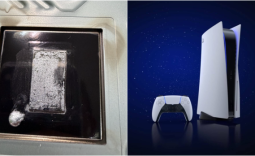 PS5 suffers from severe overheating after liquid metal eats into the heatsink
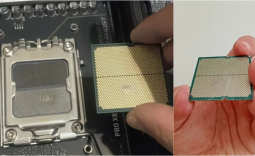 AMD Ryzen 7 7800X3D CPU burns and swells even after using AMD's updated BIOS
 D-Link F518 5G Wi‑Fi 6 AX1800 Mobile Hotspot Review: All-Day Mobile Hotspot
 Bose Lifestyle Ultra Speaker Review - Impressively Detailed Room-Filling Sound
 MSI Z890 Gaming Plus WIFI6E Review - Z890 for under $200
 Mortal Kombat (1995) 4K Ultra HD Blu-ray Review
 CPS PCCOOLER YS1200 ATX 3.1 80 PLUS Gold PSU Review
 ASRock X870E Taichi White Review: a premium AM5 motherboard with 10G LAN and WiFi 7
 Asetek Initium Pedal Modular Upgrades Review
 Thinkware U3000 Pro Review - Smart Dashcam with Wi-Fi quirks
 Montech TG3 Mid-Tower Chassis Review
 ASUS ROG Strix X870E-A Gaming WiFI7 Neo Review - A New Enticing Option
 I ditched the Windows 11 context menu for this open-source tool, and here's why
 Windows 11 may be encrypting your drive already, and I checked where my recovery key went
 GIGABYTE's 40 Days of INFINITY celebrates 40 Years of Innovation with stunning GeForce RTX graphics cards and rewards
 I swapped File Explorer for this free file manager and finally got the layout I wanted
 How to tell if someone has been using your Windows PC without your permission
 6 Task Manager tips for troubleshooting Windows performance problems
 ASUS ROG's 20th Anniversary Line-up of Premium PC Gaming Gear has Arrived - Here's Everything You Need to Know
 Six File Explorer tips every Windows user should know
 I switched my PC to encrypted DNS in Windows 11, and browsing felt more private
 Printer Not Working in Windows? How to fix detection, print queues and drivers