







Science, Space, & Robotics - Page 147
Explore the latest Science, Space, Health, and Robotics news from TweakTown. Coverage includes space launches, medical tech, discoveries, and rockets. - Page 147
Stay Updated
Follow TweakTown for breaking tech news, reviews, and daily updates.


As an Amazon Associate, we earn from qualifying purchases. TweakTown may also earn commissions from other affiliate partners at no extra cost to you.
Blast from the Sun could possibly impact Earth very soon
New reports are indicating that a coronal mass ejection (CME) is heading relatively close to Earth, which may result in an impact.

The report comes from SpaceWeather.com, which states a magnetic filament connected to the sunspot AR2882 erupted on October 12, and that the debris from that eruption are expected to near-miss Earth. Now, this CME isn't like the one that happened earlier this week where Earth took the impact head-on that resulted in minor-moderate geomagnetic storms. This new CME is much less severe, and may not cause any impact at all due to its position.
The publication states that the near-miss CME that's expected to pass close to Earth on October 15 may cause Arctic auroras, with minimal chance of a geomagnetic storm. As for the CME that caused a geomagnetic storm on October 12, the impact caused Northern Light-like auroras across select regions of the planet. If you are interested in checking out images of those auroras, or would like to learn more about CMEs, check out the below links.
Continue reading: Blast from the Sun could possibly impact Earth very soon (full post)
NASA releases Hubble image of monster cosmic 'Pac-Man' supernova
NASA has released a new incredible image of a supernova remnant that looks an awful lot like a cosmic Pac-Man munching its way across the galaxy.

The supernova remnant is called N 63 A, and its located in the Large Magellanic Cloud galaxy. While the image certainly does look like the iconic video game character Pac-Man, it's actually the remains of a violent supernova explosion that happened when a star's life came to a tragic end. The remains of the star are located some 163,000 light-years away from the Milky Way galaxy and inside what is referred to as a stellar nursery (a region in space that contains large amounts of gases that condense into baby stars).
NASA explains that when N 63 A went supernova, it appears to have stalled star formation for other stars in its region, which is the opposite of what usually happens when a supernova occurs. However, NASA says that N 63 A is relatively young, and once it begins to settle, it will likely start to trigger its own star-forming region in space. For more information on this story, check out this link here.
Continue reading: NASA releases Hubble image of monster cosmic 'Pac-Man' supernova (full post)
NASA finds signs of persistent water vapor on an alien planet
NASA researchers have detected the presence of persistent water vapor on one of Jupiter's icy moons using the Hubble Space Telescope.

Jupiter has many moons, and NASA is planning on exploring them as they could hold secrets about the evolution of Jupiter and Jupiter-like exoplanets that may be found in other parts of the Milky Way. According to a new post by NASA, Hubble's observations from 1999 to 2015 have led researchers to believe that one of Jupiter's moons, Europa, is showing signs of water vapor being present in the moon's atmosphere, which is only one-billionth the surface pressure of Earth's atmosphere.
Europa is scared by cracks and fissures and averages -275 degrees Fahrenheit, but researchers believe that life could be present in a vast ocean beneath its icy crust. Hubble previously observed 60 mile-high plumes of water vapor being shot into the atmosphere, which is very similar to a geyser on Earth. These results suggest a "long-term presence of a water vapor atmosphere only in Europa's trailing hemisphere," writes NASA. The results from these observations will assist NASA in its upcoming mission to Europa called the Europa Clipper mission.
Continue reading: NASA finds signs of persistent water vapor on an alien planet (full post)
Biggest comet ever discovered is approaching Earth, arrival date found
Earlier this year astronomers detected what could be the largest comet ever discovered, and it's the first comet on an incoming path with our solar system.

The comet is named Bernardinelli-Bernstein after the astronomers that detected it, Pedro Bernardinelli and Gary Bernstein, from the University of Pennsylvania. The comet was originally thought to be a dwarf planet due to its immense diameter of 62 - 124 miles, but after further analysis researchers found that it wasn't a dwarf planet, but a large comet travelling from the Oort Cloud.
The researchers performed heavy analysis on the newly discovered comet with data sets from multiple observations. What the researchers found was the comet made its previous closest approach to the Sun around 3.5 million years ago, coming in at a distance of 18 AU (1 AU = the distance between Earth and the Sun - 93 million miles.) Additionally, the researchers were able to predict when the comet will make its closest approach to Earth, and according to the results, Comet Bernardinelli-Bernstein will approach the Sun in 2031.
Continue reading: Biggest comet ever discovered is approaching Earth, arrival date found (full post)
NASA researchers predict when humans will colonize multiple planets
NASA is working towards getting humans on multiple planets in an effort to protect the species from extinction and expand our knowledge. But when will this happen?

According to a team of NASA scientists who published a paper on the pre-print server arXiv, humanity entered a "window of peril" when the first nuclear weapons were developed and deployed close to the end of World War II. The paper states that this "window of peril" will not be closed "until robust off-world colonies become a reality." The paper explores the timeline of when humans will be able to get off Earth and spread out amongst the stars.
The team of researchers concentrated their efforts on predicting the future of advanced computing power, which would be a major factor in allowing humans to reach far into space and colonize other planets. According to the results of the paper, NASA researchers estimate that humans could land the first humans on Mars by 2038. Additionally, the researchers predict that humans could reach the Asteroid Belt sometime around the year 2064. Lastly, humans could venture to the nearest neighboring star, Proxima Centauri, by 2254.
Continue reading: NASA researchers predict when humans will colonize multiple planets (full post)
Meteorite crashes through woman's roof nearly killing her, 'explosion'
A close call is an understatement to 66-year-old Golden, British Columbia resident Ruth Hamilton, who experienced a terrifying ordeal on October 4 that nearly killed her.

Hamilton was asleep in her bed for hours when she was awoken by her dog barking, which was followed by a loud "explosion" sound. Following the loud "explosion" sound, Hamilton jumped out of bed and ran over to turn the light on. Only moments later, a large chunk of rock smashed through her ceiling. Hamilton flipped back her pillow and found a decent size rock laying in between her pillows, only inches away from where her head once was a few seconds ago.
The rock was initially thought to be from a construction site nearby that conducts blasting. However, it was quickly confirmed from multiple sources that a meteorite was seen exploding that same night. The meteorite weighed in at about two pounds, and according to Hamilton, she plans on keeping it after Western astronomy professor Peter Brown and his team finish analyzing it.
Continue reading: Meteorite crashes through woman's roof nearly killing her, 'explosion' (full post)
Most detailed look yet at some of the solar system's biggest asteroids
Astronomers have pointed a telescope at the asteroid belt between Mars and Jupiter and have detailed many of the largest asteroids in the solar system.

An international team of astronomers used the European Southern Observatory's Very Large Telescope to observe some of the solar system's largest objects that are located in the asteroid belt between Mars and Jupiter. The team of astronomers detailed forty-two of the solar system's biggest rocks, with three of the main belt asteroids being images with a high level of detail. The remaining space rocks were captured in sharp images.
Pierre Vernazza, from the Laboratoire d'Astrophysique de Marseille in France and led on the study that has been published in Astronomy & Astrophysics, said, "Only three large main belt asteroids, Ceres, Vesta and Lutetia, have been imaged with a high level of detail so far, as they were visited by the space missions Dawn and Rosetta of NASA and the European Space Agency, respectively. Our ESO observations have provided sharp images for many more targets, 42 in total."
Continue reading: Most detailed look yet at some of the solar system's biggest asteroids (full post)
Volcanic eruption imaged from space in true color, rivers of lava
A satellite flying overhead of an erupting volcano has captured stunning images of the rivers of lava spewing from the volcano's crater.

Credit: European Union, Copernicus Sentinel-X imagery
The volcano that is erupting is on the Spain's La Palma island which first began erupting on September 19. Since then, rivers of lava have been spewing out of the volcano causing residents in the local area to evacuate. The eruption has marked the first time in 50 years this volcano has erupted, and over the weekend reports surfaced of 3.8 earthquakes in the area - indicating that the volcanic eruption is far from over.
Continue reading: Volcanic eruption imaged from space in true color, rivers of lava (full post)
Mars isn't just red, and these new images prove its 'glowing' beauty
Mars is known for its barren wastelands and fine red sand, but that isn't all the planet has to offer, and new images released by a Mars orbiter proves that.

While known as the Red Planet, Mars offers more beauty than one might expect, and recently released images from the Mars Reconnaissance Orbiter showcase a multitude of colors that can be found throughout the surface. The Mars Reconnaissance Orbiter used the incredible HiRISE camera that it's equipped with to capture high-resolution images of the diverse nature of Mars' surface.
The HiRISE camera took images of the Kaiser Crater, which has a large number of giant dunes inside of it that have a variety of subsurface minerals that have eroded down the sides of the dunes. According to the team behind the images, "Some of these gullies produce a variety of colors that are highlighted on the west-facing (illuminated) slopes, where the gullies appear to be glowing in the winter light." The images found in this article are just some of what was taken. To view the full selection of images, check out this link here.
Continue reading: Mars isn't just red, and these new images prove its 'glowing' beauty (full post)
NASA's next-gen revolutionary space telescope inches closer to launch
After multiple years of development and numerous setbacks, NASA's next-generation space telescope is inching closer to its launch date.

NASA's next-generation telescope is the James Webb Space Telescope (JWST) that was originally proposed back in 1996 with a launch date of 2007. However, due to countless delays due to issues being found throughout testing the telescope, the launch had to be pushed back. Additionally, the JWST has cost NASA much more than what they originally intended to spend. In the US space agency's original proposal, JWST was going to cost $1 billion, but do delays and development costs that come with them, that number slowly rose to $9.7 billion.
Now, JWST has safely arrived at the last destination it will be on Earth, French Guiana, South America, which is the site of the space telescopes launch. Currently, JWST is undergoing final testing before its launch aboard the European Space Agency's (ESA) heavy-lift space launch vehicle developed by Arianespace called the Ariane 5 rocket. NASA and the ESA have selected the target launch date for December 18th, 2021 - 14 years after the originally proposed launch date.
Continue reading: NASA's next-gen revolutionary space telescope inches closer to launch (full post)
William Shatner moved by his wild space experience, brought to tears
William Shatner, along with the three other crew members, have safely made it back to the surface of Earth with Jeff Bezos' Blue Origin.

William Shatner, who played the iconic role of Captain Kirk in Star Trek, was joined by three other private citizens, Dr. Chris Boshuizen, Glen de Vries, and Audrey Powers, on Blue Origin's second successful human spaceflight aboard its New Shepard rocket. After stepping foot back on Earth, Shatner was completely lost for words as he attempted to describe his experience.
Captain Kirk tried to explain that what he experienced and said he was completely moved by it as it made him realize the fragility of Earth. It seems that what Shatner experienced was the Overview Effect that so many astronauts describe, which is a cognitive shift in awareness that happens when viewing Earth from outside of the atmosphere. To listen to what Shatner had to say, check out the above video and skip to 2:47:23.
Continue reading: William Shatner moved by his wild space experience, brought to tears (full post)
NASA answers a big question, 'did Mars ever look like Earth?'
Why do NASA and other space agencies want to explore the barren wasteland that is Mars? Is it because the planet was once like Earth?

NASA has taken to its YouTube channel to post a new video that's a part of its "We Asked a NASA Scientist" series that is curated around answering some of the biggest questions the agency gets and some of the most popular questions about the universe. In this week's episode, NASA astrobiologist Dr. Becky McCauley Rench said that Mars did once look like Earth billions of years ago when our solar system was forming.
The NASA astrobiologist goes on to say that today when we look at Mars, we see a dry planet, but there is evidence of Mars once having lakes and streams. This news of Mars having a lake was recently confirmed with NASA's Perseverance rover that captured images of a delta in the Jezero Crater, more on that story can be found here. Dr. Rench continued to explain that studying the Red Planet allows researchers to understand more about Mars' past/future as well as Earth's past/future.
Continue reading: NASA answers a big question, 'did Mars ever look like Earth?' (full post)
NASA is planning to extract oxygen from the lunar surface with this
NASA has announced it has partnered with the Australian Space Agency to construct a new rover that will assist in sustaining human presence on the Moon.

The announcement comes from the Australian Space Agency who has agreed to construct a 44-pound semi-autonomous lunar rover that is scheduled to go to the Moon as early as 2026. The new rover will search for oxygen and be capable of collecting soil that contains oxides that oxygen will be extracted from using separate NASA equipment.
According to the announcement, the rover will be used to extract oxygen from the lunar surface, which will then be used to support a sustained presence of human activity on the Moon and eventually support future missions to Mars. Anthony Murfett, the deputy head of the Australian Space Agency, said that NASA was impressed with the technology that's currently being used to remotely control trucks that transport iron ore from 1,000 miles away. For more information on this story, check out this link here.
Continue reading: NASA is planning to extract oxygen from the lunar surface with this (full post)
Signals detected from galaxy core, 'we've never seen anything like it'
A mysterious radio signal has been detected by astronomers that "fit no currently understood pattern of variable radio source".

An international Ph.D. student in the School of Physics at the University of Sydney, Ziteng Wang, explained in a new study published in the Astrophysical Journal that mysterious radio signals were detected using CSIRO's ASKAP radio telescope that's located in Western Australia. The Ph.D. student pointed the radio telescope towards the center of the Milky Way galaxy, and found "The brightness of the object also varies dramatically, by a factor of 100, and the signal switches on and off apparently at random. We've never seen anything like it."
The discovery of these unusual radio signals has suggested that it could be a new class of stellar object. Over the course of nine months, throughout 2020, more observations were conducted with international researchers, and in total, the astronomers were able to detect six radio signals from the source. Additionally, it should be noted that when the astronomers attempted to view the source of the radio signals in visible light, they saw nothing.
Continue reading: Signals detected from galaxy core, 'we've never seen anything like it' (full post)
Mystery signals from distant stars detected, possible 'hidden planets'
Researchers have used the world's most powerful radio antenna to detect signals from distant stars that suggest undiscovered planets are orbiting them.

The researcher was published in Nature Astronomy and details the use of the world's most powerful radio telescope dubbed LOFAR, or Low Frequency Array. Researcher at the University of Queensland, Dr. Benjamin Pope, along with other researchers from the Dutch national observatory ASTRON, discovered signals from nineteen distant red dwarf stars, four of the signals are best explained by "planets orbiting them", according to Dr. Pope.
Dr. Joseph Callingham at Leiden University and ASTRON, and lead author of the discovery, explained that the radio wave detection could be from the interaction between the red dwarf star and an orbiting planet, but this isn't 100% confirmed. However, Dr. Callingham says, "We can't be 100 percent sure that the four stars we think have planets are indeed planet hosts, but we can say that a planet-star interaction is the best explanation for what we're seeing."
Continue reading: Mystery signals from distant stars detected, possible 'hidden planets' (full post)
There is one thing that William Shatner doesn't want to see in space
If you happened to miss the news, William Shatner would be taking Blue Origin's New Shepard rocket to space very soon.

Shatner recently announced the news via Twitter, saying that he will be joining Blue Origin vice president of mission and flight operations and actor Audrey Powers on the mission. Originally, the launch for the mission was scheduled for October 12, but due to the bad weather conditions, Blue Origin announced the launch had to be pushed back by 24 hours.
In a video released by Blue Origin, Shatner said that he is very excited about the launch and that he plans to be looking out the window with his nose pressed up against it. In the same video, Shatner said that there is one thing he doesn't want to see, and that is gremlin looking back at him, which is a reference to the iconic 1963 episode of "The Twilight Zone" called "Nightmare at 20,000 Feet." During that episode, Shatner played a character on a flight to space that spots a gremlin on the wing of the plane.
Continue reading: There is one thing that William Shatner doesn't want to see in space (full post)
NASA is planning on returning extraterrestrial cargo back to Earth
NASA and the European Space Agency (ESA) are currently devising a plan to safely transport extraterrestrial cargo back to Earth.

NASA's Perseverance rover is collecting samples from the surface of Mars, and these samples will be stored on the rover until they are required to be transported back to Earth for analysis. This transportation process is no small feat and will require high levels of precision to pull off correctly and safely. The samples will be placed into sterilization storage containers that are sealed, preventing any contamination. The process of getting the samples back on Earth is a long one and will require several things to align correctly.
Perseverance is currently carrying Mars' samples, and when the time comes to send them back to Earth, the Mars rover will hand them over to a fetch rover that engineers are currently developing at NASA. This rover will then transport the samples to a lander that has a robotic arm that will place the samples into the head of a rocket. The rocket will then launch from the surface of Mars and transport the samples to an ESA orbiter that will prepare the samples for transportation back to Earth.
Continue reading: NASA is planning on returning extraterrestrial cargo back to Earth (full post)
Earth directly impacted by blast from the Sun, here's what happened
This week officials warned that Earth was going to get with large solar flare from the Sun, which could potentially affect satellites, internet connections, and more.

Officials at the US National Oceanic and Atmospheric Administration (NOAA) warned that a coronal magnetic ejection (CME) was on a direct collision course with Earth and was expected to arrive on October 12. NOAA warned that the effects of the CME would cause minor geomagnetic storms in Earth's atmosphere, which could result in auroras being seen in locations such as north of England and Northern Island.
The CME has impacted Earth, and officials are happy to report that everything went as anticipated. Solar wind speed increased by nearly 62 miles a second, and total interplanetary magnetic field (IMF) strength quickly elevated to over 15 nT. Additionally, NOAA states on its website that the CME arrival caused a G1-G2 geomagnetic storm which is categorized as "minor - moderate". The geomagnetic storm caused gorgeous auroras to be spotted in the sky. Those can be seen in the above video.
Continue reading: Earth directly impacted by blast from the Sun, here's what happened (full post)
'Larger than a human' mysterious sea creature captured on video
A team of marine biologists has been left baffled at the discovery of a giant sea creature as they were exploring a sunken ship.

The team at OceanX was investigating the sunken ship called "Pella", which sadly sunk 2,300 feet to the ocean floor in November 2011. According to the video post to the OceanX YouTube channel, the team of researchers sent their remotely operated vehicle (ROV) down to the ship to investigate the wreckage, and when observing the bow of the ship, a creature "larger than a human" did its own investigation of the ROV.
OceanX science program lead Mattie Rodrigue said, "I will never forget what happened next for as long as I live. All of a sudden, as we're looking at the bow of the shipwreck, this massive mysterious creature comes into view, takes a look at the ROV, and curls its entire body around the bow of the wreck." The researchers go on to say that they are yet to identify what the creature is, but suspect it's a species squid, which species exactly has yet to be confirmed, but the team is consulting with experts.
Continue reading: 'Larger than a human' mysterious sea creature captured on video (full post)
How much gravity can humans survive before our bones break?
Gravity is a phenomenon that humans will have to take into consideration before we decide to colonize a new world.

In layman's terms, gravity comes from the amount of mass an object has. More mass = a stronger gravitational field. An example of this would be comparing Earth's gravity to Mars, the Moon, or the Sun. Earth's standard gravity is 2.66 times that of Mars at 9.807 m/s squared. Mars is just 3.721 m/s squared. However, both of these figures are nothing compared to the Sun's gravity, that's about 27.9 times that of Earth at 274 m/s squared.
Measuring weight your weight on planets would yield different results as the mass of the planets would be different, and therefore, the gravity would be different. With all this now in mind, researchers have published a paper on the pre-print server arXiv that attempts to answer the question, "What is the maximum gravitational field humans can survive for long-term?" The researchers took into account factors such as extreme gravitational fields causing injuries to human bones.
Continue reading: How much gravity can humans survive before our bones break? (full post)
 Twitch opts streamers into gen AI training by default, faces harsh backlash
 Sean Murray still plays the 2016 launch version of No Man's Sky
 China's YMTC has climbed to third place in global NAND flash shipments
 $100 GTA 6 version makes up 89% of pre-orders, analysts estimate
 HWiNFO's latest update quietly confirms Intel is working on Razor Lake-AX
 Nintendo puts Switch 2 price increase warnings on store demo kiosks ahead of September 1 hike
 GIGABYTE launches two new B450 motherboards as demand for AM4 stays high in 2026
 Microsoft finally makes up its mind and unifies Copilot features into one big app
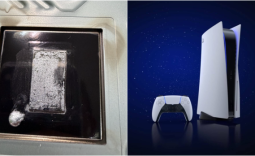 PS5 suffers from severe overheating after liquid metal eats into the heatsink
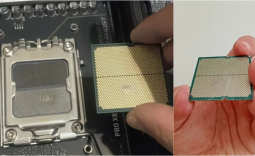 AMD Ryzen 7 7800X3D CPU burns and swells even after using AMD's updated BIOS
 D-Link F518 5G Wi‑Fi 6 AX1800 Mobile Hotspot Review: All-Day Mobile Hotspot
 Bose Lifestyle Ultra Speaker Review - Impressively Detailed Room-Filling Sound
 MSI Z890 Gaming Plus WIFI6E Review - Z890 for under $200
 Mortal Kombat (1995) 4K Ultra HD Blu-ray Review
 CPS PCCOOLER YS1200 ATX 3.1 80 PLUS Gold PSU Review
 ASRock X870E Taichi White Review: a premium AM5 motherboard with 10G LAN and WiFi 7
 Asetek Initium Pedal Modular Upgrades Review
 Thinkware U3000 Pro Review - Smart Dashcam with Wi-Fi quirks
 Montech TG3 Mid-Tower Chassis Review
 ASUS ROG Strix X870E-A Gaming WiFI7 Neo Review - A New Enticing Option
 I ditched the Windows 11 context menu for this open-source tool, and here's why
 Windows 11 may be encrypting your drive already, and I checked where my recovery key went
 GIGABYTE's 40 Days of INFINITY celebrates 40 Years of Innovation with stunning GeForce RTX graphics cards and rewards
 I swapped File Explorer for this free file manager and finally got the layout I wanted
 How to tell if someone has been using your Windows PC without your permission
 6 Task Manager tips for troubleshooting Windows performance problems
 ASUS ROG's 20th Anniversary Line-up of Premium PC Gaming Gear has Arrived - Here's Everything You Need to Know
 Six File Explorer tips every Windows user should know
 I switched my PC to encrypted DNS in Windows 11, and browsing felt more private
 Printer Not Working in Windows? How to fix detection, print queues and drivers