







Science, Space, & Robotics - Page 144
Explore the latest Science, Space, Health, and Robotics news from TweakTown. Coverage includes space launches, medical tech, discoveries, and rockets. - Page 144
Stay Updated
Follow TweakTown for breaking tech news, reviews, and daily updates.


As an Amazon Associate, we earn from qualifying purchases. TweakTown may also earn commissions from other affiliate partners at no extra cost to you.
Hubble telescope images breathtaking galaxy that may have a new world
NASA's Chandra X-ray Observatory has spotted evidence of a possible planet located in another galaxy - a first-of-its-kind discovery if proven true.

NASA has detailed the discovery of the evidence in a new report on its website where it states that the possible exoplanet is located in the spiral galaxy Messier 51, which is also referred to as the Whirlpool Galaxy. Exoplanets are planets located outside of our Solar System, and according to NASA, researchers have located "almost all of them less than about 3,000 light-years from Earth". The possible exoplanet located in the Whirlpool Galaxy is around 28 million light-years away from Earth.
The researchers discovered the evidence for the possible exoplanet using the transit method, which is an event that occurs when a planet passes in front of a star, causing observes to notice a significant drop in the star's light its producing. This method of exoplanet hunting is commonly used by astronomers in the optical light frequency, the frequency of light humans can see in. However, Rosanne Di Stefano of the Center for Astrophysics | Harvard & Smithsonian (CfA) in Cambridge, Massachusetts, who led the study on the newly discovered evidence, used X-rays wavelengths, which aren't visible to the human eye.
Continue reading: Hubble telescope images breathtaking galaxy that may have a new world (full post)
Earth's first asteroid deflection attempt will launch very soon
NASA is planning on launching its first attempt at deflecting an asteroid of its course very soon, as the space agency has locked in the launch date.

The mission is called the Double Asteroid Redirection Test, or DART, and encompasses NASA launching a spacecraft directly towards an asteroid to attempt to knock it off course. It should be noted that the asteroid that NASA is targeting doesn't pose any threat to Earth, and is purely just to research purposes. The launch of DART marks humanity's first attempt at deflecting an asteroid, and is a demonstration of our capabilities to respond to a potentially dangerous asteroid if it's on course with Earth.
NASA is targeting a binary asteroid system called Didymos, which translates to "twin" in Greek. The system features two asteroids, one 2,559 foot-wide asteroid named Didymos and another 525 foot-wide asteroid called Dimorphos. Dimorphos being the smaller of the two orbits its larger partner and is essentially a moon to Didymos. NASA plans to impact Dimorphos, which will (hopefully) push the asteroid into a closer orbit of Didymos. The asteroid system is located 6.8 million miles away from Earth.
Continue reading: Earth's first asteroid deflection attempt will launch very soon (full post)
Sun erupts major solar flare, Earth to get hit by CME blast very soon
Officials that monitor the Sun have observed a large solar flare occur on Thursday, October 28, which may cause interference with radio and satellite communications.

The launched an X1-class solar flare, which is the most powerful category of flare, according to the US Space Weather Prediction Group. According to the group, the solar flare caused a coronal mass ejection that is headed directly towards Earth. Upon impact, the large amount of charged particles hitting Earth's magnetic field can cause wide-area radio communication blackouts for high-frequency signals for around an hour.
Here's what the US Space Weather Prediction Group wrote in an email, "Area of impact consists of large portions of the sunlit side of Earth, strongest at the sub-solar point." The coronal mass ejection shoots out charged particles at around 1 million mph or more and usually takes a few days before they reach Earth. Reports indicate that the charged particles from our local star are expected to reach Earth sometime on October 30 and may deliver a "glancing blow".
Continue reading: Sun erupts major solar flare, Earth to get hit by CME blast very soon (full post)
30 millions Americans at risk of bomb-cyclone, officials drop warnings
Over the weekend, the Western United States was battered by a bomb cyclone, and now reports indicate that the storm is far from being over.

According to AccuWeather, a record-setting bomb cyclone is currently moving east towards central and southern US states, where it may cause severe weather for approximately 30 million people. The warnings have come after more than a dozen tornadoes were reported across three central states as of Sunday night, with one of the hardest-hit areas being 80 miles south of St. Louis. Forecasters report that there is a risk the severe weather will trigger tornadoes that would bring winds speeds between 40 and 60 mph.
AccuWeather reports that 80 mph winds are expected through Thursday evening, and with these wind speeds, there is a considerable chance that damage can be caused to homes, roofs, mobile homes, and objects that aren't secured down. AccuWeather Meteorologist Joseph Bauer said, "From the last week of October into early November, there is a higher probability of severe weather in the eastern Red River Valley into the lower Mississippi Valley, which is roughly where damaging and dangerous storms erupted through early Wednesday."
Continue reading: 30 millions Americans at risk of bomb-cyclone, officials drop warnings (full post)
NASA expert answers how Perseverance picked its landing spot on Mars
In a new video posted to NASA's official YouTube channel, a NASA Mars technology expert has answered the following question, "How Did Perseverance Pick its Landing Spot?".

Choosing a landing location for NASA's newest Mars rover is a pivotal choice that had to be made by a selection of people that take into account all of the science goals that the rover is aiming to achieve. The primary goal for Perseverance is to locate evidence of ancient alien life being once present on the Red Planet and relay important data back to Earth about the planet's atmosphere and overall evolution. Taking all of these goals, and many more that aren't outlined here, into consideration, NASA experts selected the Jezero Crater as its landing location due to research at the time indicating that it was once an ancient lake (which was later confirmed).
While the approximate landing location was selected before Perseverance made its way down to the surface, the specific landing location wasn't, and this is where NASA experts took their hands off the wheel and let Perseverance make its own decision. According to NASA Mars Technologist Swati Mohan, Perseverance was equipped with a brand new technology called "Terrain Relative Navigation", which is essentially adding "eyes" to the rover so it could see all of the hazards on the surface as it was descending.
Continue reading: NASA expert answers how Perseverance picked its landing spot on Mars (full post)
Origins found for the detected radio signal that may have been aliens
Late last year, researchers detected a strange radio signal coming from the direction of Earth's closest neighboring star, Proxima Centauri.

It was originally speculated that the signal's origins were coming from aliens on Proxima Centauri b, a potentially habitable exoplanet orbiting Proxima Centauri, but at the time, the signal had not undergone thorough analysis. Now, researchers have performed the analysis on the signal and discovered its true origins, which are quite underwhelming if you were hoping that it was aliens.
The signal was deemed a "signal of interest" and was also dubbed Breakthrough Listen Candidate 1 (BLC1). After conducting the analysis, the researchers concluded that the signal wasn't aliens attempting to communicate with Earth, but instead, it was two different Earth-bound transmitters mixing with each other. While the confirmation that the signal is "definitely not aliens", the researchers behind the analysis say that the detection of these signals represents that their instruments are working as intended, which is, at the very least, a reassurance.
Continue reading: Origins found for the detected radio signal that may have been aliens (full post)
NASA spies on 'monster' star-forming region that looks like 'Godzilla'
NASA has published a photograph of a nebula taken by its now-retired Spitzer Space Telescope, and the image resembles a space "monster".

NASA's Jet Propulsion Laboratory has published the image, and it states in a new article on its website that the colorful image seen above is of nebula located within the constellation Sagittarius about 7,800 light-years from Earth. Using Spitzer's GLIMPSE Survey, Caltech astronomer Robert Hurt processed the image and noticed the resemblance to Godzilla within the image.
"I wasn't looking for monsters. I just happened to glance at a region of sky that I've browsed many times before, but I'd never zoomed in on. Sometimes if you just crop an area differently, it brings out something that you didn't see before. It was the eyes and mouth that roared 'Godzilla' to me," said Hurt. NASA's JPL states in its article that much like on Earth, when we observe a cloud of gas our imaginations proceed to run wild by creating images and shapes, and the very same happens out in space when observing a cloud of gas and dust.
Continue reading: NASA spies on 'monster' star-forming region that looks like 'Godzilla' (full post)
Russia caves and admits defeat, will fly cosmonauts to ISS with SpaceX
The chief of Russia's space corporation has said that he is planning on making moves towards getting cosmonauts to the International Space Station via SpaceX.

According to Futurism, the news from the head of the Russian state space corporation, Dmitry Rogozin, is a complete "reversal" on the agency's previous statements about partnering with SpaceX CEO Elon Musk. The publication reports that Rogozin had previously stated that jokes and negative comments were made towards his agency by Musk when Rogozin said that without Russia, the US might as well "deliver its astronauts to the ISS by using a trampoline", to which Musk replied, "The trampoline is working".
Those statements were made some years ago, and since then, Rogozin has changed his tone towards working with NASA and SpaceX - even inviting Musk to tea at his home in Russia last month. Now, Rogozin has said, "In our view, SpaceX has already acquired enough experience for us to be able to put our cosmonauts on Crew Dragon", according to SpaceNews. Adding, "I believe we will be in a position to discuss candidates who may be flying to the space station onboard the Crew Dragon - Russian cosmonauts, and American astronauts who will be flying to the space station on Russian spacecraft."
Continue reading: Russia caves and admits defeat, will fly cosmonauts to ISS with SpaceX (full post)
Hubble captures wild image of 'space pumpkin' with 'two glowing eyes'
NASA has posted a new Halloween-themed image on its website and socials. The image was taken by the Hubble Space Telescope and showcases a "space pumpkin".

With Halloween right around the corner, NASA has published an image that resembles jack-o-lantern but is actually a snapshot of a collision between two galaxies. The image is of galaxies NGC 2292 and NGC 2293, which looks like two glowing eyes and a crooked carved smile with a pumpkin-ish color.
The collision of the two galaxies results in a loss of the iconic flat spiral disks that are constantly seen throughout the universe, but in this image, the spiral disk can still be seen making the "smile," and it features a subtle blue hue as a result of newborn star clusters. The two galaxies reside 120 million years away from Earth within the constellation Canis Major. Additionally, NASA states that the entire view is nearly 109,000 light-years across, which is approximately the diameter of our Milky Way galaxy.
Continue reading: Hubble captures wild image of 'space pumpkin' with 'two glowing eyes' (full post)
SpaceX reminds you just how far its come with 'Gateway to Mars' video
Elon Musk's SpaceX has certainly come a long way since its inception, and the company wants you to remember that with a short new hype video released onto its Twitter account.

The video showcases a behind-the-scenes look at the construction process occurring at SpaceX's Starbase in Texas. The video reveals the several stages of development for the Starship launch vehicle that only recently completed its first successful firing of a Raptor vacuum engine attached to a Starship prototype. The video is captioned "Gateway to Mars", reminding everyone that Mars is the destination and that Starship will be the vehicle that will take humanity there.
After the successful test firing of the Raptor vacuum engine attached to a Starship prototype, SpaceX CEO Elon Musk tweeted out that "If all goes well, Starship will be ready for its first orbital launch attempt next month, pending regulatory approval". SpaceX, along with everyone else that is interested in Starships first orbital launch, is now patiently waiting for launch approval by the Federal Aviation Administration (FAA). For more information on this story, and Starship, check out this link here.
Continue reading: SpaceX reminds you just how far its come with 'Gateway to Mars' video (full post)
Head of NASA hints at UFOs may actually be alien technology
The head of NASA has said that it's likely that we aren't completely alone in the universe, hinting at the existence of other life out there in the cosmos.

NASA administrator Bill Nelson recently spoke at the University of Virginia Center for Politics via a livestream and was asked about life outside of Earth. Nelson said that he "certainly" thinks there are other planet Earths out in the universe, considering how big the universe is. Nelson also made a possible connection between the recent UFO or UAP sightings made by US military pilots and alien life.
Nelson said, "I've talked to those pilots and they know they saw something, and their radars locked on to it. And they don't know what is. And we don't know what it is. We hope it's not an adversary here on Earth that has that kind of technology." Adding, "But it's something. And so this is a mission that we're constantly looking, 'Who is out there?' Who are we?' How did we get here? How did we become as we are? How did we develop? How did we civilize? And are those same conditions out there in a universe that has billions of other suns and billions of other galaxies?' It's so large I can't conceive it."
Continue reading: Head of NASA hints at UFOs may actually be alien technology (full post)
One of the youngest exoplanets ever found, rare direct image captured
An international team of astronomers has discovered an infant planet orbiting an infant star, adding to a very small list of the youngest planets ever found.

The team of international astronomers has had their research accepted for publication in the Monthly Notices of the Royal Astronomical Society, which details the discovery of the planet named 2M0437b. What makes this planet special is that it's newly formed and can be directly observed with telescopes, paving the way forward for researchers to garner a deeper understanding of planet formation, and thus the evolution of Earth.
The team of researchers estimates that the planet is a couple more times massive than Jupiter and formed with its host star only several million years ago. According to the KeckObservatory website, the planet formed "around the time the main Hawaiian Islands first emerged above the ocean". The planet and its host star reside are located 417 light-years from Earth in what astronomers call a stellar "nursery", a region of space that is producing stars and planets at a high rate.
Continue reading: One of the youngest exoplanets ever found, rare direct image captured (full post)
Apple co-founder moves to build 'the Google maps of space'
It wasn't too long ago that a co-founder of Apple announced he was joining the private space industry with a company called Privateer.

That Apple co-founder is none other than Steve Wozniak, and about halfway through September, Wozniak announced Privateer Space, a space-based company that's purpose remains shrouded in mystery. What we do know about Privateer Space is that it plans on tackling the ever-growing problem of space junk, but how the company will solve this issue is unknown.
Recently, Privateer Space acquired a new chief scientific adviser, Moriba Jah, who's an associate professor of aerospace engineering and engineering mechanics at the University of Texas at Austin, as well as an expert on space junk and one of the leading voices that are pushing for the problem of space junk to be solved.
Continue reading: Apple co-founder moves to build 'the Google maps of space' (full post)
First planet outside of our galaxy may have just been discovered
A team of astronomers has claimed that they may have detected the first planet outside of our Milky Way galaxy.

The study from the researchers has been published in Nature Astronomy and details a possible exoplanet candidate that resides in the spiral galaxy Messier 51 (M51), or Whirlpool Galaxy, located 28 million light-years away. The astronomers used NASA's Chandra X-ray Observatory that specializes in observing celestial objects in X-rays and used the transit technique to observe the possible exoplanet.
]The transit technique is quite simple to understand - imagine looking at a star and then seeing a drop in its brightness. From this drop you can infer that a celestial body is orbiting the star and has passed in between the observational line drawn from the telescope to the star. This technique is widely used by astronomers searching for exoplanets in optical light, but is rarely used by astronomers using X-ray-based telescopes.
Continue reading: First planet outside of our galaxy may have just been discovered (full post)
Blue Origin announces a new space station to 'normalize spaceflight'
The International Space Station is nearing its end of life, but before it's retired, it will be joined by a new space station called Orbital Reef.

The announcement comes from Blue Origin, Boeing, Sierra Space, and a few other companies who plan on launching the new space station that will have the facilities to support interests from national governments, the private industry, and tourism. According to Brent Sherwood, the senior vice president of advanced development programs for Blue Origin, Orbital Reef will lower the cost, expand access and provide the services needed to normalize spaceflight.
Sherwood said, "We will expand access, lower the cost, and provide all the services and amenities needed to normalize spaceflight. A vibrant business ecosystem will grow in low Earth orbit, generating new discoveries, new products, new entertainments and global awareness." The announcement states that Orbital Reef will be up and running with operational capabilities by the late 2020s. If you are interested in reading more about this announcement, check out this link here.
Continue reading: Blue Origin announces a new space station to 'normalize spaceflight' (full post)
Earth's spin slowed down, we may need to add a 'negative leap second'
Officials are saying that we may have to add a "negative leap second" onto the official Universal Coordinated Time (UTC).

UTC is the international method for timekeeping and is based on the atomic clock that is the epitome of precision as it measures the time by the movement of electrons in atoms, hence its "atomic clock" name. Officials that operate the atomic clock look for differences between Earth's rotation speed in time, which averages out to be 86,400 seconds per day, versus what the atomic clock states.
When there is a discrepancy between the atomic clock and Earth's rotation speed, the atomic clock is adjusted, and its recorded down whether Earth's rotation speed has sped up or slowed down. For example, in 2016, a leap second was added at 23 hours, 59 minutes, and 59 seconds on Dec. 31. Officials have been adding leap seconds around every 18 months since 1972, but now reports are indicating that Earth's rotation speed has slowed down, which means that a second may have to be subtracted from the atomic clock, something that is known as a "negative leap second".
Continue reading: Earth's spin slowed down, we may need to add a 'negative leap second' (full post)
Hubble bare-witnesses the 'cataclysmic demise' of a star's fiery death
NASA's Hubble Space Telescope, along with astronomers have seen for the first time the moments just after a star ended its life in a fiery explosion.

The new study has been published in the Monthly Notices of the Royal Astronomical Society and details observations made of the star's supernova, now dubbed SN 2020fqv. Researchers are now calling the supernova observation the "Rosetta Stone of supernovas", which is a reference to the Rosetta Stone that features the same text in three different languages. The stone was used by historians to understand Egyptian hieroglyphs.
Now, astronomers, with their newly-found observations, will be able to use the data recorded by Hubble to gain a deeper understanding of the nature of supernovas and what happens within a star right before it's about to explode. Hubble's observations took place only a few hours after the explosion had occurred, which allowed for researchers to observe the material close to the star after the explosion.
Continue reading: Hubble bare-witnesses the 'cataclysmic demise' of a star's fiery death (full post)
Every Mars rover was forced to shut down until now
All of the rovers that are currently station on the Red Planet were forced into safe mode for a two week period, but now they are back online.

NASA, along with the China National Space Administration (CNSA) had no choice but to switch their rovers into "safe mode" for two weeks as Earth and Mars reached opposite sides of the Sun. This two week period is called a "solar conjunction", and its when Earth and Mars are obscured from each other by the Sun, meaning researchers and engineers will lose sight of Mars, and thus communications.
Now that period has passed, nominal operations for all of the rovers have resumed, meaning research is back underway. Operations for NASA's Perseverance rover officially came back online on October 19, and immediately the rover began traversing the martian landscape in search of new interesting prospects. During this down period, all rovers, including China's Zhurong rover were collecting valuable data while in safe mode. For more information on this story, check out this link here.
Continue reading: Every Mars rover was forced to shut down until now (full post)
Elon Musk teases SpaceX's Starship may launch earlier than expected
SpaceX's Starship launch vehicle has recently passed a major hurdle in its construction, and now SpaceX CEO Elon Musk has teased its launch may happen earlier than expected.

On October 21, SpaceX successfully completed a static fire test with its SN20 Starship prototype, and this static fire test is no small achievement as preparations are being made for its first orbital flight test. SpaceX has previously said that Starship's first orbital test flight would likely occur within a couple of months or before the end of the year, but now SpaceX CEO Elon Musk has teased via Twitter that the test flight could occur next month.
At the moment, the launch of SpaceX's largest orbital vehicle is "pending regulatory approval" from the US Federal Aviation Administration (FAA), which is essentially an official license that grants SpaceX approval to launch the new vehicle. Musk took to Twitter on October 22 and said, "If all goes well, Starship will be ready for its first orbital launch attempt next month, pending regulatory approval." Patience and timing are the two things the public and SpaceX must now wait for as the space transportation company gears up for its biggest launch yet.
Continue reading: Elon Musk teases SpaceX's Starship may launch earlier than expected (full post)
NASA announces date for when it begins its journey back to the Moon
Yesterday, NASA officially announced when it will begin the first mission of its Artemis lunar program that aims to take humans back to the Moon as early as 2024.

On October 20, engineers successfully stacked the crew capsule on top of the Space Launch System (SLS) rocket that is slated to be the means of transportation to the Moon. The first step on getting humans back on the Moon is Artemis 1 - an uncrewed mission that will test the Orion spacecraft, the SLS rocket and ground systems at Kennedy Space Center in Cape Canaveral, Florida. Artemis 1 will send the Orion spacecraft 280,000 miles from Earth - farther than any human spacecraft has ever flown before.
Throughout its journey, the NASA spacecraft will separate from the Interim Cryogenic Propulsion Stage (ICPS) about two hours after launch and begin deploying small satellites over several days called CubeSats, which will be used to perform several experiments and technology demonstrations. On its way to the Moon, engineers on the ground will be testing all of Orion's systems to make sure everything is operational for when humans embark.
Continue reading: NASA announces date for when it begins its journey back to the Moon (full post)
 Twitch opts streamers into gen AI training by default, faces harsh backlash
 Sean Murray still plays the 2016 launch version of No Man's Sky
 China's YMTC has climbed to third place in global NAND flash shipments
 $100 GTA 6 version makes up 89% of pre-orders, analysts estimate
 HWiNFO's latest update quietly confirms Intel is working on Razor Lake-AX
 Nintendo puts Switch 2 price increase warnings on store demo kiosks ahead of September 1 hike
 GIGABYTE launches two new B450 motherboards as demand for AM4 stays high in 2026
 Microsoft finally makes up its mind and unifies Copilot features into one big app
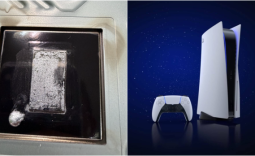 PS5 suffers from severe overheating after liquid metal eats into the heatsink
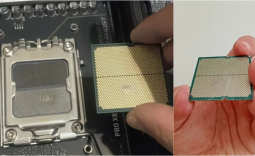 AMD Ryzen 7 7800X3D CPU burns and swells even after using AMD's updated BIOS
 D-Link F518 5G Wi‑Fi 6 AX1800 Mobile Hotspot Review: All-Day Mobile Hotspot
 Bose Lifestyle Ultra Speaker Review - Impressively Detailed Room-Filling Sound
 MSI Z890 Gaming Plus WIFI6E Review - Z890 for under $200
 Mortal Kombat (1995) 4K Ultra HD Blu-ray Review
 CPS PCCOOLER YS1200 ATX 3.1 80 PLUS Gold PSU Review
 ASRock X870E Taichi White Review: a premium AM5 motherboard with 10G LAN and WiFi 7
 Asetek Initium Pedal Modular Upgrades Review
 Thinkware U3000 Pro Review - Smart Dashcam with Wi-Fi quirks
 Montech TG3 Mid-Tower Chassis Review
 ASUS ROG Strix X870E-A Gaming WiFI7 Neo Review - A New Enticing Option
 I ditched the Windows 11 context menu for this open-source tool, and here's why
 Windows 11 may be encrypting your drive already, and I checked where my recovery key went
 GIGABYTE's 40 Days of INFINITY celebrates 40 Years of Innovation with stunning GeForce RTX graphics cards and rewards
 I swapped File Explorer for this free file manager and finally got the layout I wanted
 How to tell if someone has been using your Windows PC without your permission
 6 Task Manager tips for troubleshooting Windows performance problems
 ASUS ROG's 20th Anniversary Line-up of Premium PC Gaming Gear has Arrived - Here's Everything You Need to Know
 Six File Explorer tips every Windows user should know
 I switched my PC to encrypted DNS in Windows 11, and browsing felt more private
 Printer Not Working in Windows? How to fix detection, print queues and drivers