







Learn about how TweakTown tests and reviews hardware. As an Amazon Associate, we earn from qualifying purchases. TweakTown may also earn commissions from other affiliate partners at no extra cost to you.
Stay Updated
Follow TweakTown for breaking tech news, reviews, and daily updates.


Elon Musk shares when SpaceX will take the human race to Mars
SpaceX has recently conducted a pivotal test on its journey to creating the transportation necessary to get humans to the surface of Mars.

SpaceX took to its social media channels to share footage of Booster 7's static fire test that was held at the company's Starbase facility in South Texas. The objective of the first stage static fire test was to gather data on the 33 Raptor engines that were intended to be fired. Unfortunately, only 31 of the Raptor 2 engines ignited, but overall the test seemed like a success as 31 Raptor 2 engines provided more than enough power to get Starship to orbit.
For those that don't know, SpaceX's Starship launch vehicle has been in development for many years now, but now development is reaching a critical point as the rocket is almost ready for its first orbital flight test. This static fire test of 31 Raptor 2 engines has tested the Ground Support Equipment (GSE), which has never felt the pressure of 31 Raptor engines firing at the same time. Additionally, SpaceX engineers will gather valuable information on Booster 7's health after the firing, which will be used to make not only Booster 7 more efficient but also future vehicles that will come after it.
Continue reading: Elon Musk shares when SpaceX will take the human race to Mars (full post)
US says China is lying over mystery balloon that was 'clearly for intelligence'
The United States government has claimed that China is lying about its intentions with its mysterious weather balloon that was recently shot down.

Last week the US government successfully shot down a Chinese weather balloon that was suspected of being capable of gathering data on neighboring American military facilities. American military brought the balloon down on Saturday as it was flying approximately 60,000 feet above sea level six nautical miles off the shore in Myrtle Beach, South Carolina. China responded to the attack on its balloon, claiming that it was caused by a "civilian" accident, and condemned the decision to attack a "civilian unmanned airship by force."
Additionally, China claimed that Beijing "repeatedly" informed the US military that the balloon was entering its airspace and that it was for civilian use only. Furthermore, China vowed that it would respond to the attack, as it believes the threat of the balloon was an "obvious overreaction and a serious violation of international practice".
Google's AI chatbot makes a mistake that cost $100 billion
It was only a few days ago Google unveiled its ChatGPT competitor called Bard, but the reveal came at a hefty price as it cost its parent company $100 billion.

The $100 billion was lost on Wednesday after trading hours when Alphabet Inc, Google's parent company, lost $100 billion in market value. The downward spiral of share prices came after Google unveiled its AI chatbot Bard, as investors feared that Google was going to lose search engine market share to Microsoft-owned competing search engine Bing. Notably, Google's announcement didn't specify a release date for its Bard chatbot, while a day before, Microsoft unveiled its new Bing-powered by an upgraded version of the technology underpinning OpenAI's extremely popular ChatGPT.
Google's announcement has been seen as sloppy and a knee-jerk reaction to Microsoft adopting ChatGPT into its search engine. To back this point up, Reuters reported that Google's marketing material for Bard contained a vital error. Bard was asked, "What new discoveries from the James Webb Space Telescope (JWST) can I tell my 9-year old about?" and the answer the AI provided was, "JWST took the very first pictures of a planet outside of our own solar system," which is factually incorrect.
Continue reading: Google's AI chatbot makes a mistake that cost $100 billion (full post)
NVIDIA's RTX Video Super Resolution for Chrome will go live this month
Chrome 110 dropped this week, adding NVIDIA RTX Video Super Resolution support to the popular browser. RTX Video might sound a little confusing, but it's basically DLSS for watching videos on YouTube - it leverages NVIDIA's AI hardware in the GeForce RTX 30 Series and GeForce RTX 40 Series GPUs to upscale 1080p videos to 4K. But, even though the feature is live in Chrome, we'll have to wait until NVIDIA adds driver support for the feature work.

On that front, NVIDIA has teased that support is coming as part of this month's R530 driver branch.
You also might be wondering what the fuss is about, and video upscaling isn't a new thing - going from 1080p to 4K has been around for years. The difference here comes squarely from how NVIDIA RTX Video Super Resolution has been presented by NVIDIA, with the following example showcasing some remarkable results.
Continue reading: NVIDIA's RTX Video Super Resolution for Chrome will go live this month (full post)
Windows 11 sends an alarming amount of user data to third parties
Not many of us are truly aware of how much data is being sent by our PCs over the internet to third parties, let alone what sort of private information is being harvested for advertising and geo-tracking. We all know it's happening; targeted search results based on stuff you might have said out loud is a testament to that. Browsing the internet, shopping trends, likes, and dislikes, the more you do, the more it's visible.

But what about a brand-new PC with a fresh installation of Windows 11? What sort of telemetry is being sent before the user sends their first email? Well, a new in-depth video by The PC Security Channel doesn't paint a flattering picture of the behind-the-scenes network traffic on Microsoft's latest OS.
Using Wireshark to check, and again this is a fresh install of Windows 11, we see an eye-opening amount of traffic. From Microsoft to Bing, Google, Steam, McAfee, and more - constant communication and geo-tracking without the user doing anything. Let alone giving permission outside of ticking boxes during the initial boot and setup phase. The most alarming examples involve sending data (DNS traffic) to market research firms and other companies we've never heard of with words like "trusted," "security," and "privacy" in their company profiles. One specific example, is ScorecardResearch.com, which "studies and reports on Internet trends and behavior."
Continue reading: Windows 11 sends an alarming amount of user data to third parties (full post)
As PC sales decline, ARM-based laptop computing on MacBooks is on the rise
Even though PC sales have seen a historic decline in the past year, with companies across the board feeling the pinch, one company is bucking the trend - Arm. For those needing a refresher, Arm processors are based on reduced instruction set computer (RISC) architecture, where Arm Limited designs the core CPU components and then licenses the IP to partners to build Arm-based chips according to their specifications, which is a very different approach to what we see from Intel and AMD.

And yeah, 2022 was a good year for Arm. Thanks partly to Apple's success with the Arm-based MacBook series, Arm-based laptops could capture a 25% market share within five years. Apple's M1 chip, which wowed many with its performance and power efficiency, is generally considered the major success story for Arm-based CPUs in recent years. It has seen the Arm laptop market grow from 2% to over 12% at the end of 2022.
Arm Limited has reported revenue growth of 28% too, which is larger than any of the other major tech giants. And even though Apple has a 90% share of the Arm-based laptop market, companies like Qualcomm are expected to deliver Arm laptops for the traditional PC market in the coming years. And with that, we get the magic 25% figure being reported, but even if Arm doesn't manage to capture a quarter of the laptop CPU market in five years, there's no doubt amongst industry analysts that it will continue to grow.
AMD now has over 30% of the processor market, Intel still dominates
AMD has broken the 30% threshold for CPU market share, with a new report from Mercury Research highlighting that AMD now has 31.3% of the x86 processor market - up from 28.5% in the previous year. Naturally, Intel still has the lion's share with 68.7%. Still, the company recently reported historic losses due to the drop in PC shipments that highlighted its waning dominance in the PC server space.

It's here where we see some of the most impressive strides made by AMD, where its server CPU market share increased from 4.2% at the close of 2018 to 17.6% at the end of 2022. Desktop CPUs, aka the Ryzen range found in PCs, hit 18.6% market share at the close of 2022, a slow-but-steady increase for AMD - though on that front, it's down from 2020's peak of 20.1%.
Although the bump in market share is great news for AMD, the report also highlights the current state of the PC business, with Mercury Research stating that Intel and AMD have experienced the most significant year-over-year (around 34%) and quarter-over-quarter (around 19%) decline in 30 years of tracking.
Continue reading: AMD now has over 30% of the processor market, Intel still dominates (full post)
Intel says goodbye to the 11th Generation 'Rocket Lake' processor range
Intel has announced that its 11th Generation Intel Core i9, i7, i5, and Intel Xeon W processors have reached the 'end of life' stage. After partners place final orders (and they have until August 25, 2023), the last 11th Generation CPUs and chipsets will ship this time next year. As expected, Intel's 400 and 500 series chipsets supporting Rocket Lake CPUs are also going away.

Intel's 11th Generation 'Rocket Lake' processors have an interesting history, as they're built on a 14nm node that was considered a step back at the time. According to reports, the architecture was initially intended for use with 10nm, but due to delays and setbacks, 'Rocket Lake' was shoehorned onto 14nm to be released. And it never made its way into laptops.
Even so, the performance was a step up from its predecessor, but the larger node meant it used a lot of power. At the time of release, its desktop competition came from AMD's Zen 3 Ryzen CPUs, which offered more cores. The 10th Generation 'Comet Lake' was generally seen as a better option because it provided 10 cores versus the eight in 'Rocket Lake.'
Satya Nadella believes Activision merger could help Xbox compete in Japan
Microsoft CEO Satya Nadella delivers more comments on the proposed merger with Activision and rightly asserts that the deal would make Xbox much more competitive in the games market.

In a recent interview with CNBC, Satya Nadella shares his views on the Microsoft-Activision merger and how the acquisition could ultimately spark a more pronounced market presence in regions where Xbox is notably outpaced by competitors like Sony and Nintendo.
"I think this combination will only bring more competitiveness in the gaming industry," Nadella said in the interview.
United Kingdom may represent less than 5% of global video games market revenues
The United Kingdom may represent only a small portion of the video games market in terms of revenue generated in 2022, new figures from the UK's Competition and Markets Authority have indicated.

Yesterday UK regulators at the Competition and Markets Authority (CMA) published a series of highly-detailed reports on the video games industry as it pertains to the Microsoft-Activision merger. Nestled in a consumer-facing press release is an interesting figure that gives us an idea of where the United Kingdom sits in the global video games market.
According to the CMA, consumers in the United Kingdom spent about about 5 billion GBP on video games throughout 2022. Quick and crude conversions based on recent rates shows that the UK could have generated about $6 billion USD from gaming in 2022. Newzoo, an analyst firm that is often cited in official regulatory documents, notes that the worldwide games market made about $184 billion last year. If these numbers are accurate, this could mean the UK represents about 3.3% of gaming revenues made in 2022.
Microsoft-Activision merger: Sony now refuses to communicate with Microsoft
UPDATE: Sony says it is currently in contact with Microsoft: "We are in contact with Microsoft and have no further comment regarding our private negotiations," a Sony rep told the FT.

Sony has reportedly dropped all communication with Microsoft and Activision in regards to the hotly contested merger.
Sony is trying to "sabotage" the Microsoft-Activision merger, claims Activision CEO Bobby Kotick. Sony has been staunchly against the $68.7 billion merger from the get-go, arguing that Microsoft could use Call of Duty and billion-dollar Blizzard franchises as weapons against its competitors.
CMA has been 'co-opted by FTC ideology,' says Activision CEO Bobby Kotick
Activision-Blizzard CEO Bobby Kotick comments on the ongoing regulatory scrutiny surrounding the $68.7 billion Microsoft-Activision merger, saying that UK regulators may be following the FTC's alleged ideological approach to the merger.

Yesterday UK competition regulators at the Competition and Markets Authority (CMA) published a series of very important documents relating to the Microsoft-Activision merger. The CMA, who is overseeing the approval process for the potential joining of the two billion-dollar gaming giants, has provisionally determined that the merger could harm UK gamers by in turn harming competition in the gaming market.
The CMA has yet to make a finalized decision and is currently inviting the games industry to provide more information and evidence, which legal counsel from Microsoft, Activision, and Sony are very eager to do. The CMA has published their early findings alongside a list of possible remedies based on the provisional findings, and now regulators are open to arguments against their claims. Essentially, the CMA is at the "change my mind" phase.
Nintendo vs PlayStation hardware sales: All consoles and handhelds ranked
Nintendo has broken records with the Switch, which has become the third best-selling gaming hardware of all time. But how does the Switch stack up against Nintendo's other hardware, and PlayStation hardware for that matter?

Nintendo recently made history by achieving 122.55 million Switch shipments. As we predicted, the Switch had beaten the PS4 and the Game Boy by the end of 2022. This puts the Switch handheld-console family firmly in third place behind the Nintendo DS (154.02 million) and the PlayStation 2 (155 million). Although the Switch is currently in its seventh year, Nintendo is reportedly raising its hardware production target for the 2023-2024 period.
To really underline this sales achievement, we've combined historical Nintendo and PlayStation shipments in a single chart. The results speak for themselves and give consumers a better look at how specific handhelds and consoles performed during their respective eras.
Famed programmer drops warning about artificial intelligence
In an exclusive interview with Dallas Innovates, famed programmer John Carmack explained the road to developing artificial general intelligence.

The development of artificial intelligence in its various forms has and is exponentially speeding up, and according to legendary DOOM programmer John Carmack, it's only a matter of time before AI is capable of simulating a human brain. Carmack says during the interview that the tools humans have developed throughout the ten years, or so they have been developing artificial intelligence will be enough for developers to reach artificial general intelligence.
However, there is an elephant in the room. Carmack explains that a massive hurdle will be "consciousness", or the element that makes life, life. Since humans don't fully understand what consciousness is or how it's developed, programmers are unable to replicate it in software. Notably, this hurdle is far from being overcome as AI developers don't even have systems that can "act like a mouse or a cat."
Continue reading: Famed programmer drops warning about artificial intelligence (full post)
Scientists discover unprecedented rings around an object in the solar system
A group of scientists has discovered rings around an object that resides in the frozen debris region beyond Neptune and Pluto.

Researchers have published their findings in the scientific journal Nature and explain that using the world's largest optical telescope, the 34-foot-wide Gran Telescopio CANARIAS in the Canary Islands, Spain, to hone in on a dwarf planet called Quaoar. This dwarf planet doesn't meet the specifications to make it a full planet, but it does feature something special - rings, much like Saturn.
The report states that astronomers before this discovery didn't believe that rings could exist at such great distances from their host celestial bodies, especially small celestial bodies such as Quaoar. The small dwarf planet is approximately four billion miles away from Earth and is only 690 miles in diameter, making it half the size of Pluto, another dwarf planet.
Rare 'one-in-ten-billion' star system discovered and it's going to explode
A group of astronomers has used the SMARTS 1.5-meter Telescope at Cerro Tololo Inter-American Observatory in Chile to discover what is being described as the first example of a rare type of star system.

According to a press release and a study published in the scientific journal Nature, the team of astronomers discovered this unusual star system called CPD-29 2176, which is located approximately 11,400 light-years away from Earth. The star system is so rare that the researchers estimate there are only about ten such star systems within the entire Milky Way galaxy. So, what makes it so rare? CPD-29 2176 was found to have the right conditions for a kilonova to take place, an extremely powerful explosion that occurs when a neutron star collides with another neutron star.
The astronomers outline in the press release that data from the SMARTS telescope informed researchers on the orbital characteristics of the star system and what stars it consists of. The researchers found one neutron star that was created by an ultra-stripped supernova, an end-of-life explosion of a massive star that has had much of its outer atmosphere stripped away by a companion star. Additionally, the researchers found a second closely orbiting star that is on its way to becoming an ultra-stripped supernova.
Elon Musk responds to major health concerns 'public support is appreciated'
A new report revealed that Elon Musk is struggling with some health concerns, which the Tesla CEO has since responded to on Twitter.

It's no surprise that Elon Musk has a tendency to be a workaholic, especially since he's the CEO of Twitter, Tesla, and SpaceX, which is quite a tall order in terms of the total amount of work that needs to be done. While Musk is simultaneously running three of the most prominent companies in the world right now, the CEO has revealed the struggles he is facing with a piling workload. According to a new report from The Wall Street Journal, Musk is suffering from severe back and neck pain, along with insomnia.
This isn't the first time that Musk has mentioned his health problems, with the Twitter CEO saying to a lawyer during his trial over his "funding secured" tweet to take Tesla private, "I had trouble sleeping last night, so unfortunately, I'm not at my best. I'm sorry for squirming around. I have quite severe back pain." The report states that Musk has experienced back and neck pain for many years now and has even gone through two surgeries aimed at alleviating the pain.
Scientist use alien-detecting AI to discover eight 'suspicious' signals
A team of researchers used an artificial intelligence system to identify some "suspicious" radio signals that may have an extraterrestrial origin.

University of Toronto student Peter Ma spoke to New Atlas, where he explained that he developed a new machine-learning algorithm that is designed to sort through radio signals that are detected from deep space. Ma brought the AI to Breakthrough Listen, an Australian-based initiative that aims to detect artificial radio signals coming from other planets or locations in our solar system in hopes of being able to discover life outside of Earth.
For example, if a high-tech alien race scanned Earth, they would pick up the many radio signals that are bouncing around our planet. Breakthrough Listen plans on doing that, but for any signal coming to Earth. However, the task is not a small one, as there are many radio signals out in deep space, and the majority of them come from stars, black holes, quasars, supernovae, and many other objects that can release radio signals. Since the universe is quite noisy, humans struggle to filter through and categorize all of the detected radio signals, which is where artificial intelligence comes into play.
NASA confirms its Webb telescope accidentally observed its smallest object yet
NASA's James Webb Space Telescope has captured an image of an asteroid that's approximately the size of Rome's Colosseum.

An international team of European astronomers has used Webb's Mid-Infrared Instrument (MIRI) to detect an interloping asteroid that's estimated to be anywhere between 300 and 650 feet wide, or approximately the size of Rome's Colosseum. While that may sound like a large asteroid, NASA writes that this object is likely the smallest object Webb has observed so far and could be a great example of an object that measures under 0.6 miles that resides within the main asteroid belt located between Mars and Jupiter.
Webb's observations of the asteroid were published in the scientific journal Astronomy and Astrophysics, where it's explained that the asteroid was detected while Webb was performing calibration testing for its MIRI instrument. Researchers pointed the MIRI instrument at the main belt asteroid 1998 BC1 and began taking calibration images. According to NASA, these tests failed for technical reasons such as brightness and the telescope not being pointed at the right target.
Philips 'Sleep Headphones' are earbuds designed to be worn while you sleep
Philip is introducing new Sleep Headphones, created in collaboration with Kokoon, to improve one's sleep. In addition to being headphones that you can wear all night long. This includes side-sleepers, which is usually the realm where anything headphone or earbud related is a big no-no on account of the discomfort. The "world's thinnest headphones with integrated biosensors" also detect when you fall asleep and will adjust sound levels accordingly so as not to disrupt you.

The profile here is tiny, with a thickness of only 6mm compared to most earbuds in the 20+mm range, and made of soft silicone.
These earbuds are also great for blocking background noise as they come equipped with white noise filters, which are handy if you're in a noisy environment or there's snoring. This is not to be confused with Active Noise Cancelling (ANC), which is not a feature here.
 Qualcomm is raising chip prices from September 1, and Android phones could get more expensive
 Google's AI patched more Chrome bugs in two releases than it had in two years, including a 13-year-old flaw
 A missing underscore in a Skyrim-inspired username sent an innocent man to prison for 18 months
 Microsoft improves Windows 11 optimization for PCs with 8GB RAM
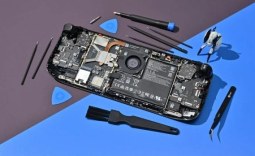 Steam Deck LCD battery returns to iFixit, but costs $50 more now
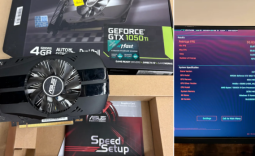 Redditor scores a working GTX 1050 Ti for just $2 at Goodwill
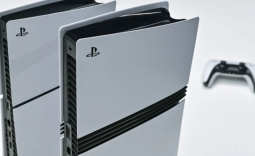 Sony has secured enough memory to meet PS5 sales targets through March 2027 and says no further price hikes are planned
 Reddit is building a video and audio listening experience for the viral post format it accidentally created for TikTok
 Seagate says Mozaic 5 50TB hard drives are on track for 2027, with 100TB already on the roadmap
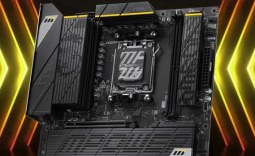 MSI adds a BIOS toggle to tighten standard DDR5 timings closer to EXPO ULL kits
 Montech TG3 Mid-Tower Chassis Review
 ASUS ROG Strix X870E-A Gaming WiFI7 Neo Review - A New Enticing Option
 Noctua NL-LC1-36 Liquid CPU Cooler Review
 Logitech G316 X 98 Wired Gaming Keyboard Review - Retro-Inspired Board that Falls a Little Short
 Biwin M560 2TB SSD Review - Best Overall Retail-Ready DRAMless SSD
 Logitech G512 X 98 Analog Mechanical Gaming Keyboard Review - An Innovative Two-in-One
 Thrustmaster T.Flight HOTAS 5 MSFS Edition Review
 SteelSeries Arctis Nova Pro Omni Wireless Headset Review - One Headset to Rule Them All
 SteelSeries Arctis Nova 7 Wireless Gen 2 Headset Review - New and Improved, But Is It Enough?
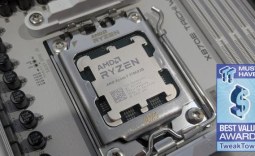 AMD Ryzen 7 7700X3D Review - Days of Future Past
 6 Task Manager tips for troubleshooting Windows performance problems
 ASUS ROG's 20th Anniversary Line-up of Premium PC Gaming Gear has Arrived - Here's Everything You Need to Know
 Six File Explorer tips every Windows user should know
 I switched my PC to encrypted DNS in Windows 11, and browsing felt more private
 Printer Not Working in Windows? How to fix detection, print queues and drivers
 The Ultimate Guide to Personalizing Your Windows 11 Taskbar
 How to Turn Your Windows Laptop Into a Second Monitor with Miracast and Wireless Display in Minutes
 6 Mistakes to Avoid When Buying a Windows Laptop
 I capped Windows Update's bandwidth with Delivery Optimization, and my downloads stopped choking
 I use this decade-old free tool that finds files faster than Windows Search does