







Science, Space, & Robotics - Page 156
Explore the latest Science, Space, Health, and Robotics news from TweakTown. Coverage includes space launches, medical tech, discoveries, and rockets. - Page 156
Stay Updated
Follow TweakTown for breaking tech news, reviews, and daily updates.


As an Amazon Associate, we earn from qualifying purchases. TweakTown may also earn commissions from other affiliate partners at no extra cost to you.
NASA's latest discovery may prove alien life existed on Mars
NASA's Perseverance rover has been exploring the Jezero Crater since it landed there in February, but now the rover has successfully taken its first two samples.

NASA's main goal is to discover any signs of ancient life once existing on the Red Planet, and the Perseverance rover is there to find it. To find signs of ancient life, Perseverance must take core samples from rocks, and from those samples, researchers will derive the history of the environment and whether or not it may have once had the right conditions for life.
According to Ken Farley of Caltech and a project scientist for NASA's Jet Propulsion Laboratory, stated in a press release shared by NASA, "It looks like our first rocks reveal a potentially habitable sustained environment." NASA states that there were salt minerals found in the core samples and that these rock cores may have trapped tiny bubbles of ancient Martian water.
Continue reading: NASA's latest discovery may prove alien life existed on Mars (full post)
SpaceX in world's first will take a Kings of Leon NFT into orbit soon
SpaceX will soon be taking a gallery's worth of digital art and one of the Kings of Leon's songs as an NFT to space.

The news comes from the Inspiration4 website, which states that payload aboard the Crew Dragon capsule will feature a Kings of Leon NFT. The song "Time in Disguise" will be played throughout the mission and will be the first minted NFT to ever be played in orbit. Additionally, there will be 50 other NFTs also aboard the Crew Dragon, all of which will be digital artwork of the band.
As for the Inspiration4 mission, SpaceX will be taking the Crew Dragon capsule into orbit for a three-day trip. The team that will be going up is Shift4 Payments CEO Jared Isaacman, Hayley Arceneaux, Sian Proctor, and Chris Sembroski. Kings of Leon said, "We're honored to participate in this historic journey in an effort to raise money for St. Jude, and we're sending all our best to the crew of Inspiration4." For more information on this story, check out this link here.
Continue reading: SpaceX in world's first will take a Kings of Leon NFT into orbit soon (full post)
Researchers detect mysterious signal, traced it back to galaxy center
A new study available on the pre-print server arXiv has suggested that researchers have detected mysterious radio signals coming from a galaxy's center.

The galaxy is called ASKAP J173608.2-321635, and according to the astronomers behind the paper, the object that is causing the radio signals is "a highly-polarized, variable radio source located near the Galactic Center and with no clear multi-wavelength counterpart." At the moment, researchers aren't sure what is causing the radio signals that are being detected by the Australian Square Kilometre Array Pathfinder (ASKAP).
However, researchers do know that radio signals aren't consistent as the object emits radio bursts for up to weeks at a time before stopping all radio signals for up to three months. While the origin of the radio signals is yet to be uncovered, researchers write that "increasing the survey cadence and comparing the results of this search to other regions will help [them] understand how truly unique ASKAP J173608.2-321635 is and whether it is related to the Galactic plane, which should ultimately help us deduce its nature."
Continue reading: Researchers detect mysterious signal, traced it back to galaxy center (full post)
Star eats black hole or neutron star, causes a 'first time' supernova
Researchers have observed for the first time a star consuming either a black hole or a neutron star, causing a supernova explosion.

Researchers performed a survey with the Very Large Array Sky Survey and noticed that there was a bright source of radio emissions coming from a star-forming galaxy located 480 million light-years away. Dillon Dong, a graduate student at Caltech and lead author on a paper, said, "Theorists had predicted that this could happen, but this is the first time we've actually seen such an event."
Researchers believe that a star killed itself in a fiery supernova explosion, leaving behind either a neutron star or a black hole. As the years went on, a neighboring star was pulled closer and closer to the black hole or neutron star, eventually becoming consumed by either. The star being consumed was violent as all of its material was thrown out into the space around it, eventually reaching the core of the star. With no more fuel to burn, the star went supernova, shooting out a flash of X-rays that researchers detected.
Continue reading: Star eats black hole or neutron star, causes a 'first time' supernova (full post)
If we want to colonize Mars, viruses may be a key to our survival
Most people are sick of hearing about viruses after the events of 2020 and the current events of 2021. But, viruses may play a pivotal role in humans colonizing new planets.

NASA and other private companies are striving towards making the human race a two-planet species, with the end goal being to colonize Mars. That goal is not easily achieved as Mars is a baron wasteland that has an extremely harsh atmosphere, making it very difficult for humans to grow food, store water, and produce breathable oxygen.
Another factor that NASA and other private companies may not have considered is viruses' role in the web of life. According to Professor Paul Davies from Arizona State University's Beyond Center for Fundamental Concepts in Science, "Viruses actually form part of the web of life. I would expect that if you've got microbial life on another planet, you're bound to have - if it's going to be sustainable and sustained - the full complexity and robustness that will go with being able to exchange genetic information."
Continue reading: If we want to colonize Mars, viruses may be a key to our survival (full post)
US Navy ghost ship fires missiles, without a single human on-board
The US Department of Defense has tweeted out a new video showing that its unmanned ship, the USV Ranger, firing an SM-6 missile successfully during a recent test. Check it out:

Back in 2017, the US Department of Defense kick-started its new program of getting at least two robot ships that the US Navy could use autonomously. The US Navy worked with the Department of Defense's Strategic Capabilities Office, and became part of the "Ghost Fleet Overlord" program, giving me some Skynet vibes.
With a regular ship, there is a chain of command before the rocket leaves the ship for its intended target -- but for an autonomous Terminator-style warship, things are a little different. Human sailors in the US Navy (and other Navy fleets) must follow the Law of the Sea Convention -- the United Nations and its list of rules and practices countries agree on.
Continue reading: US Navy ghost ship fires missiles, without a single human on-board (full post)
NATO: North Korea 'spreading dangerous technology', nuke alarms blare
It seemed that under President Donald J. Trump the world was a much safer place, especially as he made historic peace deals with North Korea -- but now? Now, things are getting worse.

During the recent 17th NATO conference on arms control and weapons of mass destruction, North Atlantic Treaty Organisations (NATO) Secretary-General Jens Stoltenberg explained that North Korea was in violation of the arms control rules and advancing nuclear capabilities.
Stoltenberg said that North Korea is "ignoring or breaking the global rules" and "spreading dangerous technology". He continued: "NATO's aim is a world free of nuclear weapons. And we are ready to take further steps to create the conditions for nuclear disarmament negotiations. But any meaningful disarmament must be balanced and verifiable".
Continue reading: NATO: North Korea 'spreading dangerous technology', nuke alarms blare (full post)
600 cubes of Nazi uranium from WW2 goes missing, for Hitler's nukes
The Nazis had over 1000 cubes of uranium during the mid-1940s and their experimentations with the first weapons of mass destruction... but most of them are all gone -- in fact, all but 14 remain.

Researchers are now trying to find the remaining Nazi uranium cubes, with Tim Koeth and Miriam Hiebert hunting them down. Hiebert, a historian and materials scientist, told Business Insider: "Marie Curie's granddaughter has one. She uses it as a doorstop".
As for the cubes themselves, researchers believe there are just 14 out of more than 1000 used during Nazi Germany's experiments with nuclear weapons. 600 of these Nazi uranium cubes were captured, and shipped over to the US back in the 40s -- but after they reached US shores, no one knows where they went.
Continue reading: 600 cubes of Nazi uranium from WW2 goes missing, for Hitler's nukes (full post)
Starlink satellite drops out of orbit, fears of crashing into the UK
One of Starlink's satellites have dropped out of orbit, and it is currently hurtling towards the planet and has re-entered Earth's atmosphere. The UK Space Agency has said that there is a "low chance it may burn up over the UK very shortly".

The UK Space Agency tweeted: "We are monitoring its re-entry together with @DefenceHQ, and there is no expectation the re-entry will cause any damage. Due to the varying input data, natural forces and associated observation error, there are always high levels of uncertainty when performing re-entry predictions on any satellite".
"Today, a Starlink-1855 satellite re-entered the Earth's atmosphere. There is a chance it will re-enter over the UK, and you might be able to spot the satellite as it burns up. Starlink has a fantastic track record or orchestrating safe and reliable re-entries. We do not expect the return of the satellite to cause any damage. Still the UK Space Agency and the Ministry of Defence continually monitor and assess the re-entries of satellite and debris and any risk to British territories through our joined Space Surveillance and Tracking capabilities".
Continue reading: Starlink satellite drops out of orbit, fears of crashing into the UK (full post)
Anduril Industries secures new contract with UK Ministry of Defence
Anduril Industries has just secured a $5.2 million contract with the UK Ministry of Defence (MOD) Strategic Command's Innovation Hub (jHub) and supply it with advanced, multi-domain, integrated force protection technology.

The military contract is part of TALOS, a program the MOD is pushing to force a defense-wide push into integrated command and control. Anduril will supply its technology for base defense, protecting personnel, and infrastructure from a "rapid evolving set of threats".
Oculus founder Palmer Luckey is behind Anduril Industries, with Anduril's technology providing alerrts to operators when threats are detected from ground intrusion or unmanned aerial systems. All of Anduril's technologies and products will be used under TALOS, including Sentry Towers, ground sensors, Ghost 4 Drones, and the Lattice AI operating system.
Continue reading: Anduril Industries secures new contract with UK Ministry of Defence (full post)
Satellite images show 10 mile ocean oil spill caused by Hurricane Ida
Satellites have captured some images of an oil spill that has happened in the Gulf of Mexico caused by Hurricane Ida.

On August 29, Hurricane Ida reached land close to Port Fourchon, Louisiana, and caused destruction to almost everything that came in its path. The hurricane came with 150 mph winds, large amounts of rainfall that eventuated into widespread flooding and many storms. Now it has been discovered that Hurricane Ida has also caused an oil spill in the ocean, as divers have identified a ruptured valve 2 miles south of Port Fourchon.
Satellites have been used to capture the size of the spill, and officials are estimating that it at least stretches 10 miles. The oil spill has remained out at sea and hasn't affected the Louisana shoreline. Additionally, crews are already doing what they can to reduce the spill, and luckily the pipe that is ruptured is in relatively shallow water of about 34 feet. If you are interested in reading more about this story, check out this link here.
Continue reading: Satellite images show 10 mile ocean oil spill caused by Hurricane Ida (full post)
NASA scientist answers the one big question, 'do aliens exist?'
NASA has posted a new video to its YouTube channel titled "We Asked a NASA Scientist - Do Aliens Exist?". Here's the answer.

NASA has posted a new video as a part of its "We Asked a NASA Scientist" series where the space agency will pose a popular question to a NASA scientist in their respective field and post their answer. In the above video Dr. Lindsay Hays, a NASA astrobiologist, was asked if aliens exist, to which she says that "we have not yet discovered life on any other planet," adding "we haven't seen any scientifically supported evidence for any extraterrestrial life".
However, Dr. Lindsay also says that doesn't mean we will never find life. The astrobiologist goes on to say that almost everywhere we have looked on Earth, we have found tiny microbial life, the simplest of life forms, and that it's very possible that other planets or even moons could have these sample simple life forms if the environmental conditions make that possible. NASA is currently searching for past signs of microbial life on Mars with the Perseverance rover.
Continue reading: NASA scientist answers the one big question, 'do aliens exist?' (full post)
NASA uses nearly half a million gallons of water in just 60 seconds
Nearly half a million gallons of water used in 60 seconds seems quite ridiculous, but what if it were possible that it was necessary?

During a rocket launch, NASA will use nearly half a million gallons of water for more reasons than just cooling down surfaces that are heated by the launch. As Interesting Engineering explains in the above video, NASA was posed with the problem of sound waves caused by the launch being initiated damaging the technology onboard.
As a relatively cost-effective solution, the space agency uses water as a medium for the sound wave vibrations to travel through, reducing the overall decibels of the launch. NASA's water system is capable of releasing 450,000 gallons of water in just 60 seconds, which is enough water to supply 1,000 homes for six days. For more information on this story, check out this link here.
Continue reading: NASA uses nearly half a million gallons of water in just 60 seconds (full post)
There's a 'dog-bone' shaped asteroid out in space, best images here
The European Space Agency (ESA) has snapped some brand new images of an asteroid that is shaped like a "dog-bone".

A team of astronomers has used the European Southern Observatory's Very Large Telescope to observe the asteroid and have published their findings in Astronomy & Astrophysics. The asteroid is officially named Kleopatra, and according to Franck Marchis, the lead author of the study, the asteroid is "truly a unique body in our Solar System."
These images taken by the Very Large Telescope are the most detailed images taken of Kleopatra to date, and the team of astronomers believes that Kleopatra's uniqueness will push the human understanding of the solar system. Using precise measurements, the team was able to create these 3D images, allowing for more research to be done on the object and the two moons that orbit it. For more information on this story, check out this link here.
Continue reading: There's a 'dog-bone' shaped asteroid out in space, best images here (full post)
Terrifying hurricane photographed by astronauts aboard the ISS
The International Space Station (ISS) has many uses, and one of them is to observe and measure Earth from above.

Astronauts aboard the ISS have managed to capture some incredible images of a hurricane rolling over the Atlantic Ocean on the weekend. The hurricane is named Hurricane Larry, and according to NASA astronaut Megan McArthur who is stationed on the ISS, "From our viewpoint on ISS, it looks much larger than Ida." Referencing Hurricane Ida that has caused massive destruction throughout southern America, more on that here.
As for Hurricane Larry, officials have said that it's a Category 3 hurricane that brings 115 mph winds. According to the National Hurricane Center, Larry isn't expected to reach land, but it will be ushering in a tropical storm for Bermuda this week as it makes its way close to the island. McArthur tweeted the following, "Hoping this one doesn't make landfall." If you are interested in reading more about Hurricane Larry, check out this link here.
Continue reading: Terrifying hurricane photographed by astronauts aboard the ISS (full post)
Astronauts aboard the ISS throw a disco party with some plants
Astronauts aboard the International Space Station (ISS) have conducted a disco party with some plants that are also aboard the floating laboratory.

The news comes from French astronaut Thomas Pesquet of the European Space Agency, who posted to his personal Twitter account with a GIF that shows plants being blasted with lights projecting multiple colors. Pesquet jokingly says in the caption of the post, "Saturday night disco! I may or may not have found the settings to program the LED lighting of our space greenhouse."
So, what are the astronauts actually doing if it isn't a disco? Astronauts aboard the ISS are experimenting with microgravity and how it affects things such as plant growth, bone density, etc. In this instance, astronauts are observing plant growth aboard the ISS to assess if nutritional value is influenced by microgravity. As for the different light colors, astronauts use the colors to see which plants respond to different light wavelengths.
Continue reading: Astronauts aboard the ISS throw a disco party with some plants (full post)
NASA's James Webb Space Telescope locks in new launch date
The highly anticipated James Webb Space Telescope has just received a delay from NASA and the European Space Agency.

The James Webb Space Telescope is no stranger to delays, as it has been suffering from them since construction on the telescope began in the 1990s. Now, NASA partnered with the European Space Agency (ESA) has announced that the launch date for the Hubble replacement has been postponed to December 18.
According to Gunther Hasinger, ESA's director of science, who announced in a statement, "We now know the day that thousands of people have been working towards for many years, and that millions around the world are looking forward to. Webb and its Ariane 5 launch vehicle are ready, thanks to the excellent work across all mission partners. We are looking forward to seeing the final preparations for launch at Europe's Spaceport."
Continue reading: NASA's James Webb Space Telescope locks in new launch date (full post)
If you want to avoid all humans, buy this 22-acre island for cheap
Sometimes all you want to do is just get away from people and be by yourself. This is a perfectly normal feeling as humans are both pack animals and solitary animals.

Spending a few hours reading a book or watching a movie by yourself is something most people would decide to do if they wanted some time to themselves. But if that isn't enough for you, there is another option available. An entire island. The island is located in the Isle of Carn Deas on the west coast of Scotland and is currently on the market for $68,900.
The island is 22-acres and is uninhabited besides the wildlife that is present all around it. Wildlife includes porpoises, dolphins, whales, and basking sharks, according to the Goldcrest Land & Forestry Group. Additionally, the island features cliffs, a beach, and due to the surrounding water, residents will be able to enjoy a variety of different water sports. For more information on this island, check out this link here.
Continue reading: If you want to avoid all humans, buy this 22-acre island for cheap (full post)
Meteor captured on video lighting up the night sky before disappearing
A meteor has been caught on video soaring through the night sky, and ask it passes overhead, it can be seen burning up.

The footage comes from a webcam owned by Solent Ships in Southampton, England, and shows a meteor entering the frame at the top left. As the meteor plummets down towards it's exposed to our atmosphere and air friction, which causes it to erupt into a fiery ball. Luckily, most meteors that enter Earth's atmosphere burn up before they can reach the ground.
The meteor was recorded down to have passed Southampton on Sunday, September 5. In other space news, a robot named CIMON is being brought back to life aboard the International Space Station. Additionally, NASA has admitted that it doesn't have a plan if a UFO actually turned out to be alien life forms, more on that story here. Lastly, a "potentially hazardous" meteor is headed towards Earth, check that out here.
Continue reading: Meteor captured on video lighting up the night sky before disappearing (full post)
Huge earthquake strikes Mexico, sky lights up red and blue
A rather powerful M7.0 earthquake has hit southwest Mexico, near the beach resort of Acapulco, and lighting up the sky red and blue. Check it out:

The 7.0 magnitude earthquake struck 2.5 miles (4km) east-northeast of Los Organos de San Agustin about 8 miles from the Pacific Coast beach resort city of Acapulco. There were at least 92 aftershocks recorded and set alarms off in Mexico City before the ground started rumbling.
The National Oceanic and Atmospheric Administration initially issued a tsunami warning but it was called off in the end. The earthquake saw 1.6 million people plunged into darkness, knocking down electricity throughout Mexico City and through 4 states.
Continue reading: Huge earthquake strikes Mexico, sky lights up red and blue (full post)
 Twitch opts streamers into gen AI training by default, faces harsh backlash
 Sean Murray still plays the 2016 launch version of No Man's Sky
 China's YMTC has climbed to third place in global NAND flash shipments
 $100 GTA 6 version makes up 89% of pre-orders, analysts estimate
 HWiNFO's latest update quietly confirms Intel is working on Razor Lake-AX
 Nintendo puts Switch 2 price increase warnings on store demo kiosks ahead of September 1 hike
 GIGABYTE launches two new B450 motherboards as demand for AM4 stays high in 2026
 Microsoft finally makes up its mind and unifies Copilot features into one big app
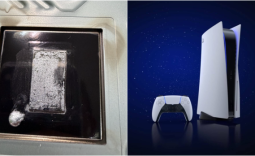 PS5 suffers from severe overheating after liquid metal eats into the heatsink
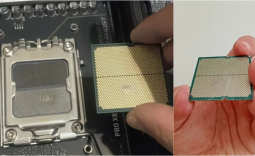 AMD Ryzen 7 7800X3D CPU burns and swells even after using AMD's updated BIOS
 D-Link F518 5G Wi‑Fi 6 AX1800 Mobile Hotspot Review: All-Day Mobile Hotspot
 Bose Lifestyle Ultra Speaker Review - Impressively Detailed Room-Filling Sound
 MSI Z890 Gaming Plus WIFI6E Review - Z890 for under $200
 Mortal Kombat (1995) 4K Ultra HD Blu-ray Review
 CPS PCCOOLER YS1200 ATX 3.1 80 PLUS Gold PSU Review
 ASRock X870E Taichi White Review: a premium AM5 motherboard with 10G LAN and WiFi 7
 Asetek Initium Pedal Modular Upgrades Review
 Thinkware U3000 Pro Review - Smart Dashcam with Wi-Fi quirks
 Montech TG3 Mid-Tower Chassis Review
 ASUS ROG Strix X870E-A Gaming WiFI7 Neo Review - A New Enticing Option
 I ditched the Windows 11 context menu for this open-source tool, and here's why
 Windows 11 may be encrypting your drive already, and I checked where my recovery key went
 GIGABYTE's 40 Days of INFINITY celebrates 40 Years of Innovation with stunning GeForce RTX graphics cards and rewards
 I swapped File Explorer for this free file manager and finally got the layout I wanted
 How to tell if someone has been using your Windows PC without your permission
 6 Task Manager tips for troubleshooting Windows performance problems
 ASUS ROG's 20th Anniversary Line-up of Premium PC Gaming Gear has Arrived - Here's Everything You Need to Know
 Six File Explorer tips every Windows user should know
 I switched my PC to encrypted DNS in Windows 11, and browsing felt more private
 Printer Not Working in Windows? How to fix detection, print queues and drivers