







Science, Space, & Robotics - Page 157
Explore the latest Science, Space, Health, and Robotics news from TweakTown. Coverage includes space launches, medical tech, discoveries, and rockets. - Page 157
Stay Updated
Follow TweakTown for breaking tech news, reviews, and daily updates.


As an Amazon Associate, we earn from qualifying purchases. TweakTown may also earn commissions from other affiliate partners at no extra cost to you.
Quantum computing breakthrough achieved, road to the future begins now
A team of researchers has achieved what is being described as a "breakthrough" in quantum computing.

The achievement comes from a team of researchers at the RIKEN Center for Emergent Matter Science, who have been able to entangle a three-qubit array in silicon with high accuracy of predicting the state the qubit is in. For those that don't know, instead of using bits to make calculations and perform tasks like a typical computer does, quantum computers use quantum bits, or qubits.
The device the researchers created used three very small blobs of silicon called quantum dots, and each of these dots can hold one electron. The direction of the spin of the electron encodes the qubit. With that in mind, it should be noted that a "Two-qubit operation is good enough to perform fundamental logical calculations. But a three-qubit system is the minimum unit for scaling up and implementing error correction", explains Tarucha.
Continue reading: Quantum computing breakthrough achieved, road to the future begins now (full post)
Breathtaking image of edge of Earth taken by ISS astronaut goes viral
A French astronaut aboard the International Space Station (ISS) has snapped an incredible image of the edge of Earth.

The French astronaut is named Thomas Pesquet, who's an engineer with the European Space Agency (ESA) that arrived on the station back in April. During Pesquet's stay aboard the ISS, he has taken many breathtaking images that have been posted to his personal Twitter account that has acquired more than 1.2 million followers.
The above image was taken from the Cupola on the ISS, which is the Italian word for "dome". The Cupola is an ESA-built observatory module aboard the ISS, and this is where Pesquet snapped two phenomenal images of Earth's edge. Pesquet said in the image's caption, "Not only do you as a photographer have to stay extremely still holding the camera, but also the Space Station moves so fast that there will be some motion anyway." For reference, the ISS only takes 90 minutes to complete an orbit of Earth as it's traveling at 17,000 miles per hour.
Continue reading: Breathtaking image of edge of Earth taken by ISS astronaut goes viral (full post)
A robot named CIMON will be brought back to life by ISS astronauts
Astronauts aboard the International Space Station (ISS) will be bringing a robot named CIMON back to life, as it has a new purpose.

CIMON-2 stands for "Crew Interactive Mobile Companion", and has previously worked with two European astronauts on missions. The robot has been in storage since Luca Parmitano departed the ISS in February 2020, but it recently received a software upgrade that gives it the ability to perform more complex tasks, allowing it to provide astronauts with more assistance.
Till Eisenberg, the CIMON project manager at Airbus who partnered with the German Aerospace Centre DLR and the LMU University in Munich, said, "The sphere is just the front end. All the voice recognition and artificial intelligence happens on Earth at an IBM data center in Frankfurt, Germany. The signal from CIMON has to travel through satellites and ground stations to the data centre and back. We focused on improving the robustness of this connection to prevent disruptions."
Continue reading: A robot named CIMON will be brought back to life by ISS astronauts (full post)
Plans unveiled for $400 billion new US city to be built in the desert
A billionaire has unveiled plans to construct a new eco-friendly city somewhere in a United States desert.

The new city is named Telosa, and the plans for its construction have been unveiled by billionaire Marc Lore, who has outlined his plan for a city that will be able to support 5 million people at the start. Lore has appointed a world-famous architect to design the city, and according to the plans, the city will span 150,000 acres, have eco-friendly architecture, sustainable energy production, and a drought-resistant water system.
The architecture firm behind the project, Bjarke Ingels Group (BIG) released some digital renders of the city, which show buildings covered in plant life and residents of the city enjoying open pollution-free spaces. Planners are currently tossing up between locations in Nevada, Utah, Idaho, Arizona, Texas, and the Appalachian region. The entire project has been estimated to cost $400 billion, which Lore has yet to acquire. For more information on this story, check out this link here.
Continue reading: Plans unveiled for $400 billion new US city to be built in the desert (full post)
NASA says it doesn't have a plan if UFOs end up actually being aliens
A new interview has revealed that if aliens actually came from an Unidentified Flying Object (UFO), or now more accurately named, an Unidentified Aerial Phenomenon (UAP), the National Aeronautics and Space Administration (NASA) doesn't have a plan.

The interview was conducted with PBS's "Firing Line" with former Senator and current NASA Administrator Bill Nelson, who said that the space agency doesn't currently have a plan in place if a UFO encounter turns into an alien encounter. Nelson did say that the space agency is working with researchers and scientists exploring the possibility of alien life existing. The agency has also attempted to communicate with alien life by sending messages out into the cosmos.
Margaret Hoover asked Nelson the following question; "Does NASA have a plan for what it would do if a UAP turned out to be a space alien?" Nelson replied by saying, "No, but the first thing we'd want to do is find out is if it's friend or foe. But we're not to that point because we just don't know what this phenomenon is. I think that with all of those sightings that you referenced, there's something there. This is not an optical illusion or a radar blip that's a mistake. So we need to find out. When you talk to those Navy pilots, they're convinced because they saw it and they tracked it."
Continue reading: NASA says it doesn't have a plan if UFOs end up actually being aliens (full post)
'Potentially hazardous' asteroid traveling 21,000 mph towards Earth
NASA has labeled an asteroid that is currently heading towards Earth as "potentially hazardous". However that doesn't mean it's going to hit the planet.

For an asteroid to be considered "potentially hazardous," it must be classified as a "Near-Earth Object" (NEO), and for an asteroid (or comet) to be a NEO, it needs to "approaches our planet less than 1.3 times the distance from Earth to the Sun", per NASA.
For another perspective on just how far away that is, the distance between Earth and the moon is around 240,000 miles, the distance between Earth and the Sun is 92,900,000 miles. As for the asteroid that is approaching Earth, 2021 NY1 is estimated to be between 427 and 984 feet in diameter, and it will come within 930,487 miles of Earth. The asteroid is moving at 21,000 miles per hour despite its large size and is expected to pass by our planet safely.
Continue reading: 'Potentially hazardous' asteroid traveling 21,000 mph towards Earth (full post)
Jeff Bezos is reportedly funding a company trying to cheat death
A company that is aiming to reverse the aging process by changing human cells back into stem cells is reportedly being funded by Jeff Bezos.

The company is named Alto Labs, and according to reports, it has received more than $270 million in funding from individuals all around the world, including Bezos. Alto Labs is investigating anti-aging technologies, and according to Screen Shot, one method that the company has shown interest in is teaching cells the ability to convert back to their "stem cell" origins.
Alto Labs has recruited Doctor Shinya Yamanaka, who was awarded a Nobel Prize for the discovery of four proteins that are now referred to as the "Yamanaka factors". These proteins can essentially reprogram a cell back into a stem cell state, which Alto Labs and other researchers believe can lead to age reversal. It's unclear if Alto Labs will be successful with the new anti-aging technology, but one thing is for sure if it is successful, people are going to be raising some ethical questions.
Continue reading: Jeff Bezos is reportedly funding a company trying to cheat death (full post)
NASA Mars rover achieves 'a phenomenal accomplishment', first images
NASA has announced that its Perseverance rover has officially collected its first-ever rock sample from the Red Planet.

Perseverance and the small scout helicopter named Ingenuity landed in the Jezero Crater back in February, and since then, both robots have been observing their surrounding. Perseverance has previously attempted to collect a sample of rock from Mars but failed. Now, Perseverance has announced on its Twitter account, as well as NASA has confirmed that Perseverance's first sample has been collected and secured.
The first is a drilled-out core of a rock, and it was collected on September 6. The rock sample has been sealed inside a titanium tube and will be a part of a collection that Perseverance will acquire over its mission. NASA expects that Perseverance will carry around a dozen of these core samples, all of which will eventually be transported back to Earth for analysis.
Continue reading: NASA Mars rover achieves 'a phenomenal accomplishment', first images (full post)
Ex-Air Force Intelligence Officer: UFOs are 50,000 years ahead of us
Showtime is currently airing its series "UFO" with Episode 4 "They Also Found a Live Alien" detailing some truly mind-boggling information about not just aliens... but a male alien named Eva, and the fact their technology is beyond our imagination.

During the clip, you see Former Air Force Intelligence Officer Richard Doty explain that there were two crashes in the late 1940s and that the US government talked to an alien named Eva. Eva explained to them how their UFO technology worked, and that it was 50,000 years ahead of what we had at the time... which is kinda, no it truly is mind-blowing.
Doty said: "But during that time period that he was with us, he told us a plethora of information of what they have learned about the universe -- and what their technology is, they're technology is probably estimated to be about 50,000 years ahead of us".
Continue reading: Ex-Air Force Intelligence Officer: UFOs are 50,000 years ahead of us (full post)
2,200-year-old ancient Roman battering rams discovered, alters history
Four ancient roman battering rams have been discovered by marine archaeologists, changing the understanding of Roman navy strategies.

In 264 B.C, the First Punic War between Ancient Rome and Carthage took place in the western Mediterranean, and throughout that time, warships used battering rams constructed out of bronze as weapons against their enemies. The batterings rams were fitted to the bow of the ship, and when collided with an enemy vessel, it would tear massive holes into the hull. Many of these relics of the past are still located on the seafloor, and four were just recovered.
From historian accounts, it's believed that the Roman navy sunk up to 50 Carthaginian ships using the battering, and the four that were successfully recovered were from wrecks off the coast of Sicily. Each of the rams was found to have inscriptions from judges "that affirmed these weapons were made in accordance with the high Roman engineering standards," per allthatsinteresting.com. Researchers previously believed that Romans attempted to RAM enemy ships broadside, but the rams were found to have damage from head-to-head collisions.
Continue reading: 2,200-year-old ancient Roman battering rams discovered, alters history (full post)
Rare failed star called 'The Accident' found, defies all expectations
A new study published on June 30 has detailed a rare class of object known as a brown dwarf star or a failed star.

The study was published in The Astrophysical Journal Letters and explains that a brown dwarf is can be up to 80 times the size of Jupiter but only hold a small fraction of the Earth's mass. Brown dwarf stars can't be spotted through visible light, but researchers have used infrared telescopes to observe around 2,000 brown dwarfs throughout the galaxy, and one brown dwarf in particular called The Accident caught the attention of researchers in the recently published study.
Davy Kirkpatrick, an astrophysicist at Caltech in Pasadena, California, and lead author on the study, said that "This object defied all our expectations" as it didn't look like the typical brown dwarf. The Accident was observed in infrared wavelengths of light to be faint, which led researchers to believe that it was cold and been around for quite some time. However, in other wavelengths of light, it was observed to be warm, which indicates that it's a young dwarf star.
Continue reading: Rare failed star called 'The Accident' found, defies all expectations (full post)
Our atmosphere will soon have swarms of 'hive mind' NASA satellites
NASA is making moves towards implementing a hive mind infrastructure with satellites that are currently monitoring the Earth.

Engineers are working on software that will be used to connect what is described as "swarms" of satellites allowing communication through each of them and creating a "hive mind". The satellites would be used to collect data on important weather patterns at different times of the day across the planet from multiple angles. Additionally, researchers will be able to select targets for the satellite swarm to inspect. Once a target is selected, the satellite's software will take over and begin the inspection process.
According to Engineer Sabrina Thompson, who's working on the software, "We already know that Saharan dust blowing over to the Amazon rainforests affects cloud formation over the Atlantic Ocean during certain times of the year." Adding, "How do you capture that cloud formation? How do you tell a swarm of satellites what region and time of day is the best to observe that phenomenon?"
Continue reading: Our atmosphere will soon have swarms of 'hive mind' NASA satellites (full post)
US Navy's new mysterious weapon is designed to stop human speech
The US Navy is currently developing a new weapon that is designed to make it extremely difficult for an individual caught on the receiving end of it, to speak.

So, how is this possible? The weapon plays on the phenomenon of individuals finding it difficult to speak when they hear their own voice played back to them with a slight delay. The new device is called the handheld Acoustic Hailing And Disruption (AHAD), and it uses a long-range microphone that can record an individual's voice.
While recording an individual's voice, the device then relays what the individual is saying, but with a slight delay, back to the individual through long-range directional speakers. These speakers are designed to be extremely precise and can be used to target one person in the group without the others knowing. It should be noted that this weapon won't work on everyone as some people aren't prone to delayed auditory feedback problems. However, the large majority of people are.
Continue reading: US Navy's new mysterious weapon is designed to stop human speech (full post)
'First time' study reveals what the Sun looked like when it was a baby
Astronomers have successfully captured what is believed to now be the best view of matter colliding with the surface of a young star.

Catherine Espaillat, an astrophysicist at Boston University, spoke to Space.com and explained the process of a young star and how a local system of celestial objects can form around it. Newborn stars are surrounded by a protoplanetary disk of dust and gases, and from this disk, the objects that we commonly observe throughout the universe, such as moons, planets, and asteroids, are born. The star's magnetic field connects to this disk, as shown in the above concept image.
Espaillat is also the lead author on a new study that has examined the location on a star "where a star's magnetic field deposits protoplanetary disk material onto a star", per Space.com. Espaillat explains, "This footprint is called the 'hot spot,' since the material is very hot when it slams on to the surface of the star." The researchers concentrated their efforts on a star named GM Aurigae, as it's roughly the same mass as our sun, but is only about 2 million years old. Our sun is 4.6 billion years old.
Continue reading: 'First time' study reveals what the Sun looked like when it was a baby (full post)
Hospital charges man $70,000 for X-rays, so he built his own machine
A man was charged nearly $70,000 in hospital bills. He then decided to make his own X-ray machine to see if he could build one cheaper than he was charged.

The man is a YouTuber named William Osman, and in the above video, you can see Osman jokingly going through his possessions to see which ones he could sell to pay off his hospital bill of $69,210.32. Osman explains that he will only have to pay $2,500 thanks to the health insurance he is on. However, Osman says that the bill he received made him think if he could build his own X-ray machine for cheaper than the hospital charges.
Osman successfully created his own X-ray machine, but the creation doesn't come without obvious health risks. Osman notes, "My will to do science is significantly stronger than my will to live," adding, "this is my magnum opus. This is the most dangerous contraption I have ever built." So, how did Osman do it? The engineer purchased a $155 X-ray vacuum tube that was recovered from an old X-ray machine that was purchased off eBay.
Continue reading: Hospital charges man $70,000 for X-rays, so he built his own machine (full post)
NASA's new telescope is 'literally revolutionary', will launch soon
It's one of the most exciting times ever in terms of space telescopes as NASA is currently at the end of the launch runway fro the James Webb Space Telescope.

The James Webb Space Telescope is pinned by the Hubble Space Telescope successor, and while that sounds like Webb will replace Hubble, that isn't the case, as both space telescopes will be working in tandem. As for how much better Webb is when compared to Hubble, a general understanding can be acquired from knowing that Hubble is designed with 1980's technology, and Webb has been outfitted with the latest and greatest sensors - making it the most powerful space telescope ever designed.
Webb is 100 times more sensitive than Hubble, and is a conjoined effort of thousands of people working for more than thirty years on the one project. Digital Trends spoke to Nestor Espinoza of the Space Telescope Science Institute and Antonella Nota of the European Space Agency (ESA). Both will be working with Webb when it's operational. Espinoza explained that "James Webb is going to be revolutionary. Literally revolutionary."
Continue reading: NASA's new telescope is 'literally revolutionary', will launch soon (full post)
NASA's new 'mind-blowing' telescope may answer the one big question
NASA's brand new space telescope that is nearing its launch date is poised as the telescope that may answer the one big question; are we alone in the universe?

The James Webb Space Telescope is a joint venture between NASA, the European Space Agency (ESA), and the Canadian Space Agency (CSA). The telescope is slated to be the replacement for the Hubble Space Telescope that has been in use for more than thirty years now, but how much better is Webb?
According to Antonella Nota from ESA, who spoke to DigitalTrends, "Webb is a hundred times more sensitive than Hubble, and because of that, Webb will be able to reveal the faintest details in the farthest corners of the very distant universe, with exquisite resolution." Nestor Espinoza of the Space Telescope Science Institute said, "James Webb is going to be revolutionary. Literally revolutionary. It's going to allow us to see stuff that we've been expecting to detect for a long time but haven't had the technology to see, and I'm pretty sure it's going to detect stuff that we are not thinking of."
Continue reading: NASA's new 'mind-blowing' telescope may answer the one big question (full post)
Air Force Intelligence Officer talks about recovered Alien called EBE
If you haven't been watching the Showtime documentary that's streaming right now in parts, but the "They Also Found a Live Alien" is pretty explosive.

Episode 4 of the "UFO" series on Showtime has former Air Force Intelligence Officer, Richard Doty, saying that the infamous UFO crash in New Mexico, USA in 1947 was actually a collision between two UFOs. There was one UFO that crashed in Corona, New Mexico -- whilst the other crashed "way out west" of Magdalena, New Mexico and was found 2 years later.
But the first crash in Corona, New Mexico saw the UFO recovered and the US government also recover its pilot -- an Alien named EBE, or Extraterrestrial Biological Entity. EBE told us all about their technology and how much they know of the universe, with Doty saying that EBE "was a male, he was transported to Los Alamos where he lived out his life. He died in 1952".
Continue reading: Air Force Intelligence Officer talks about recovered Alien called EBE (full post)
Near-Earth supermassive black hole hidden in tendrils photographed
A galaxy that is relatively close to Earth has been photographed by astronomers, capturing its tendrils in incredible detail.

The galaxy that is front and center in the image is Centaurus A, which is more than 12 million light-years from Earth, a relatively short distance in space. Centaurus A is located in the southern constellation Centaurus and was first discovered back in 1826 by Scottish astronomer James Dunlop from his home in Parramatta, New South Wales, Australia. Due to how bright the galaxy is, it's one of the most studied galaxies in the southern sky.
The supermassive black hole located at the center of the galaxy is estimated to contain 55 million times the mass of our Sun and is also shooting out jets of matter that is causing a bright source of radio light that astronomers are interpreting. The tendrils seen encompassing the black hole are comprised of dust, which came from a collision of another galaxy in the past. Researchers used the Dark Energy Camera that is located at the Cerro Tololo Inter-American Observatory in Chile to take the image.
Continue reading: Near-Earth supermassive black hole hidden in tendrils photographed (full post)
'Fizzing' asteroid that behaves like a comet found by astronomers
Astronomers have located an asteroid that is mysteriously exhibiting comet-like activity. Their new study aims at figuring out why.

Firstly, comets are known for their tails that can be seen as they fly through space. These tails are the result of a process commonly referred to as "outgassing". The tails themselves are ice, rock or other material and usually occur when the comet is heated. This process of "outgassing" isn't exclusive to comets, as moons and other icy bodies have been observed giving off gas when heated.
With all of that now in mind, it would be understandable to be confused when observing an asteroid that's rock outgassing material. Phaethon is a 3.6-mile wide asteroid that has been the focus of a study led by Joseph Masiero of Caltech's IPAC (Infrared Processing & Analysis Center) research organization. The team of researchers observed the asteroid's comet-like behavior as its orbit approached the Sun. What the researchers found was that the likely source of the outgassing was heated sodium.
Continue reading: 'Fizzing' asteroid that behaves like a comet found by astronomers (full post)
 Twitch opts streamers into gen AI training by default, faces harsh backlash
 Sean Murray still plays the 2016 launch version of No Man's Sky
 China's YMTC has climbed to third place in global NAND flash shipments
 $100 GTA 6 version makes up 89% of pre-orders, analysts estimate
 HWiNFO's latest update quietly confirms Intel is working on Razor Lake-AX
 Nintendo puts Switch 2 price increase warnings on store demo kiosks ahead of September 1 hike
 GIGABYTE launches two new B450 motherboards as demand for AM4 stays high in 2026
 Microsoft finally makes up its mind and unifies Copilot features into one big app
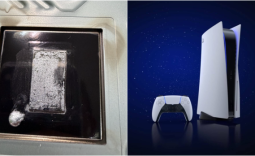 PS5 suffers from severe overheating after liquid metal eats into the heatsink
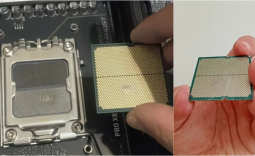 AMD Ryzen 7 7800X3D CPU burns and swells even after using AMD's updated BIOS
 D-Link F518 5G Wi‑Fi 6 AX1800 Mobile Hotspot Review: All-Day Mobile Hotspot
 Bose Lifestyle Ultra Speaker Review - Impressively Detailed Room-Filling Sound
 MSI Z890 Gaming Plus WIFI6E Review - Z890 for under $200
 Mortal Kombat (1995) 4K Ultra HD Blu-ray Review
 CPS PCCOOLER YS1200 ATX 3.1 80 PLUS Gold PSU Review
 ASRock X870E Taichi White Review: a premium AM5 motherboard with 10G LAN and WiFi 7
 Asetek Initium Pedal Modular Upgrades Review
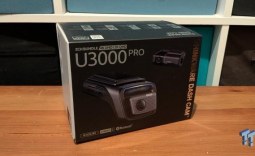 Thinkware U3000 Pro Review - Smart Dashcam with Wi-Fi quirks
 Montech TG3 Mid-Tower Chassis Review
 ASUS ROG Strix X870E-A Gaming WiFI7 Neo Review - A New Enticing Option
 I ditched the Windows 11 context menu for this open-source tool, and here's why
 Windows 11 may be encrypting your drive already, and I checked where my recovery key went
 GIGABYTE's 40 Days of INFINITY celebrates 40 Years of Innovation with stunning GeForce RTX graphics cards and rewards
 I swapped File Explorer for this free file manager and finally got the layout I wanted
 How to tell if someone has been using your Windows PC without your permission
 6 Task Manager tips for troubleshooting Windows performance problems
 ASUS ROG's 20th Anniversary Line-up of Premium PC Gaming Gear has Arrived - Here's Everything You Need to Know
 Six File Explorer tips every Windows user should know
 I switched my PC to encrypted DNS in Windows 11, and browsing felt more private
 Printer Not Working in Windows? How to fix detection, print queues and drivers