







Science, Space, & Robotics - Page 159
Explore the latest Science, Space, Health, and Robotics news from TweakTown. Coverage includes space launches, medical tech, discoveries, and rockets. - Page 159
Stay Updated
Follow TweakTown for breaking tech news, reviews, and daily updates.


As an Amazon Associate, we earn from qualifying purchases. TweakTown may also earn commissions from other affiliate partners at no extra cost to you.
Stunning video shows a supermassive black hole feeding on a galaxy
Black holes are certainly one of the most incredible creations of the universe, perplexing scientists and our general understanding of how physics works.

However, humans have come a long way in our understanding of black holes and the general way the universe functions, but now we are at the point where we have gathered enough data to create simulations of these celestial phenomena. Claude-Andre Faucher-Giguere, a physicist at Northwestern University and the lead author on a new paper that has simulated a black hole, said, "The reason supermassive black holes are so difficult to explain is that forming them requires cramming a huge amount of matter into a tiny space."
Adding, "How does the universe manage to do that? Until now, theorists developed explanations relying on patching together different ideas for how matter in galaxies gets crammed into the innermost one millionth of a galaxy's size." In the above video, you will be able to see a supermassive black hole at the center of a galaxy called NGC 1566 and how all of the gas is consumed by the massive structure.
Continue reading: Stunning video shows a supermassive black hole feeding on a galaxy (full post)
Hubble captures incredible image of space 'sword' piercing a 'heart'
Despite being more than 30 years old, the Hubble Space Telescope is still one of the leading telescopes in the world for the incredible images it can produce.

The European Space Agency (ESA) released a new image taken with Hubble's Wield Field Camera 3, and it shows what appears to look like a massive cosmic "sword" stabbing through a "heart". The image is actually showcasing two twin jets of ionized gas being propelled out in two separate jets from the poles of a newborn star. The star is named IRAS 05491+0247, and it's located 1,300 light-years from Earth within the constellation we refer to as Orion.
The ESA wrote on the post the following, "Herbig-Haro objects actually release a lot of light at optical wavelengths, but they are difficult to observe because their surrounding dust and gas absorb much of the visible light. Therefore, the WFC3's ability to observe at infrared wavelengths - where observations are not as affected by gas and dust - is crucial to observing [Herbig]-Haro objects successfully." Hubble will soon be replaced with the James Webb Space Telescope, the world's most powerful space telescope. To find out more about the James Webb Space Telescope, check out this link here.
Continue reading: Hubble captures incredible image of space 'sword' piercing a 'heart' (full post)
New cracks were just found on the International Space Station
A senior space official reported on August 30 that new cracks have been found on the Zarya module of the International Space Station.

The report comes from a Russian cosmonaut who said that the situation is "bad" and that the cracks could eventually spread and cause fissures over time. As for the history of the Zarya module, it was the first module of the International Space Station ever launched on November 20, 1998.
Vladimir Solovyov, a chief engineer of rocket and space corporation Energia, said, "Superficial fissures have been found in some places on the Zarya module." Adding, "This is bad and suggests that the fissures will begin to spread over time." Solovyov has previously said that the ISS is beginning to appear aged and that after 2025 he expects there will be an "avalanche" of broken equipment. For more information on this story, check out this link here.
Continue reading: New cracks were just found on the International Space Station (full post)
NASA awards first company with 10 cent check to start mining the moon
A company has received the first-ever check from NASA to commence mining on the moon. NASA Administrator Bill Nelson presented the check to Lunar Outpost.

The company that has been awarded the check is Lunar Outpost, a Colorado-based space startup company were awarded the check under the space resource contract that was announced on August 23 during the 36th annual Space Symposium. Lunar Outpost CEO Justin Cyrus has presented the check by NASA Administrator Bill Nelson.
Nelson explained why the check is so little, "We had contractual terms with them when they produce their first element. We would give them 10% of their contract award. I am happy to present a check for 10% of their bid. Justin, here's a check for 10 cents." While the amount that was awarded to the company is somewhat humorous, Cyrus explains, "This sets a legal and procedural framework that will be utilized for generations and decades to come for companies like ours and many others to go out and collect resources from the lunar surface from other planetary bodies and make them basically useful for humanity."
Continue reading: NASA awards first company with 10 cent check to start mining the moon (full post)
Female octopuses throw stuff at males who are trying to mate with them
Sometimes science can be humorous, and a team of researchers from Australia, Canada, and the United States who were observing octopuses may have stumbled across one of those times.

In a new paper that has appeared on the bioRxiv preprint server, which means the paper is yet to be peer-reviewed, a team of researchers observed female octopuses engaged in object-throwing more times than previously anticipated. The researchers traveled to Jervis Bay, Sydney, Australia, and saw that female octopuses throw shells, silt, and other objects at males attempting to mate with them.
Not only do the female octopuses throw the material at the males, but they also hide the material under their body after they have gathered it, concealing it until the time is right to throw it. The researchers observed one female octopus throwing sea material at a male ten times. Additionally, researchers saw males attempt to duck the material and were recorded to be successful half of the time. For more information on this story, check out this link here.
Continue reading: Female octopuses throw stuff at males who are trying to mate with them (full post)
Elon Musk says SpaceX will catch largest flying object with chopsticks
The CEO of SpaceX, Elon Musk has said that his company will be attempting to catch the largest flying object ever with robot chopsticks.

Musk has taken to his Twitter account to announce the news, and if you think that there is no chance that Musk or SpaceX can pull this off, it's not the first time the concept has been discussed. The idea was originally proposed by a startup company called Small Stars, who released a video to its YouTube channel that poses the question - Can SpaceX Really Catch Starships? The video can be found below if you wish to understand the concept in its entirety.
Back in April, Musk tweeted that "Starship booster, largest flying object ever designed, will be caught out of sky by launch tower. Big step forward, as reflight can be done in under an hour." Now, Musk has said that "SpaceX will try to catch largest ever flying object with robot chopsticks. Success is not guaranteed, but excitement is!" Musk followed up with a time frame by saying that the first catch will be attempted with Booster 5, Starships booster.
Continue reading: Elon Musk says SpaceX will catch largest flying object with chopsticks (full post)
Check out the International Space Station in this new 360-degree video
If you are interested in space, you are most likely interested in the International Space Station (ISS). So, how about you go on a tour?

European Space Agency (ESA) ISS astronaut Thomas Pesquet has decided to be your guide as the ESA has posted a video to its YouTube channel that details a new series that will take viewers on a tour through the floating laboratory with 360-degree cameras. The new series is appropriately named Space Station 360 and will allow the viewer to control the camera to look around in their desired location.
As for the video above, Pesquet details the Node 2 module, giving explanations for all of the features contained within it. Node 2 is described as a "connecting module" or "communication module", and is the "crossroads" of the ISS. The module is where cargo vehicles dock, tools are stored, sleeping stations, and more. If you are interested in more of this unique ISS tour, check out this link here.
Continue reading: Check out the International Space Station in this new 360-degree video (full post)
NASA's James Webb Space Telescope hits a 'major turning' point
The successor to the Hubble Space Telescope is moving closer and closer to its launch. Introducing the James Webb Space Telescope, the world's most powerful space telescope.

Anyone who is interested in space and all of the subcategories that can be derived from the topic is excited about the launch of the James Webb Telescope, as the power the telescope brings to the table will allow for researchers to observe the universe like they never have before. NASA is currently preparing for the launch of the telescope.
Gregory Robinson, Webb's program director at NASA headquarters in Washington, said, "NASA's James Webb Space Telescope has reached a major turning point on its path toward launch with the completion of final observatory integration and testing. We have a tremendously dedicated workforce who brought us to the finish line, and we are very excited to see that Webb is ready for launch and will soon be on that science journey."
Continue reading: NASA's James Webb Space Telescope hits a 'major turning' point (full post)
Elon Musk pays out Jeff Bezos, says he retired to just file 'lawsuits'
SpaceX CEO Elon Musk has fired off a shot at Blue Origin CEO Jeff Bezos after Amazon sent a letter to the US Federal Communications Commission (FCC).

Amazon sent a letter to the FCC asking the regulatory agency not to allow SpaceX to launch a new set of its Starlink satellites, and in response to the letter SpaceX CEO Elon Musk has taken to his Twitter account to poke some fun at former Amazon CEO Jeff Bezos. Musk said that it "Turns out Besos retired in order to pursue a full-time job filing lawsuits against SpaceX ..."
This isn't the first time a company run by Bezos has pushed for regulation of SpaceXs' plans as Blue Origin earlier this month has moved to sue NASA over its decision to award SpaceX a $2.9 billion contract to construct the next lunar lander. The decision to sue NASA and the previous arguments put forward by Blue Origin has resulted in numerous delays with the construction of the new lunar lander, which has now raised concern about the likelihood of NASA being able to put humans back on the moon in 2024.
Continue reading: Elon Musk pays out Jeff Bezos, says he retired to just file 'lawsuits' (full post)
SpaceX is taking avocados, ants and ice cream to ISS astronauts
NASA is sending launching another resupply trip to the International Space Station with SpaceX's Dragon spacecraft.

The Dragon spacecraft launched aboard the Falcon 9 rocket from NASA's Kennedy Space Center in Florida with more than 4,800 pounds of cutting-edge science for researchers aboard the laboratory to enjoy. The cargo delivery is scheduled to arrive on Monday. It includes ants, avocados, a human-sized robotic arm, and numerous testing equipment designed to monitor astronaut health progression.
Other items aboard the cargo shipment are fresh foods such as lemons, ice cream for the floating laboratories, seven astronauts, shrimp, plant test subjects, seeds, weeds, concrete samples, solar cells, and more. All of the items aboard the cargo ship will be exposed to weightlessness and studied by the astronaut researchers in their respective fields. Assisting the astronauts in their study will be Gitai Inc.'s robotic arm that is designed to take on mundane tasks from astronauts, freeing up their time to accomplish something more of value.
Continue reading: SpaceX is taking avocados, ants and ice cream to ISS astronauts (full post)
NASA launches cutting-edge science to the International Space Station
The International Space Station (ISS) will soon be getting a bunch of new cutting-edge science toys to play around with in microgravity.

SpaceX will be transporting the cargo aboard the company's Dragon resupply spacecraft that launched at 3:14 a.m. EDT Sunday on a Falcon 9 rocket from NASA's Kennedy Space Center in Florida. The cargo's weight comes in at a total of 4,800 pounds and includes new experiments, supplies for the astronauts aboard the floating laboratory, and hardware.
The Dragon spacecraft will automatically dock with the ISS on Monday, August 30 and will stay at the ISS for around a month while astronauts aboard the lab remove the cargo and prepare for Dragon's separation. Below is what science is included in the cargo.
Continue reading: NASA launches cutting-edge science to the International Space Station (full post)
Scientists discover Earth's 'northernmost' island, it may be swallowed
During an expedition in July, researchers came across what is now believed to be the "northernmost" landmass in the world.

Currently, the official northernmost landmass is Oodaaq, which is a bank of gravel and silt northeast of Greenland. However, Morten Rasch from Copenhagen University's department of geosciences and natural resource management, and head on the expedition, "We were informed that there had been an error on my GPS which had led us to believe that we were standing on Oodaaq Island. In reality, we had discovered a new island further north, a discovery that just slightly expands the kingdom."
For context of where this "new" island is, Oodaaq is around 700 miles south from the North Pole, and this recently discovered island is about 2,000 feet north of Oodaaq. While Greenland is undoubtedly pleased to discover more of its kingdom, researchers are concerned that the ocean could swallow the recently discovered landmass as it only resides 96 to 196 feet above sea level. Rasch added, "No one knows how long it will remain. In principle, it could disappear as soon as a powerful new storm hits."
Continue reading: Scientists discover Earth's 'northernmost' island, it may be swallowed (full post)
A 'one in a million' brain from 310 million years ago was just found
A new study published in the journal Geology has detailed the discovery of a fossilized brain that dates back 310 million years.

According to the study, researchers uncovered what is being described as a "one in a million" fossilized brain of a horseshoe crab, specifically from the crab species called Euproops danae. The researchers found the crab brain in Mazon Creek, Illinois, where conditions consist of iron carbonate minerals named siderite, which the corpse of the crab was wrapped in - fossilizing it for all of that time.
Russell Bicknell, the led author on the study, and paleontologist at the University of New England in Maine, spoke to Live Science and said, "This is the first and only evidence of a brain in a fossilized horseshoe crab." Bicknell clarified that over the millions of years, the brain tissue of the crab decomposed, but due to the fossilization, the mineral kaolinite created a perfect mold of the brain. "We have a mold of the brain, not the brain itself. If we start looking, we may be lucky enough to find more brain fossils", said Bicknell.
Continue reading: A 'one in a million' brain from 310 million years ago was just found (full post)
NASA's Mars helicopter snapped an image of a martian 'road'
During NASA's Mars helicopter 12th and most recent flight, the small scout named Ingenuity snapped its most valuable images.

The area is dubbed South Seitah, and during Ingenuity's flight that occurred on August 16, the helicopter scoped out the area by taking some incredible pictures of landscapes. According to Ken Farley, the project scientist for NASA's Perseverance rover, Ingenuity's recent images are the most valuable images the helicopter has ever taken because they are giving project planners essential data that impacts the route of the Perseverance rover.
NASA's goal is to find prime locations that Perseverance can traverse and inspect. Through the rover's inspection, NASA hopes to gain a deeper understanding of possible ancient microbial life and also the history of Mars' geology. There are certain locations where this data is best extrapolated from the planet and these locations where there are sedimentary rock - rock that shows erosion, weathering, dissolution, precipitation, and lithification.
Continue reading: NASA's Mars helicopter snapped an image of a martian 'road' (full post)
NASA space telescope looked back in time, saw rare supernova explosion
Space telescopes receiving light that was from billions of years ago is quite literally allowing researchers to peer back in time.

NASA's Kepler Space Telescope is one of the space agency's telescopes that do such a thing, and according to the led author of the study, Patrick Armstrong, a Ph.D. student at the Australian National University, "The light we were seeing had actually left that star a billion years ago".
Armstrong added that it was lucky that the space telescope was observing the area of space where the explosion occurred as a star, while it can live for billions of years, it explodes in just a matter of weeks, leaving a relatively small window of opportunity for observations to be made of a supernova. Kepler is providing researchers with an abundance of data to go over, which means that discoveries from observations made by Kepler usually happen years after the images were taken.
Continue reading: NASA space telescope looked back in time, saw rare supernova explosion (full post)
Artificial intelligence just located new craters on Mars in 5 seconds
One way researchers discover "new" craters on Mars is to analyze images taken from NASA satellites that are pointed at the surface of the Red Planet.

Researchers will look at a collection of images spanning over various time frames, then compare images of the surface to each other. If a new crater appears between an image taken on A date and an image taken B date, then researchers can estimate that an impact must have occurred sometime between the dates of the images taken. To analyze one image, a researcher will spend about 40 minutes.
As humans tend to do, we have offloaded the process to technology that can complete the task much more efficiently, freeing up time for researchers to work on other tasks. Researchers have now used a supercomputer at NASA's Jet Propulsion Laboratory (JPL) to train an artificial intelligence with around 7,000 images, reducing the time it takes to analyze a single image to just 5 seconds and causing the discovery of new craters.
Continue reading: Artificial intelligence just located new craters on Mars in 5 seconds (full post)
There are 6 invisible structures hidden beneath Greenland's ice sheet
As humans continue to expand our understanding of what technology is capable of, we also expand our understanding of the world we live in.

The evolution of human knowledge through the advancement of the technologies we create comes in various forms, and one of those forms is radar technology. In 2013 it was discovered that beneath the Greenland ice sheet, there is the world's longest canyon that is 460 miles in length, putting it above China's 308-mile-long (496 km) Yarlung Tsangpo Grand Canyon, which is renowned as the world's longest visible canyon.
Not only has the world's longest canyon been discovered through the use of emerging new technologies, but so have vast mountain ranges beneath the 2 mile-thick ice sheet. The data recovered by these technologies revealed a topographic map of the world beneath the glaciers, making researchers interesting in certain aspects of the glaciers; water beneath the surface containing clues about past events, meteor impacts, lakes of various sizes, and perfectly preserved fossil plants.
Continue reading: There are 6 invisible structures hidden beneath Greenland's ice sheet (full post)
Internet apocalypse: solar storm could knock internet out for WEEKS
If you haven't heard about the Carrington event then I suggest you read up on it, but back in 1859 there was a gigantic solar flare that -- if it happened now -- would knock us back into the Stone Age.

But in a new study, Sangeetha Abdu Jyothi of the University of California, Irvine warned that a solar storm could knock the internet down for weeks if not more. In the presentation titled "Solar Superstorms: Planning for an Internet Apocalypse" found that local and regional Internet infrastructure could be hit but they would be fine -- the long undersea cables on the other hand, are at risk.
Why? The local and regional internet infrastructure isn't at a high risk because the optical fiber isn't affected by geomagnetically induced currents -- meanwhile, short cable spans are grounded regularly. But, undersea cables on the other hand... would be knocked out of operation. The reason is that there are repeaters under the sea that connect the internet cables, at around 50-150km apart.
Continue reading: Internet apocalypse: solar storm could knock internet out for WEEKS (full post)
Japanese scientists use 3D printing to make realistic Wagyu steak
You might be chowing down on a 3D-printed Wagyu steak in the very near future, with Japanese scientists creating Wagyu steak with marbling "just like the real thing".

A team out of the Osaka University replicated some of the best-tasting beef on the planet -- Wagyu -- which even has fat, muscle, and blood vessels in an intricate structure producing a marble effect. Wagyu beef is known worldwide as one of the most famous (and delicious) for its high content of "intramuscular fat" and marbling, recreated with 3D printing.
The marbling side of things is what gives Wagyu beef its delicious, deep flavors and specific texture -- so 3D printing Wagyu beef is a true feat. The researchers used two types of stem stells: bovine satellite cells and adipose-derived stem cells, insulated from Wagyu cows. They then incubated and coaxed the cells into becoming the various cell types required for the individual fibers for muscle, fat, and blood vessels -- they were piled on top of each other into a 3D stack that re-creates the marbling of the delicious Wagyu beef.
Continue reading: Japanese scientists use 3D printing to make realistic Wagyu steak (full post)
Taiwan splashes $1.4 billion on warplanes to stop WW3 with China
And so it begins... Taiwan has just boosted its defense budget by 10% in 2021, with the Taiwanese government to spend a large chunk of that on new war-ready aircraft.

Taiwan has boosted its defense budget to $16.89 billion with $1.4 billion of that going into new warplanes, which should turn out to be US-made F16 fighter jets. Once it's all said and done, Taiwan should have 200 of the high-end war-ready aircraft -- more than any other country in Asia.
Why? Well, China really wants to take Taiwan over -- Beijing claims sovereignty over Taiwan, and the CCP military has reportedly said it would also drop nuclear bombs on Taiwan continuously if it stepped in between the fight between China and Taiwan... so Taiwan needs to be ready, and so too do its allies around the world -- including the USA.
Continue reading: Taiwan splashes $1.4 billion on warplanes to stop WW3 with China (full post)
 Twitch opts streamers into gen AI training by default, faces harsh backlash
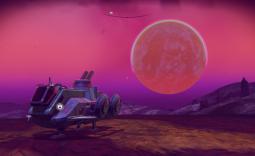 Sean Murray still plays the 2016 launch version of No Man's Sky
 China's YMTC has climbed to third place in global NAND flash shipments
 $100 GTA 6 version makes up 89% of pre-orders, analysts estimate
 HWiNFO's latest update quietly confirms Intel is working on Razor Lake-AX
 Nintendo puts Switch 2 price increase warnings on store demo kiosks ahead of September 1 hike
 GIGABYTE launches two new B450 motherboards as demand for AM4 stays high in 2026
 Microsoft finally makes up its mind and unifies Copilot features into one big app
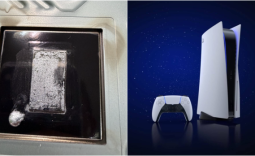 PS5 suffers from severe overheating after liquid metal eats into the heatsink
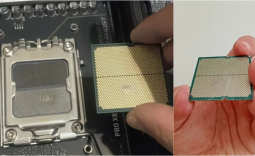 AMD Ryzen 7 7800X3D CPU burns and swells even after using AMD's updated BIOS
 D-Link F518 5G Wi‑Fi 6 AX1800 Mobile Hotspot Review: All-Day Mobile Hotspot
 Bose Lifestyle Ultra Speaker Review - Impressively Detailed Room-Filling Sound
 MSI Z890 Gaming Plus WIFI6E Review - Z890 for under $200
 Mortal Kombat (1995) 4K Ultra HD Blu-ray Review
 CPS PCCOOLER YS1200 ATX 3.1 80 PLUS Gold PSU Review
 ASRock X870E Taichi White Review: a premium AM5 motherboard with 10G LAN and WiFi 7
 Asetek Initium Pedal Modular Upgrades Review
 Thinkware U3000 Pro Review - Smart Dashcam with Wi-Fi quirks
 Montech TG3 Mid-Tower Chassis Review
 ASUS ROG Strix X870E-A Gaming WiFI7 Neo Review - A New Enticing Option
 I ditched the Windows 11 context menu for this open-source tool, and here's why
 Windows 11 may be encrypting your drive already, and I checked where my recovery key went
 GIGABYTE's 40 Days of INFINITY celebrates 40 Years of Innovation with stunning GeForce RTX graphics cards and rewards
 I swapped File Explorer for this free file manager and finally got the layout I wanted
 How to tell if someone has been using your Windows PC without your permission
 6 Task Manager tips for troubleshooting Windows performance problems
 ASUS ROG's 20th Anniversary Line-up of Premium PC Gaming Gear has Arrived - Here's Everything You Need to Know
 Six File Explorer tips every Windows user should know
 I switched my PC to encrypted DNS in Windows 11, and browsing felt more private
 Printer Not Working in Windows? How to fix detection, print queues and drivers