







Science, Space, & Robotics - Page 160
Explore the latest Science, Space, Health, and Robotics news from TweakTown. Coverage includes space launches, medical tech, discoveries, and rockets. - Page 160
Stay Updated
Follow TweakTown for breaking tech news, reviews, and daily updates.


As an Amazon Associate, we earn from qualifying purchases. TweakTown may also earn commissions from other affiliate partners at no extra cost to you.
NASA rover captures video of shiny object in Mars sky
NASA's newest Mars rover has captured on video a shiny object in the martian sky, according to a new post on Twitter.

The news comes from NASA's Perseverance Mars rover Twitter account, which posted a short video of the Perseverance rover aiming its cameras towards Mars' bleak sky. The shiny object seen in the video is one of Mars' moons, Deimos. Mars has two moons Deimos and Phobos, and according to current research, Deimos measures in at a diameter of 7.7 miles.
Deimos is located 14,576 miles from Mars and is the further moon of two that orbit Mars. As for its orbit, Deimos orbits Mars once every 30.3 hours and is also not spherically shaped like the moon that orbits Earth. If you are interested in reading any more news about space, check out this article about a study that suggests aliens could be thriving on these "super-Earth's".
Continue reading: NASA rover captures video of shiny object in Mars sky (full post)
Here's the reasons why NASA wants to go back to the moon
NASA is planning on making the long venture back to the moon, but why is the space agency selecting the more for exploration?

In a new video posted to the NASA YouTube channel, the space agency details all of its reasons why it wants to go back to the moon. NASA researchers explain that the moon holds opportunities for humans to discover more about Earth, our Sun, and our entire solar system.
NASA says that its Artemis program that is set to put humans back on the moon by 2024 will pave the way forward for future generations to be inspired by its accomplishments. In more detail, NASA explains that the agency needs to learn how to establish a community on another cosmic shore because "Mars is calling". When a community is created long-term science will be underway to better understand our neighbors and the planet we call home.
Continue reading: Here's the reasons why NASA wants to go back to the moon (full post)
Will an asteroid ever hit Earth? Answered by a NASA scientist
Most people that are aware of asteroids understand that if a large one was to ever line up with Earth, it could be a catastrophe.

NASA has published a new video to its YouTube channel as a part of its "We Asked a NASA scientists" series where a NASA scientist was asked if an asteroid will ever hit Earth. A NASA asteroid expert, Dr. Kelly Fast, explained that many asteroids have hit Earth over the course of its history and that asteroids will continue to do so potentially millions of years into the future.
Fast explains that dust, meteorites, and asteroids hit Earth all the time and cause what we commonly refer to as "shooting stars" in the night sky. These shooting stars are dust, meteorites, and asteroids burning up in Earth's atmosphere as the planet's gravity pulls them in. As for large asteroids that pose a threat to the surface of the planet, NASA says there are currently no known impact threats.
Continue reading: Will an asteroid ever hit Earth? Answered by a NASA scientist (full post)
Here's where NASA's next search for alien life will be
NASA has its eyes set on a specific type of planet for its next search for extraterrestrial life out the deep dark cosmos.

In a new video posted on the Bloomberg Quicktake YouTube channel, NASA scientists outline the reasons why the space agency is looking towards planets or moons that contain liquid water for signs of extraterrestrial life. NASA experts believe that if there is life outside of Earth, these moons or planets that are hosting liquid water beneath their icy crust are the best chance of finding it. Why do NASA believe this?
Researchers on Earth have found life in the strangest of places, and one of these places was the bottom of the ocean near hydrothermal vents. Life was found near these vents, and not just simple life forms either - a high diversity of life was found. This discovery changed human understanding of where life can exist, thus suggesting that other objects in our solar system that have extreme conditions similar to Earth's extreme conditions may also be able to support life.
Continue reading: Here's where NASA's next search for alien life will be (full post)
Internet makes fun of replica rocket that took Jeff Bezos to space
The internet rarely takes matters seriously, and whenever there is an opportunity to poke fun at a subject, it seems that opportunity is taken.

Jeff Bezos' Blue Origin New Shepard rocket is seemingly facing the firing squad of the internet as individuals are making jokes about the miniature New Shepard rocket that is available for purchase. On July 20, Jeff Bezos briefly went to space aboard the New Shepard rocket. Now, Estes Industries partnered with Blue Origin has revealed a near-perfect replica of the New Shepard rocket that Bezos traveled in, and it's available for purchase for $69.
The replica rocket is flyable and can even reach 400 feet in altitude when its launched using model rocket engines. In the above launch video for the model rocket, the YouTube comment section is taking aim at the design of the rocket as well as the price. Individuals said, "My sister has one of them in her drawer", "Does it come a 12 mini-fig lawyers to sue NASA with?", and "It also comes with a vibrating mode that simulates the ignition and launch even in a wet and rainy day."
Continue reading: Internet makes fun of replica rocket that took Jeff Bezos to space (full post)
Elon Musk, Richard Branson and Jeff Bezos invited Russia's big launch
Elon Musk, Richard Branson, and Jeff Bezos have been invited by Russia's space agency to join them at the launch of Soyuz MS-19.

Roscosmos head Dmitry Rogozin invited the three space entrepreneurs to the Baikonur Cosmodrome for the launch of one of the space agency's most anticipated missions, Soyuz MS-19. Rogozin invited Musk, Branson, and Bezos on Russia's Channel One, while also revealing the mission will include a director, an actress, and a filmmaker that will shoot a movie aboard the International Space Station (ISS).
Rogozin backed up his invitation on Twitter, saying, "On October 5, a new expedition will leave for the International Space Station. We are planning to send a cinematographic group of the leading television channel as part of it. If you succeed, I would be glad to see you on October 5 in the cradle of world cosmonautics - at the Baikonur cosmodrome." The movie that will be shot over a week aboard the ISS is titled "Vyzov", which translates to "Challenge".
Continue reading: Elon Musk, Richard Branson and Jeff Bezos invited Russia's big launch (full post)
If aliens exist they could thriving on these 'super- Earths' planets
Humans are constantly searching for other forms of life out in the cosmos, and most of the areas we are searching the hardest are on Earth-like.

It makes sense to search the cosmos for planets that are similar to Earth as that is the only planet we know of to host life. However, the universe is extremely diverse in the types of planets that it has produced, which means life could be elsewhere, but we just haven't checked. A new study by researchers from the Institute of Astronomy at the University of Cambridge in England has honed in on one type of planet, "hycean" planets, or "super-Earths."
These planets are around 2.5 times larger than Earth, have hydrogen-rich atmospheres, and are mostly covered in large oceans of liquid water, which researchers believe could contain microbial life much as we see here on Earth. On Earth, we have observed microbial life surviving in extreme environments such as miles beneath the Earth's crust and deep within oceans. This form of life has been categorized as "extremophiles".
Continue reading: If aliens exist they could thriving on these 'super- Earths' planets (full post)
Wormholes are possible, but to build one we need a specific ingredient
Are wormholes real, and is it possible for humans to construct one to travel through spacetime? Theoretically, yes, but we are missing a specific ingredient.

Joao Rosa, a physicist at Aveiro University in Portugal, spoke to Live Science and said that she is attempting to "build" a virtual wormhole, but there are few problems that are needed to be overcome first. A wormhole is a theoretical passage between two points in space, however, with our current understanding of physics, wormholes are located beyond the event horizon of a black hole, and if an individual passed the event horizon, they would never be able to leave due to the extreme gravitational pull.
Additionally, the tunnel between the two points in space would likely collapse due to how unstable it is. In order to create a wormhole that doesn't trap the traveler, Rosa is proposing a form of matter that has negative energy or negative mass. The only problem is that researchers haven't yet observed negative mass in the observable universe, however at the quantum level, physicists have observed negative energy, but the observations have been limited to the microscopic scales.
Continue reading: Wormholes are possible, but to build one we need a specific ingredient (full post)
Man finds 2,000 year old body that didn't decompose
In the 1980's a man stumbled across what he believed to be a leather football while he was working an operation to collect peat, or soil.

Andy Moul was working his operation in Wilmslow in Cheshire England when he came across a decapitated head of what was later believed to be a woman that was murdered in the area 20 years prior. However, carbon dating of the head found that it was over 1,600 years old. In the same location Mould later found toe tails that eventuated into the discovery of a leg that was later carbon dated to around 2,000 years old.
What was strange about the head and body part was how well preserved they were, as the head still had skin, hair and an eyeball still intact. How were these bodies parts so well-preserved? It has to do with the soils contents, as the bog where they were found contains acids that are extremely good at preserving bodies. An example of this is the famous Lindow man that was discovered in the peat bog near Manchester, England, who was found still wearing a hat on his chin, and had whiskers on his chin.
Continue reading: Man finds 2,000 year old body that didn't decompose (full post)
We just detected a mysterious exoplanet that has no known 'equivalent'
An exoplanet satellite hunter has stumbled across an unexpected exoplanet that is being described as not having an equivalent.

The exoplanet satellite hunter named the CHaracterising ExOPlanet Satellite (CHEOPS), a space telescope from the European Space Agency, which is designed to determine the size of extrasolar planets. The space telescope spotted the mysterious planet when it passed in front of its star, a common way researchers discover celestial objects.
The study has recently been published in the journal Nature Astronomy and details that the star Nu2 Lupi, which is located only 50 light-years from Earth. First author on the study, Laetitia Delrez, and a researcher at the University of Liege said, "Transiting systems such as Nu2 Lupi are of great importance in our understanding of how planets form and evolve, because we can compare several planets around the same bright star in detail."
Continue reading: We just detected a mysterious exoplanet that has no known 'equivalent' (full post)
NASA says Moon landing in 2024 may happen after all, despite delays
NASA recently said that it was facing delays for its Artemis program that would land humans back on the moon by 2024, but the space agency's administrator is remaining optimistic about the timeline.

Despite the delays caused by the legal matters between Jeff Bezos's Blue Origin, Elon Musk's SpaceX, and NASA, NASA's Administrator Bill Nelson has said that the space agency isn't going to back down from the initial time frame. NASA is facing delays not only with the lunar dispute between SpaceX and Blue Origin but also with the astronaut spacesuits which the space agency said won't be ready in time.
Nelson spoke on August 24 at the Space Symposium and said, "Our human landing system demo award has been held up by delays and by litigation. The spacesuits, which, for the first time, were built by our commercial partners, have been technically challenging. And COVID-19 has caused unprecedented disruptions in the supply chain. But remember back to what [President John F.] Kennedy said. We choose to go to the moon in this decade and do the other things, not because they are easy, but because they are hard."
Continue reading: NASA says Moon landing in 2024 may happen after all, despite delays (full post)
China moves to build spacecraft that is miles in length
China has big plans for space, and according to recent reports, the country is moving to build a very large spacecraft while in orbit.

A proposal from the National Natural Science Foundation of China states that an analysis should be conducted on the mechanics and logistics of constructing an "ultra-large spacecraft spanning kilometers" - a miles-long spacecraft. The proposal states that spacecraft will be constructed in orbit and will require multiple launches to piece together modules.
The outline by the National Natural Science Foundation of China states that the team behind the project will face many tough challenges as costs of the project need to meet China's budget and that construction needs to be timely as the modules orbiting the planet in space will need to be kept under control, so they don't drift or start spinning. With this in mind, China plans on creating spacecraft with as few launches as possible.
Continue reading: China moves to build spacecraft that is miles in length (full post)
Here's the most distant object astronomers have detected in space
Have astronomers found the most distant object in space? Well, astronomers have located what they believe to be the most distant object detected so far.

The universe is 13.77 billion years old, and rewinding time back to the moment the universe began, you would see a massive explosion scientists refer to as the Big Bang. From that event is us, and all of the glorious stars and galaxies we are observing today. One galaxy in particular astronomers have come across is GN-z11 and the reason for its importance as it is believed to be the most distant object we have ever found - 13.4 billion light-years from Earth.
What about stars? Astronomers from the University of California-Berkeley believe they have honed in on a very distant star that could take the crown for the most distant star ever discovered. The star is titled MACS J1149 Lensed Star 1, or Icarus, located 9 billion light-years from Earth. Observing these planets and galaxies is quite literally looking back in time, and we have barely scratched the surface of what is to be found in the observable universe.
Continue reading: Here's the most distant object astronomers have detected in space (full post)
US military has a secret space weapon, may be declassified very soon
The United States military is currently debating over revealing a highly classified space weapon through a public demonstration.

The news is sourced from the publication Breaking Defense, and according to the report, a number of military leaders have been discussing for more than a year about unveiling the US's secret space weapon. The report goes on to say that weapon was created under the "Special Access Program", which is slapped with a "highly classified" stamp.
The debate between the senior military leaders is on whether to reveal the weapon by demonstrating its capabilities, according to the report. This isn't the first time the US government has thought about revealing the weapon, as the Trump administration was planning on an unveiling in 2020, but the event was canceled due to COVID-19. Additionally, the report says the weapon could be revealed at the 2021 Space Symposium, where there could be a public display.
Continue reading: US military has a secret space weapon, may be declassified very soon (full post)
Advanced technology shows the age of Machu Picchu isn't accurate
Researchers have used advanced technology that has indicated that the previous historical age of Machu Picchu is slightly inaccurate.

In conjunction with other researchers, a new study by Richard Burger, an archaeologist at Yale University, took advantage of accelerator mass spectrometry (AMS), an advanced form of radiocarbon dating. The researchers looked at human remains, and according to the results presented in the journal Antiquity, the ancient Inca city Machu Picchu was active from around 1420 to A.D 1530, making the wonder of the world 20 years older than previously thought.
The researchers state that 1530 was close to the time of the Spanish conquest and that most of the historical accounts about Machu Picchu come from Spaniards. Furthermore, the AMS results from analyzing 26 human samples sourced from four cemeteries at Machu Picchu suggest that the accounts that were the basis of common understanding about the ancient city may not be entirely accurate and are in need of revision.
Continue reading: Advanced technology shows the age of Machu Picchu isn't accurate (full post)
NASA is sending 'blue' and 'gold' satellites to Mars for one reason
The University of California is spearheading a mission that will send two satellites to Mars, and these satellites are named "Blue" and "Red".

NASA announced the mission last week and said that it has been authorized for launch in October 2024. The mission is titled the Escape and Plasma Acceleration and Dynamics Explorers (ESCAPADE), and the core idea of the mission is to show that a spacecraft can be built, tested, integrated and launched for less than $80 million.
The speed and cost of the entire process is the main exploration point for scientists and NASA as it will mean the agency will be able to create a craft and launch towards planets in a short amount of time. Usually, a planned launch towards a planet requires years of planning, sometimes even ranging up to decades. Not to mention that costs are extremely expensive, often ranging in the billions of dollars.
Continue reading: NASA is sending 'blue' and 'gold' satellites to Mars for one reason (full post)
Scientists find Grand Canyon is missing a billion years worth of rocks
Back in 1896, geologist John Wesley Powell noticed that there was a large portion of missing rock from the Grand Canyon. This later became known as the "Great Unconformity" mystery of the Grand Canyon.

Powell was later able to date the rocks and found that some rocks dated between 1.4 - 1.8 billion years ago, and that more than a billion years of rocks were missing. Geologists in a new study propose that they have found out the reason why there are missing rocks from the Grand Canyon, with the researchers saying that the Grand Canyon is much more complex than researchers have previously anticipated.
The researchers used new methods to come to this conclusion, most of which rely on thermochronology, which is a chemical analysis of the rock that reveals how much heat is stored within the rock when it formed. The heat signature also corresponds to the amount of geological pressure it was under when parts of the canyon were shifting over millions of years. The researchers presented data that suggests the Grand Canyon experienced some small faulting events that can account for the gaps in the overall geological record.
Continue reading: Scientists find Grand Canyon is missing a billion years worth of rocks (full post)
NASA's Mars rover just captured a 'changing landscape'
NASA's Curiosity rover may not be the center of attention on the Red Planet, but it's still out there roaming around conducting significant science.

Curiosity recently climbed Mount Sharp on the Red Planet, which is a five-mile tall mountain that is within the 96 mile wide Gale Crater basin where Curiosity is stationed. Curiosity used its Mast Camera to capture a stunning panoramic view of the entire landscape, showing off layers of the mount that researchers back on Earth will use as information to attempt to derive the age of the rock formations. NASA describes the image as Curiosity findings a "changing landscape".
Curiosity also took a rock sample with its drill and then used its robotic arm to crush the rock into a powder so it can be placed into its chassis for examination. Once the now-powder rock is inside the chassis Curiosity proceeds to use its instruments to find out which chemicals and minerals are present in the sample. All of the data acquired from this process is added to the pile of information is being used to answer the question "Did Mars once have the conditions to support life?".
Continue reading: NASA's Mars rover just captured a 'changing landscape' (full post)
NASA moves closer to launching its 'asteroid deflecting' spacecraft
NASA has just taken a few steps towards the launch of a spacecraft that is designed to collide with an asteroid.

NASA is calling it the Double Asteroid Redirection Test, or DART for short. The mission is to see if NASA is capable of designing a spacecraft that's purpose is to collide with an asteroid to knock it off course. NASA isn't alone in working on asteroid-deflecting technologies, and for good reason, if an asteroid lines its trajectory up with Earth it could be a potentially catastrophic event. As for DART, NASA will be launching it into space, and it will collide with an asteroid 6.8 million miles away that is of no danger to Earth - at 15,000 mph.
As the launch of DART approaches, NASA is revealing the technology the spacecraft will be sporting. Engineers are close to completing the installation of the internal imaging device called Didymos Reconnaissance and Asteroid Camera for Optical (DRACO), which will be used to capture images of the asteroid along with the very last seconds of its imminent collision into the asteroid. This installation moves the spacecraft one more step closer to launch. For more information on this story, check out this link here.
Continue reading: NASA moves closer to launching its 'asteroid deflecting' spacecraft (full post)
Ancient dusty snowfall formed ice on Mars, could melt to form water
Researchers have known that Mars has ice on it for some time, but what they don't know is how much of this ice is water and how much of it is dust.

Using data acquired by NASA's Phoenix Mars Lander and Mars Reconnaissance Orbiter, planetary scientists Aditya Khuller and Philip Christensen of Arizona State University partnered with Stephen Warren, an Earth ice and snow expert from the University of Washington, set out to determine just how much dust is contained in Martian ice using computer simulations. The researchers found that the ice dug up by the Phoenix Mars lander formed from dusty snowfall that occurred sometime within the last million years.
The researchers also found that the ice found on the surface of Mars could be from dusty snowfall, according to Khuller, who said, "There is a chance that this dusty and dark ice might melt a few centimeters down. And any subsurface liquid water produced from melting will be protected from evaporating in Mars' wispy atmosphere by the overlying blanket of ice."
Continue reading: Ancient dusty snowfall formed ice on Mars, could melt to form water (full post)
 Twitch opts streamers into gen AI training by default, faces harsh backlash
 Sean Murray still plays the 2016 launch version of No Man's Sky
 China's YMTC has climbed to third place in global NAND flash shipments
 $100 GTA 6 version makes up 89% of pre-orders, analysts estimate
 HWiNFO's latest update quietly confirms Intel is working on Razor Lake-AX
 Nintendo puts Switch 2 price increase warnings on store demo kiosks ahead of September 1 hike
 GIGABYTE launches two new B450 motherboards as demand for AM4 stays high in 2026
 Microsoft finally makes up its mind and unifies Copilot features into one big app
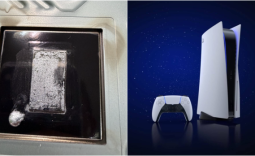 PS5 suffers from severe overheating after liquid metal eats into the heatsink
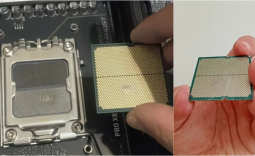 AMD Ryzen 7 7800X3D CPU burns and swells even after using AMD's updated BIOS
 D-Link F518 5G Wi‑Fi 6 AX1800 Mobile Hotspot Review: All-Day Mobile Hotspot
 Bose Lifestyle Ultra Speaker Review - Impressively Detailed Room-Filling Sound
 MSI Z890 Gaming Plus WIFI6E Review - Z890 for under $200
 Mortal Kombat (1995) 4K Ultra HD Blu-ray Review
 CPS PCCOOLER YS1200 ATX 3.1 80 PLUS Gold PSU Review
 ASRock X870E Taichi White Review: a premium AM5 motherboard with 10G LAN and WiFi 7
 Asetek Initium Pedal Modular Upgrades Review
 Thinkware U3000 Pro Review - Smart Dashcam with Wi-Fi quirks
 Montech TG3 Mid-Tower Chassis Review
 ASUS ROG Strix X870E-A Gaming WiFI7 Neo Review - A New Enticing Option
 I ditched the Windows 11 context menu for this open-source tool, and here's why
 Windows 11 may be encrypting your drive already, and I checked where my recovery key went
 GIGABYTE's 40 Days of INFINITY celebrates 40 Years of Innovation with stunning GeForce RTX graphics cards and rewards
 I swapped File Explorer for this free file manager and finally got the layout I wanted
 How to tell if someone has been using your Windows PC without your permission
 6 Task Manager tips for troubleshooting Windows performance problems
 ASUS ROG's 20th Anniversary Line-up of Premium PC Gaming Gear has Arrived - Here's Everything You Need to Know
 Six File Explorer tips every Windows user should know
 I switched my PC to encrypted DNS in Windows 11, and browsing felt more private
 Printer Not Working in Windows? How to fix detection, print queues and drivers