
Newsletter IconFacebook IconX IconThreads IconInstagram IconYouTube IconPinterest Icon
Giveaway: Win an NZXT H6 RGB+ Case, Kraken Elite AIO, RGB Fans and 1200W PSU

Astronomers find what was left over from a rare explosion in 1181

Astronomers have detailed in a new study what caused a bright light to appear in the night sky for six months back in 1181.

Comments
Tech and Science Editor
Published
Updated
1-minute read time
Voice: Jak Connor
0:00 / --:--
Use left and right arrow keys to seek audio.

Astronomers have detailed in a new study what the bright cosmic object was that lit up the sky over Japan and China back in 1181.
Astronomers find what was left over from a rare explosion in 1181 02

Historians and astronomers have been attempting to find an answer for what contemporary astronomers recorded seeing in the sky in 1181. According to accounts from these astronomers, onlookers of the sky saw a bright light that resembled the same brightness level as Saturn.

This bright light remained in the night sky for six months, according to historical accounts of the event. Now the mastery of the bright light in the sky may be uncovered as a new study has tracked a cosmic event back to around 1181.

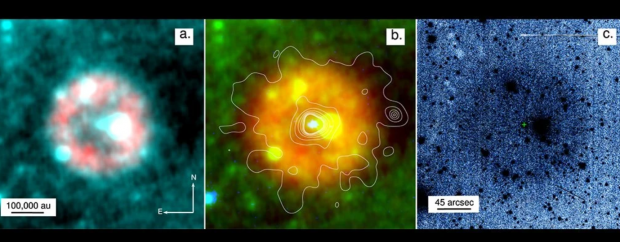
The study hones in on a nebula called Pa 30, or Parker's Star. This nebula has one of the hottest stars in the Milky Way, and according to astronomers, the nebula is producing a gas cloud that is expanding 684 miles every second. Rewinding time, astronomers have traced the expansion of the cloud to an event that happened around 1,000 years ago.

Astrophysicist Albert Zijlstra from the University of Manchester in the UK said, "The historical reports place the guest star between two Chinese constellations, Chuanshe and Huagai. Parker's Star fits the position well. That means both the age and location fit with the events of 1181."

If you are interested in reading more about how this star formed, check out this link here.

Best Deals: Hanes Men's Graphic Vintage Cali Collection T-Shirt

* Prices may be inaccurate. As an Amazon Associate, we earn from qualifying purchases. We earn affiliate commission from any Newegg or PCCG sales.


News Source:sciencealert.com

Comments

Tech and Science Editor

Email IconX IconLinkedIn Icon

Jak joined TweakTown in 2017 and has since reviewed 100s of new tech products and kept us informed daily on the latest science, space, and artificial intelligence news. Jak's love for science, space, and technology, and, more specifically, PC gaming, began at 10 years old. It was the day his dad showed him how to play Age of Empires on an old Compaq PC. Ever since that day, Jak fell in love with games and the progression of the technology industry in all its forms.

Stay Updated

Follow TweakTown for breaking tech news, reviews, and daily updates.

Add TweakTown as a preferred source on GoogleFind TweakTown on Apple News
Newsletter Subscription