







Science, Space, & Robotics - Page 138
Explore the latest Science, Space, Health, and Robotics news from TweakTown. Coverage includes space launches, medical tech, discoveries, and rockets. - Page 138
Stay Updated
Follow TweakTown for breaking tech news, reviews, and daily updates.


As an Amazon Associate, we earn from qualifying purchases. TweakTown may also earn commissions from other affiliate partners at no extra cost to you.
Longest lunar eclipse since 1440 will happen tonight, view it here
Tonight an astronomy event will take place that hasn't happened for hundreds of years. The Moon will pass through Earth's shadow to create the longest partial lunar eclipse since 1440.

AccuWeather reports that an astronomical event will happen on the night of Thursday, November 18, into the morning of November 19. Many countries around the world will be able to take part in the event, including North America, Australia, New Zealand, eastern Asia, and parts of South America. It should be noted that this is the longest partial lunar eclipse since 1440 and not the longest total lunar eclipse as that title is held by the total lunar eclipse that occurred in July 2018, which was about 12 minutes longer than the one that will happen tonight.
Most of the United States is expected to have quite good viewing conditions, as AccuWeather meteorologists predict that parts of southern Plains and the lower Midwest will have "excellent viewing conditions" across the Southeast. If you are unable to enjoy the eclipse in person, but would still like to see what it looks like, there is the timeanddate livestream that can be found above. If you are interested in learning more about the coming partial lunar eclipse, check out this link here.
Continue reading: Longest lunar eclipse since 1440 will happen tonight, view it here (full post)
Spectacular protostar formations spotted by the Hubble Space Telescope
Roughly 500 light-years away in the Chamaeleon constellation, within its star-forming region is a reflection nebula designated IC 2631.

IC 2631 is the brightest nebula in the Chamaeleon Complex, where numerous protostars form and grow. Amongst the clouds of gas and dust, stars are born as clouds collapse under their gravity. The Hubble telescope can detect infrared emissions from the heat energy released from clouds contracting around a protostar. Once enough material gathers, and the protostar's core becomes dense and hot enough, it completes its transformation into a star.
While the protostar J1672835.29-763111.64 was spotted in the IC 2631 region of the Chamaeleon constellation, in the constellation Aquila, another star-forming constellation designated G035.20-0.74 was captured, producing a beautiful image.
Continue reading: Spectacular protostar formations spotted by the Hubble Space Telescope (full post)
Rocket Lab launches two satellites, and attempt to recover the booster
Rocket Lab successfully launched its two-stage Electron rocket, carrying two BlackSky Global Earth observation satellites for its planned constellation.

The launch took place from Rocket Lab's launch pad on the Mahia Peninsula of New Zealand's North Island. Lift-off occurred at 2:38 p.m. (1:38 a.m. UTC) local time on November 18th. The first stage of the Electron rocket was scheduled to parachute safely into the ocean, splashing a few hundred miles off the coast where it was to be retrieved by a Rocket Lab boat, with a helicopter flying in the area to help locate it.
Fifty-five minutes after lift-off, the rocket's upper stage deployed the two BlackSky satellites it was carrying at an altitude of 270 miles (430 kilometers). Rocket Lab plans to help launch four additional BlackSky satellites across two more Electron launches as per the deal signed between the two companies.
Continue reading: Rocket Lab launches two satellites, and attempt to recover the booster (full post)
NASA's Perseverance Mars rover twin, OPTIMISM, begins terrain tests
The OPTIMISM rover, shorthand for "Operational Perseverance Twin for Integration of Mechanisms and Instruments Sent to Mars," is a full-scale engineering model of the Perseverance rover currently trawling the surface of Mars, searching for signs of ancient microbial life.

In Southern California, at the Mars Yard of NASA's Jet Propulsion Laboratory, a boulder-laden landscape simulates Mars's terrain that has been a testing site for many a rover twins, beginning with the first Sojourner rover that landed on Mars in 1997. The rover is about the size of a car, and the Mars Yard is roughly as long as a doubles tennis court and twice as wide.
OPTIMISM will be carrying out tasks expected of its twin on Mars to ensure that Perseverance will safely do the same in its mission and identify any potential bugs or issues that would disrupt its regular operation. These tasks include navigating complex terrain, drilling samples from boulders, and storing them in metal tubes, as Perseverance will be doing on Mars.
Continue reading: NASA's Perseverance Mars rover twin, OPTIMISM, begins terrain tests (full post)
Hubble operations contract extended by NASA, provides status update
NASA has awarded the Association of Universities for Research in Astronomy (AURA), a sole source contract extension to continue science operations support for the Hubble Telescope.

Headquartered in Washington, AURA provides this support based out of the Space Telescope Science Institute (STScI) in Baltimore. Hubble's mission has now been extended through to June 3rd, 2026, with the value of the existing contract increasing by ~$215 million, bringing the total to ~$2.4 billion.
The contract extension will fund ongoing support for Hubble out of the STScI, including science operations, engineering of science systems, awarding science research, data archival, and public outreach.
Continue reading: Hubble operations contract extended by NASA, provides status update (full post)
Scientists warn of potential 'alien invasion', but not from space
Researchers have warned that an "alien invasion" is a warranted concern, but the invaders won't arrive in spaceships.

A new study published in the journal Bioscience explores the effects of human expansion beyond Earth's atmosphere and the dangers of micro-bacterial contamination. The researchers looked at the risks of obtaining micro-bacteria and bringing it back to Earth. Additionally, the study looked at humans bringing bacteria to new worlds, such as Mars, and found measures to reduce the risk of contamination. Researchers have already discovered strains of bacteria that have evolved from Earth bacteria on the International Space Station.
Additionally, NASA has found in its clean rooms that are used to assemble spacecrafts, "bacterial strains exhibiting extreme resistance to ionizing radiation, desiccation, and disinfectants." The authors note that bacteria from Earth shouldn't be brought to new planets such as Mars, and that an event such as this can is comparable to an extreme natural disaster such a major earthquake or even a nuclear meltdown. The study authors suggested the following measures should be taken to prevent contamination from extraterrestrials.
Continue reading: Scientists warn of potential 'alien invasion', but not from space (full post)
Hear the ISS crew prepare to escape to Earth from Russian space debris
Russia decided it was going to test an anti-satellite weapon on one of its own satellites. The test was a success as the satellite was sufficiently destroyed.

However, the debris from the now-destroyed satellite has been deemed dangerous by NASA, with officials coming out against Russia's "irresponsible" behavior. An audio recording has surfaced of a conversation between the International Space Station crew and on-ground support, which warned them that the crew was required to take shelter in SpaceX Crew Dragon. Mission control can be heard informing Raja Chari, Commander of the Crew-3 mission, of the incoming "satellite break up".
Chari said, "If that's more than half an hour, then I think we'll stay suited and potentially come back home if Dragon takes a hit". As previously mentioned, NASA and the United States Military have condemned the actions of Russia, and only recently did Russia respond, with Russia's Ministry of Defense defending the test. Minister-general of the army, Sergei Shoigu commented on the space debris having the potential to pose a threat to future space activities, "the resulting fragments do not pose any threat to space activities".
Continue reading: Hear the ISS crew prepare to escape to Earth from Russian space debris (full post)
Elon Musk to drop update on SpaceX's Starship soon, watch it live here
Space CEO Elon Musk is reportedly scheduled to drop an update for the company's upcoming next-generation launch vehicle - Starship.

Reports indicate that Musk will be speaking at the National Academies' first virtual Space Studies Board that's scheduled for 6 pm EST on November 17th. The event will be streamed live and will no doubt cover the extensive progress made constructing Starship and the regulatory approval waiting process that has caused the launch to be delayed.
During this waiting period, the company has been performing numerous tests of Starship SN20, and now it's nearing the end of the process as the Federal Aviation Administration (FAA) stated it would have its review of the environmental impacts of the Starbase launch site completed by the end of the year. Recently, Musk said that SpaceX's next-generation engines that will take humans "multi-planetary" won't be called Raptor, more on that here.
Continue reading: Elon Musk to drop update on SpaceX's Starship soon, watch it live here (full post)
NASA rover captures Mars sample containing a 'greenish' mystery
A new post has appeared on NASA's official Twitter account for its Perseverance rover that is currently collecting new soil samples on Mars.

Perseverance has officially collected its third sample of Martian soil, and this time around, the rover has collected something unexpected that has sparked hypotheses to fly among NASA scientists. Images of the sample collection have been posted to the Perseverance Twitter account, which is captioned, "My latest sample is from a rock loaded with the greenish mineral olivine". However, researchers are yet to find out how the mineral got there.
Futurism reports that olivine minerals are found on Earth in solidified places of lava or magma. NASA scientists are attempting to find a correlation between olivine minerals and carbonates, which form when carbon dioxide interacts with water. As for this sample of olivine, we will have to wait for an explanation for how it got there as NASA scientists work their magic analyzing data and throwing hypotheses around. The Perseverance team will undoubtedly update us with an answer in the coming weeks/months.
Continue reading: NASA rover captures Mars sample containing a 'greenish' mystery (full post)
Major storm warning dropped, potential 'bomb cyclone' to hit soon
Ahead of the Thanksgiving celebrations, AccuWeather forecasters have warned of an incoming storm that is expected to cause major travel delays across certain parts of the US.

Forecasters have predicted that two major weather patterns could cause extreme delays in parts of the Midwest and Northeast, as a wintry storm is developing over the central Plains on Sunday, and another storm that will spawn out of the Atlantic Coast one to two days later. AccuWeather Chief Meteorologist Jon Porter said, "We could be looking at a huge mess and a real wrench in holiday travel."
Reports state that the first storm will begin brewing over the central Plains on Sunday and will then move northeast to reach Great Lakes by Monday. It will then move into central Ontario or western Quebec on Tuesday, and all throughout its journey AccuWeather reports, "It is likely to strengthen rapidly enough to be classified as a bomb cyclone as the central pressure of the storm could plummet 0.71 of an inch of mercury (24 millibars) within 24 hours."
Continue reading: Major storm warning dropped, potential 'bomb cyclone' to hit soon (full post)
Will the asteroid NASA is about to slam into cause problems for Earth?
NASA is getting very close to the launch of its Double Asteroid Redirection Test (DART), which involves slamming a spacecraft directly into an asteroid to change its orbit.

A small group of NASA experts has taken to Reddit AMA to answer some burning questions from the public, and one of the questions posed was, "Are you at all worried that the collision will cause pieces of the asteroid to break off and disperse into the atmosphere and create new hazards?". For those that don't know, NASA will be sending a small spacecraft around the size of a large vending machine directly towards an asteroid around the size of the Great Pyramid of Giza.
The spacecraft will be traveling at 15,000 mph at the time of its impact, and NASA expects that it will change the orbit of the asteroid by more than 1%. It should be noted that Didymos is orbiting a larger asteroid called Dimorpohos and will be 6.7 million miles away at the time of impact. The idea behind DART is to demonstrate if a kinetic impactor (the spacecraft) is a sufficient method of deflecting an asteroid that is on course to hit Earth.
Continue reading: Will the asteroid NASA is about to slam into cause problems for Earth? (full post)
NASA reveals chances of an asteroid hitting Earth in next 100 years
Six NASA experts have taken to Reddit for an Ask-Me-Anything (AMA) regarding asteroids, Earth, and the agency's upcoming Double Asteroid Redirection Test (DART) mission.

NASA's upcoming DART mission is the first planetary defense mission from the agency and will involve colliding a small spacecraft around the size of a vending machine into a small asteroid around the size of the Great Pyramid of Giza. The asteroid that is the target is orbiting a larger asteroid, and NASA's goal of the mission is to see if it's possible to alter the orbit of the smaller asteroid. The results from this mission will pave the way forward for planetary defense strategies.
One of the questions that were posed to the six participants was, "What is the probability (mathematical) of a moderate size asteroid impact in the next 100 years?". NASA's Marina Brozovic, an asteroid scientist at JPL, answered and said that the agency doesn't know of any objects that are several hundred meters (200 meters is 656 feet) in size that has a chance of impacting Earth. Additionally, Brozovic reminds everyone that any object smaller than about 100 feet in size is unlikely to reach the ground due to our atmosphere.
Continue reading: NASA reveals chances of an asteroid hitting Earth in next 100 years (full post)
NASA answers, 'Is NASA really crashing a spacecraft into an asteroid?'
NASA has answered the question "Is NASA really crashing a spacecraft into an asteroid?" with a new video on its YouTube channel.

The space agency has posted a new video that is a part of its "We Asked a NASA Expert" weekly series that tackles some of NASA's most popular questions. This week, NASA Planetary Expert Nancy Chabot answers the question regarding the spacecraft asteroid collision, saying, "Yes, NASA really is smashing a spacecraft into an asteroid. That spacecraft is DART, Double Asteroid Redirection Test".
Chabot goes on to explain that the spacecraft is about the size of a vending machine and will be colliding with an asteroid around the size of the Great Pyramid of Giza. The planetary expert explains that the goal of the mission isn't to destroy the asteroid but to see if its possible to slightly change its orbit, which would then knock it off its original course. Knowing if this is possible will allow NASA to plan a strategy around deflecting an asteroid that's on a collision course with Earth years before impact.
Continue reading: NASA answers, 'Is NASA really crashing a spacecraft into an asteroid?' (full post)
NASA experts reveal the chances of spotting an asteroid before impact
Multiple NASA experts have taken to Reddit to answer some questions from the public about asteroids, a part of NASA's upcoming DART mission.

The Reddit AMA featured six NASA experts in several different fields, but all a part of the agency's upcoming launch of the Double Asteroid Redirection Test (DART), which involves a NASA spacecraft slamming into an asteroid to knock it off course. One of the questions that NASA received was, "What's the minimum time it'll take to notice an asteroid heading towards earth?".
Lance Benner, lead for NASA's asteroid radar research program at NASA's Jet Propulsion Laboratory (JPL) answered and wrote that the agency is looking for asteroids that are on route to hit Earth with years to decades of advance notice, but are also monitoring any small asteroids that are going to impact Earth. However, the larger and more dangerous asteroids are regularly found, but are very far away from Earth and pose no danger.
Continue reading: NASA experts reveal the chances of spotting an asteroid before impact (full post)
False fossils may mislead the search for life on Mars
As the search for life on mars continues, formations taking on a similar appearance to fossils have been found.

Unfortunately, they were likely created by various non-biological chemical processes mimicking biological sources. The processes that created these false fossils produce deposits that resemble bacterial cells and carbon-based molecules.
During a period are 3.6 to 4 billion years ago, Mars would have been habitable for some life, as valleys and sedimentary rocks on the surface indicate water was once widely available. Despite this, concrete evidence of life has yet to be discovered.
Continue reading: False fossils may mislead the search for life on Mars (full post)
Leonid meteor shower is due to peak today, but the best is yet to come
The Leonids meteor shower are visible annually throughout most of November, with 2014 onward having some visibility between the 6th and 30th of November each year.

Since 2016, the peak has occurred on November 17th. However, in recent years, the number of meteors visible at the peak of the Leonids is estimated between 10-15 per hour by a single observer under ideal conditions. This year's relatively poor turnout is due partly to the approaching full moon, which is due on November 19th, lighting up the night sky and obscuring the shower.
The Leonids result from the debris left by the comet Tempel-Tuttle, which completes an orbit of the Sun every 33 years. The comet's orbital path intersects that of the Earth around the Sun, and each year as the Earth passes through the intersection point, meteors left over from the comet are visible in the shower.
Continue reading: Leonid meteor shower is due to peak today, but the best is yet to come (full post)
Mammals with potential to spread Covid-19, found with machine learning
A new study has been published in Proceedings of the Royal Society B: Biological Sciences, where researchers predicted the zoonotic disease transmission potential of 5,400 mammalian species.

Identifying high-risk species has been limited by the available data on the cell receptor ACE2, allowing SARS-CoV-2 (Covid-19) to bind with a host cell and infect it. This receptor is found in all major vertebrate groups, and although likely present in all vertebrates, has only been sequenced for 326 species.
By combining the available data on ACE2 with the biological traits of the 5,400 mammals chosen, a machine learning model developed by the research team could identify species with high zoonotic capacity, specifically the ability to contract and transmit SARS-CoV-2 to humans and other animal species.
Continue reading: Mammals with potential to spread Covid-19, found with machine learning (full post)
New collaboration set to enable on-orbit refuelling of satellites
The vision of Orbit Fab is to create the first Gas Stations in Space™, and it has announced a collaboration with Dawn Aerospace, a space-transportation company, to provide an on-orbit refueling service to satellites utilizing nitrous oxide (N2O) and propylene (C3H6).

Orbit Fab has developed a fuel port designated the Rapidly Attachable Fluid Transfer Interface, or RAFTI. Recently made available under an open license, it is an option available for government and commercial satellites and will be available for Dawn Aerospace customers midway through 2022.
Dawn produces propulsion systems for use in space utilizing green propellants, including nitrous oxide and propylene, gases which are readily available from domestic suppliers. The viability of Dawn's technology has been proven in CubeSats and other small satellites, and Dawn propulsion systems have flown aboard Vega, Falcon 9, and Soyuz rockets.
Continue reading: New collaboration set to enable on-orbit refuelling of satellites (full post)
Starlink constellation grows as SpaceX launches 53 new satellites
Fifty-three new Starlink satellites have been successfully launched using a Falcon 9 rocket, bringing the total number of Starlink satellites launched to 1844.

The Falcon 9 rocket was launched from Space Launch Complex 40 Cape Canaveral Space Force Station in Florida, with lift-off at 7:19 a.m. EST (12:19 UTC) on November 13th, 2021. Due to poor weather conditions, the mission had been delayed from its initially scheduled departure the day prior.
The first stage of the Falcon 9 rocket was core B1058, in use for the ninth time after a turnaround of 182 days from its previous flight. The core's first flight was on May 30th, 2020, almost a year and a half lifetime so far. It successfully landed on SpaceX's drone ship "Just Read the Instructions" after separating from the second stage 2.5 minutes into the flight.
Continue reading: Starlink constellation grows as SpaceX launches 53 new satellites (full post)
Origin of interstellar object 'Oumuamua still contentious
'Oumuamua is a large, cigar-shaped object that was first identified in October 2017, exiting our solar system at nearly 57,000 mph (92,000 km/h), indicating it could not have originated in our solar system.

Since then, scientists have tried to explain its origin and composition, with two papers published in March by Arizona State University astrophysicists suggesting it was made of nitrogen ice. However, a new paper has been published by Harvard astrophysicists in opposition to this suggestion. Astronomers have been unable to explain the source of its speed, as it shows no signs of propellant gases leaving it. The gravitational pull of the Sun is also insufficient to have accelerated it to the speeds that have slingshotted 'Oumuamua in and out of the solar system.
Alan Jackson and Steven Desch of the Arizona State University suggested that 'Oumuamua was likely a large chunk of nitrogen ice, having broken off of a planet similar to Pluto outside of our solar system. Given Pluto is 98% solid nitrogen, there likely are many similar planets, exo-Plutos, outside of our solar system from which 'Oumuamua may have broken off.
Continue reading: Origin of interstellar object 'Oumuamua still contentious (full post)
 Twitch opts streamers into gen AI training by default, faces harsh backlash
 Sean Murray still plays the 2016 launch version of No Man's Sky
 China's YMTC has climbed to third place in global NAND flash shipments
 $100 GTA 6 version makes up 89% of pre-orders, analysts estimate
 HWiNFO's latest update quietly confirms Intel is working on Razor Lake-AX
 Nintendo puts Switch 2 price increase warnings on store demo kiosks ahead of September 1 hike
 GIGABYTE launches two new B450 motherboards as demand for AM4 stays high in 2026
 Microsoft finally makes up its mind and unifies Copilot features into one big app
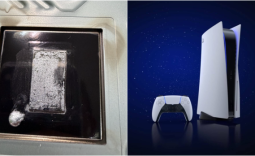 PS5 suffers from severe overheating after liquid metal eats into the heatsink
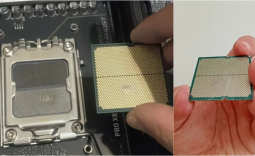 AMD Ryzen 7 7800X3D CPU burns and swells even after using AMD's updated BIOS
 D-Link F518 5G Wi‑Fi 6 AX1800 Mobile Hotspot Review: All-Day Mobile Hotspot
 Bose Lifestyle Ultra Speaker Review - Impressively Detailed Room-Filling Sound
 MSI Z890 Gaming Plus WIFI6E Review - Z890 for under $200
 Mortal Kombat (1995) 4K Ultra HD Blu-ray Review
 CPS PCCOOLER YS1200 ATX 3.1 80 PLUS Gold PSU Review
 ASRock X870E Taichi White Review: a premium AM5 motherboard with 10G LAN and WiFi 7
 Asetek Initium Pedal Modular Upgrades Review
 Thinkware U3000 Pro Review - Smart Dashcam with Wi-Fi quirks
 Montech TG3 Mid-Tower Chassis Review
 ASUS ROG Strix X870E-A Gaming WiFI7 Neo Review - A New Enticing Option
 I ditched the Windows 11 context menu for this open-source tool, and here's why
 Windows 11 may be encrypting your drive already, and I checked where my recovery key went
 GIGABYTE's 40 Days of INFINITY celebrates 40 Years of Innovation with stunning GeForce RTX graphics cards and rewards
 I swapped File Explorer for this free file manager and finally got the layout I wanted
 How to tell if someone has been using your Windows PC without your permission
 6 Task Manager tips for troubleshooting Windows performance problems
 ASUS ROG's 20th Anniversary Line-up of Premium PC Gaming Gear has Arrived - Here's Everything You Need to Know
 Six File Explorer tips every Windows user should know
 I switched my PC to encrypted DNS in Windows 11, and browsing felt more private
 Printer Not Working in Windows? How to fix detection, print queues and drivers