







Science, Space, & Robotics - Page 139
Explore the latest Science, Space, Health, and Robotics news from TweakTown. Coverage includes space launches, medical tech, discoveries, and rockets. - Page 139
Stay Updated
Follow TweakTown for breaking tech news, reviews, and daily updates.


As an Amazon Associate, we earn from qualifying purchases. TweakTown may also earn commissions from other affiliate partners at no extra cost to you.
SpaceX can almost taste regulatory approval for its biggest launch yet
SpaceX has been performing tests for its first upcoming orbital test launch of Starship. However, the company has yet to secure a launch date as it has been waiting for regulatory approval from the FAA.

The Federal Aviation Administration (FAA) began an environmental assessment on SpaceX's orbital launch activities at its launch facility called Starbase, located close to the South Texas village of Boca Chica. SpaceX has been patiently waiting for the environmental assessment to be completed and regulatory approval to be granted for the launch of Starship. However, the FAA didn't say when the assessment would be completed until now, as the regulator estimated in an update that it would be completed by December 31, 2021.
For those who don't know the significance of Starship, the launch vehicle is comprised of two fully reuseable components, a large first-stage booster called Super Heavy that stands at 230 ft, and the spacecraft itself called Starship, which stands at 160 ft. Starship is designed to take humans to the Moon and eventually to Mars, as NASA has selected the vehicle to take astronauts back to the Moon as a part of the agency's Artemis program.
Continue reading: SpaceX can almost taste regulatory approval for its biggest launch yet (full post)
NASA gives update on Hubble Space Telescope health, and why its halted
Since late October, NASA and the European Space Agency's (ESA) Hubble Space Telescope has been mostly out-of-order as it experienced a glitch.

Engineers found that the glitch has something to do with the synchronization of its internal communications, and as a result of the failure to sync correctly, the space telescope puts all of its instruments into safety mode to prevent any potential damage that could be caused.
On November 7, the Advanced Camera for Surveys (ACS) was brought back online, and now according to NASA, "the Hubble team has identified near-term changes that could be made to how the instruments monitor and respond to missed synchronization messages, as well as to how the payload computer monitors the instruments." Adding, "This would allow science operations to continue even if several missed messages occur. The team has also continued analyzing the instrument flight software to verify that all possible solutions would be safe for the instruments."
Continue reading: NASA gives update on Hubble Space Telescope health, and why its halted (full post)
Russia blew up its own satellite, telescope spots scary space debris
Russia decided it was going to test out of one of its anti-satellite weapons on one of its own satellites. The results have now sparked a debate.

Russia tested an anti-satellite missile on Monday, November 15, on a defunct satellite called Cosmos-1408, which, as you can probably imagine, resulted in an explosion and many new space debris created. Numberica Corp, a Colorado-based company that tracks space debris, has partnered with Slingshot Aerospace on Twitter to publish images and video of the debris caused by the destruction of Cosmos-1408.
Reports indicate that more than 1,500 new trackable space debris were found, with an unknown amount of debris too small to be tracked. The US Military, as well as NASA, have condemned the actions by Russia to test an anti-satellite weapon as they claim the space debris could pose a threat to astronauts living on the International Space Station (ISS). However, Russia has since defended its decision by saying that the resulting fragments do not pose any threat to space activities".
Continue reading: Russia blew up its own satellite, telescope spots scary space debris (full post)
Russia defends its 'dangerous' choice to explode one of its satellites
Russia recently tested an anti-satellite weapon that caused a large swath of space debris that has been subject to heavy debate.

The United States condemned the event, describing it as "dangerous and irresponsible behavior" that can potentially jeopardize the long-term sustainability of space. The criticism came from NASA's head Bill Nelson, as well as Ned Price, a State Department spokesperson, who said that the destruction of one of Russia satellites at the hand of Russia has caused a significant increase in risk for astronauts aboard the International Space Station (ISS) and any human spaceflight activities.
Now, Russia's Ministry of Defence has issued a statement defending its decision to test the anti-satellite weapon and create space debris. According to the minister-general of the army, Sergei Shoigu said, "the resulting fragments do not pose any threat to space activities". However, experts have said that the cloud of debris, which consists of more than 1,500 trackable pieces, could pose a threat for years to come. Roscosmos Twitter wrote on Monday that the debris cloud "has moved away from the ISS orbit", referring to the ISS orbiting Earth at around 250 miles and the debris cloud being tracked to 273 to 323 miles. Rocosmos wrote, "the station is in the green zone."
Continue reading: Russia defends its 'dangerous' choice to explode one of its satellites (full post)
Elon Musk says SpaceX's multi-planet engines won't be called 'Raptor'
SpaceX is currently gearing up for its first orbital test of Starship, its vehicle that is set to be the transportation between the Moon and Mars.

SpaceX is in full testing mode at the moment in preparation for Starship's first orbital test flight that will take the rocket higher than it ever has before. Starship is comprised of three main parts, the 160 ft spacecraft named Starship, a 230 ft tall booster named Super Heavy, and its 59 ft tall and 30 ft wide payload fairing. Recently, SpaceX conducted a 6-engine static fire test of Starship, showcasing the tremendous power of its six Raptor engines. To see incredible images of that firing test, check out this link here.
As SpaceX wait for approval from the Federal Aviation Administration (FAA) to conduct the first orbital test of Starship, SpaceX CEO Elon Musk has published an awesome image of under Super Heavy with the caption "12 million pounds of thrust at liftoff". In response to this image, a Twitter user said, "Can't wait for Raptor 2, it's still a rat's nest up there", which is in reference to the exposed Raptor engines that can be seen in the image.
Continue reading: Elon Musk says SpaceX's multi-planet engines won't be called 'Raptor' (full post)
NASA's Mars rover paves the way forward for future astronauts
NASA's Curiosity rover is acquiring data that will be used to make sure future astronauts have a safe environment on the surface of Mars.

Curiosity is equipped with an instrument called a Radiation Assessment Detector (RAD), and this instrument is designed to measure the amount of radiation detected from galactic cosmic rays, which are particles that can be traced back to exploding stars. These galactic cosmic rays form what is called "background radiation", and due to Mars not having a protective magnetic field to repel this radiation, these galactic cosmic rays will be especially harmful to astronauts on Mars' surface.
A new paper published in JGR Planets detailed data acquired by Curiosity when it was parked against a cliff called Murray Buttes from September 9 to 21 in 2016. During this time frame, RAD recorded a 4% decrease in overall radiation exposure and a 7.5% decrease in neutral particle radiation, which also includes neutrons that can penetrate rock and are very harmful to human health. Researchers attributed these drops to the location of the rover. Bent Ehresmann of the Southwest Research Institute, lead author of the paper, said, "We've been waiting a long time for the right conditions to get these results, which are critical to ensure the accuracy of our computer models."
Continue reading: NASA's Mars rover paves the way forward for future astronauts (full post)
NASA confirms longest lunar eclipse in centuries will happen this week
NASA has confirmed an upcoming partial lunar eclipse that will take place on November 18 and 19.

According to a new report by Phys.org, NASA writes on its website that the Moon "will be so close to opposite the Sun on Nov 19 that it will pass through the southern part of the shadow of the Earth for a nearly total lunar eclipse." For those that don't know, a "total" lunar eclipse is different from a "partial" lunar eclipse. During a partial lunar eclipse, some of the Moon's surface is still visible, while in a total lunar eclipse, all of the Moon's visible surface moves into Earth's shadow.
NASA states that the eclipse will last for 3 hours, 28 minutes, and 23 seconds, which will be the longest partial eclipse in centuries. Additionally, NASA explains that about 97% of the Moon will be covered in Earth's shadow and that it will appear a reddish-brown color that will be visible throughout many parts of the world. EarthSky writes that people in North America, eastern Australia, New Zealand, and Japan will be able to enjoy the partial eclipse.
Continue reading: NASA confirms longest lunar eclipse in centuries will happen this week (full post)
NASA scientists to use 'singing trees' to help get us to a new Earth
Sometimes the most unusual ideas are the ones that generate the most interesting answers, and a song that is poised to last two centuries maybe the idea that generates an incredibly interesting answer.

A group of NASA scientists is going to attempt to communicate with the cosmos through a spacecraft sent towards exoplanet Proxima B that is located 4.2 light-years away from Earth, and a group of select trees that will be equipped with sensors that can detect changes in their surroundings, which will then be converted into sound frequencies that will be relayed to the spacecraft. Julia Christensen, president of the Space Song Foundation, said, "As the light, water and temperature at the tree change, so does the tune, the volume, and the actual sound of the song."
Adding, "In the short term, we hear shifts in the song as day turns to night, as clouds pass over the tree, as seasons change, etc. But over the very long term - decades or centuries - we will hear major global shifts in climate and other changes on our planet." Proxima B is of special interest to researchers as it may have the contains to harbor life, as it is very Earth-like. Researchers intend on sending a future spacecraft towards Proxima B that will communicate the "sound" of our planet. However, with current technology, it would take a spacecraft 6,300 years to reach Proxima B.
Continue reading: NASA scientists to use 'singing trees' to help get us to a new Earth (full post)
Arianespace is launching three new satellites for the French military
Arianespace is set to launch its Vega rocket in Kourou at 6:27 a.m. local time (09:27 UTC) on November 16th, 2021. It will launch from the Ensemble de Lancement Vega (ELV) pad at the Guiana Space Center, the oldest of its launch pads.

Its mission is to launch three Capacite de Renseignement d'origine Electromagnetique Spatiale (CERES) satellites (which translates to "Intelligence Capacity of Space Electromagnetic Origin"). These satellites are operated by the French space agency Centre National d'Etudes Spatiales (translating to the National Centre for Space Studies).
This mission marks Arianespace's 12th flight for the year and the 300th ever launch for its rockets. The mission is also Vega's third this year and 20th overall. Since its inception, 17 of the 19 Vega flights have been successful.
Continue reading: Arianespace is launching three new satellites for the French military (full post)
As the universe continues to expand, black holes may be growing too
As the universe continues to expand, a new study has been published detailing a hypothesis called "cosmological coupling" that could explain the disparity between the expected size of black holes and what scientists have observed.

Black holes are estimated to have masses of ~40 times that of our sun, yet this is not what we see from observations using gravitational wave detections from the Laser Interferometer Gravitational-Wave Observatory (LIGO) and Virgo interferometer. The gravitational waves detected from black hole mergers have been used to estimate the sizes of many black holes as more than 50 solar masses, with some approaching 100 solar masses.
The hypothesis asserts that coinciding with the universe's expansion following the Big Bang, all objects within it grow in mass. While other scientists have modeled black hole mergers in static universes to simplify complicated equations, the authors of this study did so in an expanding universe. Simulating the activity of stars and their life cycles, culminating in the formation of black holes, predicted black holes within this universe that better resembled the findings of the current LIGO-Virgo data.
Continue reading: As the universe continues to expand, black holes may be growing too (full post)
Carbon dioxide cold traps confirmed in the darkest parts of the moon
Scientists for decades have predicted lunar cold traps, but with the publishing of new research in the AGU journal Geophysical Research Letters, their presence on the moon has finally been confirmed.

These cold traps exist in permanently shadowed regions of the moon, such as some craters, where the temperature falls below 60 degrees Kelvin, approximately -352 degrees Fahrenheit. These areas have the potential for carbon dioxide to freeze and become trapped, though the presence of frozen carbon dioxide in these traps is not yet confirmed.
Researchers analyzed NASA's Lunar Reconnaissance Orbiter data to identify and map these carbon dioxide cold traps. Aboard the spacecraft is the Diviner Lunar Radiometer Experiment (DLRE), which has collected temperature data from the moon over the ongoing 12-year mission of the spacecraft.
Continue reading: Carbon dioxide cold traps confirmed in the darkest parts of the moon (full post)
Space tourists share jaw-dropping images of Earth from space
Tourists aboard the SpaceX Crew Dragon snapped some incredible images of Earth from space, and they have been uploaded in full resolution for your viewing pleasure.

The Inspiration4 crew consisted of four civilians spending three days aboard a SpaceX Crew Dragon spacecraft back in September 2021. While the crew was floating around the planet for three days, they snapped some fantastic images of what Earth looked like for them, showcasing incredible unique perspectives of our planet as well as the Sun.
The team was able to snap the images through the spacecraft's cupola, which is essentially a massive glass dome located on the nose-end of the spacecraft. Originally, the nose-end of the spacecraft had a docking module attached, but since the Inspiration4 mission didn't involve any docking, it was replaced with the large viewing window. If you are interested in viewing the images in full resolution, you can check out the selection here.
Continue reading: Space tourists share jaw-dropping images of Earth from space (full post)
Planet Nine may have been seen decades ago, suggests astronomer
Astronomers and normal people alike have been wondering for quite some time if there really is a Planet Nine that has such a wide orbit that it takes 20,000 years to complete.

However, there is minimal evidence to suggest such a planet exists. But, one study from 2016 resurfaced the idea that Planet Nine may be real as researchers found that some celestial body was interacting with small objects outside of the Kuiper Belt, causing the orbits of these objects to be strange. These objects acted as if a large undiscovered object was influencing them through its gravity. However, the source of these anomalies has yet to be found.
Now, astronomer Michael Rowan-Robinson of Imperial College London in the UK has analyzed data obtained by the Infrared Astronomical Satellite (IRAS) in 1983. In Rowan-Robinson's pre-print paper, the astronomer says that he found a trio of point sources that may have been Planet Nine and suggests that this decade also information is retested with today's instruments. Additionally, Rowan-Robinson acknowledges that the probability of the candidate being real is quite low, but it's worthwhile to check.
Continue reading: Planet Nine may have been seen decades ago, suggests astronomer (full post)
US fires back at Russia over its use of an anti-satellite missile test
Russia recently conducted an anti-satellite weapon test on one of its own satellites, which caused more than 1,000 pieces new pieces of space debris.

The debris that were a result of Russia's anti-satellite missile test and amounted to more than 1,500 new pieces that may remain in orbit for potentially decades. Not only will these debris stay in orbit for an extended period of time, but they also pose a risk to other satellites if they collide with them. Ned Price, the State Department spokesman, told reporters on Monday, "Earlier today the Russian Federation recklessly conducted a destructive test of a direct--ascent anti satellite missile against one of its own satellites."
Adding, "This test has so far generated over fifteen hundred pieces of trackable orbital debris and hundreds of thousands of pieces of smaller orbital debris that now threatens the interests of all nations." Price even went on to say that Russia's "dangerous and irresponsible behavior jeopardizes the long term sustainability of our space and clearly demonstrates that Russia's claims of opposing the weapons and weaponization of space are disingenuous and hypocritical."
Continue reading: US fires back at Russia over its use of an anti-satellite missile test (full post)
NASA drops image of a dark 'hole in the sky' that consumes light
NASA has published a new image that's a part of Nebula November, and this time around, the agency has detailed a dark nebula dubbed LDN 1165.

LDN 1165 is located in the constellation Cepheus and is a member of the agency's catalog of Dark Nebulae, which are also called absorption nebulae. NASA explains in a new blog post that absorption nebula don't reflect or emit light like other nebula but instead block out any light that is coming from behind them. The agency continues to explain that these dark nebulae contain high amounts of dust, which is what prevents any light from protruding throughout the other side of the nebula.
Additionally, these dark nebulae are sometimes called "holes in the sky", purely because of the complete lack of light. However, this name may not be entirely accurate as NASA writes that while dark nebulae look like nothing at all, there could be plenty of star-forming activity occurring inside of the dense clouds. As for LDN 1165, Hubble peered closely at the dark nebula, and according to NASA, the bright region "is likely a star-forming region that may hold one or more young protostars." See the image below.
Continue reading: NASA drops image of a dark 'hole in the sky' that consumes light (full post)
NASA telescope discovers wild new planet, may have ingredient for life
A team of astronomers has located a new exoplanet that is showing promising signs of harboring one of life's most vital ingredients - water.

In a new paper published on the arXiv pre-print server details the discovery of an exoplanet titled TOI-2257b. Astronomers used NASA's Transiting Exoplanet Survey Satellite (TESS), which is designed to detect dips in light that planets cause when they pass in front of the star that they are orbiting. This method of discovering new exoplanets is called the transit method, and has proven to be a reliable way of observing new celestial objects.
The newly found exoplanet is believed to be twice the size of Earth, and has more than five times Earth's mass. Researchers also believe that it orbits at just 135 million miles away from its M-dwarf star TOI-2257, meaning it completes one full orbit of the star in just 35 Earth-days. The reason researchers believe TOI-2257b may harbor water is that the dwarf star it orbits is much cooler and smaller than our Sun, with an average surface temperature of around 5,792 Fahrenheit, compared to the Sun, which has a surface temperature of 9,932 Fahrenheit.
Continue reading: NASA telescope discovers wild new planet, may have ingredient for life (full post)
'Doughnut UFO' photographed flying in the sky, shocking onlookers
Back on November 8, a photographer snapped an image of a "doughnut UFO" hovering overhead, sparking an explanation for what the object could be if it even was an object.

The photographer, which goes by the Twitter handle of @Eavix1Eavix, snapped the image in Zurich, Switzerland, and described the object as a "doughnut UFO". The photographer was aware that on the same night, the SpaceX Endeavour capsule was scheduled to re-enter Earth's atmosphere from the International Space Station, which led to the belief that what was being seen in the night sky over Switzerland was the Endeavor capsule.
However, there is a problem with this theory. The SpaceX capsule touched back down on Earth in the Gulf of Mexico, more than 5,000 miles away on the other side of the planet. Marco Langbroek, an amateur satellite tracker and academic researcher at Leiden University in the Netherlands spoke to LiveScience and said, "Any passes [of Endeavour] over Switzerland prior to landing that night would have been completely in Earth's shadow, i.e. it would not be illuminated by the sun and hence not visible."
Continue reading: 'Doughnut UFO' photographed flying in the sky, shocking onlookers (full post)
First black hole ever discovered outside of our Milky Way galaxy
Astronomers have found the very first black hole outside of our Milky Way galaxy by observing a star in the region with a strange motion.

The researchers used the European Southern Observatory's Very Large Telescope located in Chile to peer into the star cluster NGC 1850 within the Large Magellanic Cloud. The astronomers were observing stars in the region and noticed that a star was being influenced by an unknown gravitational force, marking the first time a black hole had been discovered using this method.
The black hole is located approximately 160,000 light-years from Earth and is estimated to have eleven times the mass of our Sun, or 11 solar masses. The study was published in the Monthly Notices of the Royal Astronomical Society, and according to Stefan Dreizler, a contributing member on the paper, "The vast majority can only be unveiled dynamically. When they form a system with a star, they will affect its motion in a subtle but detectable way, so we can find them with sophisticated instruments."
Continue reading: First black hole ever discovered outside of our Milky Way galaxy (full post)
NASA will spend nearly $100 billion on its moon program by 2025
Getting humans off Earth is incredibly expensive, and to back that statement up, a new report from the NASA Office of Inspector General (OIG) has revealed how much the Artemis program will cost by 2025.

The new report from the NASA Office of Inspector General has revealed that the Artemis program is expected to cost NASA $93 billion by the year 2025. According to the report, the agency has several initiatives underway that will reduce the total cost of the program by 2025. However, the report also reads that looking ahead at spending without taking into account any of these cost-saving initiatives, NASA "will face significant challenges to sustaining its Artemis program in its current configuration."
According to the nonprofit Planetary Society, the Apollo moon program between 1960 and 1973 cost $28 billion, which would be about $280 billion today. The OIG report also states, "Moreover, while NASA has several initiatives underway aimed at increasing affordability, we project the current production cost of a single SLS/Orion system to be $4.1 billion per launch." If you are interested in reading more about this story or would like a more in-depth breakdown of the costs, check out this link here.
Continue reading: NASA will spend nearly $100 billion on its moon program by 2025 (full post)
This deep sea rover has been studying climate change for 7 years
Monterey Bay Aquarium Research Institute's (MBARI) Benthic Rover II has been trawling the ocean floor for seven years, collecting data on the carbon cycle of the deep sea and how it is impacted by climate change.

Less is known about the deep sea than other planets in our solar system. Delving many miles below the ocean surface is a challenge, owing to extreme pressures and seawater's corrosive nature. It is impressive not only to reach deep down but to continue operating there for more than half a decade.
One hundred forty miles (225 kilometers) off the coast of central California and 13,100 feet (4,000 meters) below the surface lies Station M, MBARI's research site where the Benthic Rover II operates. This depth is equivalent to the ocean's average depth and allows for an adept model for studying deep-ocean ecosystems.
Continue reading: This deep sea rover has been studying climate change for 7 years (full post)
 Twitch opts streamers into gen AI training by default, faces harsh backlash
 Sean Murray still plays the 2016 launch version of No Man's Sky
 China's YMTC has climbed to third place in global NAND flash shipments
 $100 GTA 6 version makes up 89% of pre-orders, analysts estimate
 HWiNFO's latest update quietly confirms Intel is working on Razor Lake-AX
 Nintendo puts Switch 2 price increase warnings on store demo kiosks ahead of September 1 hike
 GIGABYTE launches two new B450 motherboards as demand for AM4 stays high in 2026
 Microsoft finally makes up its mind and unifies Copilot features into one big app
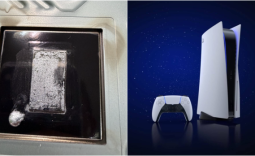 PS5 suffers from severe overheating after liquid metal eats into the heatsink
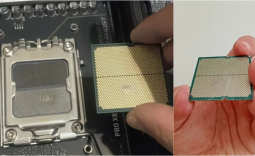 AMD Ryzen 7 7800X3D CPU burns and swells even after using AMD's updated BIOS
 D-Link F518 5G Wi‑Fi 6 AX1800 Mobile Hotspot Review: All-Day Mobile Hotspot
 Bose Lifestyle Ultra Speaker Review - Impressively Detailed Room-Filling Sound
 MSI Z890 Gaming Plus WIFI6E Review - Z890 for under $200
 Mortal Kombat (1995) 4K Ultra HD Blu-ray Review
 CPS PCCOOLER YS1200 ATX 3.1 80 PLUS Gold PSU Review
 ASRock X870E Taichi White Review: a premium AM5 motherboard with 10G LAN and WiFi 7
 Asetek Initium Pedal Modular Upgrades Review
 Thinkware U3000 Pro Review - Smart Dashcam with Wi-Fi quirks
 Montech TG3 Mid-Tower Chassis Review
 ASUS ROG Strix X870E-A Gaming WiFI7 Neo Review - A New Enticing Option
 I ditched the Windows 11 context menu for this open-source tool, and here's why
 Windows 11 may be encrypting your drive already, and I checked where my recovery key went
 GIGABYTE's 40 Days of INFINITY celebrates 40 Years of Innovation with stunning GeForce RTX graphics cards and rewards
 I swapped File Explorer for this free file manager and finally got the layout I wanted
 How to tell if someone has been using your Windows PC without your permission
 6 Task Manager tips for troubleshooting Windows performance problems
 ASUS ROG's 20th Anniversary Line-up of Premium PC Gaming Gear has Arrived - Here's Everything You Need to Know
 Six File Explorer tips every Windows user should know
 I switched my PC to encrypted DNS in Windows 11, and browsing felt more private
 Printer Not Working in Windows? How to fix detection, print queues and drivers