







Science, Space, & Robotics - Page 136
Explore the latest Science, Space, Health, and Robotics news from TweakTown. Coverage includes space launches, medical tech, discoveries, and rockets. - Page 136
Stay Updated
Follow TweakTown for breaking tech news, reviews, and daily updates.


As an Amazon Associate, we earn from qualifying purchases. TweakTown may also earn commissions from other affiliate partners at no extra cost to you.
NASA's rover collects a mysterious 'greenish' Martian sample
NASA has taken to the official Twitter account for its newest Mars rover to announce that Perseverance has sealed its fifth sample tube.

On November 17, the Perseverance Twitter account revealed that NASA's Mars rover captured its third sample of Martian soil that was loaded with the "greenish mineral olivine". While NASA scientists are able to identify which mineral Perseverance has collected, it's still a mystery how it got there in the first place, as the Tweet reads, "there are several ideas among my science team about how it got there. Hypotheses are flying!".
Now, Perseverance has collected another sample from the same rock, "A rock so nice, I sampled it twice! Just capped and sealed my fifth sample tube, with another piece from this interesting rock". The Perseverance team explains that the rover is doubling up on samples on "high priority targets", which suggests that this rock and others like it are deemed high-priority targets. We will have to wait for an update from NASA about how the greenish mineral got there.
Continue reading: NASA's rover collects a mysterious 'greenish' Martian sample (full post)
Hubble photographs deep space 'Running Man', shock waves detected
NASA and the European Space Agency's (ESA) Hubble Space Telescope has photographed "The Running Man" and shock waves of colliding gases.

NASA has taken to its blog to explain how the Hubble Space Telescope witnesses a shock wave of colliding gases in a nebula. Hubble snapped the above image of the Running Man Nebula, that's located 1,500 light-years from Earth in the constellation Orion. This image is of a Herbig-Haro object known as HH 45, and according to NASA, "Herbig-Haro objects are a rarely seen type of nebula that occurs when hot gas ejected by a newborn star collides with the gas and dust around it at hundreds of miles per second, creating bright shock waves".
NASA continues to explain that the blue color seen throughout the image represents ionized oxygen (O II), and purple indicates ionized magnesium (Mg II). The nebula seen in the image is called NGC 1977 and is one of three that comprise The Running Man. NGC 1977 is a reflection nebula, which means it doesn't emit its own light and only reflects light from neighboring stars, much like a "streetlight illuminating fog", according to NASA. If you are interested in learning more about The Running Man, check out this link here.
Continue reading: Hubble photographs deep space 'Running Man', shock waves detected (full post)
NASA expert reveals difference between 'comets, meteors and asteroids'
NASA has taken to its YouTube channel to post a video answering the question, "What's the Difference Between Asteroids, Comets, and Meteors?".

Space can be quite confusing to those that aren't knowledgeable in the terminology used and what names define certain celestial objects. To make it easier for everyone to understand, NASA created an awesome series called "We Asked A NASA Expert", and this series includes answering some of the most popular questions about space in short, quick videos. In this week's episode, NASA scientist Ryan Park explains the differences between asteroids, comets, and meteors.
According to Ryan Park, a NASA near-Earth asteroid expert, an asteroid is primarily rocky, and most of them can be found in the asteroid belt between Mars and Jupiter. Asteroids come in a variety of sizes and shapes, and when observing an asteroid through a telescope, it appears as a point of light. Park explains that comets, like asteroids, orbit the Sun but are composed of ice and dust. When a comet gets close to the Sun, its ice and dust contents begin to vaporize, which gives off that iconic "tail" when viewing one through a telescope.
Continue reading: NASA expert reveals difference between 'comets, meteors and asteroids' (full post)
NASA's asteroid redirection test launch, SpaceX drops shocking photos
NASA recently launched its Double Asteroid Redirection Test (DART) mission on the back of SpaceX's Falcon 9 rocket.

For those not updated with the goal of the mission, NASA is attempting to redirect an asteroid by colliding a vending machine-sized spacecraft into a Great Pyramid of Giza-sized asteroid. The space agency is aiming the spacecraft at an asteroid that is orbiting a larger companion asteroid. As previously stated, the goal of the mission is to see if the spacecraft can change the orbit of the asteroid, and with the results, NASA will be able to know if this form of redirection is a possible solution if an asteroid that's on a trajectory with Earth is found.
DART launched on the back of the SpaceX Falcon 9 launch vehicle, and overall the launch was a success. SpaceX has taken to its official Twitter account to post three images of the launch, and while the images posted to the Twitter account are low-resolution, the company has uploaded HD versions to its Flickr account. If you are interested in learning more about the DART mission, check out some of the links below.
Continue reading: NASA's asteroid redirection test launch, SpaceX drops shocking photos (full post)
NASA's lunar orbiter spied on Saturn, snapped image of iconic rings
NASA's Lunar Reconnaissance Orbiter, which is primarily used to take images of the Moon has been used to spy on Saturn from an extreme distance.

On October 13, 2021 the Lunar Reconnaissance Orbiter (LRO) snapped the above image of Saturn, and while the image could be somewhat disappointing to the eye, it's a representation of a significant technological achievement. The Lunar Reconnaissance Orbiter Camera (LROC) are line scan cameras, which means that instead of viewing the image as a whole it reviews it precisely line by line.
The LROC cameras have very short exposure times and are designed to take advantage of the speed of the spacecraft as it travels 1 mile per second. So, how did it take an image of Saturn? The orbiters cameras were pointed towards one side of Saturn and then to the planet's other side. The image that was taken showcases Saturn's iconic rings which appear to be above the equator. For those that don't know, Saturn's rings are only 10 to 100 million years old and mostly consist of water ice.
Continue reading: NASA's lunar orbiter spied on Saturn, snapped image of iconic rings (full post)
NASA rover sends back jaw-dropping postcard photograph from Mars
NASA's Mars rover has been climbing a mountain since 2014 and has sent back an incredible image of the progress it has made.

NASA's Curiosity rover landed on Mars back in 2012, and in 2014 it began its journey up Mount Sharp, a 3-mile-tall mountain. In a new press release on the NASA JPL website, the space agency explains that Curiosity is equipped with two navigation cameras that capture a 360-degree view of the rover's location after it completes a drive. The team saw the image that Curiosity snapped from its recent perch on the mountain and decided it was too stunning of a spot not to capture the scenery in the highest possible quality.
The team ordered the rover to snap two images with its Mastcam instrument; one at 8:30 a.m. and again at 4:10 p.m. local Mars time. NASA explains that the two times of day revealed different details in the landscape, so they were combined together to include elements from both the morning and the afternoon. The artists added in the blue and orange colors to the image to represent what the scene would look like at different times of day, not what the human eye would see if an individual was standing next to Curiosity.
Continue reading: NASA rover sends back jaw-dropping postcard photograph from Mars (full post)
NASA creates first-ever map of Mars underground using the Martian wind
Researchers have used the instruments on the back of NASA's InSight probe to create the first-ever map of Mars underground.

The team of geophysicists used the instruments onboard NASA's InSight probe that landed on the Elysium Planitia back in 2018 to study "marsquakes". From the data already acquired by InSight, researchers have been able to get a basic idea of what Mars' core consists of and the other important information about the Red Planet, such as the mantle and the thickness of the crust.
The Swiss geophysicists used InSight to conduct a technique that is used on Earth to "characterize places for earthquake risk and to study subsurface structure", says Cedric Schmelzbach, a geophysicist at the Swiss Federal Institute of Technology in Zurich (ETH) and corresponding author on the study. Schmelzbach explains, "The technique is based on ambient vibration. On Earth, you have the oceans, the winds, that make the ground shake all the time, and the shaking that you measure at a certain point has an imprint of the subsurface."
Continue reading: NASA creates first-ever map of Mars underground using the Martian wind (full post)
Blue Origin announces it will take an NFL hall of famer to space soon
Jeff Bezos' Blue Origin has announced its plans for its next space tourism event, where it will take six individuals to a place very few humans have ever traveled.

Blue Origin is gearing up for its next space tourism event and has announced all of the individuals that will be boarding the company's New Shepard rocket sometime next month. Blue Origin took to its website and social channels to announce the members.
The following are booked in; Laura Shepard Churchley, the daughter of the first American to reach space, Michael Strahan, an NFL hall of famer and a co-anchor on ABC's "Good Morning America". Dylan Taylor, CEO of Voyager Space, Evan Dick, Managing Member of Dick Holdings, LLC, and first parent-child duo, Lane and Cameron Bess.
Continue reading: Blue Origin announces it will take an NFL hall of famer to space soon (full post)
500,000 miles away something is being slowly eaten by this star
A new press release has revealed that a white dwarf star some 500,000 miles away is pummeling a companion object.

Astronomers from Taiwan used data from NASA's Chandra X-ray Observatory and the European Space Agency's (ESA) XMM-Newton Observatory to analyze some "unusual X-ray activity". The article explains that white dwarf stars usually give off low amounts of X-rays, but the three white dwarf samples that were being investigated had surprisingly high amounts of X-ray readings. One white dwarf named KPD 0005+5106 was found to be giving off more high-energy X-rays compared to the other two white dwarfs.
Additionally, the astronomers found that KPD 0005+5106's X-ray emissions were increasing and decreasing every 4.7 hours. This increasing and decreasing indicates that an object is orbiting around the white dwarf star. The astronomers suspect that the object could be a very low-mass star or a planet. Either way, the astronomers write that whatever the object is, it's being devoured by the immense gravitational pull of the white dwarf star, as it would be ripping and tearing material from the object's surface.
Continue reading: 500,000 miles away something is being slowly eaten by this star (full post)
Iodine ion thrusters successfully used to move a satellite in orbit
For the past two years, a small CubeSat has been orbiting Earth, occasionally using its ion thrusters to prove that iodine can be used successfully for fuel in space.

Working with members of Sorbonne Universite, researchers from ThrustMe have published a paper in the journal Nature, detailing their work on the satellite and with iodine.
The accelerants used to launch a rocket into orbit are not ideal for actual space travel, where little power is needed to course-correct and propel a spacecraft. Typical rocket fuel is powerful but wildly inefficient. Space travel is where ion thrusters come in, moving spacecraft forward by expelling ions. Solar panels aboard the spacecraft generate the electricity needed to strip a neutral atom of its electrons, creating ions. Xenon gas is currently the default neutral atom source, though the authors of this paper have been trialing iodine as an alternative.
Continue reading: Iodine ion thrusters successfully used to move a satellite in orbit (full post)
Hubble's annual tour of our solar system photographs the outer planets
These new images from Hubble are part of the yearly maps of the planets in their entirety taken as part of the Outer Planets Atmospheres Legacy (OPAL) program, which provides annual global views of the outer planets to observe changes in their storms, winds, and clouds.

While planets closer to the Sun are more rocky and solid, reaching out into the solar system thirty times further than the distance between the Earth and the Sun are the gas giants Jupiter, Saturn, Uranus, and Neptune. The composition of these planets is predominantly a cold mix of hydrogen, helium, ammonia, methane, and other trace gases formed around a dense, hot core.
Over the past fifty years, robotic spacecraft have captured snapshots of these planets. However, part of the Hubble Space Telescope's role in surveying our universe is to revisit these planets each year, imaging their surfaces to note the changes year to year.
Continue reading: Hubble's annual tour of our solar system photographs the outer planets (full post)
New space radio technology manufacturing deal signed by Rocket Lab
Rocket Lab and Johns Hopkins University Applied Physics Laboratory (APL) have entered into an exclusive license agreement to manufacture commercialized near and deep-space capable small spacecraft telemetry and control radio technology.

Developed by Rocket Lab, the Frontier-S is based on the APL Frontier Radio that flew aboard the Van Allen Probes, Parker Solar Probe, and the Emirates Mars Mission. Today, the APL-designed and Rocket Lab-manufactured Frontier-S SDRs (Software-Defined Radio) fly aboard Rocket Lab's Pathstone mission. They will also be aboard its upcoming CAPSTONE mission to the moon for NASA and to Venus for a Rocket Lab mission.
Extended functionality atypical of other low-cost radios includes a coherent transponder enabling radiometric navigation, timekeeping functions, and a hardware-based critical command decoder. The radio is low-cost and compatible with spacecraft as small as 6U CubeSats, creating a lightweight, power-efficient, and highly radiation-tolerant telemetry and command solution suitable for deep space and low Earth orbit applications.
Continue reading: New space radio technology manufacturing deal signed by Rocket Lab (full post)
301 new exoplanets verified by deep learning with a new neural network
Four thousand five hundred sixty-nine exoplanets are orbiting distant stars elsewhere in the observable universe, and recently a massive batch of 301 exoplanets has been added to that total.

ExoMiner is a deep learning neural network, which has been running on the Pleiades, NASA's supercomputer. Using datasets fed to it, ExoMiner has developed the capacity to distinguish between genuine exoplanets and false positives without the need for human scientists to sift through the datasets themselves.
As scientists determine the criteria for and properties of exoplanets, they can train the neural network to identify these characteristics and decide what data fits them. The network learns from previously analyzed data where scientists have validated exoplanets and false positives.
Continue reading: 301 new exoplanets verified by deep learning with a new neural network (full post)
Hubble almost back to full operation after recent instrument recovery
After recent technical issues that have plagued the Hubble Space Telescope, it nears full operational status following the recovery of its Wide Field Camera 3 (WFC3).

In late October 2021, NASA placed Hubble into safe mode, and its main scientific instruments ceased operation while NASA investigated synchronization errors related to internal system messages. There are five main scientific instruments aboard Hubble: the Advanced Camera System (ACS), the Wide Field Camera 3 (WFC3), the Cosmic Origins Spectrograph, and the Space Telescope Imaging Spectrograph, and the Near Infrared Camera and Multi-Object Spectrometer.
On November 7th, NASA brought the ACS back online and has confirmed in an update on November 22nd that the WFC3 was restored to working condition the day prior. It is scheduled to continue scientific operations on November 23rd. Both instruments were recovered without significant alteration to their parameters.
Continue reading: Hubble almost back to full operation after recent instrument recovery (full post)
NASA delays launch of its next-generation space telescope
NASA has announced that it has delayed the launch of its next-generation space telescope by a few days as something unexpected happened.

According to NASA's blog post update, the space agency will be delaying the launch of the James Webb Space Telescope to December 22. The next-gen space telescope was originally scheduled to launch on December 18, but due to a "A sudden, unplanned release of a clamp band - which secures Webb to the launch vehicle adapter - caused a vibration throughout the observatory".
NASA goes on to state that engineers are currently testing whether the telescope was damaged during the incident and that an update will be provided once new information is gathered. James Webb is pegged to be the successor to the Hubble Space Telescope that has been in service for more than 30 years now. If you are interested in reading more about James Webb and would like to learn what the new space telescope is capable of, check out the below links.
Continue reading: NASA delays launch of its next-generation space telescope (full post)
Scientists say alien 'humans' may already be out there in the universe
What if the little green men that are commonly perceived as a typical "alien" are really just humans, but from a different period in the evolutionary timeline?

During a recent interview with BBC's Science Focus magazine, Simon Conway Morris, an evolutionary palaeobiologist at the institution's Department of Earth Sciences, said that researchers can say with "reasonable confidence" that human-like evolution has occurred in other parts of the universe and isn't just locked to Earth. Science Focus explains that this thought is derived from the theory of convergent evolution, which is "random effects eventually average out so that evolution converges, tending to produce similar organisms in any given environment."
An example of this would be flight, which "has evolved independently on Earth at least four times - in birds, bats, insects and pterosaurs." Essentially, the theory points towards evolution itself being a law of nature, which would mean that it happens on other planets in the universe, and thus, human-like evolution may be happening on distant planets around the universe right now. Morris goes on to say that if there is alien life out there, it would have evolved in ways "analogous to a human."
Continue reading: Scientists say alien 'humans' may already be out there in the universe (full post)
NASA's asteroid collision test all hinges on these 60 critical minutes
NASA is currently preparing to launch its Double Asteroid Redirection Test (DART) mission that will send a spacecraft directly into an asteroid in an attempt to change the asteroid's orbit.

NASA is planning on launching its DART spacecraft from the Vandenberg Space Force Base in California at 1:20 a.m. EST (0620 GMT) on Wednesday, Nov. 24. The idea behind the mission is to test planetary defense technologies in case they need to be used when a real threat reveals itself. The DART spacecraft will travel for ten months towards the asteroid named Dimorphos, where it will then collide with it at 15,000 mph.
Betsy Congdon, DART mechanical systems engineer, said during a news conference on Sunday that the last hour of the spacecraft's trip towards the asteroid will be the most vital part of the mission as the navigation instrument that DART is carrying, called DRACO that will need to begin angling the spacecraft towards Dimorphos when the asteroid will only be 1.4 pixels wide in the field of view. As the spacecraft continues to approach Dimorphos, it will have a better idea of the shape of the asteroid, and thus an easier time to navigate.
Continue reading: NASA's asteroid collision test all hinges on these 60 critical minutes (full post)
NASA telescope photographs the process of a star being born
A NASA and European Space Agency (ESA) space telescope has captured a new image of a star-forming hundreds of light-years away from Earth.

The Hubble Space Telescope has zoomed in on a star being born in the reflection nebula IC 2631, which is a part of the Chamaeleon star-forming region in the southern constellation Chamaeleon. A new NASA blog post details the protostar and explains that stars are born from an accumulation of gas and dust. Clouds of gas and dust collapse under their own gravitation attraction, creating a dense, hot core that then gathers more dust and gas.
The gas and dust that is left over after the core of the star is formed can eventually become planets, asteroids, comets, or just remain as dust. As with most protostars, they are best observed in infrared light as they are known to emit a lot of heat energy. Additionally, observers using the visible light wavelength will have trouble locating a protostar as the star is obscured by large amounts of dust. If you are interested in reading more about this story, check out this link here.
Continue reading: NASA telescope photographs the process of a star being born (full post)
Here's when the next Lunar Eclipse and Blood Moon will happen
On November 19, the longest partial lunar eclipse in the last 580 years happened, and if you missed it, mark your calendars for the next astronomical event.

Last Friday, the Moon entered Earth's shadow for nearly three and a half hours, and while the timeframe for viewing was small, many people managed to snap some awesome images of the event. If you were unlucky and didn't get to see the partial lunar eclipse in person, you will be pleased to know that another one is coming up, and this time it's a total lunar eclipse not a partial. For those that don't know, a lunar eclipse happens when the Earth passes between the Sun and the Moon. The Moon then enters Earth's shadow for a period of time.
So, why does the Moon appear red during a lunar eclipse? The Earth is blocking the majority of the Sun rays as it's in between the Moon and the Sun. However, some of the rays from the Sun go around the Earth and pass through Earth's atmosphere, which only lets long wavelengths of light such as red pass through. According to TimeandDate.com, the next lunar eclipse will happen between May 15 and 16, 2022. TimeandDate state that the total lunar eclipse will be visible for people in North and South America, Europe, Africa, and parts of Asia.
Continue reading: Here's when the next Lunar Eclipse and Blood Moon will happen (full post)
Once in 580-year astronomical event photographed from around the world
On November 19 an astronomical event that hasn't happened in 580 years took place and skywatchers around the world stopped to bare-witness the Beaver Moon.

On Friday morning the Moon passed into Earth's shadow for about three and a half hours and during that time 95% of it was covered in shadow, resulting in an eerie red to emerge. This event was the longest partial lunar eclipse to occur in 580 years, and was seen from all around the world as images of the spectacle were shared online.
So, why did the Moon turn red? Simple answer is Earth's atmosphere. Since the Earth is positioned in between the Sun and the Moon, the mass of Earth blocks out majority of the Sun rays, but some of these rays went around Earth, passing through our planet's atmosphere and letting only longer wavelengths of light, such as red, through to hit the Moon. This process is why we see a reddish hue on the surface of the Moon. Below are some images of the partial lunar eclipse from different parts of the world.
Continue reading: Once in 580-year astronomical event photographed from around the world (full post)
 Twitch opts streamers into gen AI training by default, faces harsh backlash
 Sean Murray still plays the 2016 launch version of No Man's Sky
 China's YMTC has climbed to third place in global NAND flash shipments
 $100 GTA 6 version makes up 89% of pre-orders, analysts estimate
 HWiNFO's latest update quietly confirms Intel is working on Razor Lake-AX
 Nintendo puts Switch 2 price increase warnings on store demo kiosks ahead of September 1 hike
 GIGABYTE launches two new B450 motherboards as demand for AM4 stays high in 2026
 Microsoft finally makes up its mind and unifies Copilot features into one big app
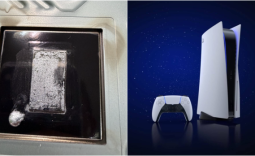 PS5 suffers from severe overheating after liquid metal eats into the heatsink
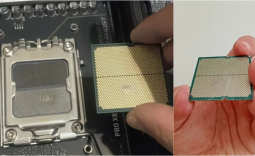 AMD Ryzen 7 7800X3D CPU burns and swells even after using AMD's updated BIOS
 D-Link F518 5G Wi‑Fi 6 AX1800 Mobile Hotspot Review: All-Day Mobile Hotspot
 Bose Lifestyle Ultra Speaker Review - Impressively Detailed Room-Filling Sound
 MSI Z890 Gaming Plus WIFI6E Review - Z890 for under $200
 Mortal Kombat (1995) 4K Ultra HD Blu-ray Review
 CPS PCCOOLER YS1200 ATX 3.1 80 PLUS Gold PSU Review
 ASRock X870E Taichi White Review: a premium AM5 motherboard with 10G LAN and WiFi 7
 Asetek Initium Pedal Modular Upgrades Review
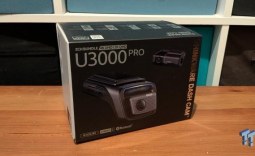 Thinkware U3000 Pro Review - Smart Dashcam with Wi-Fi quirks
 Montech TG3 Mid-Tower Chassis Review
 ASUS ROG Strix X870E-A Gaming WiFI7 Neo Review - A New Enticing Option
 I ditched the Windows 11 context menu for this open-source tool, and here's why
 Windows 11 may be encrypting your drive already, and I checked where my recovery key went
 GIGABYTE's 40 Days of INFINITY celebrates 40 Years of Innovation with stunning GeForce RTX graphics cards and rewards
 I swapped File Explorer for this free file manager and finally got the layout I wanted
 How to tell if someone has been using your Windows PC without your permission
 6 Task Manager tips for troubleshooting Windows performance problems
 ASUS ROG's 20th Anniversary Line-up of Premium PC Gaming Gear has Arrived - Here's Everything You Need to Know
 Six File Explorer tips every Windows user should know
 I switched my PC to encrypted DNS in Windows 11, and browsing felt more private
 Printer Not Working in Windows? How to fix detection, print queues and drivers