







Science, Space, & Robotics - Page 135
Explore the latest Science, Space, Health, and Robotics news from TweakTown. Coverage includes space launches, medical tech, discoveries, and rockets. - Page 135
Stay Updated
Follow TweakTown for breaking tech news, reviews, and daily updates.


As an Amazon Associate, we earn from qualifying purchases. TweakTown may also earn commissions from other affiliate partners at no extra cost to you.
NASA probe breaks two world records, now fastest object ever built
NASA's Parker Solar Probe has just completed its 10th pass of the Sun, and during its fly-by, it smashed two world records.

The NASA probe made an extremely close encounter with the Sun on November 21, 2021, at 4:35 am EST. The probe was just 5.3 million miles away from the surface of our star and passed by at a ridiculous speed of 363,660 mph, making it the fastest artificial object ever created. Additionally, the Parker Solar Probe also broke the record for the closest satellite to survive a near pass of the Sun.
The probe will continue to orbit and increasingly get closer to the Sun, eventually coming within 4.3 million miles from the surface at speeds above 430,000 mph. With each pass, the probe collects valuable data about our star and relays the information back to Earth for scientists to interpret. Information regarding solar wind, and the amount of dust particles in the area are two main sets of data the probe collects. If you are interested in reading more about this story, check out this link here.
Continue reading: NASA probe breaks two world records, now fastest object ever built (full post)
New study drops warning for alien organisms invading, Earth's new era
A team of researchers has published a new study in the journal BioScience on November 17, and it details warnings for increasing Earth's biosecurity as the human race accelerates its push into space exploration.

The paper concentrates on how humans in the past have moved species to new environments only for those species to have a negative effect on the environment, driving out the native species. The researchers believe that humans can do the same thing with planets when we begin visiting them and that alien life on other planets could accidentally be brought back to Earth via astronauts. Humans spreading bacteria from Earth on a planet may cause devastating effects on the planet's evolution. The same way alien bacteria being brought to Earth and potentially becoming harmful to life would cause havoc.
The new study calls for more papers to be written as collaborations between astrobiologists that are hunting for signs of life in the universe as well as invasion biologists that are studying invasive species on Earth. Lead author Anthony Ricciardi, a professor of invasion biology at McGill University in Montreal, said to Live Science, "We can only speculate on what kinds of organisms might be encountered if astrobiologists were to find life. The most plausible life-forms would be microbial and probably resemble bacteria."
Continue reading: New study drops warning for alien organisms invading, Earth's new era (full post)
Jeff Bezos' new village for space tourists isn't what you'd expect
If you have booked your tickets to become an astronaut with Blue Origin, you will be staying in Jeff Bezos' Astronaut Village.

Space tourists flying with Blue Origin will stay in Astronaut Village, located about 15 miles away from the launch site in Van Horn, Texas desert. Passengers will sleep in Airstream trailers, and according to Don DiCostanzo, a business owner who was Star Trek actor William Shatner's wingman told Insider in an interview conducted earlier that the campsite is located down a dirt road that has "tight security". Additionally, Chris Boshuizen, who joined Shatner on his space flight, said that Astronaut Village was a "perfect little campsite."
Future astronauts are given their own Airstream trailer to sleep in, which has had its interior outfitted to look more like a hotel than a camper van. According to Boshuizen, "It's not like a five-star hotel or anything. They have historic artifacts here and there in the different rooms, so you really feel like you're in a place with some connection to past and future". Astronaut Village is also equipped with its own restaurant and bar where future astronauts can enjoy a nice seating arrangement around a fire pit.
Continue reading: Jeff Bezos' new village for space tourists isn't what you'd expect (full post)
Scientists are stumped by these 7 mysteries about our universe
Researchers in many fields are yet to fully understand what they are studying, but every day we move closer to uncovering the answers to some of the most difficult questions.

Outlined in this article are just seven questions that have puzzled researchers for quite some time, and while they are extremely difficult to answer, they aren't impossible. In all of the questions, scientists have a basic understanding of the topic but haven't yet been able to fully answer the entire question.
As time continues and technology advances, it can be assumed that some of these questions will be answered and replaced by others.
Continue reading: Scientists are stumped by these 7 mysteries about our universe (full post)
New data shows galaxies accompanying the Milky Way weren't always here
In a newly released data dump by the European Space Agency's (ESA) Gaia mission, what we thought of as satellite galaxies to the Milky Way are not all they seem.

For decades scientists have believed the dwarf galaxies surrounding the Milky Way to be satellites, galaxies orbiting our own that have been doing so for billions of years. However, new data from ESA's Gaia mission has been used to calculate the movements of these galaxies, revealing they aren't orbiting the Milky Way at all.
Researchers computed the three-dimensional velocities for forty dwarf galaxies around the Milky Way, then used them to calculate the galaxy's orbital energies and angular (rotational) momentum. They found the galaxies to be moving significantly faster than other giant stars and star clusters known to orbit the Milky Way. The research team concluded that the dwarf galaxies could not yet be orbiting the Milky Way, as it would have attenuated their orbital energies and angular momentum.
Continue reading: New data shows galaxies accompanying the Milky Way weren't always here (full post)
Russia ejects a cargo ship from the ISS to make way for its new module
The Russian cargo ship "Progress 78" has departed the International Space Station (ISS), freeing up space for the inbound Prichal module.

Also known as Progress MS-17, Progress 78 launched on June 29th, 2021, to the ISS, delivering over 3,600 pounds (1,630 kilograms) of supplies two days after it launched. Progress 78 undocked from Russia's Nauka science module at 11:22 UTC, November 25th, set on a destructive trajectory into Earth's atmosphere. A new Russian docking port module named Prichal (Russian for "pier") is set to take its place, launching toward the ISS on November 24th.
Prichal's role will be for "testing architecture for potentially permanent settlements in space" according to RussianSpaceWeb.com. Another Progress spacecraft is bringing the Prichal module to the ISS, after which it will undock from Prichal and meet the same fate as Progress 78. Progress 78 was expected to burn up upon re-entry to Earth's atmosphere above the Pacific ocean, roughly four hours following undocking.
Continue reading: Russia ejects a cargo ship from the ISS to make way for its new module (full post)
New research details using gene editing to make stronger antibiotics
New research has been published in Nature Communications, describing how a team of scientists from the University of Manchester used gene editing to manufacture new antibiotics.

The team used CRISPR-Cas9 gene editing to create new non-ribosomal peptide synthetase (NRPS) enzymes, critical in the natural production of antibiotics like penicillin. Previously, manipulating these enzymes to create more potent antibiotics that are less susceptible to growing microbial antibiotic resistance has been a challenge.
The UK government has estimated that antimicrobial resistance (AMR) will lead to 700,000 deaths each year globally and predict this will climb to 10 million by 2050, costing the global economy ~$100 trillion.
Continue reading: New research details using gene editing to make stronger antibiotics (full post)
Amazon slashes prices for early Black Friday deal: 25% off microphones
Black Friday is around the corner and to lead into the sales madness Amazon has slashed prices across a select range of microphones.

A good quality microphone is a staple part of any streaming setup, and while you can take a cheaper microphone and tweak it to sound like a higher-end microphone, sometimes it's just better to pick up a reputable brand of microphone that you know is going to be acceptable quality.
Blue Microphones certainly comes to mind when the topic of high-quality microphones is brought up and Amazon has discounted a large range of its microphone solutions by up to 25%. Amazon's early Black Friday deals feature discounts for popular Blue products such as the Blue Yeti, Blue Yeti X, Blue Yeti Nano, and Blue Snowball iCE. In the entirety of this article you will find the best deals for Blue's range of on sale products.
Continue reading: Amazon slashes prices for early Black Friday deal: 25% off microphones (full post)
100,000 year old Mammoth Tusk found, sparks 'Jurassic Park' moment
A team of researchers has stumbled across a mammoth tusk deep beneath the ocean surface, which is perfect for preserving fossils.

A team of researchers from the Monterey Bay Aquarium Research Institute was exploring an underwater mountain off the coast of California back in 2019 when they discovered what looks like a wood log. 10,000 feet below the surface, the research team found a 3-foot mammoth tusk fossil that had been preserved by the cold temperatures of the deep sea, much like how food is preserved by being frozen.
Researchers suspect that the tusk was from a large Columbian mammoth that was likely a creature that came from crossbreeding a woolly mammoth and another species of mammoth. As for the exact age of the creature, researchers are working on analyzing the radioisotopes, which can be indicators for finding out an approximation of how old a specimen is. ScienceAlert reports that the mammoth tusk is "much more than 100,000 years old."
Continue reading: 100,000 year old Mammoth Tusk found, sparks 'Jurassic Park' moment (full post)
NASA gives update on James Webb Space Telescope health and launch date
NASA's highly anticipated next-generation space telescope titled the James Webb Space Telescope is getting extremely close to launching.

Earlier this week, NASA announced that the launch of the James Webb Space Telescope (JWST) had to be delayed due to a "A sudden, unplanned release of a clamp band - which secures Webb to the launch vehicle adapter - caused a vibration throughout the observatory". NASA explained in its announcement that engineers were working on testing if the telescope was damaged, and now the agency has given an update.
"Engineering teams have completed additional testing confirming NASA's James Webb Space Telescope is ready for flight", writes NASA. The space agency explains that JWST underwent "additional testing" and that a "NASA-led anomaly review board concluded no observatory components were damaged in the incident." Additionally, the update states that NASA has given approval for the fueling of the observatory to begin. Fueling operations will begin on Thursday, November 25, and take about 10 days to complete. NASA is targeting December 22 for the launch of the JWST.
Continue reading: NASA gives update on James Webb Space Telescope health and launch date (full post)
Earth to be sideswiped by Sun blast very soon, 'canyon of fire' seen
The Sun has released a coronal mass ejection (CME) into space, and Earth will get impacted by a small portion of it.

Spaceweather.com reports that one of the plasma filaments located on the Sun's southern hemisphere snapped and collapsed, pushing a large amount of particles out at a wide-angle. The majority of the burst is expected to head south past Earth, but a small portion will still impact our magnetic field, which has resulted in forecasters predicting minor G1-class geomagnetic storms for November 27.
When the plasma filament snapped, a "canyon of fire" was carved into the surface of the Sun that was visible for more than 6 hours after the event. Additionally, the blast that is headed our way may be powerful enough to cause Arctic auroras, which always makes for an incredible photography opportunity. In other Sun-related news, a satellite is going to perform its riskiest fly-by of Earth yet on its way to the Sun, check out that story here.
Continue reading: Earth to be sideswiped by Sun blast very soon, 'canyon of fire' seen (full post)
ISS astronauts do a 'turkey trot' for Thanksgiving, bonus special meal
Five astronauts aboard the International Space Station have discussed what Thanksgiving means to them and what they will be doing to celebrate.

Five of the seven NASA astronaut crew gathered around a camera to let the world know that they will be celebrating Thanksgiving while traveling aboard a floating laboratory that is currently orbiting the Earth at around 17,150 miles per hour. NASA astronaut Raja Chari explained that even though it's Thanksgiving, the astronauts are still required to perform their 90 minutes to two hours of daily exercise in order to maintain health during their six-month stay aboard the station, but there is something good to look forward to when it comes to dinner.
As with most Thanksgiving celebrations, the food is an important part, and the International Space Station is no different. The astronaut's joke about how they won't be doing any cooking as all of the food aboard the station just needs to be reheated. The crew will be enjoying a wonderful meal of crab bisque, candied yams, and cherry blueberry cobbler, as well as turkey. Additionally, the crew will be performing their Thanksgiving treadmill sessions which are referred to as the "turkey trot".
Continue reading: ISS astronauts do a 'turkey trot' for Thanksgiving, bonus special meal (full post)
NASA says it will crash into an asteroid, explains why it's important
The very first fully-scaled mission to test a specific technology that would be used to defend Earth in the event of an asteroid or comet hazard has been launched by NASA.

NASA dubbed the mission the "Double Asteroid Redirection Test," and it involves sending a vending-machine-sized spacecraft to collide with a Great Pyramid of Giza-sized asteroid in an attempt to change the asteroid's orbit around its larger companion asteroid. NASA's spacecraft will be traveling at 15,000 mph, or 4 miles per second, when it collides with the asteroid named Dimorphos.
The results from this test will then be used to prepare for an asteroid threat, and if one ever presents itself, which it currently hasn't, researchers will have a much better idea of to handle the situation by taking already tested methods. Thomas Zurbuchen, associate administrator for the Science Mission Directorate at NASA Headquarters in Washington, said, "At its core, DART is a mission of preparedness, and it is also a mission of unity. This international collaboration involves DART, ASI's LICIACube, and ESA's Hera investigations and science teams, which will follow up on this groundbreaking space mission."
Continue reading: NASA says it will crash into an asteroid, explains why it's important (full post)
NASA's next-gen space telescope to unlock the secrets of the universe
NASA's next-generation space telescope that is pinned as the successor to the Hubble Space Telescope is teed up to unlock the secrets of the universe.

The James Webb Space Telescope has been in development for many years now and has experienced many delays for numerous reasons. The delays have driven up the cost of the space telescope, but now it's finally nearing the end of the road to completion as it's scheduled to launch next month.
In a video posted to the Interesting Engineering YouTube channel, it's explained how important space telescopes are to developing our understanding of the universe and how the James Webb Space Telescope is "currently the most advanced piece of observational equipment ever built." With the JWST, astronomers will be able to observe what the universe was like as far as 250 million years after the Big Bang, which may be further back enough to unlock some secrets of the universe.
Continue reading: NASA's next-gen space telescope to unlock the secrets of the universe (full post)
Huge deposit of lithium found in a brown dwarf star, now to get there
Brown dwarfs are massive stellar objects that fit in between planets and stars, and one has been identified with a large amount of lithium.

Brown dwarfs are not massive enough to burn hydrogen, which other stars burn, allowing them to shine in the night sky. For this reason, astronomers did not detect brown dwarfs until 1995. Since then, they have been identified in binary systems, and their masses have been determined using Kepler's laws.
The laws are formulae that describe the movement of astronomical bodies subjected to each other's gravity. Some bodies in these systems have been calculated to be massive enough to burn lithium, while their counterparts have been too small to do so.
Continue reading: Huge deposit of lithium found in a brown dwarf star, now to get there (full post)
Researchers eavesdropped on SpaceX Starlink satellites signals for GPS
Using signals broadcasted by SpaceX's Starlink satellites, researchers have developed a way to locate a position on Earth, similar to GPS.

With signals from six satellites, the researchers pinpointed a location within 8 meters of accuracy here on Earth. The researchers did not require any assistance from SpaceX, nor did they have any access to the data any satellites were transmitting, only information relating to the location and trajectory of the satellites. The research team was based out of the University of California-Irvine (UCI) in partnership with the Center for Automated Vehicles Research with Multimodal Assured Navigation (CARMEN), a multi-institution transportation center housed at The Ohio State University.
The team set up an antenna on campus at UCI, using the algorithm they developed to pinpoint its location. They could locate the antenna within ~7.7 meters, compared to GPS' accuracy of between 0.3 and 5 meters generally. Previously, using other satellites, the team has been able to pinpoint locations within ~23 meters. Working with the United States Air Force, they could locate high-altitude aircraft within 5 meters using land-based cellular signals.
Continue reading: Researchers eavesdropped on SpaceX Starlink satellites signals for GPS (full post)
New study details creation of a new ultrahard diamond glass
In a new study published in Nature, researchers have synthesized a new form of ultrahard carbon glass.

This new form of glass is the hardest known and has the highest thermal conductivity of all glass materials. The properties of a material are a consequence of its arrangement at an atomic level. Carbon atoms can combine in many configurations, separated into two categories: crystalline, forming ordered and repeating lattice structures, or amorphous, which are seemingly more random and disorganized.
The chemical bonds holding the atoms together determine the hardness of any given carbon material, with two-dimensional bonds leading to softer materials like graphite and three-dimensional bonds leading to harder materials like a diamond.
Continue reading: New study details creation of a new ultrahard diamond glass (full post)
Ingenuity, the Mars helicopter, completes its 16th successful flight
On November 21st, 2021 (Sol 268 of the Perseverance rover mission), Ingenuity, the Mars helicopter, made its 16th successful flight across the planet's surface, titled "Short Hop to the North."

Flight 16 was a 109-second flight, where Ingenuity climbed to 33 feet (10 meters), flew over the "Raised Ridges" at 3 miles per hour (almost 5 kilometers per hour), and landed near the edge of "South Seitah." This journey spanned 380 feet (116 meters) as the craft flew northeast.
Using a Return-to-Earth (RTE) camera oriented southwest, opposite to the flight path, NASA aimed to capture nine color images evenly spaced throughout the flight. Only four black and white photos have currently been posted, with color versions due to come in a later downlink.
Continue reading: Ingenuity, the Mars helicopter, completes its 16th successful flight (full post)
Beautiful Flame Nebula may be stunting planet growth, Hubble finds
NGC 2024, or the Flame Nebula, is a large star-forming region that makes up part of the Orion constellation and resides roughly 1,400 light-years away from Earth.

Besides the Flame Nebula, the Orion Molecular Cloud Complex houses other famous nebulae, including the Horsehead Nebula and Orion Nebula. The Hubble Space Telescope (HST) studied the Flame Nebula, looking for protoplanetary disks, or "proplyds." These disks are masses of gas and dust surrounding stars that could eventually grow into a new solar system.
Hubble has confirmed four proplyds within the nebula and four potential proplyds. However, these proplyds are being steadily worn away due to intense radiation from nearby stars. Consequently, these proplyds may never form planets.
Continue reading: Beautiful Flame Nebula may be stunting planet growth, Hubble finds (full post)
This solar probe has broken records as it speeds past the Sun
NASA's Parker Solar Probe has been orbiting the Sun since its launch on August 12th, 2018, from the Johns Hopkins Applied Physics Laboratory in Laurel, Maryland.

Now, it's broken records for the fastest human-made object and the closest distance a spacecraft has come to the Sun. On November 21st, 2021, the probe reached speeds of 364,660 miles per hour (586,864 kilometers per hour), shattering its previous record of 330,000 miles per hour (531,083 kilometers per hour) on April 29th, 2021.
On both occasions, the probe was at the perihelion, the point where it comes closest to the Sun along its orbiting path. The latest close approach is part of the probe's tenth orbit, and it reached the perihelion at 4:25 a.m. EST (8:25 UTC). The distance from the solar surface at this point was 5.3 million miles (8.5 million kilometers), breaking the record for the closest a spacecraft has come to the Sun.
Continue reading: This solar probe has broken records as it speeds past the Sun (full post)
 Twitch opts streamers into gen AI training by default, faces harsh backlash
 Sean Murray still plays the 2016 launch version of No Man's Sky
 China's YMTC has climbed to third place in global NAND flash shipments
 $100 GTA 6 version makes up 89% of pre-orders, analysts estimate
 HWiNFO's latest update quietly confirms Intel is working on Razor Lake-AX
 Nintendo puts Switch 2 price increase warnings on store demo kiosks ahead of September 1 hike
 GIGABYTE launches two new B450 motherboards as demand for AM4 stays high in 2026
 Microsoft finally makes up its mind and unifies Copilot features into one big app
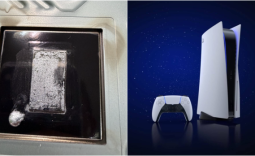 PS5 suffers from severe overheating after liquid metal eats into the heatsink
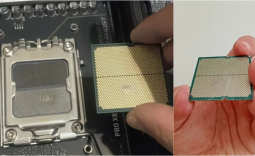 AMD Ryzen 7 7800X3D CPU burns and swells even after using AMD's updated BIOS
 D-Link F518 5G Wi‑Fi 6 AX1800 Mobile Hotspot Review: All-Day Mobile Hotspot
 Bose Lifestyle Ultra Speaker Review - Impressively Detailed Room-Filling Sound
 MSI Z890 Gaming Plus WIFI6E Review - Z890 for under $200
 Mortal Kombat (1995) 4K Ultra HD Blu-ray Review
 CPS PCCOOLER YS1200 ATX 3.1 80 PLUS Gold PSU Review
 ASRock X870E Taichi White Review: a premium AM5 motherboard with 10G LAN and WiFi 7
 Asetek Initium Pedal Modular Upgrades Review
 Thinkware U3000 Pro Review - Smart Dashcam with Wi-Fi quirks
 Montech TG3 Mid-Tower Chassis Review
 ASUS ROG Strix X870E-A Gaming WiFI7 Neo Review - A New Enticing Option
 I ditched the Windows 11 context menu for this open-source tool, and here's why
 Windows 11 may be encrypting your drive already, and I checked where my recovery key went
 GIGABYTE's 40 Days of INFINITY celebrates 40 Years of Innovation with stunning GeForce RTX graphics cards and rewards
 I swapped File Explorer for this free file manager and finally got the layout I wanted
 How to tell if someone has been using your Windows PC without your permission
 6 Task Manager tips for troubleshooting Windows performance problems
 ASUS ROG's 20th Anniversary Line-up of Premium PC Gaming Gear has Arrived - Here's Everything You Need to Know
 Six File Explorer tips every Windows user should know
 I switched my PC to encrypted DNS in Windows 11, and browsing felt more private
 Printer Not Working in Windows? How to fix detection, print queues and drivers