







Learn about how TweakTown tests and reviews hardware. As an Amazon Associate, we earn from qualifying purchases. TweakTown may also earn commissions from other affiliate partners at no extra cost to you.
Stay Updated
Follow TweakTown for breaking tech news, reviews, and daily updates.


GIGABYTE's flagship AORUS Radeon RX 9070 XT ELITE GPU - RDNA 4 up close
If you're a PC gamer looking forward to the next generation of Radeon and GeForce graphics cards, AMD's CES 2025 has been a let-down, not in the sense of what it showed but what it didn't. Instead of a full reveal for RDNA 4 and the upcoming Radeon RX 9070 XT and Radeon RX 9070 combo, we got info on some of the new tech but no specs, pricing, release date, or performance. It was more of a tease than a full announcement, ala the NVIDIA GeForce RTX 50 Series.

Thankfully, at least in terms of getting to pick up and hold a brand-new RDNA 4 GPU, GIGABYTE delivered the goods. During our tour of all of their latest gear, we got a closer look at the new AORUS Radeon RX 9070 XT ELITE and GIGABYTE Radeon RX 9070 GAMNIG OC graphics cards that will debut sometime during Q1 2025.
Unfortunately, we couldn't get any details on things like Compute Units, clock speeds, and VRAM capacity. Still, we do know that the AORUS Radeon RX 9070 XT ELITE features three 8-pin power connectors.
ASUS ROG XG Mobile: external Thunderbolt 5 GPU enclosure with RTX 5090 Laptop GPU costs $2199
ASUS has just refreshed its ROG XG Mobile: unveiling its new Thunderbolt 5-powered external GPU dock that can be configurred with up to NVIDIA's new flagship GeForce RTX 5090 Laptop GPU with 24GB of GDDR7 memory.

The new ASUS ROG XG Mobile is the world's first Thunderbolt 5 external graphics card, and one of the first Thunderbolt 5-ready docks with the new 80Gbps bidirectional link that allows far more things to be driven over a single cable. We're talking about the new RTX 5090 Laptop GPU as well as up to 140W of power, two monitors, and a USB + SD card reading hub, joined by enthusiast-grade 5GbE ethernet connectivity. Oh yeah.
ASUS has managed to cram in an incredible amount of power and technologies into the ROG XG Mobile, with a 350W PSU built into the system (and it still weighs in at under 2.2 pounds) that even features a wicked kickstand. ASUS claims the new ROG XG Mobile is 25% lighter and 18% smaller than its predecessor, with HDMI 2.1, DisplayPort 2.1, and dual 10Gbps USB-A ports to boot.
AORUS MASTER 18 gaming laptop: 18-inch 240Hz Mini-LED display, new GeForce RTX 5090 Laptop GPU
GIGABYTE unleashed its next-gen AORUS MASTER 18 gaming laptop at CES 2025, rocking up to Intel's new Core Ultra 9 285HX processor, and outfitted with up to NVIDIA's new GeForce RTX 5090 Laptop GPU with 24GB of GDDR7 memory. Check it out:

We are on the CES 2025 show floor with some pictures of the AORUS MASTER 18 gaming laptop, packing up to the Core Ultra 9 285HX processor, up to NVIDIA's new GeForce RTX 5090 Laptop GPU with 24GB of GDDR7 memory, and up to 128GB of DDR5-5600 memory.
The new AORUS MASTER 18 gaming laptop features a huge 18-inch 1600p (2560 x 1600) 240Hz Mini-LED display, with 1 x Gen5 SSD slot and 2 x Gen4 SSD slots for up to 6TB of ultra-fast SSD storage with RAID0 enabled. In the picture above, we've got the AORUS MASTER 18 gaming laptop with the Core Ultra 9 285HX processor, and the GeForce RTX 5080 Laptop GPU with 16GB of GDDR7 memory, joined by 32GB RAM + 1TB Gen4 SSD.
MSI's GeForce RTX 5070 Ti and RTX 5070 line-up includes the brand-new VANGUARD OC model
MSI is showcasing its full line-up of GeForce RTX 50 Series GPUs at CES 2025, covering the entire range, from GeForce RTX 5070 to the flagship GeForce RTX 5090. Even though model names like VENTUS, GAMING TRIO, and SUPRIM will sound familiar to PC gamers, MSI is also introducing a few cool new designs for the Blackwell generation.

Looking at the RTX 5070 and RTX 5070 Ti line-up, one that immediately caught our eye at CES 2025 was the new VANGUARD OC design. It's set to arrive in GeForce RTX 5070 Ti 16G VANGUARD OC and GeForce RTX 5070 12G VANGUARD OC form and sports a design similar to the SUPRIM but with RGB accents throughout its shell, including an MSI Dragon logo that lights up on the side.
The VANGUARD models represent the flagship variants for MSI's GeForce RTX 5070 and RTX 5070 Ti line-up. They sport HYPER FROZR Thermal Design, an advanced vapor chamber, the new STORMFORCE fans, and plenty of additional features to support the RTX 50 Series' new GPU architecture and move to faster GDDR7 memory.
MSI's GeForce RTX 5080 line-up includes the SFF-Ready and brand-new 16G INSPIRE 3X OC design
Enthusiast GPUs have been getting bigger and bigger, with many requiring new anti-sag designs and brackets to support their size and weight. The good news is that we will see sleeker and more compact designs with NVIDIA's new Blackwell-powered GeForce RTX 50 Series, as seen in MSI's line-up of GeForce RTX 5080 graphics cards - unveiled at CES 2025.

This can be seen in MSI's brand-new GeForce RTX 5080 16G INSPIRE 3X OC graphics card. It's SFF-Ready, so it's only 2.5 slots thick, and it features a minimal design with a brushed metal backplate and an overall look that will please those looking for a GPU that isn't all about the PC gamer aesthetic.
It also features MSI's new STORMFORCE fans with claw texturing, designed to optimize airflow and keep noise levels down. This is impressive stuff, especially when you consider that the GeForce RTX 5080 will be a capable 4K gaming GPU thanks to the new architecture, DLSS 4, and 16GB of fast GDDR7 memory.
Here's MSI's GeForce RTX 5090 line-up, led by the flagship 32G SUPRIM LIQUID OC
Built on NVIDIA's latest Blackwell architecture, the new flagship GeForce RTX 5090 is an absolute beast. With 32GB of super-fast GDDR7 memory, 21760 CUDA Cores, and an incredible 3352 AI TOPS of performance, the new DLSS 4 can deliver a 2X increase in in-game performance compared to the GeForce RTX 4090 - a card that is still a 4K beast.

The GeForce RTX 5090 will be able to run intensive Path Tracing games like Alan Wake 2, Black Myth: Wukong, and more at 4K 240 FPS with DLSS 4. As one of NVIDIA's key partners, MSI has several impressive GeForce RTX 5090 GPUs coming, including the brand-new GeForce RTX 5090 32G VANGUARD OC. More on this one in a bit.
First up, though, which you can see in the images above - you've got the GeForce RTX 5090 32G SUPRIM LIQUID OC. A closed-loop liquid-cooled RTX 5090 with a patented waterblock design was created to optimize GPU and VRAM cooling. There's also a 360mm aluminum radiator, a micro-fin copper base, and an integrated STORMFORCE fan. It's a beast.
ASUS ROG Strix SCAR 18 gaming laptop: 18-inch 2.5K 240Hz Mini-LED, GeForce RTX 5090 Laptop GPU
ASUS has just announced its next-gen ROG Strix SCAR 18 and ROG Strix SCAR 16 gaming laptops, powered by the latest silicon from NVIDIA, Intel, and AMD. Check them out:

Inside, the new ASUS ROG Strix SCAR 18 gaming laptops packs up to Intel's new Core Ultra 9 275HX processor, which packs 24 cores and 32 threads at up to 65W TDP, and up to NVIDIA's new GeForce RTX 5090 Laptop GPU with 24GB of super-fast GDDR7 memory and 175W max TGP and a MUX Switch with NVIDIA Advanced Optimus.
There's a big and beautiful 18-inch 2.5K Nebula HDR Mini-LED panel with a super-smooth 240Hz refrrsh rate, with up to 64GB of DDR5-5600 RAM inside, and up to 4TB of Gen4 SSDs in RAID0 mode for the ultimate in performance, but they're both easily upgradeable thanks to ASUS using a tool-free design.
NVIDIA GeForce RTX 50 Series specs, pricing, and performance - plan that upgrade today
NVIDIA's GeForce RTX 50 Series is almost here, and the company revealed its latest generation of GeForce RTX graphics at CES 2025. The flagship GeForce RTX 5090 and GeForce RTX 5080 are set to launch on January 30, 2025, with stunning new compact Founders Edition models and dozens of revamped designs from NVIDIA's partners, such as MSI, ASUS, GIGABYTE, and many, many, more.

The GeForce RTX 50 Series will introduce NVIDIA's latest groundbreaking AI tech for PC gaming, DLSS 4, and laptop GeForce RTX 50 Series chips, which are on the way. DLSS 4 is set to bring an incredible boost to game performance with Path Tracing, as it now generates multiple new frames instead of one. DLSS 4 is bringing a lot more to the table, and the good news is that GeForce RTX 40, 30, and even 20 Series owners will reap the benefits.
With NVIDIA unveiling the GeForce RTX 50 Series, we finally have the official specs, pricing, and performance for the lineup. Each model will deliver an incredible 2X performance increase over its GeForce RTX 40 Series counterpart.
ASUS ROG Flow Z13 gaming tablet announced: AMD Strix Halo APU, 2.5K 180Hz Nebula Display
ASUS has made its ROG Flow Z13 premium gaming tablet official at CES 2025, rocking AMD's new Ryzen AI Max+ 395 "Strix Halo" flagship APU, up to 128GB of RAM, and 40 Compute Units of RDNA 3.5 GPU power. Check it out:

The new ASUS ROG Flow Z13 gaming tablet features a 13-inch 2.5K 180Hz touchscreen Nebula Display with 500 nits of peak brightness and Corning Gorilla Glass 5 protection, a new stainless steel and copper vapor chamber, larger intake vents, and 2nd Gen Arc Flow Fans which provide 70% more airflow for quiet, and efficient cooling.
ASUS has included a larger 70Wh battery inside of the ROG Flow Z13, as well as a larger touchpad and keycaps, a convenient Command Center button for quick access to vital system functions, dual USB-C ports (both support USB4 and power delivery), a dedicated HDMI 2.1 port for up to 4K 120Hz output, and more.
AMD Ryzen AI Max 'Strix Halo' monster APU is official: 16C/32T Zen 5 CPU, 40-core RDNA 3.5 GPU
AMD has just formally announced its new Ryzen AI Max "Strix Halo" APUs with the new flagship Ryzen AI Max+ 395 chip featuring 16 cores and 32 threads of Zen 5 power, 40 CUs of RDNA 3.5 GPU, up to 50 TOPs of AI performance, and up to 256GB/sec memory bandwidth.

The new Ryzen AI Max+ 395 features 16 cores and 32 threads at up to 5.1GHz boost, 80MB of cache, 50 TOPs of AI performance out of the XDNA 2 NPU, 40 Compute Units of RDNA 3.5 GPU performance (up from 16 CUs on Strix Point APUs, so over double the gaming performance) and between 45W and 120W TDP.
AMD compared its new Ryzen AI Max+ 395 "Strix Halo" APU against Intel's new Core Ultrra 9 288V "Lunar Lake" mobile processor, with the flagship Strix Halo APU offering an average of 1.4x higher graphics performance. AMD touted 220%+ improvements in the entire stack of 3DMark benchmarks, but missed actual gaming benchmarks.
AMD partners drop clues on RDNA 4 GPUs including 16GB VRAM and possible January 24 release date
AMD has been playing its graphics cards close to its chest with the RDNA 4 launch so far - probably waiting for NVIDIA to tip its Blackwell hand, at least pricing-wise, which has now happened - but we've been treated to a couple of interesting hints on the next-gen Radeon offerings courtesy of Team Red's partners.

VideoCardz noticed that XFX's Instagram (for the middle east) posted that something is "coming soon," providing a date of January 24 - and one of the hashtags is Navi 48 (RX 9070) GPUs. That seems to be a hefty hint that this will be when some kind of announcement about these XFX graphics cards occurs, or maybe even the release date.
On top of that, yesterday ASUS provided some details of its RX 9070 TUF and Prime models (XT and the vanilla versions), stating that these GPUs are equipped with 16GB of VRAM - something AMD has yet to officially reveal. (But this does align with rumors, too, it should be noted).
NVIDIA announces native GeForce Now app for Steam Deck coming later this year
Over at CES 2025, NVIDIA has announced that it will release a native GeForce Now app for the Steam Deck.

While that's certainly not the most high-profile revelation for Team Green at CES 2025 - far from it, what with the RTX 5000 launch, alongside DLSS 4 and other AI trickery such as texture compression to make the most of VRAM - it's going to be of interest to those with one of Valve's portables.
Steam Deck owners will be able to install the native app for the cloud gaming service later this year, NVIDIA tells us, without giving a specific timeframe (so it may not be coming all that soon).
Samsung's new flagship Neo QLED 8K QN990F TV: new NQ8 AI Gen3 processor, 8K upscaling, more
Samsung has unveiled its new flagship Neo QLED 8K QN990F TV at CES 2025, with the AI-powered TV set to be the best yet from the South Korean giant.

Samsung's new Neo QLED 8K QN990F is its most advanced TV to date, powered by the company's in-house NQ8 AI Gen3 processor, the new 8K TV uses on-device AI features to enhance picture quality, sound clarity, and the overall viewing experience. Here's how:
SW Yong, President and Head of Visual Display Business at Samsung Electronics, said: "Samsung sees TVs not as one-directional devices for passive consumption but as interactive, intelligent partners that adapt to your needs. With Samsung Vision AI, we're reimagining what screens can do, connecting entertainment, personalization and lifestyle solutions into one seamless experience to simplify your life".
Phison's new Pascari D205V Gen5 data center SSD: up to 122.88TB, up to 14.6GB/sec reads
Phison unveiled its new Pascari ultra-capacity D205V data center SSD at CES 2025, offering unrivalled 122TB capacities with reads of up to 14.6GB/sec. Check it out:

The new Phison Pascari D205 ultra high-capacity data center SSD is available in a monster 122.88TB capacity, with the read-intensive SSD powered by Phison's in-house, industry-leading X2 controller and the latest 2Tb 3D QLC technology to hit the lofty heights of 14.6GB/sec (14,600MB/sec) sequential reads, and 3000K IOPS random read performance.
Phison explains: "Discarding data is no longer an option in the artificial intelligence era. AI requires a combination of warm and cold data for machine learning to build new models to predict future events and trends that lead. Your path to overcoming the data deluge is clear with today's leading capacity-per-watt SSD, the Phison D205V".
Phison unveils world's first mainstream Gen5 SSD and native USB4 controller at CES 2025
Phison has plenty to show at CES 2025, with the announcement of the world's first mainstream Gen5 SSD with the introduction of the PS5031-E31T, and the world's first native USB4 controller with the PS2251-21 (U21).

The new Phison PS5031-E31T is the first DRAM-less PCIe Gen5 SSD controller that pushes over 10GB/sec reads, which the company says that this cost-effective SSD controller will bring premium-level performance, to cost-conscious customers. The new E31T Gen5 SSD controller is fabbed on the TSMC 7nm process node, is DRAM-less, has 4-channel with 16 CEs, and will boast capacities of up to 8TB.
We have sequential performance of up to 10.3GB/sec (10,300MB/sec) reads, and up to 9.5GB/sec (9500MB/sec) writes, with random performance of up to 1300K IOPS read, and up to 1600K IOPS write. One of the big pushes here from Phison is the battery life out of the new E31T SSD controller, with some decent battery life gains that will not just save system power, but generate less heat and still sustain that 10GB/sec+ performance.
Phison PS5028-E28 Gen5 SSD controller: for serious gaming, capacity of up to 32TB at 14.5GB/sec
Phison has just unveiled its new weapon of choice for serious gaming and productivity, with the introduction of the PS5028-E28 Gen5 SSD with up to 32TB capacity and up to 14.5GB/sec read speeds.

The new Phison PS5028-E28 is a Gen5 SSD controller unveiled at CES 2025, with the new flagship Gen5 SSD controller made on the TSMC 6nm process node, with capacities of up to a huge 32TB, and read and write speeds of up to 14.5GB/sec, with up to 4200 MT/s flash transfer rate.
Phison says its new Gen5 SSD controller has random read and write performance of up to 3000K IOPS, with power consumption of just 8.5W average. Phison explains the PS5028-E28 as the "world's fastest consumer SSD with up to 14.5GB/sec sequential read and write performance. Synchronous random performance at 3M IOPS read and write. 8.5W average power consumption, no heatsink required".
Alienware's new flagship Area-51 Desktop PC: Intel Core Ultra 9 285K, NVIDIA GeForce RTX 5090
Alienware has just reintroduced its iconic Area-51 in both desktop and gaming laptop form, with the new Area-51 Desktop PC packing Intel's flagship Core Ultra 9 285K processor, and NVIDIA's just-announced flagship GeForce RTX 5090 graphics card. Check it out:

Alienware's new flagship Area-51 Desktop Gaming PC sees the company returning to its roots with a new gaming system that caters to the desires of PC gaming enthusiasts, as well as long-time Alienware fans who have a "deep appreciation for technology and a can-do attitude for manually customizing their build to their needs" according to the company.
Inside, the full-sized 80L tower packs headroom for over 600W of dedicated graphics power, and up to 280W of dedicated processing power, meaning Alienware's new Area-51 Desktop Gaming PC can handle up to NVIDIA's new ultra-enthusiast GeForce RTX 5090 graphics card, and Intel's new flagship Core Ultra 9 285K processor.
Crucial expands RAM, SSD portfolio: new Gen5 SSD, DDR5 OC gaming memory, and more
Micron has just announced expansions across its Crucial consumer memory and storage portfolio, starting with the introduction of the new P510 Gen5 SSD, and oodles of new RAM products on the way.

The new Crucial P510 Gen5 SSD comes in 1TB and 2TB capacities, with up to 11GB/sec reads (11,000MB/sec) and up to 9.5GB/sec writes (9,550MB/sec) with an integrated heatsink. The company is using a single-sided design that makes it easy to install, even in newer Gen5-capable laptops.
Crucial is also expanding its SSD offerings with a heatsink version of its P310 2280 SSD, with the integrated heatsink designed to fit and work inside of the PlayStation 5, but it can also be used inside of desktop PCs with up to 7.1GB/sec reads.
KIOXIA AiSAQ uses SSDs instead of RAM, dramatically improving AI performance
KIOXIA AiSAQ (All-in-Storage ANNS with Product Quantization) is a research project created to transition from a "mostly in-storage" solution to an all-in-storage solution for AI. It's a groundbreaking technology because it offloads compressed vectors in large datasets from DRAM to storage. With memory limitations often being the key factor in AI workload speed and efficiency, AiSAQ exponentially improves performance.

AI is all about data, lots of it. There is so much data that it's often hard to wrap your head around the complexity of it all. AI models and datasets cover a range of things, including documents, images, music, and more. Retrieving specific data involves Approximate Nearest Neighbor Search (ANNS), vectors, and indices. These are usually stored on fast memory, like DRAM - KIOXIA AiSAQ moves this to the SSD.
KIOXIA's initial research paper on the technology from 2024 calls it a "novel method of index data placement." However, with only around 10MB of DRAM being used in an AiSAQ system regardless of the scale of datasets, with millisecond-order latency, it sounds more like a game changer.
KIOXIA is showcasing its flash memory solutions for AI and more at CES 2025
KIOXIA, the inventors and pioneers of advanced NAND flash technology, is at CES 2025 this week in Las Vegas. The company will showcase a wide range of flash memory solutions for AI and end-user applications. The KIOXIA exhibit room is on Level 4 of the Venetian Meeting Center from January 7-9 (Zeno 4710).

With a range of demonstrations and products covering everything from consumer-facing portable devices to cutting-edge artificial intelligence (AI) systems training complex models, including memory and SSDs, KIOXIA will demonstrate how flash memory is changing the digital landscape.
This includes the company's award-winning scalable BiCS FLASH 3D flash memory solutions, a range of SSDs (including some developed for outer space), and innovative AI software.
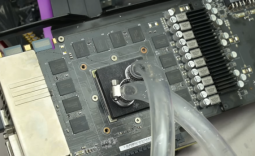 Benchmarks show direct water on die cooling with no heat spreader outperforms AIO liquid cooling on a GPU
 OpenAI's next hardware is a doughnut-shaped smart speaker with moving parts that wants to be your new phone
 Noctua measured over 100 PC cases and found Corsair, NZXT, and Lian Li cooler clearance spec sheets are often wrong
 Leaked Xbox controller for Gears of War E-Day features a cracked volcanic rock design and blood-red Crimson Omen
 Doom co-creator John Romero reveals id Software turned to Taiwanese pirates to help distribute the game to more people
 GTA Online will continue after GTA 6's release, Take-Two reiterates
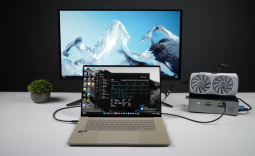 YouTuber benchmarks RTX 4060 on Snapdragon X2 Elite laptop using RTX Spark developer driver
 Dev builds a unique 3D operating system for multitasking, gets terrible performance
 Take-Two boss: 'discs, especially for big games, don't make sense to the consumer'
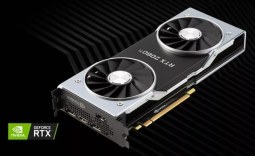 Modders are selling RTX 2080 Ti GPUs with 22GB VRAM on eBay for AI use
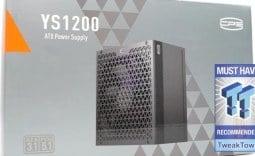 CPS PCCooler YS1200 ATX 3.1 80 PLUS Gold PSU Review
 ASRock X870E Taichi White Review: a premium AM5 motherboard with 10G LAN and WiFi 7
 Asetek Initium Pedal Modular Upgrades Review
 Thinkware U3000 Pro Review - Smart Dashcam with Wi-Fi quirks
 Montech TG3 Mid-Tower Chassis Review
 ASUS ROG Strix X870E-A Gaming WiFI7 Neo Review - A New Enticing Option
 Noctua NL-LC1-36 Liquid CPU Cooler Review
 Logitech G316 X 98 Wired Gaming Keyboard Review - Retro-Inspired Board that Falls a Little Short
 Biwin M560 2TB SSD Review - Best Overall Retail-Ready DRAMless SSD
 Logitech G512 X 98 Analog Mechanical Gaming Keyboard Review - An Innovative Two-in-One
 Windows 11 may be encrypting your drive already, and I checked where my recovery key went
 GIGABYTE's 40 Days of INFINITY celebrates 40 Years of Innovation with stunning GeForce RTX graphics cards and rewards
 I swapped File Explorer for this free file manager and finally got the layout I wanted
 How to tell if someone has been using your Windows PC without your permission
 6 Task Manager tips for troubleshooting Windows performance problems
 ASUS ROG's 20th Anniversary Line-up of Premium PC Gaming Gear has Arrived - Here's Everything You Need to Know
 Six File Explorer tips every Windows user should know
 I switched my PC to encrypted DNS in Windows 11, and browsing felt more private
 Printer Not Working in Windows? How to fix detection, print queues and drivers
 The Ultimate Guide to Personalizing Your Windows 11 Taskbar