







Learn about how TweakTown tests and reviews hardware. As an Amazon Associate, we earn from qualifying purchases. TweakTown may also earn commissions from other affiliate partners at no extra cost to you.
Stay Updated
Follow TweakTown for breaking tech news, reviews, and daily updates.


Marvel potentially cancelling Fantastic Four comic to spite Fox film
Since the Disney Corporation's purchase of Marvel back in 2009, they've certainly reinvigorated the brand that was close to bankruptcy and pleased fans with some fantastic big screen adventures including The Avengers. Whilst they weren't able to claw back some of the feature film rights which were sold years before, including that of Spider-Man to Sony Pictures and X-Men and Fantastic Four to Twentieth Century Fox, according to a rumour posted at Bleeding Cool, it looks like Disney might start flexing their muscle in ways that won't please fans.
Whilst it's fair to say that the 2005 adaptation of Fantastic Four wasn't adored by the fan base,it did print some solid cash, making it no surprise that Fox would seek to reboot the property. Disney can't scuttle their plans because Fox own the film rights in perpetuity, but they can do something much heinous to rain on their parade and that's cancel the comic book, ensuring no tie-in can come to market.
Whilst the various Fantastic Four comic properties don't sell in huge numbers comparative to other Marvel properties, the Jack Kirby/Stan Lee property has been around in some way, shape or form for over fifty years. Whilst Disney have not yet confirmed or deny the story, falling back on "no comment", they would do well to exercise caution with Fox - they might get a taste of their own medicine when it comes to negotiating rights to Star Wars Episode IV: A New Hope which they own the distribution rights to in perpetuity.
Continue reading: Marvel potentially cancelling Fantastic Four comic to spite Fox film (full post)
GIGABYTE unveils the incredibly powerful AORUS X3 gaming notebook
Computex 2014 - GIGABYTE has come out swinging at Computex this year, unveiling its new super powerful, but also very light 13-inch gaming notebook, the AORUS X3.
GIGABYTE has crammed in quite an array of technology into its AORUS X3 notebook - with it coming in two models, the X3 which is a 13.3-inch model, and the slightly bigger X3 Plus which comes in at 13.9 inches. The X3's 13.3-inch display has a resolution of 2560x1440, but you can opt the X3 Plus with either the 2560x1440 panel, or go one better with the QHD+ 3200x1800 display.
When it comes to pushing those pixels in games, you need a serious GPU, right? Well, GIGABYTE has used the NVIDIA GeForce GTX 870M with 6GB of RAM, something that should ensure you keep those FPS numbers up high. There's two 512GB Next Generation Form Factor (NGFF) M.2 SSDs in RAID 0 for your storage needs, while 16GB of DDR3L 1600MHz RAM will keep everything running smooth.
Continue reading: GIGABYTE unveils the incredibly powerful AORUS X3 gaming notebook (full post)
Patent royalties make up over 25% of a smartphone's price
Two of the lawyers from the law firm that Apple used in its patent fight against Samsung, and an executive from Intel, have released a paper that shows just how much we're paying in smartphone royalty fees - a figure that won't see you smiling.
In a report titled "The Smartphone Royalty Stack: Surveying Royalty Demands for the Components Within Modern Smartphones," we now have a dollar amount when it comes to patent royalty fees on the average smartphone. The average smartphone is priced at $400, with patent royalties costing a huge $120 of that $400 - or more than 30%.
Considering the build of materials, or BoM, is usually less than that - smartphone owners are paying more in patent royalties, than the physical hardware that makes up the smartphone. The paper was written by WilmerHale intellectual property litigators Joe Mueller and Tim Syrett, who were joined by Intel's Vice President and Associate General Counsel Ann Armstrong, who all used public information to calculate the patent royalty costs.
Continue reading: Patent royalties make up over 25% of a smartphone's price (full post)
Galaxy Tab S 8.4 press renders also leaked, also packs AMOLED display
We've already seen the Galaxy Tab S 10.5 tablet, but now we're seeing the press renders of its smaller sibling, the Galaxy Tab S 8.4. You can tell from the name that it is an 8.4-inch tablet, that continues the style of the Galaxy S5 smartphone from Samsung.
There's already the Galaxy Tab 4 series on sale, but these new Galaxy Tab S tablets are Samsung's new premium line of slates, sporting the company's AMOLED displays versus the LCD panels in previous tablets. We can see the perforated faux leather texturing on the rear of the Galaxy Tab S 8.4, something that is found on the Galaxy S5 smartphone.
We should also see the fingerprint sensor make its way over from Samsung's flagship handset, and you'll also notice there are two circles on the right edge of the Galaxy Tab S 8.4, which are reportedly for a new Book Cover type of flip cover for the slate.
Continue reading: Galaxy Tab S 8.4 press renders also leaked, also packs AMOLED display (full post)
ASUS rebels against Intel, adds Devil Canyon support to Z87 boards
Intel's Devil's Canyon CPUs are the next thing to be excited about, but most thought they would require an upgraded motherboard for the new CPUs to work - an upgrade to Z97. Well, that isn't the case for ASUS at least.
ASUS has pushed back at Intel, providing support for Devil's Canyon-based CPUs on its Z87 motherboards - something that was posted on the XtremeSystems forums. The post says: "Most, if not all of their Z87 boards have received a BIOS update allowing the use of Intel's devil canyon processors. This is also backed up on their Cpu support lists".
This is a good thing for owners of Z87-based motherboards who were waiting on the new CPUs, or would like to upgrade to the new CPUs, without having to upgrade to a new motherboard, too. Especially when you may have plunked down $400+ on a high-end board.
Continue reading: ASUS rebels against Intel, adds Devil Canyon support to Z87 boards (full post)
Watch Dogs woes: you'd better have 2GB of VRAM or more
Watch Dogs has launched, but definitely not without its fair share of problems. When it comes to recommended hardware for Ubisoft's open-world hacking extravaganza, it recommends a GPU with at least 2GB of VRAM - but this might change in the future, according to Watch Dogs' Technical Director, Sebastien Viard.
Viard tweeted: "Our PC progs are ... currently working on a patch to improve your experience thanks to your reports, stay tuned". There's no ETA on the patch, so we could be weeks or months away from it yet. The question now is, why does Watch Dogs have so many issues on PCs, when Dominic Guay, Senior Producer on Watch Dogs talked about the game, he said: "we chose the PC as our first target to have when we started developing Watch Dogs, so that we would have the flexibility to adapt to a different platform".
Now we have Viard chiming in, saying: "Watch Dogs can use 3+ GB of RAM on new-generation consoles for graphics, your PC GPU needs enough VRAM for ultra options due to the lack of unified memory". If Watch Dogs was developed on the PC first, it's a bit of a problem that there are so many issues with it so far.
Continue reading: Watch Dogs woes: you'd better have 2GB of VRAM or more (full post)
Intel rumored to show off Broadwell-based 2-in-1 device at Computex
Computex 2014: Computex is about to kick off here in Taipei, with the latest rumor that Intel will show off a new Broadwell-based 2-in-1 device at the trade show. The new device will be a laptop-tablet hybrid, based on its next-generation processor - something the company delayed not too long ago.
Why should you be excited about Broadwell? Intel's new processor will reportedly be 30% more power efficient when compared to their Haswell-based counterparts, and it will also feature better graphics. The desktop side of Broadwell will deliver DDR4 technology, and new graphics cores. Right now, we've only heard about a single Broadwell-based processor, so it'll be interesting to see what materializes over the next couple of days at Computex.
Continue reading: Intel rumored to show off Broadwell-based 2-in-1 device at Computex (full post)
Psy's 'Gangnam Style' video hits 2 billion views on YouTube
South Korean singer Psy's popular "Gangnam Style" music video became the first video to reach 2 billion views, as it instantly went viral after being posted online in July 2012. "Gangnam Style" has held the most viewed YouTube video for quite some time, also becoming the first video to eclipse the 1 billion-view mark.
Psy's "Gentleman" music video holds the record for most video views in a single day, picking up 38 million in less than 24 hours.
"2 billion views... they are very honorable and very burdensome numbers," Psy said in a statement. "With appreciation, I will come back soon with more joyful contents!"
Continue reading: Psy's 'Gangnam Style' video hits 2 billion views on YouTube (full post)
Samsung working with Oculus VR on VR headset for media
We already know that Samsung is set to release its own VR headset, but now Engadget is reporting that Oculus VR is working with the South Korean electronics giant on a media-focused virtual reality headset.
Oculus VR will work on the software side of the headset, while Samsung builds the hardware. Oculus will be handing over early access to its mobile software development kit to Samsung, while it will also help with the user interface software. In exchange, Samsung will give Oculus VR early access to its next-gen OLED screens.
The deal is an interesting one, as it will propel Samsung into the VR market much quicker - and ahead of its competitors' devices, without pouring millions into R&D. Where this device will be different, is that it will use your smartphone, where it will plug into your smartphone. Samsung's upcoming VR headset won't sport its own display, instead your smartphone becomes the display.
Continue reading: Samsung working with Oculus VR on VR headset for media (full post)
ASUS reminds us that 4K monitors with 120Hz are still 1-2 years away
Now that 4K monitors are being pushed heavily, the next question is, when will we see 120Hz-capable 4K monitors? Well, according to some ASUS engineers, this won't happen for another 1-2 years.
What is stopping it from happening right now is the display connectivity, for 4K at 120Hz to happen, we need DisplayPort 1.3 to be finalized. ASUS said: "4K at 120Hz (or 8K at 60Hz) will require DisplayPort 1.3 (which is not a finalised spec yet), and we estimate 1-2 years before there is the DP 1.3 spec, GPU support, and a scalar chip for the LCD electronics that could support this. HDMI 2.0 is only good for 4K at 60Hz".
Not only that, but driving your games at 3840x2160 at 120FPS is going to be an incredible feat for your GPUs. You're going to really need four-way GPUs to get there, so you'd be opting for some very expensive video cards. I still can't wait for silky smooth 4K displays.
Continue reading: ASUS reminds us that 4K monitors with 120Hz are still 1-2 years away (full post)
Apple iOS 7 market share approaches 90 percent for iPhone owners
A few days away from its Worldwide Developer Conference (WWDC), Apple iOS 7 reaches almost 90 percent of iPhone market share in North America, according to online advertising firm Chitika. There was significant iOS 7 usage share growth for both the iPhone and iPads - with iOS 7 also capturing nearly 85 percent of the iPad market.
Here is what Chitika said in its blog post: "For some additional historical perspective, when Chitika Insights examined iOS version distribution prior to WWDC 2013, iOS 6 represented 92.7% of iPhone Web traffic, while this percentage was 82.9% for iPads. At that time and for this most recent report, the last major iOS version had been released for slightly over eight months during the dates studied."
Apple is expected to unveil iOS 8 on Monday during its WWDC event, but the OS probably wouldn't be available until later this year.
Continue reading: Apple iOS 7 market share approaches 90 percent for iPhone owners (full post)
After Heartbleed, 'Cupid' could hit Wi-Fi routers & Android devices
Weeks after it became evident Heartbleed was one of the biggest security threats to the internet ever, one security researcher has released a proof of concept that could deploy the same vulnerability over Wi-Fi.
Luis Grangeia has called his concept 'Cupid', and it would operate in a similar way to Heartbleed. But rather than being hidden on the web, it would run over Wi-Fi and take data from routers or Android devices. Android Jelly Bean 4.1.1 devices are particularly vulnerable.
There's not quite cause for panic over this vulnerability just yet, as although there's a proof of concept the attack would have to be carried out over Wi-Fi range, which would limit potential targets, the Verge reports.
Continue reading: After Heartbleed, 'Cupid' could hit Wi-Fi routers & Android devices (full post)
UK PM's adviser urges Google to do more to curb online piracy
The British Prime Minister's intellectual property adviser has said Google should do more to curb online piracy, and has urged the search giant to lead the charge in curbing the trend.
In a new report, member of parliament Mike Weatherley suggested it is up to search engines to take the fight to copyright theft, putting the indomitable market leader Google in the crosshairs.
His recommendations, the Guardian reports, will be presented to British business secretary Vince Cable - and one idea is to stop advertising cashflow for websites that appear to be making a profit on piracy.
Continue reading: UK PM's adviser urges Google to do more to curb online piracy (full post)
Wireless payments struggle, as near field communication interest grows
Near Field Communication (NFC) is common in Europe and Asia, but still has struggled to gain mainstream acceptance in the United States. Security remains a major concern, but continued growth in trusted service management (TSM) provides companies interested in wireless payments the opportunity to become more inventive. The TSM market is expected to jump from $280 million in 2014 up to $550 million in 2015, according to Frost & Sullivan, as more vendors utilize it for NFC-related transactions.
Almost 25 percent of U.S. consumers will carry a smartphone with NFC technology by 2016, according to Forrester Research, which will give banks, credit card companies, and payment startups a unique opportunity.
Moving forward, phone manufacturers are expected to embrace NFC built directly into new smartphones, as the technology becomes more common place in the United States. Apple has rejected NFC for quite some time now, though that could change with the iPhone 6, according to reports.
Continue reading: Wireless payments struggle, as near field communication interest grows (full post)
Whopping 47% of Americans have been hit by hackers in past 12 months
Hackers have successfully compromised around 110 million Americans in the past 12 months alone, nearly half of all adults in the country, as companies struggle to keep up with growing cyber threats. It's hard to identify exact numbers, with larger companies not providing precise data of affected users following a large-scale data breach.
The compromised information typically includes various forms of personal information, including names, addresses, phone numbers, Social Security numbers, debit and credit card information, or bank account numbers. Companies such as Target and eBay suffered massive data breaches, while other companies are compromised to a smaller degree.
Collecting a lot of information about an individual is more valuable [for attackers]," said Larry Ponemon, Ponemon Institute head, in a statement to SCMagazine. "They'll take the data, and wait patiently. Then, two or three years after the breach, [the impacted] become the victim of identity theft."
Continue reading: Whopping 47% of Americans have been hit by hackers in past 12 months (full post)
TrueCrypt reportedly developers jump ship, free tool reportedly done
The open source and free TrueCrypt full-disk encryption project is likely over after developers jumped ship, abruptly ending what was a popular asset for PC users. There are rumors circulating that TrueCrypt was compromised, though that hasn't been confirmed and still seems rather unlikely at this point in time.
In what was a rather cheeky way to throw in the towel, the truecrypt.org website redirects users to sourceforge.net, and current TrueCrypt users are being transitioned to BitLocker. This message also was posted:
"WARNING: Using TrueCrypt is not secure as it may contain unfixed security issues" -
Continue reading: TrueCrypt reportedly developers jump ship, free tool reportedly done (full post)
We get some hands-on time with the shrunken In Win D-Frame Mini
Computex 2014: When we reviewed In Win's amazing D-Frame chassis last year, we gave it 96% - which is nearly as good as it gets. Well, In Win is back with what seems like yet another hit with its shrunken down chassis, the D-Frame Mini.
We were hands-on today at the In Win factory tour, where we got some video footage (that you can watch above) and a slew of pictures for you to drool over. The new D-Frame Mini supports mini-ITX motherboards, which should see some interesting builds in the chassis. On the front of the D-Frame Mini, we have two USB 3.0 ports, something that has slid on over from the bigger brother, as well as two HD audio ports.
Continue reading: We get some hands-on time with the shrunken In Win D-Frame Mini (full post)
Red Dead Redemption described as a permanent franchise by Take-Two CEO
Fans of the video game Red Dead Redemption have been clamoring for a sequel to that game for a long time now. There seemed to be some concern that a sequel wouldn't be made. Considering the original Red Dead sold 13 million units, the fear of no follow up to the original seems out of place.
Take-Two CEO Strauss Zelnick has made some comments recently that seem to indicate that a sequel to the game is in the works. He described the Red Dead franchise as being permanent and sitting alongside Grand Theft Auto and Borderlands. Those are two of Take-Two's most popular franchises putting Red Dead in good company.
Zelnick also mentioned during the conference where he talked about Red Dead that his company uses a selective approach to releasing games. He says Take-Two doesn't want to flood the market with games. Rather than giving consumers more, he says they want better games.
Continue reading: Red Dead Redemption described as a permanent franchise by Take-Two CEO (full post)
Owner and operator of BlackShades pleads not guilty, faces 15 years
The owner and operator of BlackShades has plead not guilty to computer hacking charges, for his role in selling malware software. Alex Yucel, 24, was arrested last November and extradited to the United States, and now faces up to 15 years if convicted of conspiring to commit access device fraud and access to device fraud, among other charges.
The group reportedly sold its Remote Access Tool (RAT) to thousands of customers across the world since 2010, authorities noted.
Recently, authorities announced 100 people have been arrested in multiple countries for their participation in BlackShades. Federal authorities are trying to clamp down on cybercrime groups, though tend to only make arrests following major incidents - and have been largely unable to stop groups before they compromise users.
Continue reading: Owner and operator of BlackShades pleads not guilty, faces 15 years (full post)
Microsoft reportedly ready to jump into crowded smartwatch market
Microsoft is gearing up to release a smartwatch that will be compatible with its Windows Phone OS, along with support for Google Android and Apple iOS devices. Using technology refined by Kinect engineers, the watch will have two days of battery life and support continuous heart rate monitoring. A product announcement and launch date have not been released, though it could be available to consumers later this summer.
Throughout much of its dominant era, Microsoft didn't put a lot of effort into cross-platform compatibility, though including support for Android and iOS makes smart business sense. Both the iPhone and Android-powered smartphones currently control the market, and excluding users would greatly hurt potential sales.
It is an exciting time for the smartwatch market, with Samsung, Fitbit, Nike, Jawbone, and other companies already deeply involved - with Microsoft, Apple, and other companies expected to release their own devices. However, continuous heart rate monitoring would be a valuable asset for Microsoft, providing a better overall health analysis of watch owners.
Continue reading: Microsoft reportedly ready to jump into crowded smartwatch market (full post)
 CPS PCCOOLER unveils all-in-one modular PC where you can replace the display and upgrade its hardware
 NVIDIA and LG are building a next-generation humanoid robot that will make its debut at CES 2027
 Intel will continue supplying Raptor Lake CPUs for 'years to come' thanks to the memory crisis
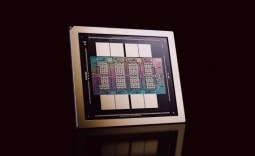 NVIDIA's next-gen 'Feynman' GPUs to be built with TSMC's 1.6 nm A16 process
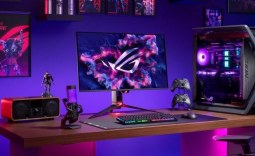 OLED monitor shipments have doubled in a year, with ASUS as the global leader
 SK Hynix is running out of SSD replacements, leaving customers with inadequate refunds
 Kingdom Hearts 4 reveals Pixar's Coco-inspired Land of the Dead world and late 2027 release window
 Budget GPU shortages to get even worse in second half of 2026, warns PC Partner
 Intel plans an entry-level Panther Lake chip with 4 Xe3 cores for handhelds
 AMD denied any review samples for the Radeon RX 9050 because it's embarrassing
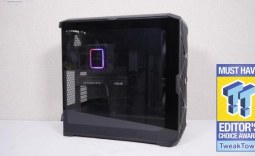 Cooler Master HAF II 500 Mid-Tower Chassis Review
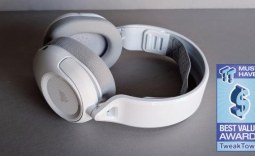 Corsair HS35 v3 Wireless Gaming Headset Review - An Affordable Winner
 D-Link F518 5G Wi‑Fi 6 AX1800 Mobile Hotspot Review: All-Day Mobile Hotspot
 Bose Lifestyle Ultra Speaker Review - Impressively Detailed Room-Filling Sound
 MSI Z890 Gaming Plus WIFI6E Review - Z890 for under $200
 Mortal Kombat (1995) 4K Ultra HD Blu-ray Review
 CPS PCCOOLER YS1200 ATX 3.1 80 PLUS Gold PSU Review
 ASRock X870E Taichi White Review: a premium AM5 motherboard with 10G LAN and WiFi 7
 Asetek Initium Pedal Modular Upgrades Review
 Thinkware U3000 Pro Review - Smart Dashcam with Wi-Fi quirks
 Windows Sandbox is The Windows Security Feature Most People Never Use
 I ditched the Windows 11 context menu for this open-source tool, and here's why
 Windows 11 may be encrypting your drive already, and I checked where my recovery key went
 GIGABYTE's 40 Days of INFINITY celebrates 40 Years of Innovation with stunning GeForce RTX graphics cards and rewards
 I swapped File Explorer for this free file manager and finally got the layout I wanted
 How to tell if someone has been using your Windows PC without your permission
 6 Task Manager tips for troubleshooting Windows performance problems
 ASUS ROG's 20th Anniversary Line-up of Premium PC Gaming Gear has Arrived - Here's Everything You Need to Know
 Six File Explorer tips every Windows user should know
 I switched my PC to encrypted DNS in Windows 11, and browsing felt more private