







Learn about how TweakTown tests and reviews hardware. As an Amazon Associate, we earn from qualifying purchases. TweakTown may also earn commissions from other affiliate partners at no extra cost to you.
Stay Updated
Follow TweakTown for breaking tech news, reviews, and daily updates.


Apple removes TRIM support for third-party SSDs with OS X update
Cindori Software provides the Trim Enabler program that allows Apple users to use third-party SSDs and still have TRIM functionality. An SSD has no idea what data is erased by the filesystem, but TRIM marks data for deletion that has been removed at the filesystem level. This allows the SSD to clean itself up during a routine task called garbage collection. TRIM is important for SSDs, without it they will eventually slow down and become less responsive. Without notice Apple has blocked third-party applications, such as Trim Enabler, from working unless users institute a workaround that creates a security risk with OS X 10.10 Yosemite. Unfortunately, users are finding this out after the upgrade has already taken place.
A summary of the issue from Cindori Software:
From an OEM perspective it makes good sense for Apple to restrict third-party TRIM applications, it forces their customers to only use Apple SSDs. There is an ecosystem of third-party SSD suppliers for Apple products that might feel otherwise, and customers certainly aren't going to be happy with this move.
Continue reading: Apple removes TRIM support for third-party SSDs with OS X update (full post)
Diablo Technologies displays Sandisk ULLtraDIMMS at Open Server Summit
Open Server Summit 2014 focuses on next-generation server designs that leverage industry-standard hardware and open-source software. The show is a great place to view future server technology, which makes it the perfect venue for displaying the Diablo MCS (Memory Channel Storage) architecture at work on the Sandisk ULLtraDIMM. The Sandisk ULLtraDIMM DDR3 SSD brings latency as low as five microseconds by sidestepping the traditional storage stack, and communicating via the DDR3 bus. This reduces cabling, complexity, and components required for typical storage deployments.
The slim form factor, which takes advantage of the existing memory subsystem, will enable radical new server designs, particularly in the blade and microserver segment. The hardware consists of a JEDEC-compliant ULLtraDIMM that presents itself as a block storage device with 200 or 400GB of capacity. The ULLtraDIMM utilizes two Marvell 88SS9187 controllers running the Guardian Technology Platform to increase endurance and reliability. This tandem delivers random read/write performance of 140,000/40,000 IOPS, and sequential read/write speeds up to 880/600 MB/s. Ten DWPD (Drive Writes Per Day) of endurance, and a five-year warranty (or TBW) are provided by Sandisk 19nm eMLC NAND.
The real genius of the ULLtraDIMM design is its enhanced parallelism. Stacking several devices in parallel unlocks key performance advantages that will challenge even the fastest datacenter-class PCIe SSDs. We recently had a chance to take an in-depth look at the ULLtraDIMM and post our independent third party testing results in the Sandisk ULLtraDIMM DDR3 400GB SSD Enterprise Review. Head over to the PCIe category in our IT/Datacenter section for a look at competing PCIe devices.
Continue reading: Diablo Technologies displays Sandisk ULLtraDIMMS at Open Server Summit (full post)
New development tool from A*STAR speeds 20TB HDD HAMR development
Lately HDDs aren't gaining in capacity as quickly due to the limitations of PMR (Perpendicular Magnetic Recording). PMR stores magnetic bits of data vertically, allowing manufacturers to cram more data onto the HDD's platters, which provides more density than the previous horizontal method. Every new technology has its limits, and PMR has nearly reached the end of its evolutionary cycle. Now manufacturers are turning to HAMR (Heat-Assisted Magnetic Recording) to increase density. HAMR uses a small laser to heat the surface of the platter to 800 degrees Fahrenheit before data is written. The laser is incredibly small and embedded into the drive's write head, and the small heated surface area cools back down in under a nanosecond.
Heat alters the magnetic properties of the disk for this nanosecond in time, and removes or reduces the superparamagnetic effect while data is written. This process allows for exponential gains in density, and HAMR drives with up to 20TB of storage are on the horizon. While this technology sounds a bit far-fetched, working development drives have already been displayed. With any new technology one of the immediate concerns is a lack of development tools. A team from A*STAR, led by Hongzhi Yang and the National University of Singapore, have designed a pump-probe laser to test HAMR devices. This allows accurate testing of temperature-dependent recording in localized regions without actually destroying the media. This is one more step on the path to creating affordable HAMR HDDs, and the first Seagate HAMR HDDs are projected to release in 2016 timeframe.
Continue reading: New development tool from A*STAR speeds 20TB HDD HAMR development (full post)
Intel's DC P3500 NVMe SSD comes closer to market
NVMe is a radically efficient and powerful protocol that reduces latency, increases performance, and reduces CPU load. The Intel DC P-Series are the first branded NVMe SSDs on the market, and as indicated in our Intel SSD DC P3700 1.6TB PCIe NVMe Enterprise Review, it delivers on the promises of NVMe. The Intel PCIe SSD family is broken down into three segments that feature different levels of endurance and performance. The DC P3700, DC P3600, and DC P3500 are designed for the datacenter, but enthusiasts have shown incredible interest in the DC P3500.
The Intel NVMe SSDs are very competitive in prices, and the 0.3 DWPD (Drive Writes Per Day) for the the DC P3500 brings its pricing within striking distance of other enthusiast PCIe SSDs, which are nowhere close in performance. The relatively low endurance is more than suitable for the desktop environment, and the DC P3500 features an amazing 450,000/35,000 4k random read/write speed, and 2.5/1.7 GB/s of sequential speed. Most importantly, it delivers amazing speed at lower queue depths, which offers the best performance for workstation/desktop workloads. The 400GB DC P3500 has begun to pop up on retailers for pre-order for around $600.00. This works out to roughly $1.50 per GB, which will have them flying off the shelves soon.
Continue reading: Intel's DC P3500 NVMe SSD comes closer to market (full post)
Samsung unveils Project Beyond, the world's first 3D 360-degree camera
Something out of left field, is Samsung announcing its new Project Beyond product. Project Beyond consists of 16 individual HD-quality cameras, positioned in a circular pattern, which capture continuous 360-degree images. Project Beyond takes in a gigapixel of data every second, stitching it all together as if it were a 360-degree video, streaming it directly to Samsung's Gear VR headset.
Limiting its use to someone shooting a video while you sit in your house with your Gear VR sounds weird, until you think of the fact that Samsung could - at first - use Project Beyond at events, streaming you the VR imagery back to your Gear VR headset. Things like sporting events, concerts, and much more can be opened up into the world of VR with this camera.
Continue reading: Samsung unveils Project Beyond, the world's first 3D 360-degree camera (full post)
Third 'Avengers: Age of Ultron' trailer released by Marvel
It seems like we waited many many months with baited breathe for our first look at 'The Avengers' sequel; 'The Age of Ultron', now Disney and Marvel have just released the third variant of the theatrical teaser trailer, which seems to have been sponsored by Samsung.
The second trailer, released as a treat for fans during the second season broadcast of 'Agents of SHIELD' after the initial trailer leaked early.
You'll be able to see some more 'Age of Ultron' when the theatrical trailer launches early next year. The film will be released on April 23rd 2015 in Australia and New Zealand and on the 1st of May in the USA.
Continue reading: Third 'Avengers: Age of Ultron' trailer released by Marvel (full post)
Apple iPad Pro rumors continue, manufacturing problems persist
Something we keep hearing about is a bigger iPad, shifting from the 9.7-inch screen found on the full-sized iPad, to a 12.9-inch "iPad Pro". The latest report from KGI Securities analyst Ming-Chi Kuo is that Apple won't put it into mass production until Q2 2015.
Kuo says that Apple will use an oxide panel in the iPad Pro to hit a "high resolution, quick response, and high color saturation" and that it requires more time to make this happen for component yield and assembly. We don't know much else about the iPad Pro, apart from it having a bigger screen size - floating somewhere between 12.2 and 12.9 inches.
It should offer an A8X chip, Lighting connector, and hopefully something that differentiates it from the iPad and iPad Air.
Continue reading: Apple iPad Pro rumors continue, manufacturing problems persist (full post)
Leaked details on NVIDIA's GeForce GTX Titan II, with 12GB of RAM
Today is the day for next-gen GPU news, where we just reported about AMD's Radeon R9 390X to feature an insane 4096-bit memory bus. Now, we're hearing about NVIDIA's new GeForce GTX Titan II, a beast of a GPU that would feature 12GB of VRAM.
This new beast would be baked on the GM200 silicon, on the 28nm process, feature 3072 CUDA cores, a 384-bit memory bus, and the aforementioned 12GB of VRAM. When it comes to clock speeds, we should see a Core clock of 1100MHz, while the Boost clock sits at 1390MHz and the memory at 6GHz. With the GTX 980 having 2048 CUDA cores, the GTX Titan II based on the current rumors has over 1000 additional CUDA cores.
We should see a David vs Goliath battle early next year for GPU supremacy between AMD and NVIDIA, it's just too bad that today's games run like absolute crap, even on great hardware.
Continue reading: Leaked details on NVIDIA's GeForce GTX Titan II, with 12GB of RAM (full post)
AMD Radeon R9 390X rumored to have truly next-gen 4096-bit memory bus
Here we are again, another post about the AMD Radeon R9 390X, but this time we have some even more exciting news. There's more details leaking out on the codename Fiji XT board, thanks to a listing in the SiSoft Sandra benchmark database.
If the details are true, and right now we're classing them as rumors, we could expect the Radeon R9 390X to feature a whopping 4096 stream processors, with 64 compute units and 256 texture units - but the best bit, we've saved until last: a massive, game-changing 4096-bit memory bus. This insane jump in memory bus specs will have been a result of the HBM technology we reported on a little while ago now, with a 1024-bit input/output interface.
We should see the first R9 390X cards with 4GB of RAM, but 8GB of VRAM will be seen on these GPUs very quickly. If we do see four, first-generation HBM DRAM chips with a 4096-bit memory bus operating at around 1.25GHz, we can expect a huge memory bandwidth of 640GB/sec. Considering the still-fresh, and kick-ass NVIDIA GeForce GTX 980 has a 256-bit memory bus with 224GB/sec of bandwidth, AMD would be killing it at high-res. 4K and beyond would see AMD leaping ahead, which is something they need right now.
Continue reading: AMD Radeon R9 390X rumored to have truly next-gen 4096-bit memory bus (full post)
'Uncharted' movie gets another Sony Pictures commissioned script
Sony Pictures might have already dated the release of the live-action adaptation of Naughty Dog's PlayStation franchise 'Uncharted', but they forgot one thing - a script.

It looks like the studio is seeking to fast track that though, with Sony Pictures commissioning screenwriter Mark Boal to satisfy the studio, director Seth Gordon and the franchises legion of fans. Boal won an Oscar for his work on 2010's 'The Hurt Locker'.
In disappointing news, Chris Pratt whose role in 'Guardians of the Galaxy' has propelled him to leading man status, and who will be next seen in 'Jurassic World' has taken a pass on the role of Nathan Drake. Perhaps Sony are hoping to woo him back with this latest revision.
Continue reading: 'Uncharted' movie gets another Sony Pictures commissioned script (full post)
Ubisoft working on problems with Assassin's Creed Unity PC performance
Ubisoft is working on performance problems related to PC gamers of Assassin's Creed Unity, which affects a small number of users. The gaming problem is related to AMD CPU and GPU configurations, with some Steam users saying poor frame rates, audio problems, and occasional freezing and crashing taking place.
"We are aware that the graphics performance of Assassin's Creed Unity on PC may be adversely affected by certain AMD CPU and GPU configurations," Ubisoft said in a statement. "This should not affect the vast majority of PC players, but rest assured that AMD and Ubisoft ware continuing to work together to closely resolve the issue, and will provide more information as soon as it is available."
Meanwhile, console versions of the game are struggling to maintain frame rates, as Microsoft Xbox One and Sony PlayStation 4 gamers also have complained.
Continue reading: Ubisoft working on problems with Assassin's Creed Unity PC performance (full post)
Pew research finds many users don't trust Internet privacy anymore
Online privacy is something that most Americans believe they have lost control of, as governments and companies collect and use even more personal information, according to a survey from the Pew Research Internet Project.
"It's a bundle of concerns," said Lee Rainie, a Pew researcher involved in the project. "It's party surveillance, it's partly tracking, and this generalized sense that I'm losing control of my identity and my data."
The survey also found that 91 percent of adults "agree" or "strongly agree" that consumers no longer have control over how their personal information is collected and used by companies - and with the government collecting even more data about citizen phone calls and Internet communications, 80 percent of adults "agree" or "strongly agree" that Americans should be concerned about the government monitoring.
Continue reading: Pew research finds many users don't trust Internet privacy anymore (full post)
PS4 vs. Xbox One: Let the holiday pricing battles begin
This holiday season the PlayStation 4 and Xbox One, two of the most powerful consoles in gaming history, will compete for gamers' attention. Microsoft has been trailing in sales throughout the last year-according to BetaNews, 3.3 million PlayStation 4s have shipped in the last quarter , whereas Microsoft has only shipped 2.4 million combined Xbox 360 and One units. This holiday season, both console giants will offer bundles in an attempt to climb to the top of the hill. Here are some of the upcoming holiday deals for the PlayStation 4 and Xbox One.
While both consoles will be offering great bundles this holiday, Microsoft isn't wasting any time offering a discount on their console. IDigitalTimes reports that Microsoft is offering a $50 discount on the Xbox One from now until Jan. 3. This price drop effects all Xbox One bundles as well, meaning that you can already pick up an Xbox One bundle for between $349 and $449.
Sony hasn't reacted to this price cut yet with its own console price cut, though it is possible that something may be announced in the next few weeks. With their console outselling the Xbox One worldwide, it seems unlikely that Sony will decrease the base cost of the PS4 this year.
Continue reading: PS4 vs. Xbox One: Let the holiday pricing battles begin (full post)
NVM Express launches NVMe 1.2 specification
NVM Express has announced the new NVMe 1.2 specification, and many of the features are aligned to increase adoption in mobile designs, such as laptops and ultrathins. NVMe is a new storage protocol that provides amazing performance and low latency in comparison to legacy approaches, but while we have seen some amazingly fast enterprise SSDs hit our labs, NVMe hasn't quite made it to the consumer space. New power management features will allow NVMe SSDs to kick into lower power states, which will increase battery life for mobile applications.
Another new feature can also help to make SSDs more affordable. The NVMe specification now supports a host-based memory buffer. With the notable exception of SandForce devices, current SSDs use DRAM for caching. This extra DRAM component adds cost, draws more power, and takes up space on the SSD. NVMe 1.2 allows the SSD to use the computers RAM for SSD management, which means simpler, and cheaper, SSD designs. The smaller form factors will also lend themselves well to ultra-thins, 2-in-1's, and tablets. One neat aspect is that the SSD can request varying amounts of DRAM from the host system. This DRAM is typically utilized for translation tables for the FTL, but it isn't hard to imagine some uses for caching actual data in the future. Enhanced temperature management will keep the SSD from overheating, which is also a key feature in cramped laptops and ultra-thins. If the SSD reaches a high temperature it can simply throttle performance to cool down. These new features are welcome additions, and new NVMe SSDs will speed their way into your home computer or mobile device soon.
For enterprise applications, enhanced namespace management, a controller memory buffer, online firmware updates, and enhanced status reporting are on the menu. We will dive deeper into these features when new NVMe 1.2 SSDs hit our lab, but in the meantime take a look at our extensive coverage of the NVMe spec in our Defining NVMe Article. Also, visit our Intel SSD DC P3700 1.6TB PCIe NVMe Enterprise Review and Samsung XS1715 1.6TB 2.5-inch NVMe PCIe Enterprise SSD Review for an in-depth look at the extreme performance of NVMe datacenter storage solutions.
Continue reading: NVM Express launches NVMe 1.2 specification (full post)
CalDigit T4 Thunderbolt 2 RAID enclosure announced
CalDigit has announced that pre-ordering is available for their new T4 Thunderbolt 2 RAID enclosures, and units begin shipping on November 14th. Thunderbolt 2 is a flexible interface that provides up to 10 Gb/s of throughput. This massive bandwidth allows for easy daisy-chaining of connected devices, such as storage devices and monitors. The small connector is a big benefit, and there are adapters for a myriad of other devices, such as USB, Ethernet, DisplayPort, DVI, HDMI, or VGA. It might seem counter-intuitive to connect displays onto the same connection as a storage device, but this eliminates multiple connectors while providing up to 4K resolutions for video displays. Thunderbolt 2 has made a big splash with content creators and video/picture editors, as big bandwidth equates to faster external storage options.
CalDigit has yet another innovative product for the Thunderbolt 2 crowd with the surprisingly compact T4 external RAID enclosure. The 4-bay device supports HDDs and SSDs in striped, mirrored, or redundant configurations. The enclosure supports RAID 5, which protects against a single drive failure. For professionals who use their external storage in the field this is a big plus. Some of the most common data recovery projects involve data recovery for photographers and videographers. The T4 will satisfy even the most demanding professionals with 1,370 MB/s of throughput and dual Thunderbolt 2 ports. 4 drive bays allow for plenty of storage capacity and also allow creation of multiple storage arrays. All of this is backed up by a five-year warranty. The T4 is available for $899 MSRP with 4TB of storage. For the latest in Thunderbolt 2 performance data head over to our Thunderbolt section, where out resident Thunderbolt expert Tyler Bernath breaks down the latest products.
Continue reading: CalDigit T4 Thunderbolt 2 RAID enclosure announced (full post)
DriveSavers and Sandisk announce data recovery partnership
DriveSavers are like the MacGyver of data recovery services. If you lose data from your phone, SD card, SSD, HDD, NAS, SAN, or anything inbetween, they can recover it. One of the keys to timely and affordable data recovery are the numerous technical alliances they forge with storage companies. Sandisk has become the latest company to partner with DriveSavers by providing them with technology, techniques, and tools to assist in SSD data recovery. This partnership will help Sandisk customers recover from disasters like the fire that mutilated the poor notebook below.
DriveSavers is one of the most trusted names in data recovery for good reason, they have been at it since 1985 and have a slew of technical certifications and clean rooms for data recovery. We actually had a unique opportunity to visit the DriveSavers facility earlier this year, and it was a fascinating learning experience. DriveSavers actually recovered the data from the notebook above, and that might actually be considered tame by their standards. For a deeper understanding of data recovery jump over to our DriveSavers Data Recovery Site Tour - Your Data, Recovered article for a close look at our tour and their data recovery techniques.
As always, head over to our Storage section for a look at the latest and greatest consumer Sandisk SSDs. We also have an impressive library of competitive performance analysis in our IT/Datacenter area, including our recent Sandisk ULLtraDIMM DDR3 400GB SSD Enterprise Review.
Continue reading: DriveSavers and Sandisk announce data recovery partnership (full post)
Assassin's Creed: Unity is having serious performance problems on PC
Last night, I played a couple of hours of the just-released Assassin's Creed: Unity, and was absolutely disgusted at the performance of the game, even on my powerful PC.
I'm running a Core i7-4930K, 16GB of Corsair 2400MHz DDR3 RAM, SSDs galore from Sandisk, and two NVIDIA GeForce GTX 980s in SLI - yes, GTX 980s, two of them. All of this is sprinkled over the awesome ASUS ROG Swift PG278Q monitor, which has a native resolution of 2560x1440 and 144Hz refresh rate. I went into the game at 1440p, at its highest possible settings (with anti-aliasing disabled) and was getting an abysmal frame rate.
Quitting out of it, it crashed - and then I couldn't get back into it. Disabling SLI and rebooting, it still didn't work - so I downloaded and installed the new GeForce 344.65 Game Ready drivers, which helped. Back into the game, I reduced the resolution all the way down to 1280x720 and medium detail, which provided around 40-45FPS... which is way, way under what I should be getting. I quit out, jumped into Alien: Isolation which is running at 2560x1440 with everything cranked (again, sans AA) and I was getting 100FPS+. Battlefield 4? Same thing.
Continue reading: Assassin's Creed: Unity is having serious performance problems on PC (full post)
NVIDIA GeForce GTX 960 rumored to keep its 256-bit bus, and 4GB of RAM
NVIDIA already has two great GPUs in its GeForce GTX 970 and GTX 980 cards, but the mid-range market needs some lovin', too. This is where the GeForce GTX 960 comes into play, and according to the latest rumors, it won't be as cut down as previous generations have been.
The GeForce GTX 960 will reportedly maintain its GM204 core, as well as the 256-bit memory bus and 4GB of GDDR5 memory that both of its bigger brothers have. The GTX 960 will reportedly be clocked at 933MHz on the Core, and most likely 1408 Stream Processors, with 88 Texture Units behind it.
When it comes to pricing, we should expect some cut throat pricing from NVIDIA, with a price of under $249 in the US. When will it be unveiled? We should see it coming into the world in Q1 2015, so we don't have much longer to wait.
Continue reading: NVIDIA GeForce GTX 960 rumored to keep its 256-bit bus, and 4GB of RAM (full post)
NVIDIA makes its VXGI Apollo 11 tech demo available for download
During the NVIDIA's Editors Day 2014 in Monterey Bay, California just a couple of months ago (man, I miss that place) the company showed off its new second-generation Maxwell architecture, and gave birth to the GeForce GTX 900 series. But one of the cooler things shown off during the event, was VXGI, or Voxel Global Illumination.
NVIDIA used VXGI to recreate the infamous photo from the Lunar landing in 1969, attempting to debunk conspiracy theories on whether it happened - and whether the photos were fakes or not. Well, the company has now released that Apollo 11 demo, for anyone with a GeForce GTX 970 or GTX 980 to play around with it.
The Apollo 11 demo is powered with Unreal Engine 4, and takes some serious GPU horsepower to run it.
Continue reading: NVIDIA makes its VXGI Apollo 11 tech demo available for download (full post)
Just Cause 3 confirmed for Xbox One, PS4 and PC for 2015
We knew it was coming, but Avalanche Studios has confirmed it: Just Cause 3 is coming. JC3 will be released next year, for current-generation consoles and PC.
Xbox One and PS4 users will be over the moon, but Xbox 360 and PS3 users? Not so much. Just Cause 3 will throw gamers into the fictional Mediterranean islands, which are ruled by a dictator. We did hear about microtransactions for Just Cause 3, but the developer has ruled them out, as well as a free-to-play model.
The leaked screenshots? Don't worry about those, according to the co-founder and Chief Creative Officer of Avalanche, Christofer Sundberg. He said: "Those leaked screenshots were taken from an ancient version of Just Cause 3. Like most games, this one went through an exploratory phase where we looked at different control schemes, different technologies, different business models. Those leaked screenshots show aspects of that process, and in no way reflect the game we are making today".
Continue reading: Just Cause 3 confirmed for Xbox One, PS4 and PC for 2015 (full post)
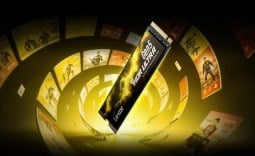 Lexar's DRAM-less Thor Ultra series PCIe Gen 5 SSDs are built for desktop and laptop PC gaming
 Gaming monitors are next in line for a price hike as manufacturers can no longer absorb costs
 Linux 7.2 makes TSC support mandatory for x86 CPUs, but it's not like Windows 11's TPM 2.0 check
 ChatGPT can now build a timeline of everything you do on your Mac
 Redditor finds a working RTX 2080 Super in the dump, gets a huge free upgrade
 Redditor sends a gaming laptop with 64GB RAM for repair, comes back with 32GB RAM
 GPU Tweak III can now detect and shut down a PC when a 12V-2x6 graphics card goes over a certain current limit
 CPS PCCOOLER unveils all-in-one modular PC where you can replace the display and upgrade its hardware
 NVIDIA and LG are building a next-generation humanoid robot that will make its debut at CES 2027
 Intel will continue supplying Raptor Lake CPUs for 'years to come' thanks to the memory crisis
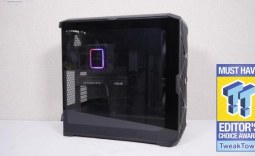 Cooler Master HAF II 500 Mid-Tower Chassis Review
 Corsair HS35 v3 Wireless Gaming Headset Review - An Affordable Winner
 D-Link F518 5G Wi‑Fi 6 AX1800 Mobile Hotspot Review: All-Day Mobile Hotspot
 Bose Lifestyle Ultra Speaker Review - Impressively Detailed Room-Filling Sound
 MSI Z890 Gaming Plus WIFI6E Review - Z890 for under $200
 Mortal Kombat (1995) 4K Ultra HD Blu-ray Review
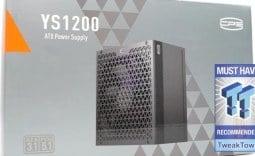 CPS PCCOOLER YS1200 ATX 3.1 80 PLUS Gold PSU Review
 ASRock X870E Taichi White Review: a premium AM5 motherboard with 10G LAN and WiFi 7
 Asetek Initium Pedal Modular Upgrades Review
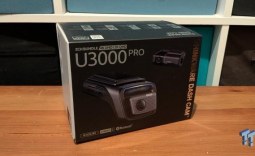 Thinkware U3000 Pro Review - Smart Dashcam with Wi-Fi quirks
 Using Multiple Monitors? Change these Windows settings for a Better Experience
 Windows Sandbox is The Windows Security Feature Most People Never Use
 I ditched the Windows 11 context menu for this open-source tool, and here's why
 Windows 11 may be encrypting your drive already, and I checked where my recovery key went
 GIGABYTE's 40 Days of INFINITY celebrates 40 Years of Innovation with stunning GeForce RTX graphics cards and rewards
 I swapped File Explorer for this free file manager and finally got the layout I wanted
 How to tell if someone has been using your Windows PC without your permission
 6 Task Manager tips for troubleshooting Windows performance problems
 ASUS ROG's 20th Anniversary Line-up of Premium PC Gaming Gear has Arrived - Here's Everything You Need to Know
 Six File Explorer tips every Windows user should know