







Learn about how TweakTown tests and reviews hardware. As an Amazon Associate, we earn from qualifying purchases. TweakTown may also earn commissions from other affiliate partners at no extra cost to you.
Stay Updated
Follow TweakTown for breaking tech news, reviews, and daily updates.


Rocket Lab launches two satellites, and attempt to recover the booster
Rocket Lab successfully launched its two-stage Electron rocket, carrying two BlackSky Global Earth observation satellites for its planned constellation.

The launch took place from Rocket Lab's launch pad on the Mahia Peninsula of New Zealand's North Island. Lift-off occurred at 2:38 p.m. (1:38 a.m. UTC) local time on November 18th. The first stage of the Electron rocket was scheduled to parachute safely into the ocean, splashing a few hundred miles off the coast where it was to be retrieved by a Rocket Lab boat, with a helicopter flying in the area to help locate it.
Fifty-five minutes after lift-off, the rocket's upper stage deployed the two BlackSky satellites it was carrying at an altitude of 270 miles (430 kilometers). Rocket Lab plans to help launch four additional BlackSky satellites across two more Electron launches as per the deal signed between the two companies.
Continue reading: Rocket Lab launches two satellites, and attempt to recover the booster (full post)
NASA's Perseverance Mars rover twin, OPTIMISM, begins terrain tests
The OPTIMISM rover, shorthand for "Operational Perseverance Twin for Integration of Mechanisms and Instruments Sent to Mars," is a full-scale engineering model of the Perseverance rover currently trawling the surface of Mars, searching for signs of ancient microbial life.

In Southern California, at the Mars Yard of NASA's Jet Propulsion Laboratory, a boulder-laden landscape simulates Mars's terrain that has been a testing site for many a rover twins, beginning with the first Sojourner rover that landed on Mars in 1997. The rover is about the size of a car, and the Mars Yard is roughly as long as a doubles tennis court and twice as wide.
OPTIMISM will be carrying out tasks expected of its twin on Mars to ensure that Perseverance will safely do the same in its mission and identify any potential bugs or issues that would disrupt its regular operation. These tasks include navigating complex terrain, drilling samples from boulders, and storing them in metal tubes, as Perseverance will be doing on Mars.
Continue reading: NASA's Perseverance Mars rover twin, OPTIMISM, begins terrain tests (full post)
Hubble operations contract extended by NASA, provides status update
NASA has awarded the Association of Universities for Research in Astronomy (AURA), a sole source contract extension to continue science operations support for the Hubble Telescope.

Headquartered in Washington, AURA provides this support based out of the Space Telescope Science Institute (STScI) in Baltimore. Hubble's mission has now been extended through to June 3rd, 2026, with the value of the existing contract increasing by ~$215 million, bringing the total to ~$2.4 billion.
The contract extension will fund ongoing support for Hubble out of the STScI, including science operations, engineering of science systems, awarding science research, data archival, and public outreach.
Continue reading: Hubble operations contract extended by NASA, provides status update (full post)
Scientists warn of potential 'alien invasion', but not from space
Researchers have warned that an "alien invasion" is a warranted concern, but the invaders won't arrive in spaceships.

A new study published in the journal Bioscience explores the effects of human expansion beyond Earth's atmosphere and the dangers of micro-bacterial contamination. The researchers looked at the risks of obtaining micro-bacteria and bringing it back to Earth. Additionally, the study looked at humans bringing bacteria to new worlds, such as Mars, and found measures to reduce the risk of contamination. Researchers have already discovered strains of bacteria that have evolved from Earth bacteria on the International Space Station.
Additionally, NASA has found in its clean rooms that are used to assemble spacecrafts, "bacterial strains exhibiting extreme resistance to ionizing radiation, desiccation, and disinfectants." The authors note that bacteria from Earth shouldn't be brought to new planets such as Mars, and that an event such as this can is comparable to an extreme natural disaster such a major earthquake or even a nuclear meltdown. The study authors suggested the following measures should be taken to prevent contamination from extraterrestrials.
Continue reading: Scientists warn of potential 'alien invasion', but not from space (full post)
Hear the ISS crew prepare to escape to Earth from Russian space debris
Russia decided it was going to test an anti-satellite weapon on one of its own satellites. The test was a success as the satellite was sufficiently destroyed.

However, the debris from the now-destroyed satellite has been deemed dangerous by NASA, with officials coming out against Russia's "irresponsible" behavior. An audio recording has surfaced of a conversation between the International Space Station crew and on-ground support, which warned them that the crew was required to take shelter in SpaceX Crew Dragon. Mission control can be heard informing Raja Chari, Commander of the Crew-3 mission, of the incoming "satellite break up".
Chari said, "If that's more than half an hour, then I think we'll stay suited and potentially come back home if Dragon takes a hit". As previously mentioned, NASA and the United States Military have condemned the actions of Russia, and only recently did Russia respond, with Russia's Ministry of Defense defending the test. Minister-general of the army, Sergei Shoigu commented on the space debris having the potential to pose a threat to future space activities, "the resulting fragments do not pose any threat to space activities".
Continue reading: Hear the ISS crew prepare to escape to Earth from Russian space debris (full post)
Elon Musk to drop update on SpaceX's Starship soon, watch it live here
Space CEO Elon Musk is reportedly scheduled to drop an update for the company's upcoming next-generation launch vehicle - Starship.

Reports indicate that Musk will be speaking at the National Academies' first virtual Space Studies Board that's scheduled for 6 pm EST on November 17th. The event will be streamed live and will no doubt cover the extensive progress made constructing Starship and the regulatory approval waiting process that has caused the launch to be delayed.
During this waiting period, the company has been performing numerous tests of Starship SN20, and now it's nearing the end of the process as the Federal Aviation Administration (FAA) stated it would have its review of the environmental impacts of the Starbase launch site completed by the end of the year. Recently, Musk said that SpaceX's next-generation engines that will take humans "multi-planetary" won't be called Raptor, more on that here.
Continue reading: Elon Musk to drop update on SpaceX's Starship soon, watch it live here (full post)
NASA rover captures Mars sample containing a 'greenish' mystery
A new post has appeared on NASA's official Twitter account for its Perseverance rover that is currently collecting new soil samples on Mars.

Perseverance has officially collected its third sample of Martian soil, and this time around, the rover has collected something unexpected that has sparked hypotheses to fly among NASA scientists. Images of the sample collection have been posted to the Perseverance Twitter account, which is captioned, "My latest sample is from a rock loaded with the greenish mineral olivine". However, researchers are yet to find out how the mineral got there.
Futurism reports that olivine minerals are found on Earth in solidified places of lava or magma. NASA scientists are attempting to find a correlation between olivine minerals and carbonates, which form when carbon dioxide interacts with water. As for this sample of olivine, we will have to wait for an explanation for how it got there as NASA scientists work their magic analyzing data and throwing hypotheses around. The Perseverance team will undoubtedly update us with an answer in the coming weeks/months.
Continue reading: NASA rover captures Mars sample containing a 'greenish' mystery (full post)
Major storm warning dropped, potential 'bomb cyclone' to hit soon
Ahead of the Thanksgiving celebrations, AccuWeather forecasters have warned of an incoming storm that is expected to cause major travel delays across certain parts of the US.

Forecasters have predicted that two major weather patterns could cause extreme delays in parts of the Midwest and Northeast, as a wintry storm is developing over the central Plains on Sunday, and another storm that will spawn out of the Atlantic Coast one to two days later. AccuWeather Chief Meteorologist Jon Porter said, "We could be looking at a huge mess and a real wrench in holiday travel."
Reports state that the first storm will begin brewing over the central Plains on Sunday and will then move northeast to reach Great Lakes by Monday. It will then move into central Ontario or western Quebec on Tuesday, and all throughout its journey AccuWeather reports, "It is likely to strengthen rapidly enough to be classified as a bomb cyclone as the central pressure of the storm could plummet 0.71 of an inch of mercury (24 millibars) within 24 hours."
Continue reading: Major storm warning dropped, potential 'bomb cyclone' to hit soon (full post)
Will the asteroid NASA is about to slam into cause problems for Earth?
NASA is getting very close to the launch of its Double Asteroid Redirection Test (DART), which involves slamming a spacecraft directly into an asteroid to change its orbit.

A small group of NASA experts has taken to Reddit AMA to answer some burning questions from the public, and one of the questions posed was, "Are you at all worried that the collision will cause pieces of the asteroid to break off and disperse into the atmosphere and create new hazards?". For those that don't know, NASA will be sending a small spacecraft around the size of a large vending machine directly towards an asteroid around the size of the Great Pyramid of Giza.
The spacecraft will be traveling at 15,000 mph at the time of its impact, and NASA expects that it will change the orbit of the asteroid by more than 1%. It should be noted that Didymos is orbiting a larger asteroid called Dimorpohos and will be 6.7 million miles away at the time of impact. The idea behind DART is to demonstrate if a kinetic impactor (the spacecraft) is a sufficient method of deflecting an asteroid that is on course to hit Earth.
Continue reading: Will the asteroid NASA is about to slam into cause problems for Earth? (full post)
NASA reveals chances of an asteroid hitting Earth in next 100 years
Six NASA experts have taken to Reddit for an Ask-Me-Anything (AMA) regarding asteroids, Earth, and the agency's upcoming Double Asteroid Redirection Test (DART) mission.

NASA's upcoming DART mission is the first planetary defense mission from the agency and will involve colliding a small spacecraft around the size of a vending machine into a small asteroid around the size of the Great Pyramid of Giza. The asteroid that is the target is orbiting a larger asteroid, and NASA's goal of the mission is to see if it's possible to alter the orbit of the smaller asteroid. The results from this mission will pave the way forward for planetary defense strategies.
One of the questions that were posed to the six participants was, "What is the probability (mathematical) of a moderate size asteroid impact in the next 100 years?". NASA's Marina Brozovic, an asteroid scientist at JPL, answered and said that the agency doesn't know of any objects that are several hundred meters (200 meters is 656 feet) in size that has a chance of impacting Earth. Additionally, Brozovic reminds everyone that any object smaller than about 100 feet in size is unlikely to reach the ground due to our atmosphere.
Continue reading: NASA reveals chances of an asteroid hitting Earth in next 100 years (full post)
NASA answers, 'Is NASA really crashing a spacecraft into an asteroid?'
NASA has answered the question "Is NASA really crashing a spacecraft into an asteroid?" with a new video on its YouTube channel.

The space agency has posted a new video that is a part of its "We Asked a NASA Expert" weekly series that tackles some of NASA's most popular questions. This week, NASA Planetary Expert Nancy Chabot answers the question regarding the spacecraft asteroid collision, saying, "Yes, NASA really is smashing a spacecraft into an asteroid. That spacecraft is DART, Double Asteroid Redirection Test".
Chabot goes on to explain that the spacecraft is about the size of a vending machine and will be colliding with an asteroid around the size of the Great Pyramid of Giza. The planetary expert explains that the goal of the mission isn't to destroy the asteroid but to see if its possible to slightly change its orbit, which would then knock it off its original course. Knowing if this is possible will allow NASA to plan a strategy around deflecting an asteroid that's on a collision course with Earth years before impact.
Continue reading: NASA answers, 'Is NASA really crashing a spacecraft into an asteroid?' (full post)
NASA experts reveal the chances of spotting an asteroid before impact
Multiple NASA experts have taken to Reddit to answer some questions from the public about asteroids, a part of NASA's upcoming DART mission.

The Reddit AMA featured six NASA experts in several different fields, but all a part of the agency's upcoming launch of the Double Asteroid Redirection Test (DART), which involves a NASA spacecraft slamming into an asteroid to knock it off course. One of the questions that NASA received was, "What's the minimum time it'll take to notice an asteroid heading towards earth?".
Lance Benner, lead for NASA's asteroid radar research program at NASA's Jet Propulsion Laboratory (JPL) answered and wrote that the agency is looking for asteroids that are on route to hit Earth with years to decades of advance notice, but are also monitoring any small asteroids that are going to impact Earth. However, the larger and more dangerous asteroids are regularly found, but are very far away from Earth and pose no danger.
Continue reading: NASA experts reveal the chances of spotting an asteroid before impact (full post)
Check out the new Matrix Resurrections poster, debuts December 22
The Matrix Resurrections is just over a month away from release, which means it's new movie poster time -- with Warner Bros. today unveiling a new poster for the movie. Check it out:

The new poster doesn't tell us anything new at all, but we do see Neo using his hand to slow down to manipulate time in some way -- while also teasing Trinity, a younger Morpheus, and other characters that will be joining the fray in The Matrix Resurrections.
If you haven't watched the first teaser to The Matrix Resurrections then you can check that out here, but I would say a brand new explosive trailer will be released in the coming weeks that will hopefully really drive the hype for the movie through the roof.
Continue reading: Check out the new Matrix Resurrections poster, debuts December 22 (full post)
BIOSTAR mixes old school with new school: Alder Lake CPU + DVI port
BIOSTAR has just announced its new Racing Z690GTA motherboard, which packs Intel's new Z690 chipset that supports the latest 12th Gen Core "Alder Lake" CPUs.

The new BIOSTAR Racing Z690GTA motherboard has some wicked Tron-inspired styling, with a 17-phase power design and an actively-cooled armor gear with heat sink. You've got 4 x DIMMs with support for up to 128GB of DDR4-5000 RAM, next-gen PCIe 5.0 connectivity, and a DVI port... yeah, the old school DVI connector.
On the I/O panel, BIOSTAR includes 1 x DisplayPort, 1 x HDMI 2.0, and 1 x DVI port as well as an old-school PS/2 port for your keyboard, a bunch of USB ports, 2.5GbE ethernet, and 3.5mm audio jacks.
Continue reading: BIOSTAR mixes old school with new school: Alder Lake CPU + DVI port (full post)
AMD could be Samsung's first 3nm customer, Apple ties up 3nm at TSMC
The race towards 5nm was pretty quick but the race to 3nm is going to be even quicker, with Apple scooping up most of the 3nm node pie from TSMC and now rumor has it AMD is going to be Samsung's first 3nm customer.

A new report from DigiTimes says that the relationship between Apple and TSMC (Taiwan Semiconductor Manufacturing Company) is forcing AMD's hand in cozying up with Samsung for its supply of next-gen 3nm chips. Not only is AMD looking to get 3nm chips out of the Samsung ovens, but Qualcomm is reportedly getting 3nm chips from Samsung, too.
Samsung Foundry is expected to make 3nm chips for both AMD and Qualcomm, while TSMC will make 3nm for Apple. We should see TSMC begin production on its 3nm node in the second half of 2022, and inside of future Apple devices in late 2022 and early 2023. TSMC has been very forthcoming with its roadmap, with TSMC boss Dr. C.C. Wei talking about its new N3 and N3E nodes.
Continue reading: AMD could be Samsung's first 3nm customer, Apple ties up 3nm at TSMC (full post)
NVIDIA's spatial upscaler goes open source, will better fight AMD FSR
NVIDIA is making some big shifts in the image upscaling world this week with the introduction of both DLSS 2.3 and ICAT, as well as the announcement of making its Image Scaling technology open-source.

NVIDIA has had Image Scaling inside of its drivers for many years now, but the move into open source means it's easier for developers to use and will act separate to DLSS (Deep Learning Super Sampling). Where DLSS requires a specific NVIDIA GPU, NVIDIA Image Scaling will work with all games and virtually on GPUs.
With the new GeForce Game Ready 496.76 WHQL drivers you'll have access to the NVIDIA Image Scaling feature through the NVIDIA Control Panel, or through GeForce Experience. You can tweak per-game sharpening from within NVIDIA's in-game overlay, too.
Continue reading: NVIDIA's spatial upscaler goes open source, will better fight AMD FSR (full post)
NVIDIA's new GeForce 496.76 drivers are ready for Battlefield 2042
NVIDIA has released its new GeForce Game Ready 496.76 WHQL drivers, which are optimized and tuned for Battlefield 2042, and more.

Battlefield 2042 officially launches in a few days but if you pre-ordered the game, or you are an Xbox Game Pass or EA Play Ultimate subscriber you get into the Early Access of Battlefield 2042 and can play it now. NVIDIA's new GeForce 496.76 drivers don't just offer Game Ready support for Battlefield 2042, but new games with DLSS.
Assetto Corsa Competizione, Bright Memory: Infinite, Farming Simulator 22, Hot Wheels Unleashed, and Myth of Empires are all powered with NVIDIA DLSS technology, with the new GeForce 496.76 drivers ready to go. There are the usual issues fixed, there are still known issues, while the biggest thing here apart from games being NVIDIA's new Image Scaling feature, which you can read more about here.
Continue reading: NVIDIA's new GeForce 496.76 drivers are ready for Battlefield 2042 (full post)
Secretlab TITAN XXS: a gaming chair for kids, and even your pets
In what started out as an April Fools Day joke has turned into a reality, with gaming chair leader Secretlab unveiling their new teeny-tiny TITAN XXS. Yes, they really made the gaming chair for kids and pets, and are now selling it.

The new Secretlab TITAN XXS was created with the same industry-leading quality and materials as the higher-end TITAN 2022 range, with height-adjustable armrests, child-locking casters, and more. The TITAN XXS supports up to 70kg (154lbs or so) and will only be made in "limited quantities".
Secretlab's new TITAN XXS is made in a 1:2 scale so they look really awesome next to the proper TITAN gaming chair, with the company making them available in the black hybrid leatherette version for $299, while the Plush Pink or Frost Blue will cost $319. Secretlab explains its new TITAN XXS: "Meet the smallest member of the Secretlab family. The Secretlab TITAN Extra Extra Small (XXS) is a 1:2 collectible designed for true fans - the ones who demand world-class seating as a cornerstone of their living space".
Continue reading: Secretlab TITAN XXS: a gaming chair for kids, and even your pets (full post)
Saints Row reboot delayed to August to make the game 'f*cking awesome'
Volition has pushed back the new Saints Row reboot to August 2022 to ensure it will be "fucking awesome".

Today Volition and Embracer Group have delayed the upcoming Saints Row game from February to August 2022. The game will now launch during the Q3 period on August 23, 2022, roughly six months after its planned release. The reason is add more polish to the game but no core gameplay mechanics will be adjusted or altered. This is the second time the game has been delayed.
Continue reading: Saints Row reboot delayed to August to make the game 'f*cking awesome' (full post)
False fossils may mislead the search for life on Mars
As the search for life on mars continues, formations taking on a similar appearance to fossils have been found.

Unfortunately, they were likely created by various non-biological chemical processes mimicking biological sources. The processes that created these false fossils produce deposits that resemble bacterial cells and carbon-based molecules.
During a period are 3.6 to 4 billion years ago, Mars would have been habitable for some life, as valleys and sedimentary rocks on the surface indicate water was once widely available. Despite this, concrete evidence of life has yet to be discovered.
Continue reading: False fossils may mislead the search for life on Mars (full post)
 Xbox outage turns ugly as players use Xbox App glitch to download and play titles for free
 Xbox servers go down just days after PlayStation outage, giving us a glimpse into our digital-only future
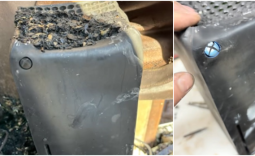 Xbox Series X survives a devastating house fire and still works!
 'PS5 is currently the Call of Duty box,' analyst says after Black Ops II re-release takes over PlayStation
 Colorful and MSI RTX 50 graphics card prices spike in China as GDDR6 and GDDR7 memory costs rise
 SEGA won't abandon its physical culture, but stresses importance of digital for sales growth
 PC classic Myst returns with mysterious new Project Mudfish
 Minecraft now recommends 16GB of RAM and a much newer CPU
 007 First Light ditches Denuvo DRM just as first patch arrives packing a ton of bug fixes and some new content
 Microsoft's still working on Windows 11 File Explorer improvements, and it's now making deleting large files speedier
 Logitech G512 X 98 Analog Mechanical Gaming Keyboard Review - An Innovative Two-in-One
 Thrustmaster T.Flight HOTAS 5 MSFS Edition Review
 SteelSeries Arctis Nova Pro Omni Wireless Headset Review - One Headset to Rule Them All
 SteelSeries Arctis Nova 7 Wireless Gen 2 Headset Review - New and Improved, But Is It Enough?
 AMD Ryzen 7 7700X3D Review - Days of Future Past
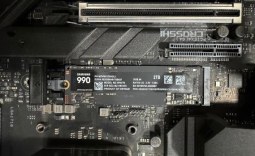 Samsung 990 2TB SSD Review - Ninth Gen QLC at PCIe Gen4 Speeds
 ASUS ExpertBook Ultra (Panther Lake) 14" Business Laptop Review
 ASUS ROG Raikiri II Xbox Wireless Controller Review - Ready to Take Control
 MOZA FMP18 Panel Bundle Review: authentic F/A-18 Hornet cockpit controls for flight sims
 Micron 6600 ION 245.76TB Enterprise SSD Review - Best in Class Programming Speeds
 Printer Not Working in Windows? How to fix detection, print queues and drivers
 The Ultimate Guide to Personalizing Your Windows 11 Taskbar
 How to Turn Your Windows Laptop Into a Second Monitor with Miracast and Wireless Display in Minutes
 6 Mistakes to Avoid When Buying a Windows Laptop
 I capped Windows Update's bandwidth with Delivery Optimization, and my downloads stopped choking
 I use this decade-old free tool that finds files faster than Windows Search does
 I install and update most of my apps with this Windows command now, and I stopped downloading sketchy installers
 Hisense U6SF 65-inch MiniLED TV: High Performance Meets Leisurely Convenience
 I stopped digging through Windows menus after I set up this one folder
 Don't sell your Windows laptop until you do these things