







Learn about how TweakTown tests and reviews hardware. As an Amazon Associate, we earn from qualifying purchases. TweakTown may also earn commissions from other affiliate partners at no extra cost to you.
Stay Updated
Follow TweakTown for breaking tech news, reviews, and daily updates.


Space tourists share jaw-dropping images of Earth from space
Tourists aboard the SpaceX Crew Dragon snapped some incredible images of Earth from space, and they have been uploaded in full resolution for your viewing pleasure.

The Inspiration4 crew consisted of four civilians spending three days aboard a SpaceX Crew Dragon spacecraft back in September 2021. While the crew was floating around the planet for three days, they snapped some fantastic images of what Earth looked like for them, showcasing incredible unique perspectives of our planet as well as the Sun.
The team was able to snap the images through the spacecraft's cupola, which is essentially a massive glass dome located on the nose-end of the spacecraft. Originally, the nose-end of the spacecraft had a docking module attached, but since the Inspiration4 mission didn't involve any docking, it was replaced with the large viewing window. If you are interested in viewing the images in full resolution, you can check out the selection here.
Continue reading: Space tourists share jaw-dropping images of Earth from space (full post)
Planet Nine may have been seen decades ago, suggests astronomer
Astronomers and normal people alike have been wondering for quite some time if there really is a Planet Nine that has such a wide orbit that it takes 20,000 years to complete.

However, there is minimal evidence to suggest such a planet exists. But, one study from 2016 resurfaced the idea that Planet Nine may be real as researchers found that some celestial body was interacting with small objects outside of the Kuiper Belt, causing the orbits of these objects to be strange. These objects acted as if a large undiscovered object was influencing them through its gravity. However, the source of these anomalies has yet to be found.
Now, astronomer Michael Rowan-Robinson of Imperial College London in the UK has analyzed data obtained by the Infrared Astronomical Satellite (IRAS) in 1983. In Rowan-Robinson's pre-print paper, the astronomer says that he found a trio of point sources that may have been Planet Nine and suggests that this decade also information is retested with today's instruments. Additionally, Rowan-Robinson acknowledges that the probability of the candidate being real is quite low, but it's worthwhile to check.
Continue reading: Planet Nine may have been seen decades ago, suggests astronomer (full post)
US fires back at Russia over its use of an anti-satellite missile test
Russia recently conducted an anti-satellite weapon test on one of its own satellites, which caused more than 1,000 pieces new pieces of space debris.

The debris that were a result of Russia's anti-satellite missile test and amounted to more than 1,500 new pieces that may remain in orbit for potentially decades. Not only will these debris stay in orbit for an extended period of time, but they also pose a risk to other satellites if they collide with them. Ned Price, the State Department spokesman, told reporters on Monday, "Earlier today the Russian Federation recklessly conducted a destructive test of a direct--ascent anti satellite missile against one of its own satellites."
Adding, "This test has so far generated over fifteen hundred pieces of trackable orbital debris and hundreds of thousands of pieces of smaller orbital debris that now threatens the interests of all nations." Price even went on to say that Russia's "dangerous and irresponsible behavior jeopardizes the long term sustainability of our space and clearly demonstrates that Russia's claims of opposing the weapons and weaponization of space are disingenuous and hypocritical."
Continue reading: US fires back at Russia over its use of an anti-satellite missile test (full post)
NASA drops image of a dark 'hole in the sky' that consumes light
NASA has published a new image that's a part of Nebula November, and this time around, the agency has detailed a dark nebula dubbed LDN 1165.

LDN 1165 is located in the constellation Cepheus and is a member of the agency's catalog of Dark Nebulae, which are also called absorption nebulae. NASA explains in a new blog post that absorption nebula don't reflect or emit light like other nebula but instead block out any light that is coming from behind them. The agency continues to explain that these dark nebulae contain high amounts of dust, which is what prevents any light from protruding throughout the other side of the nebula.
Additionally, these dark nebulae are sometimes called "holes in the sky", purely because of the complete lack of light. However, this name may not be entirely accurate as NASA writes that while dark nebulae look like nothing at all, there could be plenty of star-forming activity occurring inside of the dense clouds. As for LDN 1165, Hubble peered closely at the dark nebula, and according to NASA, the bright region "is likely a star-forming region that may hold one or more young protostars." See the image below.
Continue reading: NASA drops image of a dark 'hole in the sky' that consumes light (full post)
NASA telescope discovers wild new planet, may have ingredient for life
A team of astronomers has located a new exoplanet that is showing promising signs of harboring one of life's most vital ingredients - water.

In a new paper published on the arXiv pre-print server details the discovery of an exoplanet titled TOI-2257b. Astronomers used NASA's Transiting Exoplanet Survey Satellite (TESS), which is designed to detect dips in light that planets cause when they pass in front of the star that they are orbiting. This method of discovering new exoplanets is called the transit method, and has proven to be a reliable way of observing new celestial objects.
The newly found exoplanet is believed to be twice the size of Earth, and has more than five times Earth's mass. Researchers also believe that it orbits at just 135 million miles away from its M-dwarf star TOI-2257, meaning it completes one full orbit of the star in just 35 Earth-days. The reason researchers believe TOI-2257b may harbor water is that the dwarf star it orbits is much cooler and smaller than our Sun, with an average surface temperature of around 5,792 Fahrenheit, compared to the Sun, which has a surface temperature of 9,932 Fahrenheit.
Continue reading: NASA telescope discovers wild new planet, may have ingredient for life (full post)
'Doughnut UFO' photographed flying in the sky, shocking onlookers
Back on November 8, a photographer snapped an image of a "doughnut UFO" hovering overhead, sparking an explanation for what the object could be if it even was an object.

The photographer, which goes by the Twitter handle of @Eavix1Eavix, snapped the image in Zurich, Switzerland, and described the object as a "doughnut UFO". The photographer was aware that on the same night, the SpaceX Endeavour capsule was scheduled to re-enter Earth's atmosphere from the International Space Station, which led to the belief that what was being seen in the night sky over Switzerland was the Endeavor capsule.
However, there is a problem with this theory. The SpaceX capsule touched back down on Earth in the Gulf of Mexico, more than 5,000 miles away on the other side of the planet. Marco Langbroek, an amateur satellite tracker and academic researcher at Leiden University in the Netherlands spoke to LiveScience and said, "Any passes [of Endeavour] over Switzerland prior to landing that night would have been completely in Earth's shadow, i.e. it would not be illuminated by the sun and hence not visible."
Continue reading: 'Doughnut UFO' photographed flying in the sky, shocking onlookers (full post)
First black hole ever discovered outside of our Milky Way galaxy
Astronomers have found the very first black hole outside of our Milky Way galaxy by observing a star in the region with a strange motion.

The researchers used the European Southern Observatory's Very Large Telescope located in Chile to peer into the star cluster NGC 1850 within the Large Magellanic Cloud. The astronomers were observing stars in the region and noticed that a star was being influenced by an unknown gravitational force, marking the first time a black hole had been discovered using this method.
The black hole is located approximately 160,000 light-years from Earth and is estimated to have eleven times the mass of our Sun, or 11 solar masses. The study was published in the Monthly Notices of the Royal Astronomical Society, and according to Stefan Dreizler, a contributing member on the paper, "The vast majority can only be unveiled dynamically. When they form a system with a star, they will affect its motion in a subtle but detectable way, so we can find them with sophisticated instruments."
Continue reading: First black hole ever discovered outside of our Milky Way galaxy (full post)
NASA will spend nearly $100 billion on its moon program by 2025
Getting humans off Earth is incredibly expensive, and to back that statement up, a new report from the NASA Office of Inspector General (OIG) has revealed how much the Artemis program will cost by 2025.

The new report from the NASA Office of Inspector General has revealed that the Artemis program is expected to cost NASA $93 billion by the year 2025. According to the report, the agency has several initiatives underway that will reduce the total cost of the program by 2025. However, the report also reads that looking ahead at spending without taking into account any of these cost-saving initiatives, NASA "will face significant challenges to sustaining its Artemis program in its current configuration."
According to the nonprofit Planetary Society, the Apollo moon program between 1960 and 1973 cost $28 billion, which would be about $280 billion today. The OIG report also states, "Moreover, while NASA has several initiatives underway aimed at increasing affordability, we project the current production cost of a single SLS/Orion system to be $4.1 billion per launch." If you are interested in reading more about this story or would like a more in-depth breakdown of the costs, check out this link here.
Continue reading: NASA will spend nearly $100 billion on its moon program by 2025 (full post)
Battlefield 2042 compared on next-gen PS5, Xbox Series X/S, and the PC
Battlefield 2042 is in the wild for PC and console owners if you pre-ordered the Gold Edition or Ultimate Edition of the game, or you're an Xbox Game Pass Ultimate or EA Play subscriber then you've got Early Access. Now that the game is out in the wild, comparisons between the next-gen consoles and PC are here for Battlefield 2042:

In a new video, ElAnalistaDeBits compares Battlefield 2042 on the next-gen Sony PlayStation 5 and Microsoft Xbox Series X/S consoles, as well as a PC with an NVIDIA GeForce RTX 3080 graphics card. The video notes that the Xbox Series S has a "practically perfect framerate" in Battlefield 2042, with temporal reconstruction rendering driving 1260p resolution and 60FPS on XSS.
The video notes that the PlayStation 5 and beefier Xbox Series X versions of Battlefield 2042 actually "suffer some occasional drops, being more common on PS5". On top of that, the textures on the PS5 and XSX versions of BF2042 are nearly the same, while it's noted that the "PS5 version is closer to the PC version" while there's lower quality textures on the XSS version of the game.
Continue reading: Battlefield 2042 compared on next-gen PS5, Xbox Series X/S, and the PC (full post)
Apple Car concept was based on Tesla Cybertruck-like car of the future
If you didn't already know: Apple is working on its own car that would make a gigantic splash in the automotive industry, and now new design renders have been crafted from Apple's own patents filed for the Apple Car. Check them out:

The new renders come from a UK-based car leasing company called Vanarama, which was tasked with designing renders from the patents Apple had filed for the Apple Car. From the outside, the Apple Car has a beautiful mesh-style grille that looks like the circular vents Apple uses on its desktop Mac Pro.
Inside, there's a huge customizable dashboard that spans across the entire front of the car. The steering wheel looks like it's ripped right out of the future -- and out of Tesla's latest electric cars -- with a huge 80s style Apple logo on the wheel itself.
Continue reading: Apple Car concept was based on Tesla Cybertruck-like car of the future (full post)
Intel Xeon 'Sapphire Rapids': 56C/112T CPU, DDR5 RAM, up to 64GB HBM2e
Intel has detailed its next-gen Xeon platform "Sapphire Rapids" which will deliver up to 56 cores and 112 threads per CPU, with multiple Xeon "Sapphire Rapids" CPUs per socket -- on top of that DDR5 RAM and PCIe 5.0 technology support.

Intel's new Xeon "Sapphire Rapids" CPU has 4 stacks of 16GB HBM2e memory, for a total of 64GB HBM2e through Xeon Scalable. The new Sapphire Rapids CPUs are built on Intel's new Eagle Stream platform, unlocking up to 56 cores and 112 threads with up to 350W TDPs.
On the GPU side of things Intel is using its new Ponte Vecchio HPC GPU, offering 4MB of L1 cache and 144MB of L2 cache per GPU tile. In total, there is 408MB of L2 cache while the GPU is going to use multiple fabrication notes: Intel 7 for the base tile, TSMC N7 for Xe-Link, and TSMC N5 for the computing tile.
Continue reading: Intel Xeon 'Sapphire Rapids': 56C/112T CPU, DDR5 RAM, up to 64GB HBM2e (full post)
KIOXIA announces PCIe 4.0 SSDs for PC gamers: 256GB, 512GB, and 1TB
KIOXIA has just introduced its new BG5 Series SSD family, with super-fast PCIe 4.0 SSDs that were designed to blend into a balance of performance, cost, and power to everyday gamers and PC users.

The new KIOXIA BG5 Series is built on the PCIe 4.0 x4 standard, powered by KIOXIA's in-house fifth-generation BiCS FLASH 3D flash memory technology. The new KIOXIA BG5 Series SSDs also support the latest Host Memory Buffer (HMB) technology that in KIOXIA's words "realize a finely optimized DRAM-less SSD".
KIOXIA is offering 256GB, 512GB, and 1TB capacities of its new BG5 Series SSDs, with up to 3.5GB/sec (3500MB/sec) and 2.9GB/sec (2900MB/sec) reads and writes, respectively. The new SSDs have up to 500,000 IOPS random read, and 450,000 IOPS random write.
Continue reading: KIOXIA announces PCIe 4.0 SSDs for PC gamers: 256GB, 512GB, and 1TB (full post)
Intel celebrates 50th anniversary of world-changing 4004 processor
Can you believe it has been 50 years since Intel released the Intel 4004 processor, the world's first commercially available microprocessor. 50 years from that day, we have Intel's new 12th Gen Core "Alder Lake" CPUs that have just launched.

The Intel 4004 processor in November 1971 and acted as the "brains" the virtually the foundation of technology as we know it: from your smartphone to your desktop PC, right up into the cloud. Microprocessors opened up the world to what it is today, and without them we'd still be using paper cups and string... well, you get what I mean.
Maybe Pat Gelsinger, Intel CEO will explain it better: "This year marks the 50th anniversary of the 4004 chip. Think of how much we've accomplished in the past half-century. This is a sacred moment for technology. This is what made computing really take off!"
Continue reading: Intel celebrates 50th anniversary of world-changing 4004 processor (full post)
This deep sea rover has been studying climate change for 7 years
Monterey Bay Aquarium Research Institute's (MBARI) Benthic Rover II has been trawling the ocean floor for seven years, collecting data on the carbon cycle of the deep sea and how it is impacted by climate change.

Less is known about the deep sea than other planets in our solar system. Delving many miles below the ocean surface is a challenge, owing to extreme pressures and seawater's corrosive nature. It is impressive not only to reach deep down but to continue operating there for more than half a decade.
One hundred forty miles (225 kilometers) off the coast of central California and 13,100 feet (4,000 meters) below the surface lies Station M, MBARI's research site where the Benthic Rover II operates. This depth is equivalent to the ocean's average depth and allows for an adept model for studying deep-ocean ecosystems.
Continue reading: This deep sea rover has been studying climate change for 7 years (full post)
Tesla is upgrading its Supercharger network, adding Starlink support
Tesla has begun to add Starlink functionality to some Supercharger stations across America, with multiple people online spotting satellite dishes appearing in Lake City, Florida, and Lisbon, Connecticut.

Tesla already supports free in-car cellular connectivity for limited features such as email or simple navigation and offers a Premium Connectivity subscription for a $10 monthly fee which supports more data-intensive features. However, when connected to a Wi-Fi network, all Internet features are free to use.
Elon Musk recently replied to other users on Twitter that expressed a desire to see Wi-Fi built into all Supercharger stations, stating that they all eventually would. Now it seems the rollout has begun, potentially enabling a plethora of features. Enabling full Wi-Fi functionality between the car and the Starlink network would allow users full Internet access in the downtime spent charging at stations on a long road trip, without subscribing to the Premium Connectivity plan.
Continue reading: Tesla is upgrading its Supercharger network, adding Starlink support (full post)
The most gravitational waves ever have been detected, here's how
The Laser Interferometer Gravitational-Wave Observatory (LIGO) and the Virgo interferometer, designed to detect cosmic gravitational waves, have recently observed 35 new waves produced from black holes merging and black holes and neutron stars colliding.

Ninety total gravitational waves have been detected from three observing runs between 2015 and 2020. The latest collection of observations came from observing runs conducted using both observatories between November 2019 and March 2020.
Almost all of these detections come from events occurring billions of years ago and billions of light-years away from our solar system. 32 of the 35 events involve mergers between black holes, with the remaining three likely attributed to collisions between neutron stars and black holes.
Continue reading: The most gravitational waves ever have been detected, here's how (full post)
NASA confirms three solar flare combined, trigger auroras upon impact
NASA has confirmed three solar flares erupting on the surface of the Sun and an impact resulting in auroras being seen in the sky across select locations.

NASA writes in a new blog post that the solar flares came from two active regions on the Sun; AR 12891 and AR 12887. On November 1, a C1.3-class flare was detected erupting from AR12887, which was followed by a C4-class flare two hours later. The flare intensity is measured on a scale; A, B, C, M, and X-classes. Each class is ten times stronger than the last, with X being the strongest and A being the weakest.
Two hours after the last flare, another was detected out to AR 12891. This one was an M1.6-class flare. NASA writes that solar flares are often associated with coronal mass ejections (CME), large swaths of plasma ejected into space from the Sun's corona. CME's can sometimes hit Earth and, depending on the intensity of the impact, can cause geomagnetic storms in Earth's upper atmosphere. The impact of the charged particles on Earth's magnetic field can cause issues for satellites, radio communication, electricity grids, and more.
Continue reading: NASA confirms three solar flare combined, trigger auroras upon impact (full post)
This NASA spacecraft holds the record for fastest human-made object
It isn't a car or a plane that holds the record for the fastest human-made object. It's a NASA probe that is about to make its closest approach to the Sun yet.

NASA's Parker Solar Probe recently took a swing around Venus, gaining some speed through sling-shotting itself through its gravitational pull, and is now on its way to the Sun, where it will come within about 5.3 million miles to its while traveling up to speeds of 101 miles per second, or 364,621 miles per hour.
The goal of the fly-by is to capture data on the solar wind that is close to the Sun's surface and hopefully provide valuable data to researchers that will unlock a deeper understanding of our Sun and thus other stars. There is a large dust cloud circling the Sun, and engineers have constructed the Parker probe to be able to survive what it will encounter. However, this region of space is still yet to be discovered, so it certainly presents challenges for researchers and engineers, which NASA acknowledges.
Continue reading: This NASA spacecraft holds the record for fastest human-made object (full post)
SpaceX drops phenomenal picture of Starship SN20 engine test
Elon Musk's SpaceX has dropped a wallpaper-worthy image of its Starship SN20 vehicle performing a "static fire" test.

The Starship vehicle will be what SpaceX offers as a solution of transporting humans to the Moon, Mars, and eventually more distant locations within our solar system. The company is currently in testing mode as Starship gears up for its first orbital test flight. Starship is comprised of two main parts, its 260-foot booster named Super Heavy, and the 165-foot tall spacecraft named Starship. SpaceX's flagship vehicle has performed some flights tests in the past where it reached altitudes of about 6 miles.
However, the orbital flight test is going to be its biggest challenge yet, which SpaceX plans on conducting within the coming weeks or months. A solid time and date hasn't been set by SpaceX as it's waiting for the Federal Aviation Administration (FAA) to complete an environmental assessment of the Starbase orbital launch site, which will arrive in the form of a report that's yet to be released. Starship completed a static fire test that included all six raptor engines - it's Super Heavy in all its glory.
Continue reading: SpaceX drops phenomenal picture of Starship SN20 engine test (full post)
Earth found to have a second 'Moon', but it won't be around forever
Researchers have located a temporary second "moon" floating around Earth in a strange fashion, according to a new study published in Nature Magazine.

The new study details an object that is circling Earth in a corkscrew-like trajectory, and this object is dubbed Kamo'oalewa, which in Hawaiian means "moving celestial object". Kamo'oalewa was first discovered back in 2016 and became the smallest stable quasi-satellite of Earth, measuring in at just 164 feet in diameter. The space rock was believed to be a small asteroid, but according to results from the newly published study, it appears that Kamo'oalewa is a fragment of our Moon.
The researchers compared lunar sample data retrieved from the Apollo 14 mission (1971) to Kamo'oalewa data and found that the results match. The team of researchers proposed that the moon-fragment likely came from a meteor collision that occurred on the surface of resulting in this piece of "lunar material" being broken off towards Earth. Ben Sharkey of the Lunar and Planetary Laboratory at the University of Arizona, and the lead author on the study, said that Kamo'oalewa won't be around forever as estimations indicate that after 300 years, it will break its orbit and journey out into space.
Continue reading: Earth found to have a second 'Moon', but it won't be around forever (full post)
 Xbox servers go down just days after PlayStation outage, giving us a glimpse into our digital-only future
 Xbox Series X survives a devastating house fire and still works!
 'PS5 is currently the Call of Duty box,' analyst says after Black Ops II re-release takes over PlayStation
 Colorful and MSI RTX 50 graphics card prices spike in China as GDDR6 and GDDR7 memory costs rise
 SEGA won't abandon its physical culture, but stresses importance of digital for sales growth
 PC classic Myst returns with mysterious new Project Mudfish
 Minecraft now recommends 16GB of RAM and a much newer CPU
 007 First Light ditches Denuvo DRM just as first patch arrives packing a ton of bug fixes and some new content
 Microsoft's still working on Windows 11 File Explorer improvements, and it's now making deleting large files speedier
 Hacking group Anonymous targets Sony over deciding to kill PlayStation discs
 Logitech G512 X 98 Analog Mechanical Gaming Keyboard Review - An Innovative Two-in-One
 Thrustmaster T.Flight HOTAS 5 MSFS Edition Review
 SteelSeries Arctis Nova Pro Omni Wireless Headset Review - One Headset to Rule Them All
 SteelSeries Arctis Nova 7 Wireless Gen 2 Headset Review - New and Improved, But Is It Enough?
 AMD Ryzen 7 7700X3D Review - Days of Future Past
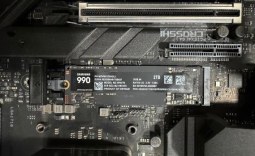 Samsung 990 2TB SSD Review - Ninth Gen QLC at PCIe Gen4 Speeds
 ASUS ExpertBook Ultra (Panther Lake) 14" Business Laptop Review
 ASUS ROG Raikiri II Xbox Wireless Controller Review - Ready to Take Control
 MOZA FMP18 Panel Bundle Review: authentic F/A-18 Hornet cockpit controls for flight sims
 Micron 6600 ION 245.76TB Enterprise SSD Review - Best in Class Programming Speeds
 Printer Not Working in Windows? How to fix detection, print queues and drivers
 The Ultimate Guide to Personalizing Your Windows 11 Taskbar
 How to Turn Your Windows Laptop Into a Second Monitor with Miracast and Wireless Display in Minutes
 6 Mistakes to Avoid When Buying a Windows Laptop
 I capped Windows Update's bandwidth with Delivery Optimization, and my downloads stopped choking
 I use this decade-old free tool that finds files faster than Windows Search does
 I install and update most of my apps with this Windows command now, and I stopped downloading sketchy installers
 Hisense U6SF 65-inch MiniLED TV: High Performance Meets Leisurely Convenience
 I stopped digging through Windows menus after I set up this one folder
 Don't sell your Windows laptop until you do these things