







Learn about how TweakTown tests and reviews hardware. As an Amazon Associate, we earn from qualifying purchases. TweakTown may also earn commissions from other affiliate partners at no extra cost to you.
Stay Updated
Follow TweakTown for breaking tech news, reviews, and daily updates.


Mammals with potential to spread Covid-19, found with machine learning
A new study has been published in Proceedings of the Royal Society B: Biological Sciences, where researchers predicted the zoonotic disease transmission potential of 5,400 mammalian species.

Identifying high-risk species has been limited by the available data on the cell receptor ACE2, allowing SARS-CoV-2 (Covid-19) to bind with a host cell and infect it. This receptor is found in all major vertebrate groups, and although likely present in all vertebrates, has only been sequenced for 326 species.
By combining the available data on ACE2 with the biological traits of the 5,400 mammals chosen, a machine learning model developed by the research team could identify species with high zoonotic capacity, specifically the ability to contract and transmit SARS-CoV-2 to humans and other animal species.
Continue reading: Mammals with potential to spread Covid-19, found with machine learning (full post)
New collaboration set to enable on-orbit refuelling of satellites
The vision of Orbit Fab is to create the first Gas Stations in Space™, and it has announced a collaboration with Dawn Aerospace, a space-transportation company, to provide an on-orbit refueling service to satellites utilizing nitrous oxide (N2O) and propylene (C3H6).

Orbit Fab has developed a fuel port designated the Rapidly Attachable Fluid Transfer Interface, or RAFTI. Recently made available under an open license, it is an option available for government and commercial satellites and will be available for Dawn Aerospace customers midway through 2022.
Dawn produces propulsion systems for use in space utilizing green propellants, including nitrous oxide and propylene, gases which are readily available from domestic suppliers. The viability of Dawn's technology has been proven in CubeSats and other small satellites, and Dawn propulsion systems have flown aboard Vega, Falcon 9, and Soyuz rockets.
Continue reading: New collaboration set to enable on-orbit refuelling of satellites (full post)
Starlink constellation grows as SpaceX launches 53 new satellites
Fifty-three new Starlink satellites have been successfully launched using a Falcon 9 rocket, bringing the total number of Starlink satellites launched to 1844.

The Falcon 9 rocket was launched from Space Launch Complex 40 Cape Canaveral Space Force Station in Florida, with lift-off at 7:19 a.m. EST (12:19 UTC) on November 13th, 2021. Due to poor weather conditions, the mission had been delayed from its initially scheduled departure the day prior.
The first stage of the Falcon 9 rocket was core B1058, in use for the ninth time after a turnaround of 182 days from its previous flight. The core's first flight was on May 30th, 2020, almost a year and a half lifetime so far. It successfully landed on SpaceX's drone ship "Just Read the Instructions" after separating from the second stage 2.5 minutes into the flight.
Continue reading: Starlink constellation grows as SpaceX launches 53 new satellites (full post)
Origin of interstellar object 'Oumuamua still contentious
'Oumuamua is a large, cigar-shaped object that was first identified in October 2017, exiting our solar system at nearly 57,000 mph (92,000 km/h), indicating it could not have originated in our solar system.

Since then, scientists have tried to explain its origin and composition, with two papers published in March by Arizona State University astrophysicists suggesting it was made of nitrogen ice. However, a new paper has been published by Harvard astrophysicists in opposition to this suggestion. Astronomers have been unable to explain the source of its speed, as it shows no signs of propellant gases leaving it. The gravitational pull of the Sun is also insufficient to have accelerated it to the speeds that have slingshotted 'Oumuamua in and out of the solar system.
Alan Jackson and Steven Desch of the Arizona State University suggested that 'Oumuamua was likely a large chunk of nitrogen ice, having broken off of a planet similar to Pluto outside of our solar system. Given Pluto is 98% solid nitrogen, there likely are many similar planets, exo-Plutos, outside of our solar system from which 'Oumuamua may have broken off.
Continue reading: Origin of interstellar object 'Oumuamua still contentious (full post)
SpaceX can almost taste regulatory approval for its biggest launch yet
SpaceX has been performing tests for its first upcoming orbital test launch of Starship. However, the company has yet to secure a launch date as it has been waiting for regulatory approval from the FAA.

The Federal Aviation Administration (FAA) began an environmental assessment on SpaceX's orbital launch activities at its launch facility called Starbase, located close to the South Texas village of Boca Chica. SpaceX has been patiently waiting for the environmental assessment to be completed and regulatory approval to be granted for the launch of Starship. However, the FAA didn't say when the assessment would be completed until now, as the regulator estimated in an update that it would be completed by December 31, 2021.
For those who don't know the significance of Starship, the launch vehicle is comprised of two fully reuseable components, a large first-stage booster called Super Heavy that stands at 230 ft, and the spacecraft itself called Starship, which stands at 160 ft. Starship is designed to take humans to the Moon and eventually to Mars, as NASA has selected the vehicle to take astronauts back to the Moon as a part of the agency's Artemis program.
Continue reading: SpaceX can almost taste regulatory approval for its biggest launch yet (full post)
NASA gives update on Hubble Space Telescope health, and why its halted
Since late October, NASA and the European Space Agency's (ESA) Hubble Space Telescope has been mostly out-of-order as it experienced a glitch.

Engineers found that the glitch has something to do with the synchronization of its internal communications, and as a result of the failure to sync correctly, the space telescope puts all of its instruments into safety mode to prevent any potential damage that could be caused.
On November 7, the Advanced Camera for Surveys (ACS) was brought back online, and now according to NASA, "the Hubble team has identified near-term changes that could be made to how the instruments monitor and respond to missed synchronization messages, as well as to how the payload computer monitors the instruments." Adding, "This would allow science operations to continue even if several missed messages occur. The team has also continued analyzing the instrument flight software to verify that all possible solutions would be safe for the instruments."
Continue reading: NASA gives update on Hubble Space Telescope health, and why its halted (full post)
Russia blew up its own satellite, telescope spots scary space debris
Russia decided it was going to test out of one of its anti-satellite weapons on one of its own satellites. The results have now sparked a debate.

Russia tested an anti-satellite missile on Monday, November 15, on a defunct satellite called Cosmos-1408, which, as you can probably imagine, resulted in an explosion and many new space debris created. Numberica Corp, a Colorado-based company that tracks space debris, has partnered with Slingshot Aerospace on Twitter to publish images and video of the debris caused by the destruction of Cosmos-1408.
Reports indicate that more than 1,500 new trackable space debris were found, with an unknown amount of debris too small to be tracked. The US Military, as well as NASA, have condemned the actions by Russia to test an anti-satellite weapon as they claim the space debris could pose a threat to astronauts living on the International Space Station (ISS). However, Russia has since defended its decision by saying that the resulting fragments do not pose any threat to space activities".
Continue reading: Russia blew up its own satellite, telescope spots scary space debris (full post)
Russia defends its 'dangerous' choice to explode one of its satellites
Russia recently tested an anti-satellite weapon that caused a large swath of space debris that has been subject to heavy debate.

The United States condemned the event, describing it as "dangerous and irresponsible behavior" that can potentially jeopardize the long-term sustainability of space. The criticism came from NASA's head Bill Nelson, as well as Ned Price, a State Department spokesperson, who said that the destruction of one of Russia satellites at the hand of Russia has caused a significant increase in risk for astronauts aboard the International Space Station (ISS) and any human spaceflight activities.
Now, Russia's Ministry of Defence has issued a statement defending its decision to test the anti-satellite weapon and create space debris. According to the minister-general of the army, Sergei Shoigu said, "the resulting fragments do not pose any threat to space activities". However, experts have said that the cloud of debris, which consists of more than 1,500 trackable pieces, could pose a threat for years to come. Roscosmos Twitter wrote on Monday that the debris cloud "has moved away from the ISS orbit", referring to the ISS orbiting Earth at around 250 miles and the debris cloud being tracked to 273 to 323 miles. Rocosmos wrote, "the station is in the green zone."
Continue reading: Russia defends its 'dangerous' choice to explode one of its satellites (full post)
Elon Musk says SpaceX's multi-planet engines won't be called 'Raptor'
SpaceX is currently gearing up for its first orbital test of Starship, its vehicle that is set to be the transportation between the Moon and Mars.

SpaceX is in full testing mode at the moment in preparation for Starship's first orbital test flight that will take the rocket higher than it ever has before. Starship is comprised of three main parts, the 160 ft spacecraft named Starship, a 230 ft tall booster named Super Heavy, and its 59 ft tall and 30 ft wide payload fairing. Recently, SpaceX conducted a 6-engine static fire test of Starship, showcasing the tremendous power of its six Raptor engines. To see incredible images of that firing test, check out this link here.
As SpaceX wait for approval from the Federal Aviation Administration (FAA) to conduct the first orbital test of Starship, SpaceX CEO Elon Musk has published an awesome image of under Super Heavy with the caption "12 million pounds of thrust at liftoff". In response to this image, a Twitter user said, "Can't wait for Raptor 2, it's still a rat's nest up there", which is in reference to the exposed Raptor engines that can be seen in the image.
Continue reading: Elon Musk says SpaceX's multi-planet engines won't be called 'Raptor' (full post)
NASA's Mars rover paves the way forward for future astronauts
NASA's Curiosity rover is acquiring data that will be used to make sure future astronauts have a safe environment on the surface of Mars.

Curiosity is equipped with an instrument called a Radiation Assessment Detector (RAD), and this instrument is designed to measure the amount of radiation detected from galactic cosmic rays, which are particles that can be traced back to exploding stars. These galactic cosmic rays form what is called "background radiation", and due to Mars not having a protective magnetic field to repel this radiation, these galactic cosmic rays will be especially harmful to astronauts on Mars' surface.
A new paper published in JGR Planets detailed data acquired by Curiosity when it was parked against a cliff called Murray Buttes from September 9 to 21 in 2016. During this time frame, RAD recorded a 4% decrease in overall radiation exposure and a 7.5% decrease in neutral particle radiation, which also includes neutrons that can penetrate rock and are very harmful to human health. Researchers attributed these drops to the location of the rover. Bent Ehresmann of the Southwest Research Institute, lead author of the paper, said, "We've been waiting a long time for the right conditions to get these results, which are critical to ensure the accuracy of our computer models."
Continue reading: NASA's Mars rover paves the way forward for future astronauts (full post)
NASA confirms longest lunar eclipse in centuries will happen this week
NASA has confirmed an upcoming partial lunar eclipse that will take place on November 18 and 19.

According to a new report by Phys.org, NASA writes on its website that the Moon "will be so close to opposite the Sun on Nov 19 that it will pass through the southern part of the shadow of the Earth for a nearly total lunar eclipse." For those that don't know, a "total" lunar eclipse is different from a "partial" lunar eclipse. During a partial lunar eclipse, some of the Moon's surface is still visible, while in a total lunar eclipse, all of the Moon's visible surface moves into Earth's shadow.
NASA states that the eclipse will last for 3 hours, 28 minutes, and 23 seconds, which will be the longest partial eclipse in centuries. Additionally, NASA explains that about 97% of the Moon will be covered in Earth's shadow and that it will appear a reddish-brown color that will be visible throughout many parts of the world. EarthSky writes that people in North America, eastern Australia, New Zealand, and Japan will be able to enjoy the partial eclipse.
Continue reading: NASA confirms longest lunar eclipse in centuries will happen this week (full post)
NASA scientists to use 'singing trees' to help get us to a new Earth
Sometimes the most unusual ideas are the ones that generate the most interesting answers, and a song that is poised to last two centuries maybe the idea that generates an incredibly interesting answer.

A group of NASA scientists is going to attempt to communicate with the cosmos through a spacecraft sent towards exoplanet Proxima B that is located 4.2 light-years away from Earth, and a group of select trees that will be equipped with sensors that can detect changes in their surroundings, which will then be converted into sound frequencies that will be relayed to the spacecraft. Julia Christensen, president of the Space Song Foundation, said, "As the light, water and temperature at the tree change, so does the tune, the volume, and the actual sound of the song."
Adding, "In the short term, we hear shifts in the song as day turns to night, as clouds pass over the tree, as seasons change, etc. But over the very long term - decades or centuries - we will hear major global shifts in climate and other changes on our planet." Proxima B is of special interest to researchers as it may have the contains to harbor life, as it is very Earth-like. Researchers intend on sending a future spacecraft towards Proxima B that will communicate the "sound" of our planet. However, with current technology, it would take a spacecraft 6,300 years to reach Proxima B.
Continue reading: NASA scientists to use 'singing trees' to help get us to a new Earth (full post)
Xbox backward compatibility is done, here's the full list of 595 games
The Xbox backwards compatibility program is now 100% finished and Microsoft confirms no new games will be added.

Microsoft celebrated 20 years of Xbox by bringing 70 new Xbox and Xbox 360 games to the backwards compatibility program, adding big titles like Max Payne, the FEAR franchise, and NIER complete with Auto HDR, FPS Boost, and massive resolution scaling up to 4K.
The company also confirmed this batch are the last games that will be added to the program (they said this years ago, but it's for real this time).The final Xbox backwards compatibility list has a total of 595 original Xbox and Xbox 360 games that are playable on both the Xbox One and Xbox Series X/S generations. Almost all of these games have performance or visual boosts in some form.
Continue reading: Xbox backward compatibility is done, here's the full list of 595 games (full post)
Activision board of directors may not fire CEO Bobby Kotick
Activision-Blizzard's board of directors defend company CEO Bobby Kotick despite reports that he lied to the board about sexual misconduct allegations.

Today the Wall Street Journal released a new scathing report that alleges CEO Bobby Kotick not only knew of sexual misconduct at the company, but was also an offender, and uncovered multiple instances of abuse with named company employees from court documents, internal emails, and anonymous sources. The expose triggered a cultural shift from Blizzard employees who are staging a walk-out strike until Kotick is fired. Workers are banding together and posting their stories with the #actiblizzwalkout hashtag.
It appears the demands will not be met. Despite apparently withholding information from the board, the directors are standing behind Kotick. A recent press release confirms Activision-Blizzard's board of directors is supporting Kotick, saying that it "remains confident in Bobby Kotick's leadership, commitment and ability."
Continue reading: Activision board of directors may not fire CEO Bobby Kotick (full post)
Report: Activision CEO Bobby Kotick knew of sexual misconduct issues
A new scathing report from the Wall Street Journal claims that Activision CEO Bobby Kotick lied about about his knowledge of sexual misconduct and rape allegations to the company's board of directors.

Explosive investigations from the WSJ have uncovered more controversial details around Activision's current legal issues. According to documents attained by WSJ and internal sources, Activision CEO Bobby Kotick not only knew about specific sexual abuse allegations at the company, but lied about it to the board of directors. Internal reports say Kotick settled one allegation made by a former female Sledgehammer Games developer out of court.
The report illuminates problems with Activision-Blizzard's workplace culture, which range from excessive drinking to serious allegations of sexual abuse, rape, and coercion. It's a laundry list of systemic issues, claims of criminal activity made by employees, and what appears to be cover ups by a CEO worth tens of millions of dollars. The report states that over 500 people have stepped forward with their own claims of abuse in some form or another.
Continue reading: Report: Activision CEO Bobby Kotick knew of sexual misconduct issues (full post)
343i open to changing Halo Infinite's battle pass progression system
Hate the challenge-based progression system in Halo Infinite? It looks like 343 Industries will change it up.

The Halo Infinite multiplayer beta stealth launched yesterday and practically everyone loves the game. That is, except for the battle pass and level up system. Infinite's progression scheme is hotly contentious because it doesn't reward you for playing and instead only gives EXP when you complete specific challenges--getting headshots, winning games, etc. Gamers have been very vocal on their feelings on Twitter, Facebook, and YouTube and 343i is taking notes.
343i community director Ske7ch, who's been with Halo from the get-go, recently said that the studio is collecting and investigating progression data so they can make the next move (which should be an EXP overhaul):
Continue reading: 343i open to changing Halo Infinite's battle pass progression system (full post)
Halo Infinite is out now on consoles and PC, breaks Steam records
Halo Infinite is now the most-played Microsoft first-party game on Steam after just one day on the market.

Halo Infinite surprise dropped yesterday to celebrate 20 years of Xbox. The free-to-play shooter is rocketing to the top with huge engagement numbers, especially on Steam where it has amassed over 272,000 players in just 24 hours. This makes Halo Infinite one of the most-played games on Steam and the most popular Xbox game ever released on the platform.
So far the Steam servers haven't buckled under the weight of hundreds of thousands of players, with peak players hitting 272,586. At the time of writing the game has over 146,000 players on Steam, and currently sits at the fourth spot in Steam's top 5 most-played games of all time list. That's quite an achievement for Microsoft and we might start seeing new updates on combined platform player counts and monetization in the coming weeks.
Continue reading: Halo Infinite is out now on consoles and PC, breaks Steam records (full post)
Arianespace is launching three new satellites for the French military
Arianespace is set to launch its Vega rocket in Kourou at 6:27 a.m. local time (09:27 UTC) on November 16th, 2021. It will launch from the Ensemble de Lancement Vega (ELV) pad at the Guiana Space Center, the oldest of its launch pads.

Its mission is to launch three Capacite de Renseignement d'origine Electromagnetique Spatiale (CERES) satellites (which translates to "Intelligence Capacity of Space Electromagnetic Origin"). These satellites are operated by the French space agency Centre National d'Etudes Spatiales (translating to the National Centre for Space Studies).
Continue reading: Arianespace is launching three new satellites for the French military (full post)
As the universe continues to expand, black holes may be growing too
As the universe continues to expand, a new study has been published detailing a hypothesis called "cosmological coupling" that could explain the disparity between the expected size of black holes and what scientists have observed.

Black holes are estimated to have masses of ~40 times that of our sun, yet this is not what we see from observations using gravitational wave detections from the Laser Interferometer Gravitational-Wave Observatory (LIGO) and Virgo interferometer. The gravitational waves detected from black hole mergers have been used to estimate the sizes of many black holes as more than 50 solar masses, with some approaching 100 solar masses.
The hypothesis asserts that coinciding with the universe's expansion following the Big Bang, all objects within it grow in mass. While other scientists have modeled black hole mergers in static universes to simplify complicated equations, the authors of this study did so in an expanding universe. Simulating the activity of stars and their life cycles, culminating in the formation of black holes, predicted black holes within this universe that better resembled the findings of the current LIGO-Virgo data.
Continue reading: As the universe continues to expand, black holes may be growing too (full post)
Carbon dioxide cold traps confirmed in the darkest parts of the moon
Scientists for decades have predicted lunar cold traps, but with the publishing of new research in the AGU journal Geophysical Research Letters, their presence on the moon has finally been confirmed.

These cold traps exist in permanently shadowed regions of the moon, such as some craters, where the temperature falls below 60 degrees Kelvin, approximately -352 degrees Fahrenheit. These areas have the potential for carbon dioxide to freeze and become trapped, though the presence of frozen carbon dioxide in these traps is not yet confirmed.
Researchers analyzed NASA's Lunar Reconnaissance Orbiter data to identify and map these carbon dioxide cold traps. Aboard the spacecraft is the Diviner Lunar Radiometer Experiment (DLRE), which has collected temperature data from the moon over the ongoing 12-year mission of the spacecraft.
Continue reading: Carbon dioxide cold traps confirmed in the darkest parts of the moon (full post)
 Xbox servers go down just days after PlayStation outage, giving us a glimpse into our digital-only future
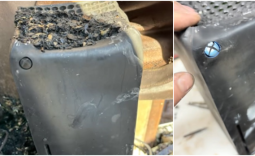 Xbox Series X survives a devastating house fire and still works!
 'PS5 is currently the Call of Duty box,' analyst says after Black Ops II re-release takes over PlayStation
 Colorful and MSI RTX 50 graphics card prices spike in China as GDDR6 and GDDR7 memory costs rise
 SEGA won't abandon its physical culture, but stresses importance of digital for sales growth
 PC classic Myst returns with mysterious new Project Mudfish
 Minecraft now recommends 16GB of RAM and a much newer CPU
 007 First Light ditches Denuvo DRM just as first patch arrives packing a ton of bug fixes and some new content
 Microsoft's still working on Windows 11 File Explorer improvements, and it's now making deleting large files speedier
 Hacking group Anonymous targets Sony over deciding to kill PlayStation discs
 Logitech G512 X 98 Analog Mechanical Gaming Keyboard Review - An Innovative Two-in-One
 Thrustmaster T.Flight HOTAS 5 MSFS Edition Review
 SteelSeries Arctis Nova Pro Omni Wireless Headset Review - One Headset to Rule Them All
 SteelSeries Arctis Nova 7 Wireless Gen 2 Headset Review - New and Improved, But Is It Enough?
 AMD Ryzen 7 7700X3D Review - Days of Future Past
 Samsung 990 2TB SSD Review - Ninth Gen QLC at PCIe Gen4 Speeds
 ASUS ExpertBook Ultra (Panther Lake) 14" Business Laptop Review
 ASUS ROG Raikiri II Xbox Wireless Controller Review - Ready to Take Control
 MOZA FMP18 Panel Bundle Review: authentic F/A-18 Hornet cockpit controls for flight sims
 Micron 6600 ION 245.76TB Enterprise SSD Review - Best in Class Programming Speeds
 Printer Not Working in Windows? How to fix detection, print queues and drivers
 The Ultimate Guide to Personalizing Your Windows 11 Taskbar
 How to Turn Your Windows Laptop Into a Second Monitor with Miracast and Wireless Display in Minutes
 6 Mistakes to Avoid When Buying a Windows Laptop
 I capped Windows Update's bandwidth with Delivery Optimization, and my downloads stopped choking
 I use this decade-old free tool that finds files faster than Windows Search does
 I install and update most of my apps with this Windows command now, and I stopped downloading sketchy installers
 Hisense U6SF 65-inch MiniLED TV: High Performance Meets Leisurely Convenience
 I stopped digging through Windows menus after I set up this one folder
 Don't sell your Windows laptop until you do these things