







Science, Space, & Robotics - Page 96
Explore the latest Science, Space, Health, and Robotics news from TweakTown. Coverage includes space launches, medical tech, discoveries, and rockets. - Page 96
Stay Updated
Follow TweakTown for breaking tech news, reviews, and daily updates.


As an Amazon Associate, we earn from qualifying purchases. TweakTown may also earn commissions from other affiliate partners at no extra cost to you.
Famous physicist drops warning on NASA shooting Earth info into space
A group of NASA-led researchers have proposed beaming information on the Earth and the human race into space, in search of any extraterrestrial life that may respond.

The project is called "Beacon in the Galaxy" (BITG) and includes researchers operating the ETI Institute's Allen Telescope Array in California and China's Five-hundred-meter Aperture Spherical Radio Telescope (FAST) to send out sensitive information regarding Earth's position in the solar system, images of humans, Earth's biology, information about DNA structure, physics and more.
The project has already been opposed by researchers from the United Kingdom's Oxford University, who warned that the dangers of sending out such a message are not yet fully understood, and that the downside of shooting up such a flare could be far larger than the upside. The warning from the Oxford researchers has now been echoed by famous theoretical physicist Michio Kau, who spoke on "Jesse Watters Primetime," where he said that it's a "horrible idea".
Continue reading: Famous physicist drops warning on NASA shooting Earth info into space (full post)
US vows to stop satellite killer testing, Russian official fires back
The US has committed to ending anti-satellite weapon testing in an effort to stop the spreading of space debris in low-Earth orbit.

The announcement came from Vice President Kamala Harris, that said the US is ending all practice of anti-satellite missile tests, which is a military demonstration that involves a missile being launched at a satellite. So far, four countries, US, China, Russia, and India, have conducted these tests on their own satellites, with the most recent being Russia in November 2021.
Russia's anti-satellite missile test created thousands of new space debris that caused astronauts aboard the International Space Station (ISS) to prepare for shrapnel impact in shelter. Harris said that space debris could destroy satellites that support the weather forecast, GPS driving directions, and "even your favorite television station."
Continue reading: US vows to stop satellite killer testing, Russian official fires back (full post)
Top scientists announce NASA probing Uranus is a top priority
The new survey was published by the renowned US National Academies of Sciences Engineering and Medicine and details the most sought-after questions in science by top scientists in their respective fields.

The survey was published by the National Academies Press and details many scientific wishlist prospects that the researchers consider being a "top priority". One of them is the collection and retrieval of Mars rocks, and another is sending an interplanetary probe to Uranus to inspect the planet more closely and gather a deeper understanding of its history, current state, and future.
The scientists behind the survey have called upon NASA to take up the task and send a Uranus Orbiter and Probe. The orbiter would be similar to the Mars Reconnaissance Orbiter that is designed to study the geology and climate of the Red Planet. The requested probe would plummet into the atmosphere of Uranus. The researchers expect that this level of a mission to Uranus should launch sometime in 2030 if engineers begin the development process in 2023.
Continue reading: Top scientists announce NASA probing Uranus is a top priority (full post)
Elon Musk warns how treacherous life on Mars will be for human life
In a recent interview, SpaceX and Tesla CEO Elon Musk discussed the dangers of living on Mars and the conditions humans will have to endure.

The SpaceX CEO sat down with TED conferences head Chris Anderson only hours after he offered to buy the second-largest social media platform in the world for $43 billion, Twitter. During the interview, Musk outlines his passion for wanting to have a "positive" outlook on the future, and to do that; you need to give people something to look forward to. Going to Mars is one of those monumental tasks that Musk has set out to achieve, but he warns the living conditions on Mars won't be for the faint of heart.
During the interview, Musk explains that the first humans to land on Mars and begin the colonization process won't be living in luxury, "It will be dangerous, cramped, difficult, hard work". Adding that participants "may not make it back". Musk has already taken steps towards getting humans on Mars with SpaceX's development of the 400-foot reusable Starship rocket that is prepared to carry 150 tons of cargo into orbit.
Continue reading: Elon Musk warns how treacherous life on Mars will be for human life (full post)
Dust-covered landing craft spotted on Mars from space by NASA
NASA's Mars Reconnaissance Orbiter (MRO) satellite orbiting Mars has captured another piece of NASA equipment on the surface of the Red Planet.

An image captured by the MRO's High Resolution Imaging Science Experiment (HiRISE) shows the InSight Mars Lander about three and half years after it first landed on the planet in November 2018. The right half portion of the above image shows InSight as it was on March 9th, 2022, compared with how it was after landing on the left.
In the image taken following the landing, you can see a dark blast zone created during the landing. In the ensuing years, especially since a recent storm in January 2022, InSight and its surrounding blast zone has been covered with Martian dust.
Continue reading: Dust-covered landing craft spotted on Mars from space by NASA (full post)
75% of tumors destroyed with new machine, and they don't come back
A study on the treatment titled "Impact of Histotripsy on Development of Intrahepatic Metastases in a Rodent Liver Tumor Model" has been published in the journal Cancers.

Researchers from the University of Michigan have developed a noninvasive sound technology capable of breaking down liver tumors in rats, killing cancer cells, and spurring the immune system to prevent the further spread of cancer. The treatment is called histotripsy and utilizes focused ultrasound waves to destroy target tissues with millimeter precision.
Using this technique, the researchers could destroy between 50% and 75% of liver tumor volume in the rats, relieving enough of the burden for the rats' immune systems to clear the rest. In over 80% of the animal subjects, there was no evidence of recurring tumors or metastases, meaning cancer that has spread elsewhere in the body.
Continue reading: 75% of tumors destroyed with new machine, and they don't come back (full post)
Adding gold to vaccines increases efficacy by over 25%, research shows
A study on the vaccine development titled "Enantiomer-dependent immunological response to chiral nanoparticles" has been published in the journal Nature.

An international research team found that the addition of left-handed chiral gold nanoparticles to vaccines increased their effectiveness by over 25 percent. The gold nanoparticles are added as adjuvants, molecules that boost the immune system's sensitivity to a particular antigen, where an antigen is any substance that elicits an immune response.
The research began before the COVID-19 pandemic, and the researchers paired the nanoparticles with vaccines developed for a specific influenza virus strain. However, Moura says that the breakthrough could be generalized to work for any vaccine, including those for novel variants of SARS-CoV-2 or influenza.
Continue reading: Adding gold to vaccines increases efficacy by over 25%, research shows (full post)
'Historic' laser weapon system test by US Navy destroys passing drone
In February, the U.S. Navy used an "all-electric, high-energy laser weapon" to destroy a target for the first time.

The demonstration involved a red drone flying nearby the ground-based laser system, which the test used to represent a subsonic cruise missile in flight. The weapon is the Layered Laser Defense (LLD) and was designed and built by Lockheed Martin. It homed in on the drone, firing a laser invisible to the naked eye, which caused a fiery glow and smoke to emit from the drone before it fell to the ground while deploying its parachute.
The test was conducted at the U.S. Army's High Energy Laser Systems Test Facility at White Sands Missile Range in New Mexico and was sponsored by the Office of Naval Research (ONR). Other tests at White Sands involved the LLD shooting down targets, including unmanned fixed-wing aerial vehicles and quadcopters, and more high-speed drones that act as surrogate cruise missiles.
Continue reading: 'Historic' laser weapon system test by US Navy destroys passing drone (full post)
NASA's moon rocket made it to the launch pad, and now it's going back
NASA's Space Launch System (SLS) and Orion spacecraft made their way onto the launchpad on March 17th.

Since then, NASA engineers have been conducting tests at the Kennedy Space Center in Florida to ensure the SLS and Orion's readiness for the upcoming uncrewed Artemis I mission to the moon. After three attempts, workers have been unable to complete the final test, a practice countdown referred to as the "wet dress rehearsal."
The repeated failure has led NASA to decide to return the SLS and Orion to the Vehicle Assembly Building (VAB), where technicians can undertake work to fix the issues plaguing the spacecraft. The major problems have been with a faulty helium check valve and a liquid hydrogen leak. The spacecraft's launch was initially slated for early June, but the setbacks may result in yet another delay for the mission.
Continue reading: NASA's moon rocket made it to the launch pad, and now it's going back (full post)
'Screaming planets' may explain one of big mysteries of the universe
Originally discovered in 2007, fast radio bursts, or as researchers refer to them, FRBs, are one of the many mysteries of the universe that are yet to be fully explained by science.

FRBs are a radio wave pulse that ranges from a fraction of a millisecond to a few milliseconds, but is estimated to release as much energy as the sun does over three days. The process of these pulses isn't yet fully understood by astronomers, but a team of scientists recently put forward a study published in the Astrophysics Journal, and it provides evidence for an explanation of these FRBs.
The team suggests that FRBs may be caused by neutron stars interacting with orbiting planets within their region. The researchers explain that the pulse of radio waves may be caused by a planet's orbit coming too close to the neutron, and as a result, the neutron stars strong gravitational pull tears parts of the planet off, causing an interaction that produces "really strong radio emissions."
Continue reading: 'Screaming planets' may explain one of big mysteries of the universe (full post)
NASA telescope photographs a monster at the heart of a distant galaxy
NASA's Hubble Space Telescope has photographed a spiral galaxy 55 million light-years away from Earth and at its heart is a monster.

NASA has taken to its blog and social channels to showcase an image taken by the Hubble Space Telescope's Wide Field Camera 3, which has honed in on a barred spiral galaxy that is approximately 55 million light-years away from Earth within the constellation Coma Berenices. The above image shows spiral galaxy M91, and while looking stunning to the eye, it's hiding an "astronomical monstrosity", according to NASA.
Much like our own galaxy, the Milky Way, M91 also contains a supermassive black hole at its center. A 2009 study using data acquired by Hubble estimated M91's black hole to weigh anywhere between 9.6 and 38 million times as much as the Sun. If you are interested in learning more about M91 or the Hubble Space Telescope, check out this link here.
Continue reading: NASA telescope photographs a monster at the heart of a distant galaxy (full post)
NASA films a major Easter solar flare that caused a radio blackout
Over the Easter holiday weekend, officials at the US Space Weather Prediction Center (SWPC) reported observing a large solar flare followed by a coronal mass ejection (CME).

NASA's Solar Dynamics Observatory recording.
On April 16 at 11:23 pm EDT, the SWPC, which is overseen by the National Oceanic and Atmospheric Administration (NOAA), confirmed an X1.1 class solar flare that was traced to sunspot regions 2994 and 2993 located on the eastern limb of the sun. According to the agency, the flare lasted for around 34 minutes and caused a brief radio blackout that NOAA has classified as an "R3 (Strong) event [that] had an associated Type II radio sweep".
Continue reading: NASA films a major Easter solar flare that caused a radio blackout (full post)
Telescope captures stunning footage of 'flying whirlpool' above Hawaii
The Subaru Telescope, located in Hawaii near Mauna Kea and situated at an altitude of 13,579 feet, has captured a video of a "flying whirlpool".

SpaceWeather.com has described the object as a "flying whirlpool," and it was spotted by the Subaru Telescope on Sunday, April 17, only hours after the launch of SpaceX's Falcon 9 rocket. LiveScience and SpaceWeather.com confirm that the "flying whirlpool" was caused by the post-deorbit-burn fuel vent of the Falcon 9 upper stage that sends it out of its orbit back down to Earth to burn up eventually.
SpaceX launched the Falcon 9 rocket carrying a classified payload for the U.S. National Reconnaissance Office (NRO) from Vandenberg Space Force Base in California on April 17. While the upper stage of the Falcon 9 isn't reusable, the first stage is, and its reusability was displayed by a few videos posted to SpaceX's official Twitter account. These videos show the first stage successfully landing atop a drone ship in the Pacific Ocean.
Continue reading: Telescope captures stunning footage of 'flying whirlpool' above Hawaii (full post)
Scientists warn that NASA may provoke aliens and cause an invasion
A team of NASA-led researchers are planning on broadcasting sensitive information about Earth into the cosmos.

The team's project is called "Beacon in the Galaxy" (BITG) and involves operating the SETI Institute's Allen Telescope array in California and China's Five-hundred-meter Aperture Spherical Radio Telescope (FAST) to broadcast information about Earth's biology, location, images of humans, solar system pictures, and an invitation for aliens to respond to the message.
The project has been opposed by researchers from the United Kingdom's Oxford University who have warned that it may not be a good idea to send out sensitive information about Earth and the human race as an alien civilizations that may receive the information may not have the best intentions. FHI scientist at Oxford, Toby Ord said that there should be a public discussion before any signals are sent out, adding that there is even dangers involved in listening to incoming messages.
Continue reading: Scientists warn that NASA may provoke aliens and cause an invasion (full post)
Elon Musk's SpaceX transports a classified payload to into space
Only days after making an offer to buy Twitter, Elon Musk's space transportation company has taken a classified payload into space.

SpaceX's Falcon 9 launch vehicle took off from Vandenberg Space Force Base located in California, and attached to it was a classified payload from the US National Reconnaissance Office, which is reportedly a US spy satellite with unknown purposes. Videos of the launch were posted to the SpaceX Twitter account that shows the Falcon 9 lifting off from the launch bad in a stunning display of bright flame.
SpaceX also released a video showcasing the first stage booster of the Falcon 9 successfully landing back on the launch pad after separating less than three minutes after it initially launched. While SpaceX would usually conduct a long livestream of the launch, separation, and discuss the payload and its purpose, the US National Reconnaissance Office (NRO) requested that the livestream be ended given the classified nature of the payload.
Continue reading: Elon Musk's SpaceX transports a classified payload to into space (full post)
1,000+ scientists from around the world unanimously risked arrest
Last week more than 1,000 scientists from around the world engaged in a unanimous act of civil disobedience in protest against governments' inaction against the production of fossil fuels.

The project is called "Climate Ad Project", and involved scientists and researchers from 26 countries risking arrest by chaining themselves to the doors of banks that are funding fossil fuel projects. The organizer's planned day of disobedience was on April 6, and according to them, it was the "world's largest-ever scientist-led civil disobedience campaign".
US climate scientist Peter Kalmus, who works at NASA's Jet Propulsion Laboratory as a data scientist, chained himself to the door of a JP Morgan Chase bank in Los Angeles, which resulted in his arrest and then release. Many other scientists around the world that participated in the protests were also arrested and released.
Continue reading: 1,000+ scientists from around the world unanimously risked arrest (full post)
NASA scientist chains himself to bank, fights off tears over disaster
A NASA scientist has chained himself to a bank and been filmed giving a passionate speech about how Earth is "on track to be unlivable".

The NASA scientist is Peter Kalmus, a climate scientist and writer that currently works as a data scientist at NASA's Jet Propulsion Laboratory and is also an associate project scientist at UCLA's Joint Institute for Regional Earth System Science & Engineering. Last week Kalmus chained himself to the doors of a JP Morgan Chase bank in Los Angeles in a protest against banks funding fossil fuel projects that cause a negative impact on the planet.
Kalmus has taken to Twitter since his arrest and release by posting content about climate change as well as videos of him and other scientists conducting the protest. In the above-posted video, Kalmus can be seen giving an empowering speech where he warns that "we're going to lose everything, and we're not joking, we're not lying, we're not exaggerating". Kalmus goes on to explain that he is protesting "because scientists are not being listened to. I'm willing to take a risk for this gorgeous planet," Kalmus said, "for my sons."
Continue reading: NASA scientist chains himself to bank, fights off tears over disaster (full post)
Officials confirm sunspot eruption may bring auroras over New York
Earlier in the week, officials confirmed that an explosion on the surface of the Sun resulted in a plasma ball of charged particles hurled towards Earth.

The plasma ball came from an eruption that occurred on April 11 when the "corpse" of a sunspot called AR29877 exploded and released a large amount of radiation into space. The explosion was followed by a coronal mass ejection (CME), a wave of charged particles, that was hurled toward Earth and expected to arrive on Thursday, April 14.
The interaction between the charged particles from the Sun and Earth's atmosphere causes a geomagnetic storm, which NOAA officials say will be at least a G2 on the G1 - G5 scale (G5 being the strongest). As explained by SpaceWeather.com, during a G2 geomagnetic storm, auroras can be seen much farther south than they typically would. Reports indicate that the CME impact will cause auroras to be seen as far south as New York and Idaho, giving individuals an incredible opportunity to take pictures of the beautiful auroras above.
Continue reading: Officials confirm sunspot eruption may bring auroras over New York (full post)
NASA uses 'holoportation' to transport people to the space station
NASA 'holoported' a group of humans into the International Space Station (ISS) in October 2021.

NASA used Microsoft's Hololens Konnect camera with custom software developed by AEXA Aerospace running on a computer to project holograms of the group to the ISS. This allowed NASA's Crew 2 astronauts, who were aboard the ISS at the time to communicate with people on Earth as if they were also physically present on the space station.
'Holoportation' is a portmanteau of 'hologram' and 'teleportation' and involves the three-dimensional holographic recreation of an individual in a new space. NASA will turn toward combining the technology with augmented reality to create even more advanced communication capabilities with astronauts in space.
Continue reading: NASA uses 'holoportation' to transport people to the space station (full post)
'Magic' compound rewires the brains of people with depression
A study on the depression treatment titled "Increased global integration in the brain after psilocybin therapy for depression" has been published in the journal Nature Medicine.

Recent clinical trials have used psilocybin, a psychoactive compound found in so-called "magic mushrooms," to treat depression by boosting connectivity between different brain regions. The study involved 59 people, of which 16 people participated in one clinical trial, and the remaining 43 participated in another.
Functional magnetic resonance imaging (fMRI) scans showed increased blood flow between different areas and increasing brain network integration, which were correlated with long-term improvements in depressive symptoms, even in patients with treatment-resistant depression.
Continue reading: 'Magic' compound rewires the brains of people with depression (full post)
 Phantom Blade Zero on PC will launch with DLSS 4.5 and Ray Tracing on day one
 Razer announces its first Artisan Keycap with the Triple-Headed Snake Edition
 ZOTAC's 20th Anniversary Edition GeForce RTX 5080 features a titanium colorway and mirror-like backplate
 GeForce NOW app for Linux leaves beta, while DLSS Frame Generation cloud latency also improves
 Twitch opts streamers into gen AI training by default, faces harsh backlash
 Sean Murray still plays the 2016 launch version of No Man's Sky
 China's YMTC has climbed to third place in global NAND flash shipments
 $100 GTA 6 version makes up 89% of pre-orders, analysts estimate
 HWiNFO's latest update quietly confirms Intel is working on Razor Lake-AX
 Nintendo puts Switch 2 price increase warnings on store demo kiosks ahead of September 1 hike
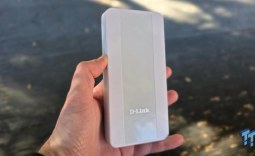 D-Link F518 5G Wi‑Fi 6 AX1800 Mobile Hotspot Review: All-Day Mobile Hotspot
 Bose Lifestyle Ultra Speaker Review - Impressively Detailed Room-Filling Sound
 MSI Z890 Gaming Plus WIFI6E Review - Z890 for under $200
 Mortal Kombat (1995) 4K Ultra HD Blu-ray Review
 CPS PCCOOLER YS1200 ATX 3.1 80 PLUS Gold PSU Review
 ASRock X870E Taichi White Review: a premium AM5 motherboard with 10G LAN and WiFi 7
 Asetek Initium Pedal Modular Upgrades Review
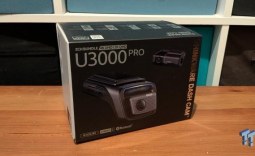 Thinkware U3000 Pro Review - Smart Dashcam with Wi-Fi quirks
 Montech TG3 Mid-Tower Chassis Review
 ASUS ROG Strix X870E-A Gaming WiFI7 Neo Review - A New Enticing Option
 I ditched the Windows 11 context menu for this open-source tool, and here's why
 Windows 11 may be encrypting your drive already, and I checked where my recovery key went
 GIGABYTE's 40 Days of INFINITY celebrates 40 Years of Innovation with stunning GeForce RTX graphics cards and rewards
 I swapped File Explorer for this free file manager and finally got the layout I wanted
 How to tell if someone has been using your Windows PC without your permission
 6 Task Manager tips for troubleshooting Windows performance problems
 ASUS ROG's 20th Anniversary Line-up of Premium PC Gaming Gear has Arrived - Here's Everything You Need to Know
 Six File Explorer tips every Windows user should know
 I switched my PC to encrypted DNS in Windows 11, and browsing felt more private
 Printer Not Working in Windows? How to fix detection, print queues and drivers