
A study on the treatment titled "Impact of Histotripsy on Development of Intrahepatic Metastases in a Rodent Liver Tumor Model" has been published in the journal Cancers.
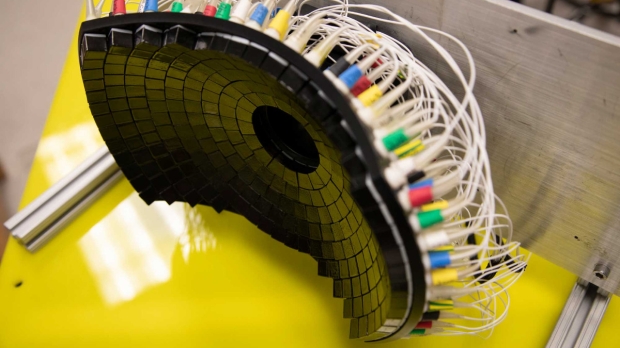
The 700kHz, 260-element histotripsy ultrasound array transducer used in Prof. Xu's lab. Image credit: Marcin Szczepanski, Michigan Engineering
Researchers from the University of Michigan have developed a noninvasive sound technology capable of breaking down liver tumors in rats, killing cancer cells, and spurring the immune system to prevent the further spread of cancer. The treatment is called histotripsy and utilizes focused ultrasound waves to destroy target tissues with millimeter precision.
"Histotripsy is a promising option that can overcome the limitations of currently available ablation modalities and provide safe and effective noninvasive liver tumor ablation," said Tejaswi Worlikar, a doctoral student in biomedical engineering.
Using this technique, the researchers could destroy between 50% and 75% of liver tumor volume in the rats, relieving enough of the burden for the rats' immune systems to clear the rest. In over 80% of the animal subjects, there was no evidence of recurring tumors or metastases, meaning cancer that has spread elsewhere in the body.
"Even if we don't target the entire tumor, we can still cause the tumor to regress and also reduce the risk of future metastasis," said Zhen Xu, professor of biomedical engineering at U-M and corresponding author of the study.
You can read more from the study here.
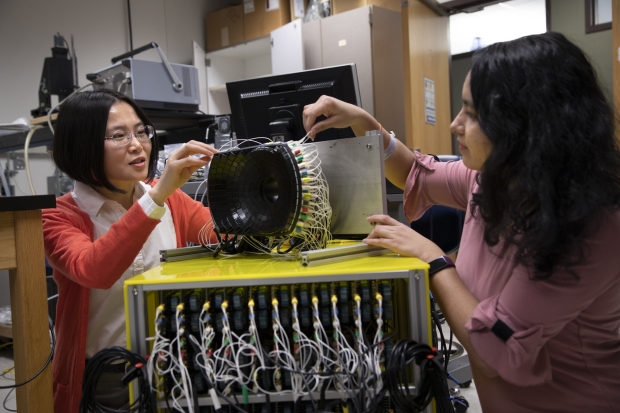
Zhen Xu, Professor of Biomedical Engineering at the University of Michigan (left), and Tejaswi Worlikar, Biomedical Engineering Ph.D. student (right). Image credit: Marcin Szczepanski, Michigan Engineering
Adam's Top 3 Recommended Articles:
Read more: NASA satellite spots helicopter flying on Mars' surface
Read more: Lone Ukrainian tank sneaks up on and ambushes Russian convoy
Read more: Almost all Bitcoins that will ever exist have now been mined