







Science, Space, & Robotics - Page 241
Explore the latest Science, Space, Health, and Robotics news from TweakTown. Coverage includes space launches, medical tech, discoveries, and rockets. - Page 241
Stay Updated
Follow TweakTown for breaking tech news, reviews, and daily updates.


As an Amazon Associate, we earn from qualifying purchases. TweakTown may also earn commissions from other affiliate partners at no extra cost to you.
ScienceFriday: NASA ends efforts to repair Kepler Space Telescope
News came in overnight that NASA has decided to call off all efforts dedicated to repairing its crippled Kepler Space Telescope. The 0.95-meter space telescope was launched four years ago with the task of discovering Earth-size planets orbiting nearby stars. The mission has widely been considered a success with hundreds of new planets now catalogued.
A few months back, the telescope's gyroscopic reaction wheels began failing, and this makes precisely aligning the telescope for stable long exposure shots impossible. Kepler resides in such a high orbit that even if we had a servicing robot or still flew space shuttles, we would simply not be able to reach it and as such, NASA has decided to end all efforts attempting to revive the telescope.
With Kepler gone and the Hubble space telescope quickly nearing its end of life, our only hope for outer space imaging sources now relies on the constantly threatened James Web Space Telescope. Unfortunately, it appears that every time our lawmakers start talking budgets, the James Webb is always the first to take the hit. I don't normally do this sort of thing, but if you like the images that the Hubble provides, and think hunting for new earth-like planets is a good thing, then please contact your local congressman and let them know that the James Webb space telescope is a good thing.
Continue reading: ScienceFriday: NASA ends efforts to repair Kepler Space Telescope (full post)
ScienceFriday: NASA says it has no idea where Voyager 1 is in space
It has been 35 years since NASA's Voyager 1 spacecraft blasted off from terra firma and headed into the final frontier. During this journey, the space probe has visited Saturn, Jupiter, and has even managed to leave our solar system. Well maybe it has left, or maybe it is still here. Not even NASA is sure whether or not Voyager 1 has reached interstellar space.
If you're a space buff like me, I know what you're thinking, NASA's Jet Propulsion Laboratory (JPL) announced last year that Voyager 1 has in fact left our solar system and is now streaking through interstellar space. Unfortunately, the original Voyager science team seems to think otherwise.
To toss even more confusion into the mix, both the University of Maryland as well as Boston University both agree that Voyager 1 actually reached interstellar space on July 27, 2012, and for the moment, NASA has agreed to simply disagree and released a statement saying that they simply have no idea where Voyager 1 actually it.
Continue reading: ScienceFriday: NASA says it has no idea where Voyager 1 is in space (full post)
Perseid Meteor Shower set to dazzle stargazers on August 11
August holds a special event for stargazers across the nation in the form of the annual Perseid Meteor Shower. This astronomical event occurs on an annual basis and produces more fireballs and "shooting stars" than any other meteor shower. During its peak, stargazers could see more than 100 meteors per hour with some streaking across the sky as bright fireballs.
"We have found that one meteor shower produces more fireballs than any other," Bill Cooke of NASA's Meteoroid Environment Office said in a statement. "It's the Perseid meteor shower, which peaks on August 12 and 13."
Cook and a team of scientists from NASA have placed meteor observing cameras across the southern United States in an effort to count the amount of fireballs produced during the Perseid event and between 2008 and 2013, the project logged 568 fireballs. This is significantly more than next largest meteor shower event, The Geminids.
Continue reading: Perseid Meteor Shower set to dazzle stargazers on August 11 (full post)
Researchers create world's smallest recreation of Mona Lisa
The world's smallest re-creation of the Mona Lisa has been painted on a surface that is just 30 microns in width, which is roughly one-third as wide as a human hair. This tiny feat was accomplished by researchers at the Georgia Institute of Technology and used a process known as ThermoChemical NanoLithography, which is similar to the process used to etch the circuitry on the silicon used in microprocessors.
The process uses a precise application of heat in a painstaking process that "paints" the image pixel by pixel. Varying the amount of heat allows for changes in in the darkness of the gray used to illustrate the image. For example, the more heat used in a single pixel, the darker that pixel will be. Likewise, less heat produces a lighter pixel.
"By tuning the temperature, our team manipulated chemical reactions to yield variations in the molecular concentrations on the nanoscale. We've created a way to make independent patterns of multiple chemicals on a chip that can be drawn in whatever shape you want," Jennifer Curtis, an associate professor in the School of Physics and the study's lead author, said in a statement.
Continue reading: Researchers create world's smallest recreation of Mona Lisa (full post)
Canada reaches for deep space with next-gen robotic arm
Canada's Next-Generation Canadarm (NGC) have developed a new version of their robotic space arm that will help out with space exploration. The program itself is designed to support missions in both low-Earth orbit, and deep space.
The next-gen robotic arm will be used for jobs from repairing communications satellites to helping out on manned missions to the moon, asteroids, Mars, and other vast parts of the universe. Alain Ouellet, the Director of Space Exploration Development at the Canadian Space Agency (CSA) said:
"With the retirement of the space shuttle, a new generation of crewed space exploration vehicles will soon become available. However, these new vehicles are much smaller in size compared to the space shuttle, and therefore there is a need to adapt the robotic arm technology developed for the shuttle and the International Space Station."
Continue reading: Canada reaches for deep space with next-gen robotic arm (full post)
ScienceFriday: Hubble captures breathtaking image of Comet ISON, one of the greatest comets humans will ever see
It has been several months since I have made a Science Friday post here at TweakTown and I have been wanting to bring it back. So many of you have mentioned how much you enjoyed them, so I am going to attempt to make 1-2 science related posts every Friday. Today, NASA released a breathtaking image of Comet ISON taken with the Hubble Space Telescope back on April 30. The image shows ISON streaking through our solar system with many stars and faint galaxies in the background.
The image is comprised of five photos that the researchers at NASA stitched together to form such a wide field of view. "The result is part science, part art," Josh Sokol of the Space Telescope Science Institute in Baltimore, Md., which operates Hubble, wrote in a blog post last week. "It's a simulation of what our eyes, with their ability to dynamically adjust to brighter and fainter objects, would see if we could look up at the heavens with the resolution of Hubble."
Comet ISON, is a sungrazing comet discovered on September 21, 2012, by Vitali Nevski and Artyom Novichonok. The discovery was made using a 0.4 meter--16 in--reflecting telescope. As the comet warms as it moves closer to the sun, its rate of sublimation (a process similar to evaporation in which solid matter transitions directly into gas) will increase. The comet will get brighter and its tail will grow longer. The comet is predicted to reach naked-eye visibility in November.
Scientists finally capture video of the pitch dropping in 69-year-old Pitch Drop Experiment
86 years ago, the University of Queensland in Australia began conducting an experiment in which the flow rate of a piece of pitch was measured. For those of you who may not know what pitch is, it's a highly viscous liquid which, for all intents and purposes, appears to be solid. Bitumen is the most commonly used form and at room temperature, this tar pitch flows at a very slow rate sometimes taking up to a decade or more for a single drop to fall.
The University of Queensland is not the only institution studying this phenomenon. Trinity College in Dublin, Ireland has also been conducting their own experiment since 1944. Finally after 69 long years, the first drop of pitch has finally fallen. The drop occurred on July 11, 2013 at 5 PM local time and webcams that were set up last April were on hand to catch this extremely rare occurrence.
While some of you may not understand the excitement, I find in things like this let me break down how many times human eyes have missed seeing this event take place. According to Prof. John Mainstone of the University of Queensland, he has missed several opportunities to witness the drop happening with his own eyes. First in 1979, Mainstone said that he skipped one of his usual Sunday campus visits and coincidentally the drop happened the same day. Then again in 1988, Mainstone left his lab to grab a snack and apparently missed the drop by just five minutes. Finally in 2000, fed up with missing the drop, Mainstone set up a camera but unfortunately a glitch at the moment of the drop prevented any video of the event occurring.
X-47B makes its first landing on an aircraft carrier, the aircraft just took a giant leap for unmannedkind
The Northrop Grumman-built X-47B is an unmanned drone, and it has completed its first successful landing on an aircraft carrier at sea. We reported on the X-47B being the first unmanned drone to take off from an aircraft carrier, but landing unmanned? Remarkable.
Considering aircraft carriers are constantly moving with the ocean waves, even an experienced pilot would have trouble landing on one. It's not an easy thing to do, but unmanned, run purely on technology, algorithms and equipment? That's quite an achievement. The X-47B Unmanned Combat Air System (UCAS) is designed to fly mostly on its own, without much hands-on time from shipboard operators.
The precision landing was just that: precise. It is a huge step for multiple reasons, as this has been a procedure set in motion after quite a few years, and nearly a billion US dollars. On Wednesday, the X-47B made a 35-minute flight from the Navail Air Station at Patuxent River, Md., to the aircraft carrier, where it hooked onto the 3 wire with its tailhook and came to a perfect stop from a speed of approximately 145 knots in less than 350 feet.
Solar panels will be much cheaper by 2017, would cost around 36c per watt
It looks like adoption rates of solar power are about to get much better, with the cost of photovoltaic solar panels expected to drop to around 36c per watt by 2017, according to new research by cleantech market research firm, GTM Research.
Solar panels are currently backed up by natural gas and other types of power plants on the electricity grid... but with solar panels costing just $0.36 per watt, this would make it a good idea to install many more solar panels to back each other up instead of relying on another, older, Earth- and human-harming way of generating power.
At 36c per watt, 1000W of solar power is only going to cost you $360. With these costs arriving by 2017, we're not far from a far brighter (pun intended) future. Read more on this at the source.
Google's engineering director says humanity is close to achieving immortality
Google's engineering director, Ray Kurzweil, has come out with a crazy prediction - that the human race will soon develop the technology to keep us alive forever. CNBC reports that Kurzweil told the Global Future 2045 World Congress this week that life expectancies "will go into high gear within 10 and 20 years from now."
Kurzweil added that within "probably less than 15 we will be reaching that tipping point where we add more time than has gone by because of scientific progress." This means that Kurzweil thinks within the next 20 years, technology will have reached a point to add more years to our lives than the pace we currently live at through natural ageing. I don't quite think we'll get there, with all of the government regulation and the idea that everything has to be about making money - and everyone not dying surely has to have some serious consequences.
If no one died, how would the economies of the world work exactly? If you could live for 5000 years, you'd live a much different life than you would now, wouldn't you? It really does make you think - what do you think about living forever?
Thought the speed of light was fast? NASA is about to get a speeding ticket with their next field test
I think mainstream science has been suppressed for a very long time now, and it's about time that we find out, as a human race, what the reality of our existence really is. The first steps in this, are reversing the mainstream points of science. It looks like NASA could do something good here, with their latest field test that could prove that there is a possibility of faster-than-light travel.
Harold White and his team at NASA have been working on something called the Alcubierre Drive. This new method could use a solution which would see a craft placed within a space that is moving faster than the speed of light. This means that the craft itself isn't moving at the speed of light, meaning the craft itself doesn't need a propulsion system capable of travelling at that speed. This is where things get a little confusing, so grab your white lab coat and come on a walk with me.
The Alcubierre Drive is based on Einstein's field equations, which suggest that a spacecraft could indeed travel faster than the speed of light. But, instead of the craft itself pushing past the speed of light, it would do so by contracting space from in front of it, and expanding the space behind it - a nice trick. It's this type of science that I love reading about, and I think this is the future of space travel - thinking outside the box, which this kind of is.
ScienceTT: NASA looking to bring Star Trek replicator to life, funding 3D printer capable of printing food
"Tea, Earl Grey, Hot" It's the classic line from TV's Star Trek: The Next Generation, where Captain Picard walks up to the Replicator in his living quarters and orders a cup of tea. While some have likened that scene with the consumer level 3D printers of today, we are still unable to replicate food from thin air. NASA is looking to change that.
With 3D printers growing cheaper and more popular by the day, it only makes sense for NASA to investigate the use of RepRap style 3D printers for making a hot slice of pizza, right? Mechanical engineer Anjan Contractor received a $125,000 grant from the agency to build a prototype 3D printer with the aim of automating food creation.
The idea behind the project is to take a RepRap Mendel 3D printer and convert the extrusion head to print a mixture of "nutrients" that will form the basis of the food product you wish to eat. Contractor says the nutrient cartridges will have a lifespan of 30 years, making them stable enough for space travel. The project will begin with a proof of concept test where he will print chocolate and the plan is to ramp up from there.
SpaceTT: Serious malfunction shuts down NASA's Kepler Space Telescope
This morning we are waking up to the news that NASA's Kepler Space Telescope may have just came to an early end of mission due to a faulty piece of orientation hardware. The fault falls within one of the wheels that stabilize and help keep the spacecraft pointed in the right direction.
When Kepler needs to be repositioned or stabilized for image capturing, three wheels are spun up to take advantage of centripetal force. Kepler needs three of its wheels running at all times to ensure a stable orientation. On Wednesday NASA officials announced that one of those three wheels had stopped functioning, which put the telescope into "safe mode."
Unfortunately, unlike the Hubble Space Telescope, Kepler is far away from our reach and was not designed to be serviceable. Plus, with the shuttle program long gone, it's not like we would have a way to get to it anyway. "Kepler's not in a place where I can go up and rescue it, or any other astronaut," said John Grunsfeld, the head of science at NASA, and the man who is famous for repairing the Hubble.
Continue reading: SpaceTT: Serious malfunction shuts down NASA's Kepler Space Telescope (full post)
SpaceTT: Coolant leak on the International Space Station poses no threat to astronauts, says NASA
Yesterday, astronauts on the International Space Station (ISS) discovered an ammonia leak in a coolant loop that cools the power system attached to one of the large solar arrays on the ISS. NASA officials say that the crew of six is in no danger and that this leak will most likely result in the array being shut down until the leak is fixed.
This same system has had leaks before, in 2007 a leak in the same spot was discovered, but was much smaller then and was such that it did not warrant an immediate repair. It was so small that the system was recharged with just eight pounds of ammonia in 2011 during a visit from the Space Shuttle Endeavor. Last November, an attempt to repair the leak was made during spacewalks made by NASA astronaut Sunita Williams and Japanese space flyer Akihiko Hoshide. The fix was only temporary though and now it has reared its ugly head again.
"It is a serious situation, but between crew and experts on the ground, it appears to have been stabilized. Tomorrow we find out for certain," space station commander Chris Hadfield of Canada wrote Thursday via Twitter, where he posts updates as @Cmdr_Hadfield.
Google and Time team up to launch Timelapse, a new tool for viewing how Earth has changed
This morning Google and Time released the culmination of a project in which they teamed up with NASA and the US Geological Survey to produce a historical perspective on how Earth has changed over the past 30 years.
The project takes satellite imagery produced by the LandSat program and stitches them together removing clouds and haze to produce animated GIF images of how a region has changed over the past three decades. The Time.com hosted site features a handful of pre-chosen sites such as the Amazon Rainforest, Las Vegas, Dubai, Mendenhall Glacier and the Oil Sands fields in Russia.
The project consists of literally millions of individual images taken by the LandSat satellites that have been orbiting Earth at an altitude of over 400 miles since the 1970's. The project began in 2009 when Google began working with the USGS to make the entire archive of LandSat imagery available to the public.
World's smallest video by IBM features actors played by atoms, certified by Guinness
The video you are about to see was not created in CGI, nor does it use any of Hollywood's video trickery. Scientists at IBM's Almaden Research Lab in San Jose, CA, have figured out a way to precisely move and manipulate individual atoms in very precise ways. So precise, in fact, that they were able to film the world's smallest video using nothing but the building blocks of all matter.
When it comes to the things I love, the video above is about as high on the list as it gets. The simple fact that we have the technology to now take an individual atom and place it anywhere in space that we want is simply astounding, when you consider the fact that less than 100 years ago we had no idea that atoms even existed. To get a scale of what is going on here, each dot has been magnified about 100,000,000 times.
The video was made by using a scanning tunneling microscope that weighs as much as a full sized truck and operates at -268 degrees Celsius. The positioning of the atoms was achieved by moving a very tiny needle across the surface of a piece of copper the size of a postage stamp with a height from the surface of just one nanometer.
Curiosity back in contact with NASA handlers, NASA discuss what the next steps are
Everybody's favorite little rover, Curiosity, is back in contact with its handlers on Earth, now that Mars and Earth are in an alignment where communication is possible. Curiosity had previously been sitting mostly idle for the last four weeks while the sun blocked communications between Earth and Mars.
The first step NASA has to complete is to update Curiosity's software. After Curiosity is brought up to speed, its handlers will instruct the rover to continue analysis on Yellowknife Bay. Yellowknife Bay is the location that Curiosity has already found the basic building blocks of life.
Eventually, scientists want Curiosity to climb up Mount Sharp.
Anti-gravity has been through its first test at Cern's Alpha experiment
Researchers at Cern in Switzerland have some interesting things to play with, and have now proved the merits of a way to test antimatter as a source of the thing we all want to see in our futures: "anti-gravity".
Antimatter particles are the "mirror image" of normal matter, but have an opposite electric charge. Antimatter and its relationship with gravity is still a mystery, but it may just simple "fall up" rather than down. Researchers reporting in Nature Communications have made a few steps toward solving this notion.
Antimatter continues to be one of the biggest question marks in physics, where equal amounts of matter and antimatter should have been created at the Universe's beginning. But, if the two were to shake hands, they destroy each other in what is called annihilation, turning into pure light. Cern's Alpha experiment is here to help the researchers hopefully solve this.
Virgin Galactic successfully completes first test flight of its commercial space plane
Our readers seem to have quite an interest in space, and who wouldn't? As part of the commercialization of space and space travel, Virgin Galactic has successfully completed the first test flight of its space plane, which will eventually be used to take ordinary citizens into space.
Don't start packing your bags quite yet, though, as Virgin Galactic didn't even make it into space on this first test flight. The plane behaved as expected and flew for around 10 minutes before returning to the ground. It was shuttled to an altitude of 47,000 feet before being released to fly on its own.
After being released, the plane flew up to 55,000 feet and broke the sound barrier. Virgin Galactic expect to test the plane in space by the end of the year and plan to have real flights for everyone available starting in 2015.
NASA goes low-budget, launches three smartphones into orbit
NASA have just launched three Nexus One smartphones into orbit as part of a low-budget, experimental satellite program that uses off-the-shelf components.
The three Android-powered devices are now circling high above the Earth, encased in 4-inch metal cubes, at an altitude of around 150 miles and will burn up on re-entry within the next two weeks. NASA's mission of each PhoneSat is easy, they just have to take photos of the Earth and send back periodic radio messages.
The mission is to see if the smartphones are capable of supplying the "brains" of future satellites, which would make satellites much cheaper in the future. NASA launched the smartphones into orbit on Sunday when Orbital Science Corp.'s Antares rocket lifted off from Virginia. Amateur radio operators had begun notifying NASA that they could pick up radio signals from the satellites within hours of the launch.
Continue reading: NASA goes low-budget, launches three smartphones into orbit (full post)
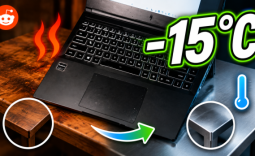 Redditor improves his gaming laptop temps by 15C simply by changing the table
 Phantom Blade Zero on PC will launch with DLSS 4.5 and Ray Tracing on day one
 Razer announces its first Artisan Keycap with the Triple-Headed Snake Edition
 ZOTAC's 20th Anniversary Edition GeForce RTX 5080 features a titanium colorway and mirror-like backplate
 GeForce NOW app for Linux leaves beta, while DLSS Frame Generation cloud latency also improves
 Twitch opts streamers into gen AI training by default, faces harsh backlash
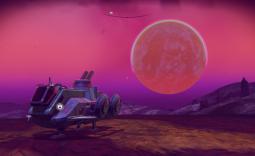 Sean Murray still plays the 2016 launch version of No Man's Sky
 China's YMTC has climbed to third place in global NAND flash shipments
 $100 GTA 6 version makes up 89% of pre-orders, analysts estimate
 HWiNFO's latest update quietly confirms Intel is working on Razor Lake-AX
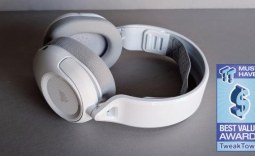 Corsair HS35 v3 Wireless Gaming Headset Review - An Affordable Winner
 D-Link F518 5G Wi‑Fi 6 AX1800 Mobile Hotspot Review: All-Day Mobile Hotspot
 Bose Lifestyle Ultra Speaker Review - Impressively Detailed Room-Filling Sound
 MSI Z890 Gaming Plus WIFI6E Review - Z890 for under $200
 Mortal Kombat (1995) 4K Ultra HD Blu-ray Review
 CPS PCCOOLER YS1200 ATX 3.1 80 PLUS Gold PSU Review
 ASRock X870E Taichi White Review: a premium AM5 motherboard with 10G LAN and WiFi 7
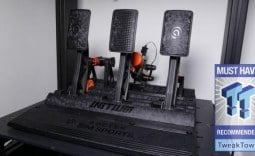 Asetek Initium Pedal Modular Upgrades Review
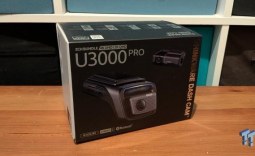 Thinkware U3000 Pro Review - Smart Dashcam with Wi-Fi quirks
 Montech TG3 Mid-Tower Chassis Review
 I ditched the Windows 11 context menu for this open-source tool, and here's why
 Windows 11 may be encrypting your drive already, and I checked where my recovery key went
 GIGABYTE's 40 Days of INFINITY celebrates 40 Years of Innovation with stunning GeForce RTX graphics cards and rewards
 I swapped File Explorer for this free file manager and finally got the layout I wanted
 How to tell if someone has been using your Windows PC without your permission
 6 Task Manager tips for troubleshooting Windows performance problems
 ASUS ROG's 20th Anniversary Line-up of Premium PC Gaming Gear has Arrived - Here's Everything You Need to Know
 Six File Explorer tips every Windows user should know
 I switched my PC to encrypted DNS in Windows 11, and browsing felt more private
 Printer Not Working in Windows? How to fix detection, print queues and drivers