







Science, Space, & Robotics - Page 240
Explore the latest Science, Space, Health, and Robotics news from TweakTown. Coverage includes space launches, medical tech, discoveries, and rockets. - Page 240
Stay Updated
Follow TweakTown for breaking tech news, reviews, and daily updates.


As an Amazon Associate, we earn from qualifying purchases. TweakTown may also earn commissions from other affiliate partners at no extra cost to you.
Age reversing process in mice successful, next step is human trials
Scientists have been working for years on the age reversing process, but it looks like we're very close to it being a reality. Scientists have successfully reversed the aging process in mice, according to a new study.
The next step? Human trials, something that will begin possibly before 2014 wraps up. The study itself was published in the peer reviewed science journal, Cell, after US and Australian scientists made the breakthrough discovery. David Sinclair of the University of New South Wales, and lead researcher, says he's hopeful that the results can be duplicated in human trials.
Where this gets amazing, is that not only could the aging process be slowed down, but a measurable reversal. The study showed that after administering a certain compound to the mice, muscle degeneration and diseases caused by aging were reversed. Sinclair was amazed at the results, saying they had exceeded his expectations, he explained: "I've been studying aging at the molecular level now for nearly 20 years and I didn't think I'd see a day when ageing could be reversed. I thought we'd be lucky to slow it down a little bit. The mice had more energy, their muscles were as though they'd be exercising and it was able to mimic the benefits of diet and exercise just within a week. We think that should be able to keep people healthier for longer and keep them from getting diseases of ageing".
Continue reading: Age reversing process in mice successful, next step is human trials (full post)
Fight against veteran brain injury going high tech to change lives
Medical researchers and military veterans are increasingly teaming up to study traumatic brain injuries (TBI) that U.S. personnel are dealing with after returning home from the battlefield. An estimated 15 to 23 percent of Iraq and Afghanistan veterans suffer TBI, which equates to about 300,000 to 460,000 soldiers in need of various levels of medical treatment.
Researchers are developing new objective imaging testing methods that provide better insight of brain scans and cognitive testing - and while progress is accelerating - there are a large number of veterans that aren't receiving proper medical treatment. However, using a new diffusion tensor imaging helps indicate nerve track fiber damage and provides better guidance to detect mild-TBI episodes that can be more easily corrected if discovered quickly.
"Traumatic brain injury and post-traumatic stress is a different kind of wound," noted Arnold Fisher, Intrepid Fallen Heroes Fund staff member. "It's unseen. Apparently, because it's unseen, very many people don't understand it."
Continue reading: Fight against veteran brain injury going high tech to change lives (full post)
Smartphone usage at night can tire you out the next day, study says
A smartphone "hangover" plaguing people that check their smartphones after 9:00 p.m. revealed users tend to be more exhausted the next day, according to a new study from Michigan State University. The drop in energy and productivity level is similar to a drinking hangover suffered the morning after partaking too much at the local pub.
"It can be a double-edged sword," said Russell Johnson, MSU assistant professor of management, in a statement. "The night-time use of smartphones appears to have both psychological and physiological effects on people's ability to sleep and on sleep's essential recovery functions."
How everyone feels each day is strongly correlated to healthy sleeping habits, with sleep quality - and quantity - impacting personal health. As more people begin to look for ways to improve sleep, a custom sensor-based inference algorithm is being tested to help educate sleepers and help develop better habits. There also are a growing collection of wearables and accessories that help study - and improve - sleep habits.
Continue reading: Smartphone usage at night can tire you out the next day, study says (full post)
Scientists develop 'space cops', satellites that patrol Earth's orbit
US researchers and scientists have developed the Space-Based Telescopes for Actionable Refinement of Ephemeris, or STARE, which is basically a bunch of small satellites that orbit the Earth, helping satellites avoid collisions with space junk - so, really, space cops.
These 'space cops' have the researchers seeing a future of deploying countless satellites into Earth's orbit, with the space cops then relaying information about potential collisions between satellites and space debris back to Earth, which would then send alternative coordinates to the satellites that are in trouble.
A ground-based satellite was used to refine the orbit of the NORAD 27006 satellite, which was based on the first four observations made within 24 hours. The team managed to predict NORAD's satellite trajectory to within 50m, in under 36 hours. Considering that current technology is only capable of working out the pace of a space object within a 1km range, which gives ground operators the hard time of weeding through thousands of false alarms, for that one rock that might cause trouble.
Continue reading: Scientists develop 'space cops', satellites that patrol Earth's orbit (full post)
HIV vaccine could happen thanks to a free, crowdfunded project
A research team completely crowdfunded, is using a machine learning algorithm to examine the cells of rare individuals who are immune to HIV, and are looking to make a vaccine from their efforts.
The team is known as The Immunity Project, which promises a revolutionary method to reach its goals, vowing to revolutionize how we look at vaccines in general, too. Pharmaceutical companies projects can, and do cost billions of dollars - but this project could solve a very large problem, and is simply crowdfunded.
The Immunity Project is run by researchers out of Harvard, Stanford and MIT, with some big names on the roster: the creators of the Internet's first spam filter, an artificial intelligence and machine learning specialist at Microsoft, and the founder of Flow Pharma and drug delivery system specialist.
Continue reading: HIV vaccine could happen thanks to a free, crowdfunded project (full post)
Bright super nova appears in M82, 12 million light years from earth
The past few days have been quite exciting for scientist and astronomers world wide due to a very bright super nova appearing in the galaxy M82. While a super nova appearing is not a rare event, one happening in a galaxy as close as M82 is quite the rarity indeed.
M82 is just 12 million light years away making this one of the closest nova events recorded by modern science. Furthermore, this event is quite special for amateur astronomers as well as causal star gazers as the super nova is bright enough for viewing with binoculars and is quite spectacular in even the most modest amateur telescopes. The super nova is expected to brighten to about the 8th magnitude which would last for a few days.
In the image above you can see the super nova appear in the bottom image. Nothing is known about the star that exploded, but one thing is for sure... anything orbiting the star pre-nova was vaporized in the blink of an eye. With the galaxy being roughly 12 million light-years away, the star actually went super nova about 12 million years ago, and we are just now begging to see the photons emitted from the explosion. Some scientist say that with a super nova this close, we could even see neutrinos from the event making their way to Earth.
Continue reading: Bright super nova appears in M82, 12 million light years from earth (full post)
US Army invests in Linux-powered, Wi-Fi capable 'smart rifles'
It seems that the United States military is investing in some next-gen firearms, which feature an internal computer, sensors that gauge environmental factors to help soldiers aim, and more, according to tech startup, Tracking Point.
Tracking Point has announced that the US military purchased six of its "smart" rifles, which are priced at between $10,000 and $27,000 each. The smart rifles feature technology so advanced that the initial investment should pay itself off over and over again in the future. A soldier equipped with a smart rifle would simply need to tag a target viewable on a screen, which is found on the gun's scope. The internal computer will then tell the shooter exactly how to hold the gun, and when to press the trigger.
Oren Schauble, a Marketing Official for the company: "Rifles can communicate with each other. We can enable a more information-driven combat in the sense that you can tag targets. You can pass off those targets to someone else with a scope. There's a whole layer of communication that comes with having a rifle that can designate and track targets."
Continue reading: US Army invests in Linux-powered, Wi-Fi capable 'smart rifles' (full post)
Brain-computer interface shows great potential over next 12 years
Intel and other established tech companies are showing interest in the blossoming brain-computer-interface (BCI) market, according to Mind Solutions. BCI is a dedicated communication pathway between the human brain and a device - with early focus on helping medical patients recover from severe physical injuries.
With the help of Intel and other companies, Mind Solutions hopes to see BCI become more common place over the next few years. As the number of transistors powering PCs and mobile devices increases, especially as technology surpasses neurons in the human brain, there is great potential for long-term development.
"We will finally remove the fiction from the science fiction," said Mooly Eden, Intel head of perceptual computing, during CES. It will be possible to "open a car door with our finger, receive constant information about our health" along with using devices that "interface directly with your brain."
Continue reading: Brain-computer interface shows great potential over next 12 years (full post)
Burger-flipping robot makes 360 gourmet burgers per hour
Don't you hate it when you see an advertisement for a burger, but when you buy it, it looks nothing like it? Well, Momentum Machines has unveiled the 'Smart Restaurants' machine, a robot that is capable of making 360 gourmet burgers, per hour.
These burgers can be customized, which is nothing for this robot. The robot is 24 square foot machine, which is pictured above. Momentum Machines has said: "Fast food doesn't have to have a negative connotation anymore. With our technology, a restaurant can offer gourmet quality burgers at fast food prices. Our alpha machine replaces all of the hamburger line cooks in a restaurant. It does everything employees can do except better."
Better yet, it will make custom orders like a pro. The robot will only slice the toppings seconds before it places them onto the burger, ensuring you get the freshest burger possible. It will slide up specific slices of meat and toppings, and is a more sanitary, cleaner way of making gourmet burgers. Momentum Machines says that because of these robots' efficiency, restaurants can cut down on labor costs, and spend more on better quality ingredients.
Continue reading: Burger-flipping robot makes 360 gourmet burgers per hour (full post)
Majority of PC users suffer from digital eye strain, report claims
Almost 70 percent of consumers in the United States suffer from digital eye strain from continuous use of electronic devices, according to The Vision Council. As casual consumers become more comfortable with devices like smartphones and tablets, it seems there is major concern that digital eye strain will become more prevalent. The term digital eye strain explains two or more hours using a device with a digital screen - and includes dry, red and irritated eyes, fatigued eyes, blurred vision, headaches, and back, neck or shoulder pain.
"Digital eye strain has become a large concern for the vision community," said Ed Greene, The Vision Council CEO, in a statement. "Fortunately, the optical industry has made great strides in the past year to develop lens technologies that can best address the causes of digital eye strain. Like other glasses we rely on to read and see clearly, computer glasses are transforming the way we look at computer and handheld devices."
For better eye health, the "20-20-20" rule: After every 20-minute duration, take a short 20-second break while looking at something 20 feet away. When reading text or looking at a particular screen, either increase font size or zoom in.
Continue reading: Majority of PC users suffer from digital eye strain, report claims (full post)
Pyle rolls out the Bluetooth fitness scale
Pyle Audio recently introduced the Bluetooth Fitness Scale (PHLSCBT4), a custom designed scale including a smartphone app so owners can better track their health and fitness.
Scale owners are able to track data with the free Pyle Health Fitness Tracker app, and everything can be sent wirelessly via Bluetooth to a smartphone or tablet. Designed for Apple and Google Android products, and all data can be shared on Twitter or Facebook - or in an online password-protected workout log. Collected data includes: weight, body fat, hydration levels, muscle level and bone level percentages - and provides a great baseline of overall health.
The scale is available immediately with a $59.99 USD retail price. Pyle is best known as an audio company often specializing in consumer electronics, sports products, and professional audio - so this is a rather interesting product offering.
Continue reading: Pyle rolls out the Bluetooth fitness scale (full post)
Comet ISON is no more, new images show that it has fizzled out
Back when I first reported on Comet ISON, the entire astronomical community was convinced that if given the chance, ISON would bloom into the brightest comet in recorded history. ISON was deemed something special because this visit was its first into the inner solar system, and no one knew how it might react to the suns immense heat.
As ISON passed earth and headed towards the sun, it brightened a great bit and it looked as though we might get the spectacular once in a lifetime show that had been promised, but on Thanksgiving day that all changed. As the comet approached perihelion it seemed to take a quite sharp turn into the sun and hours passed without any sign of the ball of ice and rock. Shortly after many had declared ISON dead, a glimmer of hope appeared in the form of a bright v shaped cloud of dust that was heading away from the sun.
Many though that a fraction of ISON may have survived and that just a rocky nucleus was all that was left. If true, ISON could have flared back up to naked eye visibility once it was far enough away from the sun to not be out-shown by the suns glare. Unfortunately what we though was a solid intact nucleus turned out to be fragments of the comet that were rapidly disintegrating, and new images have shown that the bright dust trail left by ISON's remains have began to fade into obscurity. As of today, the official word appears to be that ISON has met its fate and was mostly vaporized upon its entry into the Suns coronasphere.
Continue reading: Comet ISON is no more, new images show that it has fizzled out (full post)
Chinese scientists use water to create metal, can print it, too
Yeah, science, b****. You all know the show, but science really is a magical thing, isn't it? Well, three Chinese scientists have found a new way to create metal, from liquid at room temperatures.
This metal can then be printed onto pretty much anything, as would ordinary ink. It will stick to surfaces such as rubber, paper, t-shirts, or even a leaf. Yes, a leaf, from an actual tree. The biggest thing to take away from this, according to the MIT Technology Review,e is that the alloy of gallium and indium that the scientists discovered.
It's printable at room temperature, compared to other circuit inks that require massive temperatures, upwards of 400C/752F. This is an issue when you want to print onto something that much catch fire, or perish, such as paper. The three scientists explain: "Different from the former direct writing technology where large surface tension and poor adhesion between the liquid metal and the substrate often impede the flexible printing process, the liquid metal here no longer needs to be pre-oxidized to guarantee its applicability on target substrates."
Continue reading: Chinese scientists use water to create metal, can print it, too (full post)
NASA set to launch the MAVEN mission to Mars today, watch it live
We know quite a bit about the surface of Mars, and have visited the red planet's surface several times now. One thing we do not know very much about though is the composition of the clouds and the very thin Atmosphere that surrounds Mars. Today NASA will launch a new probe aimed at the 4th planet that will study these things and lend us further insight into what Mars once was, and what it is today.
Today at 1:30pm Eastern, NASA will "Light the candle" otherwise known as an Atlas 5 rocket, and set MAVEN on its way to the Martian atmosphere. The Mars Atmosphere and Volatile Evolution or "MAVEN" probe will be put into a highly elliptical orbit around Mars and the probe will actually dip deep into the atmosphere to collect and study gasses that are present in clouds and the atmosphere in general. The purpose is to understand how Mars' atmosphere reacts with the Sun and what might have caused it to mostly disappear over the last several hundred million years.
MAVEN will orbit the planet and when its mission is done, the orbiter will be crashed into the surface of the planet. While this may seem like a waste, after several thousand dips deep into the atmosphere of Mars, MAVEN will have become quite weathered and its instruments, surface, solar panels, and other hardware will be near failure. Crashing the probe into the surface is the safest way to decommission the probe at the end of its life. For those who wish to watch the launch take place today at 1:30PM Eastern, NASA is streaming the launch live on NASA TV.
Continue reading: NASA set to launch the MAVEN mission to Mars today, watch it live (full post)
GravityLight, the portable light that is powered by gravity
A gravity powered LED light has been introduced by the designers of GravityLight. This light produces its own energy by, you guessed it, gravity. A string on one side of the light is pulled, lifting a bag attached to the other side. After letting go, the bag gradually falls back down to the starting point. This turns gears inside that produce enough energy to power the LED for up to 30 minutes. The weight of the bag determines how long the light will last. Brighter light settings can be selected but also shorten the amount of time it lasts.
This easy to use, portable light that uses no costly batteries or fuel also allows light in areas without electricity. It can replace dangerous kerosene lamps in those areas.
After raising a sufficient $400,000, which is $345,000 more than their original $55,000 goal, the designers are testing the new product and are expecting it to be available to the market soon after.
Continue reading: GravityLight, the portable light that is powered by gravity (full post)
Russia to open the Commercial Space Station hotel, in space, by 2016
I haven't traveled too much in my life, but if there's one place I'd love to visit it would be space, and it looks like it's becoming more of a reality each day, especially thanks to Russia.
Orbital Technologies, a Russian company, has announced plans to build a hotel... in space. The hotel would be for commercial use, and is officially known as the Commercial Space Station, which will be capable of housing 7 guests throughout 4 cabins. The Commercial Space Station will float about the Earth at 350km, with guests enjoying the zero-gravity feel.
There'll be no flowing water, so if you want to shower, you'll have to use wet wipes. What about going to the bathroom? Well, that will be carried through flowing air, with both water and air being filtered and recycled in the satellite itself, and then reused by the occupants of the hotel. There is a strict no-alcohol law on the space hotel, too.
Continue reading: Russia to open the Commercial Space Station hotel, in space, by 2016 (full post)
LeakedTT: AMD Hawaii R9 290X GPU specs, lick your lips, folks
We're all used to the naming scheme that AMD has adopted for its GPUs, with the current high-end single GPU being the Radeon HD 7970. This is all going to change with the next generation of GPUs from the chipmaker, and we have some leaked specifications to now share with you.
The next-gen GPUs from AMD will adopt a new name, with the high-end GPU to arrive as the Hawaii R9 290X GPU. This GPU is set to be based off of AMD's second generation Graphics CoreNext architecture, based on a 28nm process and will go head-to-head with NVIDIA's best GPU, the GTX Titan. We should expect an estimated die area of 430 mm², which is 18% bigger than Tahiti.
On top of that, the R9 290X - this is going to get very confusing, but we'll get used to it soon enough - will feature 2,816 stream processors across 44 clusters of 64 stream processors each. This represents a 37.5% increase over its predecessor, Tahiti. Base clock speeds should float at around 900MHz, but we should see overclocked models that will pass this easily.
Continue reading: LeakedTT: AMD Hawaii R9 290X GPU specs, lick your lips, folks (full post)
SpaceTT: Saturn, Venus and the Moon to appear side by side tonight
Tonight will be one of the last nights that you will be able to catch a trio of heavenly bodies hanging out in the night sky in the same neighborhood. This evening's sky watchers in the northern hemisphere will be treated to Saturn, Venus, and the Crescent Moon all within a few degrees of each other.
Tonight around 45 minutes after sunset, you will be able to look toward the southwestern sky and see the waxing crescent moon. To the lower right, you will see a very bright star which is actually the planet Venus. Above Venus, you will see another brightly lit star that will actually be the planet Saturn. The distance between the moon and Saturn will be roughly 5 degrees, which is equal to about half your fist or 3 fingers held at arm's length.
This will also be one of the last spectacular shows Saturn provides us for the year, because in just a few weeks, it will have dipped below the horizon and become visible to those in the southern hemisphere. For those of you with medium power binoculars or a telescope of at least 30-power, you would be able to view Saturn's rings tonight, even with it so close to the moon. I plan on taking out my telescope and imaging gear and getting a couple nice still shots of the trio. If you get any good shots, post them up in the comments and I will share them on our TweakTown Facebook Page.
Continue reading: SpaceTT: Saturn, Venus and the Moon to appear side by side tonight (full post)
ScienceFriday: The Sun unleashes massive solar storm aimed at Earth
It's that time again: it's Friday and that means more Science Friday news posts here at TweakTown! Today, a new report straight from NASA says the sun fired off an intense solar storm in the form of a Coronal Mass Ejection, or CME, that was aimed directly at the Earth early Wednesday morning.
The event took place around 1:24 AM EDT and sent billions of tons of charged particles steaming full speed ahead straight at Earth at a rate of 380 miles per second, or 1.3 million miles per hour. The storm is expected to reach the Earth on Saturday, however, do not let that scare you as our atmosphere will effectively block all of the harmful radiation that is headed our way. Those in the extreme north and south of both hemispheres can expect to see some awesome aurora over the next few days.
A statement from NASA confirmed that no one need to fear as this sort of event happens all the time. "These particles cannot travel through the atmosphere to harm humans on Earth, but they can affect electronic systems in satellites and on the ground," NASA officials explained in a statement. Head over to Source #2 to see an animated GIF of Wednesdays CME taking place.
Continue reading: ScienceFriday: The Sun unleashes massive solar storm aimed at Earth (full post)
SpaceTT: Nova in Delphinus brightens to magnitude 5.0
What a treat! I get to write two SpaceTT posts in one day! Stargazers across the northern hemisphere are witnessing a rare occurrence happening right before our eyes. A nova in the constellation Delphinus has brightened over the last couple of days to a magnitude 5.0 and has allowed naked eye viewing of the astronomical phenomenon.
In the upper left-hand corner of the image above, you can see Nova Del 2013 appearing as a large star shining brightly in a sea of fainter stars. What you are actually witnessing is a binary star system in which the larger star is having its hydrogen stripped off by the much smaller white dwarf star. As is fresh layer of hydrogen grows thicker and more dense, the lower layers erupt in a runaway hydrogen-fusion reaction. As the reaction takes place, the star grows much hotter and brightens in the night sky.
To get an idea of how large this explosion is, one can simply imagine what a hydrogen bomb the size of the Earth would look like. The nova was discovered on August 14 by astronomer Koichi Itagaki of Yamagata, Japan, around 2PM EDT. It was originally listed as a magnitude 17 in brightness, and has since grown 100,000 times in brightness. The event will most likely only last for a few more days, so if you have clear, dark skies, you might just be able to see it with your naked eye. Tossing in visual aid from binoculars or a telescope will greaten one's chance at observing the nova.
Continue reading: SpaceTT: Nova in Delphinus brightens to magnitude 5.0 (full post)
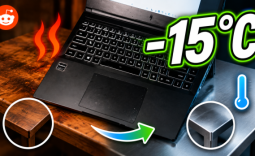 Redditor improves his gaming laptop temps by 15C simply by changing the table
 Phantom Blade Zero on PC will launch with DLSS 4.5 and Ray Tracing on day one
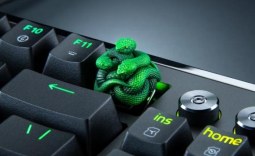 Razer announces its first Artisan Keycap with the Triple-Headed Snake Edition
 ZOTAC's 20th Anniversary Edition GeForce RTX 5080 features a titanium colorway and mirror-like backplate
 GeForce NOW app for Linux leaves beta, while DLSS Frame Generation cloud latency also improves
 Twitch opts streamers into gen AI training by default, faces harsh backlash
 Sean Murray still plays the 2016 launch version of No Man's Sky
 China's YMTC has climbed to third place in global NAND flash shipments
 $100 GTA 6 version makes up 89% of pre-orders, analysts estimate
 HWiNFO's latest update quietly confirms Intel is working on Razor Lake-AX
 Corsair HS35 v3 Wireless Gaming Headset Review - An Affordable Winner
 D-Link F518 5G Wi‑Fi 6 AX1800 Mobile Hotspot Review: All-Day Mobile Hotspot
 Bose Lifestyle Ultra Speaker Review - Impressively Detailed Room-Filling Sound
 MSI Z890 Gaming Plus WIFI6E Review - Z890 for under $200
 Mortal Kombat (1995) 4K Ultra HD Blu-ray Review
 CPS PCCOOLER YS1200 ATX 3.1 80 PLUS Gold PSU Review
 ASRock X870E Taichi White Review: a premium AM5 motherboard with 10G LAN and WiFi 7
 Asetek Initium Pedal Modular Upgrades Review
 Thinkware U3000 Pro Review - Smart Dashcam with Wi-Fi quirks
 Montech TG3 Mid-Tower Chassis Review
 I ditched the Windows 11 context menu for this open-source tool, and here's why
 Windows 11 may be encrypting your drive already, and I checked where my recovery key went
 GIGABYTE's 40 Days of INFINITY celebrates 40 Years of Innovation with stunning GeForce RTX graphics cards and rewards
 I swapped File Explorer for this free file manager and finally got the layout I wanted
 How to tell if someone has been using your Windows PC without your permission
 6 Task Manager tips for troubleshooting Windows performance problems
 ASUS ROG's 20th Anniversary Line-up of Premium PC Gaming Gear has Arrived - Here's Everything You Need to Know
 Six File Explorer tips every Windows user should know
 I switched my PC to encrypted DNS in Windows 11, and browsing felt more private
 Printer Not Working in Windows? How to fix detection, print queues and drivers