







Science, Space, & Robotics - Page 244
Explore the latest Science, Space, Health, and Robotics news from TweakTown. Coverage includes space launches, medical tech, discoveries, and rockets. - Page 244
Stay Updated
Follow TweakTown for breaking tech news, reviews, and daily updates.


As an Amazon Associate, we earn from qualifying purchases. TweakTown may also earn commissions from other affiliate partners at no extra cost to you.
SpaceTT: Man last set foot on the moon 40 years ago today
40 years ago today, the last men to walk on the surface of the moon blasted off and headed for home. Apollo 17 was the last of the Apollo missions to the moon, a feat we have not ventured to repeat since.
After three days exploring the Taurus-Littrow lunar valley, Apollo 17 astronauts Eugene Cernan (pictured above) and Harrison Schmitt lit the engine on the upper (ascent) stage of their lunar module "Challenger" and launched off the surface at 5:55 p.m. EST (2255 GMT) on Dec. 14, 1972. The word "Ignition" which was voiced by Schmitt was the last words ever spoken by man on the surface of the moon.
Schmidt was also the first geologist and professional scientist to fly on an manned NASA mission. Eugene Cernan, commander of the mission was the last human to leave a footprint on the surface and with his words "Lets get off" an era came to an end.
Continue reading: SpaceTT: Man last set foot on the moon 40 years ago today (full post)
$25 Rasberry Pi model A's are out in the wild.
Raspberry Pi, an ARM based micro computer that runs Linux, has seen a huge surge in its user base since its release. The reason for this is no doubt its price point of $35, which gets you a fully capable Linux machine with 512mb of memory, USB, Ethernet, and SD Storage. Well the Pi just got cheaper, with the model A costing a mere $25.
The Raspberry Pi model A is a slimmed down version of the model B. The model A features only 256mb of memory, and lacks an ethernet chip and jack. The Raspberry Pi Foundation did this because they know that not all projects will need the networking hardware and that by removing the Ethernet chip, they save 200mA of power consumption with the model A consuming just 100mA of power.
The model A has not yet been released for sales yet, but some boards did wind up in the hands of Limor Fried of Adafruit Industries as well as Pete Wood of Design Spark. Both of whom has released videos covering the new little ARM board.
Continue reading: $25 Rasberry Pi model A's are out in the wild. (full post)
Brilliant Geminid meteor shower peaks tonight
Skywatchers across the globe are in for a major treat tonight as the Geminid meteor shower peaks tonight along with a new unnamed meteor shower. With the moon at its new phase tonight the skies will be as dark as possible for the breathtaking event which is expected to produce around 100 "shooting stars" an hour.
To view the event you simply need to lay on your back and watch the constellation of Gemini. The meteors will seem to magically appear from that constellation. The action will be taking place all night with things really heating up starting at 10:00 local time and going into full effect around 2am. "Meteors from the new shower (if any) will be visible in the early evening, with the Geminids making their appearance later on and lasting until dawn," Bill Cooke, head of NASA's Meteoroid Environment Office, said in a statement.
For those of you unfortunate enough to have cloudy skies tonight like me, NASA will host a live web chat overnight from 11 p.m. to 3 a.m. EST (0400 to 0800 GMT), complete with live video of streaking meteors captured by a special camera at NASA's Marshall Space Flight Center in Huntsville, Ala. It will all happen here:
Continue reading: Brilliant Geminid meteor shower peaks tonight (full post)
Physicists to test if we live in a computer simulation
A couple of months ago, we reported that a team of physicists were going to see if The Matrix were more real than meets the eye - well, we've gotten a little further now and another team of physicists have found another way to experiment if we're all living within a computer.
There has been a philosophical thought experiment that has for quite some time shown that it is more likely that we're actually living in a machine - yes, that the real world is not so "real". This theory goes onto a path that any civilisation which would get as far as a 'post-human' stage would end up with the ability to run simulations on the scale of a universe. Considering the scale of what is out there, billions of stars, suns, worlds, and more - it is not only possible, but it is likely that it has already happened.
Then we tumble further down the rabbit hole, and it is statistically possible that we're (the human race, our universe) is within a chain of simulations within simulations. Inception springs to mind, so does The Matrix. The alternative to this is that we are the first civilisation, within the first universe - and this is virtually impossible.
Continue reading: Physicists to test if we live in a computer simulation (full post)
Get ready to be able to see if you have a broken bone with your smartphone
Caltech engineers have developed a cheap X-ray technology that will allow it to see through solid materials. The engineers, Ali Hajimiri and Kaushik Sengupta, have tweaked silicon microchips to emit terahertz waves. These high power waves can go through solid materials and send back an image of what is inside.
The wave used by the engineers is also quite a bit safer than ionizing X-rays, and has actually been used for a while now. Current systems, however, are bulky and costly. This new chip uses a microchip like you would already find in your phone, making it cheap and compact and able to be put into a mobile device.
"We are not just talking about a potential," Hajimiri said. "We have actually demonstrated that this works. The first time we saw the actual images, it took our breath away."
NASA to launch another rover destined for Mars in 2020
If you thought NASA's Curiosity rover was already cool, checking in on Foursquare on Mars and all, well, they're looking to launch another rover in 2010. NASA have announced the news at the American Geophysical Union conference in San Francisco, but haven't provided many more details unfortunately.
NASA's Management Astronaut and the Associate Administrator of the Science Mission Directorate at NASA headquarters (imagine that on your resume), John Mace Grunsfield, did tease the world by saying that the next-generation rover would be "based on Curiosity". The current budget for the currently-dubbed "Science Rover" will hover at around $1.5 billion, with no funding coming in from other departments.
The launch of the Science Rover is part of a multi-year Mars program, which NASA says "affirms the agency's commitment to a bold exploration program that meet's our nation's scientific and human exploration objectives". The portfolio includes the Curiosity and Opportunity rovers, two NASA spacecraft and contributions to one European spacecraft that is currently orbiting Mars, the 2013 launch of the Mars Atmosphere and Volatile EvolutioN (MAVEN) orbiter to study the Martian upper atmosphere, the Interior Exploration using Seismic Investigations, Geodesy and Heat Transport (InSight) mission, which will look into the deep interiors of the red planet, and participation in the ESA's 2016 and 2018 ExoMars missions.
Continue reading: NASA to launch another rover destined for Mars in 2020 (full post)
NASA details findings in new post, found organic compounds on Mars, but no 'definitive evidence' of life, yet
Our little Curiosity rover is all grown up now. Sitting on the surface of Mars, it has gone to work analyzing soil samples collected from a drift known as Rocknest. The sampling at this location served two purposes. One, it tested the equipment and provided data. Two, the fine sand particles were used to scrub the equipment of any lingering substances that came with the rover from Earth.
"We have no definitive detection of Martian organics at this point, but we will keep looking in the diverse environments of Gale Crater," said SAM Principal Investigator Paul Mahaffy of NASA's Goddard Space Flight Center in Greenbelt, Md.
"We used almost every part of our science payload examining this drift," said Curiosity Project Scientist John Grotzinger of the California Institute of Technology in Pasadena. "The synergies of the instruments and richness of the data sets give us great promise for using them at the mission's main science destination on Mount Sharp."
Space geeks take note: NASA to unveil Curiosity findings tomorrow, 12/3
Curiosity is awesome from many different standpoints. It's one hell of a robot, a feat of engineering, and a great way to increase our knowledge about Mars and space in general. Rumors of a massive discovery, according to NASA and Curiosity's Twitter account, have been a bit overblown, but never-the-less, NASA will be presenting its findings so far tomorrow at 12:00 p.m. EST, 9:00 a.m. PT.
The press conference will be held during the fall meeting of the American Geophysical Union, which takes place in San Francisco. NASA has been trying to dial-in expectations and has said that there won't be any unbelievable findings presented tomorrow. "Rumors and speculation that there are major new findings from the mission at this early stage are incorrect," officials at NASA's Jet Propulsion Laboratory wrote. "The news conference will be an update about first use of the rover's full array of analytical instruments to investigate a drift of sandy soil."
The rumors of a massive discovery started making their rounds two weeks ago when an NPR story used a quote from John Grotzinger, mission chief scientist, that said the SAM tool had found data "for the history books." If an earth-shattering discovery is presented tomorrow, you'll be able to read about it here.
MIT's new discovery could see a future of truly sustainable solar power
Solar power, up until now, has not really been all that great - sure, it provides a different method of powering things, but it doesn't capture anywhere near enough light to truly replace coal, oil or nuclear power. But, this week a team of MIT researchers hope to put us on the path of truly sustainable solar power.
Current solar power technology is not that efficient, with the latest development in solar systems delivering around 32% efficiency. This was met with titles of a "major breakthrough" in solar power - but in reality, it's still nowhere near as good as it should be. At this rate, solar farms need to be gigantic, taking up valuable space, in order to collect a useful amount of energy. The price per square foot has always been another issue altogether.
The main issue is that solar energy collectors can only absorb a small amount of the energy being blasted onto it from our star, with the rest of the potential energy not being captured. A recent MIT study has proposed an "atomically thing" sheet of semiconducting material that would be stretched by pushing a pin down onto the center. This may not sound like much, but it has endless possibilities for the future of our species.
Brave Robotics creates working Transformer robot with Wi-Fi camera
Ever since Transformers debuted back in the 1980s, toy creators have been trying their best to create their own real Transformer that would be able to change between a robot to a vehicle of some sort with the simple push of a button. It looks like one group has finally been able to produce a fully-functioning Transformer that not only is able to function as a robot and vehicle separately, but it also has a few awesome surprises as well.
Brave Robotics spent months building its Transformer-style toy that can switch between a luxury vehicle to a standing robot complete with projectiles that can be shot out of each arm. The mechanics of the robot changing from a vehicle to a robot and vice versa seems a little sloppy as in the video below, you can see the robot wobbling all over the place.
Not only can the toy be used as either a vehicle or robot, but it also has a Wi-Fi camera that faces the correct way regardless if the toy is in its vehicle or robot form.
Continue reading: Brave Robotics creates working Transformer robot with Wi-Fi camera (full post)
Disney has taught a humanoid robot to play catch, juggle - doesn't look like Arnie, thankfully
Here I am thinking we're getting closer to the end of the Mayan long-count calender, and the world won't end - but now Disney have taught one of their humanoid robotic subordinates how to play catch and juggle with human participants.
Yes, I'm not trolling - Disney have just unveiled this new effort, and designers have given the unit (not named the T100) a cup-shaped, human-like hand which helps with the catching and juggling. The robot uses an ASUS Xtion Pro Live camera which tracks faces and incoming balls - technology similar to Microsoft's Kinect.
The project started off with Kinect, but researchers switched to the ASUS Xtion Pro Live because they didn't need the Kinect's panning motor or microphone.
NASA might have big news from the red planet but won't talk about it just yet
NPR ran a story this morning after talking with scientists at NASA. It seems as though the Curiosity rover has found something incredible on the surface of Mars while analyzing soil. The SAM instrument, which is a miniature chemistry lab, is capable of figuring out what a sample is made of.
Data from SAM is currently coming back to NASA and it "looks really interesting." Of course, the scientists don't want to jump the gun announcing something that later turns out to be false. They almost had this happen back when the rover detected methane. It turned out the methane had come from air Curiosity had brought from Florida.
John Grotzinger, the principal investigator for the rover mission: "We're getting data from SAM as we sit here and speak, and the data looks really interesting. The science team is busily chewing away on it as it comes down." He adds: "This data is gonna be one for the history books. It's looking really good."
Wahoo's Balance scale works with your iOS device to keep track of your weight
Thanksgiving is fast approaching which means many of us will be traveling to make our way back home to celebrate and be thankful for all we have this year and to all fall into a food coma when all is said and done. Overindulging during the holidays will ruin all of your hard work at the gym, which is why a scale is such an important item to have in your weight-loss arsenal. Sure - you can make a trip to your local drug store to pick up any scale that catches your eye, or you can take a gander at Wahoo Fitness' Balance Smartphone Scale as it has way more bells and whistles than any regular scale.
The Balance Smartphone Scale doesn't just weigh you, but it can be used to track your weight and BMI over time and send it to your iOS devices instantly to Wahoo's Wellness application or other fitness apps that support the scale. With support of up to 16 different users, there's no way anyone in your household won't be able to keep track of their fitness. The scale will also store up to 130 weight readings for when you can't sync the data to your iOS device.
The Balance Smartphone Scale will be available for the first week of December with pre-orders currently available at WahooFitness.com for $99.
Man films UFO over Denver, tells CNN who are skeptical, check it out themselves and film the same UFOs on camera
News outlet CNN were notified by a Denver Metro area man of a UFO he recorded on his digital camera. He stood on the hilltop of Federal Heights, Denver and pointed his camera south toward downtown Denver capturing caught footage of an unidentified flying object. The man caught the UFOs flying at between noon and 1pm. The UFOs are flying too fast to see with the naked eye, and can only be spotted when played back on video.
Steve Cowell, Aviation Expert, former commercial pilot, instructor and FAA accident prevention counsellor. "That is not an aeroplane, that is not a helicopter, those are not birds, uhhh, I can't identify it". Cowell told CNN that he knows of no aircraft that can fly that fast. Cowell did state that there was one other possibility, "perhaps there's some sort of debris, that is being raised up by some of the atmospheric winds".
But in his professional opinion, he tells CNN "it is an unidentified flying object". The Federal Aviation Association (FAA) monitors all air traffic across the entire of the United States, and sent the CNN a statement saying:
NASA & ESA test "interplanetary Internet" connection, controlled a Lego robot in Germany from the ISS
NASA and the European Space Agency have just gone where no man has ever gone before, by testing out an "interplanetary Internet" connection. It wasn't quite Mars to Earth, but involved an astronaut on the International Space Station controlling a small robot here on Earth.
NASA is trying to respark the imagination of Americans, and with this latest mission showing off a new communications protocol, it is definitely on the right path. A new communications protocol capable of transmitting data between planets and spaceships - just typing this feels odd, but quite exciting at the same time.
The new protocol is known as Disruption Tolerant Networking (DTN), and is capable of allowing for many disconnections and errors that would occur when a signal travels long distances through space. NASA deputy associate administrator for space communications and navigation, Badri Younes, said in a statement:
China to launch manned mission spaceship in June 2013
It looks like China is taking off to the stars next year, with a new manned space mission locked in for June 2013. A senior official in charge of the manned space programme has said that the three-person crew would consist of two men and one woman, reports the BBC.
China is the third country to independently send a person into space, second only after Russia and the United States. The new plan follows the flight of the Shenzhou 9 spacecraft, which returned to Earth in late-June. The Shenzhou 9 was part of China's first manual space docking mission, which was a huge milestone in China's ambitious space programme.
The mission also saw another milestone: carrying China's first female astronaut, Liu Yang. Next year's mission could happen as early as June, but there are back-up launch windows slotted in for both July and August, according to Niu Hongguang, deputy commander-in-chief of the manned space programme.
Continue reading: China to launch manned mission spaceship in June 2013 (full post)
Tokelau islands can now solely rely on solar power
Solar panels are slowing oozing their way across the world, being slapped onto peoples' houses to power their houses. But, some panels don't have enough tech inside to completely power your house from the sunlight captured.
Well, research and development into new methods of capturing sunlight on solar panels is an ongoing thing, with the New Zealand territory of Tokelau being a great example. Tokelau is a group of three islands in the South Pacific which now has enough solar panel installations to completely meet their electrical needs.
Just recently, the islands relied on importing diesel fuel to power electrical generators, but as the New Zealand Foreign Affairs Minister, Murry McCully has said, this has huge economic and environmental costs. The project was funded by the New Zealand government to the tune of $7 million, with a collection of solar panels installed on each of the three islands.
Continue reading: Tokelau islands can now solely rely on solar power (full post)
Physicists could prove that we live in a computer simulation, probably without sunglasses, leather and slow-mo
When The Matrix came out in 1999, so many people walked out thinking "are we living in a computer program?" and it looks like physicists are thinking outside the square when it comes to our origins.
Nick Bostrom has hypothesized that the existence of our race could end up being nothing more than the algorithmic results of a computer simulation. It may sound a little nuts, but it sounds no less crazy than some theories given to use by not science and religion.
The best bit of this is that researchers have reached the point where they have a way that they can test this thought experiment. A team of scientists out of the University of Bonn in Germany suggest that even the most powerful Universe simulation would be subject to certain limitations of its host Universe.
Felix Baumgartner breaks sound barrier skydiving from space
Felix Baumgartner has become the first skydiver to reach a truly special milestone: skydiving from the edge of our planet toward the ground faster than the speed of sound. Baumgartner reached a top speed of 833.9mph (1342km/h).
Baumgartner, an Austrian skydiver, spent two hours travelling up in a balloon to reach dizzying heights of 128,100 feet, (24 miles or 39km). After which he jumped out of his capsule, and spend four minutes in complete freefall, all in a pressurized spacesuit. This gave Baumgartner a world record for the highest ever freefall.
Once he hit the ground, he took a few steps and dropped to his knees, raising his hands in absolute triumph. Baumgartner said to the media just after his record-breaking skydive:
Continue reading: Felix Baumgartner breaks sound barrier skydiving from space (full post)
New laser is being constructed, would be powerful enough to tear apart the vacuum of space-time itself
Well, this is interesting - the European Commission has approved the construction of three new huge research lasers, leaving the door open on a fourth that would, for a tiny instant, be several hundred times more powerful than the entirety of the power generated by the human race.
Yes, that is very, very powerful. The scientists hope to actually create virtual particules from absolutely nothing. The fourth laser when at peak power in Europe's Extreme Light Infrastructure project (ELI) would combine a total of ten beams into a single pulse at 200 petawatts. The entire Earth doesn't even generate that much power at any one moment, and if we're talking scale, it is more total power than the Earth receives from our star, the sun.
This is not the type of laser that stays on continuously, and will only use this mammoth amount of power for just 1.5 x 10^-14 second .This is the same time that "it takes for light to travel from one side of a human hair to the other, if you shave your hair down by 90%", reports Dvice.
 Xbox Elite Series 3 controller gets leaked with a built-in screen, quickly gets taken down
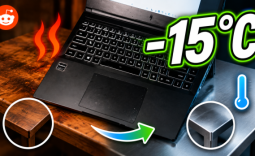 Redditor improves his gaming laptop temps by 15C simply by changing the table
 Phantom Blade Zero on PC will launch with DLSS 4.5 and Ray Tracing on day one
 Razer announces its first Artisan Keycap with the Triple-Headed Snake Edition
 ZOTAC's 20th Anniversary Edition GeForce RTX 5080 features a titanium colorway and mirror-like backplate
 GeForce NOW app for Linux leaves beta, while DLSS Frame Generation cloud latency also improves
 Twitch opts streamers into gen AI training by default, faces harsh backlash
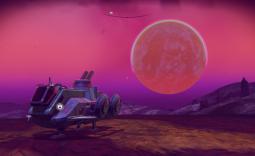 Sean Murray still plays the 2016 launch version of No Man's Sky
 China's YMTC has climbed to third place in global NAND flash shipments
 $100 GTA 6 version makes up 89% of pre-orders, analysts estimate
 Corsair HS35 v3 Wireless Gaming Headset Review - An Affordable Winner
 D-Link F518 5G Wi‑Fi 6 AX1800 Mobile Hotspot Review: All-Day Mobile Hotspot
 Bose Lifestyle Ultra Speaker Review - Impressively Detailed Room-Filling Sound
 MSI Z890 Gaming Plus WIFI6E Review - Z890 for under $200
 Mortal Kombat (1995) 4K Ultra HD Blu-ray Review
 CPS PCCOOLER YS1200 ATX 3.1 80 PLUS Gold PSU Review
 ASRock X870E Taichi White Review: a premium AM5 motherboard with 10G LAN and WiFi 7
 Asetek Initium Pedal Modular Upgrades Review
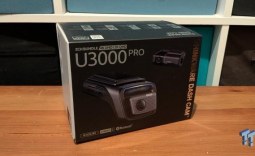 Thinkware U3000 Pro Review - Smart Dashcam with Wi-Fi quirks
 Montech TG3 Mid-Tower Chassis Review
 I ditched the Windows 11 context menu for this open-source tool, and here's why
 Windows 11 may be encrypting your drive already, and I checked where my recovery key went
 GIGABYTE's 40 Days of INFINITY celebrates 40 Years of Innovation with stunning GeForce RTX graphics cards and rewards
 I swapped File Explorer for this free file manager and finally got the layout I wanted
 How to tell if someone has been using your Windows PC without your permission
 6 Task Manager tips for troubleshooting Windows performance problems
 ASUS ROG's 20th Anniversary Line-up of Premium PC Gaming Gear has Arrived - Here's Everything You Need to Know
 Six File Explorer tips every Windows user should know
 I switched my PC to encrypted DNS in Windows 11, and browsing felt more private
 Printer Not Working in Windows? How to fix detection, print queues and drivers