







Science, Space, & Robotics - Page 242
Explore the latest Science, Space, Health, and Robotics news from TweakTown. Coverage includes space launches, medical tech, discoveries, and rockets. - Page 242
Stay Updated
Follow TweakTown for breaking tech news, reviews, and daily updates.


As an Amazon Associate, we earn from qualifying purchases. TweakTown may also earn commissions from other affiliate partners at no extra cost to you.
SpaceTT: Mars One officially announces astronaut search for one-way trip to Mars
This afternoon Mars One officially announced the opening of its search and application process for the first manned mission to the planet Mars. Mars One is looking for two men and two women from different nationalities to man a one-way trip to Mars in 2023.
The trip to Mars is not for the light hearted, or those who are not willing to give up everything they have known. "While it is possible that, within the lifetime of the early settlers on Mars, there will be opportunity to bring one or more back to Earth, it cannot be anticipated nor expected", reads part of the mission briefing on the Mars-One.com website.
While I fully support this endeavor, and am immensely excited about humans leaving the planet Earth and populating another world, I still feel that a colonization mission is nothing more than suicide and will remain so until we develop a form of terraforming that would render the Martian atmosphere more hospitable for human life. I think a more technology appropriate approach would be for an orbital mission where we send explorers on a mission to orbit the planet before returning home.
SpaceTT: Hubble Telescope takes a new look at the Horse Head Nebula, resulting image will blow your mind
This year marks the 23rd anniversary of the Hubble Telescope taking flight in orbit around the earth. To celebrate the occasion it revisited one of my favorite monuments in the night sky; the Horse Head Nebula (IC 434).
Located within the Orion Nebula (M42), the Horsehead is a massive star forming region which is comprised of dust and gas. The Hubble first imaged the Horse Head about 20 years ago and the resulting visible light image can be seen above. The red or pinkish glow originates from hydrogen gas predominantly behind the nebula, ionized by the nearby bright star Sigma Orionis. The darkness of the Horsehead is caused mostly by thick dust, although the lower part of the Horsehead's neck casts a shadow to the left.
The new image of the great Horse Head can be seen above. It shows the region in infrared light, which is made up of longer wavelengths than visible light and can see through the dusty cloud that usually obscures the nebula's inner regions. The result is a rather amazing, and stunning looking structure, made of delicate folds of gas.
Raspberry Pi Model A goes on sale in the US for $25
It's been a long and drawn out wait for the Raspberry Pi Model A to be released, but it is finally here and on sale in the US for a mere $25. Surprisingly the Model A is not being launched at Element14 as everyone might think.
Allied Electronics, a Texas based component supplier appears to be the first to market with the new $25 credit card sized Linux computer. The Model A is a dumbed down version of the vastly popular Raspberry Pi model B and differs in just a few missing components such as the LAN interface.
Unfortunately it appears that Allied has already sold out of the Model A's which leads us to wonder, why do these component houses not order several tens of thousands of units. They always blame supply, but Arduino was able to overcome supply shortages faster than Raspberry Pi has seemed to. If you know your product is going to sell in the hundreds of thousands almost overnight, why not scale up production to meet that demand?
Continue reading: Raspberry Pi Model A goes on sale in the US for $25 (full post)
NASA requests $100 million, wants to find an asteroid in space, drag it toward the Moon and send astronauts to study it
NASA has an interesting plan that would see them find an asteroid in space, drag it toward the Moon and send astronauts to study it. NASA are requesting $100 million for the mission, which is coming in the middle of their fight over the 2014 budget continues in Washington.
The idea comes from the Keck Institute for Space Studies at the California Institute of Technology back in 2011. Scientists have said that the plan is capable of being played out within the next decade, and would be a very good move for future endeavours by US engineers to plunder asteroids with robotic mining for water and metals. NASA has requested $100 million, with Keck researchers admitting that the actual operation would cost as much as $2.6 billion and it would take at least six years to grab an asteroid close to Earth.
The researchers have said that there could be as many as 20,000 pieces of space debris within a decent distance from the Earth, but it could take astronauts up to six months to travel to the asteroid in order to pull it back toward the Moon.
ScienceTT: Source of great dinosaur extinction was not an asteroid, but actually a comet
For the last 50 years or so, it has been widely accepted that an impact from an asteroid was the direct cause of the extinction of the dinosaurs, but it appears that that theory has now been turned upside down. A recent report that was given at the 44th Lunar and Planetary Science Conference suggests that it was not an asteroid that caused the demise of the dinosaurs, but was actually a comet.
This theory is based on the fact that 180km wide Chicxulub crater in Mexico is simply too large to have been caused by a meteor, which is supported by the lack of an abundance of iridium. An element which would have been kicked up in vast quantities if such a large asteroid were the source of the crater.
Dr. Jason Moore, of Dartmouth College said: "You'd need an asteroid of about 5km diameter to contribute that much iridium and osmium. But an asteroid that size would not make a 200km-diameter crater," He theorized that the crater was created by something moving much faster than an asteroid, something with less rock and more ice.
Saturn V rocket engines recovered from the bottom of the ocean
From the depths of the Atlantic Ocean, significant pieces of Saturn V's rocket engines have been recovered. What makes this a big announcement is the fact they've been there for over 40 years, and recovered thanks to a privately-funded expedition by Amazon founder Jeff Bezos.
Bezos explained the site of the discovery three miles below the surface, more than 400 miles from Florida's east cost as "an underwater wonderland, an incredible sculpture garden of twisted F-1 engines that tells the story of a fiery and violent end, one that serves testament to the Apollo programme." The Amazon founder announced over a year ago that they had located the engine pieces that took man to the moon in 1969.
After three weeks abord a recovery vessel named 'Seabed Worker', Bezos and his team are on their way back to Cape Canaveral with their pieces of the Saturn V rocket engines. Bezos said in a statement on the expedition website: "We're bringing home enough major components to fashion displays of two flown F-1 engines. Many of the original serial numbers are missing or partially missing, which is going to make mission identification difficult. We might see more during restoration. The objects themselves are gorgeous."
Continue reading: Saturn V rocket engines recovered from the bottom of the ocean (full post)
More details on Raspberry Pi's camera module surface, still aiming for $25 and up to 2592x1944 stills
Since its release, the Raspberry Pi has been changing the DIY landscape much like the Arduino did in 2009-2011. The Raspberry Pi Foundation has been hard at work developing the most anticipated add-on module it has developed to date, the camera module.
Today Raspberry Pi released a blog post detailing how the upcoming $25 camera module was created, and in that document we learn some interesting information about the camera. A fixed focus 5MP sensor capable of 2592x1944 stills, but also 1080p30, 720p60 and 640x480p60/90 video is featured. The lens is fixes so that means no auto focus will be present.
The camera will connect to the Raspberry Pi via two connections. I2C will handle the basic functions like start, stop, change resolution, and adjust exposure time. The much higher bandwidth CSI bus will handle the pixel data from the sensor back to the processor.
3D-printed guns are on their way, Defense Distributed receives federal firearms license to manufacture them
Defense Distributed has received a federal firearms license, with company head Cody Wilson announcing this would allow his company to manufacture and sell the group's guns. The news comes from Defense Distributed's Facebook page, where they uploaded a photo of the license with a note saying "The work begins!"
Wilson has said that the Type 7 license he received will allow him the same rights as other manufacturers, where he adds: "I can sell some of the pieces that we've been making. I can do firearms transactions and transport." Wilson will be required to, of course, keep records on what his company makes and sells, but he doesn't have plans to sell anything until he receives a supplemental license to make a broader range of firearms.
Defense Distributed seem to be the sharpest tool in the shed when it comes to 3D-printed gun companies, successfully testing 3D-printed rifle lowers and high-capacity magazines.
SpaceTT: Comet Pan-STARRS shows off in brilliant fashion in the March skies
Last week I reported on a comet that was set to make an appearance in our twilight skies and even though it has dimmed past naked eye visibility, those with binoculars, telescopes and DSLR's can still view the spectacular Comet Pan-STARRS. Astronomers, astrophotographers and photographers across the US have captured some stunning images during it's week long visit and I want to share them with you.
First up is an image taken from Sumter, South Carolina by my good friend and fellow astrophotographer Hap Griffin (source #1). He captured the image which includes Pan-STARRS and the crescent moon in a single frame as they set behind a tree line near his home.
Up next is a breath-taking shot of Pan-STARRS that was taken by photographer Chris Cook (source #2) at First Encounter Beach, Massachusetts. The shot features Cook and his son standing on a hill gazing in wonderment at such a beautiful scene.
Arduino unveils GSM Shield that includes SIM card and global data tariff
Whether you like Arduino or not, you have to admit that the small Italian company founded my Massimo Banzi has truly revolutionized the way the DIY world does things. Today Arduino released its next official product, the GSM Shield.
Arduino has paved the way for things such as cheap, easy to use development boards, all the way to DIY gaming controllers, and now they are looking to truly connect the internet of things wherever you may be. The GSM Shield partnered up with Telefonica Digital to "design a tool that is greatly simplifying the process of building Internet of Things applications based on the GSM mobile phone network".
The GSM Shield also includes a Telefonica SIM card that includes a worldwide data tariff which can be used anywhere there is a cellular signal. Features include the ability to have the Arduino send an SMS message when a sensor or data set reaches a specific threshold, or even send and receive voice calls directly to your Arduino based project.
NASA's Curiosity rover stuck in safe mode thanks to a flash memory issue
NASA's Curiosity rover has been doing burnouts all over Mars' surface for a while now, but it looks like it has hit a snag - the rover will be switching to its backup computer in the coming days after it suffered a corrupted file that caused the primary "A-side" computer to glitch.
This all happened on February 27, with Curiosity not sending its daily dump of data back to Earth - instead, it switched into sleep mode. Mission Control of course had to act, and made the decision to switch the rover over to its backup, suspending their scientific research until the rover is fixed. NASA posted through their Twitter acccount:
Curiosity has two computer systems on board, with the first "A-side" system used primarily for daily operations and the back up "B-side" used as a backup. The B-side now has to be updated with all of the data required to assume control of the rover and when it does, we'll be back in Mars exploration business.
Inspiration Mars ship will protect inhabitants from radiation with their number ones and twos
In five years time, Dennis Tito's plan of a private flyby of Mars will come to fruition, and as any journey into the dark beyond that is space, there are logistical issues that will have to be planned for its 501-day journey.
One of the most important issues is blocking the crew from deadly radiation, so how would you do this? Well, Tito's idea is to use human waste. Yes, human waste as in your bodily fluids. The Inspiration Mars spacecraft will be built with its walls lined in water-filled bags that would eventually be filled with the crews' waste, protecting them against cosmic rays. The water-filled bags will eventually get replaced with the crews' waste, which will then be dehydrated, purified and prepared as drinking water.
Water-based materials are better at stopping the deadly radiation, so it's a better solution than pure metal. It definitely sounds like an interesting way to solve the issue, but would you want to float through space knowing that your walls are covered in not only your waste, but your crew mates' waste? Delicious. In space, no one can hear you scream, I guess.
SpaceTT: Watch SpaceX launch next rocket to ISS live at 9:30am US Eastern time (this morning)
It's that time again folks - Science Friday is here, and today's post is coming a little early thanks to SpaceX. At 10:10am EST, Elon Musk's successful space flight company will be launching its next Falcon 9 rocket and Dragon capsule on its way to the International Space Station and we can all watch it live!
Beginning at 9:30am EST, SpaceX will begin streaming live from the launch pad located at NASA's Cape Canaveral Air Force Station in Florida. The Dragon capsule is scheduled to dock with the ISS on March 2nd and is filled with about 1,200 pounds of supplies including materials for about 160 new experiments.
When it returns to Earth three weeks later, on March 25th, it will be carrying about 2,300 pounds of spent cargo, trash and completed experiments. If everything goes as planned, this will be SpaceX's third successful trip to the ISS. For the true space geeks out there, each Falcon 9 rocket weighs 735,000 pounds, generates a thrust of 1,320,000 foot-pounds and cost roughly $133 million each mission.
Researchers announce the development of flexible, stretchable lithium-ion batteries
We've been hearing about flexible smartphones and displays, but before we can even imagine them in the consumer space, we need batteries to be flexible and stretchable. Well, it looks like that wait might be getting closer to an end, with researchers announcing the development of such a technology.
Using a process called "ordered unraveling", John A. Rogers from the University of Illinois and Yonggang Huang from Northwestern University say that their battery can be stretched by up to 300% of its original size, all without losing any functionality. Energy storage islands and "serpentine" wire connections are placed in a sheet of polymer. Polymer is flexible and stretchy by default, with the overlapping wiring can be installed without being damaged.
What can we expect in terms of battery life? According to the engineers, their solution performs close to a standard lithium-ion battery of the same physical size. So we're looking at around 8-9 hours, as well as the ability to charge it wirelessly, but the current prototype they're using loses some capacity after just 20 recharges.
New service Makexyz is like Airbnb for 3D printer owners
It's no secret that 3D printing is one of the hottest trends in recent history, and it should be no surprise that anyone and everyone is coming up with new ways to capitalize on the 3D printing revolution. Makexyz is a new service that has been launched to help connect those who need 3D printed items with 3D printer owners.
Makexzy creator Nathan Tone told VentureBeat "Instead of being printed at some Orwellian factory, our objects are printed by real people." Tone said the idea for the service came to him when a part he designed, took weeks to be printed and shipped to him through traditional 3D printing services. "Theres's a big benefit to just printing locally. Objects are half as expensive and you get them twice as fast", he said.
Tone says that services like Shapeways take too much time and cost over double as something printed on a personal machine sourced locally. With most services charging as much as $1.50 per cubic centimeter having something printed is just out of reach for some designers. "We've been careful to make sure that our prices are lower than working through a big company", Tone said.
Continue reading: New service Makexyz is like Airbnb for 3D printer owners (full post)
NASA says that the Russian meteor last week was the biggest in over 100 years
The highly destructive meteorite that blasted into Earth's atmosphere last week, exploding near Chelyabinsk, Russia is quite the event according to NASA. The US space agency have said that it is one of the biggest to strike in over 100 years.
The actual size of the object was 10,000 tons with the energy released from the event hovering at around 500 kilotons - nearly 30 times the size of the atomic bomb detonated over Hiroshima. The meteor impact that previously wielded this type of power, was in 1908 in Tunguska, Siberia.
The Voice of Russia has reported that over 1200 people have been injured, and 3724 buildings damaged by the impact. On top of this, a combined 200,000 square meters (2.15 million square feet) of shattered glass is the result from the intense shockwave. Damage is pegged at an estimated $33 million.
US scientists working on way to turn plastic bags into batteries
Scientists from the Argonne National Laboratory are working on something truly incredible, where they are converting plastic bags into batteries - yes, you read that right. Vilas Pol, a Chemist with the laboratory was interviewed by Al Jazeera, where he cut a plastic bag and eventually turned it into a battery.
Pol did this by cutting plastic bags into bits, puts the pieces of plastic bag into a metal tube, adds a 'catalyst', and heats it to 700C. In three hours, a fine black-colored powder - carbon. This carbon sells for $150 per gram, making it worth more than gold. Within a few minutes, the carbon can be converted into a watch battery. Scientists are now working on making this technology cheaper.
The more energy pushed into the battery, the cheaper the battery can get - which is the main driving force of storing more energy into the battery itself. The US government is set to invest $120 million into the project, to create smaller batteries that would eventually be used in smartphones, right up to electric cars.
Continue reading: US scientists working on way to turn plastic bags into batteries (full post)
SpaceTT: Finnish astrophotographer's animated GIF images of Elephants Trunk Nebula are mesmerizing
It's no secret - I am a huge astronomy buff. So much so that I even endeavor into the complex realm that is astrophotography. I say "complex" because taking a clear, crisp and vibrant image of the cosmos is quite challenging, and requites many hours to produce a single 2D image.
Finnish astrophotographer J-P Mestävainio has taken these complexities and mastered them, but he did not stop there. Mestävainio wondered what the Nebula he was photographing looked like in the third dimension and set out to create what can only be described as breathtaking. Seen below is IC 1396 or the Elephants Trunk Nebula.
These animated GIF images are in all actuality an artist interpretation of how he thinks the nebula would appear if passing by. The GIFs are created by adding interpretations and educated guesses based on the formation of the nebula and a rule-of-thumb that brighter stars are closer than darker ones to known data about the nebula, like distance and the location of certain stars around it to create a 3D model of the nebula.
The first bionic hand that can feel will soon be here
We all love our consumer technology, but scientific breakthroughs like this are just extraordinary. Later this year, we'll see the first bionic hand that will give an amputee the ability to feel their hand again.
This will be quite the moment for artificial limbs with sensory perception, where the first man to get the new touch-sensitive bionic hand will be a man in his 20s living in Rome, who lost the lower part of his arm in an accident. The wiring of this bionic hand will be connected to his nervous system, where they hope he'll be able to control the movements of the hand as well as receive touch signals from the bionic hand's skin sensors.
This is coming from Silvestro Micera of the Ecole Polytechnique Federale de Lausanne in Switzerland, where he's also added that the hand will be attached directly to the patient's nervous system through electrodes clipped onto two of the arm's main nerves - the median and ulnar nerves.
Continue reading: The first bionic hand that can feel will soon be here (full post)
Congress to discuss asteroids as a threat to Earth, won't involve Bruce Willis
After multiple space agencies have been tracking the asteroid that fled just past Earth waving hello and goodbye, Russia was attacked by space rocks late last week. The meteroid broke up in our atmosphere, but still crashed into Earth injuring over 1200 people and causing millions of dollars of damage.
Because of this, the Science, Space, and Technology Committee in Washington are planning to hold a hearing soon "to examine ways to better identify and address asteroids that pose a potential threat to Earth."
NASA have said that the rock that smashed into the Russian city of Chelyabinsk, which is around 950 miles east of Moscow, was around 15 meters in diameter, and it was moving at an astonishing 18 kilometres per second. It lasted around 30 seconds in our atmosphere before it broke apart, and wasn't detected by any Earth-based telescopes. NASA scientists have said that it is virtually impossible for telescopes to see a meteorite that size in the daytime sky.
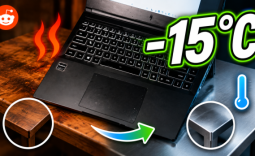 Redditor improves his gaming laptop temps by 15C simply by changing the table
 Phantom Blade Zero on PC will launch with DLSS 4.5 and Ray Tracing on day one
 Razer announces its first Artisan Keycap with the Triple-Headed Snake Edition
 ZOTAC's 20th Anniversary Edition GeForce RTX 5080 features a titanium colorway and mirror-like backplate
 GeForce NOW app for Linux leaves beta, while DLSS Frame Generation cloud latency also improves
 Twitch opts streamers into gen AI training by default, faces harsh backlash
 Sean Murray still plays the 2016 launch version of No Man's Sky
 China's YMTC has climbed to third place in global NAND flash shipments
 $100 GTA 6 version makes up 89% of pre-orders, analysts estimate
 HWiNFO's latest update quietly confirms Intel is working on Razor Lake-AX
 Corsair HS35 v3 Wireless Gaming Headset Review - An Affordable Winner
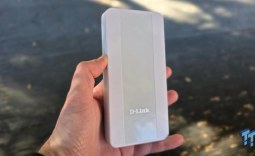 D-Link F518 5G Wi‑Fi 6 AX1800 Mobile Hotspot Review: All-Day Mobile Hotspot
 Bose Lifestyle Ultra Speaker Review - Impressively Detailed Room-Filling Sound
 MSI Z890 Gaming Plus WIFI6E Review - Z890 for under $200
 Mortal Kombat (1995) 4K Ultra HD Blu-ray Review
 CPS PCCOOLER YS1200 ATX 3.1 80 PLUS Gold PSU Review
 ASRock X870E Taichi White Review: a premium AM5 motherboard with 10G LAN and WiFi 7
 Asetek Initium Pedal Modular Upgrades Review
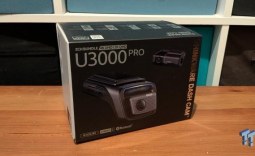 Thinkware U3000 Pro Review - Smart Dashcam with Wi-Fi quirks
 Montech TG3 Mid-Tower Chassis Review
 I ditched the Windows 11 context menu for this open-source tool, and here's why
 Windows 11 may be encrypting your drive already, and I checked where my recovery key went
 GIGABYTE's 40 Days of INFINITY celebrates 40 Years of Innovation with stunning GeForce RTX graphics cards and rewards
 I swapped File Explorer for this free file manager and finally got the layout I wanted
 How to tell if someone has been using your Windows PC without your permission
 6 Task Manager tips for troubleshooting Windows performance problems
 ASUS ROG's 20th Anniversary Line-up of Premium PC Gaming Gear has Arrived - Here's Everything You Need to Know
 Six File Explorer tips every Windows user should know
 I switched my PC to encrypted DNS in Windows 11, and browsing felt more private
 Printer Not Working in Windows? How to fix detection, print queues and drivers