







Learn about how TweakTown tests and reviews hardware. As an Amazon Associate, we earn from qualifying purchases. TweakTown may also earn commissions from other affiliate partners at no extra cost to you.
Stay Updated
Follow TweakTown for breaking tech news, reviews, and daily updates.


ChatGPT creator warns of competing AI systems that will be dangerous
The CEO of OpenAI, the developers behind the viral sensation ChatGPT, has warned of competing artificial intelligence systems that will have fewer safety regulations in place.

Sam Altman, the CEO of OpenAI, said in an interview with ABC News last week that there are some things that he does worry about with the exponential development in artificial intelligence. One of Altman's worries is that OpenAI won't be the only creators of this type of technology and that there will be other people that create these systems will less safety limits than what OpenAI has implemented. Notably, Altman says that "society" has a limited amount of time to figure out how it will react to such technologies being developed and made available.
As outlined perfectly by Futurism, the technology sector is currently experiencing an AI arms race where companies are pouring billions of dollars into research and development to get the biggest slice possible of the new machine-learning pie. ChatGPT is simply the very first AI that has been adopted by millions of people, a mere proof of concept that systems like ChatGPT are in high demand by people across a variety of different industries.
Continue reading: ChatGPT creator warns of competing AI systems that will be dangerous (full post)
OpenAI forced to shut down ChatGPT following bug that exposed user chat history
OpenAI confirmed in a statement to Bloomberg that it had to temporarily shut down ChatGPT following the emergence of a bug that made user chat histories publicly visible.

The developer of the now extremely popular AI chatbot told the publication that ChatGPT was now back online and that engineers are currently working on bringing back chat history, which was suspended following the detection of the bug. Users of ChatGPT know very well that OpenAI stores the conversations they have with the chatbot. However, what users didn't expect was to see conversations from other users appearing in their Chat History tab.
Notably, these conversations only included the title of the conversation and not its contents, meaning that all questions and answers didn't become publicly available. However, the bug is a testament to OpenAI's recommendation of not entering any sensitive information into ChatGPT, as problems such as this can present themselves from time to time.
NVIDIA announced six new workstation RTX Ada GPUs for laptops and desktops
With the rise of AI research, models, and tools and NVIDIA GPU hardware being at the center of it all, today's news of six new NVIDIA RTX Ada Lovelace architecture GPUs for laptops and desktops is surprising. But also, not that surprising.

As per NVIDIA, these workstation GPUs have been created for "the new era of AI, design, and the metaverse." The new NVIDIA RTX 5000, RTX 4000, RTX 3500, RTX 3000, and RTX 2000 Ada Generation laptop GPUs take full advantage of the latest RT Cores, Tensor Cores, and CUDA Core advancements while tapping into the up to 2x efficiency of Ada Lovelace.
We've seen this in the discrete GPU space, with Ada-based cards presenting the most power-efficient products. And by a considerable margin too.
NVIDIA RTX Path Tracing SDK is available to all developers for next-level RT
When NVIDIA announced the Ada Lovelace architecture and the GeForce RTX 40 Series, it mentioned a new bit of technology called Shader Execution Reordering (SER) to improve shader scheduling. This alone could substantially improve performance, making it the perfect tool for real-time ray tracing and path tracing in games.

We've seen the results in the impressive Portal with RTX remaster from NVIDIA, with path-tracing set to arrive in Cyberpunk 2077 sometime in the future. SER, like other technologies, is the sort of thing that needs to be tapped into as part of a game's code and engine.
With DLSS 3 and other RTX technologies coinciding with GDC, NVIDIA has announced that the RTX Path Tracing SDK is now available to all developers.
This Inno3D GeForce RTX 4070 will use a single 8-pin power connector, as rumored
Only yesterday, we reported on a rumor that the upcoming releases of the more mainstream and affordable GeForce RTX 4070 and GeForce RTX 4060 GPUs could see a shift to the more traditional 8-pin power connectors. A shift away from the new 12VHPWR connectors is seen in the current GeForce RTX 40 Series GPUs line-up.

With the lower power requirements and rumors that some GeForce RTX 4070 models are rated at 200W, it's a move that makes sense. And also one that looks true with packaging for an Inno3D GeForce RTX 4070 leaking out that specifically mentions the use of a single 8-pin power connector.
The image appeared on Chinese social media, shared by @9550pro on Twitter, where we also learned that this specific AIB Inno3D GeForce RTX 4070 features a 2-slot design with two fans.
Raja Koduri, the Chief Architect of Intel Arc GPUs is leaving the company
Raja Koduri has been a key architect behind Intel's recent push to enter the discrete GPU market with the Intel Arc line of graphics cards.

Now it looks like Raja's time at Intel has come to an end with the announcement that he's leaving the company at the end of the month to work at "a new software company around generative AI for gaming, media, and entertainment," according to Pat Gelsinger, CEO of Intel.
In response to the announcement, Raja wrote, "Thank you, Pat and Intel, for many cherished memories and incredible learning over the past five years. Will be embarking on a new chapter in my life, doing a software startup." Confirming that he's making a move away from hardware to software.
Nintendo Switch successor rumored to use new Samsung 5nm NVIDIA Tegra chip
The Nintendo Switch will get its successor at some point, though it sounds like Nintendo is in no rush to bring the eventual Switch 2 to the market. The Switch is on track to become one of the best-selling consoles ever. Still, its underlying hardware is based on aging NVIDIA Tegra technology featuring Maxwell-based CUDA Cores. And this is why many wonder what a next-gen Switch might look like.

According to a new bit of info from Korean-based insider @OreXda, the NVIDIA Tegra chip for the Nintendo Switch successor will be built using Samsung's 5nm process - 5LPP, or Low Power Plus. Previous rumors suggested that the custom chip in the Switch 2 would be based on NVIDIA's Ampere architecture - which uses Samsung 8nm or TSMC 7nm - so this would be a big step up.
It's been reported that in the past that a "Switch Pro," using a custom version of the NVIDIA Tegra Orin chip, which is considerably more powerful than current Switch hardware, was in development. Though with the arrival of the OLED refresh, and the age of the Switch, it's looking like Nintendo is moving on to the Switch 2 proper.
NVIDIA CEO wants to stay in charge of the company until he becomes a robot
NVIDIA's CEO isn't planning to give up his job anytime soon, with Jensen Huang making it clear that his ambition is to be chief executive at Team Green for a long, long time yet.

Huang just turned 60 last month, but that hasn't got him thinking about retirement. Far from it, as in an interview with CNBC, he expressed a desire to continue in his current role for another three or four decades.
That's not enough for Huang, mind. Even though he'll be 90 or 100 at that point, he wants to keep going as CEO beyond that, hoping that the technology will be around to let him become some kind of robot - and stay at the helm of NVIDIA for another 40 years, perhaps. Taking Team Green into the next century, of course...
Forget Bing AI - some Pixel superfans can now test out Google's Bard chatbot
Google is now inviting more folks to test its Bard chatbot, the rival to Microsoft's ChatGPT-powered Bing AI, which suggests that Bard might be inching closer to a public release.

Invitations are going out to Pixel superfans - a community of Pixel smartphone enthusiasts - via email, as spotted by 9 to 5 Google.
The email talks about the chance to benefit from "early access so you can get started as soon as Bard launches", helping to hone the chatbot before it reaches public launch and becomes widely available.
iPhone 15 Pro might get a controversial change to volume and mute buttons
Apple's iPhone 15 Pro could get a new design for its volume and mute buttons, and many folks aren't happy about it - though we should bear in mind, this is just a rumor at this stage.

The speculation comes from ShrimpApplePro on Twitter, a solid Apple source who has been right in the past (although the leaked CAD images of the purported new button design originate from the Chinese equivalent of TikTok).
Apple is apparently changing the iPhone 15 Pro's buttons (and Pro Max - but not the base iPhone 15 or Plus model) so they aren't physically pressed in any longer. Rather, they'll be flat and use haptic feedback (with two Taptic Engines inside the smartphone) to simulate the feeling of pressing the buttons.
Scientists almost clone OpenAI's ChatGPT for $600, but it's nowhere near as safe
The release of ChatGPT has shaken many industries around the world, while a brand new race was spawned in the technology market that is currently being dominated by OpenAI's extremely popular chatbot.

OpenAI's debut of ChatGPT was quickly adopted by millions of users, including the likes of Microsoft, which invested $10+ billion into the company and, in return, received the underlying technology powering the impressive chatbot, GPT. This technology, or more specifically, language models, are being developed by many other companies such as Google, Apple, Meta, Baidu, and Amazon. All of these will eventually be rolling out their own version of artificial intelligence that will be added to their products.
Stanford scientists set out to replicate the GPT language model created by OpenAI and used Meta's open-source LLaMA 7B language model, which is the smallest and cheapest of the LLaMA models that Meta makes available for purchase. Notably, while this small language model was trained on trillions of "tokens" or data, it fell behind in terms of speed compared to GPT. For example, while the small language model was trained on a significant amount of data, it has been trained on the answering of questions about that data or what is called 'post-training'.
YouTuber drives Tesla upside-down with ridiculous 10ft tall wheels
YouTube channel WhistlinDiesel has posted a new video showcasing a modified Tesla Model 3 with 10ft tall wheels driving along the road.

Cody Detwiler, the host of the WhistinDiesel YouTube channel that has amassed more than 5 million subscribers, explains that the goal of the above video is to test the Tesla Model 3 to see if it meets all of the claims Tesla has made about its vehicles. Notably, there is a strong vein of comic essence running through all of WhistinDiesel's videos, and the testing process is purely for entertainment purposes only, as Detwiler decides to set his own testing parameters.
One of the biggest claims from Tesla is that electric cars are greener for the planet than petroleum-powered vehicles, and while that may be true at face value, it really depends on where the electricity is sourced from. For example, if the electricity that is powering any electric car comes from a renewable source, such as solar-powered energy, then the vehicle would be greener than a typical combustion engine vehicle.
Continue reading: YouTuber drives Tesla upside-down with ridiculous 10ft tall wheels (full post)
UK government to send Rolls-Royce branded nuclear reactor to the Moon
The United Kingdom is preparing to develop a Moon base that will enable humans to work and live on the lunar surface, and the UK government wants Rolls-Royce to power it.

A new press release from the UK Space Agency details a new injection of funding into the Micro-Reactor program run by Rolls-Royce. This program is aimed at developing technology that will enable a sustained presence on the surface of the Moon through the generation of nuclear power. According to the press release, nuclear power has the potential to extend Lunar missions and thus the scientific potential, hence the UK Space Agency announcing 2.9 million pounds ($3,555,124 USD) in new funding for the project.
Notably, the new round of funding received by the UK Space Agency is for the initial demonstration of a UK lunar modular nuclear reactor, which is expected to be relatively small and lightweight compared to other power systems. Furthermore, a small nuclear reactor that can ideally be carried around by a single human could act as a continuous power source regardless of the environmental conditions. Rolls-Royce will be joined by other collaborators on the project, such as engineers from the University of Oxford, University of Bangor, University of Brighton, University of Sheffield's Advanced Manufacturing Research Centre (AMRC), and Nuclear AMRC.
Continue reading: UK government to send Rolls-Royce branded nuclear reactor to the Moon (full post)
With PCIe Gen 5 SSD speeds ASRock is releasing an SSD heatsink range with fans
ASRock's new Blazing M.2 Gen 5 Fan-Heatsink is an active cooling solution for PCIe Gen 5 SSDs and is compatible with the company's AM5 and LGA1700 motherboards with Gen 5 M.2 slots. There's also a special edition for the XB650E Taichi series.

They come in a few different flavors, and ASRock has released a handy guide to know which version is best suited for which motherboard, but the real story here is that we're entering the age of storage that needs active cooling, and that is something with a heatsink and fan.
The reason for this, of course, comes down to the incredible speeds on offer with PCIe Gen 5 SSDs, where it's looking like read speeds of over 10 GB/s are set to become the norm - a two-fold increase over the already fast PCIe Gen 4 SSDs currently available.
ASUS GeForce RTX 4080 Noctua Edition graphics card is available now
The ASUS GeForce RTX 4080 Noctua Edition graphics card is the latest collaboration between ASUS and Noctua. The graphics card uses impressive Noctua fans and a revamped heatsink design to improve cooling and offer some quiet high-end gaming.

Most modern GPUs, especially GeForce RTX 4080 cards, use three slim 110mm fans - the ASUS GeForce RTX 4080 Noctua Edition includes two Noctua NF-A12x25 PWM 120mm fans with that classic Noctua brown look. According to Noctua, the heatsink for the RTX 4080 Noctua Edition has been redesigned from the ground up compared to the RTX 3070 and RTX 3080 Noctua Edition cards.
In addition to five as opposed to two 8mm heat pipes, a vapor chamber is added for "significantly better cooling performance than the original TUF Gaming GeForce RTX 4080." And it's here where the price point for this custom RTX 4080 comes into play, with the ASUS GeForce RTX 4080 Noctua Edition being sold for USD 1649 versus the TUF RTX 4080's MSRP price point of USD 1199.
Continue reading: ASUS GeForce RTX 4080 Noctua Edition graphics card is available now (full post)
NVIDIA GeForce RTX 4070 and RTX 4060 GPUs could feature 8-pin power connectors
According to a new report by Igor's Lab, the upcoming GeForce RTX 4070 and GeForce RTX 4060 GPUs from NVIDIA could see models launched with the traditional 8-pin power connectors. Until now, all GeForce RTX 40 Series graphics cards have used the new 12VHPWR connector - which has seen all cards ship with 8-pin adaptors.

With the GeForce RTX 4070 and RTX 4060 representing more mainstream options for the Ada Lovelace generation, going the 8-pin route would simplify upgrading or swapping out GPUs in many PC builds.
The report indicates that when it comes to the GeForce RTX 4070, OC cards with a power rating of up to 225W will use the 12VHPWR connector or two 8-pin connectors, with the non-OC 200W models set to use a standard 8-pin connector. And with that, NVIDIA is expected still to adopt the 12VHPWR connector for Founders Edition models.
New server class Kingston FURY Renegade Pro DDR5 memory is all about performance
Kingston FURY represents the high-performance bracket of memory from the veteran hardware company, and its latest lineup of overclockable DDR5 memory is described as "server class." Kingston FURY Renegade Pro DDR5 RDIMMs have been designed for next-gen workstations and high-end desktops, including those built for gaming and content creation.

Though it's not normal to put registered DIMMs in a DIY home build, the new Kingston FURY Renegade Pro DDR5 RDIMMs feature the sort of stuff that makes server-class memory all about data integrity and quality, with the DDR5 Registered DIMMs including on-die ECC within the memory component capable of detecting and correcting errors.
Kingston FURY Renegade Pro DDR5 RDIMMs are plug-and-play with speeds of 4800 MT/s with support for Intel XMP 3.0 kits with speeds of up to 6000 MT/s. Kits are available in single-module capacities up to 32GB or four modules up to 128 GB. There are even kits with eight modules up to 256GB - hence the server-class origins. And the fact that these kits are designed for the Intel W790 platform that includes Xeon W-3400 and W-2400 series "Sapphire Rapids" processors.
Someone could pay $95,000 for Steve Jobs' signature
Not many people would pay a lot of money for someone else's signature. But that's probably exactly what is going to happen when this Steve Jobs autograph goes up for sale.

Jobs was famously one of the two Apple co-founders who brought us the company responsible for the Mac, iPhone, iPad, Apple Watch, and much more. But Jobs was also famously awkward when it came to getting his autograph. In fact, it just didn't happen. Except when it did. And this is one of those times.
The signature is part of a plaque that was given to an Apple employee back in 2000. In fact, that employee was former Apple marketing exec Suzanne Lindbergh and the plaque comes with a letter and a handwritten signature.
Continue reading: Someone could pay $95,000 for Steve Jobs' signature (full post)
No HomePod with a screen until 2024 at the earliest, report claims
Anyone hoping to be able to use a HomePod with a screen on it will have to wait a little while before that happens, it seems. And it won't happen in 2023 at all.

That's according to a new report which claims that Apple has pushed plans for a screen-based HomePod until 2024 at the very earliest as it works to ensure it's putting money and resources into products that it deems most important. The HomePod with a display, it seems, isn't on that list.
The report in question comes via Bloomberg's Mark Gurman, writing in this week's Power On newsletter. Gurman says that Apple is keen to ensure that it doesn't have to lay off workers in the same way that competitors Google, Meta, and Amazon all have. Part of that seems to be ensuring that it isn't spending money where it doesn't need to but still funneling attention and finances to other projects.
Continue reading: No HomePod with a screen until 2024 at the earliest, report claims (full post)
Remedy's Control made €62 million in profit with over 3 million game sales
Remedy's latest sci-fi shooter Control is a big success that has earned a 300% return on investment, new financial reports have revealed.

Control is the biggest game that Remedy Entertainment has ever made. Mostly known for its Max Payne trilogy, Finnish game developer Remedy delivered in 2019 a unique blend of Twin Peaks, The X-Files, and The Twilight Zone in an action-packed third-person shooter. The results speak for themselves. Control radically changed Remedy's business and the success of the game made Control into a fully-fledged franchise with multiple new games in development.
What's also interesting about Control is how much it took to make--or how little. Control had a development budget of €30 million, which is considerably less than most AAA games these days. According to Digital Bros, the parent company of 505 Games who published Control, Remedy's shooter made a total of €92 million in revenues and has sold over 3 million copies.
 Qualcomm is raising chip prices from September 1, and Android phones could get more expensive
 Google's AI patched more Chrome bugs in two releases than it had in two years, including a 13-year-old flaw
 A missing underscore in a Skyrim-inspired username sent an innocent man to prison for 18 months
 Microsoft improves Windows 11 optimization for PCs with 8GB RAM
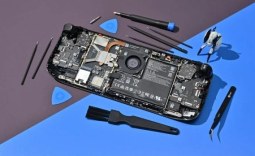 Steam Deck LCD battery returns to iFixit, but costs $50 more now
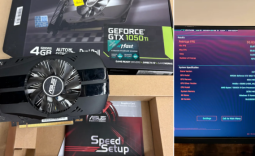 Redditor scores a working GTX 1050 Ti for just $2 at Goodwill
 Sony has secured enough memory to meet PS5 sales targets through March 2027 and says no further price hikes are planned
 Reddit is building a video and audio listening experience for the viral post format it accidentally created for TikTok
 Seagate says Mozaic 5 50TB hard drives are on track for 2027, with 100TB already on the roadmap
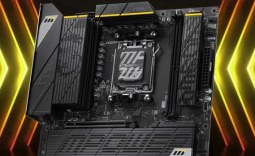 MSI adds a BIOS toggle to tighten standard DDR5 timings closer to EXPO ULL kits
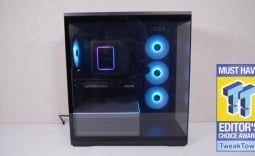 Montech TG3 Mid-Tower Chassis Review
 ASUS ROG Strix X870E-A Gaming WiFI7 Neo Review - A New Enticing Option
 Noctua NL-LC1-36 Liquid CPU Cooler Review
 Logitech G316 X 98 Wired Gaming Keyboard Review - Retro-Inspired Board that Falls a Little Short
 Biwin M560 2TB SSD Review - Best Overall Retail-Ready DRAMless SSD
 Logitech G512 X 98 Analog Mechanical Gaming Keyboard Review - An Innovative Two-in-One
 Thrustmaster T.Flight HOTAS 5 MSFS Edition Review
 SteelSeries Arctis Nova Pro Omni Wireless Headset Review - One Headset to Rule Them All
 SteelSeries Arctis Nova 7 Wireless Gen 2 Headset Review - New and Improved, But Is It Enough?
 AMD Ryzen 7 7700X3D Review - Days of Future Past
 How to tell if someone has been using your Windows PC without your permission
 6 Task Manager tips for troubleshooting Windows performance problems
 ASUS ROG's 20th Anniversary Line-up of Premium PC Gaming Gear has Arrived - Here's Everything You Need to Know
 Six File Explorer tips every Windows user should know
 I switched my PC to encrypted DNS in Windows 11, and browsing felt more private
 Printer Not Working in Windows? How to fix detection, print queues and drivers
 The Ultimate Guide to Personalizing Your Windows 11 Taskbar
 How to Turn Your Windows Laptop Into a Second Monitor with Miracast and Wireless Display in Minutes
 6 Mistakes to Avoid When Buying a Windows Laptop
 I capped Windows Update's bandwidth with Delivery Optimization, and my downloads stopped choking