







Learn about how TweakTown tests and reviews hardware. As an Amazon Associate, we earn from qualifying purchases. TweakTown may also earn commissions from other affiliate partners at no extra cost to you.
Stay Updated
Follow TweakTown for breaking tech news, reviews, and daily updates.


AMD slated to expand Zen 5 line-up with new Ryzen 'non-X' CPU in late January
January 2025 is gearing up to be a massive month for technology, as the Consumer Electronics Show (CES) will kick off the year with a range of new product announcements, including NVIDIA, and now it seems we will be getting a new AMD CPU in the same month.

According to leaker @AnhPhuH, who reportedly has previously accurately called internal movements at AMD, the Red Team is preparing to launch a non-X version of its budget Zen 5 CPU, the Ryzen 5 9600X. The launch is rumored to be in late January, which would make it a few weeks after the week of madness that will be CES 2025. As for specs, the leaker says the Ryzen 5 9600 will feature lower clock speeds than the Ryzen 9600X, but TDP will remain the same at 105W.
One big change is the contents of the box with the Ryzen 5 9600. According to the leaker, the Ryzen 5 9600 box contains a Wraith Stealth CPU cooler, which was a welcome addition in previous generations of AMD CPUs as it enabled entry-level buyers that are possibly unfamiliar with PC building, which is who these CPUs are aimed at, some peace of mind when it came to purchasing the right cooler for the CPU. Moreover, the inclusion of the Wraith Stealth cooler meant buyers were able to save money on buying one individually, resulting in more savings for higher-tier components.
NVIDIA confirms contents of Diablo IV mystery box, RTX 4080 Super and signed Jensen GeForce 256
NVIDIA has unveiled the contents of a Diablo IV-themed mystery box as part of the company's celebratory "GeForce Greats" event.

NVIDIA took to its official GeForce X account to unveil the new mystery box will contain five items, which starts off with a GeForce RTX 4080 Super that comes with a Diablo IV-themed backplate, a copy of the Diablo IV Collector's Edition, a Diablo III-themed chess set, a sealed copy of Diablo II, and a GeForce 256 signed by NVIDIA CEO Jensen Huang. Notably, the GeForce 256 was marketed as "the world's first GPU," or Graphics Processing Unit, and its emergence on the market resulted in a significant leap in 3D PC gaming performance.
The giveaway is one of many NVIDIA is hosting for its GeForce Greats event, which is designed to increase hype leading up to CES 2025, where it's slated to unveil its new generation of RTX graphics cards, the RTX 50 series, utilizing the new Blackwell architecture. Leading up to CES 2025 and NVIDIA's big announcement, the company will be doing many more of these franchise or video game-themed mystery box giveaways, and judging on the contents of the Diablo IV mystery box, gamers can expect similar contents for future mystery boxes.
Black Myth: Wukong, Space Marine 2, and Helldivers 2 lead 2024 Steam Awards nominations
After The Game Awards gave out its Game of the Year award to the PS5-exclusive Astro Bot, it is time for PC gamers to get their votes as the nominees for the annual 2024 Steam Awards. Voting opens this weekend alongside the big Seam Winter Sale 2024 kicking off, and the nominees for Game of the Year include a couple of titles that many believed were overlooked at the TGA's.

The five nominees for Game of the Year are Warhammer 40,000: Space Marine II, Black Myth: Wukong, S.T.A.L.K.E.R. 2: Heart of Chornobyl, Balatro, and Helldivers II. All excellent games have been played by millions of PC gamers in 2024, so it will be interesting to see which game takes the top honors. As a community-voted event, we assume it'll be between Black Myth: Wukong and Helldivers II.
This year, many categories return, including the Better With Friends Award for multiplayer gaming, the Outstanding Visual Style Award for visuals and art direction, the Outstanding Story-Rich Game Award, and the Best Game on Steam Deck Award. Voting opens on December 19 and concludes on December 31. Here's a look at all the nominees.
PS5 architect mostly interested in using AI for graphics and gameplay performance
Sony is all-in on machine learning technology, and wants to use AI and ML to help transform its lucrative PlayStation platform.

Although it has a variety of top-tier studios that have sold tens of millions of games, Sony is a platform-holder first and a game-maker second. This means Sony must always innovate and provide new tools to help make developers' jobs easier. It behooves Sony to optimize the game development process, and it does so through a mixture of organic means via its first-party studios who rigorously test new hardware and technologies like PlayStation Spectral Resolution (PSSR) upscaling, and inorganic means through feedback from external third-party publishers, developers, and partners.
That's the main impetus for the PlayStation 5 Pro. The mid-gen console is meant to help ease the burden that developers face when making games, namely in the constraints of the age-old struggle of resolution vs performance. Sony did this by adding in a variety of new tools and technologies that devs can use, including PSSR, which allows for unique enhancement opportunities that devs can scale for their specific games/in-game sequences. Then there's the hardware-based modifications like the +67% beefier GPU, new shader core modifications with ML instruction sets, and an extra 1GB of GDDR5 RAM specifically meant to house the PS5 Pro's OS.
BIWIN shows off huge 192GB DDR5-6400 CL28 memory, running on AMD X870E motherboard
BIWIN has shown off an incredible feat today: 192GB of DDR5-6400 CL28 memory running on an AMD X870E motherboard. Impressive stuff, check it out:

The company has announced that it has successfully completed a burn-in test using DDR5-6400 CL28 memory in a gigantic 192GB kit (4 x 48GB sticks). The company provided a screenshot for proof, but you'd think they'd be able to upload a higher-resolution image considering we're on the tail end of 2024, but I digress.
BIWIN was using an AMD Ryzen 9 9950X processor with 16 cores and 32 threads, with the CPU and RAM installed onto an MSI X870E motherboard. MSI was the first company with support for 192GB of DDR5-6400, so we're probably looking at a collaboration between MSI and BIWIN here.
COLORFUL intros iGame DDR5-6400 RAM with 'ultra-low' CL28 latency, ready for AMD Zen 5 CPUs
COLORFUL has just teased its new iGame Shadow DDR5 memory kits, available in speeds of DDR5-6400 with latencies at CL28, while faster DDR5-8000 memory is available with latencies at CL40.

The company is making a few different kits, with the new iGame Shadow DDR5 memory available in 6000, and 6800 MT/s speeds. The new COLORFUL iGame Shadow DDR5-6000 RAM comes in a 32GB kit at those 6000 MT/s speeds, but you get that ultra-low CL28 latency. The next kit up from there is the 32GB DDR5-6800 kit, with CL32 latencies, and up from there, there's a 48GB kit (2 x 24GB sticks) with 6800 MT/s speeds and CL34 latencies.
COLORFUL says its new iGame DDR5 memory can be pushed to 6400 MT/s speeds with CL28, while CL28 is the default latency for 6000 MT/s speeds, however with some manual overclocking and AMD EXPO enabled, 400 MT/s more can be achieved without the latency increasing.
NVIDIA CEO Jensen Huang plans CES 2025 keynote: GeForce RTX 50 series GPUs, and so much more
NVIDIA founder and CEO Jensen Huang will don his iconic leather jacket and head to Las Vegas in January for his annual CES 2025 keynote, where we'll be introduced to the next-gen GeForce RTX 50 series GPUs, and oh-so-much more.

We can expect a bunch of next-gen GeForce RTX 50 series "Blackwell" gaming GPUs to be unveiled, with the new ultra-enthusiast flagship GeForce RTX 5090 and its huge 32GB of ultra-fast GDDR7 memory, the RTX 5080, RTX 5070 Ti, and RTX 5070 graphics card being unveiled at CES 2025.
But, the company will surely have a bunch of new things to talk about when it comes to ray tracing, DLSS (hopefully DLSS 4 with the new RTX 50 series GPUs), self-driving cars and EV technology, AI, AI, AI, and so much more.We should also see NVIDIA and MediaTek show off their new Arm-based AI PC processor, which will launch in 2H 2025.
Sony explains how it modified PS5 Pro's GPU to enable PSSR neural network AI upscaling
Ever wonder how the PlayStation 5 Pro works? Sony gives us a hefty 37-minute technical breakdown on everything you'd want to know about the new mid-gen upgrade.

Sony just released a new PS5 Pro video specifically for enthusiasts. The 37-minute "technical seminar" is hosted by console architect Mark Cerny, who dispels the magic of Sony's new $700 console.
One of the more fascinating developments was the lengths in which Sony went to enable its proprietary PlayStation Spectral Resolution (PSSR) neural network. PSSR is Sony's own first-party, console-ready analog of DLSS, FSR, or XeSS. It's an AI-based upscaling solution that utilizes Recurrent Neural Networks (RNN), but to enable PSSR, Sony first had to create what it calls a "fully fused network."
PlayStation 6 release in 2028? 'Creating a console is a roughly 4-year journey,' Sony says
If Sony sticks to its established cadence, the next-gen PlayStation 6 could release in holiday 2028.

Console generations define the video games market. New hardware gives developers a chance to sell new games, or re-sell old ones, and content can be elongated for maximum sales. Think of each new console launch as the opening of a vast digital bazaar, while behind the scenes Sony, Microsoft, and Nintendo make power plays to optimize their platforms for developers.
Some companies like Sony have become quite regular in their generational timelines. PlayStation consoles typically last 6-7 years, and Sony likes to release a new mid-cycle refresh every four years or so. That means the PS6 might be due out in 2028, which isn't exactly a surprise given existing market trends, but it's still something to be aware of.
PS5 Pro GPU explained by architect Mark Cerny: Hybrid GPU with multi-generational RDNA tech
PlayStation console architect Mark Cerny breaks down the granular details of the PS5 Pro's GPU in a new in-depth video.

Today Sony surprise dropped a 37-minute technical seminar with Mark Cerny aimed at clarifying some the PS5 Pro's new magical upscaling sorcery. In the video, Cerny discussed the PS5 Pro's GPU in length, confirming the processor is built on multi-generational RDNA tech from AMD--alongside a custom ML solution.
Sony splashed parts of AMD's RDNA 2 and 3 architectures into the Pro's GPU, a combination referred to as RDNA 2.x, but had to be selective to ensure Pro games were still compatible with the base PS5 (which runs on RDNA 2.0). Cerny gives examples of RDNA 3 usage with the Pro's boosted primitive processing capabilities.
PlayStation, AMD team up to build next-gen AI, ML architectures for PS6, other hardware
Sony and AMD announce project Amethyst, a new collaboration focused on forging next-gen AI and ML solutions for new console hardware like the PS6, as well as other platforms, potentially even PC and rival platforms.

Today Sony Interactive Entertainment dropped a surprise video of PlayStation console architect Mark Cerny discussing the PS5 Pro in a deep dive seminar. Cerny goes through everything, including how exactly the PS5 Pro's GPU works, why it was chosen, as well as PSSR details. But towards the end of the video, Cerny teased what's next for PlayStation.
Sony and AMD are working closely together to develop new hardware and architecture solutions optimized specifically for ML and AI. Here's what Cerny said during the presentation about Amethyst:
Apple could release its foldable iPad slightly earlier than expected
Apple has long been rumored to be working on a foldable device that will shake up the market, with rumors previously indicating the company is developing a foldable iPhone and foldable iPad.

Both of these rumored devices have recently been discussed in several reports, with most of these reports accurately stating Apple is still many years away from either of these products being released, but they will emerge slightly sooner than expected. According to the Display Supply Chain Consultants, analysts that evaluate display-based products, Apple will be releasing its foldable iPhone in 2026, which runs contrary to previous rumors citing a purported leaked Apple roadmap that stated the foldable iPhone would arrive in 2028.
As for the foldable tablet, the Display Supply Chain Consultants describes the device as a foldable iPad Pro in the report, which would make sense when tying in previous leaks from reliable Apple insider and Bloomberg reporter Mark Gurman, who wrote Apple's foldable iPad will be approximately the size of two iPad Pros side-by-side. Additionally, it is rumored that Apple will be throwing its all into the new foldable iPad, which is why it has gained the "Pro" moniker. Moreover, the folding technology is relatively new, so it makes sense for Apple's foldable device to fall under its "Pro" product catalog.
Continue reading: Apple could release its foldable iPad slightly earlier than expected (full post)
MSI unveils the successor to one of the ultimate gaming monitors of 2024
One of the best gaming monitors of 2024 was MSI's MPG 321URX, a beastly 4K gaming monitor that sports a 240Hz refresh rate, and a 0.03ms response time across a 32-inch OLED panel. A truly gorgeous, top-shelf gaming experience when paired with a graphics card capable of maxing out those specifications.

MSI has decided to refresh that monitor by announcing the MPG 322URX, the company's new top-of-the-line gaming monitor that has come equipped with DisplayPort 2.1a technology. Notably, the main difference between the 321URX and the new 322URX is the upgraded DisplayPorts (2.1a/1.4a), which provides owners with a large increase in bandwidth. More specifically, DisplayPort 2.1a supports up to 80 Gbps total bandwidth (UHBR20) for uncompressed video streams.
Additionally, the upgraded DisplayPort means more support for higher resolutions, frame rates, and color depths. For example, DisplayPort 2.1a supports 8K resolution at 60Hz with HDR and 10-bit color. As for high refresh rate gaming, DisplayPort 2.1a supports 4K at 240Hz without chroma subsampling or compression. Moreover, for those big on HDR, the upgraded port means greater support for HDR10+ and other advanced HDR formats. As for the 322URX, it still has all of the glorious specifications from its predecessor, such as the 4K resolution, gorgeous OLED panel, three-year warranty, 240Hz refresh rate, 0.03ms response time, and a slick aesthetic.
NASA astronaut shares incredible video of SpaceX Dragon capsule returning to Earth
SpaceX's Dragon capsule was recently undocked from the International Space Station (ISS), and the moment was captured by a NASA astronaut who was situated at a peculiar angle.

The Dragon capsule undocking from the International Space Station is simply business as usual for both NASA and SpaceX, with the recent footage capturing the 31st commercial resupply the company has performed for NASA. The launch to the ISS from SpaceX involved carrying 2,700 kilograms (5,952 lb) of supplies for the crew aboard the floating laboratory, along with experiments and other various miscellaneous items that are useful in zero gravity.
As for the undocking video, the Dragon capsule was carrying all of the "spoils from our research," according to NASA astronaut Don Pettit, who posted the video to his personal X account. The time-lapse showcases an incredible angle of the Dragon capsule departing the ISS, showcasing the trajectory of its journey back down to Earth, where it splashdowned off the coast of Florida on Tuesday, December 17.
LG announces its new 2025 QNED evo TV family: transmits high-end 4K 144Hz goodness wirelessly
LG has just announced its renewed 2025 QNED evo lineup, which fe ature new proprietary wide color gamut technology, a true wireless viewing experience that transmits 4K 144Hz signals without picture quality loss or delay, AI-enhanced picture and sound processing, and an "ultra-personalized AI-based customer experience" with webOS 25.

The new LG 2025 QNED evo TV family has improved color gamut over previous models, with LG using its new proprietary wide color gamut technology -- Dynamic QNED Color Solution -- which replaces quantum dots. LG says that this unique technology enables light from the backlight to be expressed in "pure colors that are as realistic as they appear to the eye in general life". Impressive.
The impressive thing for me from LG's new QNED evo (QNED9M) is that it features True Wireless 4K technology, something that was previously exclusive to the top-tier OLED evo (M-series) from last year, is now available on the QNED evo lineup. This means that you can enjoy 4K content wirelessly, without compromising on picture quality or experiencing delays, with LG saying this lets you move "beyond the limitations of traditional wired connections".
SK hynix develops new PS1012 U.2 high-capacity SSD for AI data centers, up to 61TB
SK hynix has developed the new PS1012 U.2 high-capacity SSD for AI data centers, with an astonishing 61TB drive based on QLC tech, with transfer speed of up to 32 GT/s with PCIe 5.0.

The company announced it has completed the development of its high-capacity SSD product "PS1012 U.2" designed for AI data centers, tapping QLC technology that helps enable high capacity, becoming the industry standard. SK hynix has developed a 61TB SSD using this technology, and introduced it to the market.
SK hynix's new PS1012 doubles the bandwidth to the SSD thanks to the newer PCIe Gen5 standard over the Gen4 standard, offering 32 GT/s with sequential read performance of 13GB/sec (13,000MB/sec) which is double that of the Gen4 SSDs before it.
Apple is finally fixing the fatal flaws the Magic Mouse is suffering from
Apple's Magic Mouse is one of the most confusing products the company has ever released, with it being received at the time as a questionable Apple-esc take on a mouse that totally missed the mark.

Despite having some impressive gesture features, Apple's Magic Mouse was mostly poorly received by fans of the company, with many criticizing its odd design that Apple touted as ergonomic - yet these ergonomics were hard to grasp as there wasn't much mouse to hold onto. The strange design of the mouse meant users didn't have any mouse to rest the middle of their hands on, which could lead to discomfort over longer sessions.
The second fatal flaw of the Magic Mouse was the charging port, which is located on the flat underside of the mouse, meaning it is impossible to use the mouse while charging it. These two fatal flaws were fixed in the second-generation Magic Mouse, or even in the third-generation Magic Mouse, which was a refresh of the second-generation model, but instead came with a USB-C port instead of a Lightning port like its predecessors.
TSMC's first fab in Kumamoto, Japan secures initial orders from Sony and Denso
The first Japanese wafer fab built by TSMC in Kumamoto will start mass production before the end of 2024, with its first batch of orders supplied to Sony and Denso.

In a new report from the Commercial Times, we're learning that TSMC said on December 17 that the construction progress of its new Japanese fab is "still in progress" and that the previously announced mass production schedule remains unchanged.
Yuichi Horita, the president of TSMC's Japanese subsidiary -- Japan Advanced Semiconductor Manufacturing (JASM) said that the Kumamoto Factory 1 had entered the final preparation stage for mass production, emphasizing that TSMC's first production line in Japan "will be of the same quality as the Taiwanese factory".
BBC complains to Apple after its AI generates misleading headline about Luigi Mangione
Apple has been caught in hot water after its new generative AI software produced a factually incorrect headline that was discovered by the BBC.

The BBC recently published a report stating it officially complained to Apple after an Apple Intelligence-generated headline of a BBC news story that was pushed out to iPhones last week contained misinformation. The headline stated Luigi Mangione, the man who was arrested for the murder of UnitedHealthcare CEO Brian Thomson, shot himself. The AI-powered summary was discovered by the BBC, which contacted Apple to raise the concern and "fix the problem".
Notably, Apple's AI that generated the summary was otherwise correct in the other information it provided, such as South Korean President Yoon Suk Yeol having his office raided by police, and the overthrow of Bashar al-Assad's regime in Syria. However, the BBC isn't the only publication to have suffered from Apple's AI spitting out headlines that are factually incorrect, as three articles on different topics from the New York Times were distributed in one notification, and one of those headlines stated the Israeli prime minister, Benjamin Netanyahu was "arrested".
NVIDIA GB200 AI server mass production, peak shipments could be delayed until Q2 or Q3 2025
NVIDIA's new GB200 rack-mounted AI servers are still experiencing issues, with a new report suggesting that the supply chain requires more time for optimization and adjustment, and it could see mass production and peak shipments delayed until Q2 or even Q3 2025.

In a new report from TrendForce, their latest report says that the supply chain needs more time for GB200 rack servers, and that it's mostly because of the higher design specifications of the GB200 rack, including its requirement for high-speed interconnect interfaces, and thermal design power (TDP), which "significantly exceed market norms".
TrendForce is now projecting that mass production and peak shipments of NVIDIA GB200 rack servers are "unlikely to occur until between Q2 and Q3 of 2025". The NVIDIA GB rack series includes the GB200 and new GB300 models, which feature even more complex tech and higher production costs.
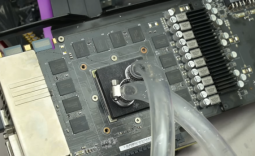 Benchmarks show direct water on die cooling with no heat spreader outperforms AIO liquid cooling on a GPU
 OpenAI's next hardware is a doughnut-shaped smart speaker with moving parts that wants to be your new phone
 Noctua measured over 100 PC cases and found Corsair, NZXT, and Lian Li cooler clearance spec sheets are often wrong
 Leaked Xbox controller for Gears of War E-Day features a cracked volcanic rock design and blood-red Crimson Omen
 Doom co-creator John Romero reveals id Software turned to Taiwanese pirates to help distribute the game to more people
 GTA Online will continue after GTA 6's release, Take-Two reiterates
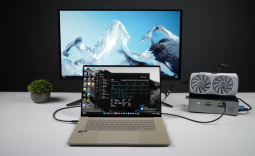 YouTuber benchmarks RTX 4060 on Snapdragon X2 Elite laptop using RTX Spark developer driver
 Dev builds a unique 3D operating system for multitasking, gets terrible performance
 Take-Two boss: 'discs, especially for big games, don't make sense to the consumer'
 Modders are selling RTX 2080 Ti GPUs with 22GB VRAM on eBay for AI use
 CPS PCCooler YS1200 ATX 3.1 80 PLUS Gold PSU Review
 ASRock X870E Taichi White Review: a premium AM5 motherboard with 10G LAN and WiFi 7
 Asetek Initium Pedal Modular Upgrades Review
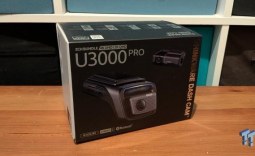 Thinkware U3000 Pro Review - Smart Dashcam with Wi-Fi quirks
 Montech TG3 Mid-Tower Chassis Review
 ASUS ROG Strix X870E-A Gaming WiFI7 Neo Review - A New Enticing Option
 Noctua NL-LC1-36 Liquid CPU Cooler Review
 Logitech G316 X 98 Wired Gaming Keyboard Review - Retro-Inspired Board that Falls a Little Short
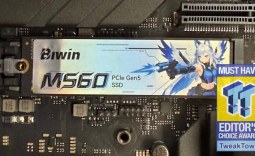 Biwin M560 2TB SSD Review - Best Overall Retail-Ready DRAMless SSD
 Logitech G512 X 98 Analog Mechanical Gaming Keyboard Review - An Innovative Two-in-One
 Windows 11 may be encrypting your drive already, and I checked where my recovery key went
 GIGABYTE's 40 Days of INFINITY celebrates 40 Years of Innovation with stunning GeForce RTX graphics cards and rewards
 I swapped File Explorer for this free file manager and finally got the layout I wanted
 How to tell if someone has been using your Windows PC without your permission
 6 Task Manager tips for troubleshooting Windows performance problems
 ASUS ROG's 20th Anniversary Line-up of Premium PC Gaming Gear has Arrived - Here's Everything You Need to Know
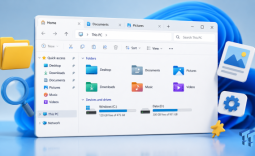 Six File Explorer tips every Windows user should know
 I switched my PC to encrypted DNS in Windows 11, and browsing felt more private
 Printer Not Working in Windows? How to fix detection, print queues and drivers
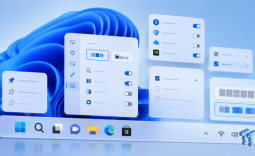 The Ultimate Guide to Personalizing Your Windows 11 Taskbar