







Learn about how TweakTown tests and reviews hardware. As an Amazon Associate, we earn from qualifying purchases. TweakTown may also earn commissions from other affiliate partners at no extra cost to you.
Stay Updated
Follow TweakTown for breaking tech news, reviews, and daily updates.


SCDKEY brings festive cheer with Windows 11 Pro for $23.50 and more exclusive Christmas deals
SCDKEY is spreading holiday cheer this Christmas with magical deals, exclusively for TweakTown readers! If you've been waiting for the perfect opportunity to upgrade your software at a jolly-good price, your wish just came true. For instance, you can grab a Windows 11 Pro OEM key for an unbelievably low $23.50 by using the festive 25% discount coupon code TT25.

And that's just the beginning of SCDKEY's Christmas Sale Extravaganza! Check out some of the top offers below and save big this holiday season:
Here's the best holiday gift of all: Buy Windows 10 now and upgrade to Windows 11 for free! If you're planning to set up a new PC this Christmas, SCDKEY has you covered. Just install Windows 10, head to Settings > Update & Security > Windows Update, and upgrade to Windows 11 - at no extra cost.
Honey extension exposed as the biggest scam in YouTube history
Honey, the browser extension marketed to consumers as a solution to easily finding the best coupons on the internet for purchasing products, has been exposed by a YouTuber for conducting shady business practices, misleading customers, and swiping affiliate marketing money from partners.

The YouTube channel MegaLag recently posted a 23-minute investigation into the extremely popular browser extension, purchased by PalPal for $4 billion in 2019. The investigation implicates some of the biggest creators on YouTube, such as MrBeast, MKBHD, Linus Tech Tips, and many others, all of which have promoted Honey to their audiences for many years. MegaLag explains Honey's nefarious business practices can be traced back to its extension, which presents itself to a user at the last phase of purchasing an item through a website.
Honey asks the user if they would like to apply the coupon codes the extension has found on the website, and after the user agrees, Honey begins "testing" the scraped coupons and adding them to the checkout. However, MegaLag discovered that if a user was carrying out a purchase through an affiliate marketing link, say through a YouTube video description which gives the creator of that YouTube video a kickback on the total purchase value of that product, Honey would covertly and unsuspectingly change the affiliate marketing link from the YouTuber's to Honey's own link.
Continue reading: Honey extension exposed as the biggest scam in YouTube history (full post)
Baldur's Gate 3 studio lead explains the formula for success in the games industry
In a speech at The Game Awards 2024, Larian boss Swen Vincke delivered a critique of the modern video games industry while underlining the push-pull dynamics of publisher-developer relationships.

Gaming isn't in the best place right now, and while the industry has raked in around $184 billion in 2024, global growth is flat. So how do you make it in the tough market?
Swen Vincke, the boss of Baldur's Gate 3 developer and Game of the Year winner Larian Studios, shares the secret for success. It's really all about passion and respect across the entire product stream, from software development to publisher distribution and then eventually end-user play. Selling a bunch of copies really lies in a team's passion and skill, but also the fine and often precarious relationships between the funding publishers and the critical, but spend-happy, creatives.
Diablo 1 and 2 creators have a new game that will capture the feel of early Diablo games
With the long-awaited release of Blizzard's Diablo 4 last year and its Vessel of Hatred expansion a few months ago, not to mention the early access launch of Path of Exile 2, it's an excellent time for action-RPG or ARPG fans. Moon Beast Productions, a new studio that includes Diablo co-creator Erich Schaefer and developers who worked on Diablo 1, Diablo 2, Diablo 3, Torchlight, and more, are cooking up something new for the genre.

The studio has secured funding for its new ARPG game, which it's set to unveil sometime next year. It's looking to shake up the genre with something new while returning to its roots, the original Diablo from 1996.
"For the past 20 years, we've dreamed of ARPG gameplay in more open, dynamic worlds," Erich Schaefer, who was instrumental in the first Diablo game's development, said in the press release. "We finally have the technological capabilities and decades of design experience to bring those visions to life. We're going back to what made those early Diablo games feel so awesome but taking them in some cool, fresh directions."
Intel's latest Arc Graphics driver fixes some issues for the new Intel Arc B580 GPU
Intel launched its first 'Battlemage' desktop graphics card earlier this month with the new Intel Arc B580, which has a competitive $250 price point. With 12GB of VRAM and performance that outclasses the GeForce RTX 4060 and Radeon RX 7600, it presents a compelling mainstream PC gaming alternative, backed up with hardware and software that is leaps and bounds better than the first-gen Arc.

For an in-depth look at the new B580, check out our full reviews of the Intel Arc B580 Limited Edition and ASRock Intel Arc B580 Steel Legend GPUs. With reports of the new Arc B580 selling out in multiple regions and Intel promising weekly shipments to retailers to try and keep up with the demand, the Arc team has just released a new Game On Graphics Driver for its Intel Arc line-up.
Intel Graphics Driver 32.0.101.6325 and 32.0.101.101.6253 (which is weirdly a single package) fixes a few issues the Intel Arc B580 has shown with games like Elden Ring and F1 24 while outlining 'Known Issues' that the Arc Graphics team is working to resolve for the B580 - including software compatibility.
LG has just launched the world's first fully wireless and transparent OLED TV for $60,000
The 77-inch LG SIGNATURE OLED T was announced at CES 2024 and is described as the world's first transparent and true wireless 4K OLED TV. It is as much an artistic innovation as a technical one, with a stunning frame and self-lit OLED screen that can transform from transparent to opaque to create a one-of-a-kind living space.

With pre-orders now open and the 77-inch LG SIGNATURE OLED T shipping to customers this month in the U.S. with a price point of around $60K, it's not exactly the sort of display you'd head on over to Best Buy to pair with that new PlayStation 5 Pro. What makes it unique is that you can watch content with the display in its 'transparent' mode. Still, it's available to pre-order at Best Buy for $59,999.99.
"When in transparent mode, the OLED T offers a futuristic content experience that must be seen to be believed," LG writes. "The screen not only creates the illusion of content floating in mid-air but also produces a mesmerizing effect by 'merging' the on-screen visuals with the surrounding space."
Steam Replay is back, giving you a fresh look at what you've been playing in 2024
Steam Replay is back for 2024, giving a breakdown of all the PC games you've been playing throughout the year. Following similar annual gaming summaries from Microsoft, Sony, and Nintendo, Valve's Steam Replay first debuted in 2022. It's chock full of stats and figures to remind you of what PC games you were into throughout the year.

2024 has been a banner year for new releases from Black Myth: Wukong to Elden Ring: Shadow of the Erdtree to Helldivers 2 to the long-awaited arrival of STALKER 2. Of course, it's also been a big year for indie releases like Balatro and Hades 2's early access debut. Plus, the usual heavy hitters like Counter-Strike 2 and Call of Duty.
What's excellent about Steam Replay is that it's personalized for you, and you can choose to share all your PC gaming stats or keep them private. It's a sea of nifty charts and figures, from how many achievements you've unlocked to how many games you've played to your longest gaming streak.
No Dreamcast or Saturn mini: SEGA officially confirms it will not make new retro consoles
It's official: SEGA is done making mini consoles, so don't expect to see a Saturn or Dreamcast mini.

A few years ago, mini consoles were all the rage. It was like the old 1990s console wars again: the SEGA Genesis and SNES mini consoles went head-to-head in a holiday showdown. But things have changed since then, and no one has the money to produce extra hardware, especially when it comes pre-loaded with software that you could sell on multiple devices.
Despite the popularity of the Genesis mini (we loved it, check out our review here), SEGA has no plans to produce or release any more retro mini consoles. That means no Saturn or Dreamcast minis...yet SEGA has other plans for these old-school eras of gaming.
'I want to make SEGA really shiny again,' president Shuji Utsumi says
SEGA's new president wants to bring the spark back to the beloved games company and stop playing it so safe.

SEGA could become more of a dazzling eye-catching spectacle again, just like it was in its prime during the 1990s and the early 2000s. At least that's the game plan of new SEGA of America and SEGA Europe exec Shuji Utsumi, who plans to re-ignite the brand's image and rally the offensive against the competition.
"I want to make Sega really shiny again," Utsumi told the BBC in a recent interview. What makes Utsumi's words so interesting is that he was head of SEGA Japan during the Dreamcast era, and he's certainly aiming to bring that era back.
Continue reading: 'I want to make SEGA really shiny again,' president Shuji Utsumi says (full post)
SEGA may create its own subscription service similar to EA Play, Ubisoft+, or Switch Online
SEGA is currently mulling over whether or not it should enter the subscription market.

Following Game Pass' launch in 2017, a number of big-name publishers also rolled out their own subscriptions. Ubisoft has uPlay, Electronic Arts has EA Play, and other platform-holders jumped in with Nintendo Switch Online and PlayStation Plus. Now it looks like other publishers are ready to jump into the market after years on the sidelines.
SEGA is one such company. In a recent interview with BBC, SEGA president Shuji Utsumi said that subscriptions are "very interesting" and that the house of Sonic was currently "evaluating some opportunities."
Bad news for Copilot+ laptops: AI PC 'supercycle' is a bust already claims one analyst
AI laptops such as Microsoft's much-hyped Copilot+ PCs might be set to flop, according to the latest word from one analyst.

This is semiconductor analyst Daniel Newman, who as Tom's Hardware noticed posted on X about Micron's Q3 earnings being slightly weaker than expected - and moreover, the forecast for Q2 2025 dropping considerably (from $8.98 billion to $7.9 billion in predicted revenue).
Newman points out that any 'panic' that this might be the beginning of the end for big AI profits is misplaced, as Micron's revenue for HBM (High Bandwidth Memory) in AI is very much booming, growing at a high double-digit percentage year-on-year.
RDNA 4 smiles for the camera: this could be AMD's next-gen Radeon RX 8800 XT reference GPU
AMD's next-gen Radeon RX 8800 XT graphics card has reportedly appeared on Reddit in the form of an advertising campaign on the site by AMD... flagship RDNA 4 might have just been teased.

The purported Radeon RX 8800 XT graphics card has a triple-fan design with a sleek black and silver aesthetic, with an LED--illuminated Radeon logo on the side. The purported RX 8800 XT is sitting alongside a Ryzen 9 series processor, so we should expect Zen 5 + RDNA 4 combos in 2025.
We don't know of the ad is still running on Reddit, as it could've been taken down by AMD... if it is real, a ninja reveal like this with an "oops, uhhh we made a mistake and now we'll pull this ad" makes sense, as AMD is going to need everything it can get to begin to fight off the tidal wave of NVIDIA's next-gen GeForce RTX 50 series "Blackwell" GPUs at CES 2025, when RDNA 4 is unveiled.
AMD Ryzen 7 9800X3D uses thick dummy silicon: uses 93% of CCD stack, no perf boost, but crucial
AMD's new Ryzen 7 9800X3D processor has thick dummy silicon that uses 93% of the CCD stack, provides no performance benefits, and is completely non-functional, but it's required for stability.

On previous x3D processors, the 3D chiplet was stacked on top of the CCD (Core Complex Die) which allowed the cores direct access to the pool of additional L3 cache memory, but AMD moved the 3D chiplet underneath the CCD for the new Ryzen 7 9800X3D.
In a recent teardown of the 9800X3D, Tom Wassisk analyzed the CCD of the 9800X3D and found that most of the silicon on it is... rather useless. The CCD and SRAM silicon layers measure 7.2µm and 6µm respectively, with the total die stack and interconnects, etc measuring only 40-45µm.
ASUS chairman: we are working on a humanoid robot, will fight Elon Musk's Tesla Optimus robot
ASUS chairman Jonney Shih has said that they are already in "full swing" developing its first humanoid robot, something that would compete with Elon Musk and his Tesla Optimus robot we've been hearing more and more about lately.

Shih recently said: "we are already in full swing on this part and have launched plans internally", but ASUS already has its Zenbo robots... but its new adventure is with a humanoid robot that should better resemble the Tesla Optimus humanoid robot sometime in the future.
Elon Musk recently chatted to TSMC boss C.C. Wei asking for a massive, and stable supply of chips for his Optimus robots, but now it looks like ASUS is stepping into the next big thing for AI. The real big breakthroughs for AI are constrained for now, with artificial general intelligence (AGI) only obtained by using large language models (LLMs), and without a physical body, we are limited by the potential of these robots.
Micron reveals 'cutting-edge' HBM4E development has started, HBM4 mass production in 2026
Micron has updated the industry on its next-generation HBM4 and HBM4E memory, with mass production expected to start in 2026 ready for next-gen AI GPUs like the NVIDIA Rubin R100.

The AI memory market only has a few players with SK hynix leading the HBM market, Samsung and Micron have started spooling up production of their HBM3, HBM3E, and future-gen HBM4 and HBM4E memory for the insatiable requirements of the AI industry... it's mostly NVIDIA vacuuming up all HBM memory chips made.
Sanjay Mehrotra, President and Chief Executive Officer of Micron said: "Leveraging the strong foundation and continued investments in proven 1β process technology, we expect Micron's HBM4 will maintain time to market and power efficiency leadership while boosting performance by over 50% over HBM3E. We expect HBM4 to ramp in high volume for the industry in calendar 2026".
NVIDIA to launch GeForce RTX 5080 16GB first, ultra-enthusiast RTX 5090 32GB comes next
NVIDIA will reportedly launch its new GeForce RTX 5080 16GB graphics card first, with the ultra-enthusiast GeForce RTX 5090 32GB launches after.

In a new post from Wccftech, we're learning that after the CES 2025 reveal of NVIDIA's new GeForce RTX 50 series "Blackwell" desktop gaming GPUs, the second-fastest card -- the RTX 5080 16GB -- will launch first. NVIDIA is expected to announce the GeForce RTX 5090 and RTX 5080 at CES 2025, alongside the RTX 5070 series (RTX 5070 Ti + RTX 5070) and then the RTX 5060 comes later.
The first Blackwell gaming GPU to launch will be the GeForce RTX 5080 which will feature 16GB of new GDDR7 memory clocked at up to 32Gbps (30Gbps is expected) on a 256-bit memory bus, which will result in up to 960GB/sec of memory bandwidth, which means the RTX 5080 has virtually as much memory bandwidth as the current-gen flagship RTX 4090 24GB.
Man who says he invented bitcoin faces prison, after filing an insane $1.2 TRILLION lawsuit
Australian computer scientist Craig Wright falsely claimed he invented bitcoin and has been sentenced for contempt of court on Thursday for his 911 billion-pound ($1.2 trillion USD) lawsuit against Twitter founder Jack Dorsey's payments company, Block, in Britain.

Reuters reports that Wright has long claimed to be the author of a 2008 white paper which was the foundational text for Bitcoin, published under the pseudonym "Satoshi Nakamoto". A judge at London's High Court found that back in May 2024, Wright had repeatedly lied and forged documents to support his claim, after the trial of a case brought by the Crypto Open Patent Alliance (COPA) to stop Wright suing bitcoin developers.
COPA said that Wright's recent lawsuit against Block and others breached an injunction preventing Wright from bringing litigation on the basis of his claim to be the creator of bitcoin, or that he owned intellectual property (IP) rights over bitcoin. The group's lawyer Jonathan Hough told the court that Wright's latest lawsuit was "a desperate publicity stunt to keep his cultish supports engaged".
Lenovo's new ThinkBook Plus laptop teased with rollable display, debuts at CES 2025
Lenovo is preparing its next-gen ThinkBook Plus laptop, which will be rolling out with a rollable display... officially debuting at CES 2025 after being shown off in 2023 in prototype form.

In a new post from leaker Evan Blass, we're being introduced to the Lenovo ThinkBook Plus laptop that has a focus on multitasking, which seems to have the rollable display splitting one screen into two separate displays. Lenovo has shared images showing off presentations and live video chats happening at the same time, showcasing the multitasking abilities of its rollable display laptop.
When the screen is folded, it looks like a regular laptop except it's missing its bottom bezel, which is where the screen rolls down. The keyboard looks like other Lenovo products, but the lid extends to the height of two display, meaning the base will need to be heavier to maintain balance (so it doesn't wobble over).
Lenovo's next-gen Yoga laptop has Intel Core Ultra 200V CPU, under-display camera for CES 2025
Lenovo PR is having a field day in terms of leaks, with another showing us the company's new Yoga laptop that features an under-display camera. Check it out:

The new Lenovo Yoga laptop will feature an ultra-slim bezel design with a front-facing camera that is hidden behind the display, while Intel's new Core Ultra 200V series "Lunar Lake" CPU handles the rest. We've had years of punch-hole cameras, cameras in bezels, and the "Dynamic Island" but Lenovo is putting the camera directly behind the display so it's invisible.
Lenovo seems to be going with a smartphone-style approach with its under-display camera, with leaked photos from WalkingCat on X, with the photos looking like they've been ripped right out of a promotional video that is probably destined for CES 2025, especially as the calendar displays 'January 2025'.
This doughnut store in Indiana, USA is still using a Commodore 64 as a cash register
A bakery in Indiana is still using a Commodore 64 as its cash register, over 42 years since the Commodore 64 launched in 1982. Check it out:

Tony Lyon reposted some photos on X of the Commodore 64 being used at the Hilligoss Bakery in Brownsburg, Indiana, USA, operating two of the systems as cash registers. The photos themselves were taken in 2010, while another photo is from 2021, but the bakery would still have the Commodore 64 systems active today.
The Commodore 64 launched in 1982 for a cost of $595 at the time, which works out to just under $2000 today, and still continues as the highest-selling individual computer of all time with sales of somewhere between 10 million and 17 million units.
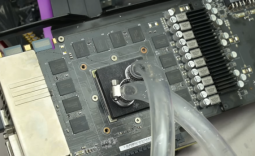 Benchmarks show direct water on die cooling with no heat spreader outperforms AIO liquid cooling on a GPU
 OpenAI's next hardware is a doughnut-shaped smart speaker with moving parts that wants to be your new phone
 Noctua measured over 100 PC cases and found Corsair, NZXT, and Lian Li cooler clearance spec sheets are often wrong
 Leaked Xbox controller for Gears of War E-Day features a cracked volcanic rock design and blood-red Crimson Omen
 Doom co-creator John Romero reveals id Software turned to Taiwanese pirates to help distribute the game to more people
 GTA Online will continue after GTA 6's release, Take-Two reiterates
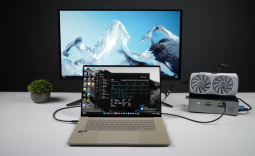 YouTuber benchmarks RTX 4060 on Snapdragon X2 Elite laptop using RTX Spark developer driver
 Dev builds a unique 3D operating system for multitasking, gets terrible performance
 Take-Two boss: 'discs, especially for big games, don't make sense to the consumer'
 Modders are selling RTX 2080 Ti GPUs with 22GB VRAM on eBay for AI use
 CPS PCCooler YS1200 ATX 3.1 80 PLUS Gold PSU Review
 ASRock X870E Taichi White Review: a premium AM5 motherboard with 10G LAN and WiFi 7
 Asetek Initium Pedal Modular Upgrades Review
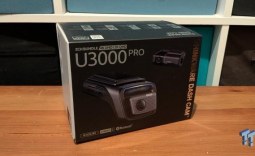 Thinkware U3000 Pro Review - Smart Dashcam with Wi-Fi quirks
 Montech TG3 Mid-Tower Chassis Review
 ASUS ROG Strix X870E-A Gaming WiFI7 Neo Review - A New Enticing Option
 Noctua NL-LC1-36 Liquid CPU Cooler Review
 Logitech G316 X 98 Wired Gaming Keyboard Review - Retro-Inspired Board that Falls a Little Short
 Biwin M560 2TB SSD Review - Best Overall Retail-Ready DRAMless SSD
 Logitech G512 X 98 Analog Mechanical Gaming Keyboard Review - An Innovative Two-in-One
 Windows 11 may be encrypting your drive already, and I checked where my recovery key went
 GIGABYTE's 40 Days of INFINITY celebrates 40 Years of Innovation with stunning GeForce RTX graphics cards and rewards
 I swapped File Explorer for this free file manager and finally got the layout I wanted
 How to tell if someone has been using your Windows PC without your permission
 6 Task Manager tips for troubleshooting Windows performance problems
 ASUS ROG's 20th Anniversary Line-up of Premium PC Gaming Gear has Arrived - Here's Everything You Need to Know
 Six File Explorer tips every Windows user should know
 I switched my PC to encrypted DNS in Windows 11, and browsing felt more private
 Printer Not Working in Windows? How to fix detection, print queues and drivers
 The Ultimate Guide to Personalizing Your Windows 11 Taskbar