







Learn about how TweakTown tests and reviews hardware. As an Amazon Associate, we earn from qualifying purchases. TweakTown may also earn commissions from other affiliate partners at no extra cost to you.
Stay Updated
Follow TweakTown for breaking tech news, reviews, and daily updates.


Silverstone unveils a Thunderbolt 2 external GPU solution at CES
CES 2014 - Intel's Thunderbolt 2 is widely considered the data connection of the future, and rightfully so as nothing else comes close to its transfer speeds. The protocol is so fast that companies can connect GPUs externally to devices such as laptops to give them a boost when needed.
Silverstone was showing off its XG2 Station, a Thunderbolt 2 External GPU housing designed in partnership with ASUS at the 2014 CES. The XG2 housed a AMD Radeon 7970 and small form factor power supply along with an ASUS designed main board that provided the Thunderbolt to PCIe connectivity. Unfortunately we did not get to demo the device, and no word was given on if or when we might see the XG2 Station hit the retail market.
Continue reading: Silverstone unveils a Thunderbolt 2 external GPU solution at CES (full post)
Silverstone's new Raven Z RVZ01 is the perfect Steam Machine chassis
CES 2014 - The buzzword at this years Consumer Electronics Show was definitely "Steam Machine," and with 12 official models being unveiled everyone was buzzing about Valve and its partners. The PC and Gaming enthusiast world in general do not like to purchase their rig pre-built though and Silverstone has a DIY Steam Machine Solution for that market.
Silverstone's new Raven Z RVZ01 Mini-ITX case is designed with small form factor builds in mind that need to lay horizontal for inclusion into a living room setup. Measuring in at just 15-inches wide by 13.5-inches deep, this case will fit into any space with clearance of about 4.5-inches, which makes it the perfect size for home theater use or to build that custom Steam Machine. The Raven Z RVZ01 has enough room inside for a decent sized GPU, ample storage, and even an AIO Liquid Cooling Solution.
Silverstone has removed the full 5.25-inch bay and replaced it with a space sized perfectly for a slot-load dvd drive, while enough room for a small PSU still exist. Magnetic dust filters cover the intake ports which makes for very easy cleaning. The fans pictured are part of Silverstone's new chassis fan lineup and are less than half the thickness of a regular 120mm fan. Finishing things off are vibration isolating rubber feet which ensure a quiet living room gaming experience
Continue reading: Silverstone's new Raven Z RVZ01 is the perfect Steam Machine chassis (full post)
Gartner: More than 99% of apps don't make any money
Less than 0.01 percent of consumer mobile apps will make money and be considered a hit by developers by the end of 2018, according to research firm Gartner. Almost 90 percent of paid apps are downloaded less than 500 times every day, earning less than $1,250 per day.
"The vast number of mobile apps may imply that mobile is a new revenue stream that will bring riches to many," said Ken Dulaney, Gartner VP and analyst, in a statement. "However, our analysis shows that most mobile applications are not generating profits and that many mobile apps are not designed to generate revenue, but rather are used to build brand recognition and product awareness or are just fun."
Mobile app use grew 115 percent year-over-year from 2012 to 2013, though 94.5 percent of all mobile apps downloaded by 2016 will be free apps, Gartner predicts.
Continue reading: Gartner: More than 99% of apps don't make any money (full post)
Valve quietly updates Steam, allows Big Picture Mode to work with VR
Valve pushed an updated version of Steam into the warm hands of gamers across the world yesterday, but most don't realize that this is actually quite a milestone for the world of virtual reality, or VR.
The latest version of Steam allows you to use a VR headset, such as the Oculus Rift, with Steam's Big Picture interface. Big Picture was originally made for the living room, but with a VR headset on, the interface has a curved screen which hovers in front of your viewpoint, where you can see all of it between games.
This is an interesting development, considering Steam Dev Days starts today. Steam Dev Days will see Valve embrace the world of VR, with rumors of the company unveiling its own VR headset. I don't think we'll see that, but more of a close embrace of all companies working on VR, such as Oculus VR. We should also see Oculus VR's Palmer Luckey on-hand at the event, but unfortunately, no press are invited to the event.
Continue reading: Valve quietly updates Steam, allows Big Picture Mode to work with VR (full post)
It took EA over six month to get offline mode into SimCity
We reported yesterday that EA finally announced an offline mode for its SimCity reboot - something I think is too little, too late - but the update is at least here now. But, it took EA quite some time to get it here.
The developer has explained how much work it did to provide offline mode in SimCity, where Lead Engineer, Simon Fox, explains: "The original creative vision for SimCity was to make a game where every action had an effect on other cities in your region. As such, we engineered the game to meet this vision, setting up the player's PC (client) to communicate all of its information to the servers. That means that our entire architecture was written to support this, from the way that the simulation works to the way that you communicate across a region of cities. So yes, while someone was able to remove the 'time check' shortly after launch, they were unable to perform key actions like communicating with other cities that they had created locally, or with the rest of their region(s), or even saving the current state of their cities."
Fox says it took over six months of coding to get here, which is a massive effort for the developer. Fox continues: "My team did, however, see a path forward towards Offline, one that would maintain the integrity of the simulation. Lucy once said that Offline wouldn't be possible 'without a significant amount of engineering work,' and she's right. By the time we're finished we will have spent over 6 ½ months working to write and rewrite core parts of the game to get this to work. Even things that seem trivial, like the way that cities are saved and loaded, had to be completely reworked in order to make this feature function correctly."
Continue reading: It took EA over six month to get offline mode into SimCity (full post)
Battlefield 4 on PC updated, increased stability and tweaks included
A small update was pushed out by DICE for Battlefield 4 on the PC yesterday, which includes a bunch of stability, balancing and player spawning fixes. Stealth jets have also been tweaked, with a 25% increase in the amount of damage their cannons can do. A full list of fixes is below:
Continue reading: Battlefield 4 on PC updated, increased stability and tweaks included (full post)
AMD's Mantle tech used for RTS game, allows 5,000 on-screen units
We know that by leveraging AMD's so far impressive Mantle technology, DICE can squeeze up to 45% more performance out of Battlefield 4. But with a gaming market focused on first-person shooters (FPS), what can AMD's technology do for other genres, such real-time strategy (RTS) games?
Well, there's a game called Nitrous, which uses AMD's Mantle programming tool to speed up the communication between the CPU and GPU. This increase in communication sees the on-screen unit count climb from the usual 50-70 units, to around 5,000 units. These 5,000 units aren't just mindless pieces of robots on your screen, but they can be AI- or physics-driven entities.
Dan Baker, Oxide founder and previous Graphics Lead on Civilization V, has said: "It's a difference of at least an order of magnitude. Take the most complex scene you've ever seen in StarCraft II and multiply it by 10."
Continue reading: AMD's Mantle tech used for RTS game, allows 5,000 on-screen units (full post)
Super Bowl 2014 will broadcast in 4K Ultra High Definition
CBS plans to use six Ultra High Definition (UHD) cameras to broadcast Super Bowl XLVII, able to capture video up to 500 frames per second, providing a very clear, HD picture.
During the Consumer Electronics Show (CES) earlier this year, many high-definition TV manufacturers showed off UHD providing a whopping 3840x2160 resolution to TV viewers.
"We're using an unprecedented array of technology," said Ken Aagard, CBS Executive VP of operations, in a statement. "This year, we'll be using an innovative native 4K camera replay system we're calling 'Heyeper Zoom,' and given the right moment, we're hoping we can show something that will be really special."
Continue reading: Super Bowl 2014 will broadcast in 4K Ultra High Definition (full post)
Research: augmented reality can find success in evolving workplace
The fascination surrounding augmented reality will yield countless potential users in the consumer and enterprise markets, with AR adoption on the rise, businesses can use the budding technology to complement and enhance internal business processes, according to the Gartner research group.
Using AR to help identify potential workplace hazards, for example, could lead to a safer and more productive office or production facility. Location-based and computer aided vision is still developing, and it will take time for business to jump onboard, but there is great potential in the years to come.
"AR is most useful as a tool in industries where workers are either in the field, do not have immediate access to information, or jobs that require one or both hands and the operator's attention," said Tuong Huy Nguyen, Gartner principal research analyst, in a media statement. "As such, the impact on weightless industries is lower because these employees often have constant and direct access to the information they need (such as knowledge workers)."
Continue reading: Research: augmented reality can find success in evolving workplace (full post)
Vuzix developing see-through smart glasses for major hardware partner
Smart glass manufacturer Vuzix has entered a manufacturing partnership with a tier 1 partner to develop a new generation of see-through smart glasses. The undisclosed partner hasn't been announced, but the prototypes will use the Vuzix see-through optics engine, with the first phase to be completed in 2015.
Manufacturers are trying to develop new smart glasses that closely resemble designer eyewear, but additional research and development time is necessary.
"Many analysts and industry executives are expecting this space to exhibit continued rapid growth," said Paul Travers, Vuzix President, in a press statement. "This was evident at CES last week. With the anticipated growth in this sector, those wearable products that address the real needs of the customer stand to garner the largest market share."
Continue reading: Vuzix developing see-through smart glasses for major hardware partner (full post)
Brain-computer interface shows great potential over next 12 years
Intel and other established tech companies are showing interest in the blossoming brain-computer-interface (BCI) market, according to Mind Solutions. BCI is a dedicated communication pathway between the human brain and a device - with early focus on helping medical patients recover from severe physical injuries.
With the help of Intel and other companies, Mind Solutions hopes to see BCI become more common place over the next few years. As the number of transistors powering PCs and mobile devices increases, especially as technology surpasses neurons in the human brain, there is great potential for long-term development.
"We will finally remove the fiction from the science fiction," said Mooly Eden, Intel head of perceptual computing, during CES. It will be possible to "open a car door with our finger, receive constant information about our health" along with using devices that "interface directly with your brain."
Continue reading: Brain-computer interface shows great potential over next 12 years (full post)
Burger-flipping robot makes 360 gourmet burgers per hour
Don't you hate it when you see an advertisement for a burger, but when you buy it, it looks nothing like it? Well, Momentum Machines has unveiled the 'Smart Restaurants' machine, a robot that is capable of making 360 gourmet burgers, per hour.
These burgers can be customized, which is nothing for this robot. The robot is 24 square foot machine, which is pictured above. Momentum Machines has said: "Fast food doesn't have to have a negative connotation anymore. With our technology, a restaurant can offer gourmet quality burgers at fast food prices. Our alpha machine replaces all of the hamburger line cooks in a restaurant. It does everything employees can do except better."
Better yet, it will make custom orders like a pro. The robot will only slice the toppings seconds before it places them onto the burger, ensuring you get the freshest burger possible. It will slide up specific slices of meat and toppings, and is a more sanitary, cleaner way of making gourmet burgers. Momentum Machines says that because of these robots' efficiency, restaurants can cut down on labor costs, and spend more on better quality ingredients.
Continue reading: Burger-flipping robot makes 360 gourmet burgers per hour (full post)
NVIDIA's Tegra K1 smashes the competition in early becnhmarks
I was pretty impressed what what I read about NVIDIA's Tegra K1 processor at CES 2014, but it looks like the new SoC will be kicking some serious benchmark ass when it hits.
Some leaked benchmarks involving Lenovo's ThinkVision 28, which is powered by the Tegra K1 SoC, have leaked. These leaked benchmarks are using Futuremark's 3DMark, where the Tegra K1 SoC just dominates the competition. Keep in mind that the ThinkVision 28 was actually clocked at just 2GHz, and not the 2.3GHz that NVIDIA claims the Tegra K1 can be operated at.
Other benchmarks suggest that NVIDIA's Tegra K1 processor can also beat an Intel Haswell-powered notebook with integrated graphics. This is a big deal, as a Haswell-powered notebook will chew up much more power than an SoC. It looks like NVIDIA is onto a big, mobile winner here, folks.
Continue reading: NVIDIA's Tegra K1 smashes the competition in early becnhmarks (full post)
Intel reportedly working on two new Broadwell-based NUCs
We only just reported that Intel is looking to release its Broadwell CPUs earlier than expected, but it looks like the chipmaker is working on two new NUC units based on the freshly shrunken CPU technology, codenamed Broadwell.
Intel engineers are currently working on two new NUCs, the "Rock Canyon" and "Maple Canyon". Starting with what we know on the Rock Canyon, which is expected to be pushed toward the consumer market, where it will be marketed toward being in your living room, with technologies making it feel more at home. We should see USB 3.0, HDMI and DisplayPort technologies inside, as well as being ready to take an infrared receiver module. On top of that, it should feature an M.2 PCI Express-based slot for SSDs.
The Rock Canyon NUC will also reportedly feature NFC technology which will allow it to connect to your smartphone or tablet, as well as WiChrg technology. It looks like the most consumer-friendly NUC yet, improving on the already great NUCs on the market.
Continue reading: Intel reportedly working on two new Broadwell-based NUCs (full post)
VisionTek unveils CryoVenom liquid cooled Radeon R9 290
CES 2014 - VisionTek has just unveiled its latest high-end GPU and its features and price will surprise you. The new CryoVenom is based on a Radeon R9 290 and is fitted with a custom-built water cooling block that is said to offer a cooling performance increase of up to 38-percent.
VisionTek says that the custom liquid cooling block allows the Radeon R9 290 to be overclocked by as much as 24-percent, something that is just not possible with air coolers which have trouble just keeping the card at operating temperatures at stock clocks. Sweetening the deal, the CryoVenom R9 290 emits under 10dB of noise, ensuring for the most quiet Radeon R9 290 experience available on the market today!
Not only is the VisionTek CryoVenom R9 290 faster, cooler, and quieter, it's cheaper as well. With other R9 290 GPUs retailing for as much as $700, VisionTek has managed to offer the CryoVenom R9 290 for just $550. The card features a nickle plated block with acrylic top plate and fittings for standard G-1/4 fittings. For anyone looking for a liquid cooled R9 solution, this is the card for you!
Continue reading: VisionTek unveils CryoVenom liquid cooled Radeon R9 290 (full post)
President Obama will announce massive NSA reform this Friday
The White House has announced that President Obama will on Friday, announce plans for NSA reform. Obama is expected to leverage a mix of executive orders and actions that will fundamentally change the way the NSA can gather information. One of the biggest actions that will be put into motion is the extension of privacy rights to non American citizens.
Other actions include the creation of a so-called "Privacy Advocate" which will argue on the peoples behalf in front of the Foreign Intelligence Surveillance Court, which now only hears arguments for spying on behalf of the government. Obama is also expected to call for a complete restructuring of the phone-data program, and will state that data collected should be held by phone companies or a third party as to offer a barrier from unwarranted access to private files.
Personally, I caution everyone to remember that most of this is still smoke and mirrors, and true reform would involve ceasing any and all collection of information on American citizens without a court order. Furthermore, Obama would have never acted to reform these policies if it would not have been for Edward Snowden and his very loud whistle blowing. While this may seem like a small victory, more work will need to be done before the NSA can truly be given the title of "reformed."
Continue reading: President Obama will announce massive NSA reform this Friday (full post)
iBUYPOWER announces new GPU coin mining systems
During the Consumer Electronics Show 2014 in Las Vegas, iBUYPOWER showed off some GPU coin mining systems that were powered by AMD's Radeon R9 290X GPUs. These systems are used purely to mine digital coins, such as Bitcoin and Litecoin.
iBUYPOWER's Vice President and co-founder, Darren Su, talks about the new GPU coin mining PCs from his company: "iBUYPOWER prides itself for being on the edge of technology, and as the world changes, we want to be at the forefront. Coin mining and high-compute systems are one of the few new areas that we have interest in. We're thrilled to be part of revolutions, and crypto-currencies are definitely on the hot-list."
The new GPU coin mining systems from iBUYPOWER start from $999, and can be configured in many different ways, depending on what you want to spend. The new coin mining PCs can be configured with up to three AMD Radeon R9 290X for some serious compute power.
Continue reading: iBUYPOWER announces new GPU coin mining systems (full post)
EA adding offline mode to SimCity one year after launch
EA announced today that it would be adding a long awaited offline mode to SimCity nearly a year after the games launch. EA originally required the game to have an always online connection to contact EA's authentication servers. This requirement caused many issues with the game launching and rendered it unplayable for many.
The issues with the always online requirement caused many users to call for its removal, but EA refused to budge on the matter, but less than a year later, the company is saying that it will be issuing an update to bring an offline mode to the game. Unfortunately offline mode may have came a little to late as many of us have forgotten about the game entirely.
Continue reading: EA adding offline mode to SimCity one year after launch (full post)
LeakedTT: Nokia's Android-based smartphone surfaces on Twitter
Since November, the tech world has been buzzing about Nokia releasing an Android-powered smartphone alongside its Lumia line of Windows Phones. @evleaks even posted an image of the top-secret project code named "Normandy," but until today all we have seen is an image of a Lumia-like device with a black screen.
Today, Twitter user, Picturepan2, posted what he says is an engineering prototype of the Nokia Normandy Android-based smartphone. The user interface definitely looks like some form of Android, but the phone appears to only feature a back button and not the typical back and home button combo. Further more, the device is pictured with what appears to be dual SIM cards based on the dual signal meters in the notification bar.
Other reports out today suggest that project Normandy is just part of a refreshed Asha line and will be running a heavily modified version of Android. The Android implementation will be modified to incorporate features from both Windows Phone 8.1 as well as Android, in what could become the Asha line's official OS. Sources say that we can expect to see this mysterious phone debuted just before or during the 2014 Mobile World Congress.
Continue reading: LeakedTT: Nokia's Android-based smartphone surfaces on Twitter (full post)
Cisco sets its sights on the 'Internet of Everything' craze
Network hardware company Cisco Systems focused on the Internet of Everything (IoE), setting the landscape for people connected to mobile devices, smart buildings, transportation networks, data and other processes on a wide scale. The number of estimated connected devices is 15 to 25 billion by 2015, which will propel up to 50 billion by 2020.
"Cisco has led customers through every Internet transition over the last 30 years," said Blair Christie, Cisco Senior VP and chief marketing officer, in a statement. "The Internet of Everything is perhaps the most promising of these, creating unprecedented opportunities for organizations, individuals, communities and countries to realize dramatically greater value from networked connections between people, processes, data and things."
Cisco has been forced to adapt to a changing environment in which employees are largely embracing the 'bring your own device' craze. However, the IoE blows that out of the water, with service users able to benefit from long-form content, location-based and profile data, home/control/automation features, and sensor-collected data in the home and workplace.
Continue reading: Cisco sets its sights on the 'Internet of Everything' craze (full post)
 Kingdom Hearts 4 reveals Pixar's Coco-inspired Land of the Dead world and late 2027 release window
 Budget GPU shortages to get even worse in second half of 2026, warns PC Partner
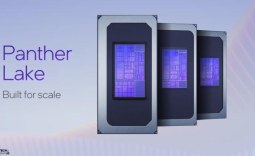 Intel plans an entry-level Panther Lake chip with 4 Xe3 cores for handhelds
 AMD denied any review samples for the Radeon RX 9050 because it's embarrassing
 Killing physical discs will make digital games cheaper, according to a former Square Enix exec
 Crucial refuses to send back a user's defective RAM, also denies warranty replacement
 Intel Razor Lake -AX will reportedly use Nova Lake CPU cores, and won't feature overclocking support
 Linux support is coming to the reworked Epic Games Launcher, new app will run on Tauri instead of Unreal Engine
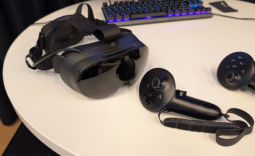 Steam Frame launch is 'just around the corner,' VR game developer confirms
 Pokemon Pokopia becomes the Switch 2's second-best-selling exclusive
 Corsair HS35 v3 Wireless Gaming Headset Review - An Affordable Winner
 D-Link F518 5G Wi‑Fi 6 AX1800 Mobile Hotspot Review: All-Day Mobile Hotspot
 Bose Lifestyle Ultra Speaker Review - Impressively Detailed Room-Filling Sound
 MSI Z890 Gaming Plus WIFI6E Review - Z890 for under $200
 Mortal Kombat (1995) 4K Ultra HD Blu-ray Review
 CPS PCCOOLER YS1200 ATX 3.1 80 PLUS Gold PSU Review
 ASRock X870E Taichi White Review: a premium AM5 motherboard with 10G LAN and WiFi 7
 Asetek Initium Pedal Modular Upgrades Review
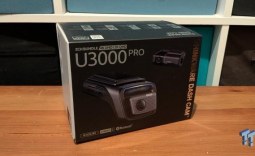 Thinkware U3000 Pro Review - Smart Dashcam with Wi-Fi quirks
 Montech TG3 Mid-Tower Chassis Review
 Windows Sandbox is The Windows Security Feature Most People Never Use
 I ditched the Windows 11 context menu for this open-source tool, and here's why
 Windows 11 may be encrypting your drive already, and I checked where my recovery key went
 GIGABYTE's 40 Days of INFINITY celebrates 40 Years of Innovation with stunning GeForce RTX graphics cards and rewards
 I swapped File Explorer for this free file manager and finally got the layout I wanted
 How to tell if someone has been using your Windows PC without your permission
 6 Task Manager tips for troubleshooting Windows performance problems
 ASUS ROG's 20th Anniversary Line-up of Premium PC Gaming Gear has Arrived - Here's Everything You Need to Know
 Six File Explorer tips every Windows user should know
 I switched my PC to encrypted DNS in Windows 11, and browsing felt more private