







Learn about how TweakTown tests and reviews hardware. As an Amazon Associate, we earn from qualifying purchases. TweakTown may also earn commissions from other affiliate partners at no extra cost to you.
Stay Updated
Follow TweakTown for breaking tech news, reviews, and daily updates.


Intel to release computers as small as USB thumb drives next year
Intel is planning to release diminutive thumb-sized computers next year. These Small PC's are fanless designs that are roughly the size of a USB thumb drive, and Intel actually demonstrated one of the devices at their recent investor conference. Intel didn't speak to the actual performance of the unit, but we do know that some Atom processors are small enough to fit into such devices.
The market for these small computers is actually in the tens of millions of devices per year, and there are already competing designs on the market featuring ARM processors and the Android operating system. By expanding x86 computing ability into this small form factor it opens up new potential use-cases. This class of tiny compute devices rarely have much storage, if any at all, onboard. Intel might be planning on integrating their new 3D NAND, which can pack up to 1TB of storage into a 2mm package, into the new devices. This would provide Intel a massive advantage over competing devices.
Intel did reveal they can be plugged into smart TV's and monitors and provide an instant computing solution. This may foreshadow Intel trying to penetrate into devices such as Amazon's Fire TV stick and Google Chromecast designs.
Continue reading: Intel to release computers as small as USB thumb drives next year (full post)
UK police arrest two men behind 'Expendables 3' piracy
Two men were arrested for their role in pirating the Expendables 3 movie, with officials from the Police Intellectual Property Crime Unit (PIPCU). The US release date for the movie was August 15, but copies of Expendables 3 were found online as early as July 25.
The two suspects, 36 and 33 years of age, reportedly uploaded the high-quality film after stealing it from a cloud-based storage system. Lionsgate Films said there was severe financial impact by the movie being related so early online, saying it cost millions of dollars in potential lost revenue.
"Today's operation shows you the significant impact intellectual property crime has on our creative industries, with millions of pounds being lost as a result of criminal actions," said Detective Chief Inspector Danny Medlycott, Head of PIPCU. "The public need to be aware that piracy is not a victimless crime. By downloading illegal music, film, TV and books, not only are you exposing your own computer to the risk of viruses and malware, but you are also putting hardworking people's livelihoods at risk as piracy threatens the security of thousands of jobs in the UK's creative industries."
Continue reading: UK police arrest two men behind 'Expendables 3' piracy (full post)
PMC scores win with Lenovo ThinkServer SAS partnership
PMC has announced that Lenovo has selected PMC storage solutions for external connectivity in their ThinkServer product line. Lenovo is offering the Lenovo 8885E by PMC for 12Gb/s SAS applications. The low-profile MD2 form factor 8885E is an HBA that provides eight SAS/SATA ports for connectivity. HBA's are becoming more popular in the datacenter as new architectures arise to leverage scale-out storage and advanced erasure coding. PMC Sierra has been very aggressive on the SAS front and recently captured the goal of providing the most SAS ports on a single card. This has led to a leading position in the market, and PMC has currently shipped more SAS ports than their competitors.
The increased density has the side effect of lower power consumption per port, which resonates well in power-constrained datacenters. PMC has measured 40% lower power consumption than their competitors with the same number of devices connected, which results in a tangible TCO reduction for their customers. As a rough guideline most datacenters spec each watt of power as an incremental cost increase of $2 dollars per year. When deploying thousands of SAS adaptors this can lead to a staggering amount of increased cost if there is a difference of a few watts per port.
12Gb/s SAS is gaining in popularity due to the bandwidth limitation of SATA SSDs. SATA is still stuck at 6Gb/s, and there are no plans to increase this in the future. SAS is cooking along at 12GB/s and provides more bandwidth for powerful solid state drives. High-Availability features also provide a more robust architecture, and until NVMe competitors can offer the same type of features SAS will continue to provide administrators tangible benefits. The Adaptec Series 8 adapters feature the PM8063 ROC, and offer great performance in a variety of workloads. We recently took the 8 Series for a test drive with 24 SATA SSDs and 8 12Gb/s SAS SSDs. Head over to our Adaptec by PMC ASR-8885 12Gb/s RAID Controller Review in the IT/Datacenter section for more in-depth coverage.
Continue reading: PMC scores win with Lenovo ThinkServer SAS partnership (full post)
ATSC lays out path to 100 TB HDDs by 2025
The quest for more storage has led to revolutionary breakthroughs in HDD technology. SSDs get the most attention in the storage world, but the incredible technology that goes into HDDs has created some of the most refined precision instruments in history. HDD density has increased 500 million fold since the initial designs were released in 1956. During the recent MMM (Magnetism and Magnetic Materials) Conference the ASTC (Advanced Storage Technology Consortium) laid out the continuing path of progress on the HDD front. Acronyms aside, the demand for more storage has resulted in billions of dollars in investments in new technology, and these new techniques are pushing us forward on the path to 100TB HDDs by 2025.
There are already 10TB HDDs on the menu for 2015, but they utilize SMR (Shingled Magnetic Recording) technology, which has some performance pitfalls. Helium drives have also come to the forefront in the quest for more density, and as demonstrated in our HGST Ultrastar He6 6TB Helium Enterprise HDD Review they deliver increased density, lower power consumption, and don't skimp on performance.
These radical new advancements are required because the pace of density increases have slowed as we reach the limits of current HDD recording technology (PMR). According to the ASTC, and several industry sources, HAMR should arrive in 2017. This will speed the annual density growth rate to 30%, which is a considerable increase from the current 15% annual increase. BPMR (Bit-Patterned Magnetic Recording) is the next step to realize incredible increases in density, and that is slated for release in the 2021 timeframe. Combining HAMR and BPMR seems to be a very promising approach that will deliver 10X the density of current HDDs, or 100 TB drives, by 2025.
Continue reading: ATSC lays out path to 100 TB HDDs by 2025 (full post)
Apple iPhone 6 storage tested with MLC and TLC NAND - TLC slower
Apple iPhone 6 models have been the subject of controversy and swirling rumors lately due to constant rebooting issues. Industry insiders opined that the crashing and reboot loops, only present on specific iPhone 6 models, is due to the use of TLC NAND. TLC NAND is denser and marginally cheaper than its MLC counterpart, but suffers from less endurance and lower performance. Apple only uses TLC NAND in select models with a lot of storage, and the 64GB iPhone and the 128GB iPhone 6 Plus are perfect examples. Whether or not TLC is at the root of the issue remains up for debate, and reports are circulating that Apple will abandon TLC entirely. Kbench, a Korean benchmark developer, has released tests of the 64GB iPhone 6 with MLC NAND against the same model with TLC NAND.
Unfortunately the released tests are limited to write benchmarking. TLC has inherent limitations with random write activity, but fares much better with read workloads. Mobile devices aren't subjected to as much heavy random write data as PC's, and as a general statement TLC fares well with sequential data. We mention this because these tests focused on random write data, which is the worst case scenario for mobile devices. Some read performance benchmarks would also be very helpful, and we are reaching out to Kbench for read performance results.
The Zero Fill test (at the top of the graphic) shows TLC blowing away the MLC competition. Zero Fill isn't a real-world test, it merely writes zero's to every address on the storage device. What isn't mentioned, however, is that this amazing speed with TLC hints at possible compression technology. It is interesting no one has connected the dots on this. SSDs that utilize compression and data reduction technology write Zero Fill data extremely quickly because compression algorithms can compress zero's so well that very little data actually hits the flash. One of the biggest challenges with TLC NAND comes on the endurance front. TLC NAND does not last as long as MLC NAND, and compressing the data results in less data actually written to the NAND, thus increasing endurance. Apple spent an estimated $500 million for Anobit, a company that was brought in specifically to increase the endurance of TLC NAND. Anobit doesn't entirely explain how they accomplish this feat, but adding compression in tandem with other techniques makes perfect sense.
Continue reading: Apple iPhone 6 storage tested with MLC and TLC NAND - TLC slower (full post)
CoinVault ransomware allows victims to decrypt one file for free
The CoinValut ransomware victimizes businesses, encrypting critical work files - but there is an added twist with this particular piece of software. The criminals provide one free decrypt, providing access to a file, trying to provide additional faith in victims.
CoinVault uses 256-bit AES encryption, and the decryption keys are stored on remote servers - and Windows files cannot be recovered unless the bitcoin payment is submitted to cybercriminals. Victims are ordered to pay 0.5 bitcoins, around $200 at current market prices, with the price increasing every 24 hours.
Ransomware attacks typically rely on employees falling prey to social engineering techniques, designed to trick users into clicking suspicious links or downloading unknown files.
Continue reading: CoinVault ransomware allows victims to decrypt one file for free (full post)
Intel, McAfee working to eliminate passwords by using biometrics
The future of passwords could be under pressure if Intel-owned McAfee can develop new biometric authentication technology that can be supported. The average user has around 18 passwords, so using some type of biometrics would be able to help reduce that chaos.
"Your biometrics basically eliminate the need for you to enter passwords for Windows log in and eventually all your websites ever again," said Kirk Skaugen, Intel SVP and GM of the PC Client Group.
Despite passwords being under threat to be eliminated - for several years now - it still remains the most common security procedure for email, online banking, and other user accounts. However, passwords paired with other security procedures prove to be significantly more secure, though consumers are still waiting to learn more before abandoning all of their passwords.
Continue reading: Intel, McAfee working to eliminate passwords by using biometrics (full post)
Survey: Most users believe Internet access is a basic human right
A whopping 83 percent of Internet users believe affordable and stable Internet access should be a basic human right, according to the CIGI-Ipsos Global Survey on Internet Security and Trust. More than two-thirds of the world's population don't have Internet access just yet, but there are more campaigns to help people across the world begin to access the Web - largely on mobile devices, such as mobile phones and tablets.
"Overwhelming global public support for the idea that access to the Internet should be a human right also shows just how important the Internet has come to freedom of expression, freedom of association, social communication, the generation of new knowledge, and economic opportunity and growth," said Fen Hampson, director of the CIGI Global Security and Politics Program.
"Unless they are brought online, a world of Internet 'have and have-nots' will not only contribute to income inequality, but also stifle the world's full potential for prosperity and innovation."
Continue reading: Survey: Most users believe Internet access is a basic human right (full post)
AC Ryan unveils their new VEOLO 4K, an Ultra HD media player
AC Ryan has just unveiled their fresh new 4K video player, known as the VEOLO 4K. AC Ryan's VEOLO 4K features a "staunch focus" on its User Experience (UX), with a fresh UI that is easy for users to navigate their Ultra HD media player.
The company has used what they discovered from their VEOLO 2 into their VEOLO 4K player, with some serious horsepower inside. The VEOLO 4K features a 1.8GHz quad-core Cortex-A17 ARM-based processor, a Mali T-764 GPU, 2GB of DDR3 RAM, and 16GB of on-board NAND flash storage. There's H.265 hardware decoding abilities, HDMI 2.0 out that allowed for the 3840x2160 output, Android 4.4 KitKat as its OS, Gigabit Ethernet, dual-band Wi-Fi, and Bluetooth 4.0.
AC Ryan supports the usual slew of media codecs, such as H.264, H.265 (video codec for 4K content), MPEG-4, MVC 4096x2048. Supported formats include but is not limited to AVI, BD-ISO, MKV, MOV, MP4, VOB among others. The company adds: "Having said that, Dolby & DTS naturally comes as a given, wrapping up the UHD experience". Inside of the box, it will include the VEOLO 4K itself, an IR remote, HDMI 1.4a cable, composite AV cables, 5V DC adapter and a quick guide. The company also sells a USB-based RF VEO Navigator Air Mouse, which is around $47, while the player itself is $239.
Continue reading: AC Ryan unveils their new VEOLO 4K, an Ultra HD media player (full post)
Stallone says sanitised PG-13 'Expandables 3' was a mistake
This year's third entry in the "Expendables" franchise was lambasted (and rightly so) for the studio chasing extra dollars by sanitising the hard R rating of the first two films for the sake of getting more kids in the theater. Now, star Sylvester Stallone has owned up to the mistake, in a new interview with CraveOnline.
'Expendables 3' was a financial disappointment for Lionsgate films, grossing $100 million less than its predecessor, despite their intentions. Asked about whether the third entry should have been released as a PG-13, Stallone responded:
So there we have it. Expect 'Expendables 4' (don't worry - it's coming) to return to a hard and gritty R rating.
Continue reading: Stallone says sanitised PG-13 'Expandables 3' was a mistake (full post)
castAR has shipped its first set of AR glasses, more on their way
Jeri Ellsworth has taken to Twitter to announce that the Technical Illusions team is finally shipping their first pair of castAR glasses. You might remember the startup took to Kickstarter to raise $1 million, spearheaded by ex-Valve engineers Jeri Ellsworth and Rick Johnson.
The AR glasses feature active shutter glasses, a camera for input and a projector that displays 3D images onto a surface. The company caalls the device "the most versatile AR and VR system" but it has more strength in its AR side, with its VR side not working until you buy the optional clip-on. We should hopefully have a pair in the coming months, so keep checking back here at TweakTown.
Continue reading: castAR has shipped its first set of AR glasses, more on their way (full post)
KOOM VR opens up NOON virtual reality glasses for pre-order
Tech company KOOM VR has announced pre-orders are now being accepted for the company's NOON virtual reality headset, a device being promoted as the first high-quality headset. The unit is compatible with most smartphones and virtual reality apps, and is optimized for the KOOM app, able to utilize your smartphone's sensors, on-screen display and computing power. The NOON VR headset will be available for just $79 - and pre-orders begin on Dec. 1.
The NOON VR has large, wide-angle lenses that offer 95-degree field of view, and head movements can be used to help navigate custom interfaces.
"We have set out to facilitate the creation and sharing of immersive video and making virtual reality content accessible and affordable to more people," said Kwang-Jin Choi, KOOM VR Chief Technology Officer. "Virtual reality can give us a new way of communication experiences, without any abstraction or interpretation. NOON VR and the ability to share content through the KOOM VR app will allow anyone to be completely submerged in a new reality."
Continue reading: KOOM VR opens up NOON virtual reality glasses for pre-order (full post)
Fidelity Investments launches 'StockCity' to woo millennials
Fidelity Investments is getting creative in its efforts to woo millennials into greater interest of the financial stock market, launching StockCity. The software uses a 3D mapping tool and feels similar to SimCity, providing virtual structures that analyze 90-day trade volume and market caps of selected stocks. StockCity also is available for the Oculus Rift, blending virtual reality with data visualization, providing a unique method to view your personal stock portfolio.
"Fidelity's target one with a bullet is the boomers," said Bill Doyle, Forrester Research VP, in a statement. "But if they don't pay attention to the next generation - which has a decidedly different feel, with a strong bias to digital touch points - they run the risk of being iced out by some upstart. They expect their best experience to come from software, as opposed to coming from a human being."
Continue reading: Fidelity Investments launches 'StockCity' to woo millennials (full post)
IM app 'Slack' lets employers tap their staff conversations
Sometimes as a boss, you've got to be sitting there in your executive chair wondering what your staff are doing at that exact moment. Are they planning world domination, are they doing hard work or are they on Reddit?
Well, if they're discussing that "ludicrous display last night" (See: IT Crowd) over instant messaging app 'Slack' - they could now be in some hot water. Slack's upcoming paid Plus plan includes a handy new feature named "Compliance Exports".
Announced to the public on Monday, Compliance Exports will make you feel like more of a vicious dictator than ever before, allowing management to peak into their employee's private communications - public and private. They've also included the ability to edit your workers messages or mark them for deletion - helping manage any conversation as you see fit.
Continue reading: IM app 'Slack' lets employers tap their staff conversations (full post)
Driveclub problems on PS4: 'you can't effectively test' these issues
When the PS4 exclusive 'Driveclub' launched, it was met with a slew of issues, and post-launch updates and fixes. But for those who want to know why there wasn't any additional in-house testing before it launched, the Sony Computer Entertainment America (SCEA) President and CEO, Shawn Layden, has some nice words to say.
Layden explained the issues, saying that games like Driveclub, and their online communities, cannot be tested thoroughly before launching the game itself. He continued: "In the development cycle, we try to do all things. In the development cycle, we try to test against every possibility. We have a [Quality Assurance] team, we have a QA plan. You do a beta test, you scope against that. But now, in a connected world, you can't effectively test in your house or in your beta group what it means to have 50,000, 100,000, 200,000 users hit your service. And the guys [at the studio] are struggling with that. It's throwing up things they had not anticipated".
Evolution Studios, the developer behind the open-world driving game has continued its path toward a fully-baked game, even offering free DLC and extending Season Passes.
Continue reading: Driveclub problems on PS4: 'you can't effectively test' these issues (full post)
Tsu, new social network has gained 1 million users in five weeks
What's one of people's favorite things to do these days? Complain about Facebook. For those who wish to do more than simply 'like for world peace', Tsu has offered up their own social networking alternative for those gutsy enough to make the plunge.
The first question you've got to ask is, what does Tsu do differently to the other copious amounts of Facebook alternatives out there? A quick look at their information page points something out straight away - "Social media should be paying you".
According to Tsu, you can sign up today - all you need is an invite from another member, or you can use the generic invite that they will provide to you anyway. They believe that they will be leading the 'social revolution', providing 90% of their total revenue from advertising and sales towards their customer base.
Continue reading: Tsu, new social network has gained 1 million users in five weeks (full post)
New StoreDot technology claims smartphone battery recharge in 30 sec
A new battery recharging solution from Israel promises to recharge smartphones in just 30 seconds, with nanotechnology synthesizing artificial molecules. The new battery stores a higher charge, and while it is still far too large to use while on the go, StoreDot hopes a slim model will be available by 2016.
As the number of smartphone owners is expected to reach almost 1.75 billion by the end of the year, finding new mobile charging solutions will be critical.
"These are new materials, they have never been developed before," said Doron Myersdorf, StoreDot founder and CEO.
Continue reading: New StoreDot technology claims smartphone battery recharge in 30 sec (full post)
Xbox boss Phil Spencer complements Sony PlayStation 4's great year
It has been a fantastic year for console gaming, with the Microsoft Xbox One and Sony PlayStation 4 both racking up great sales since launching in late 2013. The PS4 has outsold the Xbox One all year, but it appears Microsoft is beginning to close ground, due to a recent price cut.
Xbox boss Phil Spencer applauded both Microsoft and rival company Sony: "This 1st year has been incredible. Great launch for 2 consoles, exciting competition & great games. Thanks for all the support and feedback," Spencer said on Twitter. He also offered the PS4 additional praise: "Those Sony peeps had a great first year."
There have been 13.5 million PS4 units sold, while Microsoft has racked up 10 million Xbox One units sold since launch.
Continue reading: Xbox boss Phil Spencer complements Sony PlayStation 4's great year (full post)
Kobo Aura H20 eReader announced - Waterproof in design
Said to be the first eReader on this planet to be resistant to water and dust, it seems that Kobo's new Aura H20 is perfectly suited to a day in the Sahara Desert or at your local beach.
Set for release in February 2015, Kobo's new product offering is IP67 certified - meaning that it's resistant to water and dust. We haven't come across a release price for this product as of yet, but you should expect it to be announced by the new year ahead of it's launch into the market.
eReaders have taken a back seat in recent times, since the Kindle first hit it big on the market. Low on power, perfectly readable in direct sunlight, cheap, company and light in design - they're a must for any user looking to take multiple books on the go, whether you're traveling, working or studying.
Continue reading: Kobo Aura H20 eReader announced - Waterproof in design (full post)
Patriot increases capacity of LX series SDXC and microSDXC cards
As according to their press release sent out a mere 9 hours ago, Patriot have just announced they are increasing the storage sizing in their LX series of SDXC and microSDXC flash memory storage.
These come in the form of a 256GB UHS-I class 10 SDXC Flash Card and a 128GB UHS-I Class 10 microSDXC Flash Card. These new products are said to be available very soon for a MSRP of $129.99 and available for purchase from major American retailers such as Fry Electronics, Newegg and Amazon.
Said to be compliant with the latest SD Association 3.0, their new SDXC Flash Card is marketed as being able to store HD 1920 x 1080 video in real-time - providing you with a 80 MB/s peak read speed and a write speed of up to 20 MB/s. Other than this new 256GB model, Patriot also offer this card in 64GB and 128GB editions - backing them with a 5 year warranty.
Continue reading: Patriot increases capacity of LX series SDXC and microSDXC cards (full post)
 Iconic N64 shooter GoldenEye 007 is getting a native PC port
 Diablo 4 is coming to the Switch 2 with both expansions in a special Age of Hatred Collection
 CXMT DDR5 memory hits 9,000 MT/s speed milestone on AMD AM5 motherboard
 Sony says PlayStation 6 release date and pricing are still up in the air
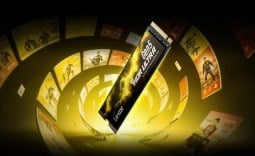 Lexar's DRAM-less Thor Ultra series PCIe Gen 5 SSDs are built for desktop and laptop PC gaming
 Gaming monitors are next in line for a price hike as manufacturers can no longer absorb costs
 Linux 7.2 makes TSC support mandatory for x86 CPUs, but it's not like Windows 11's TPM 2.0 check
 ChatGPT can now build a timeline of everything you do on your Mac
 Redditor finds a working RTX 2080 Super in the dump, gets a huge free upgrade
 Redditor sends a gaming laptop with 64GB RAM for repair, comes back with 32GB RAM
 Cooler Master HAF II 500 Mid-Tower Chassis Review
 Corsair HS35 v3 Wireless Gaming Headset Review - An Affordable Winner
 D-Link F518 5G Wi‑Fi 6 AX1800 Mobile Hotspot Review: All-Day Mobile Hotspot
 Bose Lifestyle Ultra Speaker Review - Impressively Detailed Room-Filling Sound
 MSI Z890 Gaming Plus WIFI6E Review - Z890 for under $200
 Mortal Kombat (1995) 4K Ultra HD Blu-ray Review
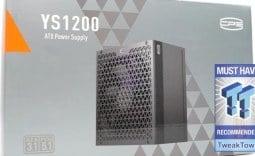 CPS PCCOOLER YS1200 ATX 3.1 80 PLUS Gold PSU Review
 ASRock X870E Taichi White Review: a premium AM5 motherboard with 10G LAN and WiFi 7
 Asetek Initium Pedal Modular Upgrades Review
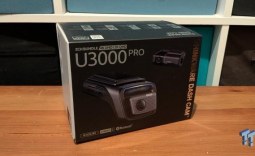 Thinkware U3000 Pro Review - Smart Dashcam with Wi-Fi quirks
 Using Multiple Monitors? Change these Windows settings for a Better Experience
 Windows Sandbox is The Windows Security Feature Most People Never Use
 I ditched the Windows 11 context menu for this open-source tool, and here's why
 Windows 11 may be encrypting your drive already, and I checked where my recovery key went
 GIGABYTE's 40 Days of INFINITY celebrates 40 Years of Innovation with stunning GeForce RTX graphics cards and rewards
 I swapped File Explorer for this free file manager and finally got the layout I wanted
 How to tell if someone has been using your Windows PC without your permission
 6 Task Manager tips for troubleshooting Windows performance problems
 ASUS ROG's 20th Anniversary Line-up of Premium PC Gaming Gear has Arrived - Here's Everything You Need to Know
 Six File Explorer tips every Windows user should know