







Learn about how TweakTown tests and reviews hardware. As an Amazon Associate, we earn from qualifying purchases. TweakTown may also earn commissions from other affiliate partners at no extra cost to you.
Stay Updated
Follow TweakTown for breaking tech news, reviews, and daily updates.


Switch N64 Zelda Ocarina of Time graphics haven't been fixed after all
Contrary to recent reports, Nintendo has apparently not entirely fixed Zelda Ocarina of Time's emulated graphics and effects on Switch Online.

Some Nintendo 64 games don't look so great on the Switch. The company is charging $50 a year for its new Switch Online + Expansion Pack subscription tier that comes with wonky emulation for specific games. Ocarina of Time, one of the best N64 games ever made, is a game that sometimes looks better on the original 1996 console than it does on Switch.
Sadly, Nintendo hasn't entirely fixed these issues...however there have been some adjustments since launch. Ocarina of Time's Switch N64 version is still missing the more enhanced reflection and fog effects that are used in the original N64 release, which are also seen in the GameCube and Wii VC versions. A Tweet from code tinkerer OatmealDome indicated that the OOT could've been fixed on the Switch; the infamous Water Temple has been adjusted to make the water more clear. Reflections have also been added, but they're not as extensive as the original version's reflections.
Continue reading: Switch N64 Zelda Ocarina of Time graphics haven't been fixed after all (full post)
This new Switch N64 game adds big value to Switch Online service
Switch Online's latest N64 game completes the Zelda 64-bit era duology.

Nintendo has announced The Legend of Zelda: Majora's Mask is the next N64 game coming to the premium Switch Online + Expansion Pack subscription. Majora's Mask will release in February 2022 as part of the Expansion Pack service.
The first Zelda N64 game, Ocarina of Time, was a launch game for the new subscription and is regarded as one of the best video games ever made.
Continue reading: This new Switch N64 game adds big value to Switch Online service (full post)
Ubisoft done with Watch Dogs Legion, no more updates coming
Ubisoft has sunset Watchdogs Legion and confirms the game will no longer get new updates.

Watch Dogs Legion--which apparently started off as a new Driver game--is officially feature-complete. Ubisoft announces that the third Watchdogs game has been officially retired and will no longer receive new content updates or patches.
"TU 5.6 was our final update for Watch Dogs: Legion," Ubisoft said. Title Update 5.6 was introduced in September 2021 with a multitude of bug fixes.
Continue reading: Ubisoft done with Watch Dogs Legion, no more updates coming (full post)
343i finally fixing Halo Infinite's monetization, and here's how
Months after high prices and over-monetization that fractured the Halo community, Halo Infinite's microtransaction scheme is finally getting fixed.

Halo Infinite head of design Jerry Hook confirms the game is getting a complete monetization overhaul. Starting with season 2, players will be able to earn credits by playing the game.
Season 2 is 99 days away (more than 3 months) and until then Halo Infinite will continue with its paid-only microtransaction currency. 343i has slightly adjusted prices of Halo Infinite's cosmetic microtransactions however there are still $12 packs that include nothing more than color schemes, a single visor, and a stance.
Continue reading: 343i finally fixing Halo Infinite's monetization, and here's how (full post)
Two new Space Force satellites launched aboard unique Atlas V rocket
Known as Big Slider, the Atlas V rocket was launched on January 21st, 2022.

The Atlas V rocket launched from the Space Launch Complex 41 at Cape Canaveral Space Force Station in Florida, with liftoff occurring at 2 p.m. EST (19:00 UTC). The rocket is the United Launch Alliance's (ULA's) only Atlas V to fly with the "511" configuration, referring to its five-meter fairing and single solid rocket motor. It is known as the "Big Slider" because it power-slides off the pad, owing to the asymmetric torque produced by the motor.
The Big Slider carried two satellites into a near geosynchronous orbit for the USSF-8 mission for the United States Space Force. The satellites launched will operate as part of the Geosynchronous Space Situational Awareness Program and are designated GSSAP-5 and GSSAP-6. Their objective is to watch for optimal satellite positioning and enhance navigation while also looking for space objects that threaten satellites so that the USSF can warn other space-faring nations.
Continue reading: Two new Space Force satellites launched aboard unique Atlas V rocket (full post)
Exotic 'X' particles detected for the first time in quark-gluon plasma
The detection is detailed in a new study published in the journal Physical Review Letters.

Immediately following the Big Bang, the universe was an extremely hot, concentrated plasma of elementary particles known as quarks and gluons, the precursor particles to protons and neutrons, which make up all matter as we know it. In the first split second of existence before the universe expanded, these quarks and gluons briefly joined in various combinations known as "X" particles of unknown structures and properties.
Physicists have theorized their creation would be possible in particle accelerators, and now physicists from MIT's Laboratory for Nuclear Science have found evidence of X particles in experiments conducted at the Large Hadron Collider (LHC) at CERN, the European Organization for Nuclear Research, based near Geneva, Switzerland. From 13 billion heavy ion collisions, the team identified about 100 X particles, known as the X (3872) type, with 3872 referring to the particle's estimated mass.
Continue reading: Exotic 'X' particles detected for the first time in quark-gluon plasma (full post)
NASA's TESS passes huge milestone for exoplanet observations
NASA's Transiting Exoplanet Survey Satellite (TESS) passed the five thousand mark for TESS Objects of Interest (TOIs).

TESS's mission began in 2018, and its most recent addition to the TOI catalog comes mostly from the Faint Star Search, led by MIT postdoc Michelle Kunimoto. The objects of interest are exoplanets candidates, potential planets found outside of our solar system. After TESS identifies these candidates, astronomers will confirm whether or not they are real exoplanets. So far, 175 have been confirmed from the TESS TOI catalog.
Continue reading: NASA's TESS passes huge milestone for exoplanet observations (full post)
Researchers boil water with ice to expand an 18th-century phenomenon
A new study on the discovery was published in the journal Physical Review Fluids.

Phase changes in water are well understood by most; heating ice (solid) makes water (liquid), and heating water produces water vapor (gas). Enter the Leidenfrost effect, first described in a 1751 publication, which refers to a phenomenon where a water droplet placed on an aluminum plate heated to at least 150 degrees Celsius (302 degrees Fahrenheit) will not boil.
As the droplet approaches the plate, water vapor will form between it and the plate, cushioning the liquid and preventing it from making direct contact with the plate, allowing it to slide around on the surface in a similar fashion to an air hockey puck. Associate Professor Jonathan Boreyko and graduate fellow Mojtaba Edalatpour sought to investigate if ice would produce a similar effect.
Continue reading: Researchers boil water with ice to expand an 18th-century phenomenon (full post)
NASA observatory spots the Sun releasing a mid-level solar flare
The flare was emitted on January 20th, 2022.

NASA's Solar Dynamics Observatory (SDO) captured images of the solar flare, which peaked at 1:01 a.m. EST (6:01 UTC). The flare was mid-level and is classified as an M5.5 class flare. Solar flares, and the potentially resulting radio blackouts, are classified using a five-level space weather scale by the National Oceanic and Atmospheric Administration (NOAA), found on its website.
The sun is currently in Solar Cycle 25, which refers to the 11-year cycle of solar activity the sun goes through, with 25 referring to the number of cycles scientists have closely tracked so far. NASA estimates that the peak of solar activity for this cycle will occur around 2025, with uptakes in sunspots, solar flares, and coronal mass ejections (CMEs).
Continue reading: NASA observatory spots the Sun releasing a mid-level solar flare (full post)
Crypto.com reveals how much it lost from its most recent hack
On January 17, Crypto.com announced that its exchange had been hacked as many users were reporting "suspicious activity" on their accounts.

The reports from users stated that coins were missing from their wallets, and in response to these user reports, Crypto.com paused all withdrawals across the exchange. The exchange stated that "all funds are safe", and that out of an abundance of caution, it will be enhancing security across all accounts. The exchange required all users to sign back into the app and exchange and also reset their two-factor authentication.
Crypto.com took to its blog on Thursday to publish a security report regarding the aforementioned hack. The report states that the hack affected 483 users, and unauthorized withdrawals totaled 4,836.26 ETH, 443.93 BTC, and around $66,200 in other cryptocurrencies. The current prices of the previously mentioned cryptocurrencies are equivalent to $33.84 million. If you are interested in reading more about this story, check out this link here.
Continue reading: Crypto.com reveals how much it lost from its most recent hack (full post)
Twitter officially integrates NFTs, launches 'NFT Profile Pictures'
Despite the contentious topic of NFTs, Twitter has stepped forward and has announced it will be integrating blockchain technology into its platform.

The social media giant announced that Twitter users that participate in Twitter Blue will now be able to verify ownership of their NFT and use it as a profile picture on their account. At the moment, the new "NFT Profile PIctures" is only available on iOS and locked to individuals who have signed up for the "Labs" feature.
Additionally, Twitter stated that the new feature won't be available to all iOS users using Twitter Blue, only some as the company wants to gather valuable feedback from a select audience before rolling the new feature out to all iOS and eventually Android users. Once an NFT has been verified by a user it will be displayed as a "soft hexagon across all Twitter surfaces where your avatar is visible". On top of that, tapping on the profile picture will display information about the NFT, such as the creator, collection and more.
Continue reading: Twitter officially integrates NFTs, launches 'NFT Profile Pictures' (full post)
Scientists have plan to reach this mysterious interstellar object
Four years ago, astronomers detected a mysterious object entering our solar system, it marked the first time an interstellar object passing through the solar system has been detected.

Since its detected, 'Oumuamua has puzzled astronomers, and as a result, many theories have surfaced that attempt to explain its origin. The object has a very odd shape, and while researchers can theorize how the object's shape came about, getting a closer look will give the most accurate answer. A team of researchers from the UK-based nonprofit "Initiative for Interstellar Studies" has proposed sending a spacecraft to the object for a close-up inspection.
The team of researchers proposed launching a spacecraft that circles Earth twice, then slingshots around Venus and Jupiter. Each pass of a planet, the spacecraft will gain momentum that will then propel the spacecraft towards the mysterious object. Researchers anticipate that if the spacecraft was launched in 2028, it would take around 26 years for it to reach 'Oumuamua.
Continue reading: Scientists have plan to reach this mysterious interstellar object (full post)
Ubisoft Quartz NFTs only made $2,392, likely hurt by higher supply
Some of gaming's biggest names are getting into NFTs, but not all of them have been successful.

NFTs are the latest monetization scheme that could make big waves in gaming. The market is particularly appealing for the likes of Konami and Ubisoft, who both have a wealth of characters from wholly-owned IPs to use as collectibles. Both companies have tried their hands at NFTs but only one has succeeded.
Konami's Castlevania NFTs have been quite popular, generating over $164,000 in auction on OpenSea. Ubisoft's Quartz NFTs, however, have been the opposite. The Quartz NFTs were minted as in-game cosmetics in Ghost Recon Breakpoint that could be auctioned and re-sold on platforms like Rarible and Objkt. Ubisoft Quartz NFTs have significantly higher supply than Konami's NFTs, with hundreds and even thousands of Quartz NFTs minted out versus the one-of-a-kind items minted by Konami.
Continue reading: Ubisoft Quartz NFTs only made $2,392, likely hurt by higher supply (full post)
Most game devs not interested in NFTs or crypto, GDC survey suggests
The majority of surveyed video game developers are not interested in utilizing NFTs or cryptocurrencies in their video games, a new GDC report finds.

GDC's new State of the Game Industry 2022 report indicates that most participating game developers do not want to enter the play-to-earn marketplace with NFTs or cryptocurrency monetization schemes. According to the report, 70% of developers were not interested, whereas 7% were very interested and 21% were somewhat interested.
It's worth remembering that the survey sampling is not broad by any means and accounts for about 2,700 developers. This means that 1889 out of 2700 game developers had no interest in NFTs and crypto, and roughly 756 developers were highly or somewhat interested.
Continue reading: Most game devs not interested in NFTs or crypto, GDC survey suggests (full post)
D2 new runewords: This new D2R runeword is very strange
Diablo 2 Resurrected's new v2.4 patch is expected to change up the meta with a host of new runewords, character rebalances, and gear adjustments. A new D2R runeword has been revealed...and it's kind of odd.

A new D2R runeword has leaked. This time it's a revamped version of Plague, a classic runeword that was originally slated to release in Diablo 2 Lord of Destruction v1.15 but was withheld.
For some reason, Blizzard has changed up Plague's stats a bit. Plague's order has changed to Cham + Shael + Um, a hefty cost but also a new use for the under-utilized Cham rune. The new version of Plague reads like some strange experimental build that has a very specific use case. Everyone's trying to figure out why you should use Plague over something like Hoto or even a powerful melee weapon like Grief or Breath of the Dying.
Continue reading: D2 new runewords: This new D2R runeword is very strange (full post)
Netflix won't be making all of its own video games
Although Netflix is purchasing its own game development studios, the streamer has no intention of making all of its own games.

In a recent Q4 report, Netflix confirms our suspicions: Most of the gaming content for its service won't be developed in-house. Instead, Netflix will license its IPs out to third-party studios similar to Disney's position with Lucasfilm Games.
All of the mobile games currently on Netflix have been created by independent third-party studios. Netflix is already spending billions (its asset content account spent $17 billion in 2021) to create video content, and adding tens or even hundreds of millions for games development isn't particularly appealing. Better to license out the IP to another studio who will fund the project and collect royalties on any sales--assuming the games go to major platforms aren't exclusive to the Netflix ecosystem.
Continue reading: Netflix won't be making all of its own video games (full post)
Netflix subscribers hit 221 million in 2021 as paid adds miss mark
Netflix's Q4 earnings show an 18% increase in revenues and 221.8 million total paid subscribers.

Netflix's subscriber numbers have missed the company's internal estimates by 220,000. The service now has 221.84 million worldwide subscribers, however executives expected total subscribers to hit 222.06 million. Total revenues for 2021 were $29.697 billion, up nearly 19% over last year's $24.996 billion.
Net income during the period was $5.116 billion, up a mighty 85% over 2020. However operating profit was down -83% to $392 million due to rising costs of asset contents and operating assets. Cash from financing was also at a $1 billion loss due to a $500 million repayment of debt, a $600 million payment for share repurchases, and $224 million withheld for taxes on equity awards.
Continue reading: Netflix subscribers hit 221 million in 2021 as paid adds miss mark (full post)
NASA will visit its smallest asteroid yet alongside Artemis 1 mission
A small satellite tagging along on the Artemis 1 moon mission will seek out the asteroid.

The mission's target is 2020 GE, a near-Earth asteroid (NEA) less than 60 feet (18 meters) in size. To investigate it, the Near-Earth Asteroid Scout, or NEA Scout, the satellite will coast toward the satellite using solar sails. It will mark the first use of solar sails by NASA, and the first time an asteroid smaller than 330 feet (100 meters) across will be explored up close.
The camera aboard the NEA Scout has a resolution of fewer than 4 inches (10 centimeters) per pixel and will be used by scientists to determine the asteroid's size, shape, rotation and ascertain whether 2020 GE is solid or a conglomerate of smaller rocks and dust.
Continue reading: NASA will visit its smallest asteroid yet alongside Artemis 1 mission (full post)
Satellites watched a giant iceberg release 152 billion tons of water
The iceberg is named A68A, and it snapped off the Larsen-C Ice Shelf on the Antarctic Peninsula in July, 2017.

The iceberg spanned 5719 square kilometers, one-quarter the size of Wales, making it the largest iceberg on Earth at the time it formed and the sixth-largest ever recorded. It traveled 4,000 kilometers across the Southern Ocean over three and a half years, drifting close to South Georgia at the end of 2020.
It avoided damaging the seafloor near South Georgia by melting sufficiently to reduce its size as it traveled from Antarctica. However, this melting meant it released 152 billion tons of fresh water into the ocean close to the island, potentially compromising the fragile marine ecosystem in the area. Five satellites were involved in tracking changes to A86A: Sentinel-1, Sentinel-3, MODIS, CryoSat-2, and ICESat-2.
Continue reading: Satellites watched a giant iceberg release 152 billion tons of water (full post)
NASA observatory put into safe mode after potential fault
NASA's Neil Gehrels Swift Observatory is in safe mode to allow the mission team to investigate the issue.

On the evening of January 18th, the Swift observatory temporarily halted its science operations after potentially experiencing a reaction wheel failure. Swift has six reaction wheels, which are used to autonomously orient the telescope towards possible gamma-ray bursts (GRBs).
The suspected wheel has since been powered off by the mission team, with the observatory put into safe mode as a precaution while the team investigates the issue. The rest of the wheels and instruments aboard the observatory are operating as expected, so the team is working to restore science operations with five reaction wheels.
Continue reading: NASA observatory put into safe mode after potential fault (full post)
 Gamers are more interested in remakes than new games, says analyst
 Huawei teases MateBook Pro S - a laptop that somehow weighs only 798 grams, making the LG Gram 14 look hefty
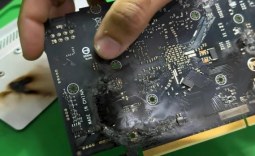 Gigabyte RTX 4060 boards suffer recurrent burns due to VRM defect
 Overclocker gets hold of never released E-coreless Core i9-14901KE and achieves 7.4GHz using sub-zero cooling
 Xbox outage exposed how your physical Xbox game discs aren't completely safe
 GTA 6 could launch without one of its biggest features in Australia
 Victim of first autonomous agent cyberattack explains what happened and why
 Valve promises Steam Machine reservation holders will get their chance to buy before 2027
 KIOXIA's UFS 5.0 embedded flash memory opens the door to powerful, compact, on-device AI
 KIOXIA's next-gen NX1 Series SSDs for AI deliver close to 40% more performance with support for direct liquid cooling
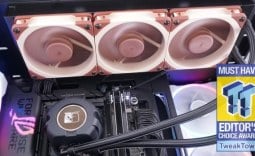 Noctua NL-LC1-36 Liquid CPU Cooler Review
 Logitech G316 X 98 Wired Gaming Keyboard Review - Retro-Inspired Board that Falls a Little Short
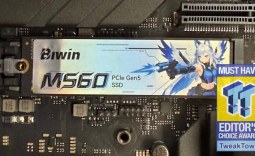 Biwin M560 2TB SSD Review - Best Overall Retail-Ready DRAMless SSD
 Logitech G512 X 98 Analog Mechanical Gaming Keyboard Review - An Innovative Two-in-One
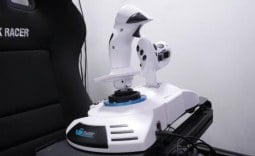 Thrustmaster T.Flight HOTAS 5 MSFS Edition Review
 SteelSeries Arctis Nova Pro Omni Wireless Headset Review - One Headset to Rule Them All
 SteelSeries Arctis Nova 7 Wireless Gen 2 Headset Review - New and Improved, But Is It Enough?
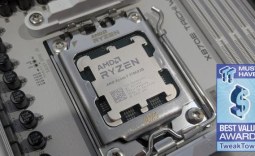 AMD Ryzen 7 7700X3D Review - Days of Future Past
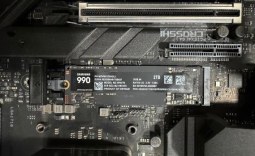 Samsung 990 2TB SSD Review - Ninth Gen QLC at PCIe Gen4 Speeds
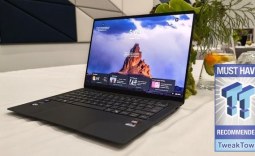 ASUS ExpertBook Ultra (Panther Lake) 14" Business Laptop Review
 Printer Not Working in Windows? How to fix detection, print queues and drivers
 The Ultimate Guide to Personalizing Your Windows 11 Taskbar
 How to Turn Your Windows Laptop Into a Second Monitor with Miracast and Wireless Display in Minutes
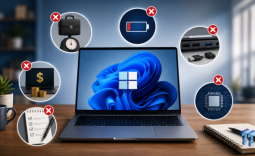 6 Mistakes to Avoid When Buying a Windows Laptop
 I capped Windows Update's bandwidth with Delivery Optimization, and my downloads stopped choking
 I use this decade-old free tool that finds files faster than Windows Search does
 I install and update most of my apps with this Windows command now, and I stopped downloading sketchy installers
 Hisense U6SF 65-inch MiniLED TV: High Performance Meets Leisurely Convenience
 I stopped digging through Windows menus after I set up this one folder
 Don't sell your Windows laptop until you do these things