












The detection is detailed in a new study published in the journal Physical Review Letters.

Immediately following the Big Bang, the universe was an extremely hot, concentrated plasma of elementary particles known as quarks and gluons, the precursor particles to protons and neutrons, which make up all matter as we know it. In the first split second of existence before the universe expanded, these quarks and gluons briefly joined in various combinations known as "X" particles of unknown structures and properties.
Physicists have theorized their creation would be possible in particle accelerators, and now physicists from MIT's Laboratory for Nuclear Science have found evidence of X particles in experiments conducted at the Large Hadron Collider (LHC) at CERN, the European Organization for Nuclear Research, based near Geneva, Switzerland. From 13 billion heavy ion collisions, the team identified about 100 X particles, known as the X (3872) type, with 3872 referring to the particle's estimated mass.
"This is just the start of the story. We've shown we can find a signal. In the next few years we want to use the quark-gluon plasma to probe the X particle's internal structure, which could change our view of what kind of material the universe should produce," said lead author Yen-Jie Lee, the Class of 1958 Career Development Associate Professor of Physics at MIT.
You can read more from the study here.


 Scientists see 'boom' at Milky Way's center with world's most powerful space telescope
 Google's new breakthrough quantum computing chip says 'we live in a multiverse'
 SpaceX blew a 'catastrophic' first-of-its-kind hole in the atmosphere with Starship
 Is Chris Avellone working on a new Fallout project?
 False documents point the finger at Phison after Windows 11 update causes SSDs to fail
 GOG confirms a native Linux Galaxy launcher is finally in development
 Assassin's Creed Hexe reportedly set to launch in late 2027 at the earliest
 Gamers are more interested in remakes than new games, says analyst
 Huawei teases MateBook Pro S - a laptop that somehow weighs only 798 grams, making the LG Gram 14 look hefty
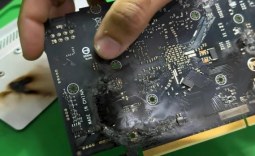 Gigabyte RTX 4060 boards suffer recurrent burns due to VRM defect
 Overclocker gets hold of never released E-coreless Core i9-14901KE and achieves 7.4GHz using sub-zero cooling
 Xbox outage exposed how your physical Xbox game discs aren't completely safe
 GTA 6 could launch without one of its biggest features in Australia
 Victim of first autonomous agent cyberattack explains what happened and why
 Valve promises Steam Machine reservation holders will get their chance to buy before 2027
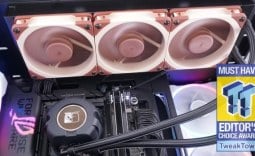 Noctua NL-LC1-36 Liquid CPU Cooler Review
 Logitech G316 X 98 Wired Gaming Keyboard Review - Retro-Inspired Board that Falls a Little Short
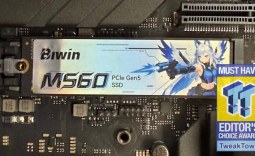 Biwin M560 2TB SSD Review - Best Overall Retail-Ready DRAMless SSD
 Logitech G512 X 98 Analog Mechanical Gaming Keyboard Review - An Innovative Two-in-One
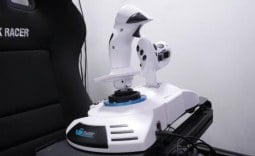 Thrustmaster T.Flight HOTAS 5 MSFS Edition Review
 SteelSeries Arctis Nova Pro Omni Wireless Headset Review - One Headset to Rule Them All
 SteelSeries Arctis Nova 7 Wireless Gen 2 Headset Review - New and Improved, But Is It Enough?
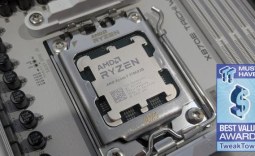 AMD Ryzen 7 7700X3D Review - Days of Future Past
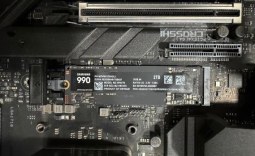 Samsung 990 2TB SSD Review - Ninth Gen QLC at PCIe Gen4 Speeds
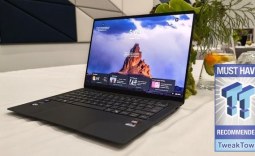 ASUS ExpertBook Ultra (Panther Lake) 14" Business Laptop Review
 Printer Not Working in Windows? How to fix detection, print queues and drivers
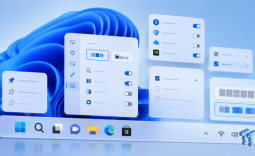 The Ultimate Guide to Personalizing Your Windows 11 Taskbar
 How to Turn Your Windows Laptop Into a Second Monitor with Miracast and Wireless Display in Minutes
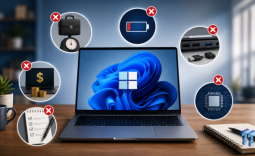 6 Mistakes to Avoid When Buying a Windows Laptop
 I capped Windows Update's bandwidth with Delivery Optimization, and my downloads stopped choking
 I use this decade-old free tool that finds files faster than Windows Search does
 I install and update most of my apps with this Windows command now, and I stopped downloading sketchy installers
 Hisense U6SF 65-inch MiniLED TV: High Performance Meets Leisurely Convenience
 I stopped digging through Windows menus after I set up this one folder
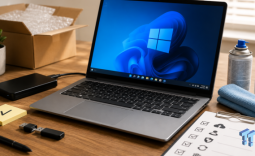 Don't sell your Windows laptop until you do these things