







Learn about how TweakTown tests and reviews hardware. As an Amazon Associate, we earn from qualifying purchases. TweakTown may also earn commissions from other affiliate partners at no extra cost to you.
Stay Updated
Follow TweakTown for breaking tech news, reviews, and daily updates.


Tesla is still holding its Bitcoin despite major market uncertainty
Tesla made what is now considered a really good decision to sell a very large portion of its Bitcoin holdings earlier in the year when the price was much higher than it is today, but the electric car manufacturer isn't completely done with Bitcoin.

Tesla recently released its Q3 earnings report for 2022, and that report shows that Tesla sold three-quarters of its $1.2 billion stack of Bitcoin back in March this year, leaving the electric car manufacturer with $218 million in Bitcoin at the time. Around the time of the large sale of Bitcoin, Musk explained that the company required liquid cash as there was large uncertainty with COVID-19 lockdown in China, which directly impacted one of Tesla's factories and thus its revenue stream.
The car manufacturer explained that it was important for them to maximize "our cash position". However, as of September 30, it seems that Tesla is still holding onto the remaining Bitcoins it didn't end up selling back in March. That stack of Bitcoin is definitely not worth as much as it was back in March, when the price of one Bitcoin fluctuated between $35,000 and $45,000, approximately. Bitcoin is now worth under $20,000 and seems to be barely holding onto that price point, with it slowly trickling down.
Continue reading: Tesla is still holding its Bitcoin despite major market uncertainty (full post)
Elon Musk's SpaceX fined nearly $20,000 for accident that put a worker in a coma
A SpaceX worker has had his skull fractured after an accident that occurred while he was testing a part of the company's rocket.

The SpaceX worker was Francisco Cabada, a father of three children from Los Angeles, according to a former SpaceX intern that spoke with BusinessInsider. Cabada, an integration engineer, suffered a head injury on January 18, and according to the Occupation Safety and Health Administration's (OSHA) accident investigation summary, Cabada was conducting checks on SpaceX's Raptor V2 engine when a valve exceeded its maximum pressure and snapped off the plate it was attached to, smacking the integration engineer in the head, knocking him to the ground.
The OHSA accident report details two violations, the first was over SpaceX's accident prevention program, the second was servicing multi-piece and single-piece rim wheels on large vehicles, which was deemed category 10 on the summary. SpaceX was fined $18,475 for the violations. Cabada "suffered a skull fracture and head trauma and was hospitalized in a coma for months."
World's largest cruise ship unveiled, 8 'neighborhoods' will set sail very soon
Royal Caribbean International has unveiled what is now considered to be the world's largest cruise ship that is expected to set sail soon.

The announcement found on the Royal Caribbean International website showcases a set of renders of the new cruise ship called 'Icon of the Seas'. The cruise ship measures in at a staggering 1,198 foot-long and is capable of accommodating 7,600 guests across its 2,805 staterooms. The Royal Caribbean has also taken to its YouTube channel to upload a series of videos that showcase the different areas of the cruise ship, such as Thrill Island, Surfside, Chill Island, AquaDome, and much more.
The Icon of the Seas features seven pools, three of which are on the Chill Island, which is a three-deck "slice of paradise", with each deck being curated for different needs. One of the decks contains the Royal Bay Pool, the largest pool at sea, per Royal Caribbean International. The 20-deck cruise ship began construction in 2021 and is expected to begin sailing sometime in 2024, with bookings from Miami to the Caribbeans to open soon.
NASA picks an unidentified aerial phenomena research team for upcoming study
NASA has chosen 16 individuals that will take part in a nine-month study focused on unidentified aerial phenomena (UAP) sightings. A UAP is an aerial event unable to be classified as an aircraft or any form of natural phenomenon. The project is expected to cost less than $100,000.

Specifically, unclassified information from civilian and commercial entities will be used for researchers to analyze. This is the US space agency's first step towards being able to accurately identify unknown sightings in the skies above us. Hopefully, NASA will be able to create a roadmap for more streamlined UAP data analysis in the future.
Besides national security interests, NASA aims at keeping aircraft in space while in the air, especially with pilots reportedly seeing UFOs. Besides university astrophysicists exploring the possibility of extraterrestrial life, the US government has slowly opened up information to the public. The Pentagon declassified some UAP videos and the US government released a UFO report.
US Army expresses continued desire for autonomous Black Hawk helicopters
During the Army Futures Command (AFC) Project Convergence, there was much excitement about the potential capability of autonomous Black Hawk helicopters. Following previous successful test flights, the US Army plans to continue towards a pilotless flight experience. There is a superior operational advantage to fly these helicopters autonomously in a variety of environments and military scenarios.

Here is what Lt. Gen Thomas Todd, chief innovation officer at Army Futures Command, told reporters during the Project Convergence conference: "My requirement was 'don't even bring it if it can't be flown fully autonomous. The point is that we have to take a step every year. We have to push ourselves to take steps."
Researchers want ALIAS to be able to carry out the entire flight mission, including take-offs and landings - and have the ability to overcome aircraft system failure or any other unforeseen contingency. There also is the potential of flying resupply missions into contested battlefields without posing risk to human pilots and flight crew.
Electric vehicle maker Rivian also wants to get people moving on electric bikes
Electric vehicle maker Rivian isn't satisfied just manufacturing passenger trucks and SUVs and has its sights set on creating electric-powered bicycles.

Rivian anticipates a multimodal approach to transportation will be beneficial and that's why there isn't a single focus on just developing consumer EVs.
Rivian's ambitions related to e-bikes aren't necessarily new, as the company has had a rather busy 2022 in preparation for the future. In January, the company filed a patent related to e-bike manufacturing, with CEO RJ Scaringe implying e-bikes could have a major role.
Over 20x lithium will need to be mined by 2050 to keep up with demand
To meet the growing global demand for electric vehicles, there will need to be more than twenty times the amount of lithium mined than in 2021, according to Benchmark Mineral Intelligence. At least 11.2 million tons of lithium carbonate equivalent will be required to support energy storage and EV battery production.

In the short term, the market will need 2.9 million tons by 2032 - or the supply chain could face lasting problems. To put it in perspective, all of the lithium mined in 2021 would be enough to support a single month of demand by 2040, researchers indicate.
It can take upwards of five years to bring a lithium mining project fully operational. Benchmark has tracked only 40 lithium-producing mines in 2022 but warns at least 234 new mines will be needed by 2050. To help alleviate pressure to build new mines, recycling old batteries and process scrap could become a wise investment for automakers and companies to explore further.
Continue reading: Over 20x lithium will need to be mined by 2050 to keep up with demand (full post)
Waymo bringing its autonomous driving technology to Los Angeles
Waymo plans to bring its autonomous ride-sharing service to Los Angeles, joining behind Phoenix and San Francisco as the company looks for more cities to partner with. When it comes to miles traveled, Waymo leads the way with autonomous miles completed anywhere in the United States.

Autonomous vehicles are becoming more prevalent, with automakers and tech companies partnering up to create safe, efficient vehicles to join regular drivers on the road.
There are high expectations for Waymo in Los Angeles:
Continue reading: Waymo bringing its autonomous driving technology to Los Angeles (full post)
Lyft drivers have a future for at least a decade before autonomous takes over
Ride-share company Lyft is working towards an autonomous future where passengers are transported to and from their destinations in a self-driving vehicle. However, that doesn't mean drivers need to worry about job security just yet, as it'll be at least a decade before Lyft needs less drivers, according to John Zimmer, Lyft co-founder and president.

Since its launch, there have been over 112 million Lyft passengers that have taken over 3 billion rides while supported by 5 million drivers - so talk about autonomous has some drivers cautious about what lies ahead.
Lyft has reportedly completed over 100,000 autonomous rides so far, and that number is only increasing. Here is what Zimmer had to say regarding drivers and autonomous: "I can't imagine anytime in the next decade-plus where we would need any less drivers.
TeraWatt will bring electric charging infrastructure to Interstate 10 for trucks
The Interstate 10 highway will soon have electric vehicle charging centers to serve EV heavy-duty and medium-duty electric trucks. TeraWatt Infrastructure has announced plans to ensure drivers from the Port of Long Beach - Los Angeles, California will be supported as they haul loads east towards the El Paso, Texas area.

Each charging station will be 150 miles apart from one another and will be less than a mile from a highway exit. Truck drivers will find multiple DC fast chargers, pull-through charging stalls, and on-site driver amenities while they wait.
The I-10 Electric Corridor will be spread across Arizona, California, and New Mexico - with multiple TeraWatt Charging Centers scheduled for construction. TeraWatt hopes this project will help entice companies to transition to zero-emission long-haul freight.
Following Hurricane Ian, EV batteries are still catching on fire
The auto industry is headed towards an electric vehicle future, but that doesn't mean there aren't safety issues causing alarm bells. Following Hurricane Ian, Florida firefighters have been tasked with putting out EV battery fires multiple times in hardest-hit regions.

Once saltwater hits a battery, the lithium-ion batteries begin to corrode, and that's where the problem begins.
These types of fires prove to be extremely difficult to fully extinguish as it's a constant flow of water to cool down and neutralize the battery. If that wasn't bad enough, there always is the possibility a fire reignites, even a couple of days after the initial fire.
Continue reading: Following Hurricane Ian, EV batteries are still catching on fire (full post)
Sony can't beat Call of Duty, but it can minimize the impact of its loss
Microsoft believes that five years is enough time for Sony to prepare for the loss of Call of Duty (and potentially other Activision-Blizzard franchises).

Right now UK regulators at the Competition and Markets Authority (CMA) are closely scrutinizing Microsoft's proposed merger with Activision. Following a massive 70-page report from the CMA, Microsoft issued its own 33-page response that contains a treasure trove of data, insights, valuable roadmaps for the future of Xbox, and interesting arguments in favor of the merger.
One of these counterclaims is particularly interesting. Microsoft previously confirmed the existence of the controversial Call of Duty exclusivity contract first revealed by Sony's Jim Ryan. This contract would extend access to Call of Duty on PlayStation for at least the end of 2027. Now Microsoft argues that this timeframe gives Sony ample preparation for what it refers to as possible foreclosure strategies, which could indicate maneuvers like Call of Duty and other Activision franchises being kept off PlayStation platforms.
McLaren Racing will bring digital ads to its Formula 1 race cars
The McLaren Formula 1 Team will bring digital advertising to its Formula 1 cars as part of an agreement with Seamless Digital. This is a rather curious announcement while McLaren becomes the first Formula 1 team to try it out, though it remains to be seen if other car manufacturers will jump onboard with the effort.

The platform will support rotating different advertiser brands on the cars. The two-display system around the cockpit will begin during today's practice sessions during the United States Grand Prix - and the advertising effort will continue throughout the rest of the race season.
McLaren wants this advertising effort to serve as another way to connect with fans and business partners willing to give it a try. Development into the digital panels has taken a few years, though aerodynamics and weight both were carefully considered as part of the project.
Continue reading: McLaren Racing will bring digital ads to its Formula 1 race cars (full post)
Sony confirms original Uncharted trilogy isn't coming to PC and here's why
Uncharted just arrived on PC for the first time ever with the Legacy of Thieves Collection (Steam, Epic Store), but gamers shouldn't expect to see the first three Uncharted games on PC.

Today represents a major milestone for Sony as it brings one of its biggest PlayStation exclusive franchises over to PC. The Uncharted Legacy of Thieves Collection continues Sony's push onto the PC market as it chases compounding, recurring revenues on the $36 billion dollar PC market.
Sony has confirmed some games just won't show up on PC, though. This selection of games includes the original Uncharted trilogy, which apparently would take too much time to port and optimize for PC.
NASA explains if climate change is causing hurricanes to get stronger
NASA has taken some time to explain if climate change is influencing the power of hurricanes as well as coastal flooding.

The space agency has taken to its NASA Climate Twitter account to share a video that poses the question "Is hurricanes getting stronger?" to NASA climate scientist Mara Cordero-Fuentes, who explains that hurricanes won't reach Category 6 due to physics, but there will be an increased number of category 3/4/5 hurricanes across the Atlantic every season.
Cordero-Fuente explains that climate change, and in particular global warming, is influencing the rate of hurricanes because the warmer the water, the stronger the hurricane system will be, giving it more energy. In short, yes, hurricanes are getting stronger as officials are noticing more and more tropical cyclones reaching higher categories.
Continue reading: NASA explains if climate change is causing hurricanes to get stronger (full post)
NASA's Webb makes surprising discovery, catches a cosmic knot out in deep space
Astronomers have used the instruments aboard NASA and the European Space Agency's James Webb Space Telescope to peer into the early universe to make an exciting discovery.

The European Space Agency (ESA) has taken to its website to detail a new discovery by Webb, with astronomers identifying an extremely red quasar called SDSS J165202.64+172852.3 (SDSS) that existed in the early universe - approximately 11.5 billion years ago. The ESA explains that quasars are very rare and are the nucelli of an active galaxy. The above image showcases Webb's observations of the extremely red quasar SDSS and how a cluster of massive galaxies is forming around the quasar.
Previously astronomers speculated, based on the amount of energy outflows from the quasar, that its host galaxy was merging with some other partner. What they didn't expect, and what Webb revealed, was that the merger would feature at least three galaxies swirling around the quasar. The ESA writes that the observations allowed astronomers to map the motion of the surrounding material around the quasar to determine that SDSS was part of a dense knot of galaxy formation.
Elon Musk says Tesla's next-gen vehicle will be cheap and extremely popular
Elon Musk has revealed some new details about Tesla's upcoming vehicles, with the Tesla CEO saying that a new affordable vehicle is on the horizon.

During Tesla's Q3 2022 earnings call on Wednesday, which can be listened to above, Musk discussed that the primary focus of Tesla's vehicle development team is a new electric vehicle that is slated to be more compact than the current Model 3 and come in at a much more affordable price, roughly half the cost of the Model 3 and the Model Y. Furthermore, Musk said Tesla's new next-generation vehicle platform would be much smaller than the Model 3/Y, but he thinks it will exceed the production of all other vehicles combined.
Notably, Musk made a point of not mentioning any release dates or even a name for the vehicle but emphasized that it's a main focal point for the Tesla vehicle development team. This isn't the first time Musk has mentioned a Tesla vehicle with a price tag of approximately $25,000, as the Tesla CEO said back in 2020 at Tesla's "Battery Day" that a vehicle with such a price tag would roll out three years from now (2023).
Ex-Navy pilot left speechless at UFO sighting, explains what he saw on Joe Rogan
A former US Navy pilot has sat down for an interview with Joe Rogan and explained his experience with a UFO while being airborne.

The former Navy fighter pilot, Lt. Ryan Graves, explains that his squadron began seeing Unidentified Aerial Phenomena (UAP) or UFOs, to the best of his knowledge, in late 2013 or early 2014. Graves says that he began witnessing these objects when he and his squadron would fly out to the training area like any other day and that the upgraded radar system identified several different contacts, which immediately became an issue.
Graves explains that some of the objects coming up on his multiple radar systems were perfectly stationary in 130/140 mph wind and that these objects showed no signs of energy emittance in any direction. The former Navy fighter pilot said that the first time the radar detected these objects, he believed the radar was malfunctioning and showing objects that weren't really there. This was his belief until a fighter pilot managed to get close enough to one of the objects to confirm its existence and rule out any radar malfunction.
NASA releases a majestic 12-year timelapse of the entire sky
NASA has taken to its YouTube channel to release a phenomenal set of images that make up a twelve-year timelapse of the entire sky.

The space agency took to its NASA Jet Propulsion Laboratory (JPL) YouTube channel to share a video that details the many changes in the universe over a small period of time. The images were captured by NASA's Near-Earth Object Wide Field Infrared Survey Explorer (NEOWISE) space telescope, which was originally launched in 2009. NASA's NEOWISE space telescope was launched to study the universe beyond our Solar System, and the data it collected allowed researchers to create a fantastically valuable view of how objects beyond our solar system have moved and changed over the years.
NEOWISE has mapped the locations of hundreds of millions of objects across the cosmos and the amount of infrared light each of those objects is emitting. With this data, researchers are able to see how objects change with time as the amount of infrared light is reduced/increased. Notably, an entire sky's worth of data is acquired every six months by the telescope, and during its time mapping the entire sky NEOWISE gathered eighteen of these maps, which scientists then stitched together to create the incredible timelapse.
Continue reading: NASA releases a majestic 12-year timelapse of the entire sky (full post)
Solaris shows off the Urbino 9 LE electric-powered bus during FIAA
Polish company Solaris Bus & Coach recently showed off its Urbino 9 LE electric bus during the FIAA 2022 conference in Spain. Solaris initially introduced the bus in late 2021, as the company continues to roll out electric-powered buses with a specific interest in Europe.

The new bus has a central traction motor with 220 kW peak power output, and the drive system has a maximum capacity of 350 kWh. The Solaris High Energy batteries are the latest generation of high-capacity batteries from Solaris, providing better range performance.
Depending on the configuration, the bus can support up to 73 passengers - with a maximum of 31 seats. Passengers can make use of USB chargers and use LED lighting while riding the bus.
Continue reading: Solaris shows off the Urbino 9 LE electric-powered bus during FIAA (full post)
 Sony has secured enough memory to meet PS5 sales targets through March 2027 and says no further price hikes are planned
 Reddit is building a video and audio listening experience for the viral post format it accidentally created for TikTok
 Seagate says Mozaic 5 50TB hard drives are on track for 2027, with 100TB already on the roadmap
 MSI adds a BIOS toggle to tighten standard DDR5 timings closer to EXPO ULL kits
 Keychron is building an open-source gaming mouse firmware called ZGM
 Assassin's Creed Odyssey gains 90% more players due to Christopher Nolan's 'The Odyssey'
 AMD Radeon GPU prices set to increase by 10% in August
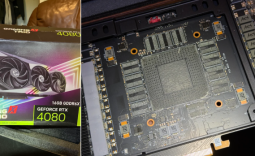 Redditor buys an RTX 4080, opens it up to find no GPU die or VRAM inside
 NVIDIA GPU rumors swirl claiming major price hikes of 20 to 30% - or more - are coming, as VRAM costs climb
 AMD's RX 9050 GPU comes up short in first review, but there's a good reason why it lags behind NVIDIA's RTX 5050 here
 Montech TG3 Mid-Tower Chassis Review
 ASUS ROG Strix X870E-A Gaming WiFI7 Neo Review - A New Enticing Option
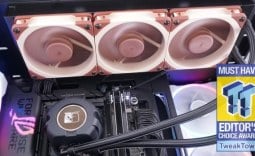 Noctua NL-LC1-36 Liquid CPU Cooler Review
 Logitech G316 X 98 Wired Gaming Keyboard Review - Retro-Inspired Board that Falls a Little Short
 Biwin M560 2TB SSD Review - Best Overall Retail-Ready DRAMless SSD
 Logitech G512 X 98 Analog Mechanical Gaming Keyboard Review - An Innovative Two-in-One
 Thrustmaster T.Flight HOTAS 5 MSFS Edition Review
 SteelSeries Arctis Nova Pro Omni Wireless Headset Review - One Headset to Rule Them All
 SteelSeries Arctis Nova 7 Wireless Gen 2 Headset Review - New and Improved, But Is It Enough?
 AMD Ryzen 7 7700X3D Review - Days of Future Past
 Six File Explorer tips every Windows user should know
 I switched my PC to encrypted DNS in Windows 11, and browsing felt more private
 Printer Not Working in Windows? How to fix detection, print queues and drivers
 The Ultimate Guide to Personalizing Your Windows 11 Taskbar
 How to Turn Your Windows Laptop Into a Second Monitor with Miracast and Wireless Display in Minutes
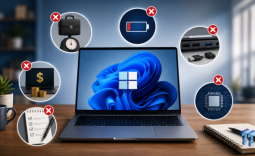 6 Mistakes to Avoid When Buying a Windows Laptop
 I capped Windows Update's bandwidth with Delivery Optimization, and my downloads stopped choking
 I use this decade-old free tool that finds files faster than Windows Search does
 I install and update most of my apps with this Windows command now, and I stopped downloading sketchy installers
 Hisense U6SF 65-inch MiniLED TV: High Performance Meets Leisurely Convenience