







Science, Space, & Robotics - Page 177
Explore the latest Science, Space, Health, and Robotics news from TweakTown. Coverage includes space launches, medical tech, discoveries, and rockets. - Page 177
Stay Updated
Follow TweakTown for breaking tech news, reviews, and daily updates.


As an Amazon Associate, we earn from qualifying purchases. TweakTown may also earn commissions from other affiliate partners at no extra cost to you.
Hubble snaps galactic game of 'tug-of-war' that births a spiral galaxy
The Hubble Space Telescope can truly capture some astonishing images of the universe we live in, and the image below is certainly no exception.

NASA has released the new image on its website, and according to its description, Hubble has snapped a gorgeous image of the spiral galaxy NGC 2276. If you didn't notice already, the spiral galaxy above appears slightly distorted as the bright hub of yellow stars usually appears directly in the center of a galaxy. NASA explains that this distortion is caused by a galactic game of "tug-of-war" between a neighboring galaxy.
The galaxy NGC 2300, which doesn't appear in this image, is actually pulling all the disk of blue stars surrounding NGC 2276. This cosmic display of tug-of-war shows that if galaxies pass too close to each other, they are impacted by their respective gravitational pull. As you could probably imagine, galaxies being caught in each other's gravitational pull is common in the universe, but no two mergers are exactly the same - much like a snowflake falling from the sky.
Continue reading: Hubble snaps galactic game of 'tug-of-war' that births a spiral galaxy (full post)
Record for the deepest hole ever drilled has been broken
A team of researchers has claimed that the record for the deepest drilled hole has been broken on May 14.

The team of researchers that was aboard the Kaimei lowered a 40-meter-long Giant Piston Corer (GPC) into the ocean off the coast of Japan. The drill was lowered to around 26,200 feet or 5 miles below the surface of the ocean. According to a statement from the researchers, the drill took around two hours and 40 minutes to hit the bottom of the Japan Trench.
When the drill researched the bottom of the Japan Trench, it had drilled a 120 feet sediment core from the ocean floor. The goal behind the exercise was to study the sediment of the drilled area, which would allow researchers to gain more knowledge about earthquakes that have occurred in the region. The previous record for deep drilling was held for 50 years for 23,061 feet water depth in the Mariana Trench. A new scientific drilling depth record for the deepest sub-sea level sample has been set with 26,443 feet below sea level.
Continue reading: Record for the deepest hole ever drilled has been broken (full post)
Blood supermoon lunar eclipse photographed from all around the world
A once in 2.5-year event occurred last night as the Earth passed in-between the Sun and the Moon, causing the shadow of Earth to be casted on the Moon.

The total lunar eclipse occurred at different times all around the globe, and what skywatchers would have seen depends on your location as well. Luckily, many people around the world managed to snap some incredible images of the Flower Moon, showing off what people saw in different locations. So, why does the Moon appear red when Earth's shadow is casted on it?
The light that is coming from the Sun is bending around Earth and moving through Earth's atmosphere. The Sun's rays are red, and when they pass through Earth's atmosphere, all of the shorter blue wavelengths are filtered out, leaving the long red ones to be seen on the surface of the Moon. Below you will find images of the Flower Moon from around the world. For more information on this story, check out this link here.
Continue reading: Blood supermoon lunar eclipse photographed from all around the world (full post)
Elon Musk says this video of Starship reentering is 'pretty close'
A new video has been created that shows a "pretty close" simulation of how Starship reenters Earth, according to Elon Musk.

Twitter user Alexander Svan has posted a video of his finished simulation of Starship reentering Earth and tagged Elon Musk in it. Musk replied to the video and said it was "pretty close", and followed up by giving some tips to Svan, "No tiles on back side of flaps. Some tiles towards leeward side of ship trailing plasma spilling off rear of flaps."
If you have watched the video, you probably didn't notice the Dogecoin symbol that is painted onto the side of Starship. Below you will find some screenshots of it, and if you have been following the cryptocurrency news involving Musk and Dogecoin, you will understand that this is a very lovely touch by the animator. Starship is a fully reusable, two-stage-to-orbit super heavy-lift rocket that SpaceX plan on using to reach Mars.
Continue reading: Elon Musk says this video of Starship reentering is 'pretty close' (full post)
New dark matter map allows researchers to see the past and future
A new study has revealed that researchers have used artificial intelligence to create a map that allows them to predict the distribution of dark matter throughout the universe.

The new study has been published in the Astrophysical Journal and shows that researchers have taken a different approach to creating a model of the distribution of dark matter. So far, researchers know that dark matter makes up 80% of the universe, and creating a model of the distribution of dark matter allows cosmologists to construct what is called a "cosmic web".
With this cosmic web, cosmologists and researchers will be able to see how dark matter impacts the motion of galaxies in the past, present, and future. Researchers in the new study used machine learning, a branch of artificial intelligence, to construct a new model. The AI was fed a large set of galaxy simulations that include galaxies, dark matter, visible matter, and gases.
Continue reading: New dark matter map allows researchers to see the past and future (full post)
Elon Musk on dinosaurs: if they had spaceships, they'd still be around
Elon Musk is on a tweet rampage again, this time it's not about space -- well, it is a little -- and more about... dinosaurs.

The boss man behind SpaceX and Tesla as well as being The Dogefather, tweeted a meme about dinosaurs and followed it up with "If only they had spaceships, they'd still be around". I get the meme, but even if dinosaurs had spaceships it's not like they'd be thinking "oh nice, there's a spaceship over there... let's get into it, and fly off this planet!"
I'm surprised Musk has the tweet up considering the dominant dinosaur says "I'm fuc*in tryin" while a comment goes for the politically correct "she/he/they has no hair" and gets a reply of "are you afraid to misgender a dinosaur".
Continue reading: Elon Musk on dinosaurs: if they had spaceships, they'd still be around (full post)
Russia has war robots ready, will take out John Connor first probably
Alright, it seems our Russian robotic overlords aren't too far away from total and utter enslavement of the human race... yet... with Russia developing autonomous weapons and AI-powered technologies for the future of war.

In a new report published by CNA nonprofit research and analysis group in Arlington, Virginia -- titled "Artificial Intelligence and Autonomy in Russia" the authors report: "the first major piece of US research that articulates contemporary Russia's main initiatives, achievements, and accomplishments in AI and autonomy efforts and places those initiatives within the broader technological landscape in Russia".
"Russian military strategists have placed a premium on establishing what they refer to as 'information dominance on the battlefield and AI-enhanced technologies promise to take advantage of the data available on the modern battlefield to protect Russia's own forces and deny that advantage to the adversary".
Continue reading: Russia has war robots ready, will take out John Connor first probably (full post)
Astronomers just found the most ancient spiral galaxy in the Universe
Astronomers have no discovered the oldest spiral galaxy yet, which has helped them answer a burning question in astronomy - "How and when did spiral galaxies form?".

Astronomers used the Atacama Large Millimeter/submillimeter Array (ALMA) and located a galaxy that had a spiral that dated to 1.4 billion years after the Big Bang. The discovery of this galaxy has broken all previous records before it and is now the most ancient spiral galaxy humans have ever observed. For those that don't know, 70% of galaxies are spiral galaxies, and one of those galaxies is ours - The Milky Way Galaxy.
However, looking back in time at the history of the universe, astronomers found that the proportion of spiral galaxies began to decrease, which suggests that there was a time when spiral galaxies began to form. Leading from that question is "why and how".
Continue reading: Astronomers just found the most ancient spiral galaxy in the Universe (full post)
SpaceX will transport FireFly Aerospace's Blue Ghost rover to the Moon
SpaceX will be using its Falcon 9 rocket to transport Firefly Aerospace's lunar lander that's carrying NASA payloads to the moon.

SpaceX has been awarded a new between Firefly Aerospace, a Texas-based aerospace firm, and NASA. SpaceX will be using its Falcon 9 rocket to transport the Blue Ghost lunar lander, which was named after a rare species of firefly. Blue Ghost will be transporting 10 payloads for NASA's Commercial Lunar Payload Services, which is a part of a $93.3 million task order that NASA gave to Firefly Aerospace.
Shea Ferring, Firefly's SVP of spacecraft, said, "Firefly is excited to fly our Blue Ghost spacecraft on the highly reliable Falcon 9, which will deliver NASA instruments and technology demonstration payloads that support NASA science goals and NASA's Artemis program." Adding, "The high performance of SpaceX's Falcon 9 launch vehicle permits a lunar transit using minimal Blue Ghost propulsion resources, thereby allowing the lander to deliver more than 150 kg of payload to the lunar surface."
Continue reading: SpaceX will transport FireFly Aerospace's Blue Ghost rover to the Moon (full post)
Russia to slingshot nuclear-powered spacecraft around Venus to Jupiter
A report from Russian state news agency Sputnik has revealed that Russia is planning on launching a nuclear-powered spacecraft towards Jupiter.

According to the report, Russia is scheduled to launch a nuclear-powered spacecraft that has been dubbed "Zeus". The spacecraft is designed to transport heavy cargo deep space, and is essentially a small-scale nuclear power plant. Currently, spacecrafts use solar power or gravity to accelerate in space, but according to NASA, nuclear-powered spacecrafts could speed up the return trips for astronauts.
With current means of acceleration, it would take three years for a return trip to Mars, but NASA says a nuclear-powered spacecraft could reduce that return trip time down to two years. Russia has launched more than thirty nuclear reactors into space, while the US has only ever put one nuclear reactor to space back in 1965. Zeus is powered by a 500-kilowatt nuclear reactor that it will use to propel itself.
Continue reading: Russia to slingshot nuclear-powered spacecraft around Venus to Jupiter (full post)
Hubble just made everyone feel tiny with this incredible image
We all know that the Milky Way galaxy is a large place, but to put things into the right perspective of how big the universe is, we need to look at a recent image from Hubble.

NASA has released a brand new image taken by the Hubble Space Telescope, and according to NASA, what we are looking at in the above image is the galaxy cluster called ACO S 295. NASA says that the above image is a galactic menagerie, and it shows off a bunch of different galaxies of all shapes and sizes.
The galaxy cluster in the center is probably what catches your eye first, and here's why, "The galaxy cluster dominates the center of this image, both visually and physically. The cluster's huge mass has gravitationally lensed the light from background galaxies, distorting and smearing their shapes. In addition to providing astronomers with a natural magnifying glass with which to study distant galaxies, gravitational lensing has subtly framed the center of this image, producing a visually striking scene."
Continue reading: Hubble just made everyone feel tiny with this incredible image (full post)
Drinking excess water can cause brain damage, comas or even death
Water is an imperative component of life itself, but have you ever considered that too much water could be dangerous to your health?

A new video posted to BusinessInsider has explained how excess consumption of water can lead to health complications. According to the video, drinking more water than your kidneys can process can lead to water intoxication, which ruins the correct balance of your sodium levels. Water intoxication can lead to, in extreme cases, brain damage, comas, and even death.
The video states that your kidneys can only process between 800 - 1,000 mL of water an hour, and if you can somehow drink more than that amount without throwing it up, you could have some health complications as a result. Why does this happen? When you consume a healthy amount of water, your cells are protected by a balanced solution of sodium and water, but when you consume excess water, that solution becomes diluted. As a result, the water enters the cell and begins to swell up, causing these health complications.
Continue reading: Drinking excess water can cause brain damage, comas or even death (full post)
Hubble uncovers the mysterious origins of five deep space radio bursts
Researchers have used the Hubble Space Telescope to find the Fast Radio Bursts (FRBs) source, which was, until now, unknown.

Recent reports have indicated that researchers from the University of California have performed a survey on eight detected FRBs and, using Hubble, was able to locate the origins of five. Astronomers usually have a very difficult time locating FRBs due to how short-lived the bursts are. But in this instance, the astronomers traced five of the FRBs back to a spiral arm in their host galaxies.
So far, there have been around 1,000 FRBs detected, and only 15 of them have their source identified. At the moment, astronomers believe through their observations that FRBs are created by a type of neutron star called magnetars. In 2020, an FRB was traced back to a magnetar, which provided astronomers some evidence to support their hypothesis. For more information on Fast Radio Bursts, check out this link here.
Continue reading: Hubble uncovers the mysterious origins of five deep space radio bursts (full post)
The most energetic light ever found detected, adding to a big mystery
Researchers have detected what is now the most energetic light that has ever been found by humans.

Astrophysicists have been trying to work out why and how the universe produces this energetic light or gamma rays for many years now. In the past, astrophysicists have detected gamma rays, but recently the most the highest-gamma ray was detected, blowing the previously recorded figures out of the water. The Large High Altitude Air Shower Observatory (LHAASO) detected more than 530 gamma rays with energies above 0.1 quadrillion electron volts, with the highest coming in at 1.4 quadrillion electron volts.
To make an easy-to-understand comparison, the Large Hadron Collider, the world's largest particle accelerator, reaches trillions of electron volts, not quadrillions. Researchers now believe that that the Milky Way has these powerful cosmic particle accelerators scattered around, dubbed "hotspots". As for how and why these "hotspots" occur is still a mystery. Current theories suggest two possibilities; turbulent remains of an exploded star, or a region in space where a massive star is forming.
Continue reading: The most energetic light ever found detected, adding to a big mystery (full post)
Nearly indestructible creatures were shot out of a gun at 2,000 mph
Tardigrades are microscopic creatures that are believed to be close to indestructible, as they can survive quite extreme environments.

Scientists have previously found tardigrades can survive in the vacuum of space, inside a volcano, and even in a lake one mile beneath the surface in the Antarctic. Tardigrades have also been frozen and returned back to normal functionality thirty years later. Now, a recent study that has been published in the journal Astrobiology has pushed the limits of tardigrades by finding out if they can survive being fired out of a gun.
The researchers put tardigrades in some canisters and fired them out of a high-speed gun at different speeds. After many tests, the researchers found that tardigrades could survive at the speed of 900 meters per second, but any faster than that resulted in the tardigrades turning into mush. According to Alejandra Traspas, an astrochemist at Queen Mary University in London, "They just mush".
Continue reading: Nearly indestructible creatures were shot out of a gun at 2,000 mph (full post)
Thousands run across a border after massive Volcano begins to erupt
Reports are indicating that the Congo's Mount Nyiragongo has officially erupted last Saturday night on May 22.

The 11,385-foot-tall volcano has a huge lava crater located at its peak. The crater measures in at 1.3 miles wide and 820 feet tall. The eruption from the volcano caused orange and red smoke to pour out into the sky and lava to flow out towards the area's major transit hub Goma. The lava managed to stop just before Goma, but out of fear, thousands of residents fled across the border to Rwanda.
Back in 2002, Mount Nyiragongo erupted, and its lava covered Goma killing nearly 250 people and leaving more than 100,000 people without homes. Luckily, current reports are indicating that the most recent eruption hasn't caused any injuries or deaths. For more information on this story, or Mount Nyiragongo, check out this link here.
Continue reading: Thousands run across a border after massive Volcano begins to erupt (full post)
Virgin Galactic completes first test flight for space tourism trips
Virgin Galactic has announced it has completed its first crewed spaceflight with the VSS Unity in New Mexico.

The accomplishment from Virgin Galactic has marked a milestone in human spaceflight for New Mexico, as the state is now the third state in the US to launch a crewed spaceflight successfully. Originally, Virgin Galactic planned to launch the spaceflight in December 2020, but after many delays, that launch has finally happened, and it has been deemed a success.
Kelly Latimer and Michael Masucci piloted the mothership that released the VSS Unity, which carried two more passengers CJ Sturckow and Dave Mackay. The VSS Unity managed to reach Mach 3, or three times the speed of sound.
Continue reading: Virgin Galactic completes first test flight for space tourism trips (full post)
World's largest iceberg, 80x size of Manhattan, breaks off Antarctica
The world's largest iceberg has just broken away from Antarctica over the last few days, with the European Space Agency (ESA) reporting that the iceberg broke off the western side of the Ronne Ice Shelf in Antarctica's Weddell Sea.

The iceberg itself is known as A-76, and it's big... we're looking at 105 miles (170 kilometers) long and 15.5 miles (25 kilometers) wide, which makes it 80x bigger than Manhattan, New York. Keith Makinson, a polar oceanographer with the British Antarctic Survey was the first to notice the iceberg, confirming it with the US National Ice Center using ESA's own Copernicus Sentinel-1 imagery.
This isn't something you need to be worried about and bringing in your tomato plants over, as iceberg calving -- which is what is happening here with A-76 breaking away from Antarctica, is part of a natural cycle. It happens, it's just that this particular iceberg is absolutely mammoth in size... so big in size that it is currently the largest iceberg in the world.
Continue reading: World's largest iceberg, 80x size of Manhattan, breaks off Antarctica (full post)
NASA drops statement about China's Zhurong Mars rover landing
China has recently become the second nation in the world to land a rover on the surface of Mars successfully.

NASA has released a statement on its website regarding China's Zhurong rover sending back its first images captured on the surface of the Red Planet. The statement comes from NASA Administrator Bill Nelson, who said, "Congratulations to the China National Space Administration on receiving the first images from the Zhurong Mars rover!". Nelson goes on to say that the world will be patiently waiting for the discoveries that come out of the Zhurong rover.
Nelson also stated, "As the international scientific community of robotic explorers on Mars grows, the United States and the world look forward to the discoveries Zhurong will make to advance humanity's knowledge of the Red Planet. I look forward to future international discoveries, which will help inform and develop the capabilities needed to land human boots on Mars."
Continue reading: NASA drops statement about China's Zhurong Mars rover landing (full post)
One seat on Jeff Bezos' Blue Origin space trip costs $2.6 million
If you heard about space companies opening up space travel to consumers, and you thought you would pick up a ticket - you are going to need at least $2.6 million for a sea on Blue Origin's rocket.

Jeff Bezos' space exploration company Blue Origin is currently auctioning off one of its seats aboard the New Shepard rocket for its first-ever crewed launch that is scheduled to take a place on July 20. Sealed online bidding for the seat began back on May 5, and on May 19 unsealed online bidding has commenced. Essentially, "unsealed online bidding" means that people can see how much the seat is actually going for, and wow, it's not cheap.
So far, the leading bid for a seat on Blue Origins New Shepard is sitting at $2.6 million, but that figure is bound to be topped as the "unsealed online bidding" phase runs through to June 10. If you think that the money from the auction will be going to Bezos, you are wrong. The auction money will "be donated to Blue Origin's foundation, Club for the Future, to inspire future generations to pursue careers in STEM [science, technology, engineering and math] and help invent the future of life in space."
Continue reading: One seat on Jeff Bezos' Blue Origin space trip costs $2.6 million (full post)
 Twitch opts streamers into gen AI training by default, faces harsh backlash
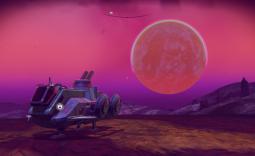 Sean Murray still plays the 2016 launch version of No Man's Sky
 China's YMTC has climbed to third place in global NAND flash shipments
 $100 GTA 6 version makes up 89% of pre-orders, analysts estimate
 HWiNFO's latest update quietly confirms Intel is working on Razor Lake-AX
 Nintendo puts Switch 2 price increase warnings on store demo kiosks ahead of September 1 hike
 GIGABYTE launches two new B450 motherboards as demand for AM4 stays high in 2026
 Microsoft finally makes up its mind and unifies Copilot features into one big app
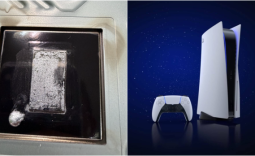 PS5 suffers from severe overheating after liquid metal eats into the heatsink
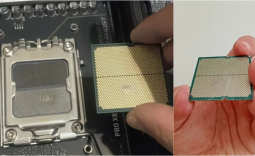 AMD Ryzen 7 7800X3D CPU burns and swells even after using AMD's updated BIOS
 D-Link F518 5G Wi‑Fi 6 AX1800 Mobile Hotspot Review: All-Day Mobile Hotspot
 Bose Lifestyle Ultra Speaker Review - Impressively Detailed Room-Filling Sound
 MSI Z890 Gaming Plus WIFI6E Review - Z890 for under $200
 Mortal Kombat (1995) 4K Ultra HD Blu-ray Review
 CPS PCCOOLER YS1200 ATX 3.1 80 PLUS Gold PSU Review
 ASRock X870E Taichi White Review: a premium AM5 motherboard with 10G LAN and WiFi 7
 Asetek Initium Pedal Modular Upgrades Review
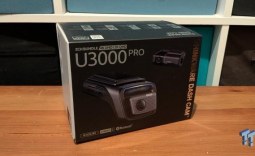 Thinkware U3000 Pro Review - Smart Dashcam with Wi-Fi quirks
 Montech TG3 Mid-Tower Chassis Review
 ASUS ROG Strix X870E-A Gaming WiFI7 Neo Review - A New Enticing Option
 I ditched the Windows 11 context menu for this open-source tool, and here's why
 Windows 11 may be encrypting your drive already, and I checked where my recovery key went
 GIGABYTE's 40 Days of INFINITY celebrates 40 Years of Innovation with stunning GeForce RTX graphics cards and rewards
 I swapped File Explorer for this free file manager and finally got the layout I wanted
 How to tell if someone has been using your Windows PC without your permission
 6 Task Manager tips for troubleshooting Windows performance problems
 ASUS ROG's 20th Anniversary Line-up of Premium PC Gaming Gear has Arrived - Here's Everything You Need to Know
 Six File Explorer tips every Windows user should know
 I switched my PC to encrypted DNS in Windows 11, and browsing felt more private
 Printer Not Working in Windows? How to fix detection, print queues and drivers