







Science, Space, & Robotics - Page 174
Explore the latest Science, Space, Health, and Robotics news from TweakTown. Coverage includes space launches, medical tech, discoveries, and rockets. - Page 174
Stay Updated
Follow TweakTown for breaking tech news, reviews, and daily updates.


As an Amazon Associate, we earn from qualifying purchases. TweakTown may also earn commissions from other affiliate partners at no extra cost to you.
Weird Mars images show signs of life, or the Internet is reaching?
For quite some time now, conspiracy theorists believe there is already proof of alien life on the baron red planet we call Mars.

Now that talk of aliens is in the news again, with Congress expecting a detailed report on UFO sightings by US intelligence agencies before the end of the month, now is a good time to look at what the internet has previously considered as "evidence" of life extraterrestrial life. For many years NASA's probes have been exploring the surface of Mars and sending back images that have been published online for public viewing. Most of these images show a baron wasteland planet with large quantities of rocks.
Some onlookers of these images claimed that the pictures were actually revealing evidence of current/past life existing on Mars. However, NASA scientists have said that what we see in these images can be attributed to a phenomenon called pareidolia, which is basically when the human brain sees an object that is similar to an object it has previously recognized and thinks that it's there when it's not.
Continue reading: Weird Mars images show signs of life, or the Internet is reaching? (full post)
Russia and China to build a joint lunar base, new space race begins?
NASA has big plans for getting humans back onto the moon, but they aren't the only ones as a very ambitious roadmap has been released by Russia and China.

The joint announcement from Russia and China occurred on June 16 at the Global Space Exploration (GLEX), where both nations announced they would be constructing a joint lunar space station called the International Lunar Research Station (ILRS). The announcement by Russia and China rival that of the US's announcement of the Artemis program, which aims to put humans back on the moon in the coming years and construct a lunar base.
So, what is the roadmap? The first phase of the ILRS will be a data-gathering phase that will entail numerous soft-landing lunar missions with China and Russia's respective landers between 2021 and 2025. The second phase has two parts, the first is the construction of infrastructure for communications, energy needs, and more. The second part of the second phase includes cargo missions to the surface of the moon, sample return missions, and joint operations. The second phase will happen between 2026 and 2035.
Continue reading: Russia and China to build a joint lunar base, new space race begins? (full post)
Experts: alien contact could result of the 'end life on Earth'
I'm sure we've been communicating with other forms of life and civilizations than most would like to admit, but according to physicist Mark Buchanan -- contacting aliens could result in the "end of life on Earth".

Buchanan wrote a panic-fueled piece in the Washington Post, frightened that if we made contact with another civilization that they'd just end our existence on the spot. He goes back and forth between seemingly wanting it (alien disclosure) to happen and tinfoil hat fear that makes even the biggest "conspiracy theorist" seem calm in comparison.
Buchanan feels like Bruce Wayne in Batman v Superman: Dawn of Justice, where he was filled with pure hate and resentment for Superman. As he said: "if there's even a 1% chance that he (Superman) is our enemy, we have to take it with an absolute certainty".
Continue reading: Experts: alien contact could result of the 'end life on Earth' (full post)
China: there is no radiation leak at Taishan Nuclear Power Plant
The Chinese government has now chimed in on the situation going on outside of Hong Kong with a nuclear power plant suspected of leaking radiation -- you know, Chernobyl style -- but everything is OK says the CCP.

China's National Nuclear Safety Administration has said that regulators have reviewed, and approved limits on how much radioactive gas is allowed to accumulate in the water at the reactor. The statement from China's safety regulator explains: "At present, monitoring results of the radiation environment around the Taishan Nuclear Power Plant show that there is no abnormality in the radiation level around the nuclear power plant".
There are over 60,000 nuclear fuel rods inside of Reactor No.1 at the Taishan Nuclear Power Plant, which is located around 80 miles southwest of Hong Kong. This has obviously raised concerns not just for Hong Kong and China, but worldwide.
Continue reading: China: there is no radiation leak at Taishan Nuclear Power Plant (full post)
Starlink dishes enter 'thermal shutdown' once temps hit 122F
We've seen how SpaceX's Starlink satellite dish continues to work in super-cold ice-covered environments, but what about the heat? 122F+ and the satellite dish goes into thermal shutdown.

A post on Reddit is now providing some updates on the upper limits of what the Starlink satellite dish can handle thermally, where in hot environments the dish can hit 122F and it'll go into thermal shutdown. One of Starlink's customers in Arizona saw his satellite dish go into thermal shutdown when temperatures popped over 122F in Arizona recently.
Another user shared their experience about hot temperatures in Las Vegas, Nevada yesterday where they hit 111F -- but his Starlink internet service was fine. His terminal didn't shut down, and no service outages were reported -- this is a better result than SpaceX said last year.
Continue reading: Starlink dishes enter 'thermal shutdown' once temps hit 122F (full post)
Hong Kong's leader is 'highly concerned' over leaking nuclear plant
If you haven't heard about the nuclear plant having issues in China, well the Taishan Nuclear Power Plant is having a "performance issue" but it is operating under safety parameters.

This is what the French joint operator -- Framatome -- said during a recent media conference, where Hong Kong leader Carrie Lam said: "With regards to foreign media reports about a nuclear plant in Taishan, Guangzhou, the Hong Kong government is highly concerned".
The Taishan Nuclear Power Plant is jointly owned by China Guangdong Nuclear Power Group and French multinational electric utility Electricite de France, which is the main owned of Framotome, which also helps operate the nuclear plant.
Continue reading: Hong Kong's leader is 'highly concerned' over leaking nuclear plant (full post)
China breaks world record for 'artificial sun', unlimited energy soon?
China is moving towards creating unlimited clean energy by designing and building an artificial Sun here on Earth.

A team of researchers at the Experimental Advanced Superconducting Tokamak (EAST) have said via Chinese state media that a new world record has been set for nuclear fusion temperature and how long that temperature was held. Reports indicate that the new world record, set by EAST, is 120 million degrees Celcius and was held for 101 seconds. For reference, the Sun is approximately 150 million degrees Celcius and will burn for billions of years.
So, why are researchers trying to create a Sun here on Earth? If researchers can manage to replicate a Sun here on Earth, they will be able to harness the energy that it produces and thus be able to provide cities with endless clean energy. Essentially, if researchers can provide enough pressure to the reaction to keep it going indefinitely, they would have considerably assisted the world's fossil fuel problem, which is a limited resource.
Continue reading: China breaks world record for 'artificial sun', unlimited energy soon? (full post)
Someone bid $28 million to sit next to Bezos in his 10 min rocket trip
Someone has bid a whopping $28 million for a seat next to Jeff Bezos on the first Blue Origin space tourist flight.

Blue Origin is founded by Amazon CEO Jeff Bezos, and recently held an auction for a seat on the first commercial trip to space. The auction was held on June 12, and an undisclosed person bid $28 million for a seat on Blue Origin's New Shepard rocket that is scheduled to take its first flight on July 20.
The auction winner will be joining Jeff Bezos on the first flight, along with Bezos' brother, Mark Bezos. So, what will the trip entail? Blue Origin will be sending the New Shepard rocket to the altitude of 62 miles above average sea level where it will then release the capsule containing the tourists. For 10 minutes the tourists will experience weightlessness before the capsule begins to safely decent back down to Earth via a parachute.
Continue reading: Someone bid $28 million to sit next to Bezos in his 10 min rocket trip (full post)
China just dropped the coolest Mars selfie you'll ever see
NASA has been the king of Mars images with its Perseverance rover being the main rover pulling most of the weight.

But now NASA might have a challenger on its hands, as the China National Space Administration has released new images from its recently touched down Mars rover named Zhurong. Since Zhurong touched down on the Red Planet, it has been exploring its surface, and along the way, it has been snapping some gorgeous images of the baron surface of Mars.
According to China's state media outlet Xinhua, a new collection of images has been released and within that collection is a very special image. The image is a selfie of the Zhurong rover positioned next to the lander, and what makes the image so special is that it was snapped with a wireless camera that was stationed on the surface of the planet at a distance. Xinhua states, "Zhurong also used a separable camera to take a selfie with the landing platform".
Continue reading: China just dropped the coolest Mars selfie you'll ever see (full post)
NASA's new planetary defence telescope will protect us with knowledge
NASA is planning the construction of a new telescope that is designed to give Earth a new level of planetary defence.

NASA has said the new telescope will be called the Near-Earth Object Surveyor, or NEO Surveyor for short. The NEO Surveyor is designed to monitor near-Earth objects such as asteroids, and will relay information back to NASA about objects' position, trajectory, etc. The NEO Surveyor will track objects that are within 30 million miles of Earth, and so far, researchers believe there are 25,000 near-Earth-objects within that vicinity.
Amy Mainzer of the University of Arizona said, "We think there are about 25,000 NEOs large enough to wipe out an area like Southern California. Once they get bigger than about 450 feet in diameter, they can cause severe regional damage. We want to find these, and as many smaller ones as possible." Near-Earth asteroids that are approaching Earth radiate heat signatures that the NEO Surveyor will be able to detect as it's equipped with heat-sensitive cameras. For more information on this story, check out this link here.
Continue reading: NASA's new planetary defence telescope will protect us with knowledge (full post)
Healthy 'space pups' have been born on the International Space Station
The International Space Station (ISS) is a floating laboratory home to many experiments and a small group of astronauts.

Now, the ISS has some new creatures aboard the floating lab, and they have been dubbed "space pups". The "space pups" are actually mice that were born from frozen sperm that was kept on the ISS for six weeks prior to the birth. Why were mice born on the ISS? Researchers are exploring the question if fertility in space is different from here on Earth. Gravity and radiation being the main factors that are being tested.
So far, researchers know that sperm behave differently in microgravity and that the radiation in space can be potentially harmful as well. The researchers took mice sperm, sealed it in vials, freeze-dried it, and sent it to the ISS. The mice sperm spent a considerable amount of time aboard the ISS and then was transported back to Earth, where it was then used to impregnate mice. The researchers on Earth found no abnormalities in the pups the mice on Earth gave birth to. The very same goes for the space pups that were birthed on the ISS.
Continue reading: Healthy 'space pups' have been born on the International Space Station (full post)
China launches new commercial 'asteroid hunter' satellite into space
China has just launched its first "asteroid hunter" satellite into space, with the new satellite taking its journey into the black beyond with three other satellites.

Lifting off from the Taiyuan Satellite Launch Center located in north China, the Long March 2D rocket took off with the Yangwang-1 spacecraft at 11:03PM EDT (0303 GMT, or 11:03AM local time, Friday, June 11). Chinese space resources company Origin Space is the company behind the launch, with the satellite being China's first optical space telescope -- capable of collecting visible and ultraviolet light to detect near-Earth asteroids.
Origin Space wants to create a "treasure map" of potential space resources, using the new "asteroid hunter" satellite to scan around using its various sensors and wide field of view to take in all that data. The company launched its NEO-1 satellite in April 2021, designed to release and collect a small target -- chunks of an asteroid.
Continue reading: China launches new commercial 'asteroid hunter' satellite into space (full post)
US Congressmen: let's change the moon's orbit to fight climate change
I can't believe that I'm even typing this, and it feels like I'm saying that more the last few months than in my 11 years working for TweakTown -- but Rep. Louie Gohmert, R-Texas suggested during a congressional hearing that the US could fight climate change by altering the orbit of the moon.

Yes.
Altering the orbit... of the moon...
Continue reading: US Congressmen: let's change the moon's orbit to fight climate change (full post)
You won't believe where scientists found a 500 year old candle box
A team of researchers has managed to uncover multiple different items that date back hundreds of years.

Archaeologists with the Glacier Archaeology Program in Norway were inspecting the Lendbreen glacier that's located in Norway's Breheimen National Park, and made some shocking discoveries. According to the findings that were posted to the researchers' Facebook Page called "Secrets of the Ice", the archaeologists uncovered a 500-year-old candle box along with spears, horse snowshoes, walking sticks, dog leashes, mittens, and the remains of a dog.
The Facebook post states that the wooden box is made out of pine, and inside was beeswax. The researchers state in the post that what is seen in the below image is the remains of a beeswax candle that's dated anywhere between 1475 - 1635 AD. Candle boxes and beeswax candles were commonly used throughout the area during that time as a source of light, and now researchers are able to confirm that such candles and candle boxes were used between the aforementioned time periods. For more information on this story, check out this link here.
Continue reading: You won't believe where scientists found a 500 year old candle box (full post)
US intelligence report confirms recent UFO sightings aren't aliens
Senior administration officials who are close to the coming UFO report headed for Congress have said that the report won't disclose any alien link to the recent UFO videos.

According to a report by The New York Times, "senior administration officials" who were briefed on the coming report scheduled for Congress by June 25 have said that the report won't reveal any evidence that links the UFO sightings to extraterrestrial life. US intelligence agencies will deliver the report to Congress, and most of its contents will be revealed to the public.
However, some parts of it will remain classified, but the Times reports that the parts that will remain classified "will not contain any evidence concluding that the phenomena are alien spacecraft". If the objects seen in the now-famous Navy pilot videos aren't extraterrestrial life, then what is it? The Times reports that these UFOs may be hypersonic technology that has been developed in China or Russia. For more information on this story, check out this link here.
Continue reading: US intelligence report confirms recent UFO sightings aren't aliens (full post)
The most expensive toilet in the world has been installed on the ISS
Have you ever wondered how expensive toilets can get? Well, I bet you never thought a toilet could be worth millions of dollars.

International Space Station (ISS) astronauts are installing the world's most expensive toilet aboard the floating laboratory. The new toilet arrived aboard the ISS back in September of last year and is a massive upgrade over the current one that is on the ISS. The new toilet is much smaller, lighter, and has been better equipped for female use.
The new toilet, dubbed the Universal Waste Management System (UWMS), will cost $23 million and features handholds and foot restraints instead of the thigh straps that are on the old toilet. NASA received feedback from ISS astronauts regarding the old toilet and made the appropriate changes, stating, "Everyone positions themselves differently while 'going,' and consistent astronaut feedback indicated that the traditional thigh straps were a hassle." The new toilet won't be replacing the old toilet, so now the ISS has two toilets for its growing crew!
Continue reading: The most expensive toilet in the world has been installed on the ISS (full post)
NASA's Mars helicopter has taken off again to explore a new region
NASA's small but study, Mars helicopter has successfully completed its seventh flight. This time Ingenuity has explored a new area.

NASA launched Ingenuity off the surface of Mars and took it 350 feet south to inspect a possible landing location that has only been seen from orbiting spacecrafts. The mission took Ingenuity to a completely new terrain that was then captured on the helicopter's navigation camera for further research. NASA announced that the mission was a success, giving Ingenuity its seventh flight badge.
When Ingenuity touched down on Mars with Perseverance, the new Mars rover, NASA planned that the small helicopter would only have five flights, as that's all it was designed to do. However, Ingenuity doesn't seem to be slowing down anytime soon, and recently it encountered a shock test that gave NASA researchers some insight into just how strong the helicopter is - more on that story here. Ingenuity is currently stationed in the new landing location, awaiting orders. If you are interested in reading more about this story, check out this link here.
Continue reading: NASA's Mars helicopter has taken off again to explore a new region (full post)
US sanctions are causing Russia to threaten to leave the ISS
The current sanctions against the Russian space sector by the United States have caused Russia's space chief to threaten to leave the International Space Station (ISS).

A new report by NBC has revealed that Roscosmos Director General Dmitry Rogozin has said during a Russian government hearing that Russia will withdraw from the ISS in 2025 if the United States doesn't immediately lift the current sanctions imposed on Russia. Rogozin goes on to say, "If the sanctions ... remain and are not lifted in the near future, the issue of Russia's withdrawal from the ISS will be the responsibility of the American partners."
Additionally, Rogozin said that Russia cannot launch some of its satellites its construct due to US sanctions stopping it from importing a certain microchip set. "We have more than enough rockets but nothing to launch them with. We have spacecraft that are nearly assembled, but they lack one specific microchip set that we have no way of purchasing because of the sanctions." Lastly, Rogozin says that the US and Russia need to work together, and if the sanctions aren't lifted immediately, Russia will pull out of the ISS and deploy its own space station.
Continue reading: US sanctions are causing Russia to threaten to leave the ISS (full post)
Moon-based large hadron collider 1,000x more powerful than Earth's
Researchers have run the numbers on a theoretical large hadron collider being constructed on the Moon, and according to the results, it would be much more powerful than the one we currently have on Earth.

A new pre-print study has explored the possibility of a large hadron collider being constructed on the Moon, and according to the results of the study, the Circular Collider on the Moon (CCM) would be able to generate a proton-proton center-of-mass collision energy of 14 PeV. In the study, the researchers estimated that the CCM would be 6,835 miles long, which is much bigger than the one currently on Earth that measures in at 16.6 miles.
The study found that if a large hadron collider was constructed on the Moon, it would be able to generate 1,000 times more energy than the one at CERN, assuming the dipole magnetic field was 20 T. Having a large hadron collider of this size may pave the way for unprecedented particle physics discoveries that could help physicists, and the human race as a whole, better understand the universe and how it came to be. If you are interested in reading more about this story, check out this link here.
Continue reading: Moon-based large hadron collider 1,000x more powerful than Earth's (full post)
Check out the first images of Jupiter's largest moon from NASA's Juno
NASA's Juno spacecraft has flown past Jupiter's largest moon, and on its way, it has snapped some awesome pictures of it.

On June 7, NASA's Juno orbiter flew past Jupiter's largest moon named Ganymede. The recent flyby by Juno has marked the closest spacecraft to fly past Ganymede in two whole decades. The orbiter snapped some pictures of the moon with its JunoCam imager and its Stellar Reference Unit, revealing the surface of the moon in remarkable detail.
From the images taken by Juno, we can see craters, its terrain, and long structural features that NASA says are "possibly linked to tectonic faults." Juno Principal Investigator Scott Bolton of the Southwest Research Institute in San Antonio said, "This is the closest any spacecraft has come to this mammoth moon in a generation. We are going to take our time before we draw any scientific conclusions, but until then we can simply marvel at this celestial wonder."
Continue reading: Check out the first images of Jupiter's largest moon from NASA's Juno (full post)
 Twitch opts streamers into gen AI training by default, faces harsh backlash
 Sean Murray still plays the 2016 launch version of No Man's Sky
 China's YMTC has climbed to third place in global NAND flash shipments
 $100 GTA 6 version makes up 89% of pre-orders, analysts estimate
 HWiNFO's latest update quietly confirms Intel is working on Razor Lake-AX
 Nintendo puts Switch 2 price increase warnings on store demo kiosks ahead of September 1 hike
 GIGABYTE launches two new B450 motherboards as demand for AM4 stays high in 2026
 Microsoft finally makes up its mind and unifies Copilot features into one big app
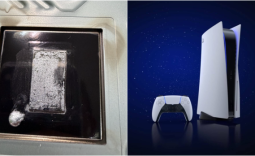 PS5 suffers from severe overheating after liquid metal eats into the heatsink
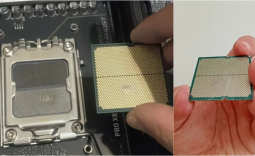 AMD Ryzen 7 7800X3D CPU burns and swells even after using AMD's updated BIOS
 D-Link F518 5G Wi‑Fi 6 AX1800 Mobile Hotspot Review: All-Day Mobile Hotspot
 Bose Lifestyle Ultra Speaker Review - Impressively Detailed Room-Filling Sound
 MSI Z890 Gaming Plus WIFI6E Review - Z890 for under $200
 Mortal Kombat (1995) 4K Ultra HD Blu-ray Review
 CPS PCCOOLER YS1200 ATX 3.1 80 PLUS Gold PSU Review
 ASRock X870E Taichi White Review: a premium AM5 motherboard with 10G LAN and WiFi 7
 Asetek Initium Pedal Modular Upgrades Review
 Thinkware U3000 Pro Review - Smart Dashcam with Wi-Fi quirks
 Montech TG3 Mid-Tower Chassis Review
 ASUS ROG Strix X870E-A Gaming WiFI7 Neo Review - A New Enticing Option
 I ditched the Windows 11 context menu for this open-source tool, and here's why
 Windows 11 may be encrypting your drive already, and I checked where my recovery key went
 GIGABYTE's 40 Days of INFINITY celebrates 40 Years of Innovation with stunning GeForce RTX graphics cards and rewards
 I swapped File Explorer for this free file manager and finally got the layout I wanted
 How to tell if someone has been using your Windows PC without your permission
 6 Task Manager tips for troubleshooting Windows performance problems
 ASUS ROG's 20th Anniversary Line-up of Premium PC Gaming Gear has Arrived - Here's Everything You Need to Know
 Six File Explorer tips every Windows user should know
 I switched my PC to encrypted DNS in Windows 11, and browsing felt more private
 Printer Not Working in Windows? How to fix detection, print queues and drivers