







Science, Space, & Robotics - Page 172
Explore the latest Science, Space, Health, and Robotics news from TweakTown. Coverage includes space launches, medical tech, discoveries, and rockets. - Page 172
Stay Updated
Follow TweakTown for breaking tech news, reviews, and daily updates.


As an Amazon Associate, we earn from qualifying purchases. TweakTown may also earn commissions from other affiliate partners at no extra cost to you.
Pentagon explains how it plans to reveal more about UFOs in the future
The highly-anticipated report on UFOs or Unidentified Aerial Phenomena (UAP) by the Office of The Director of National Intelligence (ODNI) has been released online for public viewing.

The report by the ODNI explores the possibility that these nearly 150 sightings of UAPs by U.S. government personnel (USG) are a threat to national security and what the Department of Defense plans on doing to understand the threat. According to the report, there is very limited high-quality data on UAPs, which has led the report to be inconclusive on their origin or intent.
However, the report states how the U.S. government will make moves to understand UAPs better and, therefore, be able to explain them. According to the report, there needs to be standardized reporting implemented for sightings and consolidation of data, allowing for a deeper analysis. "As the dataset increases, the Unidentified Aerial Phenomena Task Force (UAPTF) ability to employ data analytics to detect trends will also improve. The initial focus will be to employ artificial intelligence/machine learning algorithms to cluster and recognize similarities and patterns in features of the data points", the report reads.
Continue reading: Pentagon explains how it plans to reveal more about UFOs in the future (full post)
Here's why the National Intelligence UFO report didn't confirm aliens
The report provided by the Office of the Director of National Intelligence investigates the potential threat of unidentified aerial phenomena (UAP).

There are many interesting points to bring up in the 9-page document, but for the purpose of this article we will concentrate purely on why the US government didn't confirm the existence of aliens. After reading through the document you can understand that the Unidentified Aerial Phenomena Task Force (UAPTF) simply doesn't have enough data to confirm or rule out the possibility of extraterrestrial life.
The UAPTF mainly concentrated on reports from military aviators and found that the data provided to them had large variability, with minimal patterns. Essentially the dataset was too small. The patterns that were noticed regarded the size of a UAP, shape, and particularly its method for propulsion. The document goes on to state that there are probably multiple explanations for these UAPs, as not all of them are the same which means they require different explanations.
Continue reading: Here's why the National Intelligence UFO report didn't confirm aliens (full post)
Pentagon UFO report confirms 18 incidents of the unexplainable
The highly anticipated report from the Office of The Director of National Intelligence regarding UFO sightings by military personel has been released.

June 25 has arrived and the Pentagon report ordered to be presented to the Senate regarding UFOs, or as outlined in the document, UAPs (Unidentified Aerial Phenomena). The document has been unclassified and free for public viewing here. Under a section in the document states that there are 18 incidents described in 21 reports that a UAP performed unusual movement patterns of flight characteristics that may have demonstrated the use of advanced technology.
The report reads, "Some UAP appeared to remain stationary in winds aloft, move against the wind, maneuver abruptly, or move at considerable speed, without discernable means of propulsion. In a small number of cases, military aircraft systems processed radio frequency (RF) energy associated with UAP sightings." The Unidentified Aerial Phenomena Task Force (UAPTF) currently holds a small amount of data that isn't enough to confirm if its valid or not, rendering the reporting largely inclusive, according to the report.
Continue reading: Pentagon UFO report confirms 18 incidents of the unexplainable (full post)
China announces they'll send the first humans to land on Mars by 2033
A new space race may have just begun as China has announced they will be sending the first humans to land on Mars.

The ambitious plans were announced by Wang Xiaojun, the head of the state-owned China Academy of Launch Vehicle Technology (CALT). Xiaojun made the announcement at the Global Space Exploration Conference (GLEX 2021) where he gave a speech called "The Space Transportation System of Human Mars Exploration". China has its eyes set on Mars, and the nation plans on getting humans there in three stages.
The first stage will see the country send robots to the surface of the Red Planet to collect samples and then return back to Earth. These robots would also be tasked with finding a suitable base site for when humans land. The second stage will feature humans being sent there to build a permanent settlement. The last state includes large-scale Mars to Earth cargo trips that will include cargo from Earth being shipped to Mars and cargo from Mars being shipped back to Earth.
Continue reading: China announces they'll send the first humans to land on Mars by 2033 (full post)
Hubble reveals odd 'see through' galaxy that lacks dark matter 'glue'
When NASA's Hubble Space Telescope is online and working it can produce some shocking images of the cosmos, and this is no exception.

The image seen above taken by Hubble is of NGC 1052-DF2, or DF2. This galaxy, in particular, continues to perplex astronomers as estimates show that it lacks any dark matter, which is an "invisible form of matter that provides the gravitational glue to hold galaxies together" according to NASA. The team behind the discovery has published their findings in The Astrophysical Journal Letters.
The researchers found that DF2 is actually 72 million light-years which is more than most astronomers previously estimated at 42 million light-years. Pieter van Dokkum of Yale University says that DF2 is a cosmic cotton ball that is a "see-through galaxy" that features stars spread out. The diameter of DF2 is almost as large as our galaxy, but DF2 only contains 1/200th of the amount of stars as the Milky Way.
Continue reading: Hubble reveals odd 'see through' galaxy that lacks dark matter 'glue' (full post)
Death of massive star causes giant ghostly 'hand' to emerge in space
The scenario proposed sounds impossible, but it's actually quite real. NASA's Chandra X-ray Observatory has the images to prove it.

So, what are we exactly looking at here? The above image clearly shows a "hand", but it's not a galactic being of any kind, it's the remnants of a massive star dying in a supernova explosion. What appears in the image in the shape of a hand is what is known as a pulsar, an extremely dense corpse of what was once a large star.
The pulsar in the image named MSH 15-52 has many energetic particles surrounding it, and those energetic particles combined with the debris left over from the explosion have created the glorious image of a hand reaching for something. That "something" is an enormous gas cloud called RCW 89. The ghostly "hand" is located 17,000 light-years away from Earth, and according to astronomers, the light emitted from the supernova explosion would have reached Earth around 1,700 years ago, making MSH 15-52 one of the youngest supernova explosions we have found in the Milky Way galaxy.
Continue reading: Death of massive star causes giant ghostly 'hand' to emerge in space (full post)
Martian colonists will fear these very deadly issues from above
The first humans that land on Mars to begin colonizing the red planet will be faced with several life-threatening issues.

The main issues for colonizers are that planets lack of atmosphere, extreme weather, extreme temperatures, radiation, and humans would be experiencing a different amount of gravity than their bodies are used to. Another problem that isn't readily discussed is the issue with space debris colliding with Mars. Due to Mars having less than 1% of Earth's atmosphere, space debris such as meteors don't tend to break up when they are entering Mars' atmosphere.
In fact, most space debris make it to the surface, causing impact craters, which is something that usually doesn't happen on Earth. A 2013 study estimated that Mars sees as many as 200 small asteroids reach its surface, causing impact craters of at least 12.8 feet in diameter. If humans began colonizing Mars with settlements, you can understand the catastrophe that would fall upon the settlement if even one of these meteors struck it.
Continue reading: Martian colonists will fear these very deadly issues from above (full post)
Hubble's successor to unlock big secrets about our early universe
The Hubble Space Telescope has been in operation for more than 30 years, and it still continues to shock onlookers of what it can produce. But, what will Hubble's successor be able to do?

The James Webb Space Telescope (JWST) has been dubbed as Hubble's successor, and its launch has been highly anticipated for quite some time. Unfortunately, many delays occurred due to construction setbacks as well as COVID-19. However, when JWST is finally launched, it will give astronomers the opportunity to view the universe in its baby stages, just less than 800 million years old.
The JWST will literally be able to look back in time, and astronomers are planning on its extremely sensitive low-light instruments to peer at distant quasars. A good way to understand this is the light that Webb is absorbing has taken billions of years to reach it, allowing for astronomers to see things how they were billions of years ago and not how they are today. Astronomers' ability to see back to the early stages of the universe paves the way for a deeper understanding of how galaxies evolve, supermassive black hole formations, and evolution in general.
Continue reading: Hubble's successor to unlock big secrets about our early universe (full post)
Strawberry Moon is the last supermoon of 2021, don't miss it this week
If you happened to miss the Blood Supermoon that recently occurred, now if you chance to catch the last supermoon of 2021, the Strawberry Moon.

According to Farmer's Almanac, the Strawberry Moon will be visible this coming Thursday, June 24, until June 26. What is a super moon? The definition of super moon is given to the moon when its orbit brings it closest to Earth. Due to the orbit of the moon, this only happens a few times a year, and as explained by Almanac, a full moon that is less than 224,000 miles away from Earth is considered a super moon.
The coming Strawberry Moon will be located just outside the cut-off line, being 224,662 miles away from Earth. However, due to this month's supermoon only being a few thousand miles further back than April and May's supermoons, onlookers at the cosmic spectacle shouldn't see any noticeable difference. Additionally, the name "Strawberry Moon" wasn't derived from the hue that it can produce, but instead, it comes from Algonquin, Ojibwe, Dakota, and Lakota Native American tribes as it marks the ripening of June strawberries.
Continue reading: Strawberry Moon is the last supermoon of 2021, don't miss it this week (full post)
Aliens from close to 2,000 world's could be watching us right now
Humans have only just begun our search for alien life out in the cosmos, but have we considered that alien life is already spying on us, and we don't even know it?

A recent study published by a team of astronomers explores this question as they have identified 1,715 stars within 300 light-years of Earth that could view Earth if they had the technology. These nearly 2,000 stars could have been watching Earth for the last 5,000 years. A form of planetary detection is the transit method, and it involves an astronomer viewing and recording the reduction of light from a host star. When an astronomer notices a reduction in the star's brightness, they know an exoplanet is passing by.
While this method of planetary detection is effective and efficient, astronomers can only view exoplanets on Earth's orbital plane, or more simply, within our line of sight. This means that astronomers aren't able to see the exoplanets that aren't "edge-on" to us. Additionally, aliens that are using this same method could also be viewing us and performing the same mathematical estimations of our planet.
Continue reading: Aliens from close to 2,000 world's could be watching us right now (full post)
'Mega comet' close to dwarf planet size is entering our solar system
There is a very large object that is moving outside of our solar system, but it will soon enter Saturn's orbit, according to astronomers.

The very large object is a comet named 2014 UN271, and back in 2013, it was first officially discovered by the Dark Energy Survey, which is a collaborative project that has a goal of mapping galaxies and unlocking more knowledge into dark energy. The discovery by DES was just announced on June 13, and now astronomers are speculating that the rock could be as big as a small dwarf planet with an estimated diameter of anywhere around 80 to 229 miles.
Jonathan McDowell, an astronomer at the Harvard-Smithsonian Center for Astrophysics, questioned the assumption that 2014 UN271 is as big as a dwarf planet, saying, "Seems like maybe a tad too small to qualify as dwarf planet? Very cool nevertheless." Foxnews reports that the comet will enter our solar system within the next decade, coming close to Saturn's orbit. For more information on this story, check out this link here.
Continue reading: 'Mega comet' close to dwarf planet size is entering our solar system (full post)
NASA drop update on Hubble being knocked offline from confusing glitch
For some weeks now, NASA has been struggling to get its Hubble Space Telescope back online and operating at its full capabilities.

The problem arose on June 13 as the space telescopes payload computer, and since then, NASA has been performing tests to identify the piece of hardware causing the root problem. The initial hypothesis of the issue pointed towards Hubble's several memory modules, but according to an update from NASA, tests indicated that it wasn't Hubble's memory modules but a different piece of computer hardware.
NASA says on its website that the memory module errors were only a symptom of the root problem and that a team if currently designing tests to investigate the computer's Central Processing Module (CPM) and other components. "If the problem with the payload computer can't be fixed, the operations team will be prepared to switch to the STINT and CPM hardware onboard the backup payload computer." states NASA.
Continue reading: NASA drop update on Hubble being knocked offline from confusing glitch (full post)
Elon Musk's Starlink will be fully operational and global very soon
If you were planning on getting Starlink and using it, that possibility will soon become available to you as SpaceX has announced global operations will begin this year.

According to a statement from Starlink's President, Gwynne Shotwell, full operation capabilities will begin in September on a global scale, or at least this is the goal. Shotwell also said that SpaceX has been able to successfully deploy 1,800 Starlink satellites to their operation orbit around Earth. However, as Shotwell explains, there is a lot of regulatory work to do as the company needs regulatory approval from each individual country.
At the moment, Starlink has been approved and is providing internet service to users in eleven countries. Elon Musk also announced that SpaceX had received more than 500,000 preorders for Starlink internet access. SpaceX plans on launching 12,000 Starlink satellites for around $10 billion and also says that it will be able to keep up with the big demand for the service. For more information on this story, check out this link here.
Continue reading: Elon Musk's Starlink will be fully operational and global very soon (full post)
Earth's major geological event 'pulse' is 27.5 million years
A new study has revealed that most major geological events that happen on Earth happened every 27.5 million years.

Researchers have penned a new study in Geoscience Frontiers, and according to an analysis on 89 major geological events that have happened in the past 260 million years, most major geological events occur in intervals of 27.5 million years. So, what is a major geological event? The researchers took into account events such as extinctions, ocean anoxic events, rising sea levels, large volcanic activity, and Earth's tectonic plates shifting.
Lead author Michael Rampino, a professor in the departments of biology and environmental studies at New York University, said that the estimates aren't "exact", but it's a "pretty good estimate" that's "unlikely to be a coincidence". So, why every 27.5 million years does Earth have this geological "pulse"? The authors state in the study that the geological pulse may have something to do with the tectonic plates shifting and movement inside the mantle. The researchers also state that it could have something to do with the movement of Earth within our solar system/galaxy.
Continue reading: Earth's major geological event 'pulse' is 27.5 million years (full post)
Scientists show never-before-seen cosmic 'baby bubble' in dramatic pic
The birthplace of stars are still somewhat of a mystery to astronomers, and as humans continue to expand our knowledge of the universe, we begin to understand more about how stars develop over long stretches of time.

Stars form in specific regions, and one of those regions is Westerlund 2, which is located around 20,000 light-years away from Earth. This star-factory region of space hasn't been observed in high resolution until now, and from the above image, we can see that the star cluster is surrounded by a bubble of gas. It was previously hypothesized that Westerlund 2 was surrounded by two bubbles of gas, but now astronomers understand that its just one.
The study's lead author Maitraiyee Tiwari, a postdoctoral associate in astronomy at the University of Maryland, said, "When massive stars form, they blow off much stronger ejections of protons, electrons, and atoms of heavy metal, compared to our sun. These ejections are called stellar winds, and extreme stellar winds are capable of blowing and shaping bubbles in the surrounding clouds of cold, dense gas. We observed just such a bubble centered around the brightest cluster of stars in this region of the galaxy, and we were able to measure its radius, mass, and the speed at which it is expanding."
Continue reading: Scientists show never-before-seen cosmic 'baby bubble' in dramatic pic (full post)
Brand new UFO footage shot from US Navy ship will be released soon
Alien skeptics and believers of the recently viral UFO footage are all patiently awaiting the coming report from US intelligence agencies on UFO or UAP sightings.

Ahead of the report, the broadcasting network Fox has announced that it's currently investigating UFOs in its coming one-hour special from TMZ. The network says that it will be called TMZ Investigates: UFOs: The Pentagon Proof, and as reported by Deadline, "will analyze the US government's official response to the phenomenon, which is expected later this month."
Additionally, Deadline reports that Fox has said that the one-hour special will contain entirely new footage of UFOs and that this footage was shot from the deck of a US Navy ship. The footage will be aired when the special is released. On top of that, the special will also contain interviews with senators, military pilots, scientists, former Pentagon officials, and much more. TMZ Investigates: UFOs: The Pentagon Proof will air on Tuesday, June 29.
Continue reading: Brand new UFO footage shot from US Navy ship will be released soon (full post)
'Space balloons' to undercut the space tourism industry by nearly half
Space tourism is beginning to become a reality, and soon anyone will be able to take a trip to see Earth like they have never seen it before.

Blue Origin and Boeing are just some of the companies that are working towards making space tourism a reality. Blue Origin will have its first passenger flight in the coming weeks, and one of its first passengers will be Amazon CEO, Jeff Bezos. If rockets aren't your thing, or if you can't afford the price tag, and want to opt for something cheap, maybe a space balloon will be up your alley.
Space Perspective has successfully completed the first test flight of its prototype stratospheric passenger balloon called Neptune One. The launch was conducted on Friday, June 18, and Neptune One reached 108,409 feet before it splashed back down to Earth in the Gulf of Mexico. True "space" begins at 330,000, often referred to as the Karman Line. However, Space Perspective says passengers will be able to have an incredible view of Earth that creates the Overview Effect.
Continue reading: 'Space balloons' to undercut the space tourism industry by nearly half (full post)
NASA's Juno spacecraft took phenomenal pictures of Earth
NASA's Juno spacecraft used Earth for a speed boost to get to its mission destination of Jupiter back in 2016.

Juno has been orbiting Jupiter for five years now, and since then, it has been relaying vital information back to NASA about the mysterious large planet. However, before Juno reached Jupiter, it flew by Earth using its gravity for an assist and gained more than 3.9 kilometers per second (8,800 mph) boost in speed. While Juno was flying past, NASA engineers used the opportunity to test out the spacecraft's camera by taking photos of Earth.
Juno used its JunoCam to snap some incredible images of our blue planet and posted them to the Mission Juno website for public viewing. Paul Steffes from Georgie Tech, one of the Juno science investigators, said, "The idea that you can couple our scientific imaging and understanding of the planet, with artistic representations of not only what the planet means but what exploration means, has been very valuable to the mission- and to the public". For more information about this story, visit this link here.
Continue reading: NASA's Juno spacecraft took phenomenal pictures of Earth (full post)
Hubble snaps active black hole and galaxy image for the history books
The Hubble Space Telescope, despite being 30-year-old technology, is still managing to shock onlookers at the quality of images it can produce.

The above image is of a spiral galaxy named NGC 3254, and in order to capture this image, Hubble used its Wide Field Camera 3, which can observe ultraviolet light, visible light, and infrared light. How is an image like this created? According to NASA, the image is a "composite of observations taken in the visible and infrared". NASA also explains that NGC 3254 has a "hidden secret" hiding in plain sight, saying that NGC 3254 is actually a Seyfert galaxy.
For those who don't know, Seyfert galaxies have an extremely active galactic nucleus and belong to a class of galaxies called "active galaxies". Seyfert galaxies are galaxies that have "supermassive black holes at their centers accreting material, which releases vast amounts of radiation". These active cores can release as much energy as the entire galaxy put together. If you are interested in reading more about this story, check out this link here.
Continue reading: Hubble snaps active black hole and galaxy image for the history books (full post)
Earth just officially gained another ocean after 100 years of debate
Earth has officially added a new ocean to its current list of four, which is; the Atlantic, Pacific, Indian and Arctic oceans.

According to the National Geographic Society, the Southern Ocean, which resides around Antarctica, is now Earth's fifth ocean after 100 years of debate. On June 8, the National Geographic Society announced that it would be labeling the ocean region as the Southern Ocean and that it will be added to the ocean and its respective title to global maps of Earth.
Here's what Alex Tait, the society's official geographer, said to National Geographic, "The Southern Ocean has long been recognized by scientists, but because there was never agreement internationally, we never officially recognized it. It's sort of geographic nerdiness in some ways." Tait also said, "Students learn information about the ocean world through what oceans you're studying. If you don't include the Southern Ocean, then you don't learn the specifics of it and how important it is."
Continue reading: Earth just officially gained another ocean after 100 years of debate (full post)
 Twitch opts streamers into gen AI training by default, faces harsh backlash
 Sean Murray still plays the 2016 launch version of No Man's Sky
 China's YMTC has climbed to third place in global NAND flash shipments
 $100 GTA 6 version makes up 89% of pre-orders, analysts estimate
 HWiNFO's latest update quietly confirms Intel is working on Razor Lake-AX
 Nintendo puts Switch 2 price increase warnings on store demo kiosks ahead of September 1 hike
 GIGABYTE launches two new B450 motherboards as demand for AM4 stays high in 2026
 Microsoft finally makes up its mind and unifies Copilot features into one big app
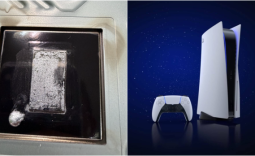 PS5 suffers from severe overheating after liquid metal eats into the heatsink
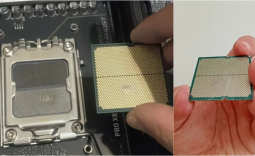 AMD Ryzen 7 7800X3D CPU burns and swells even after using AMD's updated BIOS
 D-Link F518 5G Wi‑Fi 6 AX1800 Mobile Hotspot Review: All-Day Mobile Hotspot
 Bose Lifestyle Ultra Speaker Review - Impressively Detailed Room-Filling Sound
 MSI Z890 Gaming Plus WIFI6E Review - Z890 for under $200
 Mortal Kombat (1995) 4K Ultra HD Blu-ray Review
 CPS PCCOOLER YS1200 ATX 3.1 80 PLUS Gold PSU Review
 ASRock X870E Taichi White Review: a premium AM5 motherboard with 10G LAN and WiFi 7
 Asetek Initium Pedal Modular Upgrades Review
 Thinkware U3000 Pro Review - Smart Dashcam with Wi-Fi quirks
 Montech TG3 Mid-Tower Chassis Review
 ASUS ROG Strix X870E-A Gaming WiFI7 Neo Review - A New Enticing Option
 I ditched the Windows 11 context menu for this open-source tool, and here's why
 Windows 11 may be encrypting your drive already, and I checked where my recovery key went
 GIGABYTE's 40 Days of INFINITY celebrates 40 Years of Innovation with stunning GeForce RTX graphics cards and rewards
 I swapped File Explorer for this free file manager and finally got the layout I wanted
 How to tell if someone has been using your Windows PC without your permission
 6 Task Manager tips for troubleshooting Windows performance problems
 ASUS ROG's 20th Anniversary Line-up of Premium PC Gaming Gear has Arrived - Here's Everything You Need to Know
 Six File Explorer tips every Windows user should know
 I switched my PC to encrypted DNS in Windows 11, and browsing felt more private
 Printer Not Working in Windows? How to fix detection, print queues and drivers